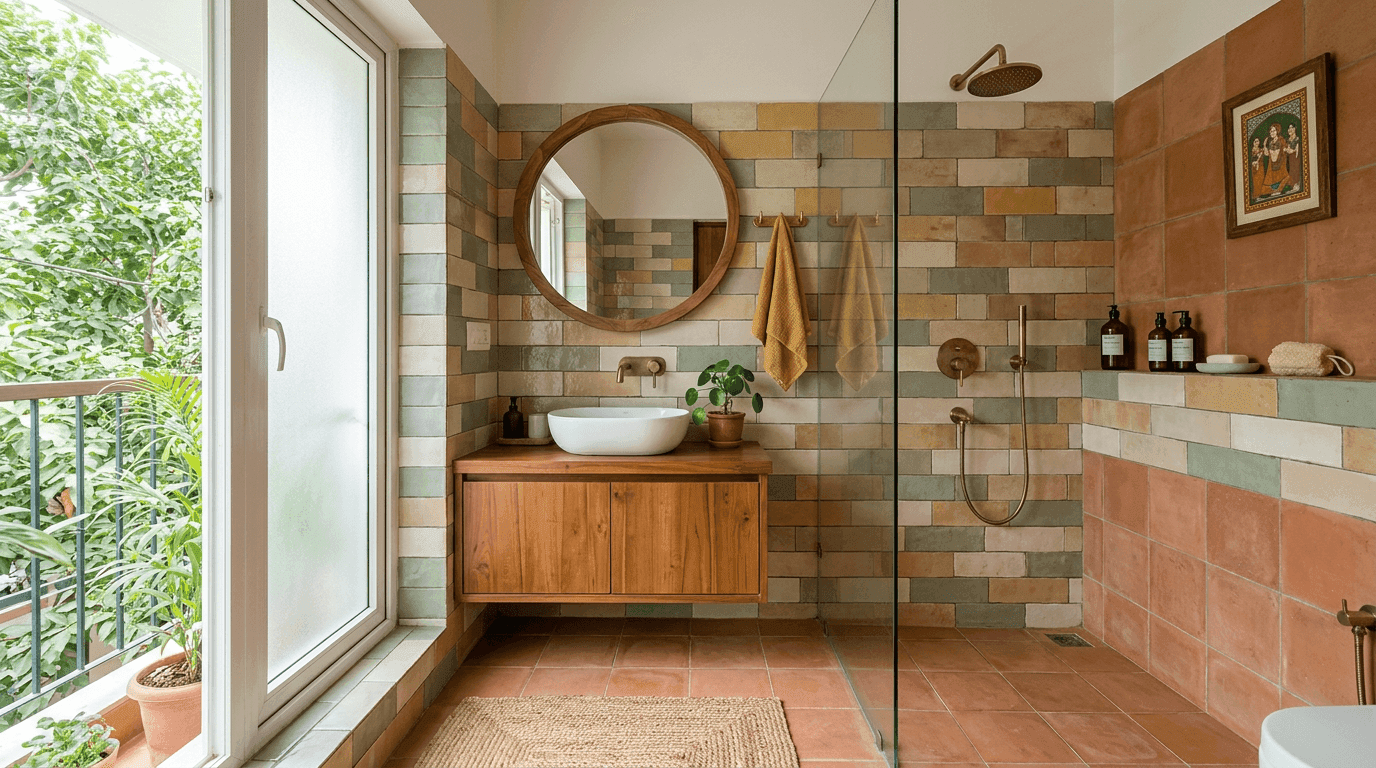
A good bathroom tiles design for an Indian home pairs a matte, anti-skid floor tile (slip rating R10 or higher, water absorption under 0.5%) with easy-wipe glossy or satin wall tiles, in colours that hide hard-water stains. Style comes after those three boxes are ticked, and 2026's design trends make ticking them easy.
Key Takeaways
- Bathroom floors need matte, textured, or anti-skid tiles. Glossy tiles belong on walls, never on wet bathroom floors.
- Double-charged vitrified tiles or glazed porcelain bathroom tiles are the safest floor choices for Indian bathrooms (water absorption below 0.5%).
- Grey, beige, and salt-and-pepper textures hide hard-water scale far better than plain white tiles.
- A small bathroom looks bigger with large-format tiles, vertical stacking, and light colours: fewer grout lines, taller walls.
- Epoxy grout costs more than cement grout but won't blacken or grow mould in wet zones.
- Always order 7–10% extra tiles from the same batch. Batch numbers matter more than brand names.
We've renovated bathrooms in 30-year-old Hyderabad apartment buildings and specced tiles for brand-new villas. The tile conversation is always the same: clients arrive with a Pinterest board full of tile ideas, and we start with a question nobody expects. "Who's going to slip on this?" Here are 45 bathroom tile designs we'd actually put in an Indian home, plus the selection rules that keep them beautiful five years in. Tiles are the one interior design decision in a bathroom you can't cheaply undo, so this list leans practical as much as pretty. For the full room — layout, fixtures, waterproofing — see our complete bathroom design guide.
How to Choose the Right Bathroom Tiles (Before You Fall for a Look)
Tile design decides safety, not just style. An Indian bathroom is a wet room: the floor gets soaked daily, the water is usually hard, and the whole family, grandparents included, walks through it barefoot. So the spec sheet matters as much as the shade card, and the right bathroom tiles are the ones that pass both.
How to Select Tiles for Indian Bathrooms
- Floor material: double-charged vitrified tiles or glazed porcelain bathroom tiles, water absorption under 0.5%.
- Floor finish: matte, textured, or anti-skid tiles with a slip resistance rating of R10 or higher.
- Wall finish: glossy ceramic tiles or polished marble-look tiles; they reflect light and wipe dry in seconds.
- Stain management: grey, beige, or earthy salt-and-pepper textures conceal hard water scale between cleans.
One story that changed how we think about the choice for bathroom surfaces: at a Banjara Hills duplex (the Vikas Goud residence), the family had fought termites for years. When we redid their interiors, we laid a full layer of tiling behind the woodwork. Walls treated, then tiled, then furniture installed. The pests never came back. Tiles aren't decoration; they're the most protective surface in the full bathroom, and in the house.
15 Latest Bathroom Tile Designs Trending in 2026
The 2026 direction is clear: matte over gloss, texture over print, and big formats over busy grids. These are the latest bathroom tile designs actually being specced, not just pinned.
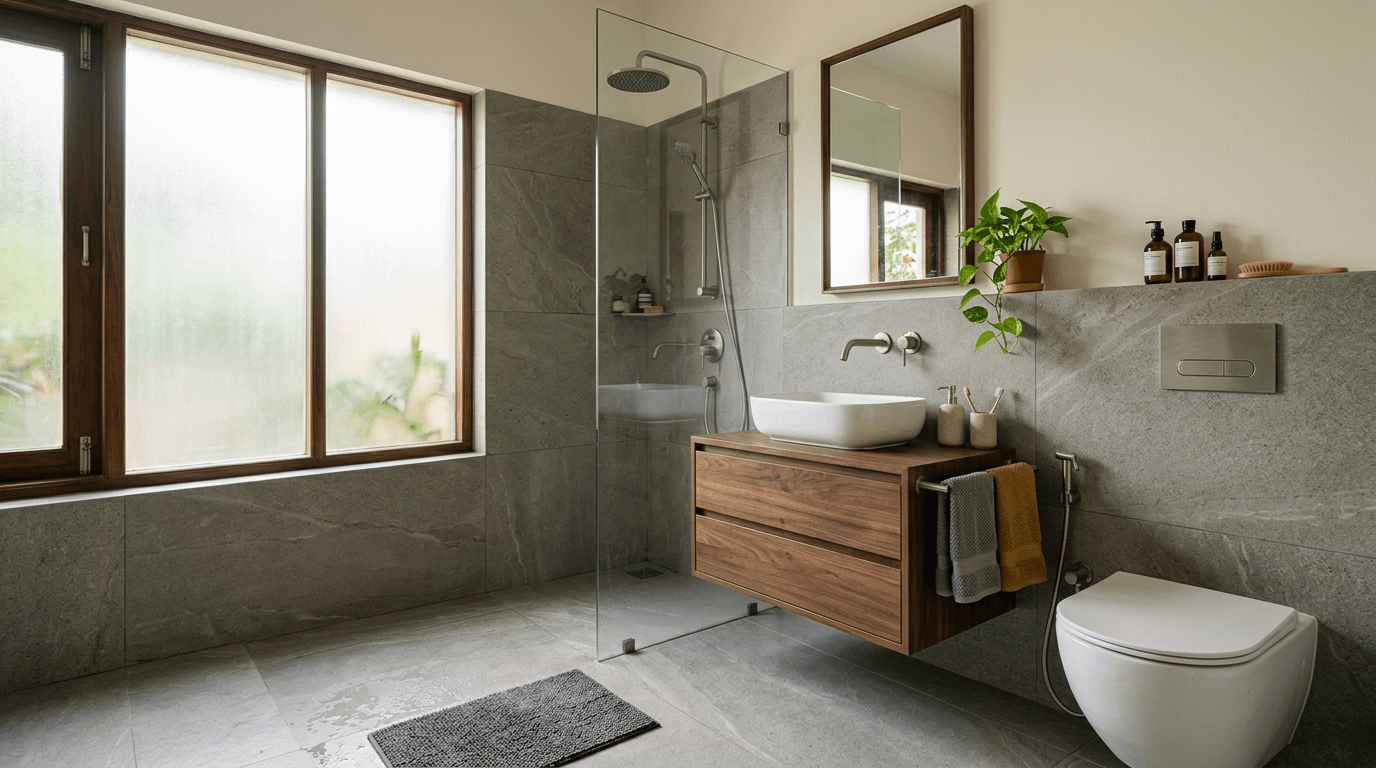
1. Large-Format Matte Grey Stone-Look
One 2x4 ft tile replaces six small ones. Fewer grout lines, calmer floor, easier cleaning. Matte grey hides water spots between mop days, which is why large-format tiles are our default for family bathrooms.
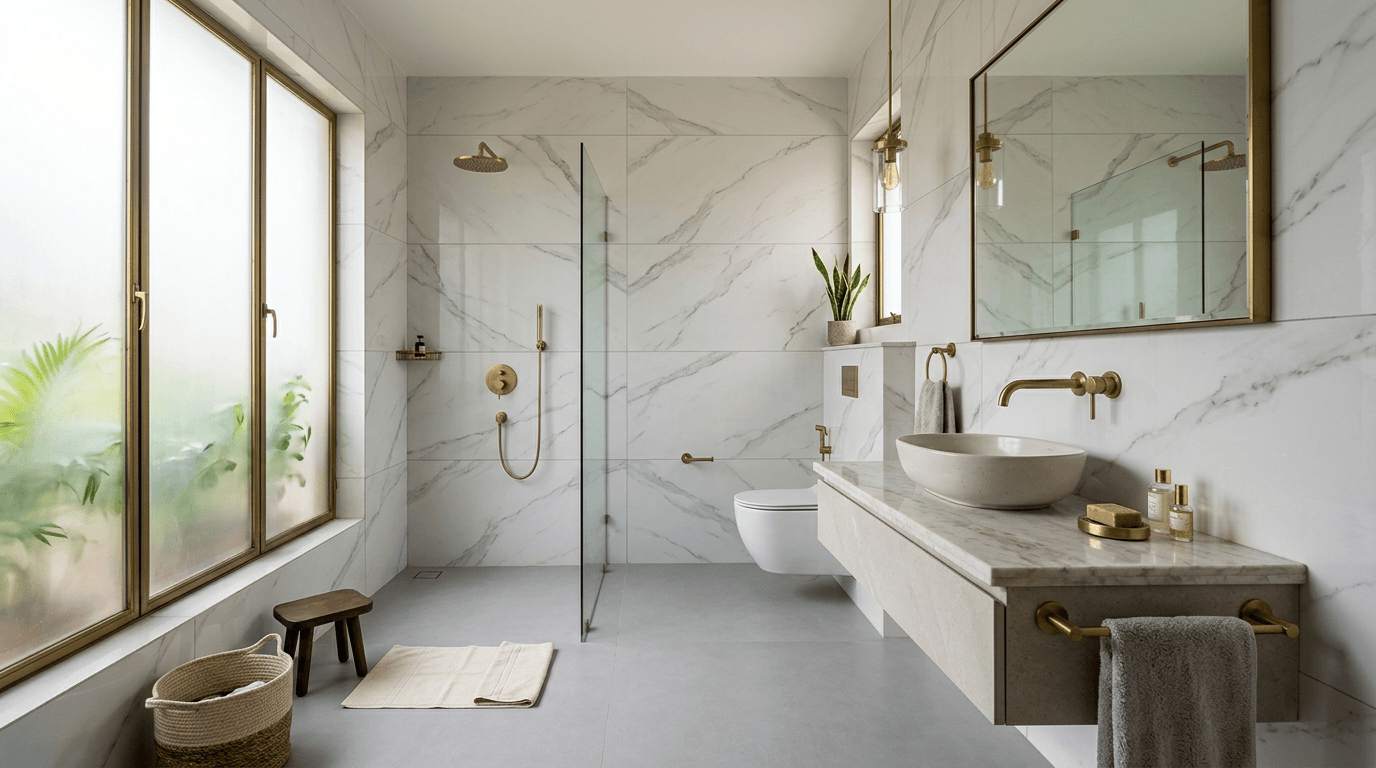
2. Marble-Look Glazed Vitrified Tiles
Real marble tiles stain and etch in Indian hard water. Glazed vitrified marble-look tiles give the veining without the maintenance, at a fraction of the cost per sq ft.
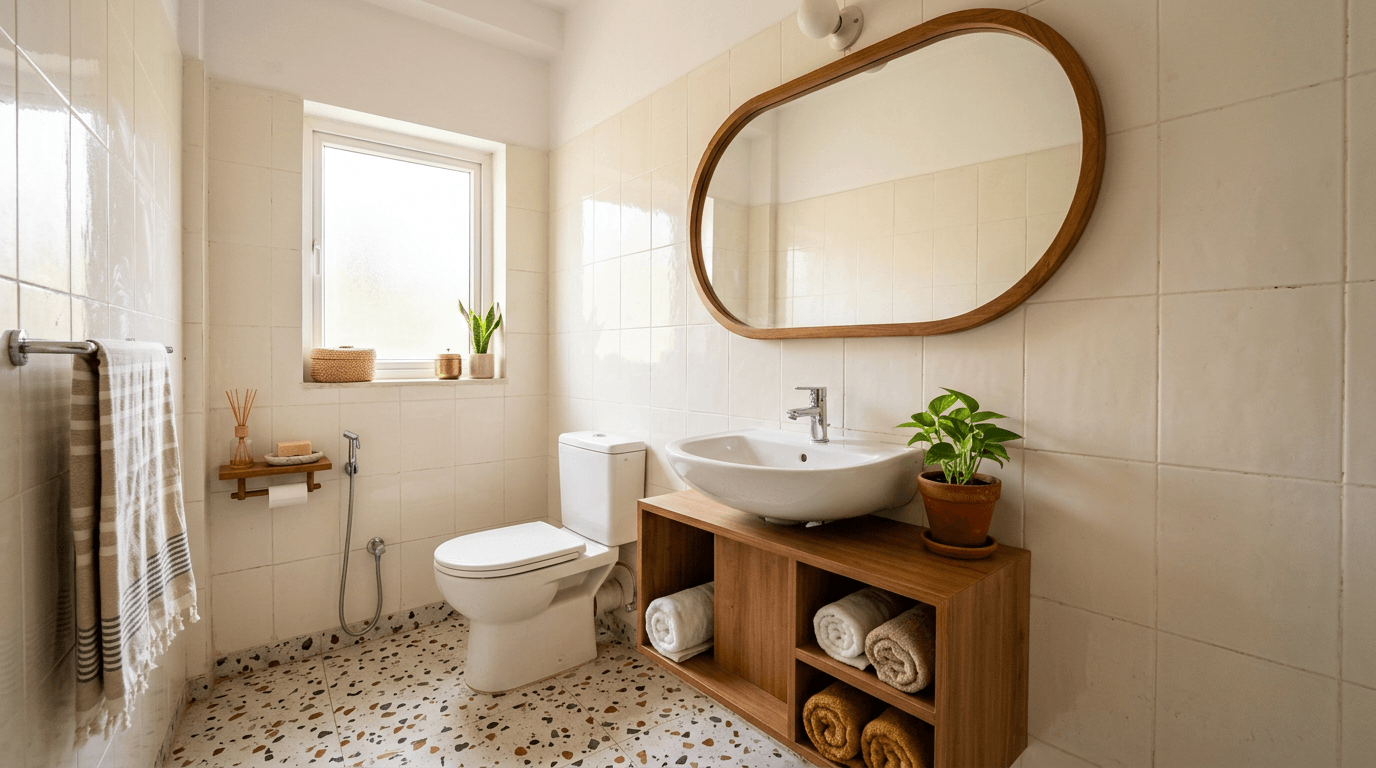
3. Terrazzo Tiles With Multicolour Chips
Terrazzo tiles are the friendliest trend for Indian bathrooms: the speckled surface hides everything — water spots, dust, the odd hair. Pick chips that echo your wall colour.
4. Chevron-Laid Walls
Chevron turns a plain rectangular tile into a directional pattern that pulls the eye upward. Best on the wall behind the vanity, in one colour, so the geometry does the talking.
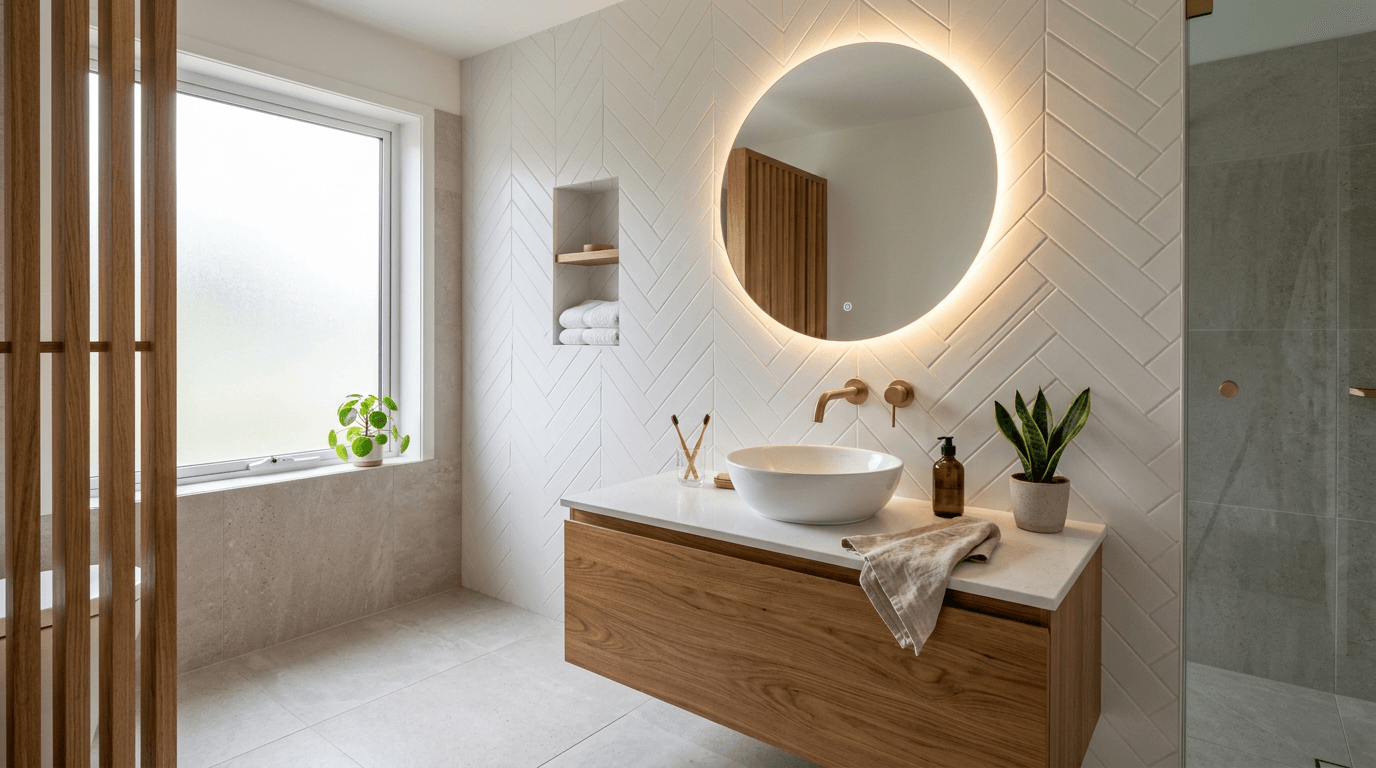
5. Herringbone Subway Tile
The classic subway tile, rotated 45 degrees. Herringbone adds craft to a budget tile; labour cost rises a little, material cost doesn't. Dark grout keeps it practical.
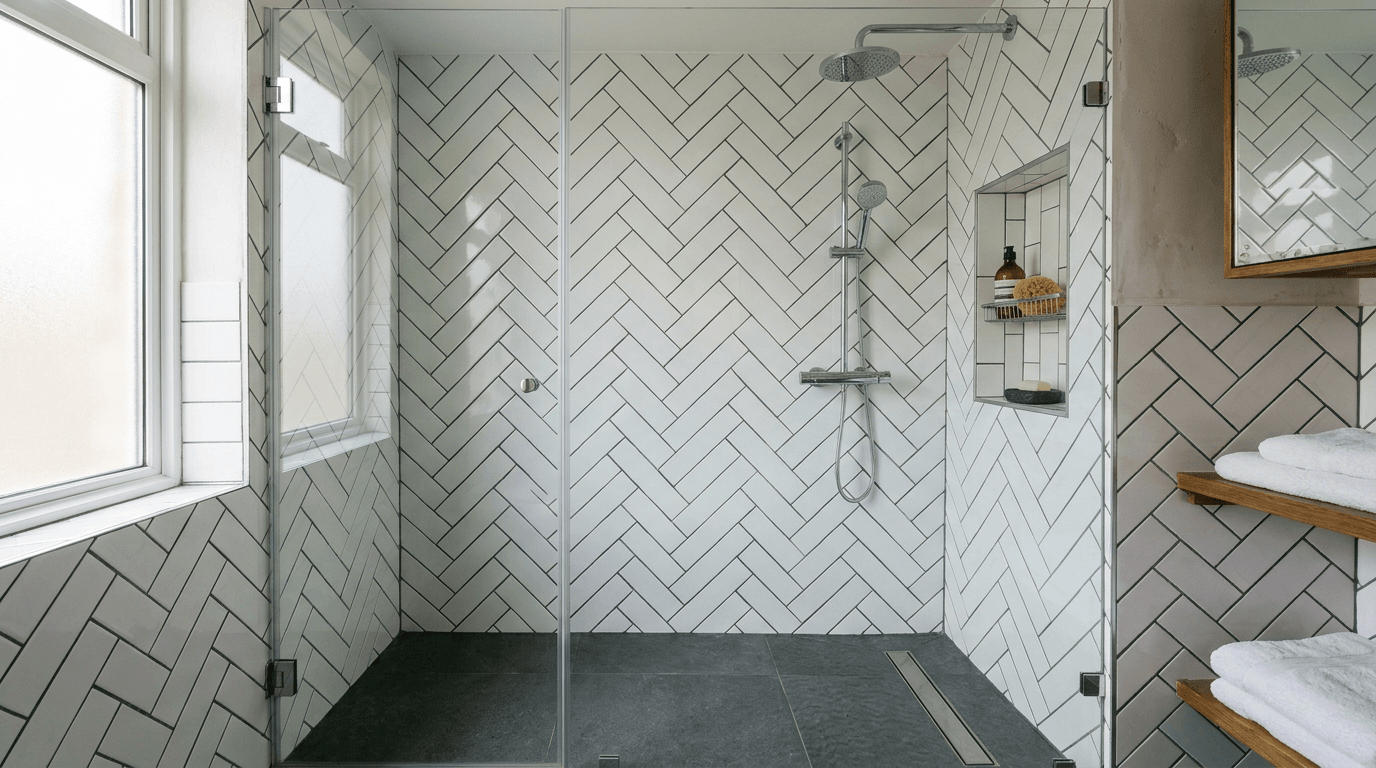
6. Fluted Ceramic Wall Tiles
Ribbed, fluted surfaces are 2026's texture of choice. These textured tiles catch side-light beautifully and make even a white bathroom feel layered. Keep them out of direct splash zones, though — grooves collect scale.
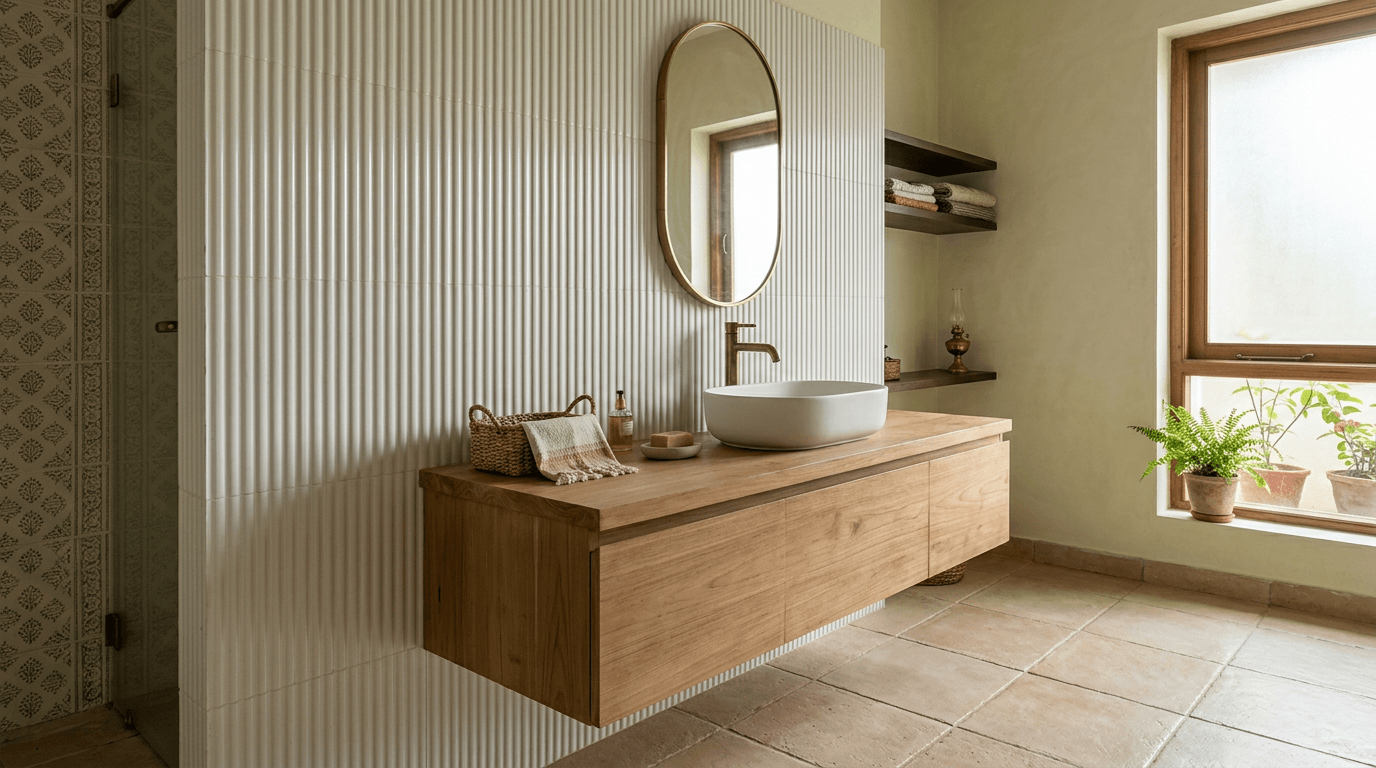
7. Zellige-Look Glazed Tiles
Handmade-look glaze with tiny surface ripples, every tile slightly different. Zellige-style walls give your bathroom the character that machine-perfect tiles can't.
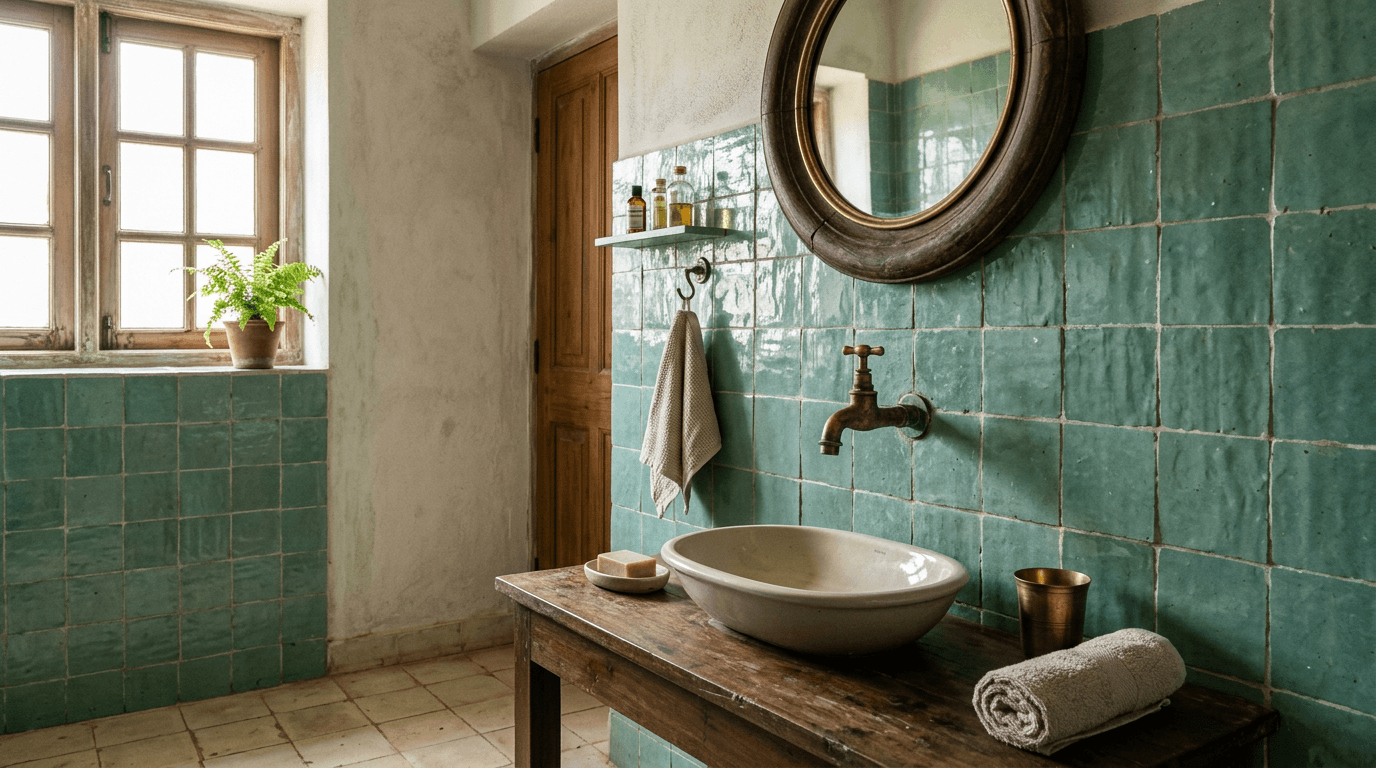
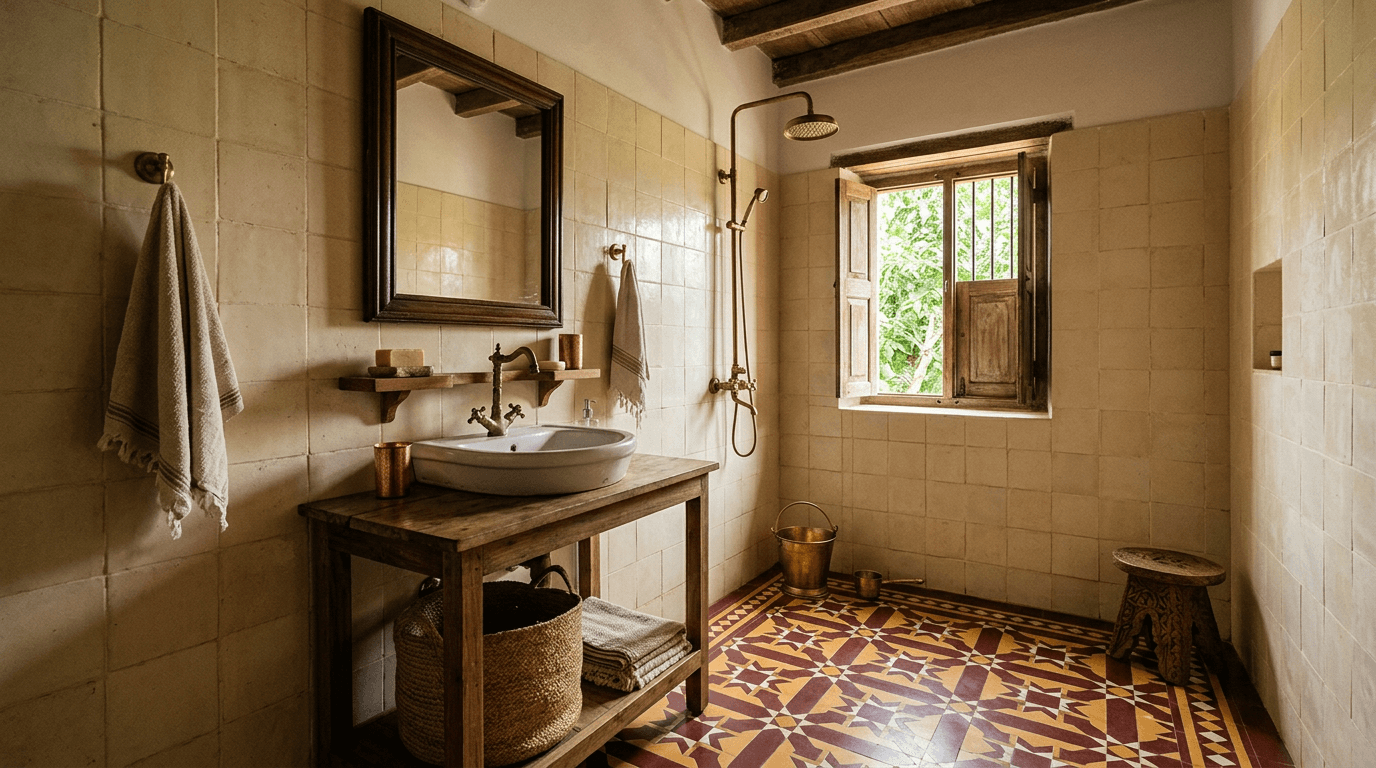
8. Athangudi-Inspired Patterned Tiles
Heritage patterned tiles from Tamil Nadu's Athangudi tradition, reinterpreted in vitrified form for wet areas. One patterned floor, plain everything else — that's the rule.
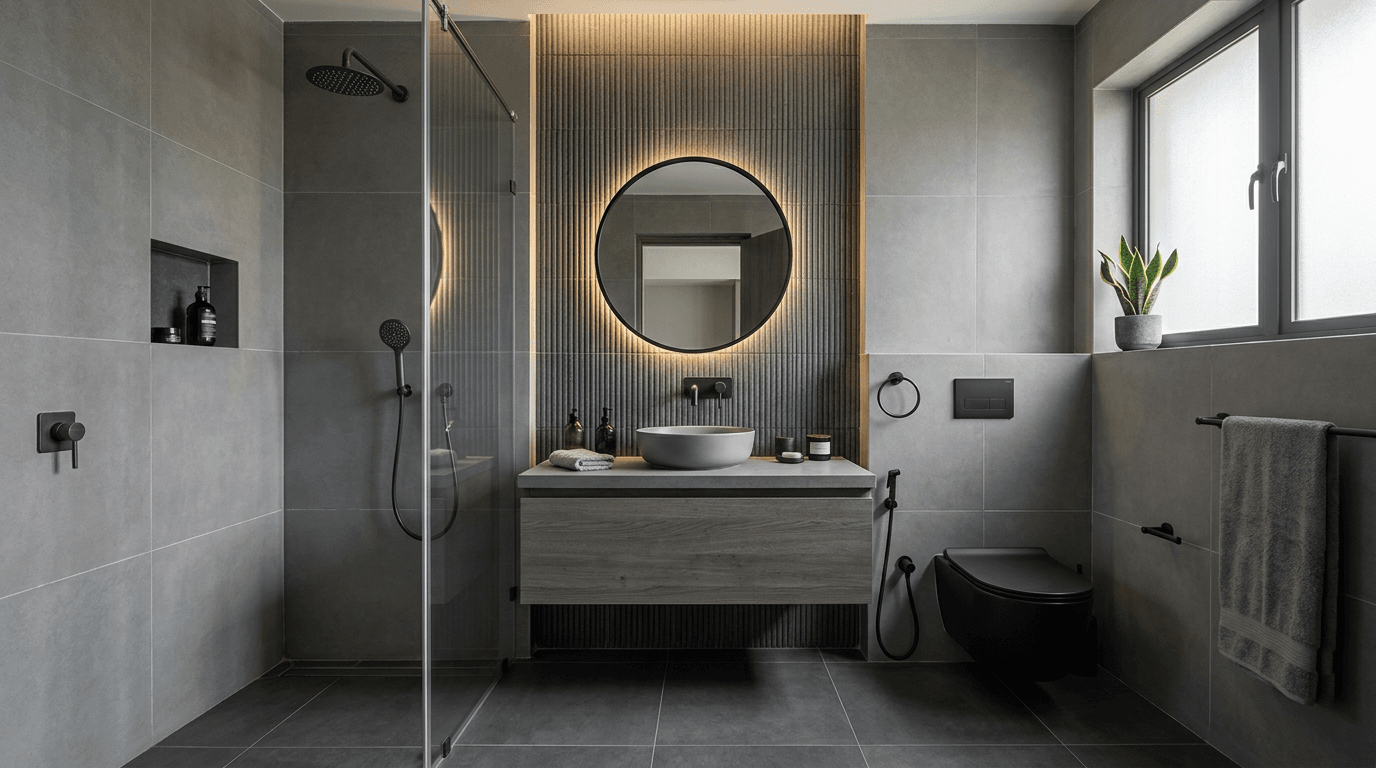
9. Monochrome Grey-on-Grey
One grey family, three finishes: matte floor, satin walls, textured feature strip. Monochrome layering reads expensive without a single "expensive" tile. It's the modern bathroom tile formula we reuse most.
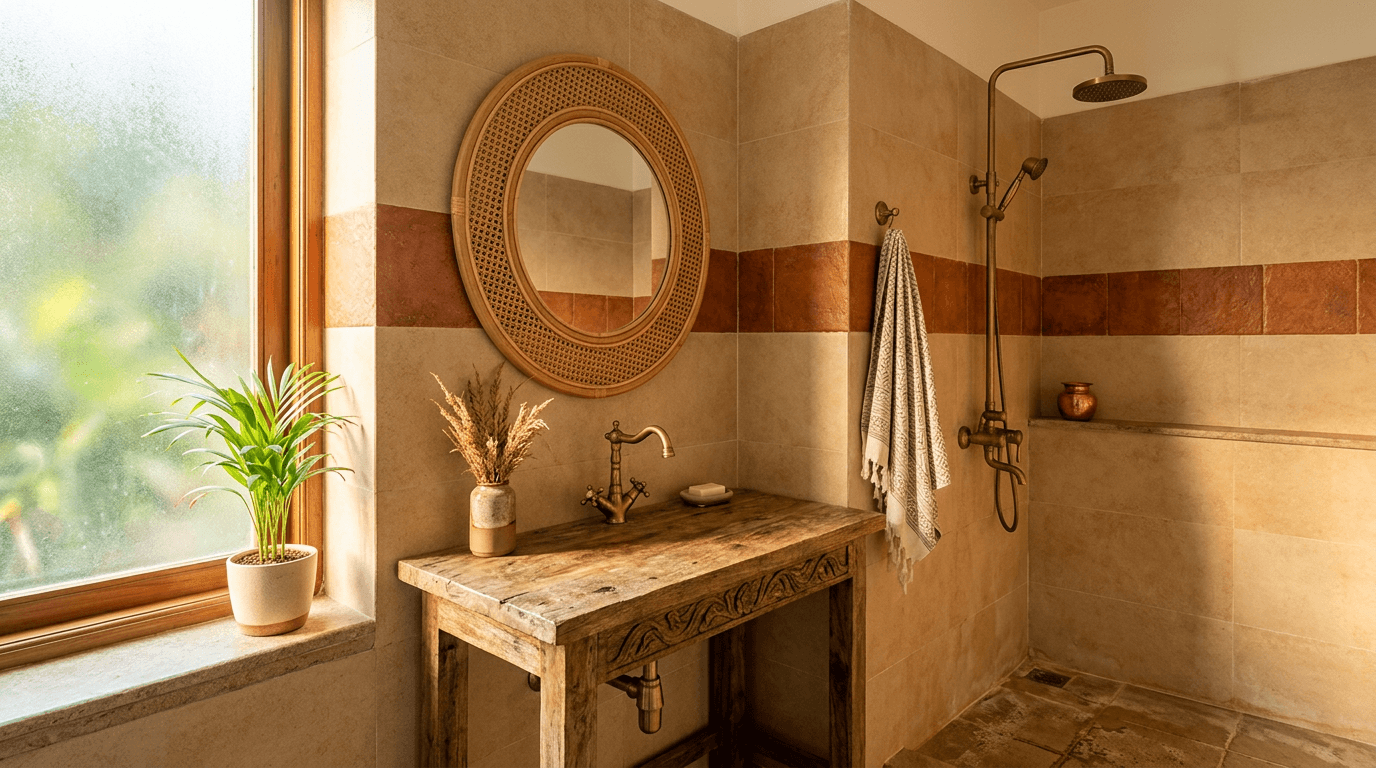
10. Earthy Beige and Rust
Warm neutrals are replacing clinical white in modern bathroom design. Beige walls with a rust or terracotta band feel grounded, and both shades are champions at hiding hard-water marks.
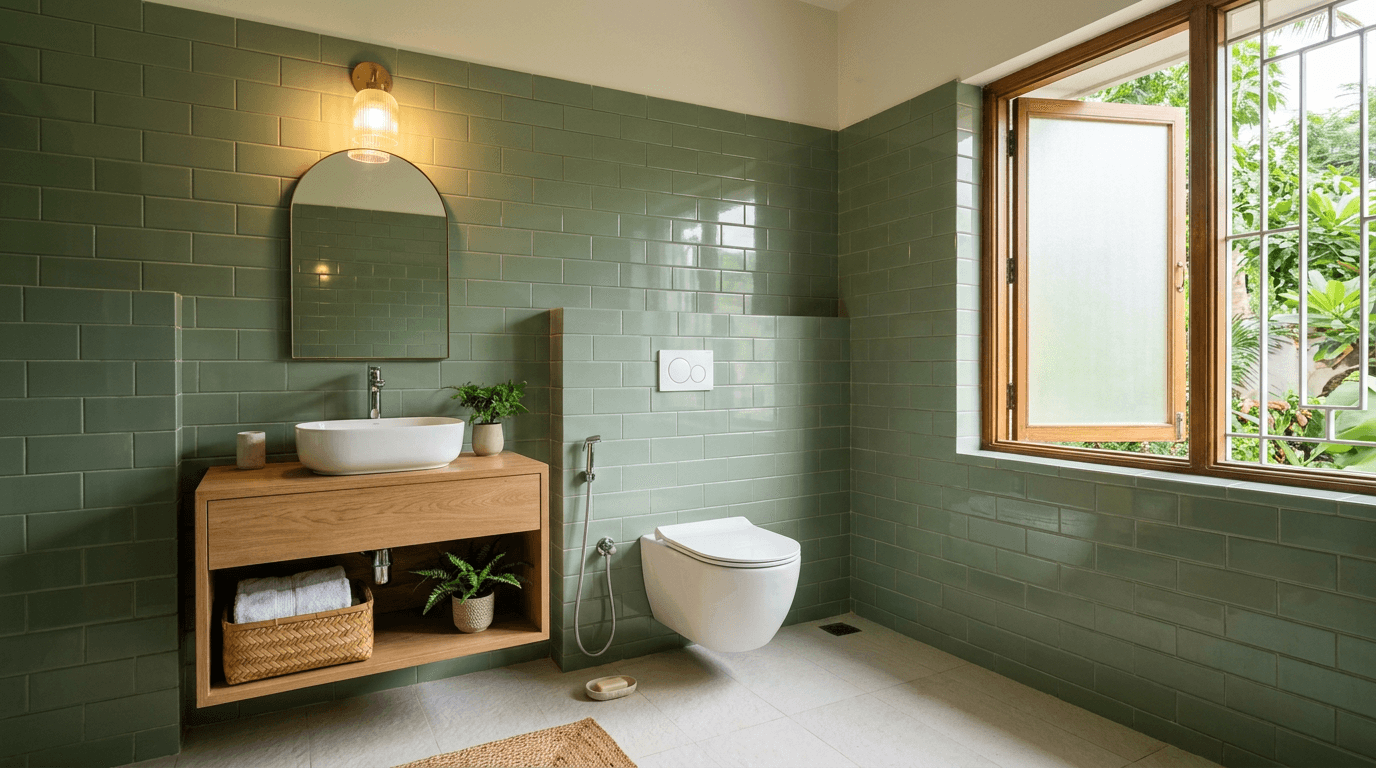
11. Sage Green Ceramic Walls
The colour of 2026. Sage green ceramic tiles pair with white sanitaryware, wood vanities, and brass taps equally well. Hard to get wrong, easy to love.
12. Textured Slate-Look Anti-Skid Tiles
For homes with elders, this is our first recommendation: slate-textured porcelain with genuine R11 grip, in charcoal or forest tones. Safety that doesn't look like a hospital.
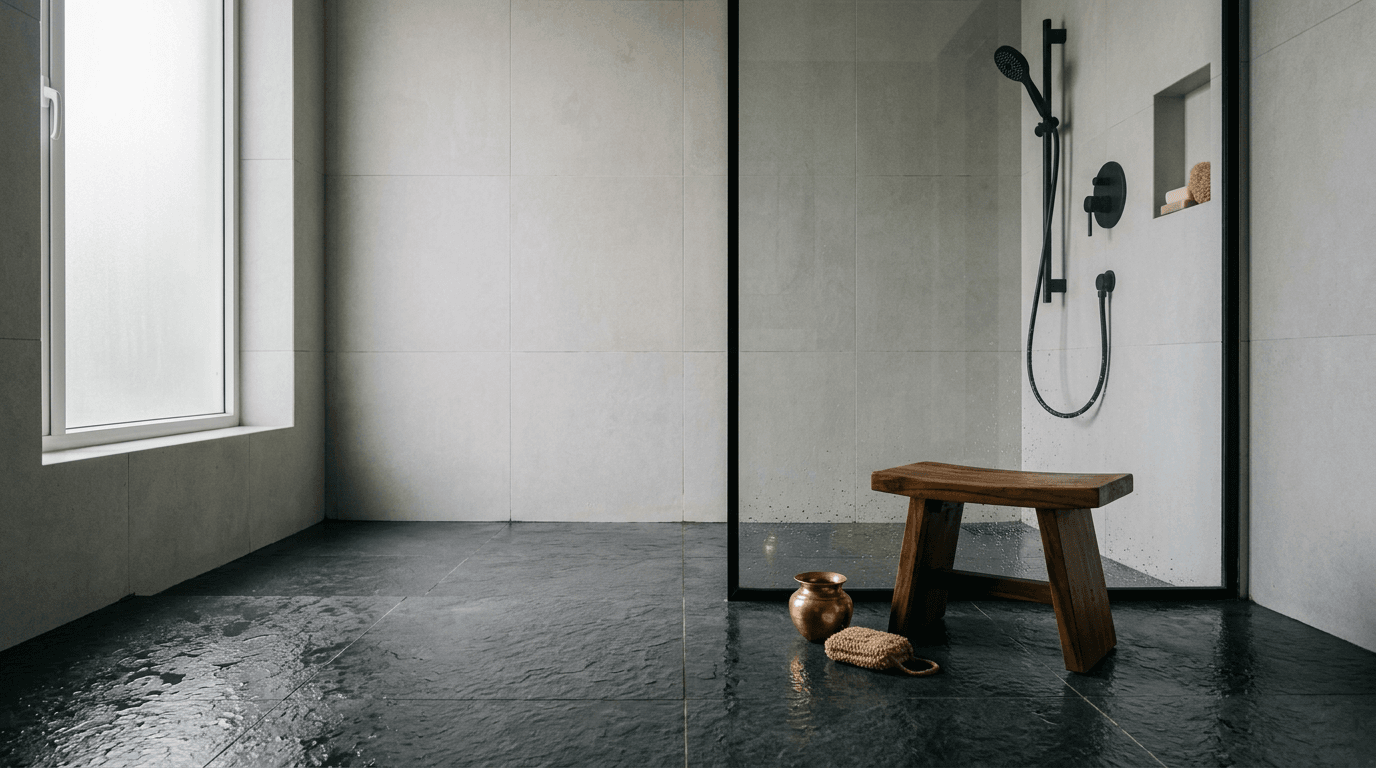
13. Mosaic Shower Accent
Mosaic tiles across a full bathroom feel busy; across one shower wall they feel like jewellery. Sheet-mounted mosaics also grip well on shower floors.
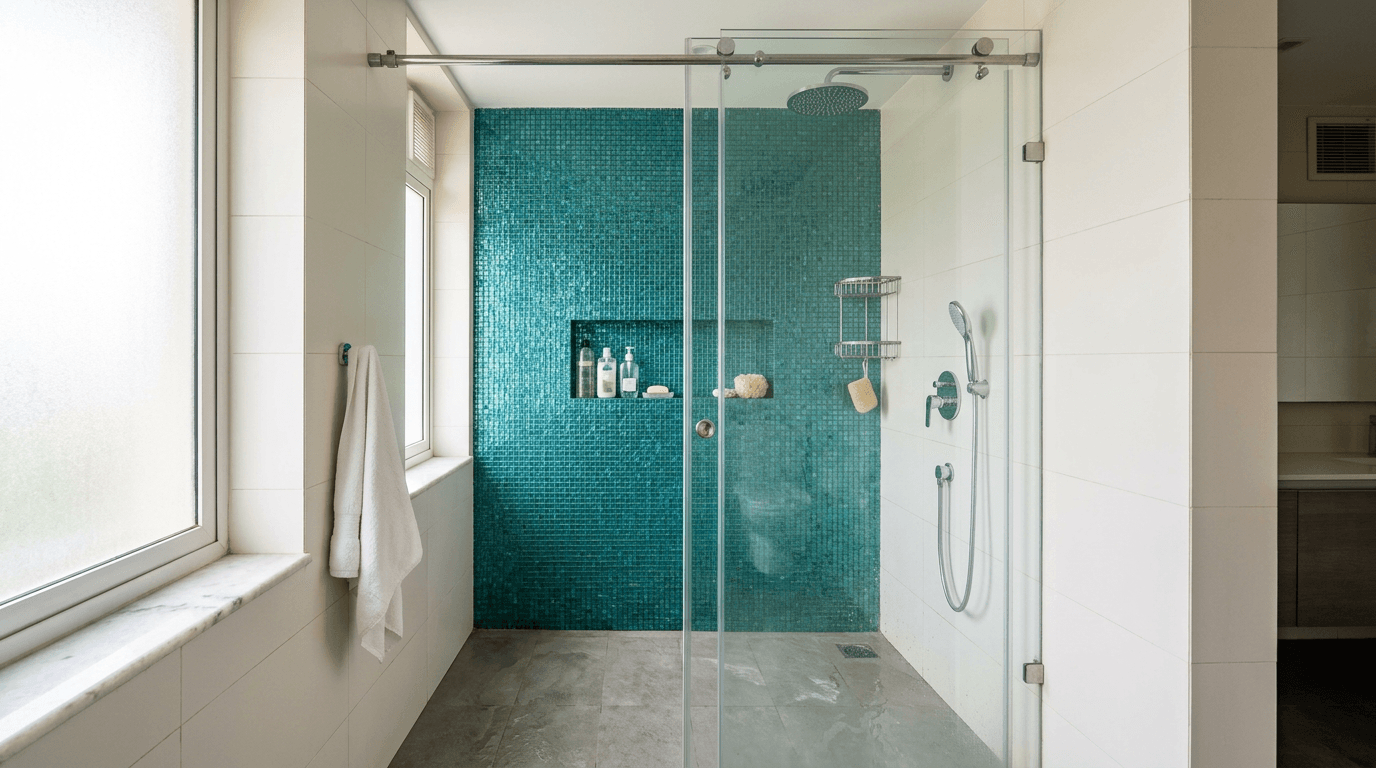
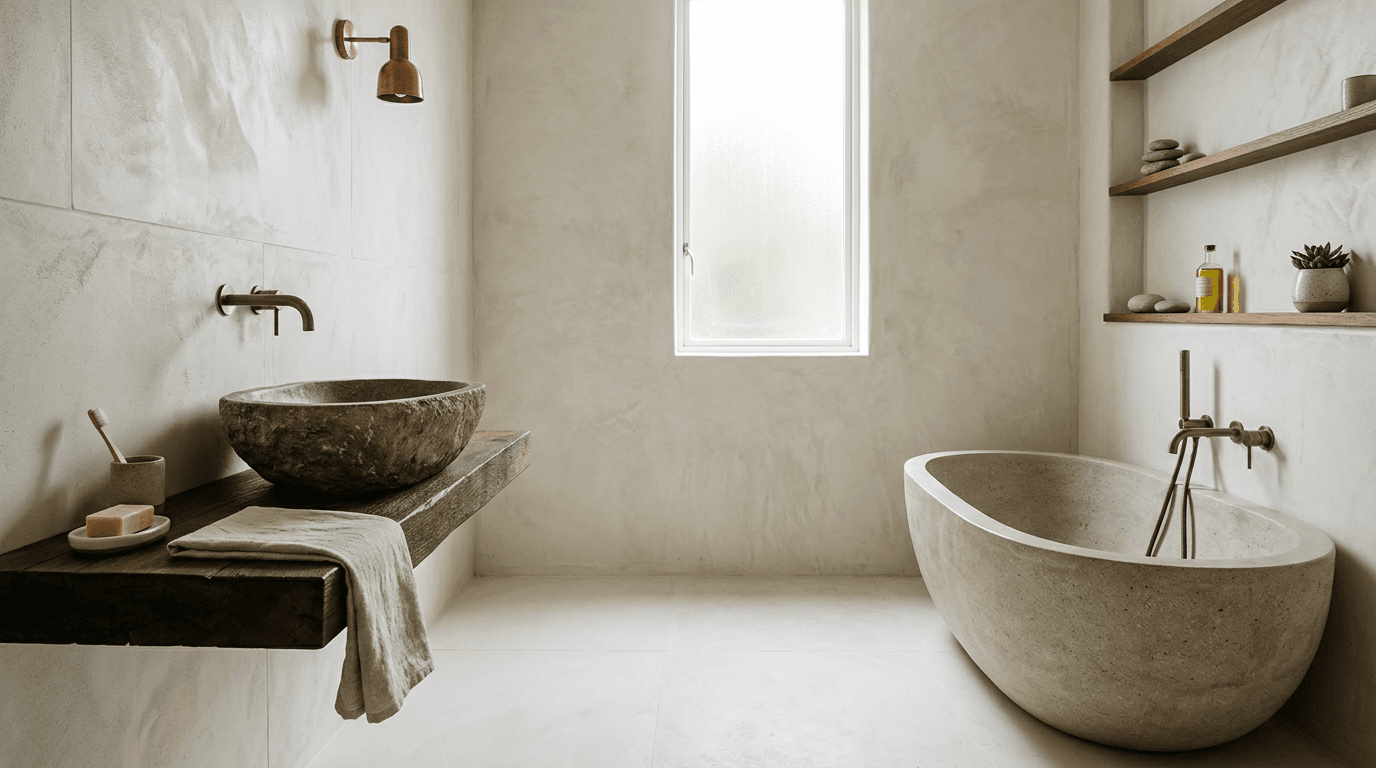
14. Off-White Lime-Plaster-Look
Soft, chalky, seamless. Off-white tiles with a lime-plaster texture give the spa look without microcement's cost or its cracking risk in Indian humidity.
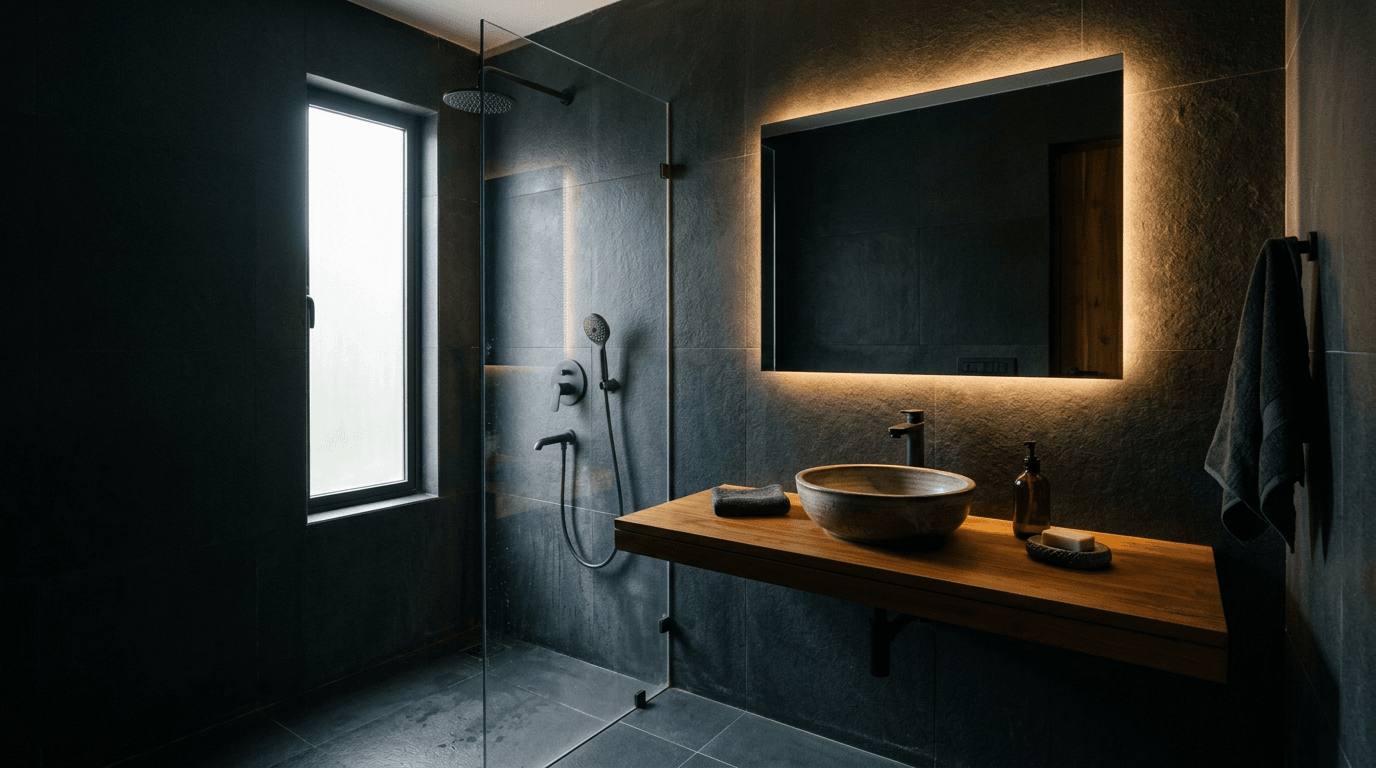
15. Dark Charcoal Contemporary Bathroom
Charcoal walls, matte black fittings, warm wood accents. A dark contemporary bathroom photographs dramatically and hides stains; just add a bright mirror light so shaving isn't guesswork.
Anti-Skid Ratings: The Number That Prevents Falls
Every floor tile sold in India carries (or should carry) a slip-resistance "R" rating. Most shoppers never ask for it. Ask for it — wet bathroom floors are where most home falls happen.
| Rating | Grip Level | Where It Belongs |
|---|---|---|
| R9 | Basic | Dry areas only — bedrooms, living rooms |
| R10 | Moderate | Bathroom dry zones, kitchens |
| R11 | High | Bathroom wet zones, shower floors |
| R12–R13 | Very high | Pool decks, ramps, utility wet areas |
Two more numbers worth checking: water absorption (under 0.5% for vitrified tiles and porcelain tiles — they barely drink water, so they don't stain or harbour bacteria) and the PEI wear rating (PEI 3+ handles family foot traffic). Glossy tiles on the floor are the single most common mistake we correct in bathroom renovation projects. They look stunning on day one and become a skating rink the first time soap hits them. Keep the floor matte; save the shine for walls.
Wall and Floor Tiles: Size, Finish & Pairing Rules
Wall tile and floor tile have different jobs. Floors need grip, walls need wipeability. That's why the best bathroom tile design ideas mix finishes deliberately:
- Finish: matte or textured tiles on the floor, glossy or satin on the bathroom wall.
- Size: larger tiles on the floor (12x24 in or bigger), equal or smaller on walls. Small tiles on the floor mean more grout to blacken.
- Tone: keep the floor equal to or darker than the walls; it grounds the bathroom space and hides staining.
- Pattern budget: one patterned surface per bathroom. A patterned floor with plain walls, or one feature wall with a plain floor. Never both.
10 Wall and Floor Tiles Combinations That Work
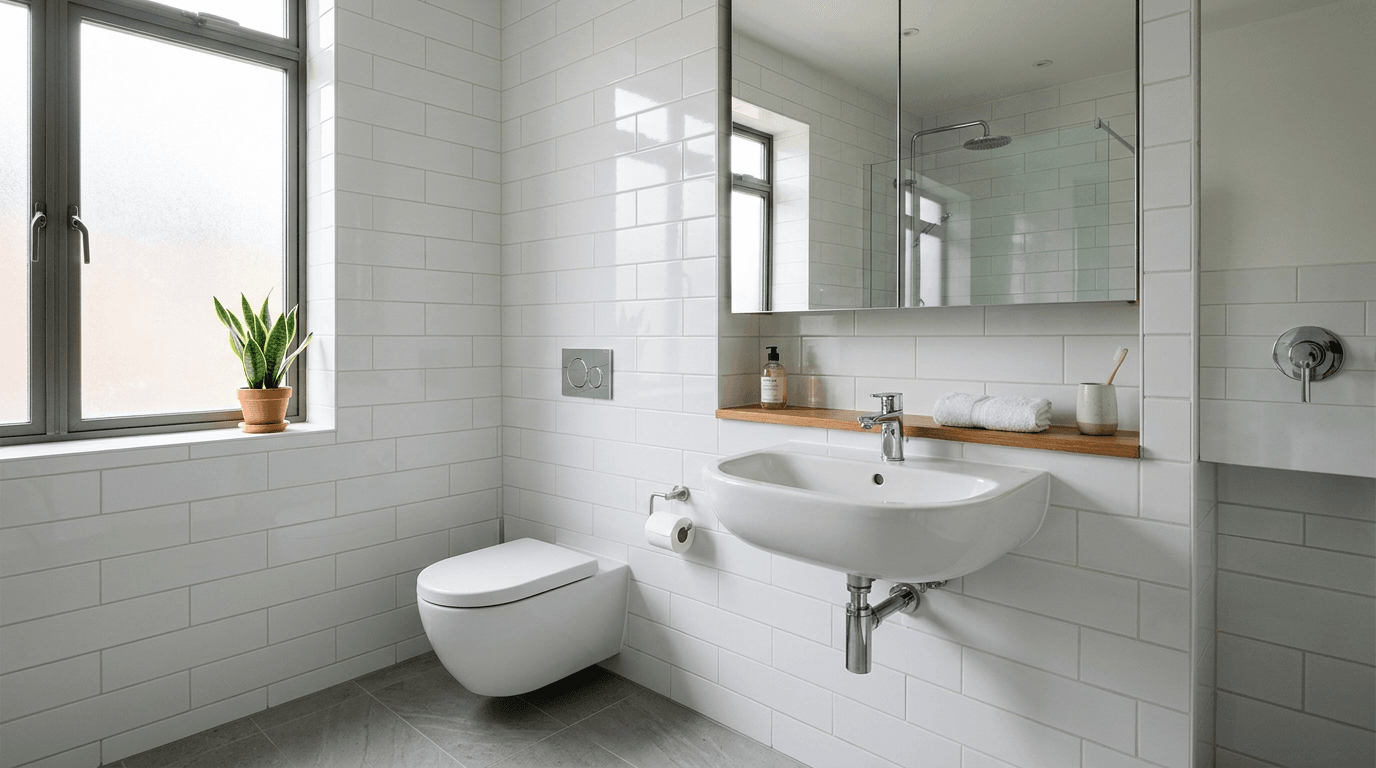
16. Glossy White Walls + Matte Grey Floor
The default that never fails. White tiles bounce light around; the grey floor hides watermarks and grips underfoot. Cheap, safe, timeless — the most popular bathroom pairing in India for good reason.
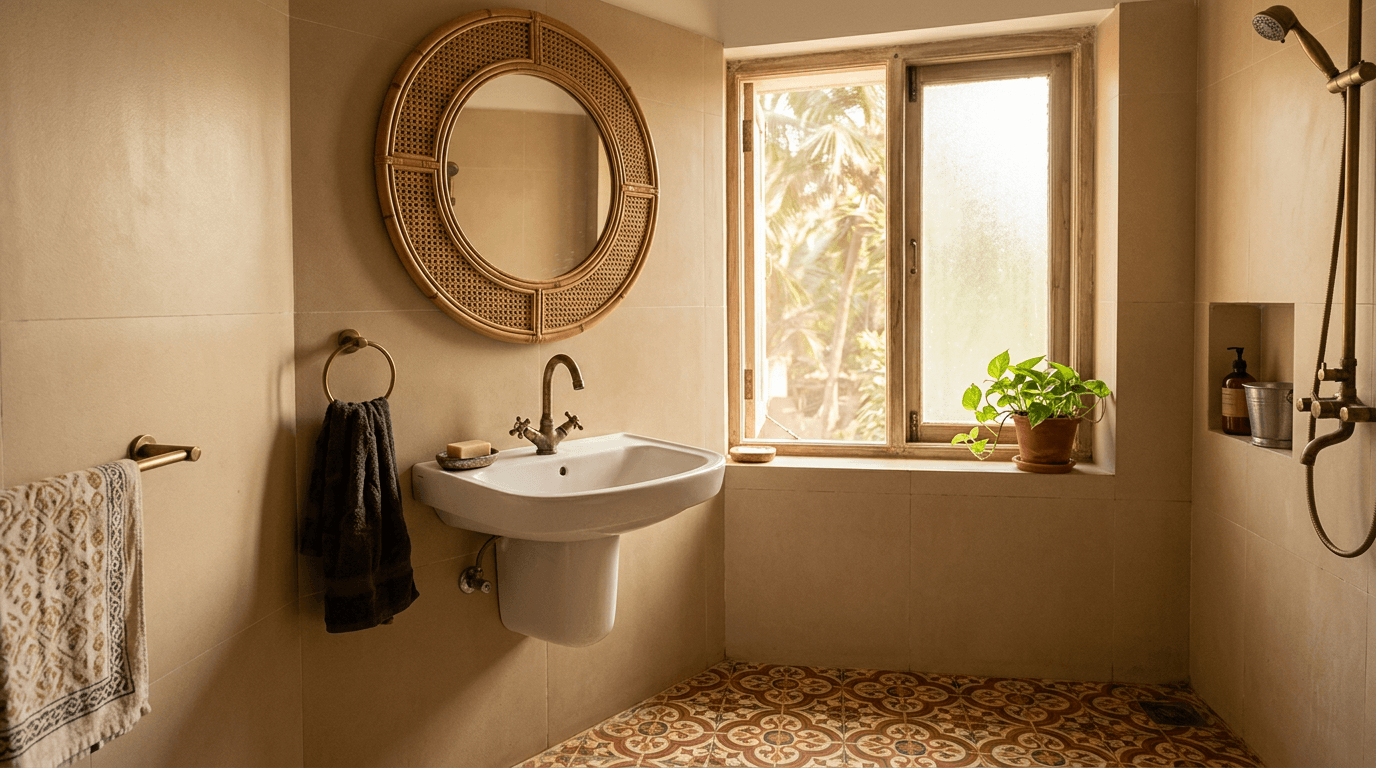
17. Sand Walls + Terracotta Patterned Floor
Warm and rooted. Plain sand-toned walls let a terracotta patterned floor carry the room. Works beautifully with cane mirrors and brass taps.
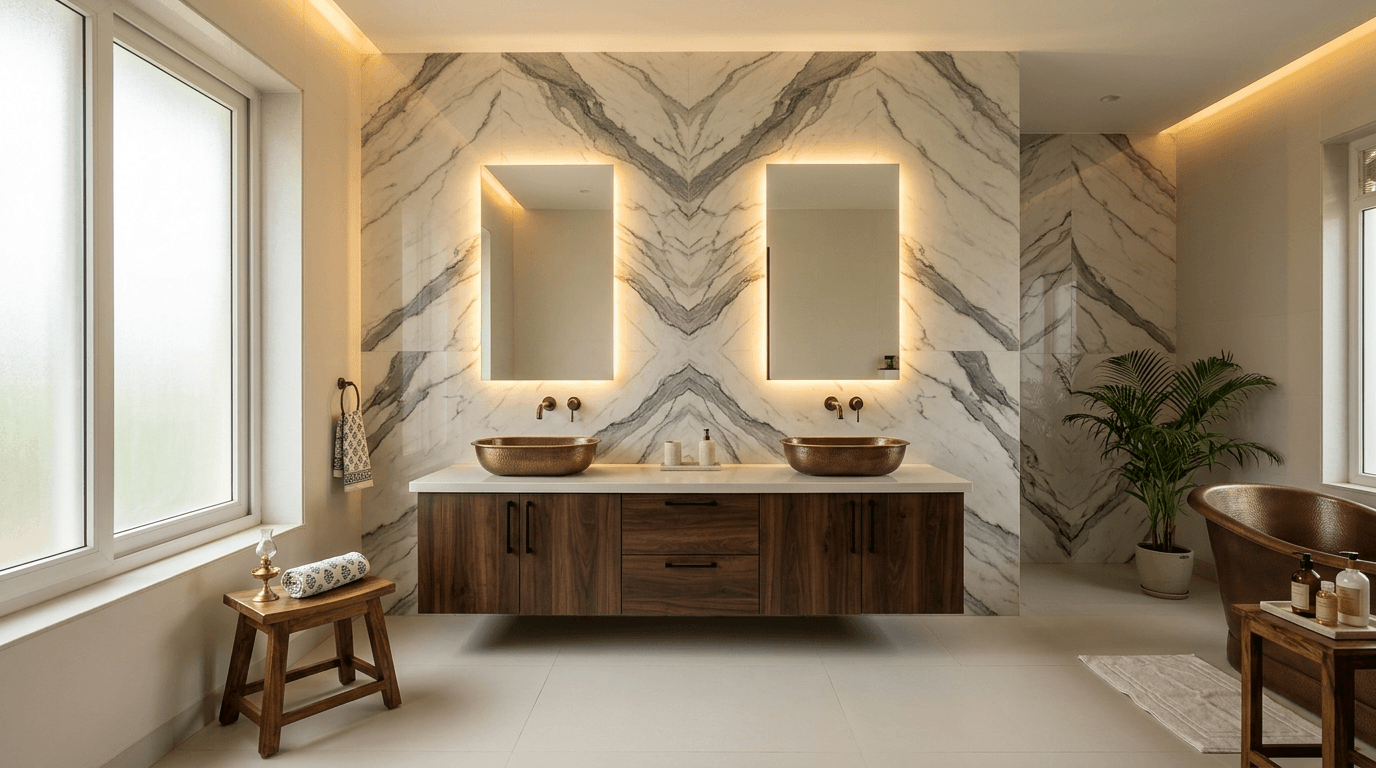
18. Bookmatched Marble Feature Wall + Plain Floor
Bookmatched marble-look slabs, veining mirrored across two tiles, make one dramatic feature wall behind the vanity or tub. Everything else stays quiet: off-white matte floor, plain side walls.
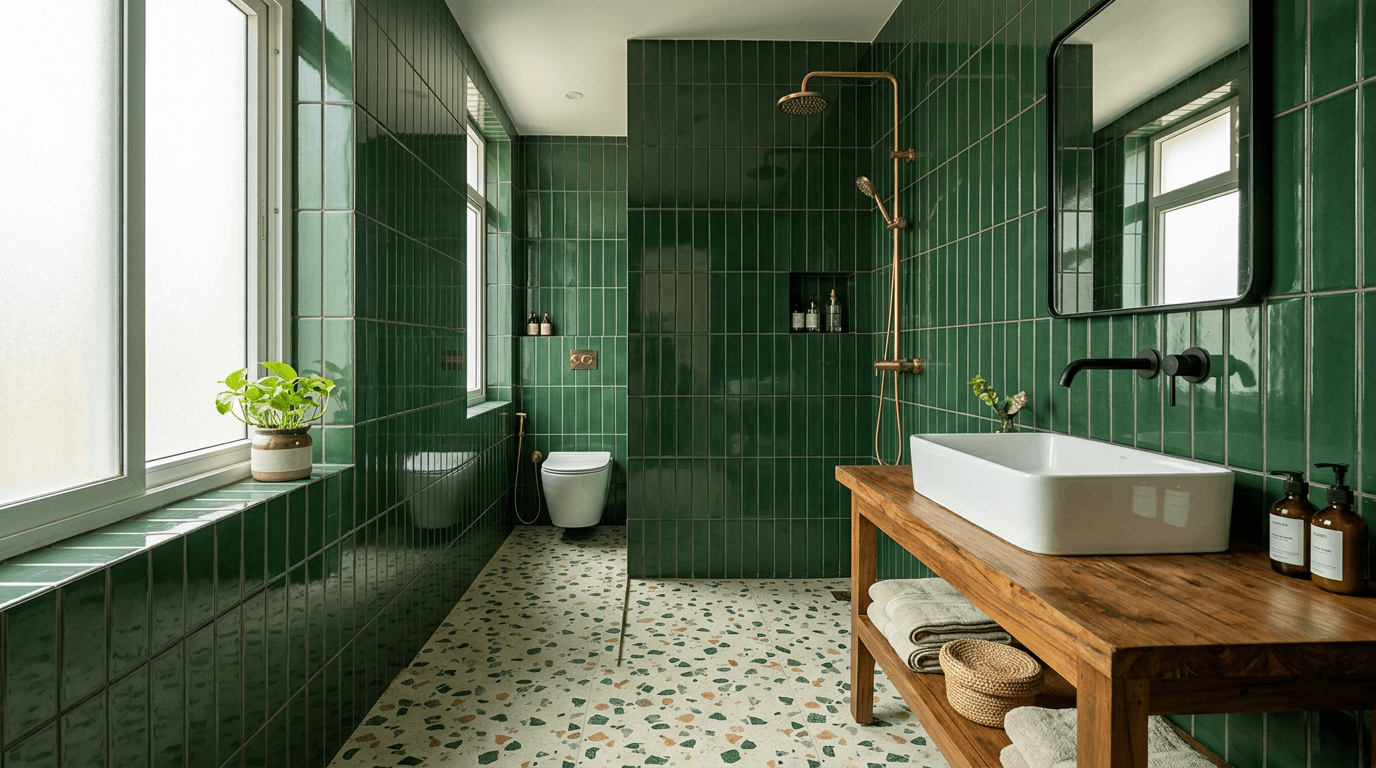
19. Vertical-Stacked Green Walls + Terrazzo Floor
Vertical stacking lifts the ceiling; terrazzo grounds the floor and repeats the wall colour in its chips. A floor and wall combination that looks custom-designed because it is.
20. Half-Height Tile + Paint Above
Tile to 4 ft, moisture-resistant paint above. Cuts tile cost nearly in half in the dry zone and adds a colour layer tiles can't. Keep full-height tile in the shower.
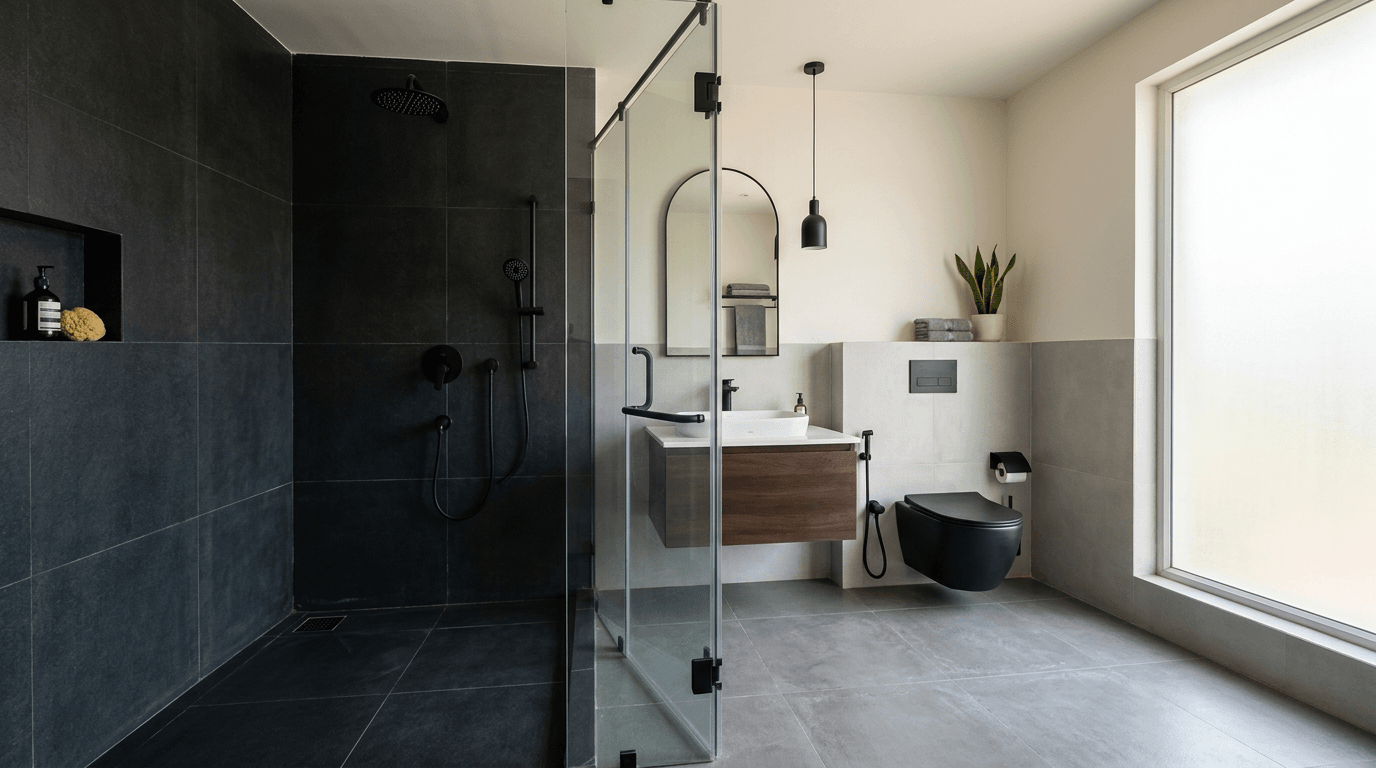
21. Charcoal Wet Wall + Light Grey Dry Zone
Zone the bathroom with tone: charcoal tiles wrap the shower, light grey handles the rest. The contrast marks the wet zone visually, which is genuinely useful in doorless layouts.
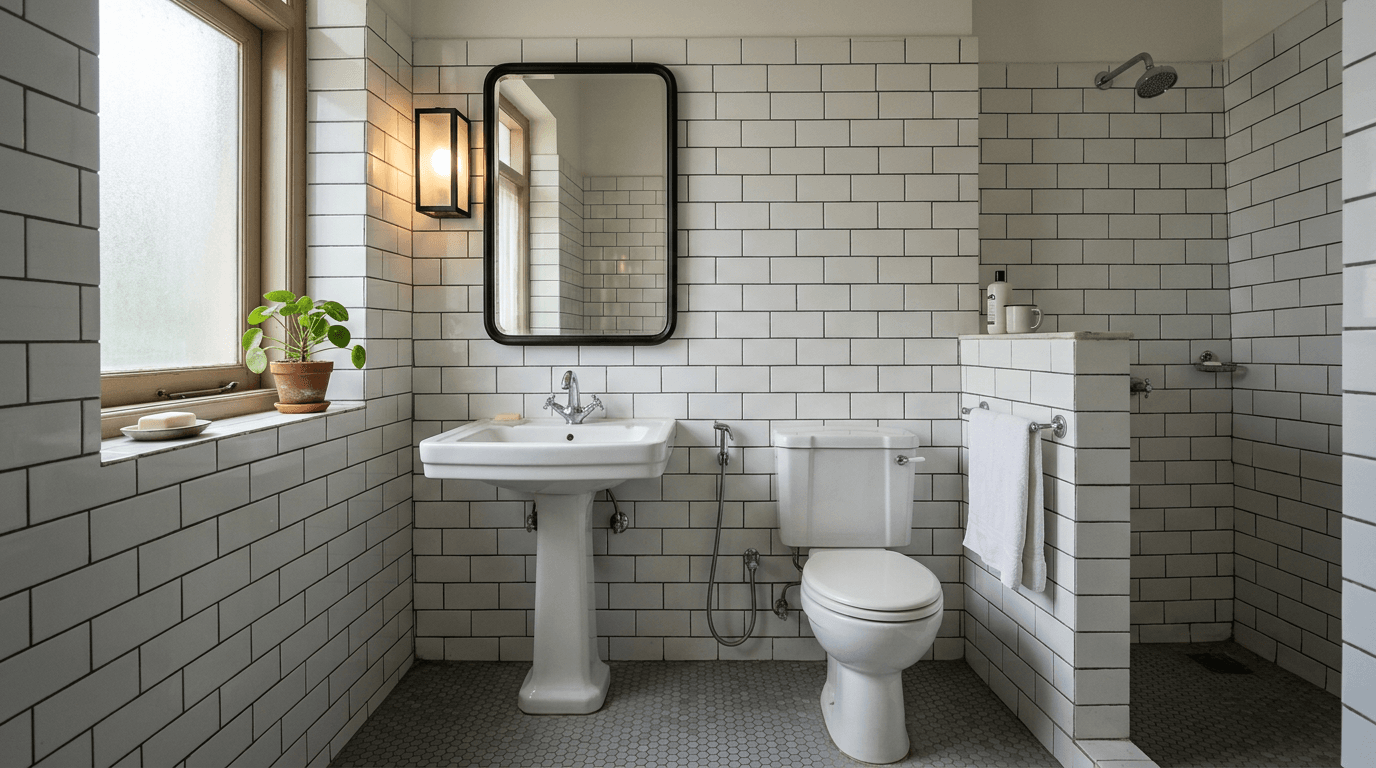
22. Subway Walls + Hexagon Mosaic Floor
White subway with dark grout up top, small hexagon mosaic below. The many grout joints of a mosaic floor actually add grip. The honest budget-safe combination.
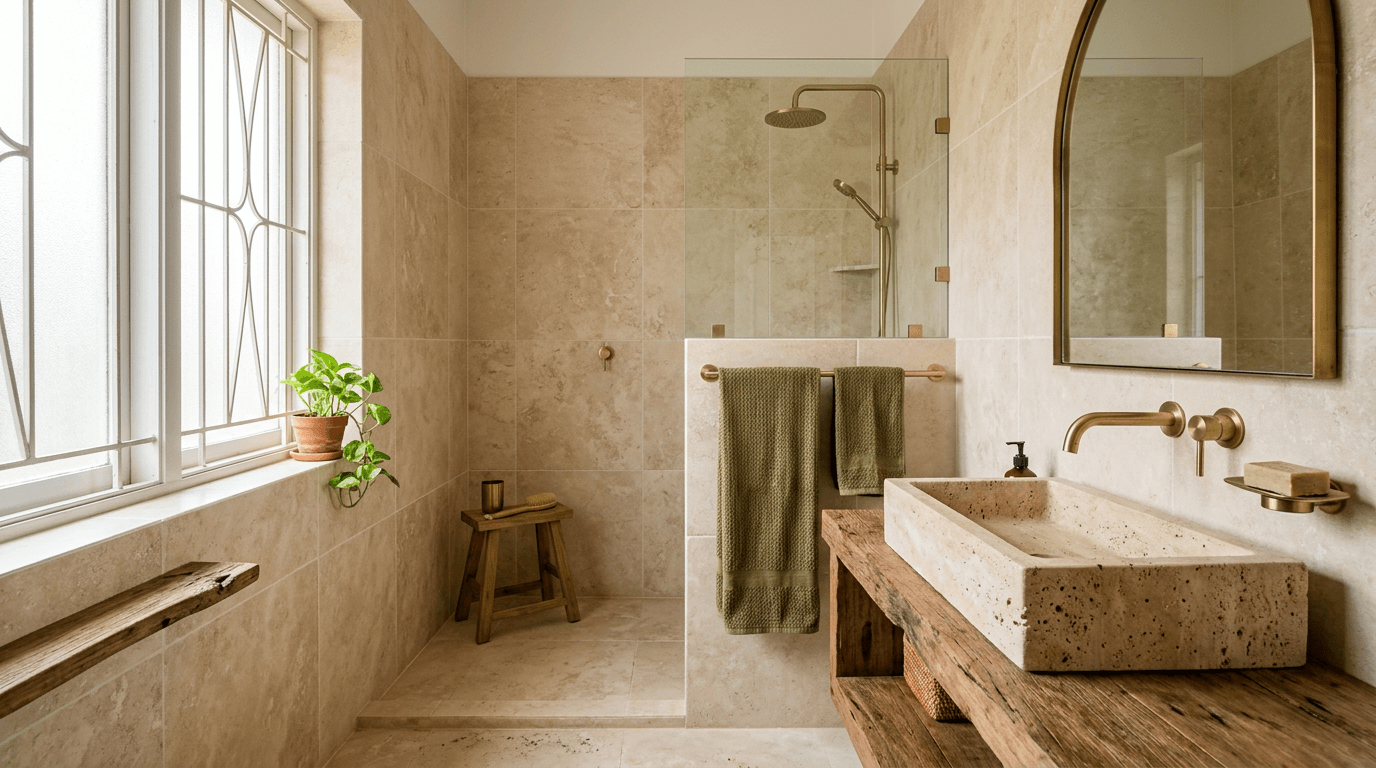
23. Tonal Travertine-Look, Walls and Floor
One travertine-look tile family across the wall and floor: matte below, honed sheen above. Seamless, warm, and very 2026. Use contrasting towels so the room doesn't flatten.
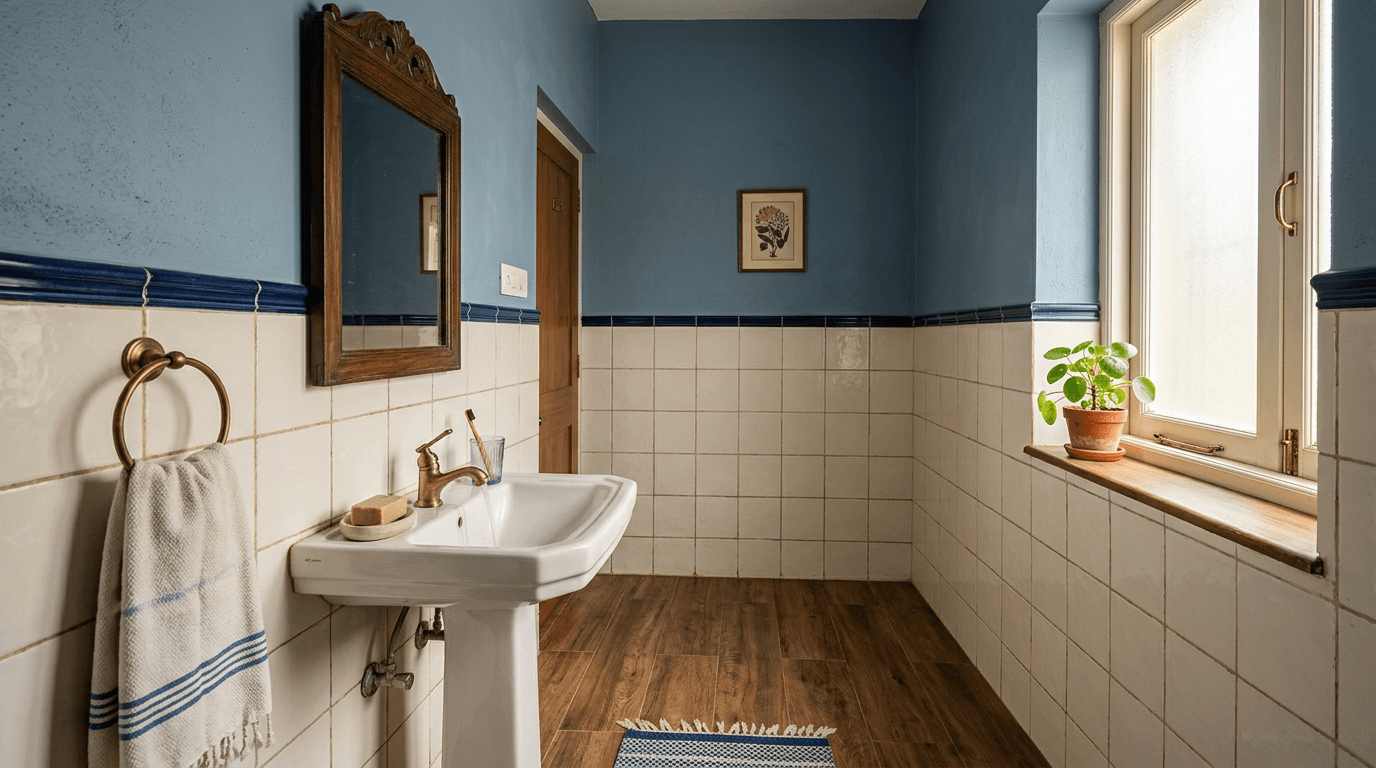
24. Patterned Blue Dado + Warm Off-White Floor
A patterned blue dado band at waist height over plain white walls, with warm off-white tiles on the floor. Heritage character, modern maintenance.
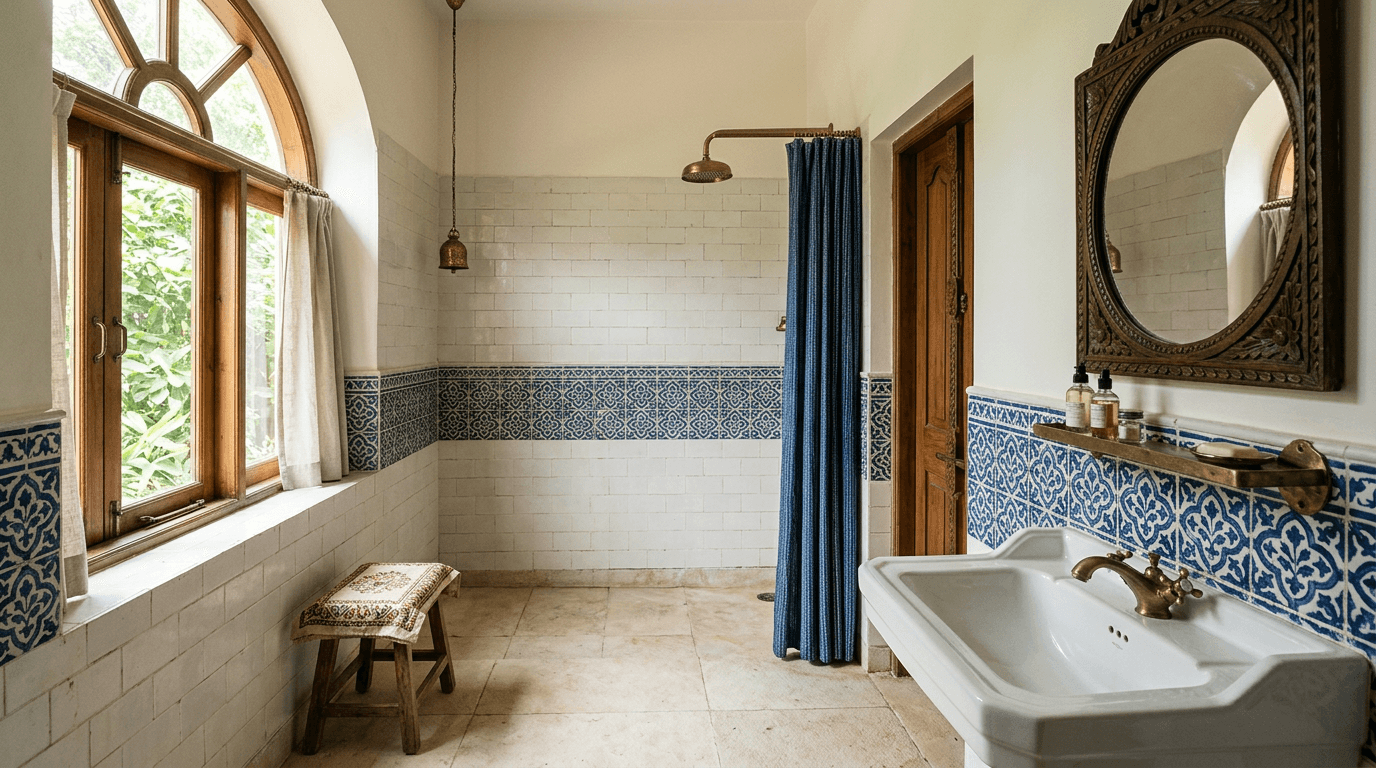
25. Stone-Look Vanity Wall + Neutral Everything
Full-height stone-look tile on the wall behind the vanity only; the wall behind the mirror becomes the room's backdrop in every photo. Neutral tiles elsewhere keep the budget sane.
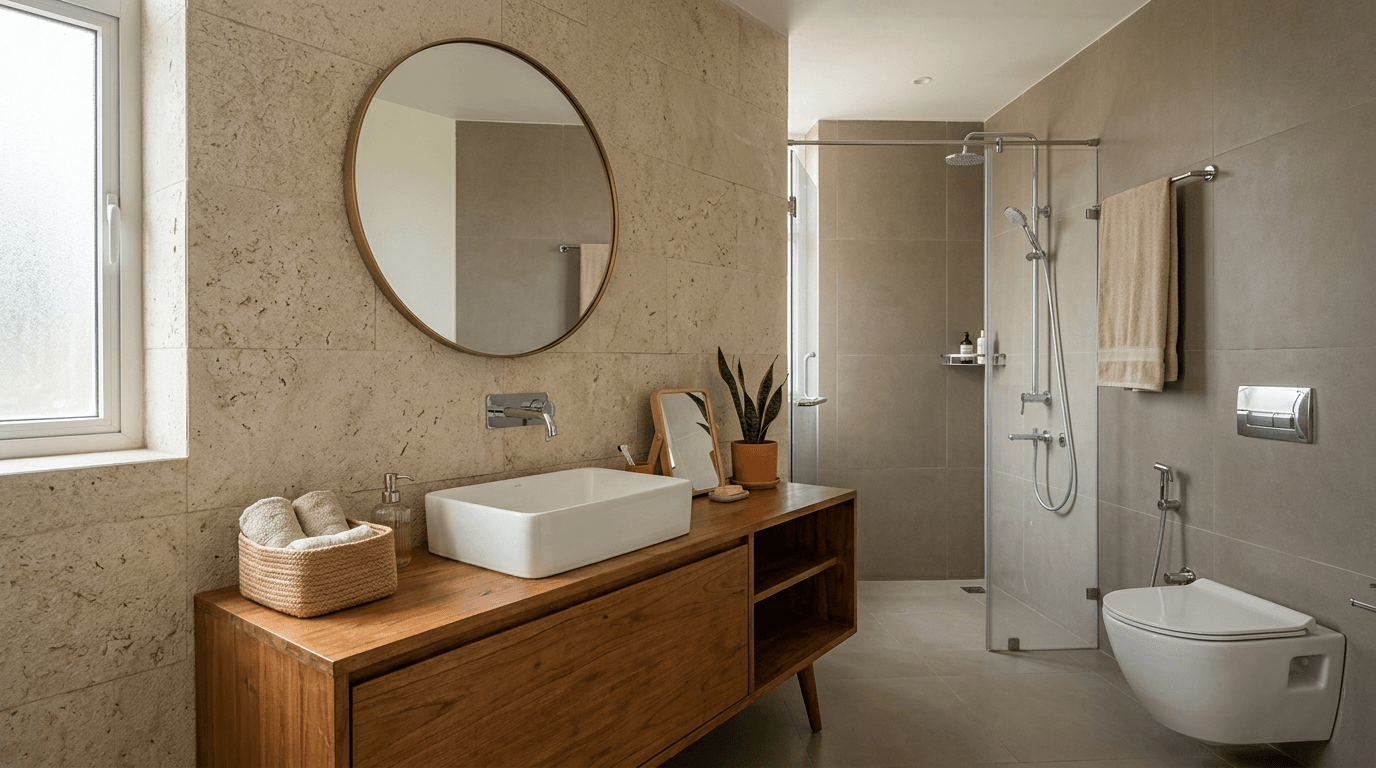
Small Bathroom Tile Tricks: Large-Format & Vertical Stacking
Most Indian bathrooms are 5x8 ft or smaller. Small bathroom tile choices can visually double that, or shrink it. The rules we use on every compact bathroom project: fewer grout lines (large-format tiles), vertical lines (stacked layouts lift the eye), light colours (they bounce what little light exists), and one material continuing through wet and dry zones. In our 500–650 sft apartment renovations across Hyderabad, these four moves did more for perceived space than any fixture change. For layout-level ideas — where the WC, basin and shower actually go — see our small bathroom designs guide.
26. Large Tiles in a 5x8 Bathroom
Large tiles in a small bathroom sounds wrong, works brilliantly. Two-by-four-foot light tiles mean barely any grout grid, so the floor reads as one plane and the bathroom feels wider than it measures.
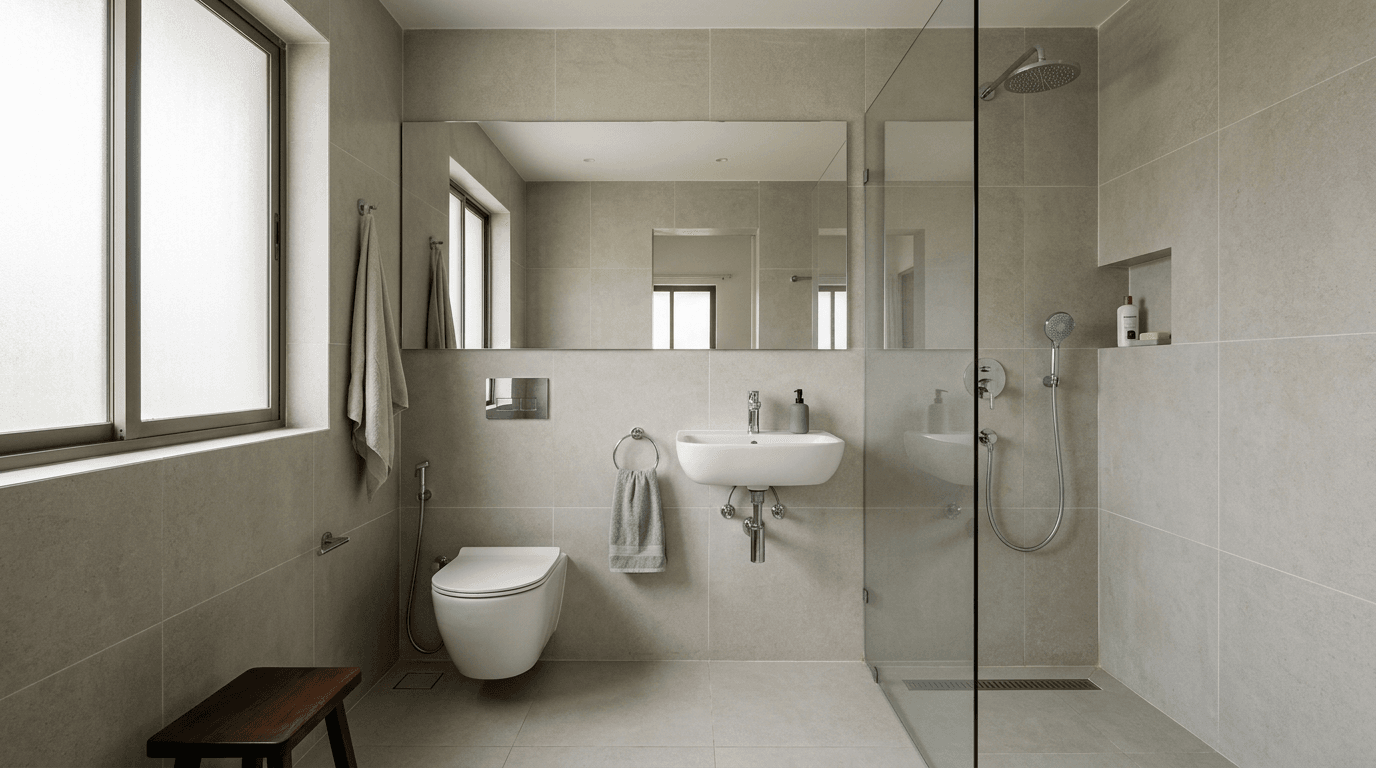
27. Vertical Stack to the Ceiling
Rectangular tiles stacked vertically, floor to ceiling. The unbroken vertical joints stretch a 9-ft wall visibly taller. Skip the border tile; borders chop height.
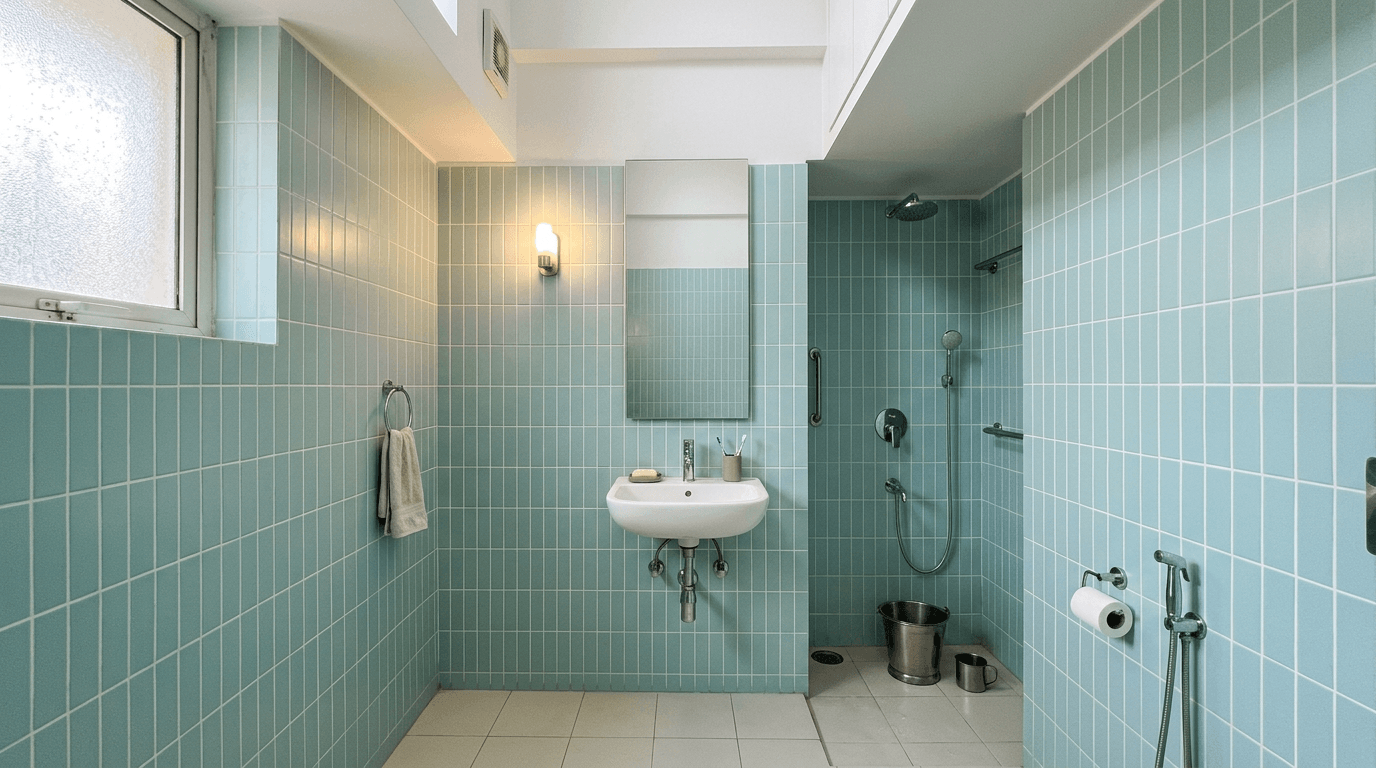
28. One Tile, Every Surface
Same tile on the floor and all walls. No visual breaks means no perceived edges — the strongest single trick to make your bathroom look bigger. Choose matte so the tiles on the floor stay safe.
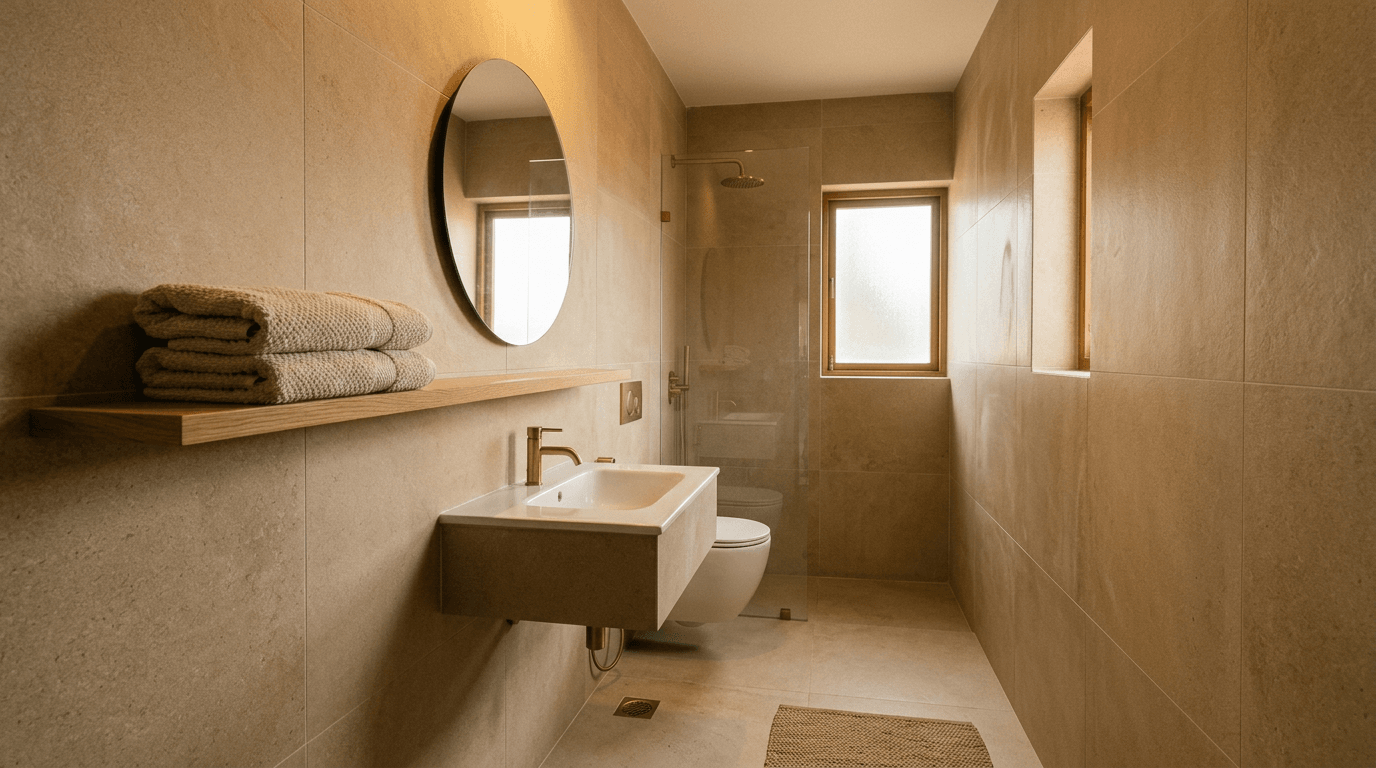
29. Light Gloss Walls + Matte Floor, Same Tone
Light-colored tiles in gloss on walls and matte on the floor, in the same tone. Light bounces off the walls; the floor keeps its grip. Small bathroom, solved.
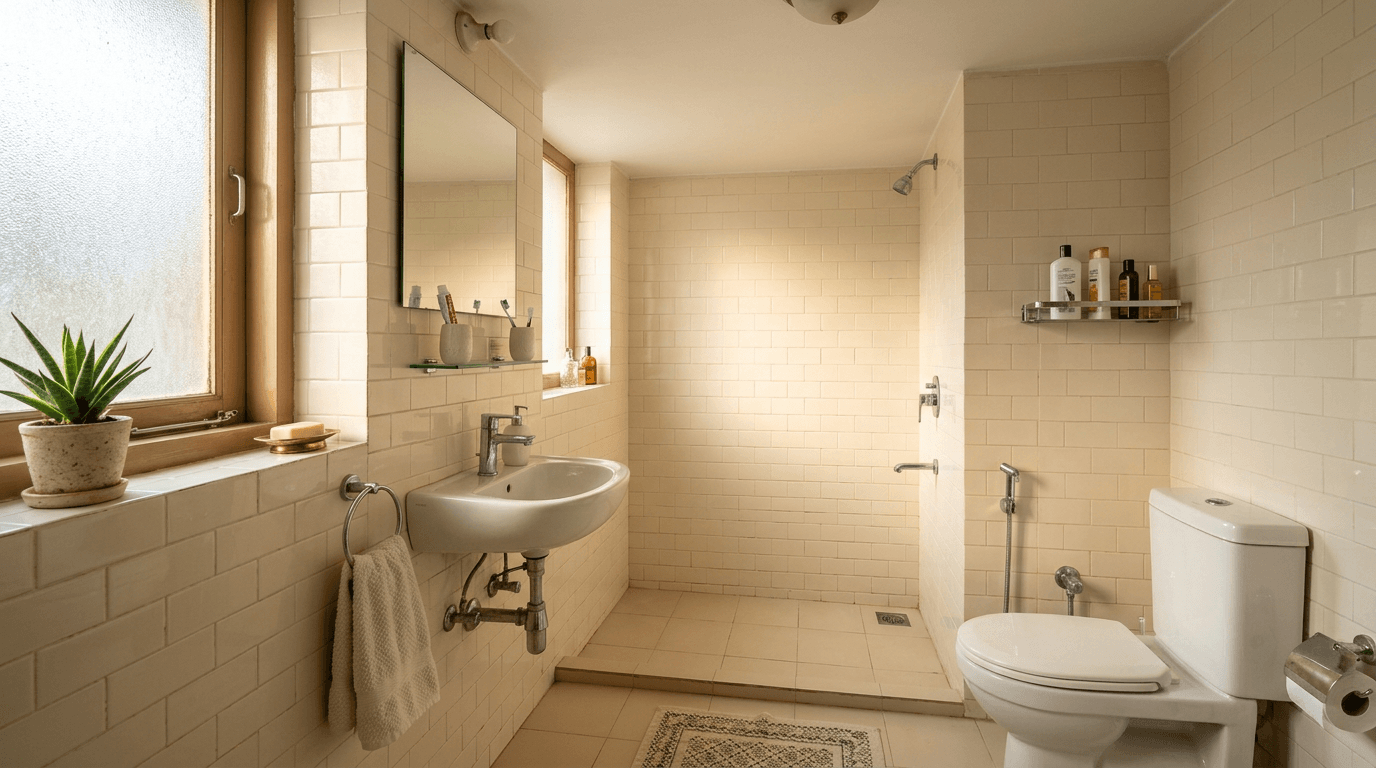
30. Diagonal-Laid Floor
Laying square tiles diagonally makes the floor's longest line run corner to corner, so the room reads wider. A labour trick, not a material cost.
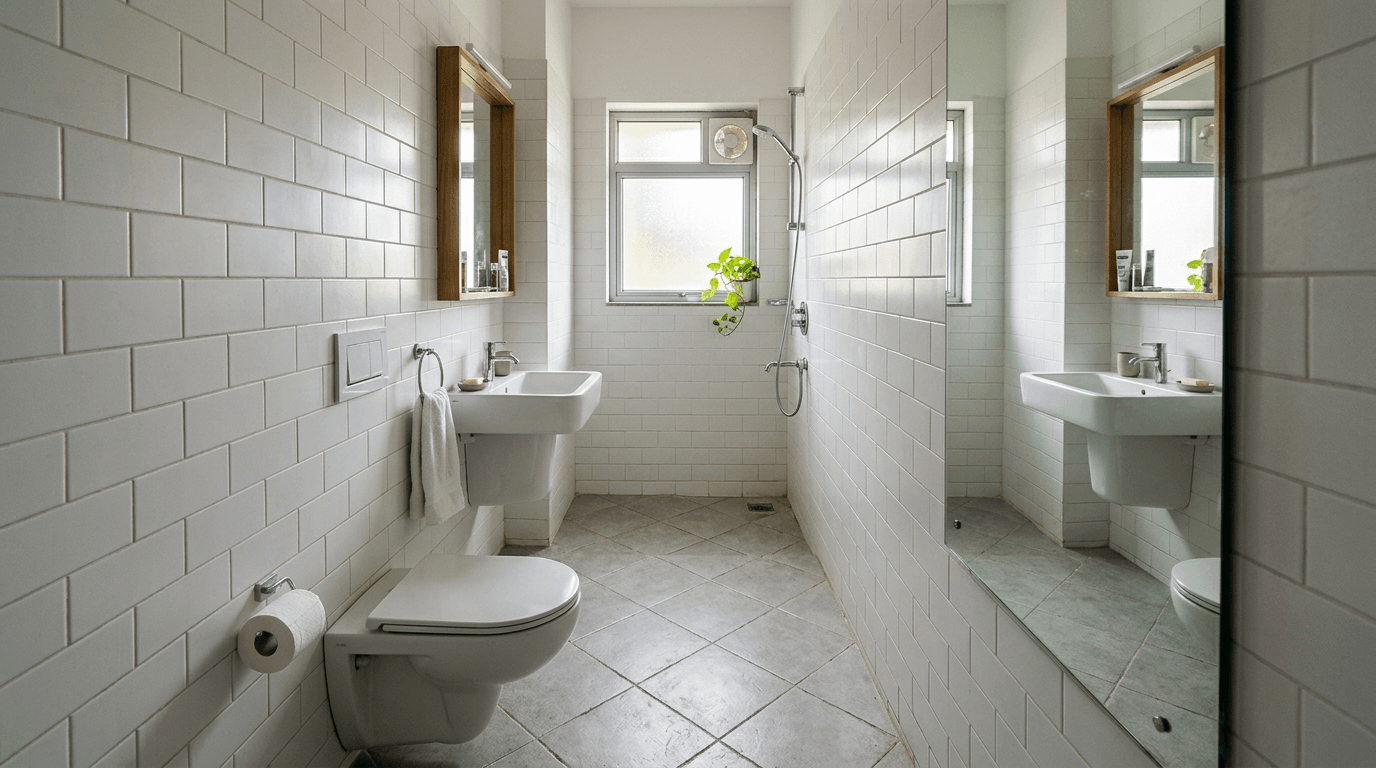
31. Mirror Wall Over Slim-Profile Tiles
A wide mirror over slim stacked tiles doubles the room visually. Pair with a demister so the trick survives hot showers — more in our bathroom door and mirror designs.
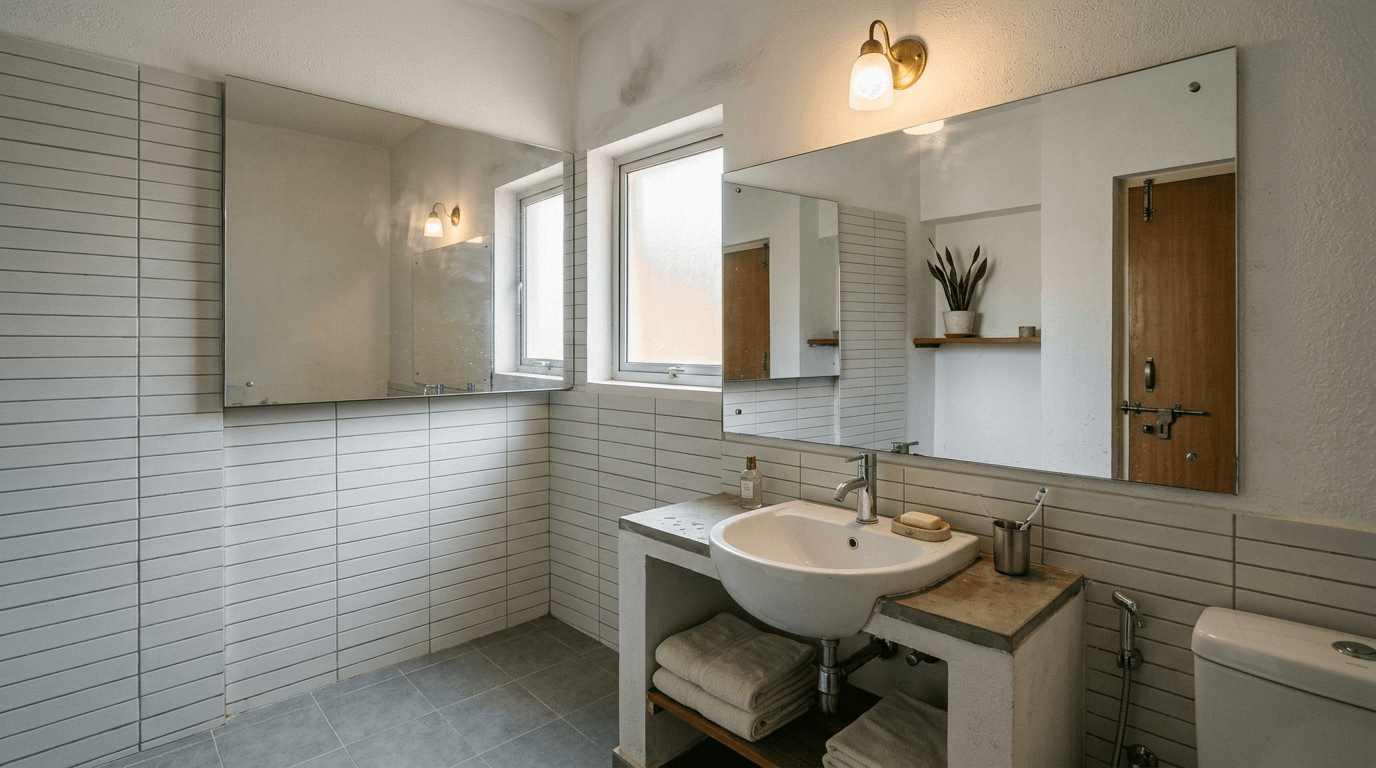
32. Contrast Mosaic Niche
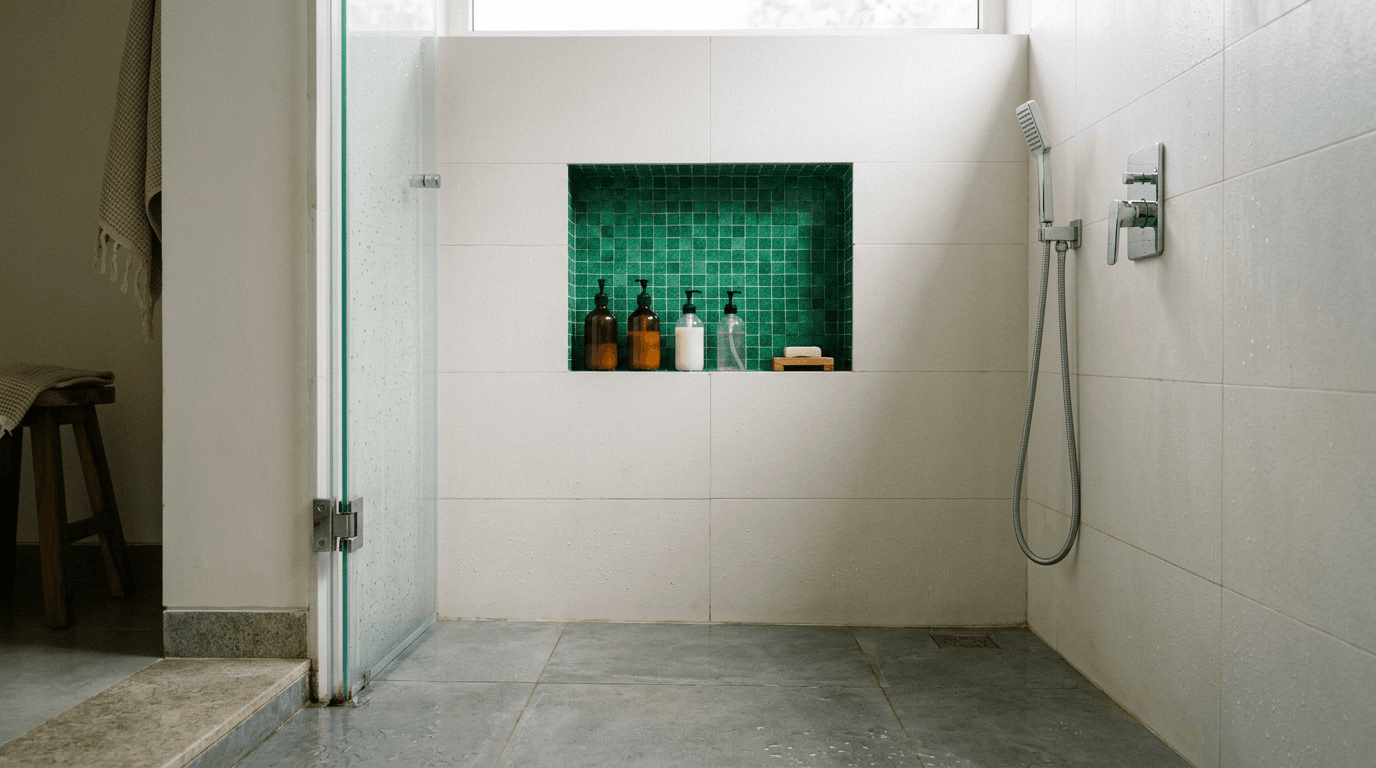
Keep every wall plain; line the storage niche in contrasting mosaic tiles. One small punch of colour, zero visual clutter — and niches beat racks in a compact bathroom.
33. White Room, One Accent Wall
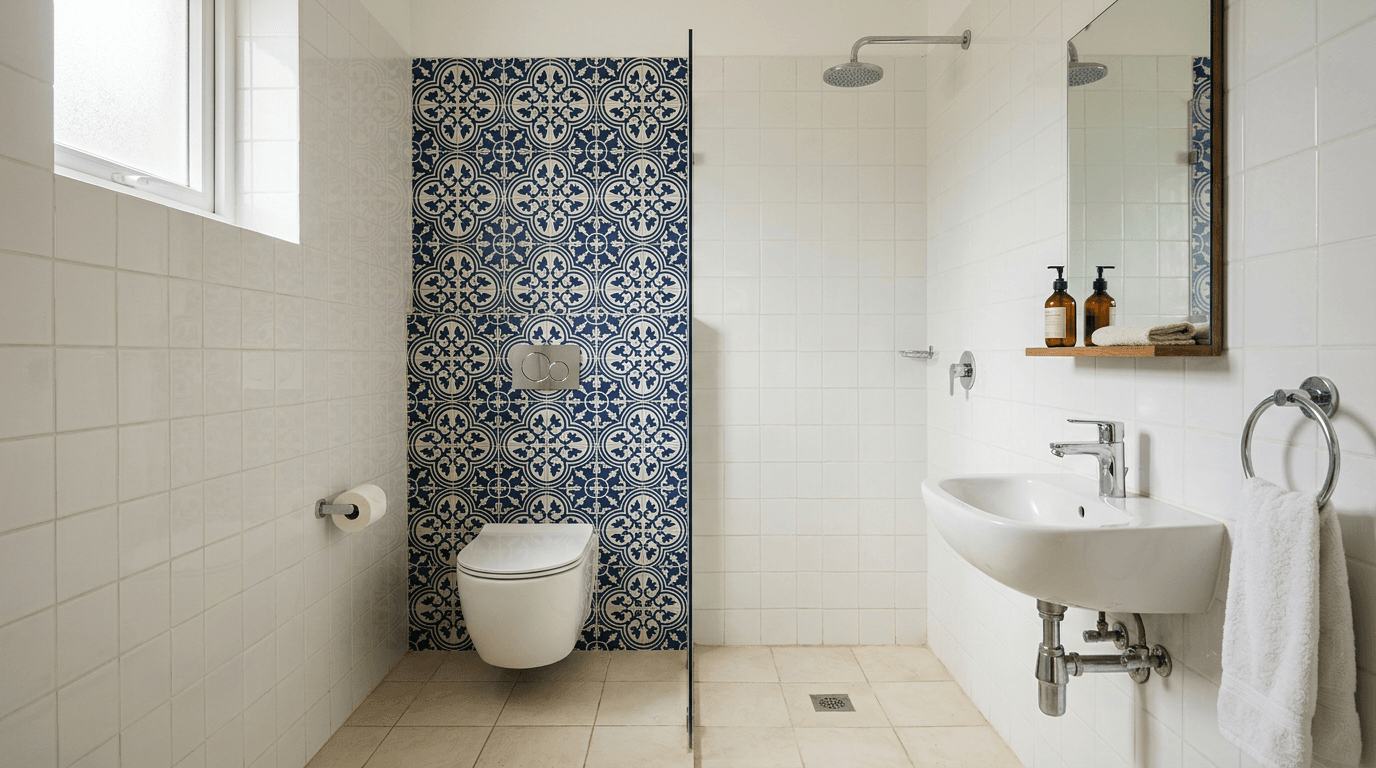
An all-white compact bathroom with one accent wall behind the WC: patterned, colour-blocked, or textured. The eye goes to the accent wall, not the room's size.
34. Pebble-Mosaic Shower Floor
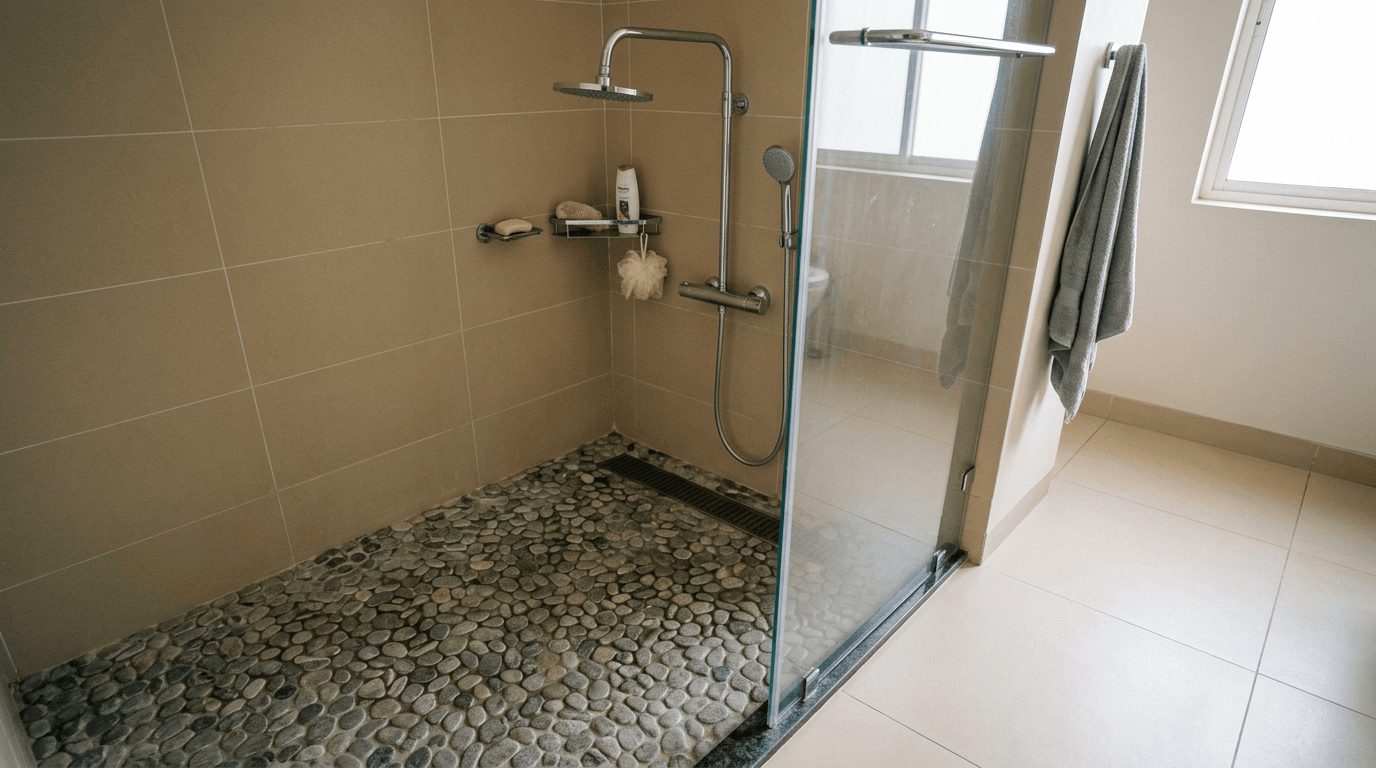
A pebble or micro-mosaic shower floor inside a plain-tiled bathroom: maximum grip exactly where the water is, plus a barefoot massage nobody complains about.
35. Borderless Seamless Grey
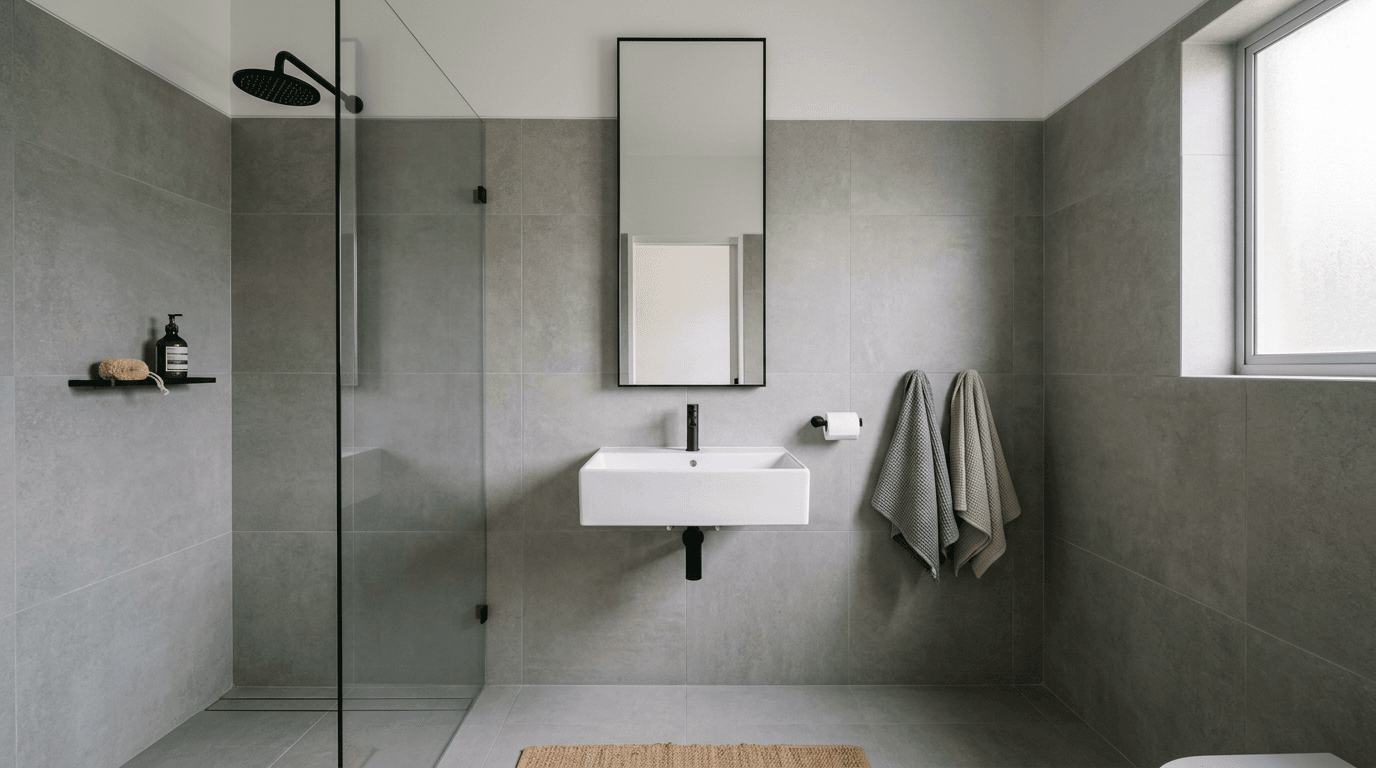
No borders, no highlighters, no dado lines. One grey tile, tight rectified joints, edge-to-edge. The quietest design style on this list, and the easiest to keep looking new.
Bathroom Floor Tiles Design by Material: Ceramic, Porcelain & Vitrified Tiles
Material determines lifespan more than looks do. The wet-zone scorecard for the best bathroom floor:
| Material | Water Absorption | Wear (PEI) | Wet-Zone Verdict |
|---|---|---|---|
| Double-charged vitrified | <0.5% | 4–5 | Best all-round bathroom floor tile |
| Glazed vitrified (GVT) | <0.5% | 3–4 | Best looks; pick matte/anti-skid glaze for floors |
| Porcelain (full-body) | <0.5% | 4–5 | Toughest; chips don't show — colour runs through |
| Ceramic | 3–6% | 2–3 | Walls yes, wet floors no |
| Mosaic (glass/stone) | Varies | — | Accents and shower floors; grout-heavy |
At Om Sri Padma Nilayam, a 30-plus-year-old Hyderabad apartment building we renovated, the original floors had spent decades over failing plumbing and seepage. We redid the flooring, plumbing and waterproofing together, and specced low-absorption vitrified tiles so the new floors wouldn't wick moisture the way the old ones had. Tile choice and substrate prep are one decision, not two. (Choosing tiles for the rest of the house? Our floor tiles design guide covers every room.)
36. Double-Charged Vitrified Floor
Two layers of pigment pressed together: the pattern runs deep, so a decade of scrubbing won't fade it. The workhorse floor tiles design of Indian homes.
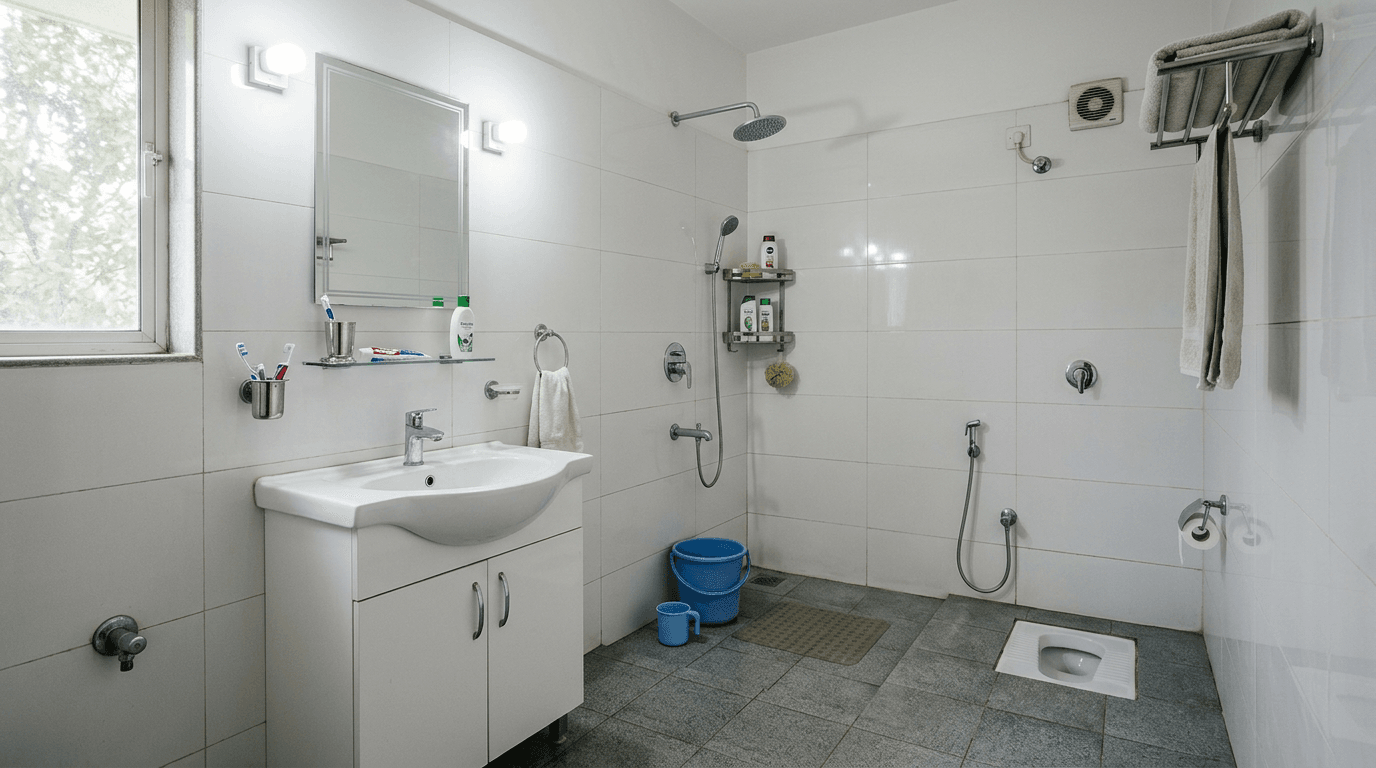
37. Glazed Vitrified Marble-Look
GVT prints any surface — marble, stone, concrete — under a protective glaze. The floor version needs a matte or anti-skid glaze; the glossy version goes on walls.
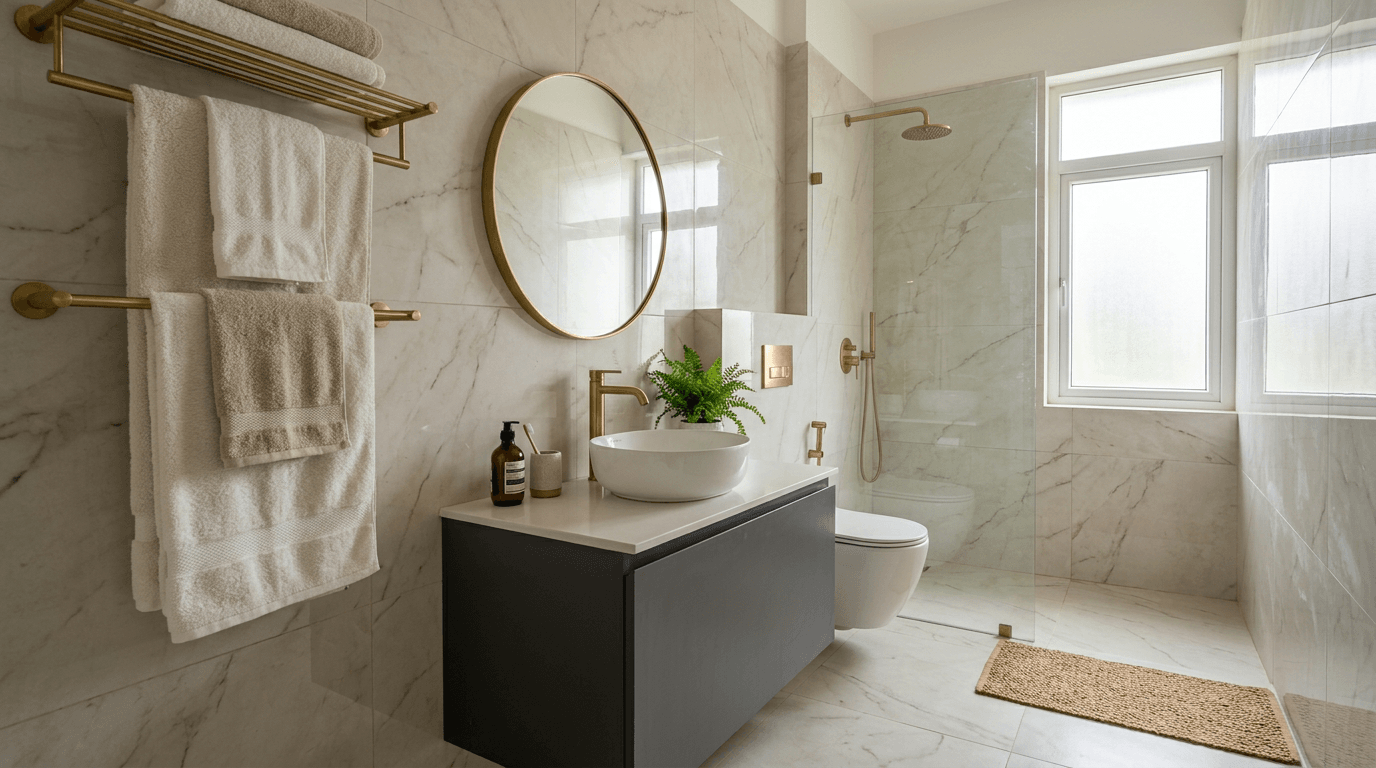
38. Full-Body Porcelain Bathroom Tiles, Anti-Skid
Colour runs through the entire tile, so edges and chips never show white. With an R11 surface, full-body porcelain bathroom tiles are what we put in elder-friendly and heavy-use bathrooms.
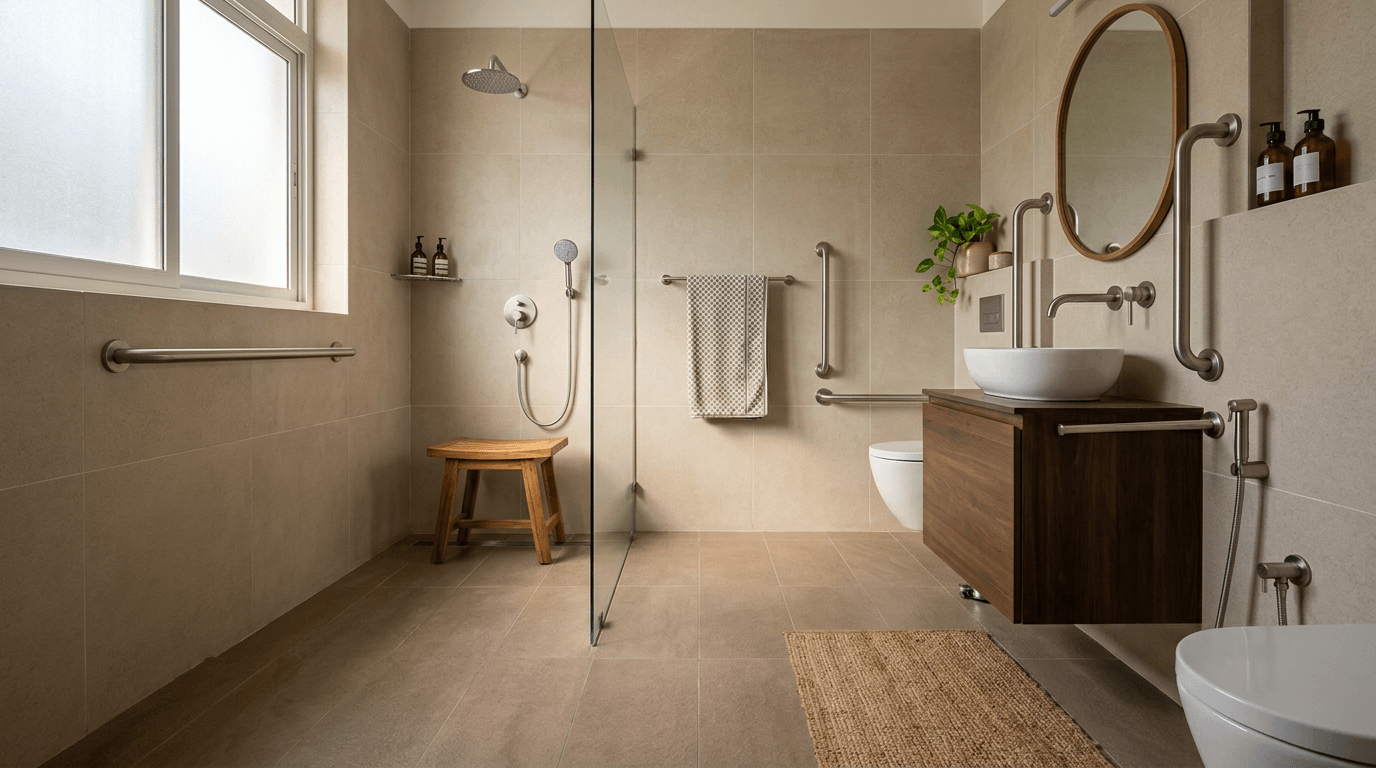
39. Classic White Ceramic Bathroom Wall Tile
Ceramic tiles remain the wall economy champion: light, easy to cut, endlessly available. The classic white bathroom wall tile frees budget for a better floor tile, which is where failure actually costs.
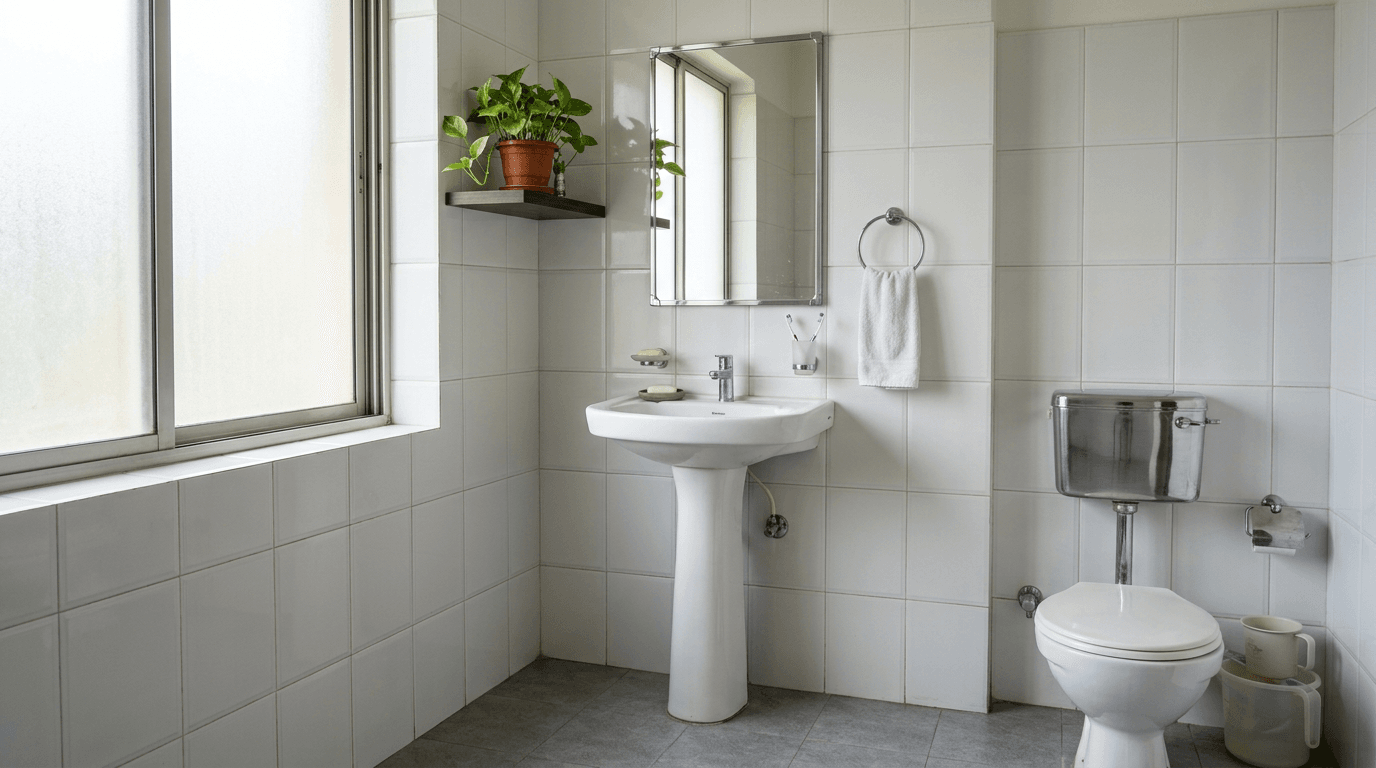
40. Glass Mosaic Accent Band
A single horizontal band of glass mosaic through plain walls: colour, sparkle, and a place for the eye to rest. Epoxy-grout it; glass mosaic's many joints demand it.
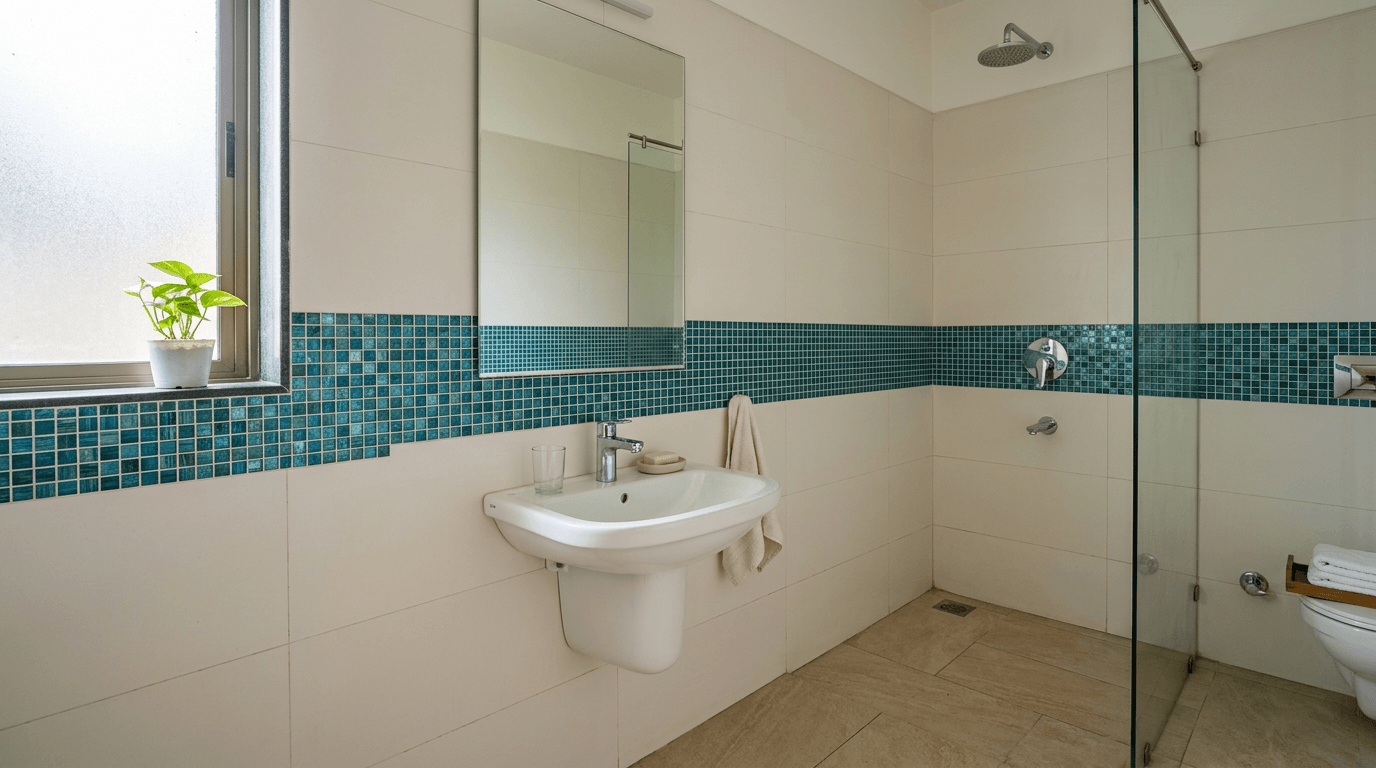
41. Terrazzo Cement Tile
The heritage version of design 3: cement-bodied terrazzo, ground and sealed. More character than vitrified copies, more maintenance too. Reseal yearly in wet areas.
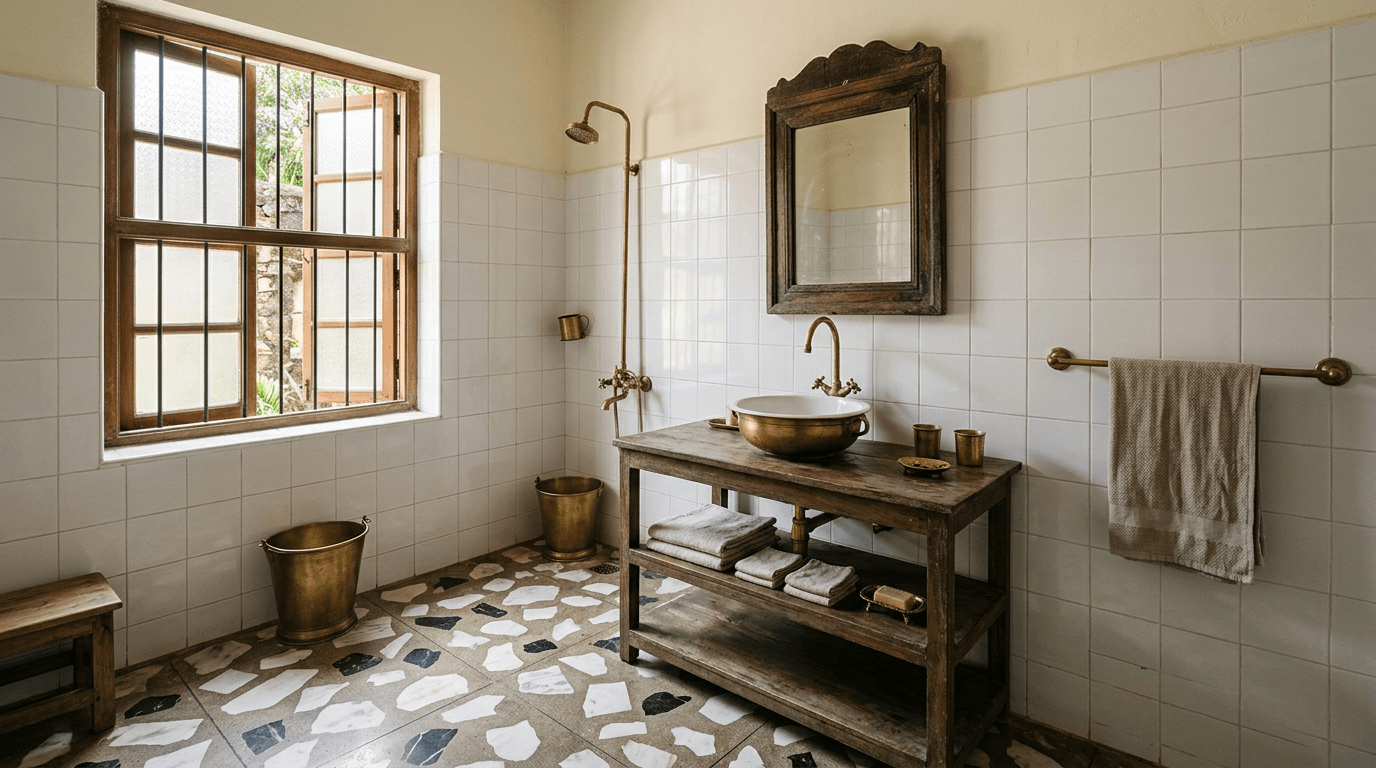
42. Natural Stone: Kota and Granite
Kota stone and flamed granite are the traditional Indian wet-area floors — naturally grippy, nearly indestructible. Heavier on labour, and they need sealing against hard water.
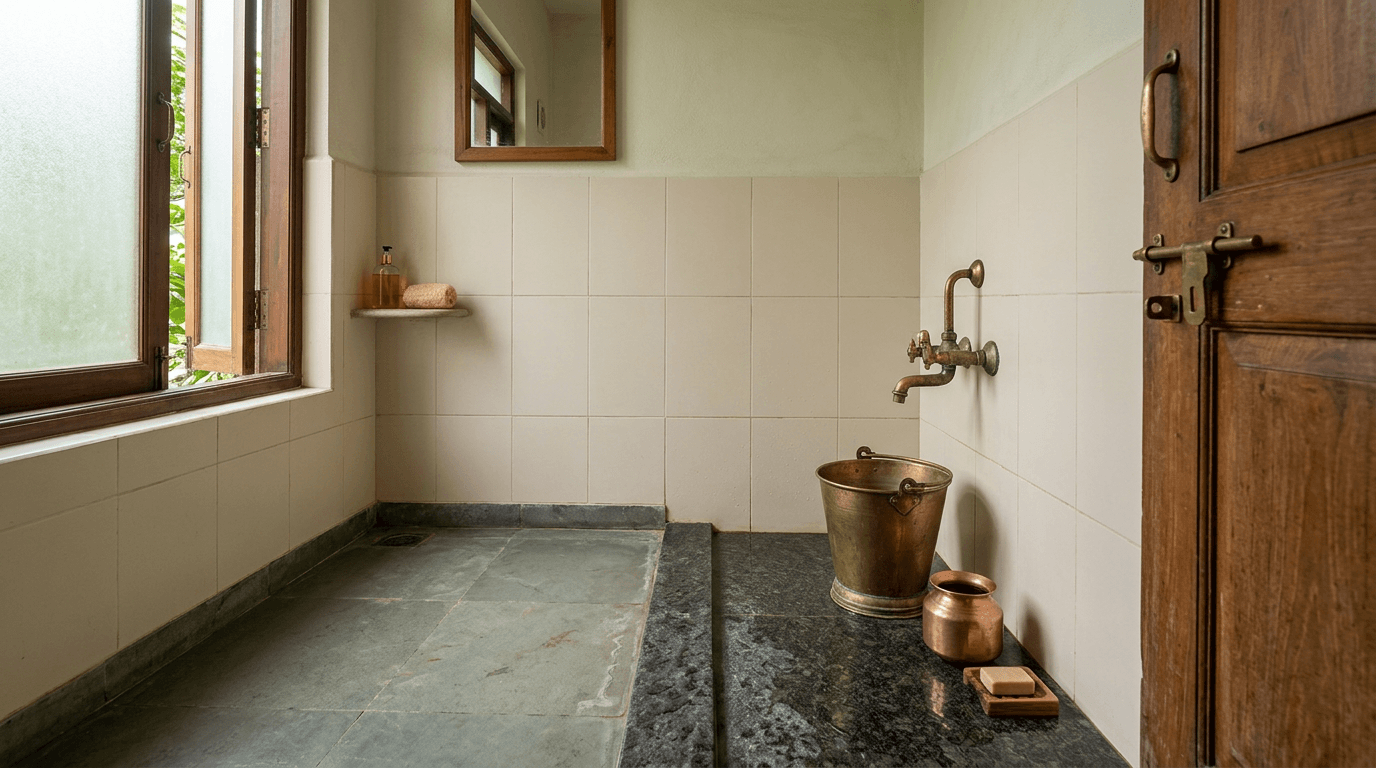
43. Wood-Look Ceramic Planks
All the warmth of wood, none of the warping. Wood-look planks work in bathroom dry zones and powder rooms; keep them out of the direct shower splash unless rated anti-skid.
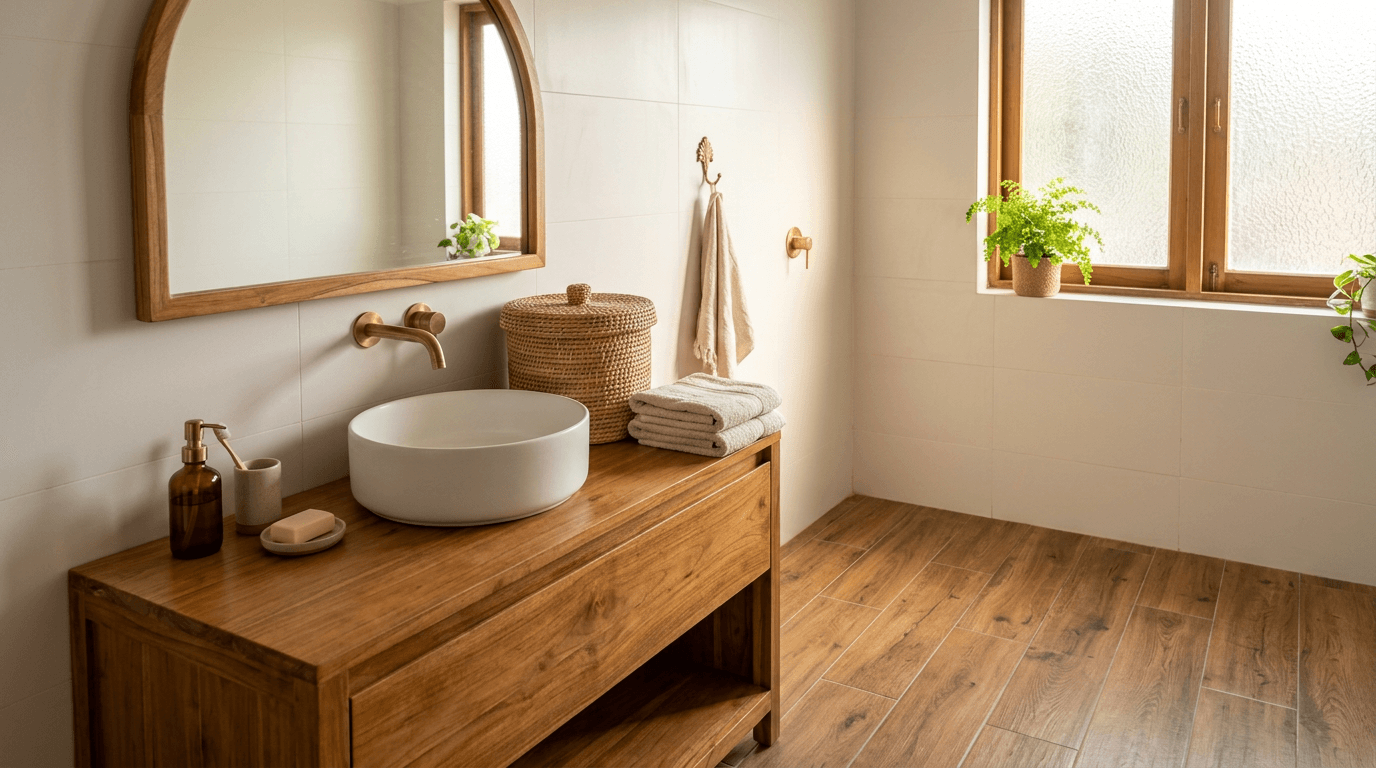
44. Large Porcelain Slabs
Four-by-eight-foot porcelain slabs: two or three pieces tile an entire wall, joints almost disappear. Premium look, premium cutting-and-handling labour — budget for both.
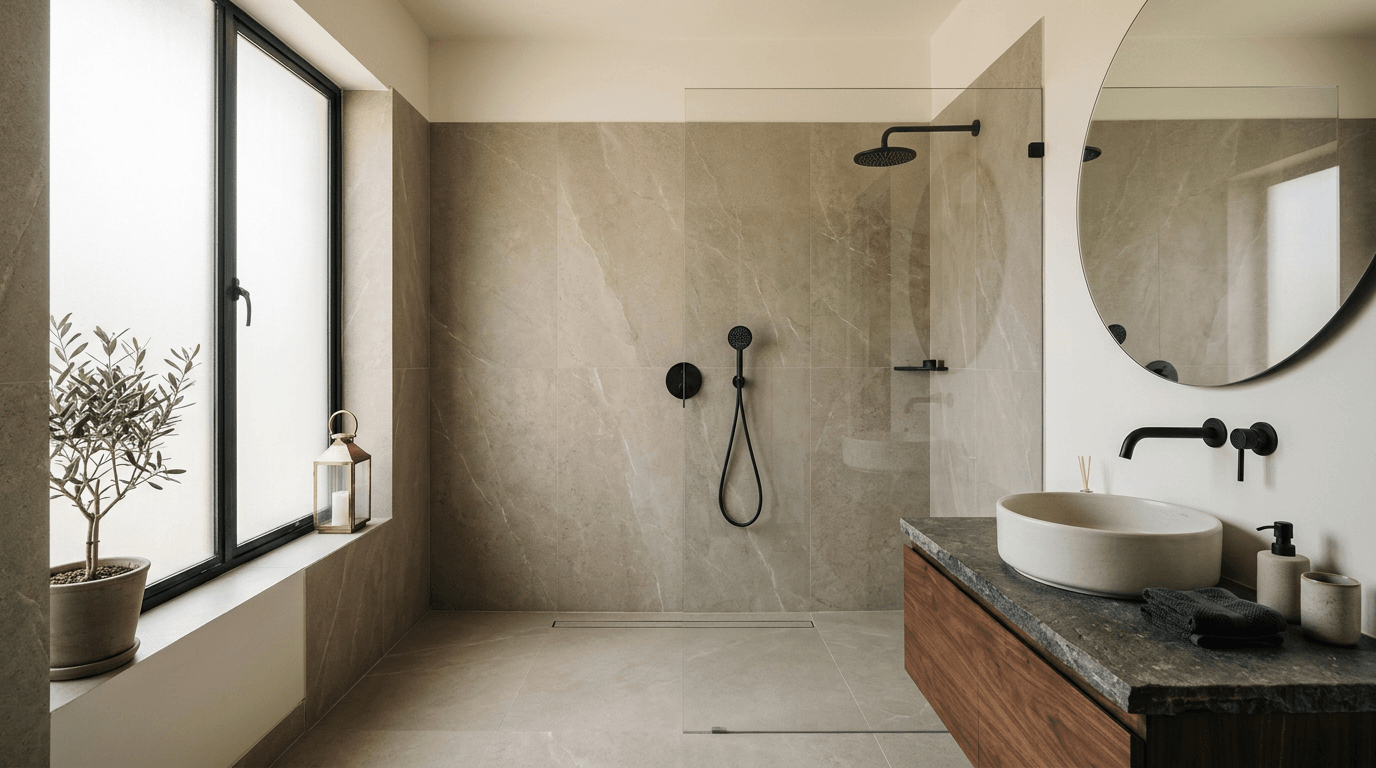
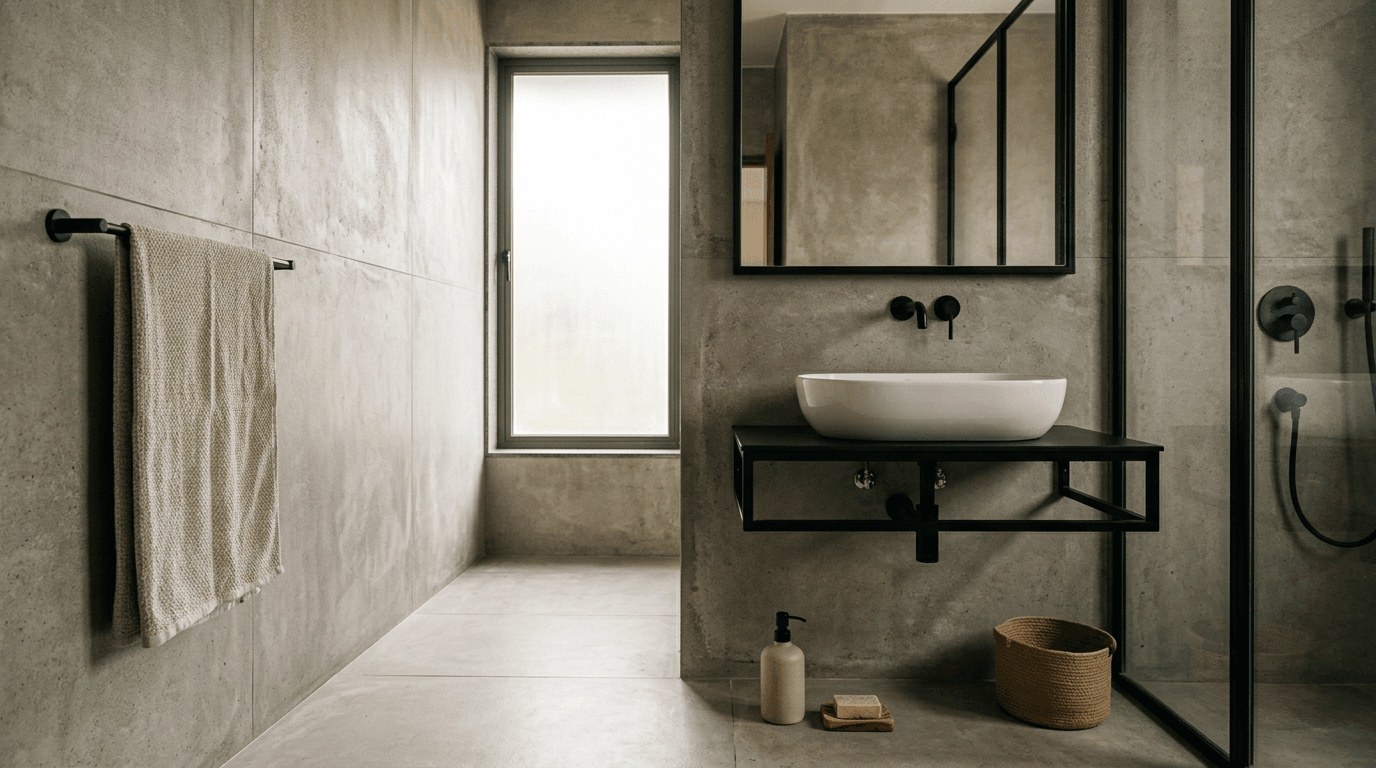
45. Cement-Look Matte Tiles
The concrete finish in a practical vitrified body. Cement-look matte tiles in greige tones are the quiet star of contemporary tile design: urban, warm, and forgiving of water spots.
Grout, Epoxy & the Mould Question
Here's the unglamorous truth: most "old bathroom" complaints are grout complaints. White cement grout absorbs water, feeds mould, and blackens within a couple of years of Indian bathroom use.
Epoxy grout is waterproof, chemical-resistant and stain-proof. It costs roughly three to four times cement grout in material and skilled labour, and in wet zones it's worth every rupee. Our compromise spec on budget projects: epoxy grout in the shower and floor joints, quality cement grout with sealer on dry-zone walls. And if you're retiling during a bathroom renovation, fix the waterproofing first. Grout is not a waterproofing layer, whatever the mason says.
Bathroom Tile Costs per Sq Ft in 2026
Tiles are sold per sq ft, and we're deliberately not publishing a rupee table: Indian tile rates move with brand, city, size and whatever discount the dealer is running that month, so any band printed here would be wrong by the time you walked into the showroom. What doesn't move is the order:
| Tile Type | Where it sits on cost |
|---|---|
| Ceramic wall tiles | Cheapest per sq ft, which is exactly why they belong on walls |
| Double-charged vitrified | A step up, and the best value per year of floor life |
| Glazed vitrified (GVT) | Similar body to double-charged, priced up for the printed surface |
| Full-body porcelain / anti-skid | Premium; you're paying for colour through the body and real grip |
| Designer / patterned / mosaic | The widest and highest spread by a distance, and priced by the piece rather than the box |
Three costs get left out of tile quotes and shouldn't be: laying charges (higher for large formats, and higher again for herringbone or diagonal layouts, which waste more tile and take longer), adhesive, and grout — epoxy grout in particular is a real line item, not a rounding error. A typical 5x8 ft bathroom uses roughly 180–220 sq ft of tiles across floor and walls, so price your actual area against live dealer rates and get the laying charge quoted separately. We don't publish fixed rates ourselves because city and spec change everything — talk to us for a project-specific estimate.
Where to Buy Tiles: Showroom First, Online Second
You can buy tiles from local dealers, brand showrooms (Kajaria, Somany, Simpolo, Orientbell and others all run display centres in major cities), or order tiles online from brand and marketplace catalogues. Our advice after years of site deliveries: shortlist online, but confirm in person. A tile's colour, texture and slip feel change completely between a phone screen and a showroom floor, and online orders make batch-matching harder if you need 10% more mid-project. Whatever the channel, check three things on the box before payment: batch number, grade, and the R rating. Popular bathroom tiles also go out of production fast — buying your extra 10% later is never guaranteed.
