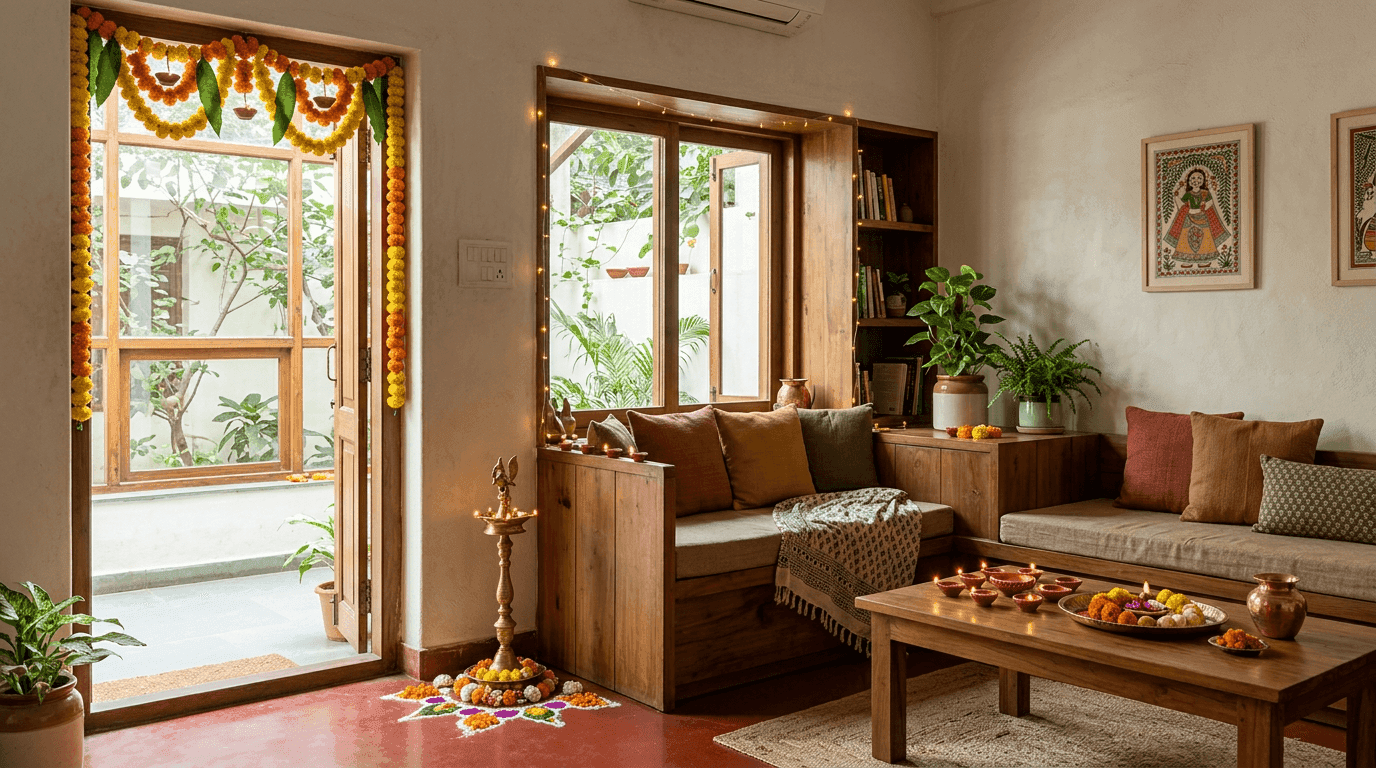
Every gallery of diwali decoration ideas promises to transform your home. This one won't. What it will do is give you 40 ideas you can actually finish, in the order you'd work through the house, with an honest note on what each one costs you in effort.
Diwali is also the one week when every corner of your home gets attention at once, which is exactly why it goes wrong. So the guide below mixes traditional diwali decoration ideas with creative ones you can make in an afternoon, tells you which diwali decoration items are worth owning versus buying fresh, and covers lights, torans, garlands, rangoli and the pooja room in one place.
Key Takeaways
- Diwali 2026 falls on Sunday, 8 November, with Dhanteras on Friday, 6 November. Most families start work on the house about three weeks before.
- Decorate the way you walk through the house: door first, then the windows and the outside edges, then the living room, then the pooja corner. It's the order visitors experience, and it stops you spreading effort thin.
- Pick three colours and stay there. Almost every cluttered festive room is really a colour problem wearing a decor costume.
- Warm light beats bright light. One glowing layer plus one soft layer per room does more than doubling the number of strands.
- Buy metal, fabric and reusable strands once. Buy flowers, loose blooms and floor powder fresh. That single split is most of the cost decision.
- Whatever you put up, know how it comes down. The week after is not the week you want to be prying adhesive off a wall.
What Makes a Good Diwali Decoration at Home?
A good Diwali decoration gives each part of the house one clear focal point, lit warmly, in no more than three colours. It works outward from the front door, uses fresh flowers and clay lights where people will stand close, and reusable metal and fabric everywhere else. Nothing blocks a doorway, and everything can come down in an evening.
That's the short version. The longer version is that most homes over-decorate the wrong rooms. People put six ideas into a living room nobody stands still in, and leave the entrance — the one spot every single visitor stops at — with a single string of bulbs.
At Roomantic we design and build homes across Hyderabad and six other regions, and the festival version of a house comes up in more briefs than you'd expect. On one project, a luxury single-storey home for the Mettu Prashanth Reddy family on a 320 sq yard plot, the whole ground floor plan was organised so the family's hereditary temple stayed intact. That's the permanent end of the spectrum. The seasonal styling you put up for a week follows exactly the same logic at a fraction of the scale: decide where the important thing sits, then work outward.
Diwali 2026 Dates and Your Festival Timeline
Diwali — Lakshmi Puja — falls on Sunday, 8 November 2026. The five-day run opens with Dhanteras on Friday, 6 November 2026, and continues through Naraka Chaturdashi, Govardhan Puja and Bhai Dooj. The five days of diwali celebrations run in that order everywhere, but panchangs differ on which calendar date each of the tail days lands on, so check the panchang your family follows rather than trusting a single listing online. The same goes for puja timings: muhurat windows are calculated locally and shift with your city's sunset, and no article can give you a number that's right everywhere.
Dhanteras is where most families begin in earnest. The day carries an old association with prosperity and new purchases, and it's when the first diyas and the first lights go up.
What you can plan without a panchang is the work. Plan to decorate your home for Diwali in two passes rather than one: everything that keeps, then everything that wilts.
- Four weeks out. Decide the palette and the one big move — a lit facade, a flower-heavy entrance, a glowing living room wall. One, not three.
- Three weeks out. Order or dig out the items that need lead time: metal vessels, lantern shades, fabric, any strand you're replacing. Test every strand you already own now, not on the night.
- One week out. Clean first. It is genuinely the highest-return step in getting the house ready, and nobody puts it on a checklist.
- Two days out. Put up everything that isn't perishable — lights, drapes, door pieces, floor stickers.
- The morning of 8 November. Flowers, loose blooms, floor art, and the diyas. Fresh things go up last so they're still fresh at dusk.
- The following weekend. Take it down while you still remember how it went up.
If you've only got one weekend, skip everything structural and put it all into flowers, fabric and light. Nobody has ever walked into a home and thought the celebration needed more plywood.
Essential Elements of Traditional Diwali Entrance Styling
Four things make an entrance read as traditional. Every other idea at the door is a variation on one of them.
- A flower and mango leaf toran. Strung across the top of the door frame. Fresh marigold and mango leaves are the classic pairing; a fabric or beaded version does the same job for the whole week.
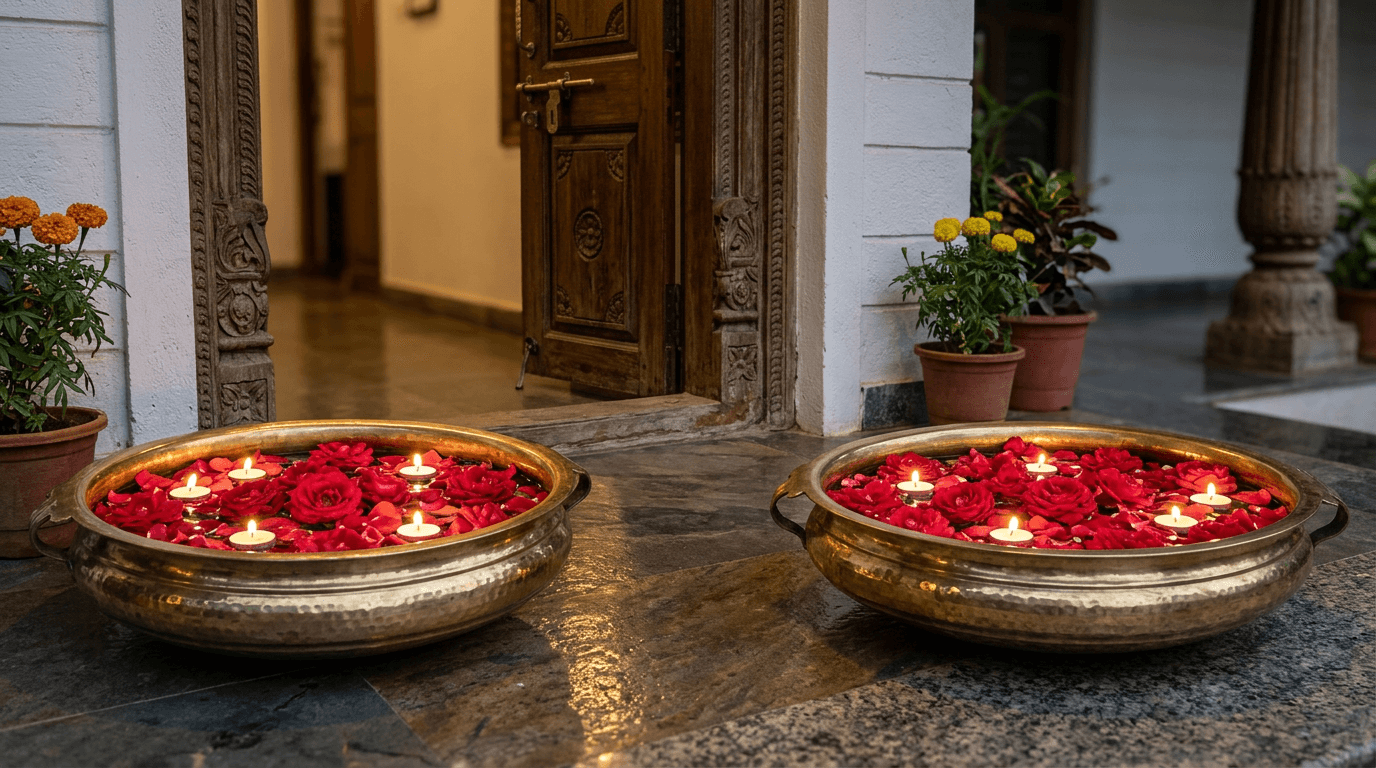
- Twin brass urlis. Two shallow water-filled bowls, one on either side of the door, with floating blooms and tea lights. Symmetry is what makes them read as formal rather than casual.
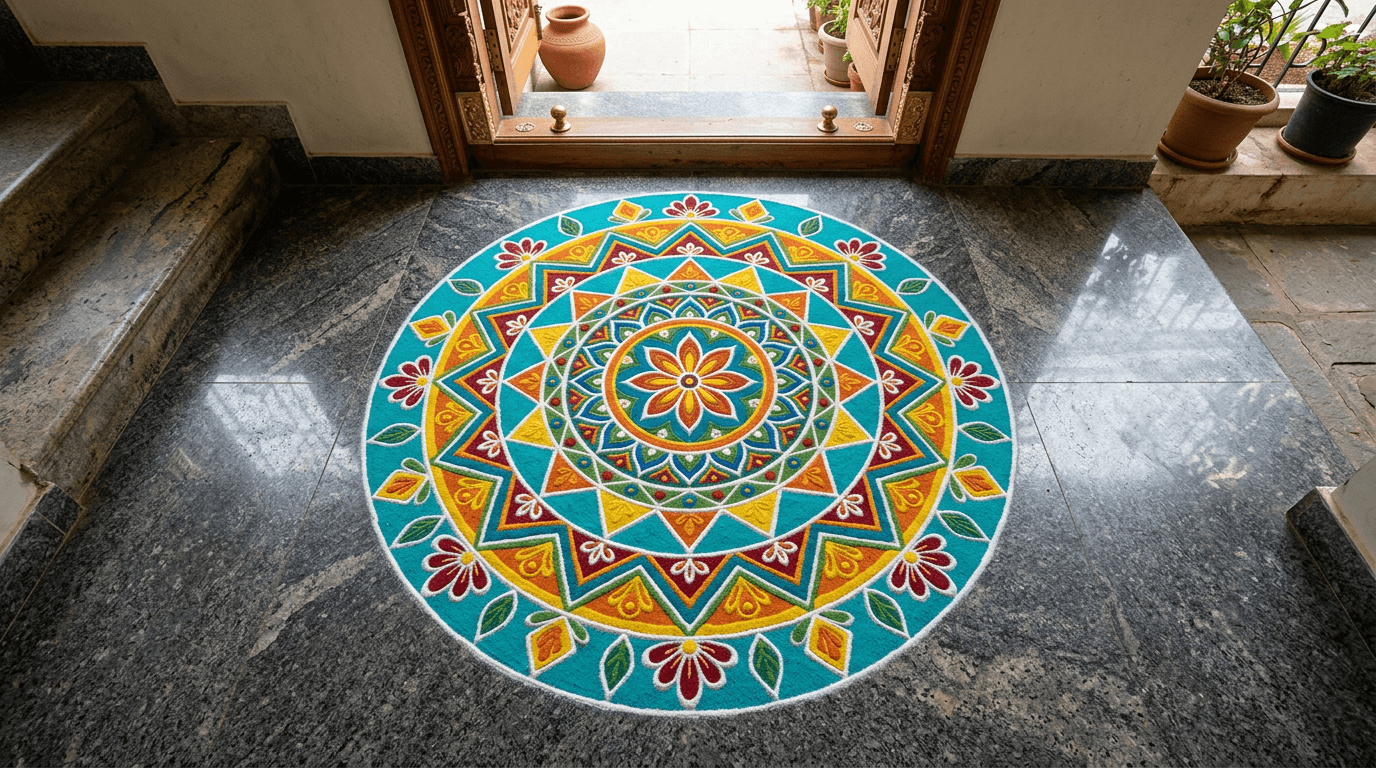
- Rangoli at the entrance. A floor pattern in powder, flower petals or turmeric and rice flour, sized to the width of the doorway rather than the whole landing.
- A symmetrical row of clay diyas. Along the threshold or the step edge, evenly spaced. Even spacing matters more than the number of diyas.
Do those four and stop. An entrance that also has bunting, a light curtain, a printed banner and a doormat with a slogan is not more festive — it's just louder.
40 Diwali Decoration Ideas for Home With Photos
Forty ideas is a lot to scroll, so here's the map. The sets run in the order you'd actually work through the house.
| Set | Ideas | Best for | Effort |
|---|---|---|---|
| Entrance and main door | 1–8 | Everyone. Highest visibility per rupee. | Low to medium |
| Balcony and window light decorations | 9–15 | Flats, and anyone whose house is seen from the road | Low |
| Living room | 16–23 | Homes hosting visitors across the five days | Medium |
| Pooja corner | 24–29 | Households where the puja is the centre of the day | Low |
| Flowers | 30–34 | Anyone short on build time — flowers do the most work fastest | Medium |
| Handmade and creative | 35–40 | Households with children who want a job | Low |
These are the best diwali decoration ideas we keep coming back to in real Indian homes. Not the most stunning diwali decoration ideas on a moodboard - the ones that survive five days of visitors.
Every idea below is one you could finish. None need a fabricator, and about half need nothing you don't already own.
Entrance and Main Door Decoration Ideas
The entrance of your home is the only part of your diwali decor that every visitor sees at close range and standing still. Give it a disproportionate share of your budget and your patience. A word on fixings before you start: if you rent, or if the building is old, don't drill. On our Majeti Residence F1 project — a 500 sft flat in a thirty-year-old Hyderabad building where the brief was minimum intervention — everything that could be reversible was. Tension rods, removable adhesive hooks and railing ties will hold anything on this list.
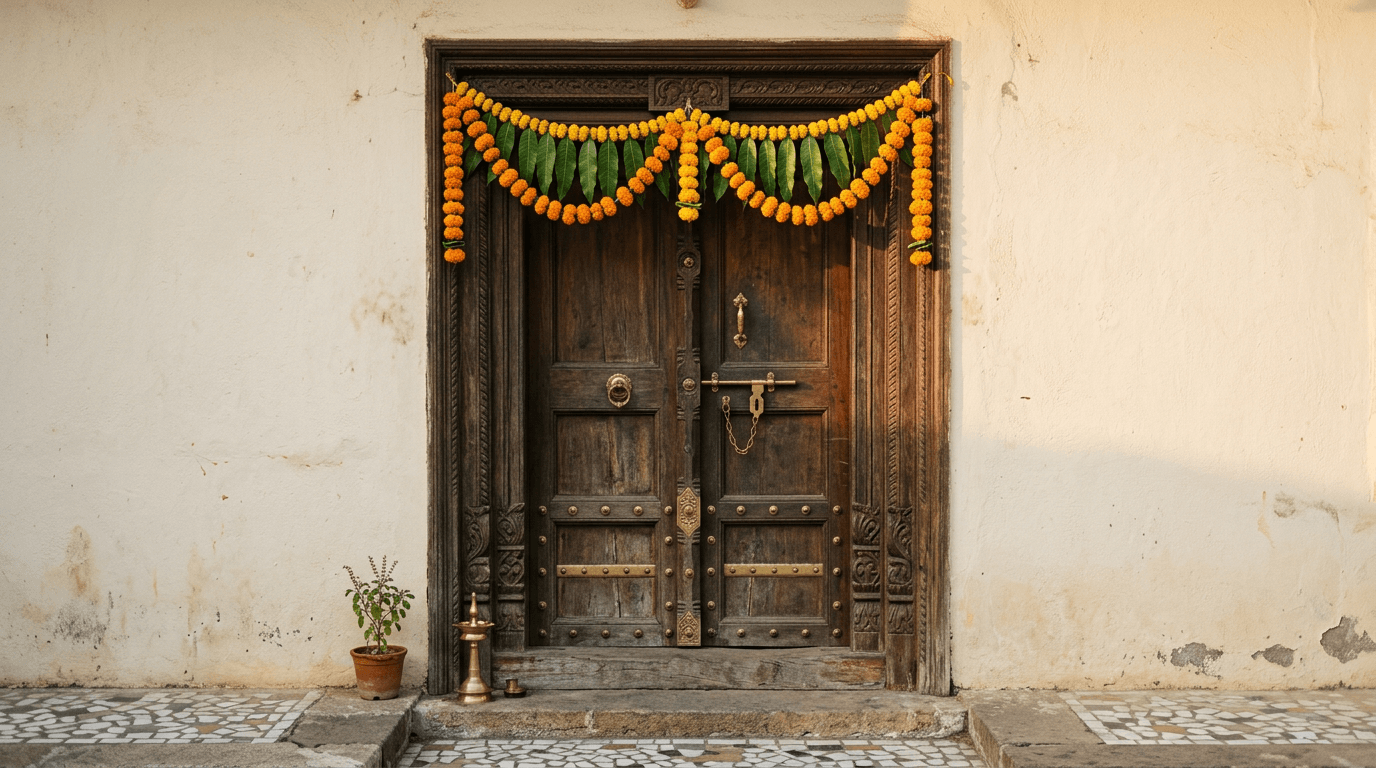
1. Flower and Leaf Door Drape
The marigold toran, in its plainest form: orange blooms alternating with mango leaves, strung on thread across the top of the frame. Costs very little, lasts about three days in dry weather, and no other single item says "festival" faster.
2. Twin Brass Urlis at the Threshold
Two wide brass bowls filled with water, one either side of the door, floating rose blooms and tea lights on the surface. They look expensive and they cost you one refill of water a day. Keep them identical — the symmetry is the whole effect.
3. Floor Art at the Doorstep
Rangoli, sized honestly. A pattern that fits the width of the door reads as deliberate; one that sprawls across the landing gets walked through by the second visitor. Powder, loose petals or the traditional rice flour all work — and if you want the full pattern library, our rangoli designs guide goes much deeper than one idea can.
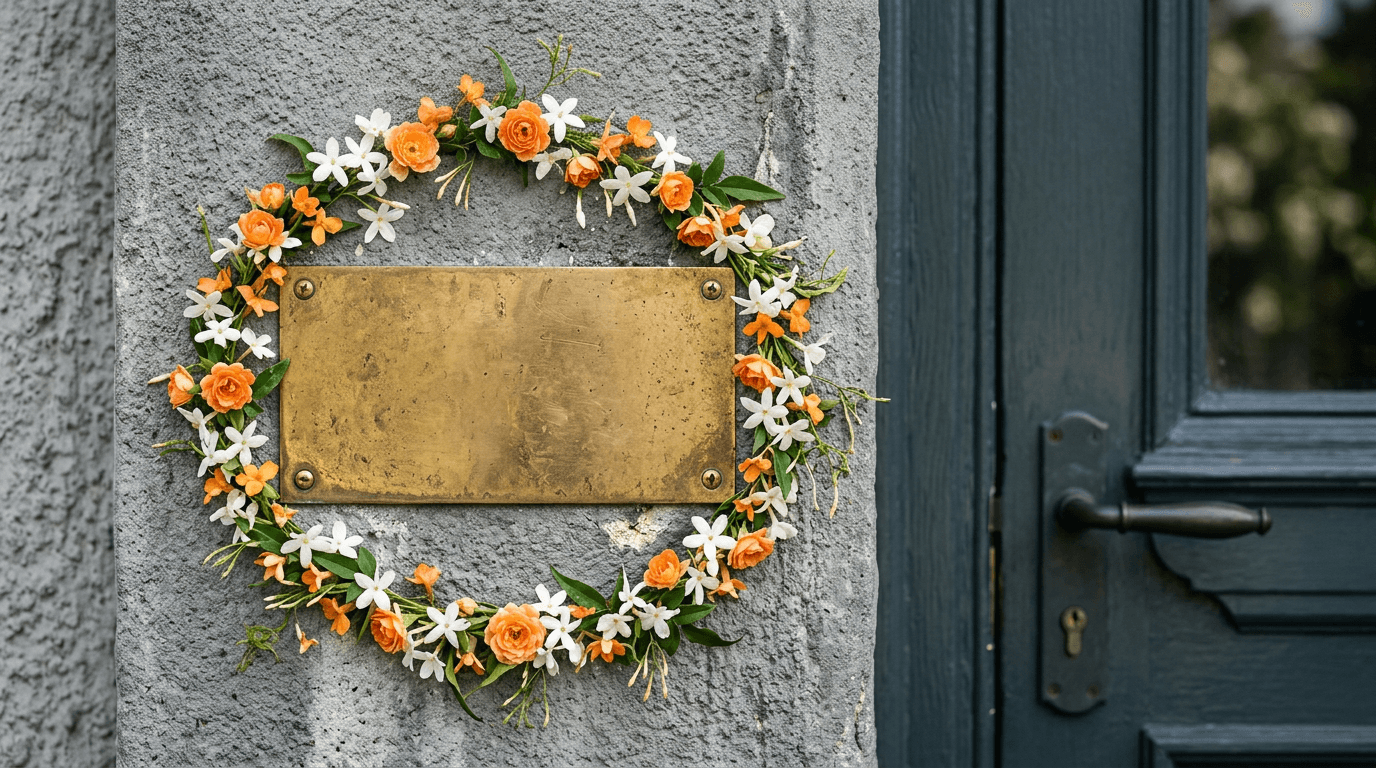
4. Nameplate Framed in Blossoms
A thin ring of flowers around the nameplate or the doorbell panel. Ten minutes of work, and it's the detail people photograph without knowing why.
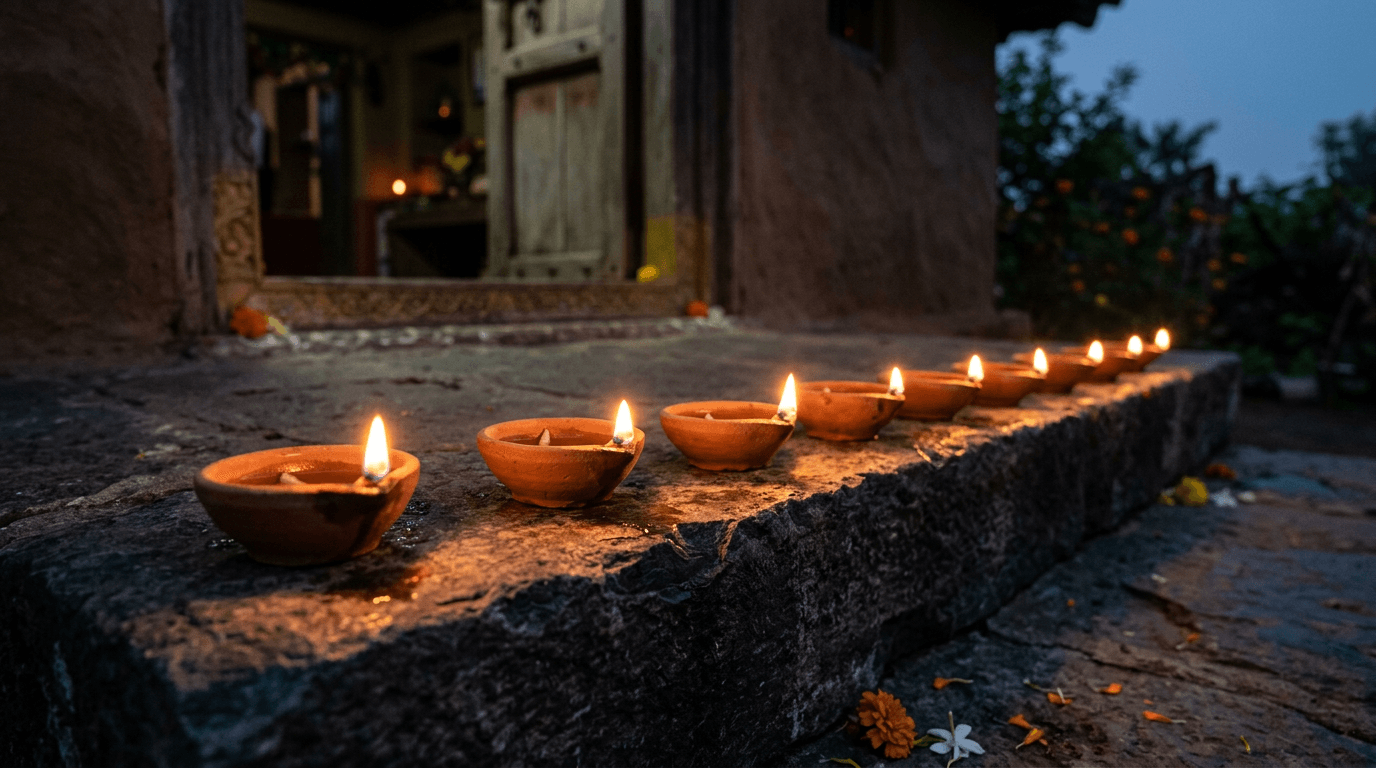
5. Terracotta Flame Cups Along the Step Edge
A row of terracotta diyas along the edge of the step, spaced a hand's width apart. Fill with oil rather than ghee for outdoor positions — it burns longer and it doesn't attract as much attention from the neighbourhood cats.
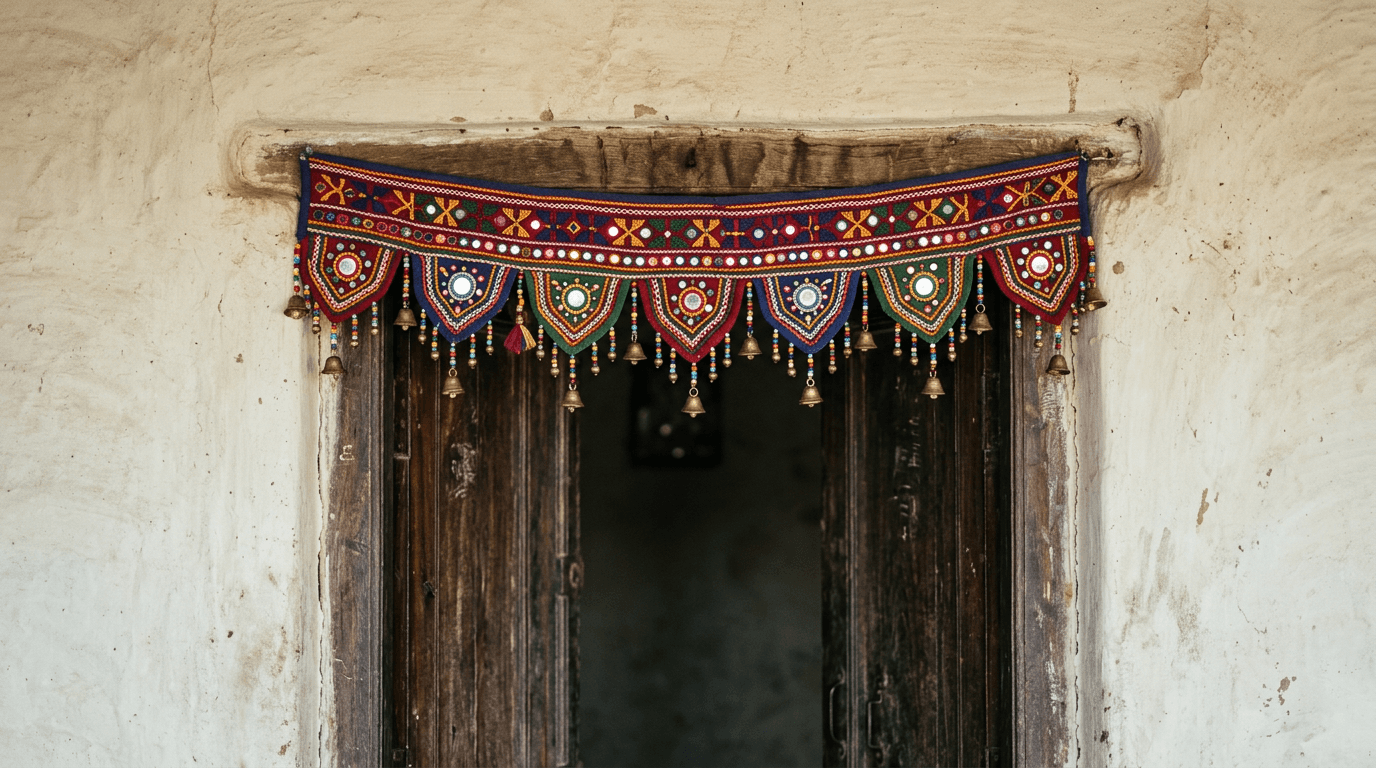
6. Beaded and Mirror-Work Door Hanging
The reusable version of the door toran. Beadwork, mirror discs, or a strip of bandhani fabric with bells. Goes up in a minute, comes down in a minute, and lives in a box for eleven months.
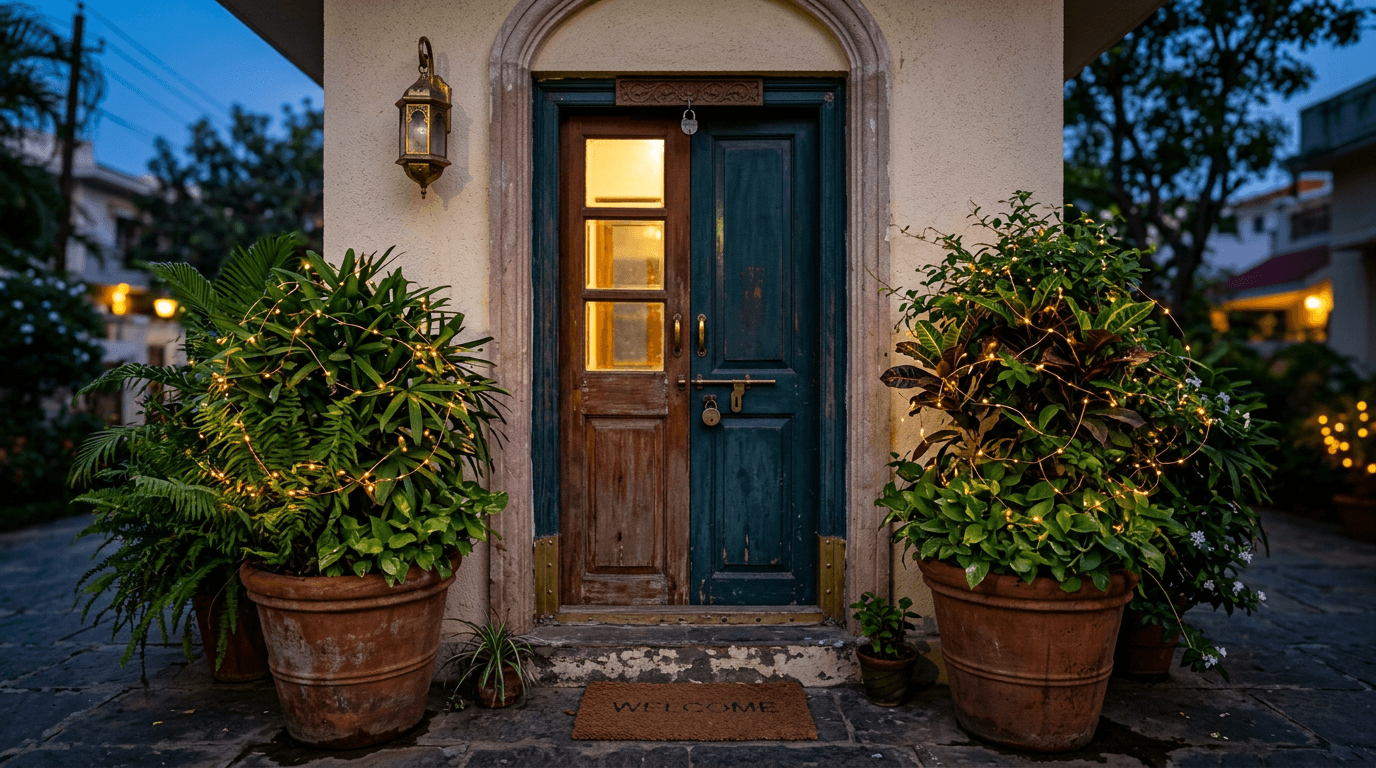
7. Potted Plants Wrapped in Light
You almost certainly already own the pots. A fine wire strand wound loosely through the foliage of two or three plants flanking the door turns them into lighting. Wind loosely — a tightly wrapped plant looks strangled.
8. A Lit Archway Over the Gate
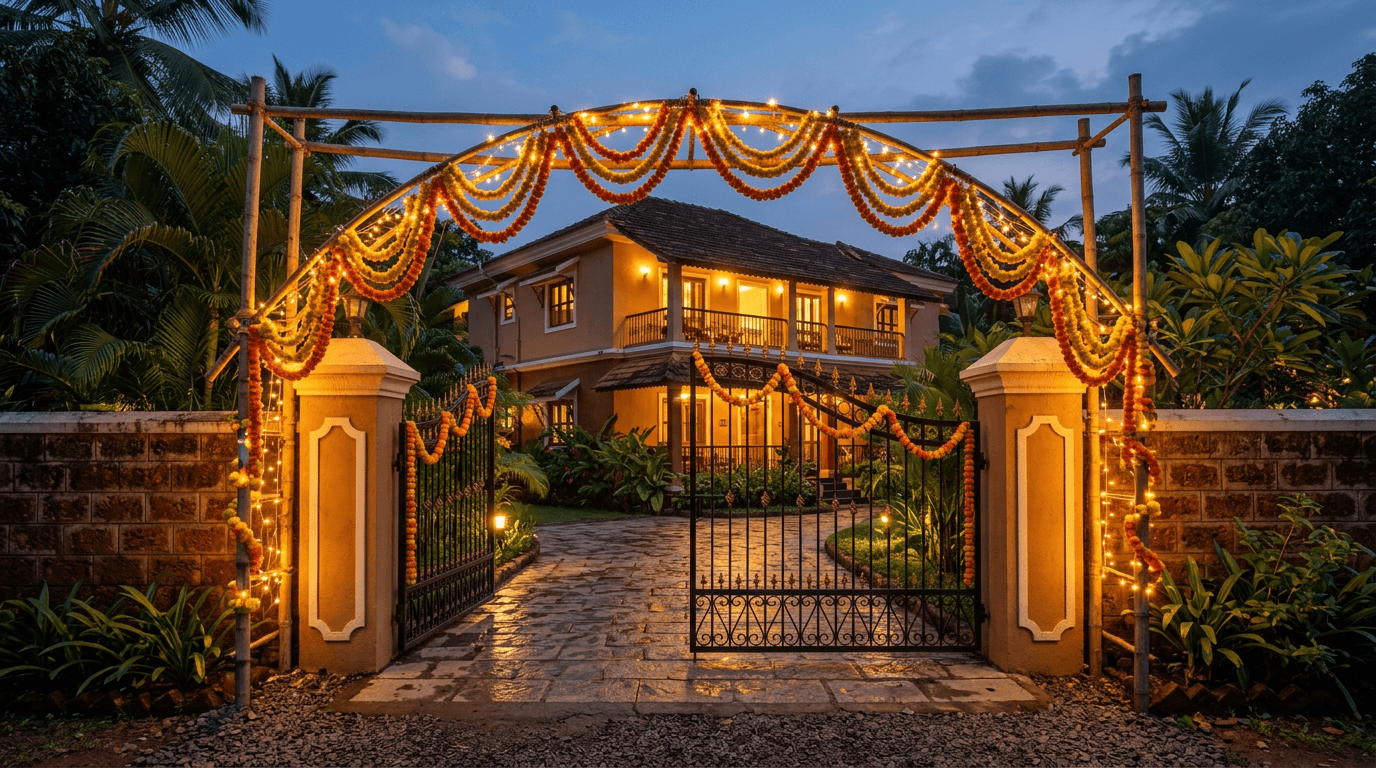
For independent houses. An arch of blossom ropes or a light-wrapped bamboo frame over the compound gate. It's the biggest gesture on this list and the one that makes the street look at your house.
Diwali Light Decoration for Balcony and Windows
This is the part of your Diwali home decoration that the outside world actually sees. A balcony reads from the road; a living room does not. It's also the cheapest set to execute, because light is the one material that looks the same whether it cost fifty rupees or five hundred.
Two rules. First, warm over cool: anything at 2700K or lower reads as festive, anything whiter reads as a hospital corridor. Second, hide the wire and show the glow — run strands behind the railing, behind the plants, behind the drape, never across the front. On our Om Sri Padma Nilayam project, a thirty-year-old Hyderabad apartment building we renovated for the whole resident body, the thing that changed how the building looked from the street was consistency across the facade rather than intensity on any one flat. Societies that agree on one light temperature look dramatically better than societies where everyone competes.
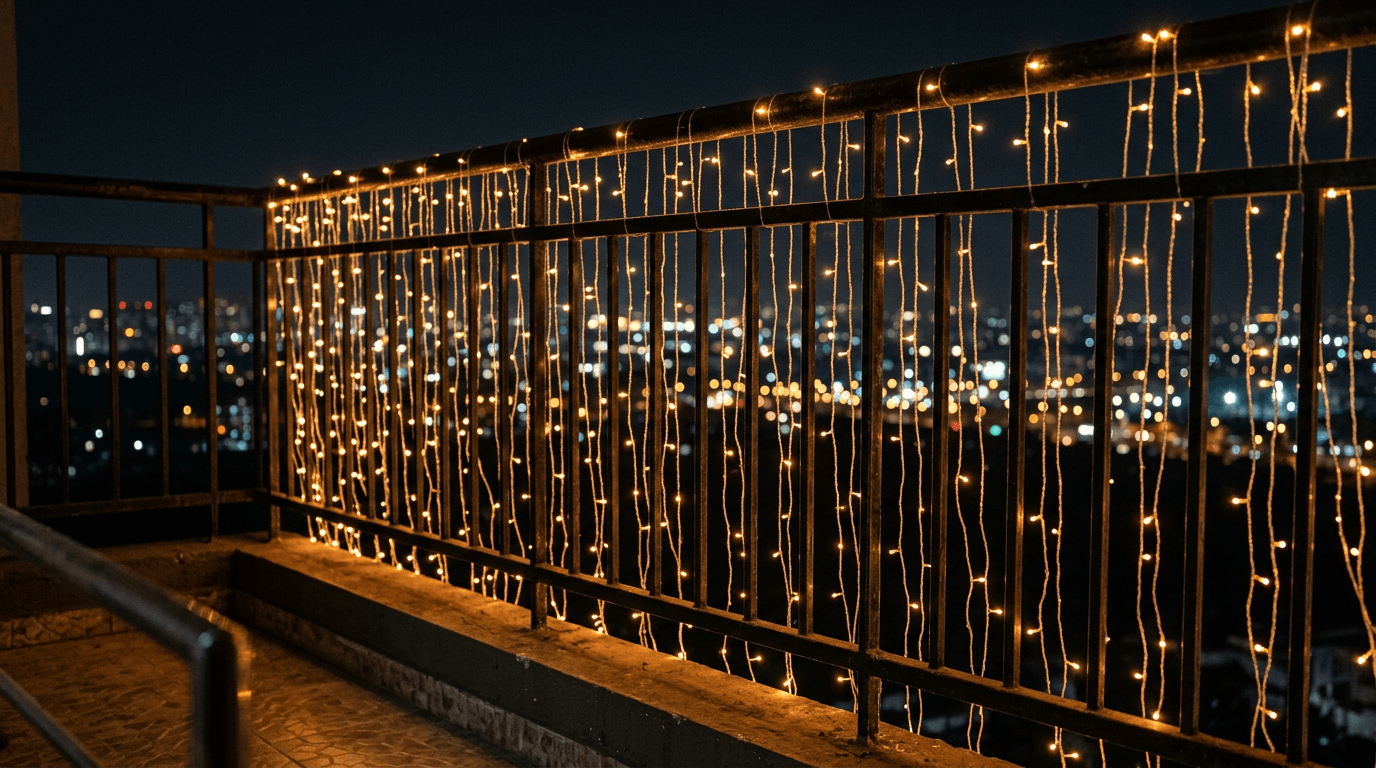
9. A Curtain of Wire Lights Down the Railing
Fairy lights hung vertically as a falling curtain rather than wound around the rail. Vertical drops read as intentional; horizontal winding reads as an afterthought.
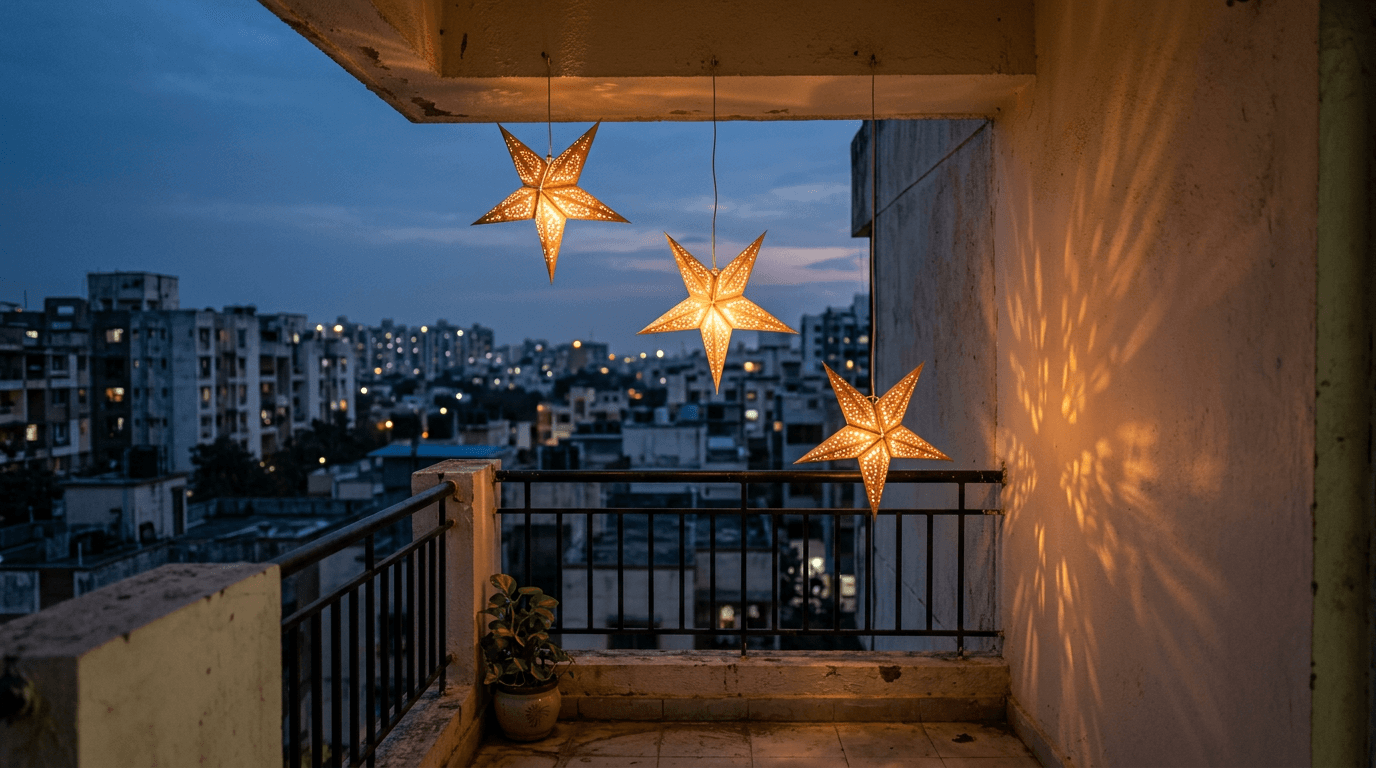
10. Suspended Paper Star Shades
The kandil - the classic Diwali lantern - in its modern form. Three shades at three different heights beat five at the same height, every time. Paper lanterns come flat-packed and store flat too.
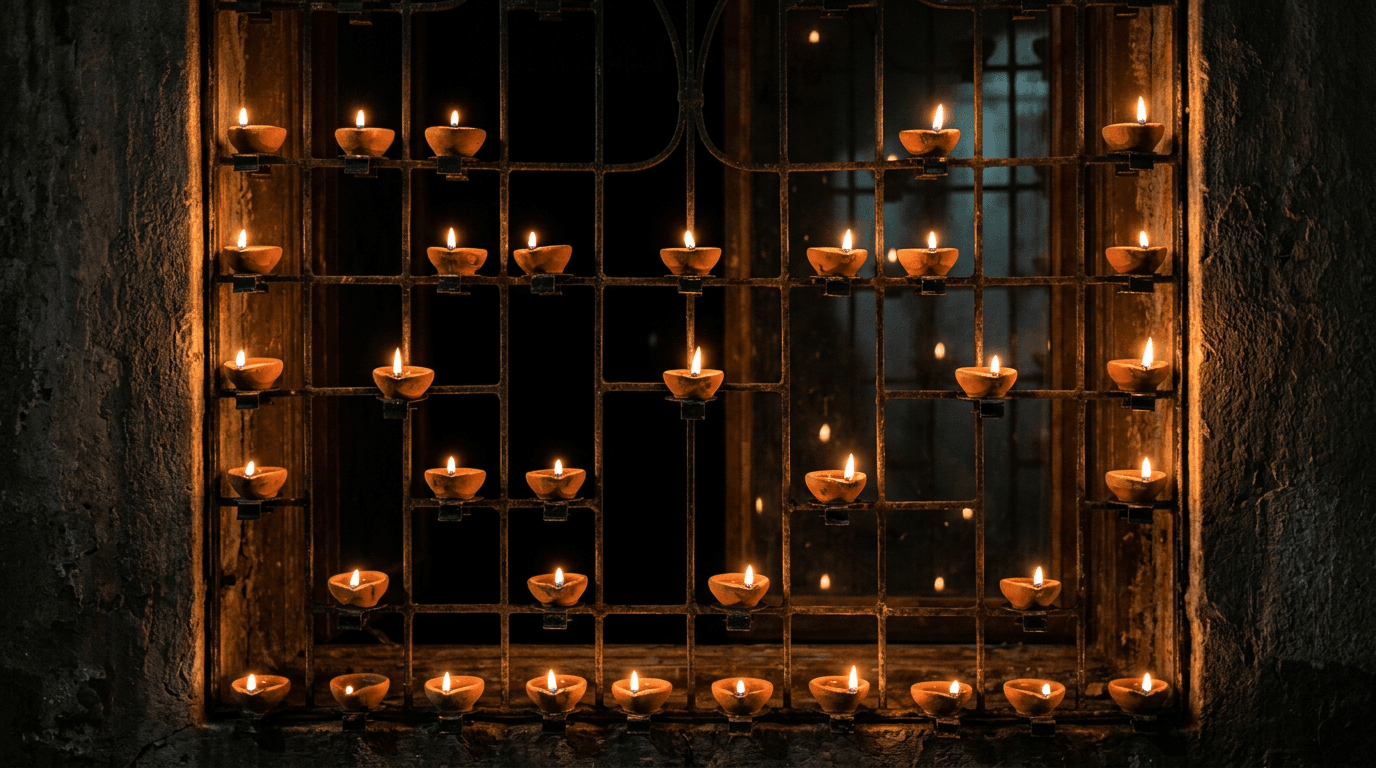
11. Grille-Mounted Flame Cups
Small metal holders clipped to the window grille, each holding one clay light. It gives you a lit window from outside without putting a flame anywhere near a curtain.
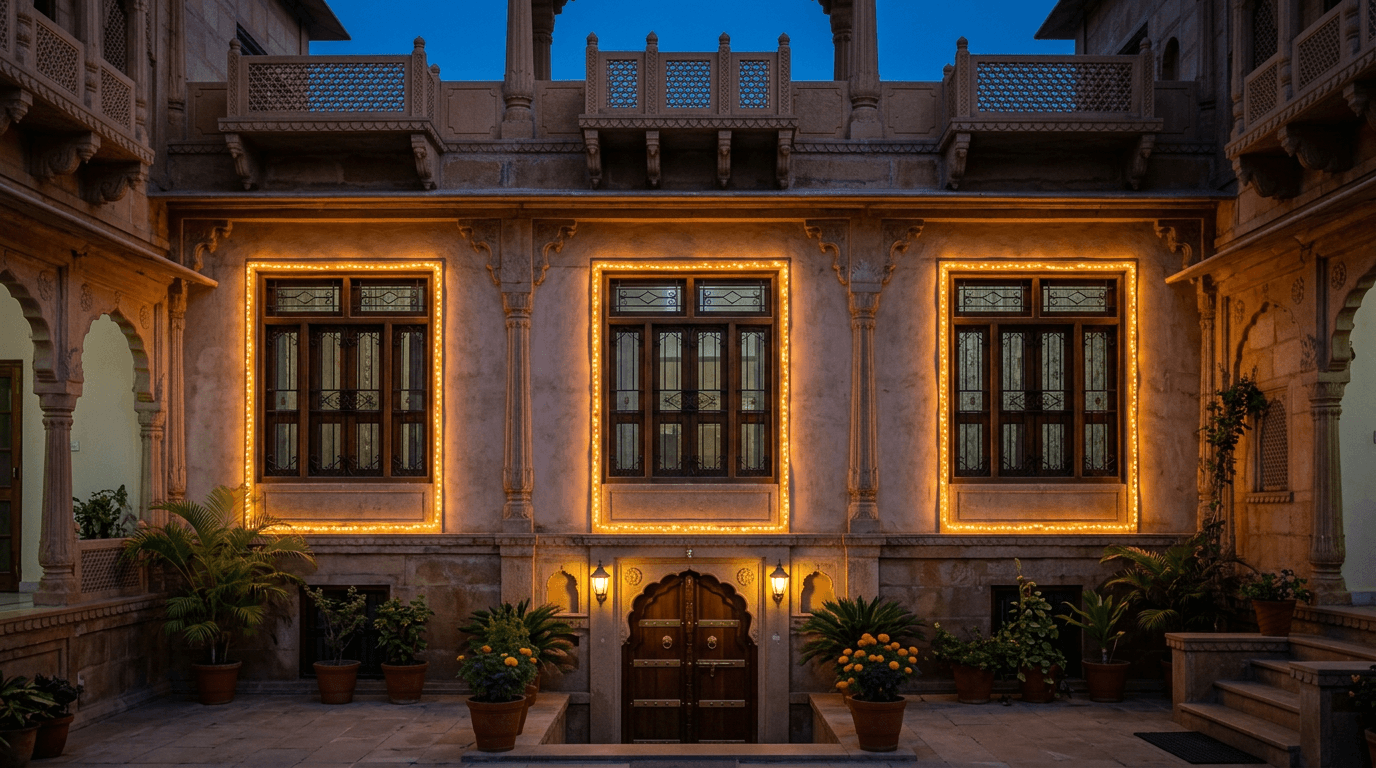
12. Window-Frame Outline in Amber Strands
Trace the window opening itself. One clean rectangle of light per window, and if you have three windows on a facade, do all three identically. Repetition is what makes it look designed.
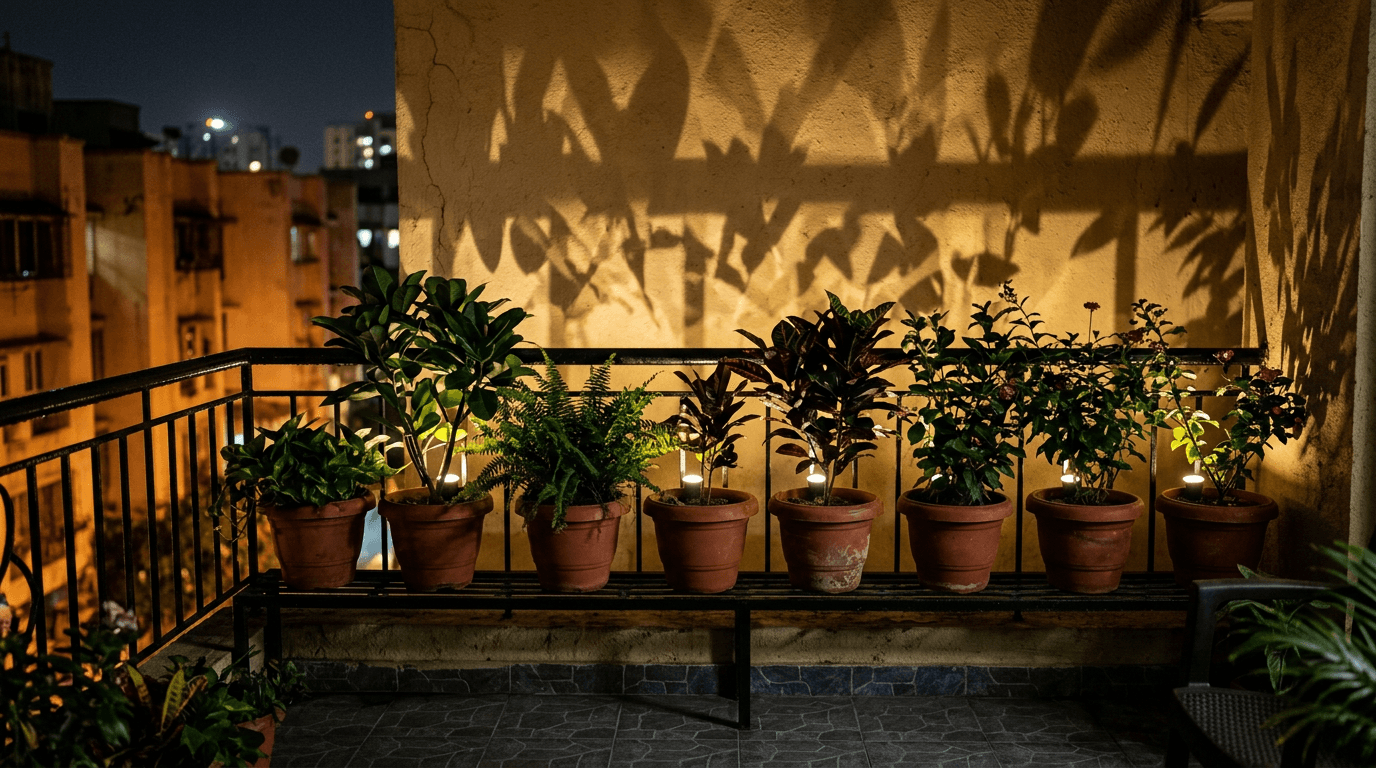
13. Railing Planter Row with Uplights
Planters along the rail with a small uplight tucked behind each one. The foliage throws shadows up the wall, and the effect costs almost nothing.
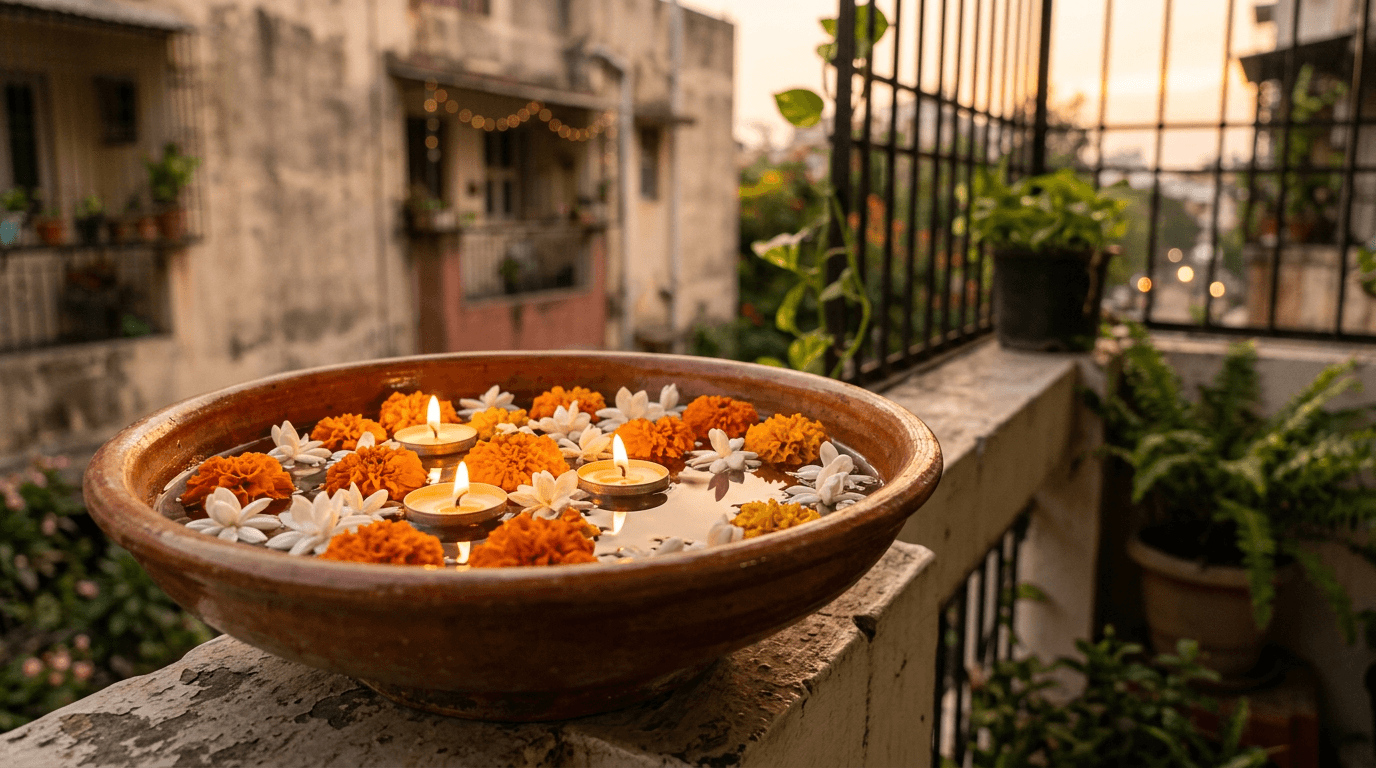
14. Floating Blooms in a Wide Bowl on the Ledge
One wide vessel of water on the ledge, blooms floating, two tea lights. It's the urli idea moved upstairs, and it works in a flat where there's no threshold to flank.
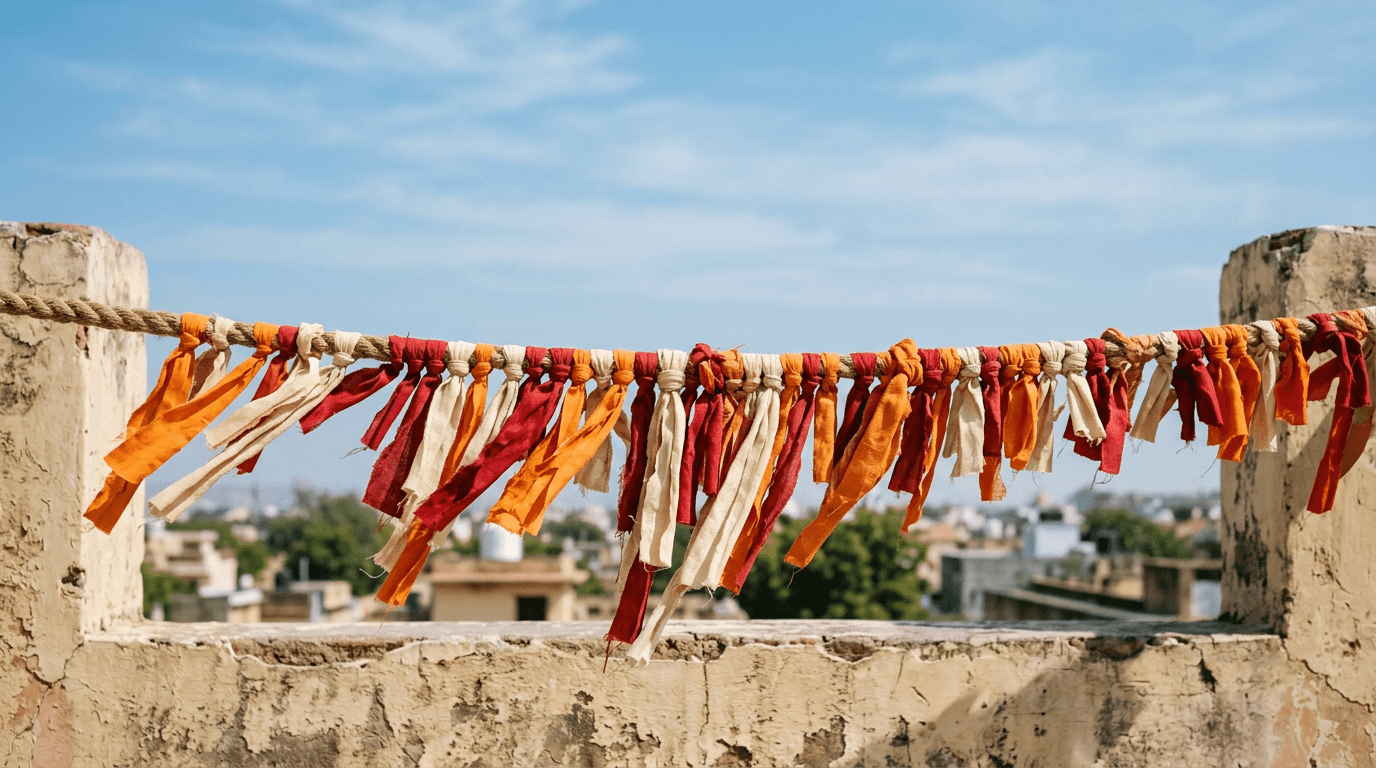
15. Fabric Bunting Along the Parapet
Strips of leftover cotton or a torn old saree, knotted along a length of jute rope. Daytime decoration for a set of ideas that's otherwise all about night.
Festive Living Room Decoration Ideas
The living room is where the five days actually happen — where people sit, where the sweets box lives, where somebody's aunt will inevitably rearrange your styling. So decorate it for use, not for photographs. Leave the circulation clear, keep flames away from where children run, and accept that the room will be messier than the image in your head.
Hosting changes the brief completely. On our Hamsini project in Hyderabad, a five-bedroom home for a joint family, the whole design problem was three generations sharing space without anyone losing privacy. A house full of festival visitors has the same problem in compressed form: you need one gathering zone that's genuinely styled, and quiet corners nearby for the people who've had enough.
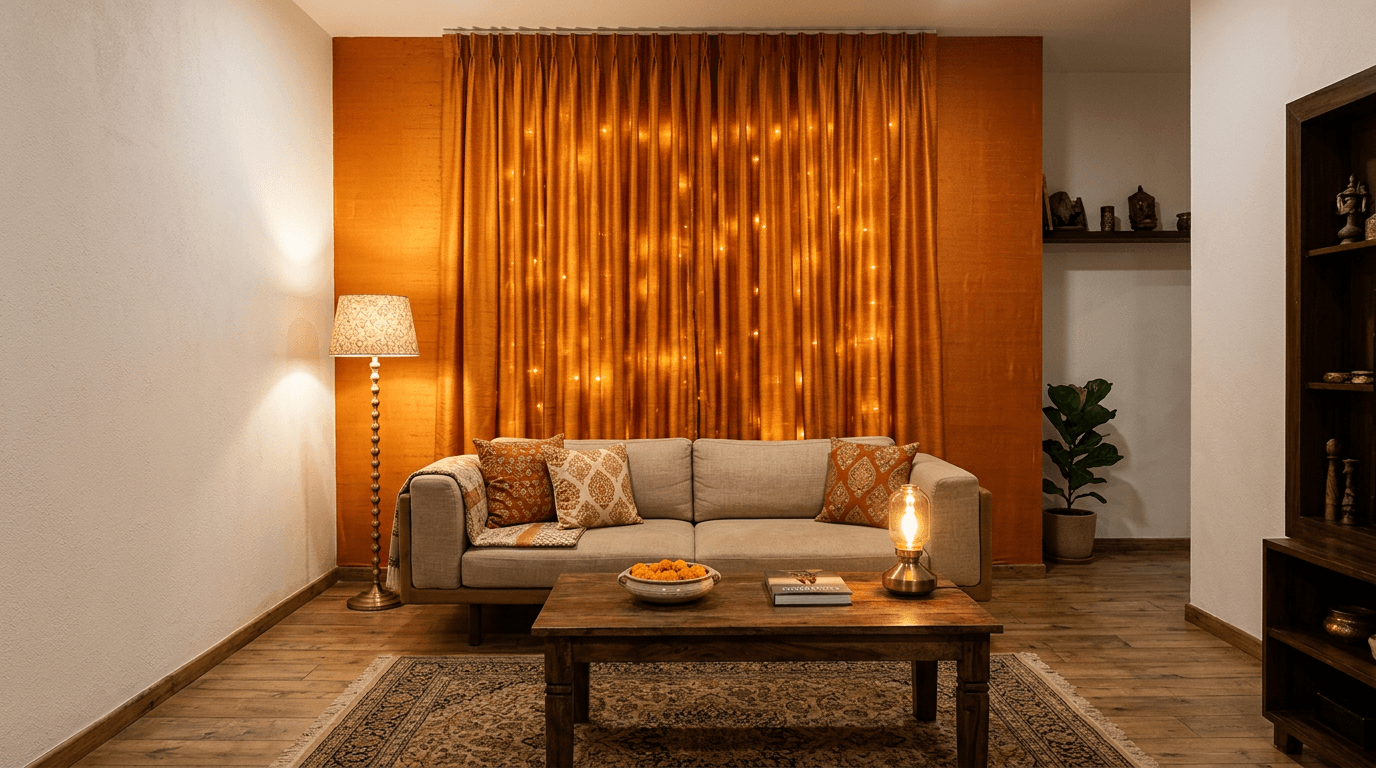
16. One Glowing Focal Wall
Pick the wall behind the main seating and put everything into it — a fabric drape, a strand behind the drape, one framed piece. Then leave the other three walls alone. Restraint here is what makes the room look styled rather than dressed.
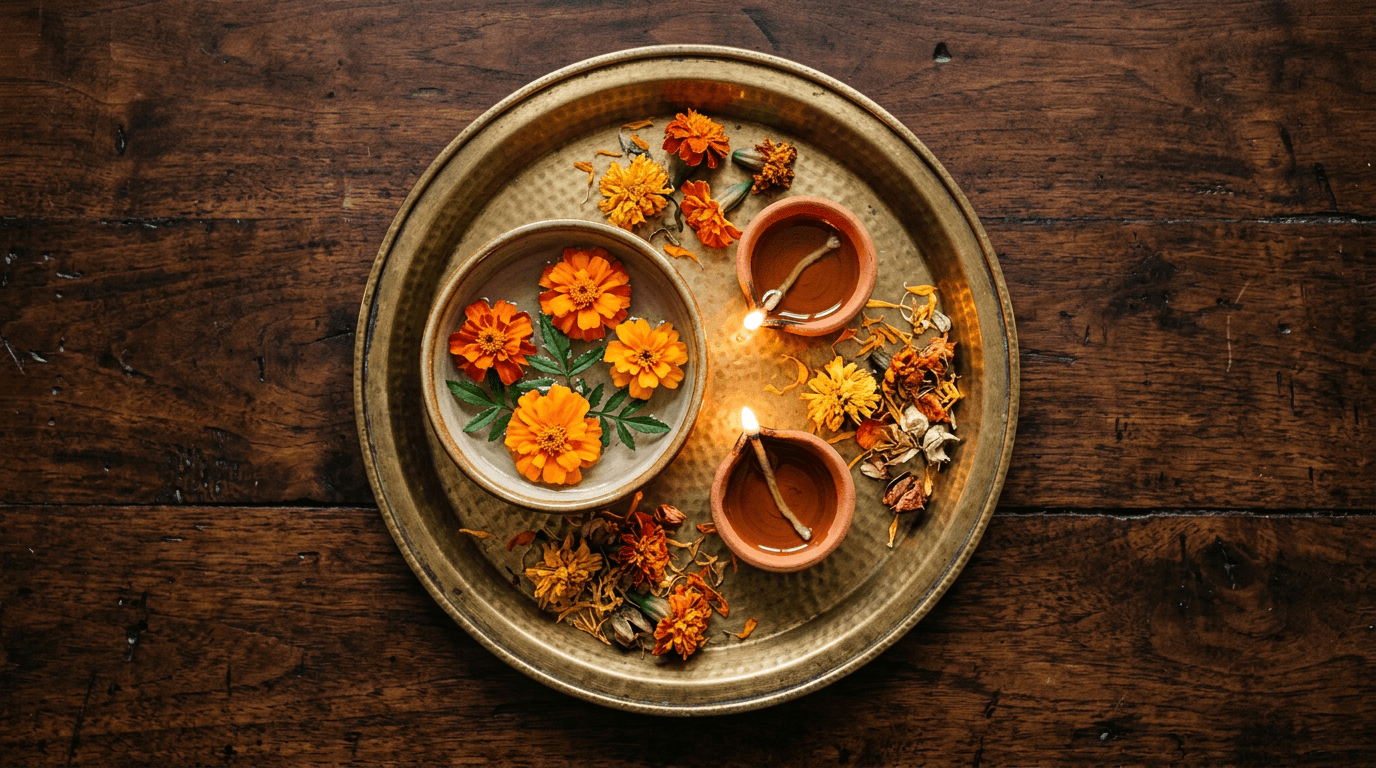
17. Coffee-Table Centrepiece Tray
One brass or wooden tray, three objects, done. A small vessel of water with floating blooms, two clay lights, and a handful of dry flower heads scattered on the tray surface.
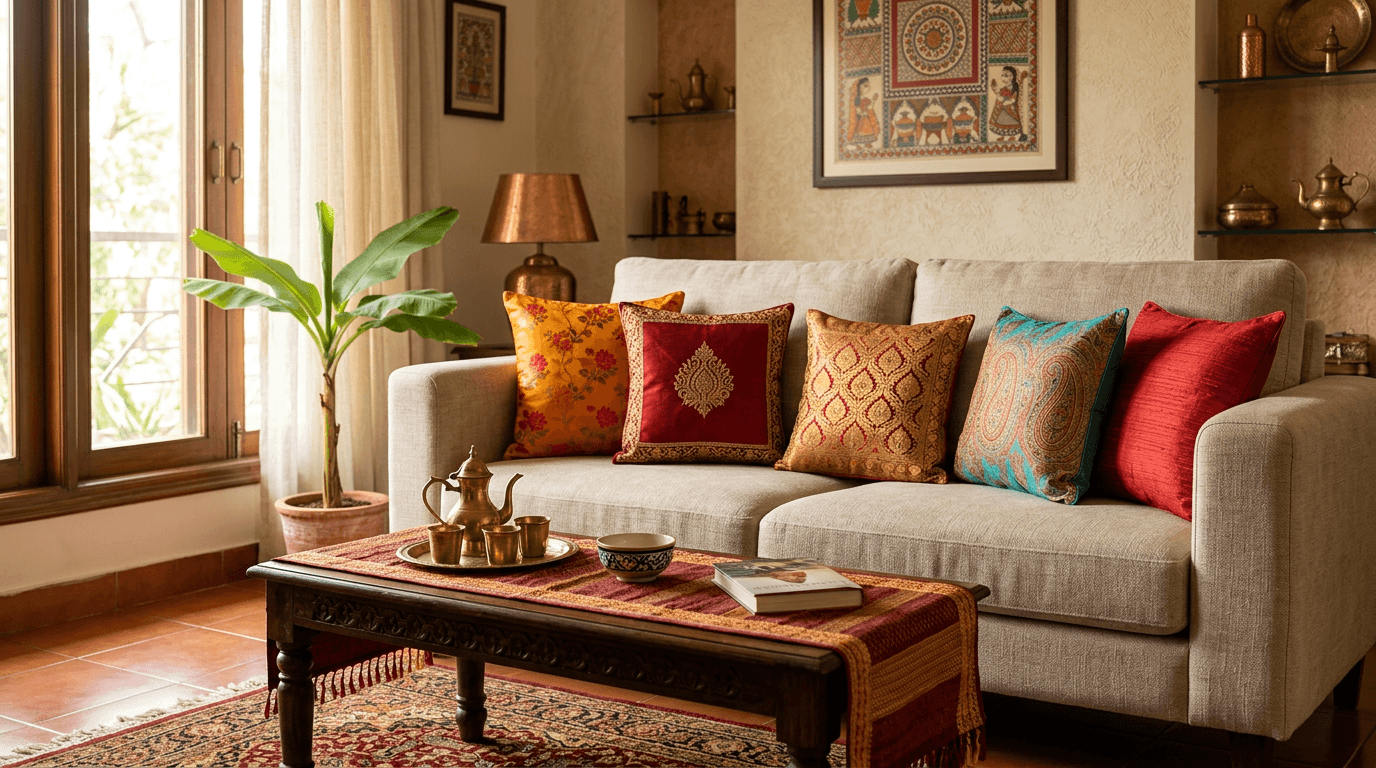
18. Throw Pillow and Runner Swap
The laziest high-impact move in the house. Swap your everyday cushion covers for festival ones and change the table runner. Ten minutes, and the room reads differently.
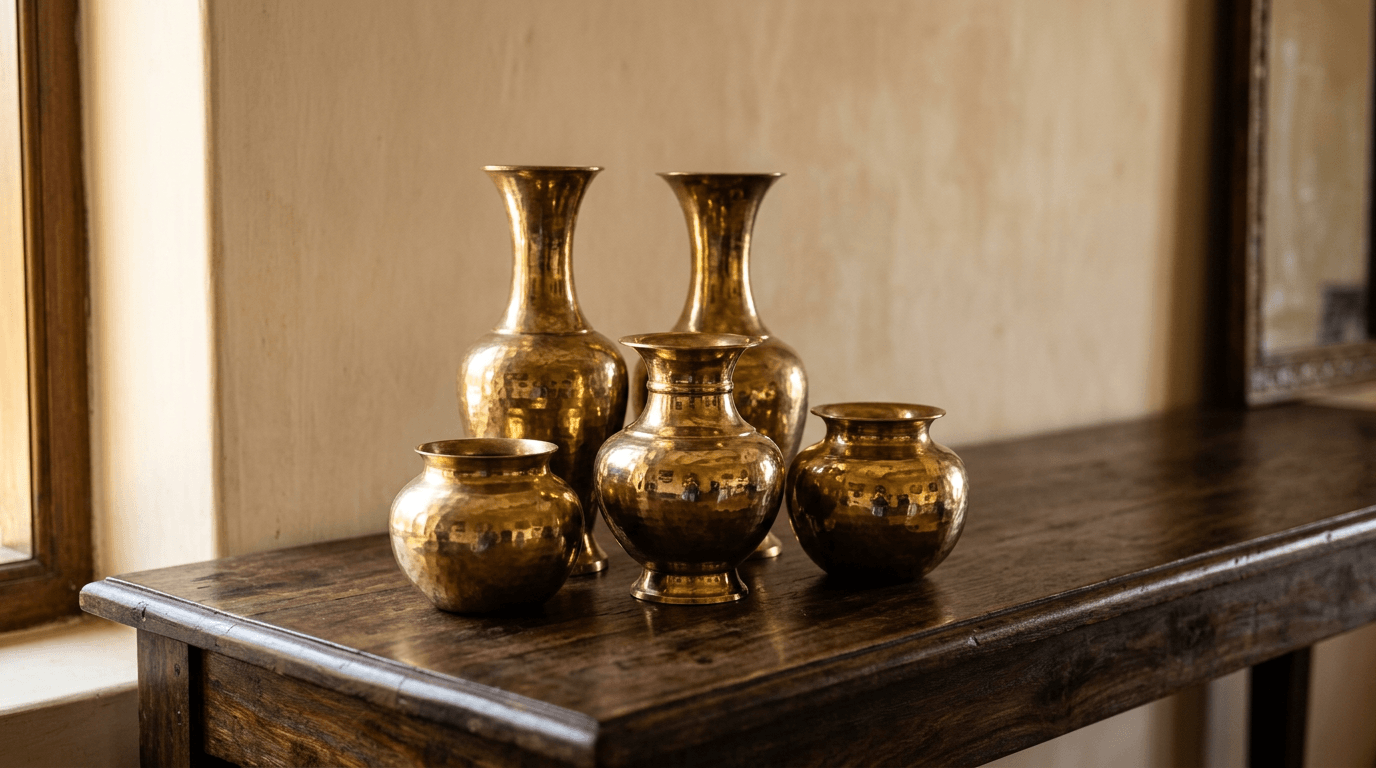
19. Brass Cluster on a Console
Every Indian household has brass in a cupboard. Take it out, polish it, and group it — odd numbers, three different heights, one surface. Grouped brass looks like a collection; scattered brass looks like clutter.
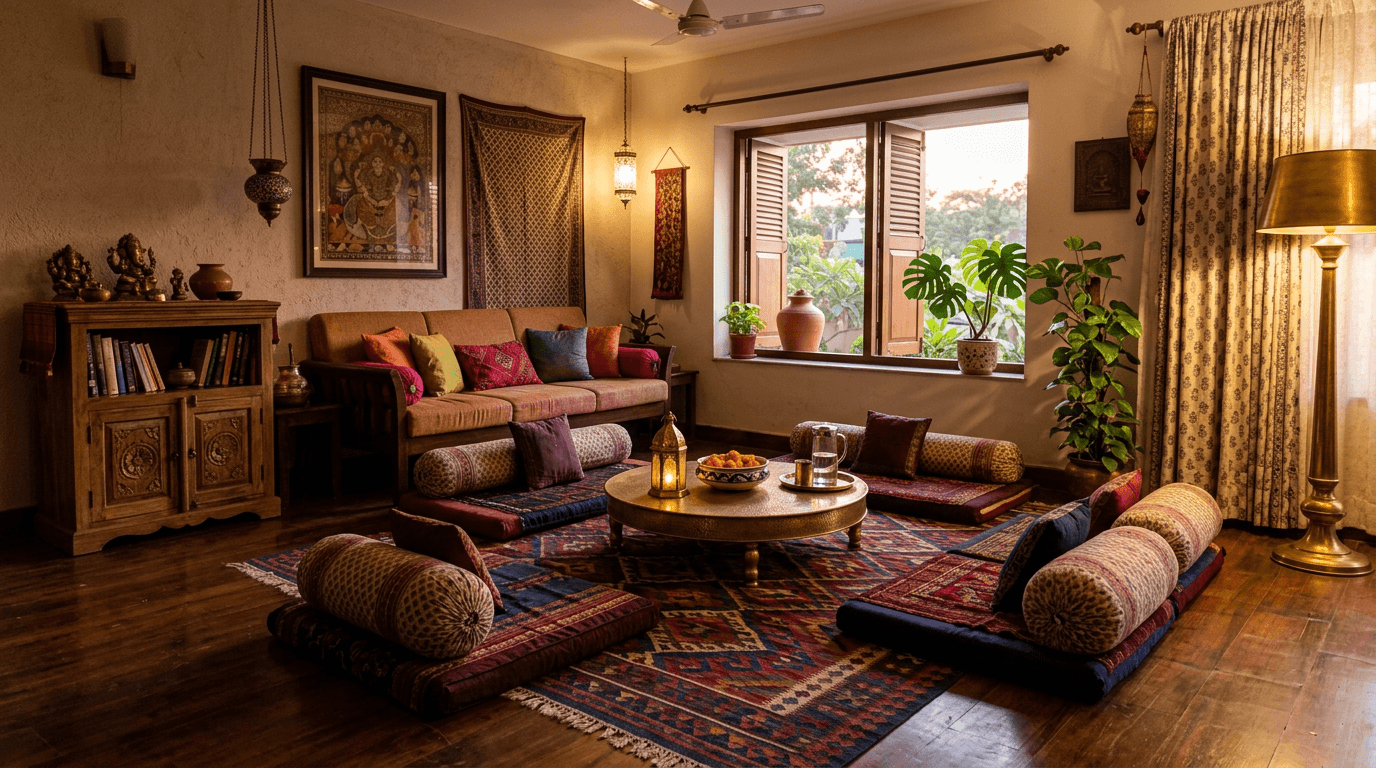
20. Floor Seating with Low Cushions and Bolsters
Push the sofa back and put a dhurrie and floor cushions in the middle. It seats twice as many people and it reads as traditional without a single ornament.
21. Mirror-Backed Flame Cups
Set a row of clay lights directly in front of a mirror or a glass cabinet door. The reflection doubles them for free — this is the single best trick for a small room.
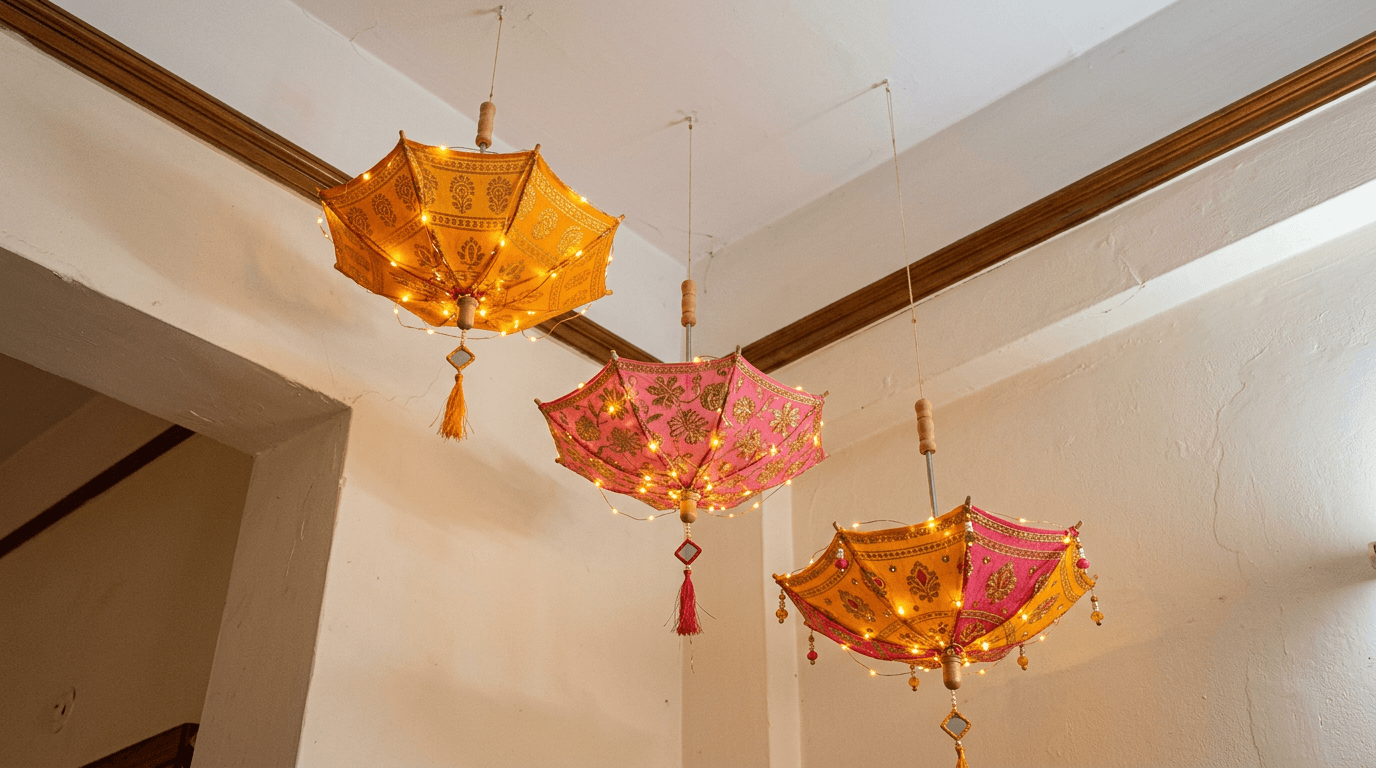
22. Suspended Umbrella Cluster
Three or four small decorative parasols suspended upside down from the ceiling at staggered heights, a fine strand threaded through each. Reads beautifully in photographs and packs completely flat.
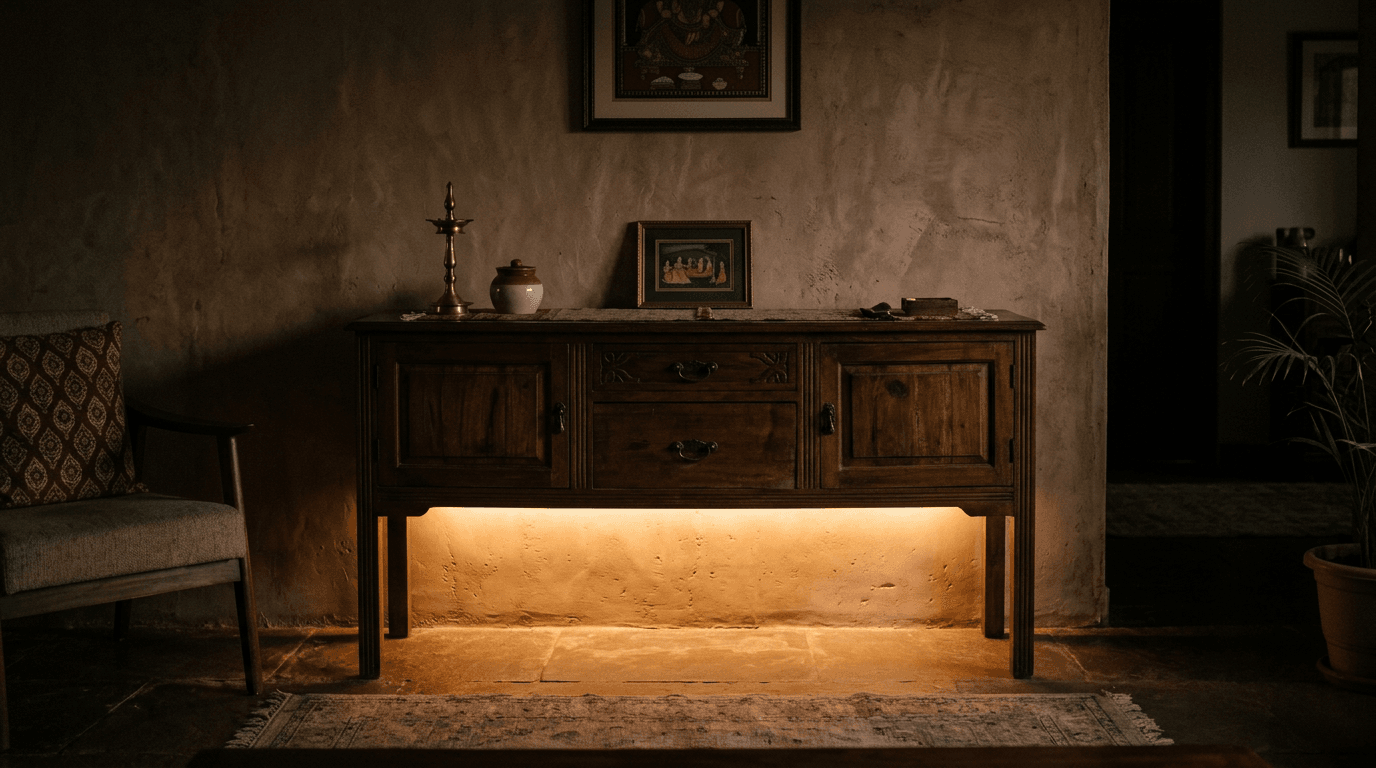
23. A Light Run Along the Sideboard Edge
A single strand tucked under the front lip of a sideboard or a TV unit, so the light washes down the wall below it. Nobody sees the source, everybody sees the effect.
Pooja Room Styling for the Festival of Lights
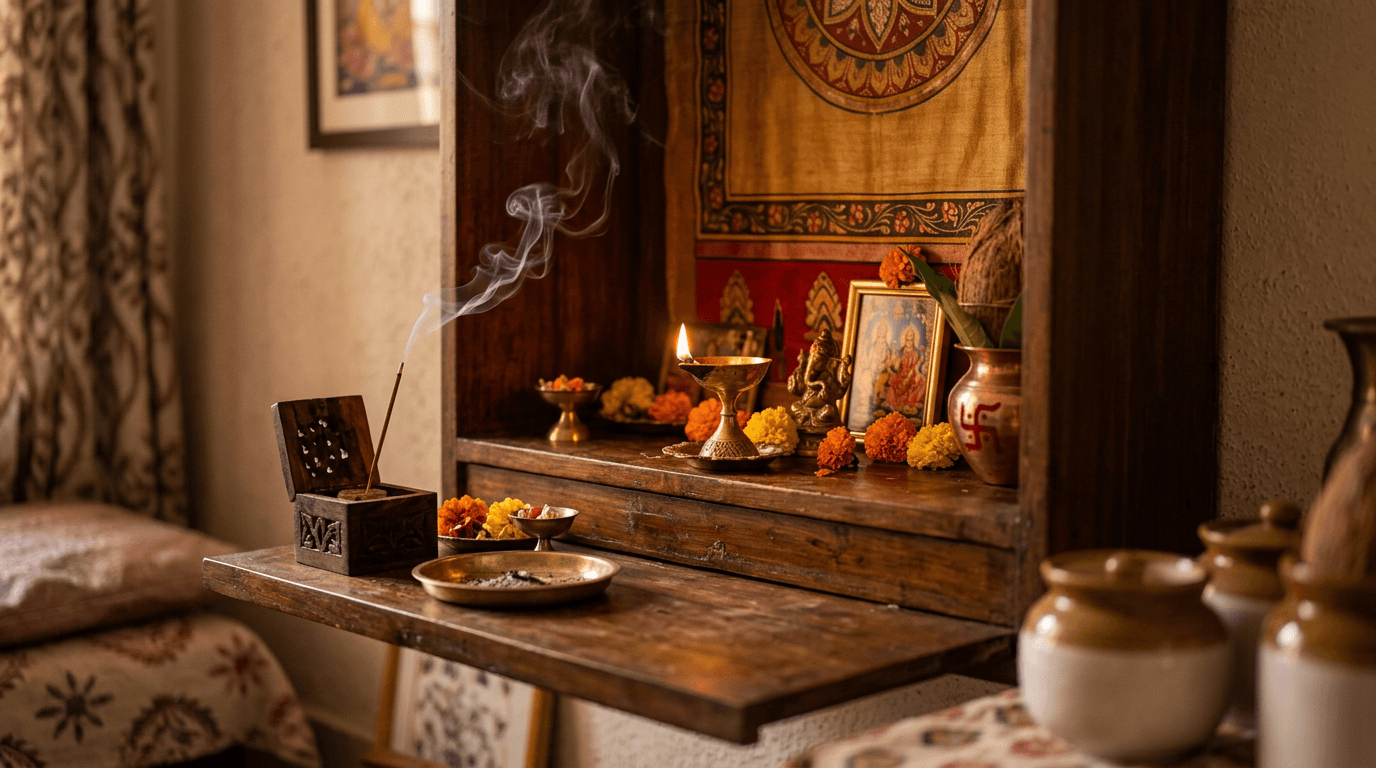
Two rules for this corner, and they're both about restraint. Don't crowd the shelf, and don't put anything in front of the idol. A pooja room for Diwali needs three things it doesn't have the rest of the year: a fresh drape behind, flowers framing it, and more light than usual. That's it.
We've seen how much this corner drives a whole layout. On our Pushpa Nilayam G2 project — a 1000 sft two-bedroom flat in Hyderabad bought from previous owners with a completely different set of requirements — reworking the plan around the new family's ritual needs was the actual brief. If you're styling a corner that's already permanent, our pooja room styling guide covers the year-round version.
24. A Fresh Drape Behind the Shelf
One length of clean silk or cotton pinned flat behind the shelf. Immediately makes a plywood unit look like a designed alcove.
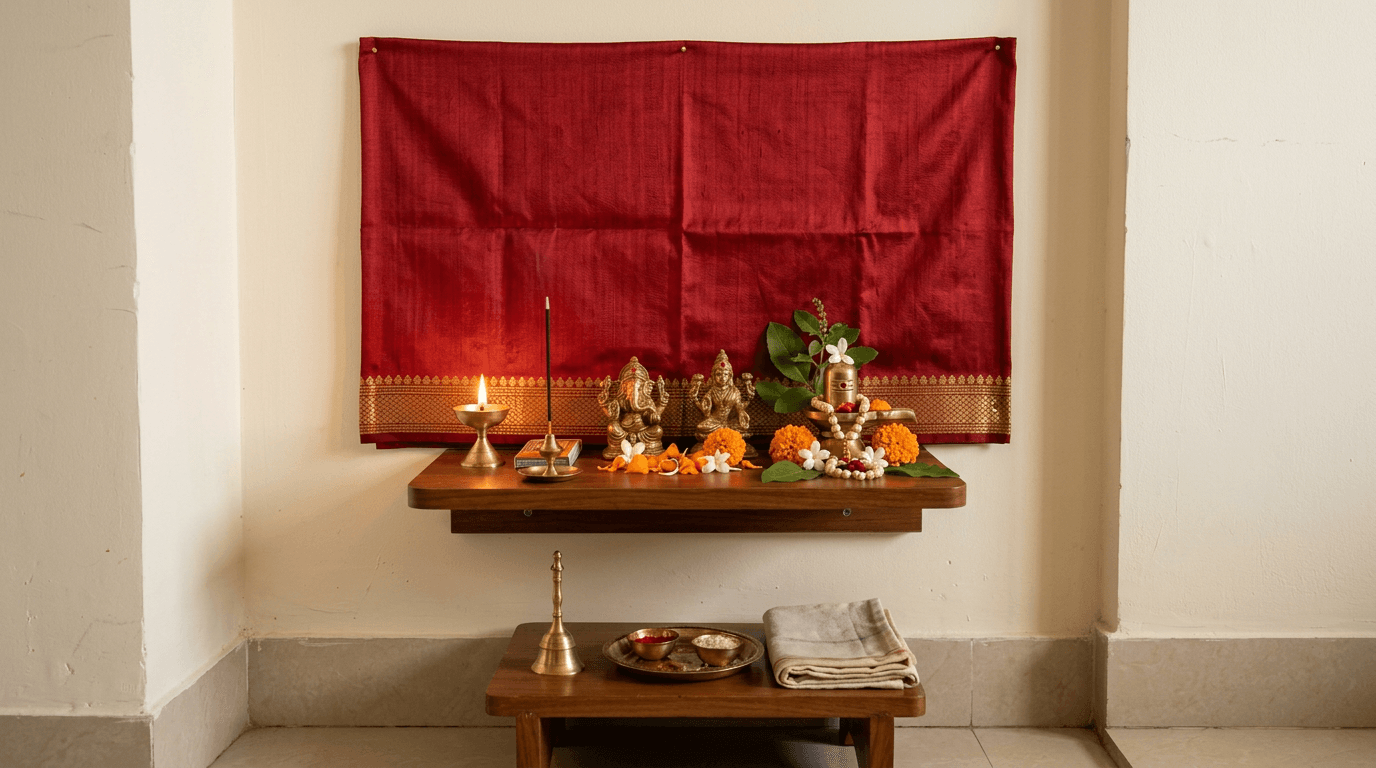
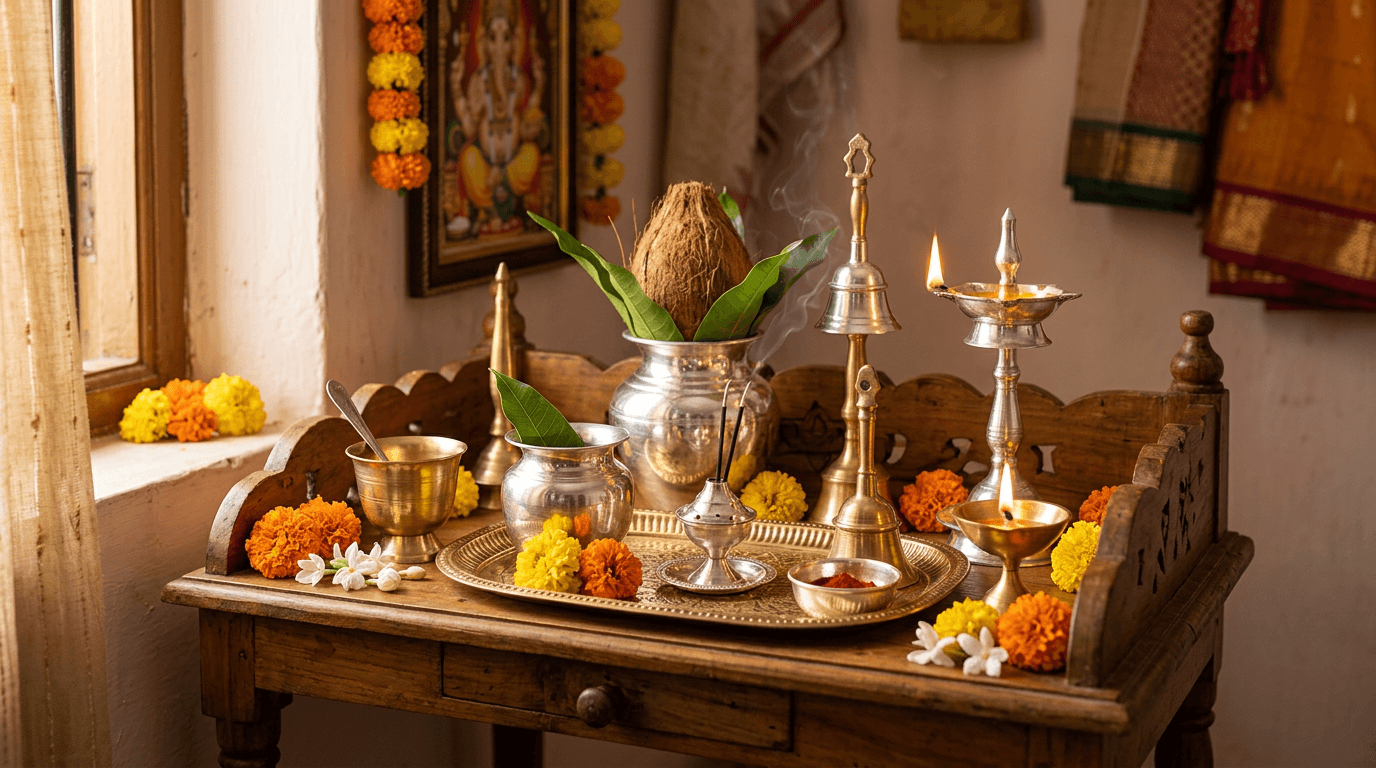
25. Polished Silver and Brass, Arranged Low
Take everything off the shelf, polish it, and put back two-thirds of it. Arrange by height with the tallest at the back. The gap you leave is the point.
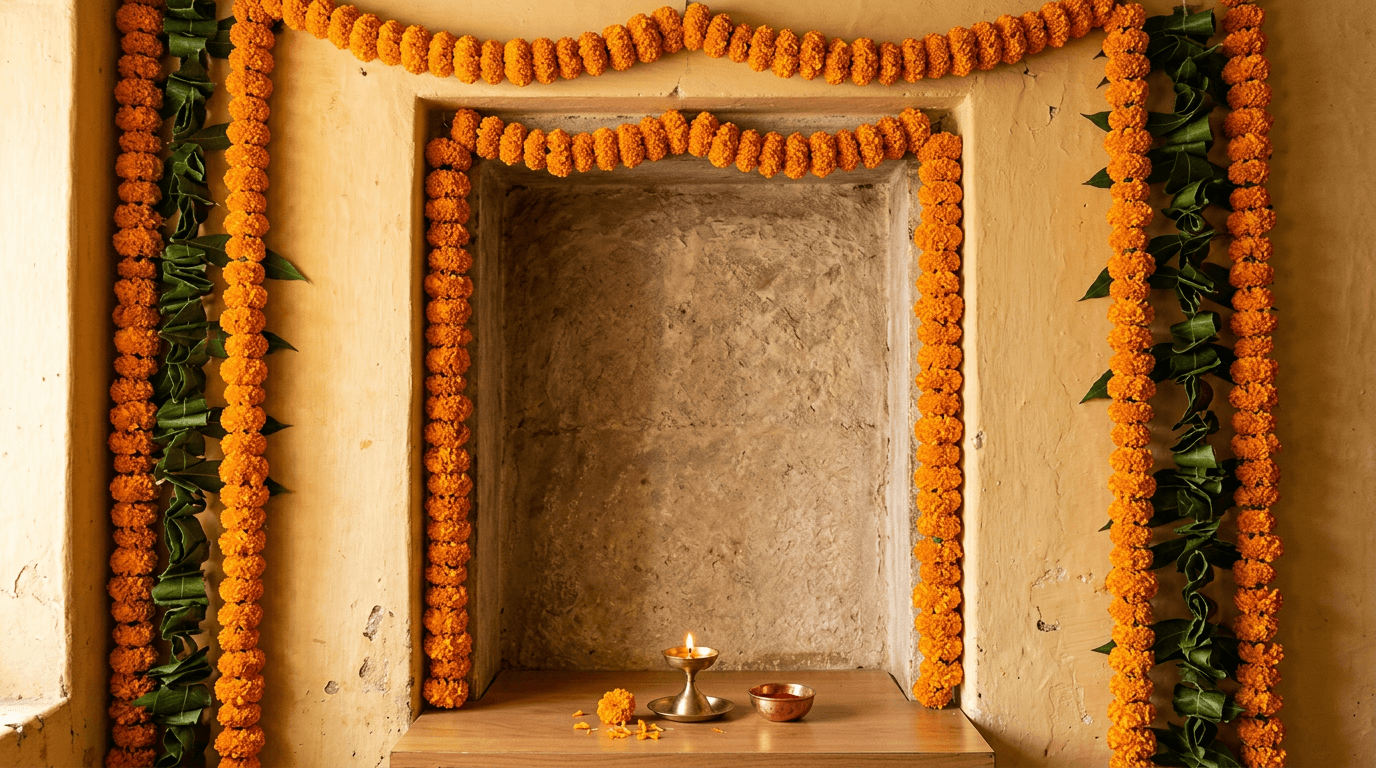
26. Blossom Ropes Framing the Alcove
Two vertical flower strings down the sides of the alcove, one across the top. It frames without covering, which is the whole trick.
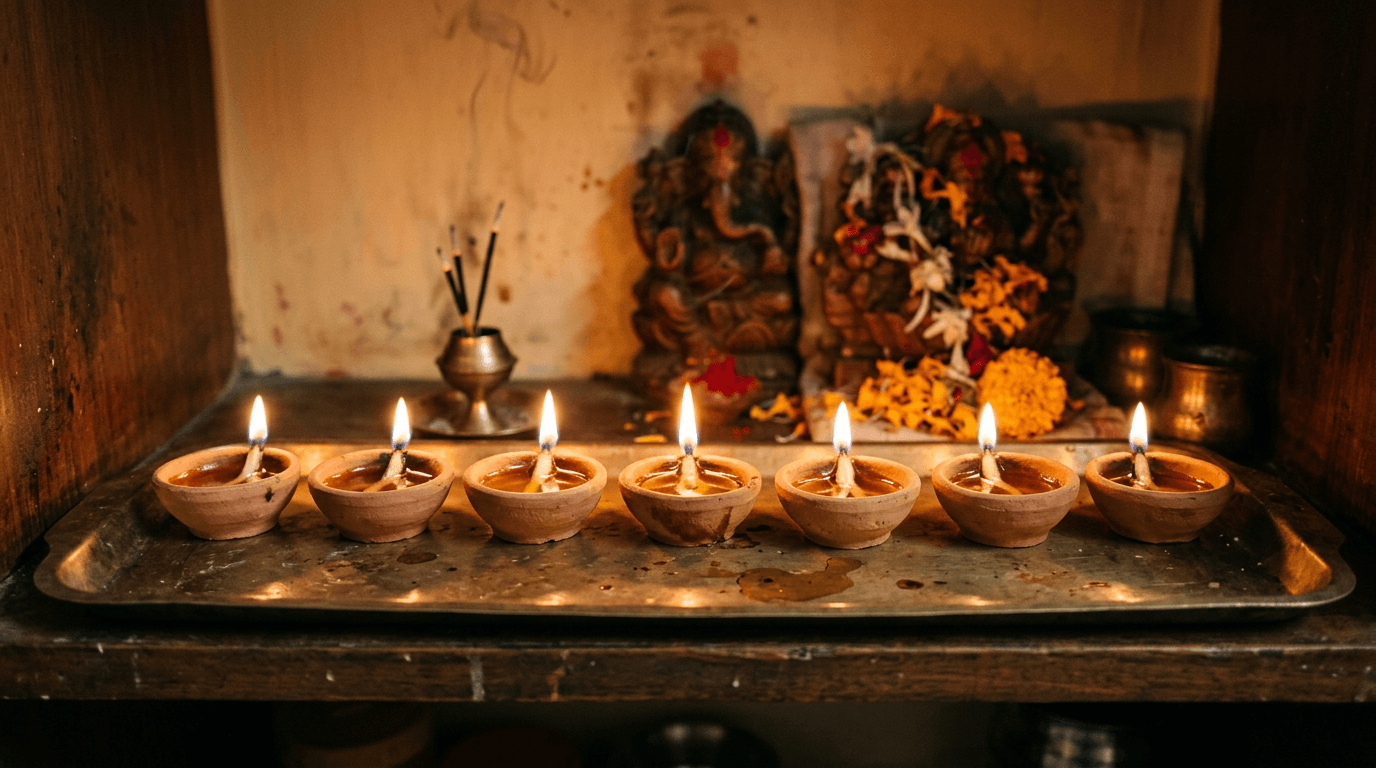
27. A Metal Tray of Flame Cups
A row of clay lights on a metal tray rather than directly on the shelf. Catches the oil, protects the wood, and lets you lift the whole row out in one movement. On a small shelf, one diya at the front is enough.
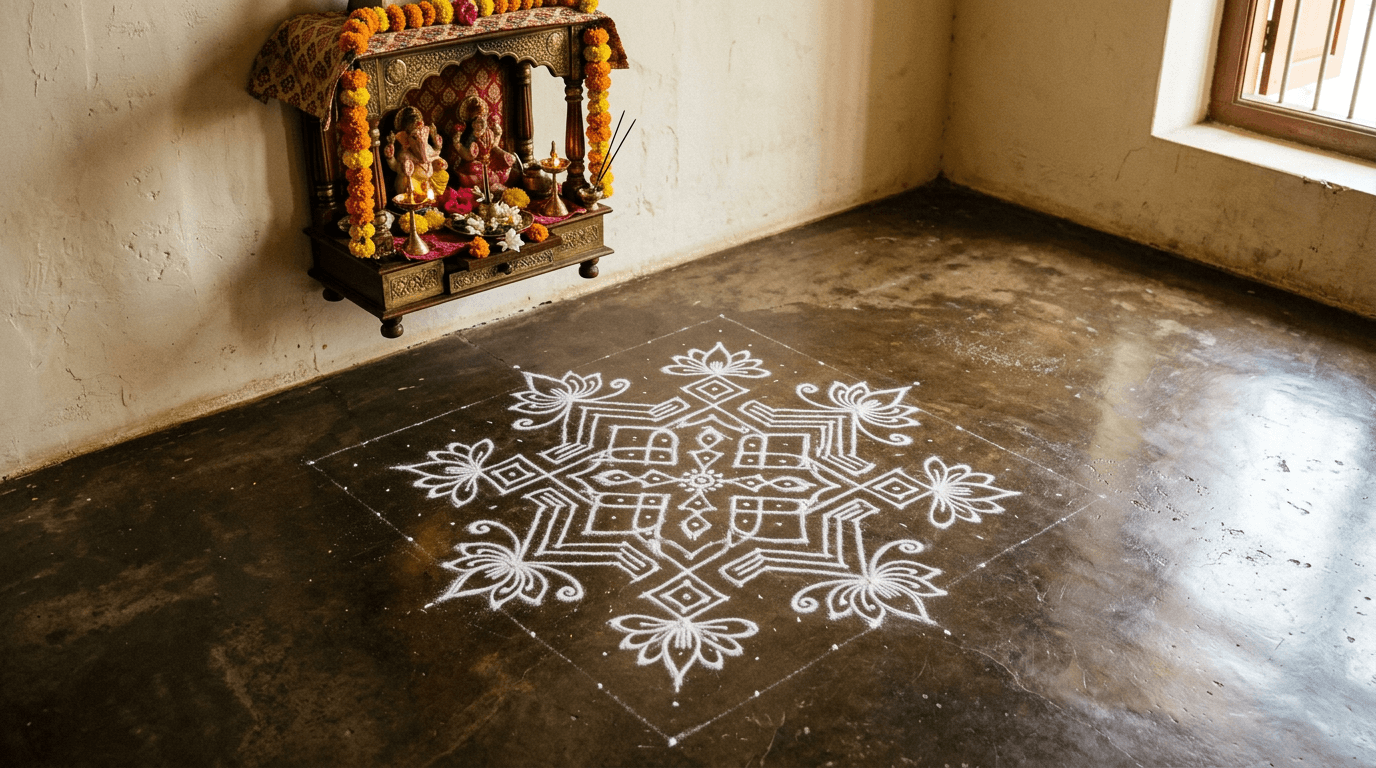
28. A Floor Motif Below the Shelf
A small kolam-style pattern on the floor directly under the shrine, drawn in rice flour. Sweeps away clean, feeds the birds, and takes four minutes.
29. Incense and Aromatics, Staged
A small stand for incense set to one side rather than in the middle, with a shallow dish of camphor beside it. Keep both away from the fabric drape behind.
Flower Decoration Ideas for Every Room That Last the Week
Flowers add more festive charm to your home per rupee than anything else you can buy, and they're the only element of a festive display that people can smell. The trade-off is honest: marigold flowers hold three to four days indoors, roses about two, and anything in direct afternoon sun holds one. So buy in two rounds — a light set on Dhanteras and the main set on the morning of the eighth — rather than one big buy that's tired by the time the guests arrive.
A marigold garland is the workhorse of the whole festival. One garland at the door, another wound along a rail, and - if you have blooms left - the heads pulled off and laid flat as a flower rangoli on the floor. That last one is the simplest rangoli design there is; for proper rangoli ideas with dot grids and repeat patterns, we have a separate guide.
Mango leaves are the exception. They dry beautifully, hold their shape, and a mango leaf toran that's a week old still looks intentional.
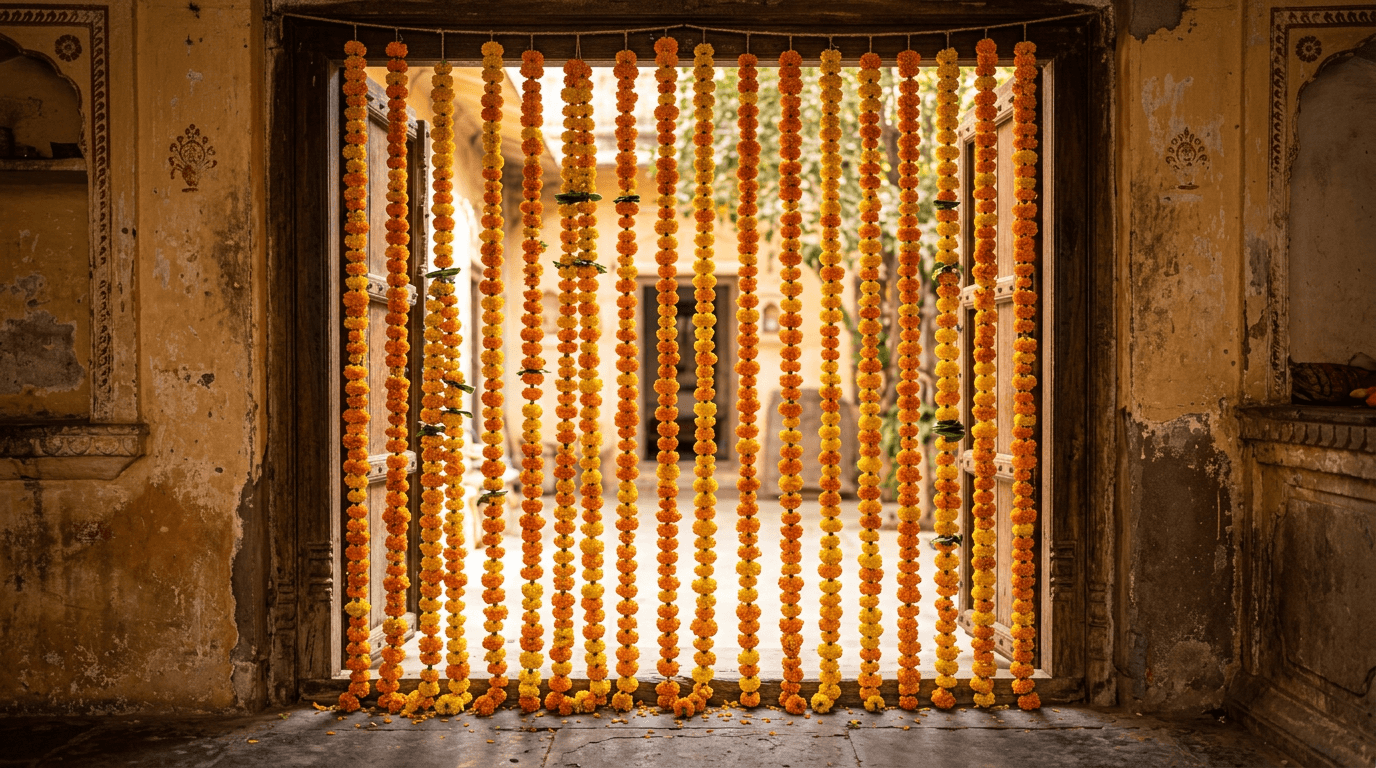
30. A Full Blossom Curtain
Twelve to fifteen flower strings hung side by side across an opening, floor to ceiling. It's the single most photographed idea in this article and it takes about an hour.
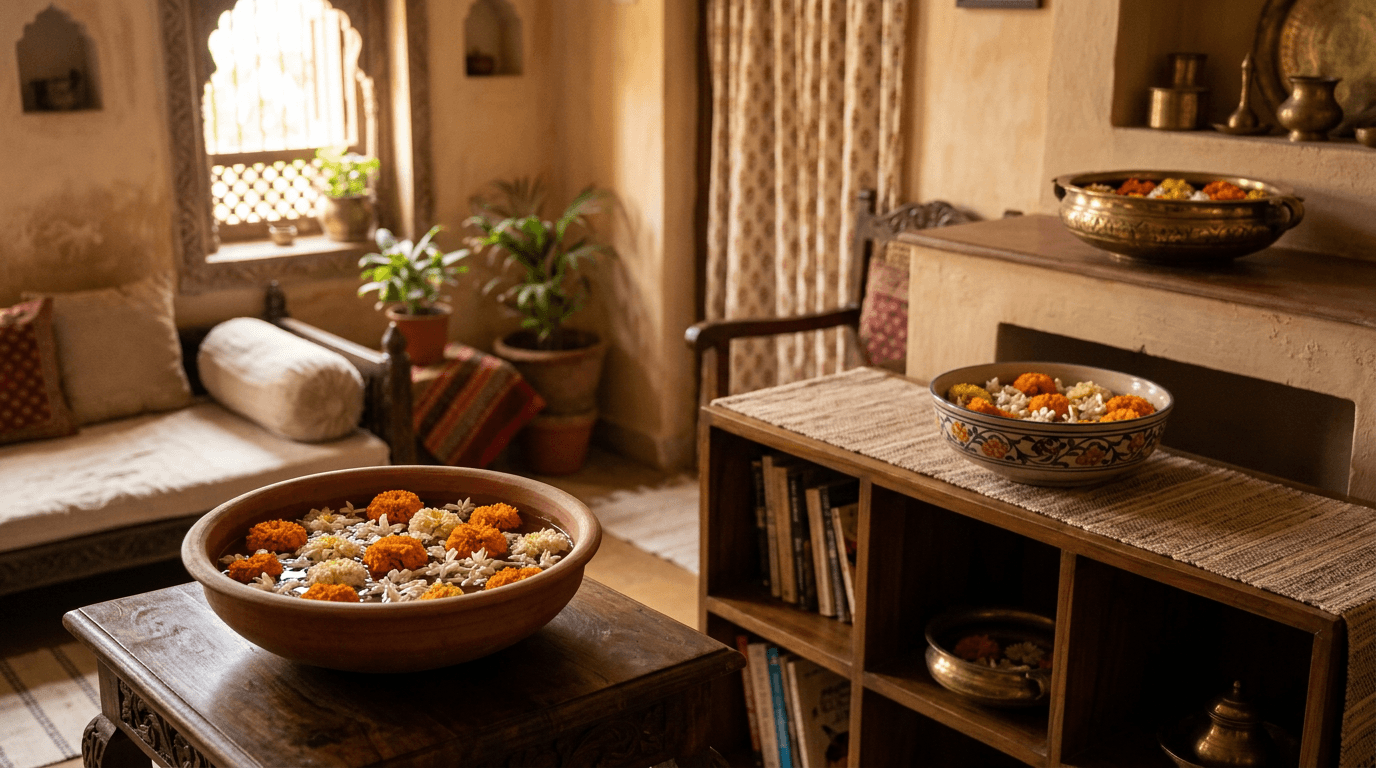
31. Loose Blooms Floating in Shallow Bowls
Three shallow bowls of water on three surfaces, flower petals floating in each. The most forgiving idea here — it looks good even when it's half wilted.
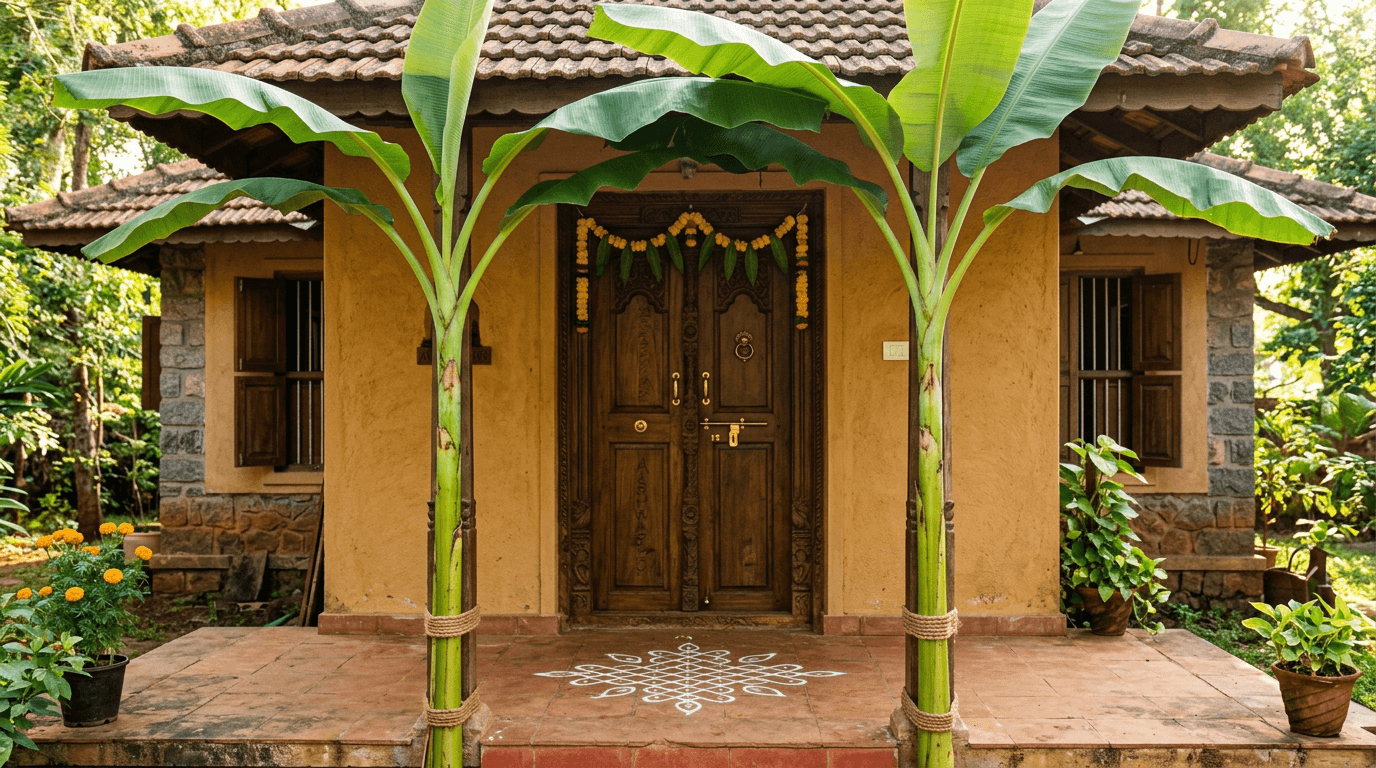
32. Banana Stems Flanking the Entry
Two fresh banana stems standing on either side of the main door, leaves fanning overhead. Deeply traditional in South Indian homes, entirely compostable, and it takes forty minutes.
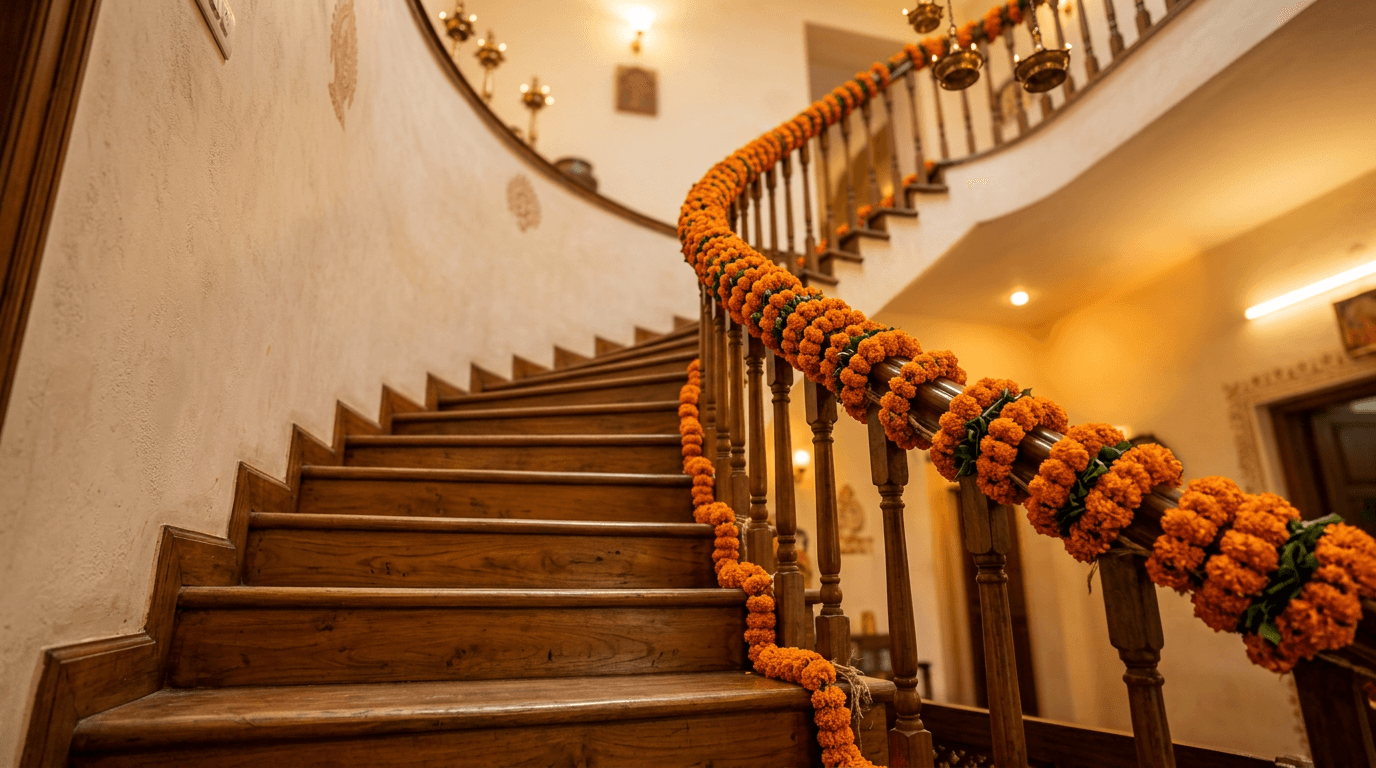
33. Blossom Rope Along the Stair Rail
For duplexes and independent houses. One continuous flower garland wound along the handrail, following the curve. Best photographed from below.
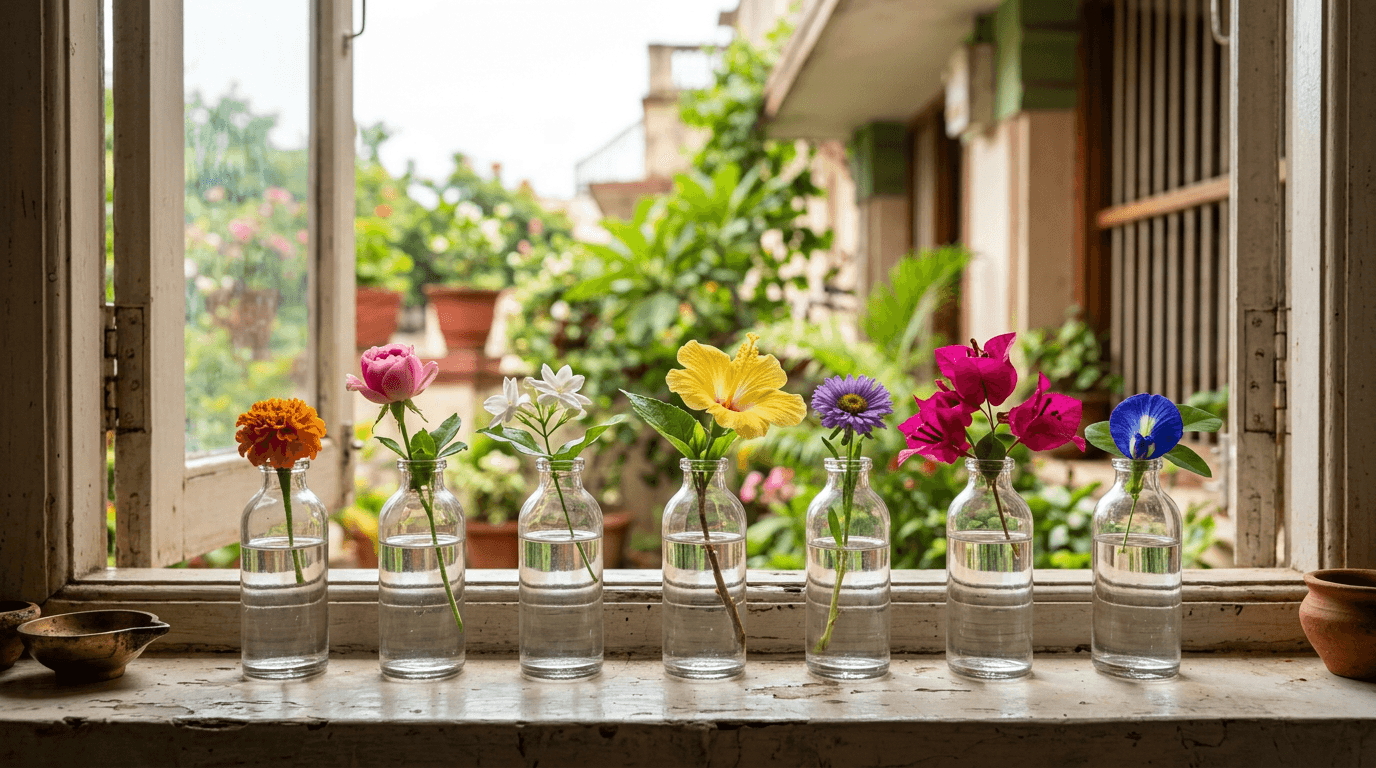
34. Single-Stem Bud Vases in a Row
Seven small bottles or bud vases in a line on a windowsill or a dining table, one stem in each. Modern, minimal, and it uses the flowers left over from everything else.
Creative Diwali Decoration Ideas You Can Make at Home
This set exists because children want a job, and because handmade things photograph better than bought things. None of it needs skill. All of it needs a newspaper on the floor first.
If you did the Ganpati setup a few weeks earlier, a lot of what's in that box works again here — our ganpati decoration guide has the full sustainable-materials list, and cardboard, cane, cotton and clay all cross over.
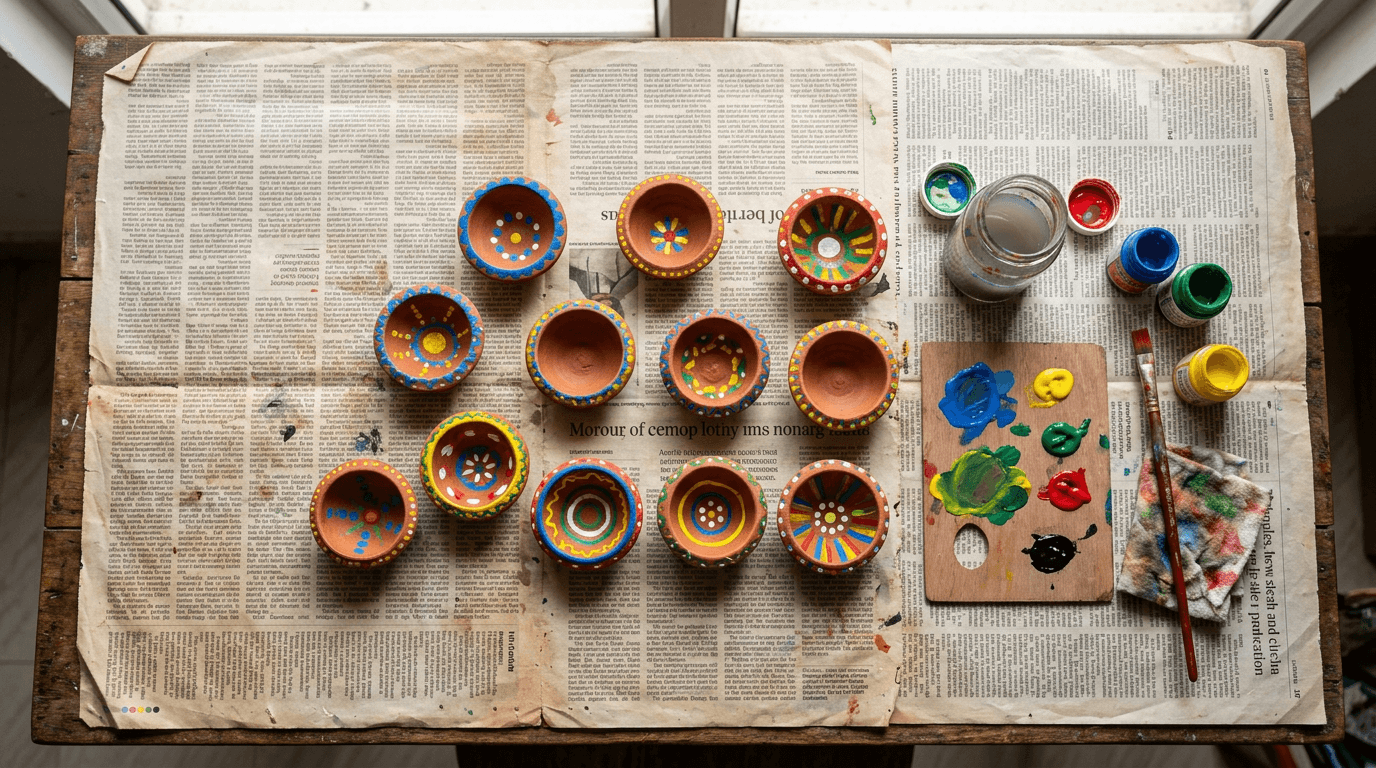
35. Painted Terracotta Flame Cups
Plain clay cups, acrylic paint, a thin brush. Give each child six and let them do whatever they want. Nobody has ever complained about a badly painted one.
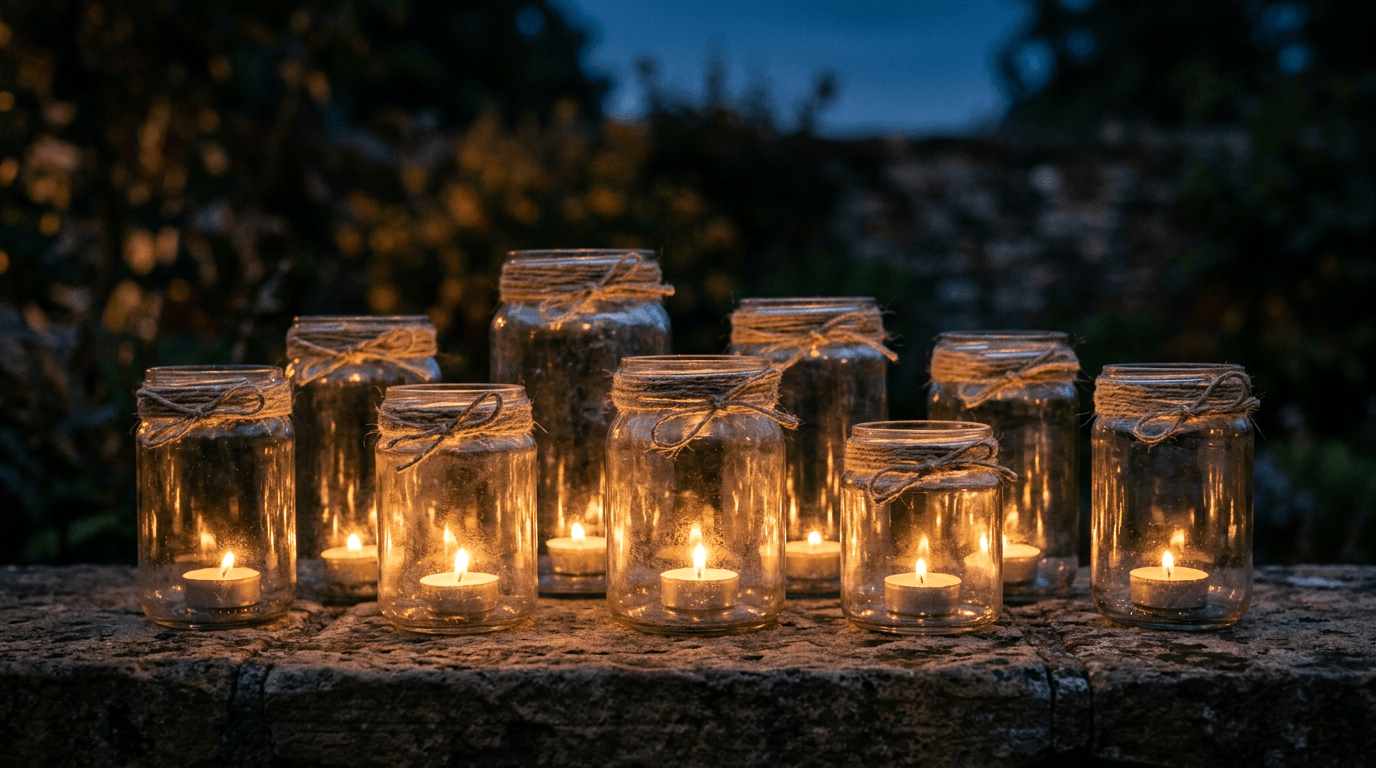
36. Glass Jar Lights from Recycled Bottles
Cut-off bottles or old pickle jars with a tea light inside and jute wound round the neck. Free, and the light through glass is softer than anything you can buy.
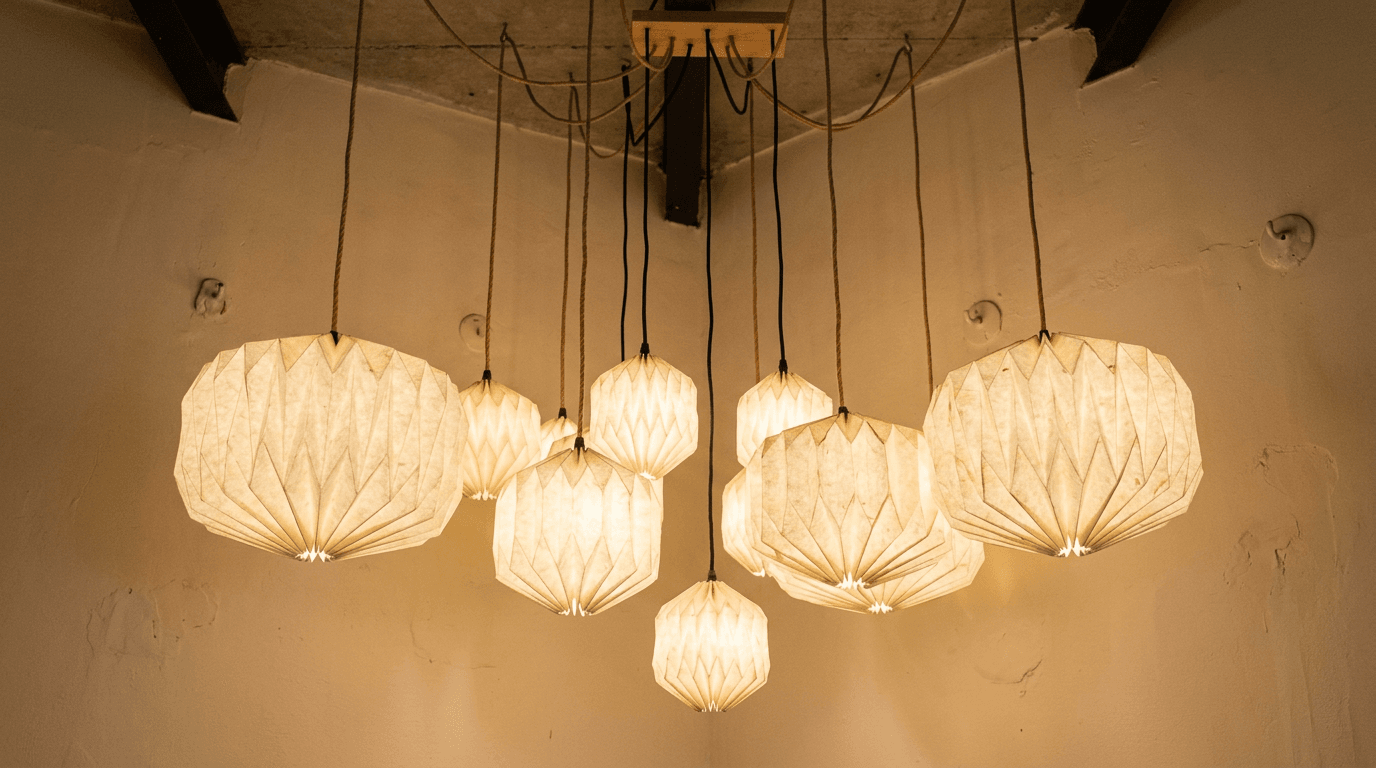
37. Folded Paper Shades in Three Sizes
Concertina-folded paper shades, three sizes, suspended in a loose cluster. Use battery tea lights inside these, never a flame.
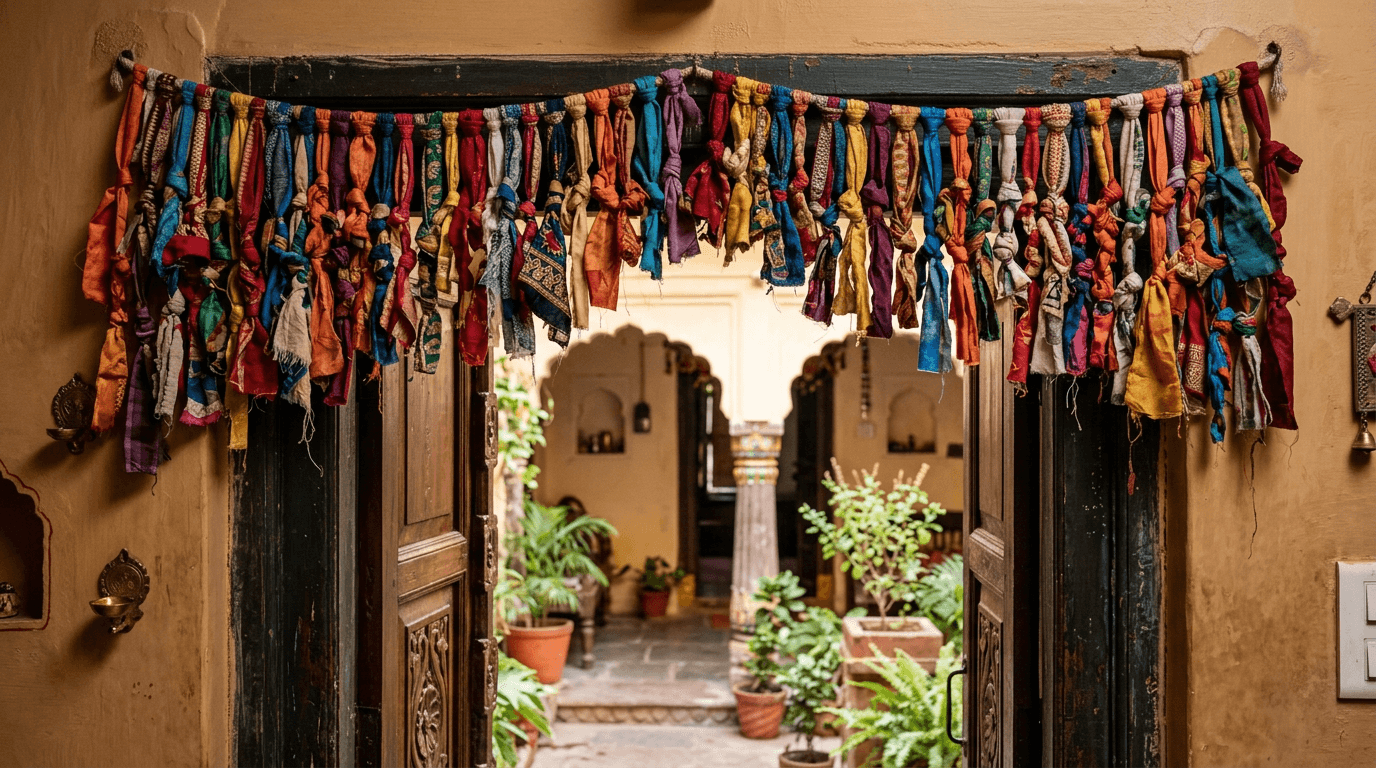
38. Fabric-Scrap Door Swag
Every tailoring job leaves offcuts. Knot them densely along a cord and you have a door piece that costs nothing and lasts for years.
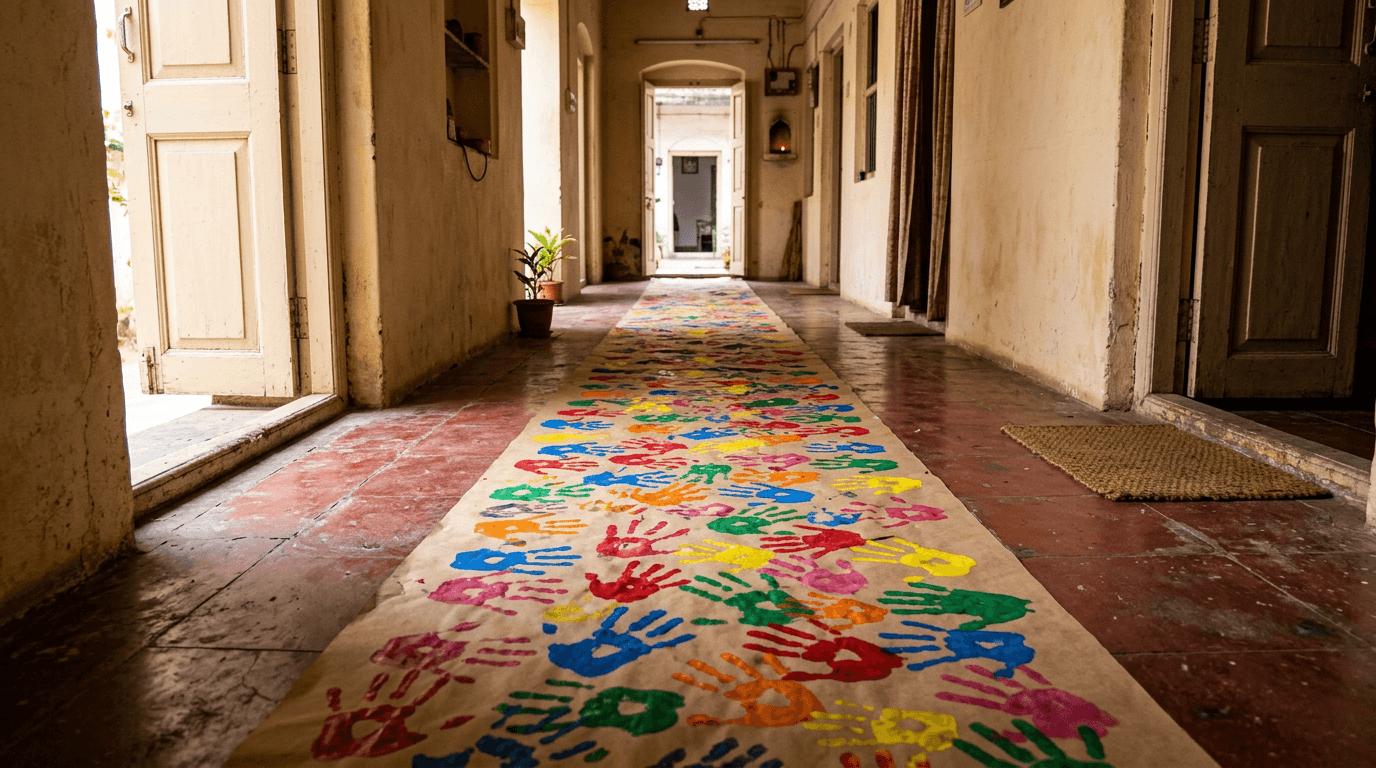
39. A Handprint Floor Runner
Craft paper down the corridor, poster paint, and every child in the house puts their hands on it. Roll it up afterwards and keep it. Ours is the only decoration anybody ever asks about again.
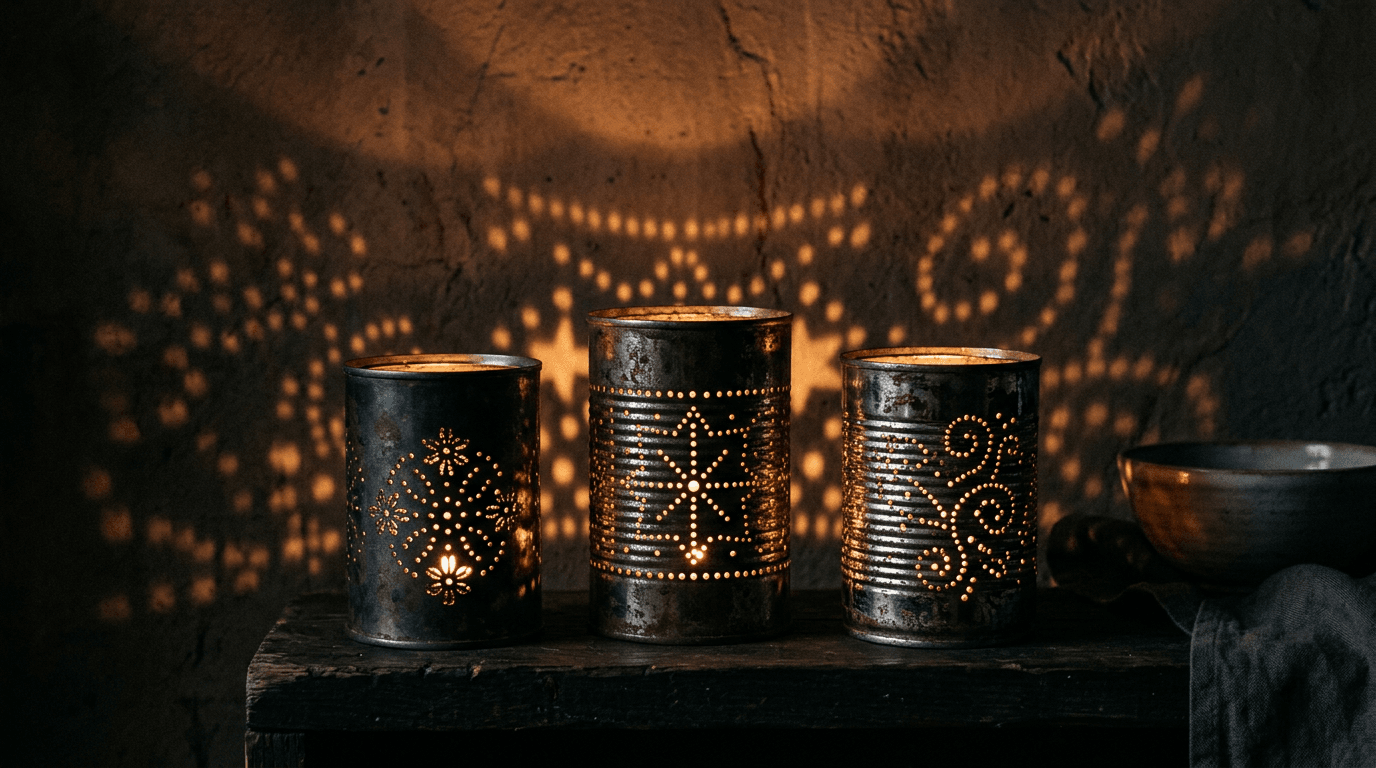
40. Punched Tin Light Holders
Old tins, a nail, a hammer, and a pattern of holes. Put a tea light inside and the pattern throws across the wall. It's the most satisfying thing on this list to make.
Trending Diwali Decoration Ideas for 2026
Four things are visibly shifting in Indian homes, and none of them are about buying more.
Fewer, larger pieces. One big blossom curtain instead of six small arrangements. The maximalist phase has given way to homes that pick one gesture per room and commit.
Warmer, dimmer light. The cool-white strand is finally losing. Amber and low-kelvin white are what read as expensive now, and dimmable strands are the fastest-growing item in the category.
Materials you can compost. Clay, cotton, cane, paper, banana fibre, jute. Partly a values shift, mostly because natural texture photographs better — real material catches light, moulded plastic does not.
Local craft over imported sets. Channapatna wood, Kutch mirror work, Sanjhi paper cuts, Bidri metal. Buying one good handmade piece a year builds a collection; buying a themed set every year builds a storage problem.
Deliberately not on this list: any specific colour of the year. Your walls, your floor and your existing furniture already decide your palette, and a trend forecast can't see your living room.
Diwali Decoration Items and Decor Ideas: Buy Once or Buy Fresh
Most diwali decor ideas are shopping decisions in disguise. Here is the split we give clients when they ask which home decor is worth storing and which is a yearly buy - and it holds whichever decor ideas you end up choosing.
| Buy once, keep for years | Buy fresh every year |
|---|---|
| Brass and silver vessels, urlis, trays | Marigold, roses, loose blooms, mango leaves |
| Metal and paper lantern shades | Clay diyas (they're cheap and they crack) |
| Beaded or fabric door torans | Floor powder, rice flour, turmeric |
| Reusable LED strands and battery tea lights | Wicks, oil, camphor, incense |
| Festival cushion covers and table runners | Anything perishable you'll be tempted to store "just in case" |
A note on the reusable column: buy it in one visual family. Five brass pieces bought over five years in the same finish will look like a set. Five pieces bought in five different metals will look like five separate decisions, because that's what they are.
And test your strands the week before. Every household in India has at least one strand that worked last year and doesn't now.
How to Layer Diwali Light Across a Flat
The lighting question people actually ask is how to make a normal flat look layered rather than lit. The answer is two layers per room, and never more than three.
- A base wash. Something soft and indirect — a strand behind a drape, an uplight behind a plant, light bouncing off a wall. This is what makes the room feel warm rather than bright.
- A focal glow. One thing you actually look at: a cluster of clay lights, a glowing hanging shade, a lit tray.
- Optional accent. A single reflected or shadow-casting element. A mirror behind a row of flames, a punched tin throwing patterns.
The instinct is to light up your home everywhere at once. Resist it. It takes surprisingly few points of light to illuminate a flat properly: a run of string lights around the door frame, a cluster of diyas on one surface, and one lamp turned down low will brighten up your home more convincingly than all the LED lights you own switched on at once. Walk around your home after dark once it is all up, and turn off whatever is not doing a job.
Then turn your overhead tube light off. This is the step people skip, and it's the one that matters most — a room with beautiful diyas and candles going and the ceiling light still on just looks like a room with the ceiling light on.
Across the whole flat, keep one colour temperature. Mixing amber strands with cool-white strands is the fastest way to make a carefully lit home look accidental. And be sensible about load: don't daisy-chain six strands into one socket, keep anything outdoors on weather-rated fittings, and give open flames real clearance from curtains, drapes and hanging fabric. A clay light on a metal tray, away from the edge of a surface, is worth the thirty seconds it takes to arrange.
What a Diwali Decoration Actually Costs
We don't publish rupee figures for this, and you should be sceptical of anyone who does — the same list of items varies enormously between a metro and a small town, and flower prices in the week before Diwali are a market of their own. What's stable is the structure of the cost. Five drivers, in the order they actually move your total:
- Flowers, by volume. The single biggest variable. A blossom curtain uses fifteen strings; a door drape uses one. Flower cost also spikes hardest in the last seventy-two hours, which is the practical argument for buying in two rounds.
- How much you're replacing versus reusing. A household that already owns brass, shades and strands spends a fraction of one starting from nothing.
- Scale of the lit area. Lighting one balcony and a door is a different order of spend from lighting a full facade or a compound wall.
- Handmade versus bought. Every idea in the last set trades money for an afternoon. That trade is usually worth taking, and it's the only lever that also entertains the children.
- Whether anyone is installing it for you. Labour for facade lighting on an independent house is a real line item; a flat you can do yourself.
If you want a considered version of this for a home you're building or renovating — where the lighting is designed in rather than plugged in — that's a conversation rather than a shopping list, and it's the sort of thing we do at the design stage.
Mistakes That Make a Festive Decoration Look Cluttered
- Too many colours. Pick three. Almost every "it looks messy and I don't know why" problem is a fourth and fifth colour.
- Cool-white light. It flattens everything and makes flowers look grey. Warm white or nothing.
- Decorating the walls and forgetting the floor. The floor is half of what people see, and the cheapest surface to style.
- Blocking circulation. A gorgeous arrangement in a doorway becomes a hazard by the second evening.
- Spreading thin. Six lightly decorated rooms look worse than two properly done ones and an untouched third.
- Visible wires. Tuck them behind something. Always.
- Not cleaning first. No amount of styling survives a dusty skirting board.
- Ignoring daylight. Everything on this list gets photographed in the afternoon too. If it only works lit, it only works half the time.
After the Festival: Storing and Reusing Your Decor
Take everything down within a week. The line between "still festive" and "nobody's got round to it" is about seven days long.
Sort into three piles as you go: keep, repair, discard. Clay lights that cracked go out. Strands with a dead section go out — you'll never fix them and you'll be annoyed next November. Everything metal gets a wipe before it's boxed, because tarnish sets in storage.
Label one box, not four. And store flat where you can: paper shades, fabric drapes, folded door pieces and cushion covers all pack down to almost nothing if you don't crumple them. On our Tarnaka studio apartment project in Hyderabad — 600 sft, a client who wanted maximum storage in a minimum footprint — the entire answer was going vertical and thinking in flat-packed volumes. Festival storage is exactly the same problem, once a year.
Diwali Decoration FAQs
How do I style a traditional entrance rangoli?
Combine organic colour powders with fresh rose and marigold petals, and frame the pattern with a ring of terracotta clay lights. Size it to the doorway rather than the landing, and draw it on the morning of the eighth so it's crisp at dusk. Flowers and rangoli together hold their look longer than powder alone, because petals don't scatter when someone walks past.
What is the best way to hang fairy lights on a balcony?
Drape them vertically as a falling curtain, or wind them closely around the railing and the potted plants rather than looping them loosely across the front. Vertical drops read as deliberate. Keep the transformer and any joins under cover, and use weather-rated fittings for anything exposed to rain.
How can I make my decorations look elegant instead of cluttered?
Three colours, warm light, one focal point per room. That's the entire answer. Choose a palette — gold, deep red and marigold yellow is the classic — use amber light rather than cool white, and pick a few larger pieces instead of many small ones. Empty space is what makes the styled parts read as styled.
How do I place traditional oil lamps safely?
Set them on a metal or stone surface, at least an arm's length from curtains, drapes or any hanging fabric, and away from where children run. Use oil rather than ghee for anything outdoors — it burns longer. For high shelves, inside paper shades, and anywhere near fabric, use battery tea lights instead of a flame. Never leave a lit flame in an empty room.
How far in advance should I start decorating?
Three weeks for planning and buying, two days for everything non-perishable, and the morning itself for flowers and floor art. If you're only doing one thing, do the entrance — it's what every visitor sees, and it takes an hour.
Can I decorate a rented flat without drilling?
Yes, and you should. Tension rods across window and door openings, removable adhesive hooks rated above the weight you're hanging, cable ties on railings and grilles, and freestanding pieces on the floor. That covers every idea in this article. We work this way even in owned homes when the building is old — on a thirty-year-old Hyderabad flat we renovated with a minimum-intervention brief, reversible fixings were the whole approach.
What should I do about the pooja corner specifically?
Less than you think. A fresh drape behind, flower strings framing the sides, more light than usual, and a clear centre. Don't put anything in front of the deity, and keep incense and flames away from the fabric behind. If that corner is permanently part of your home rather than a seasonal setup, it's worth designing properly rather than restyling every year.
Get This Look: Free Design Consultation
The diwali home decoration ideas that last are the ones built on things you already own. Everything above is seasonal — up in an evening, down in a week. If what you actually want is a home where the light, the pooja corner and the entrance are designed to look like this every day of the year, that's a different piece of work.
We're an architecture and interior design practice that both designs and builds, across Hyderabad, Bangalore and beyond, with 30+ projects delivered across residential, commercial and institutional work. Every project starts with a 3D visualisation, so you see the room before it's built.
Book a free design consultation →
Written by Karthik M, Chief Designer at Roomantic. IIT Guwahati Design alumnus focused on interiors, 3D visualisation, and design-build workflows.
Keep reading: Ganpati setups at home · year-round styling · floor patterns · the everyday prayer corner
