Written by Karthik M, Chief Designer at Roomantic. IIT Guwahati Design alumnus focused on interiors, 3D visualization, and design-build workflows.
The best kitchen tiles design for Indian homes pairs glossy glazed ceramic or vitrified tiles on the walls with matte anti-skid vitrified tiles on the floor. Glossy walls wipe clean after oily cooking; matte floors stay safe when wet. Pick the finish for the job first, the look second.
Key Takeaways
- Glossy glazed tiles on kitchen walls, matte anti-skid tiles on kitchen floors. That one rule prevents most regrets.
- Dado tiling (counter to wall cabinet) should run about 2 feet high — it's the zone that takes all the splatter.
- Epoxy grout costs more than cement grout but shrugs off turmeric. Worth it behind the hob.
- Sample tiles under your own kitchen light before ordering. Showroom lighting lies.
- We've designed kitchens across 30+ projects in 7+ Indian cities — the tile failures we see are almost never about the tile. They're about the finish chosen for the wrong surface.
Why Kitchen Tiles Fail (Grease, Grout, Glare)
Here's something most people don't realize: when a client shows us a kitchen they hate, the tiles themselves are usually fine. What failed is the match between tile and task.
Three things kill kitchen tiles in Indian homes:
Grease. Daily tadka releases oil vapour that settles on every vertical surface. Textured or unglazed tiles hold that film in their pores. Within a year, a beautiful matte wall turns sticky and dull. Glazed surfaces — glossy ceramic, glazed vitrified — let you wipe the same film off with a damp sponge.
Grout. Tiles don't stain; joints do. Cement grout is porous, and turmeric plus oil is the most stubborn stain combination we deal with. White cement grout behind a hob looks tired in months. Darker grout or epoxy grout keeps the wall looking new.
Glare. A wall of high-gloss tile opposite a window can bounce light straight into your eyes at the counter. Gloss belongs where you splatter, not necessarily on every surface of the kitchen.
The 40 kitchen tile design ideas below are organized by zone — walls, backsplash, floor, then materials — because that's how tile decisions actually get made in a modular kitchen project. And because the right tiles for Indian kitchens are rarely the ones styled for a European catalog shoot, every pick below assumes real, daily, oil-first cooking. Planning the whole room? Start with our complete modular kitchen design guide.
15 Kitchen Wall Tile Design Ideas Trending in 2026
Wall tiles set the personality of the kitchen. Kitchen walls take the steam, the splatter and most of the visual attention, so this is where tile design matters most. These are the modern kitchen wall tile design ideas we're specifying most for Indian homes in 2026 — each one chosen because it survives real Indian cooking, not just photo shoots.
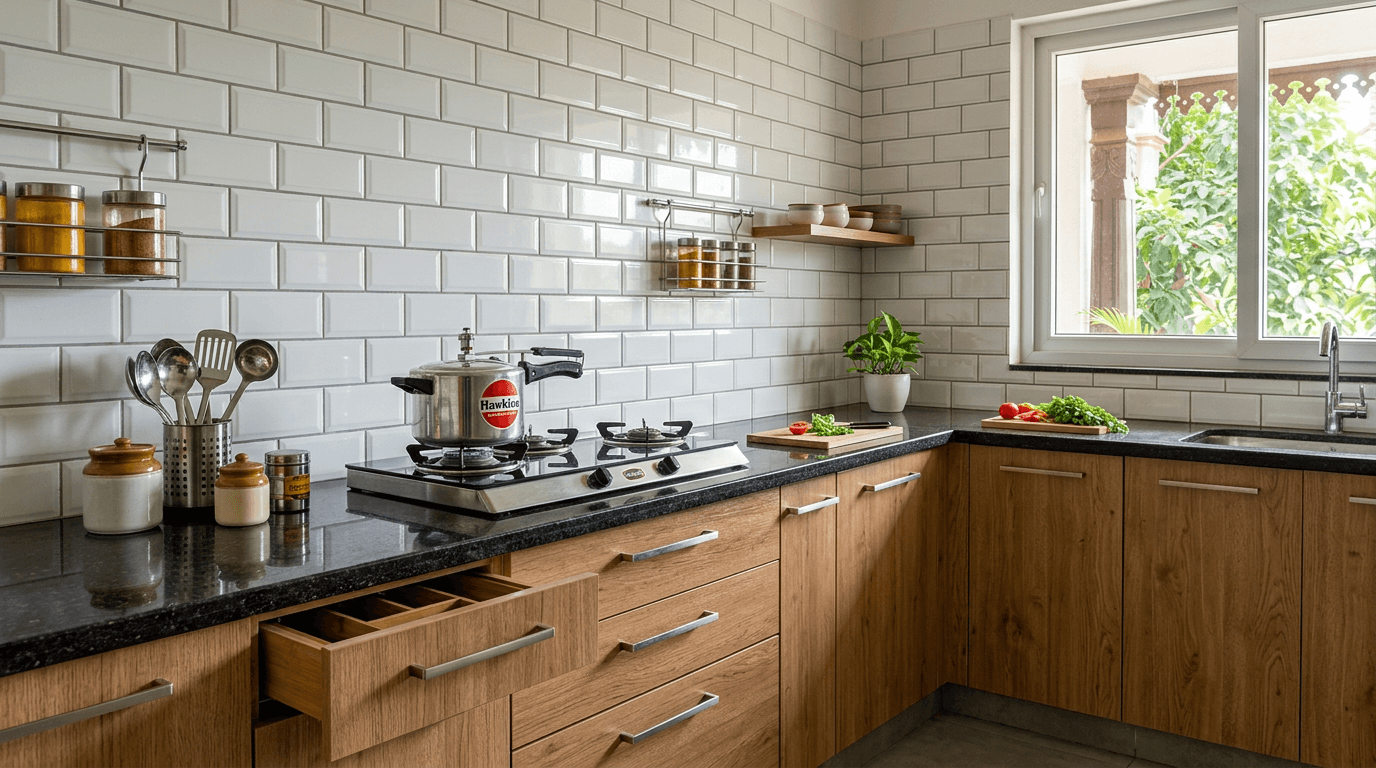
1. Glossy White Subway Tiles
The default for a reason. Glossy white subway tile makes a small kitchen feel bigger, reflects light into dim corners, and wipes clean in seconds. Use a light grey grout instead of white — it hides the inevitable.
2. Sage Green Glazed Ceramic Wall
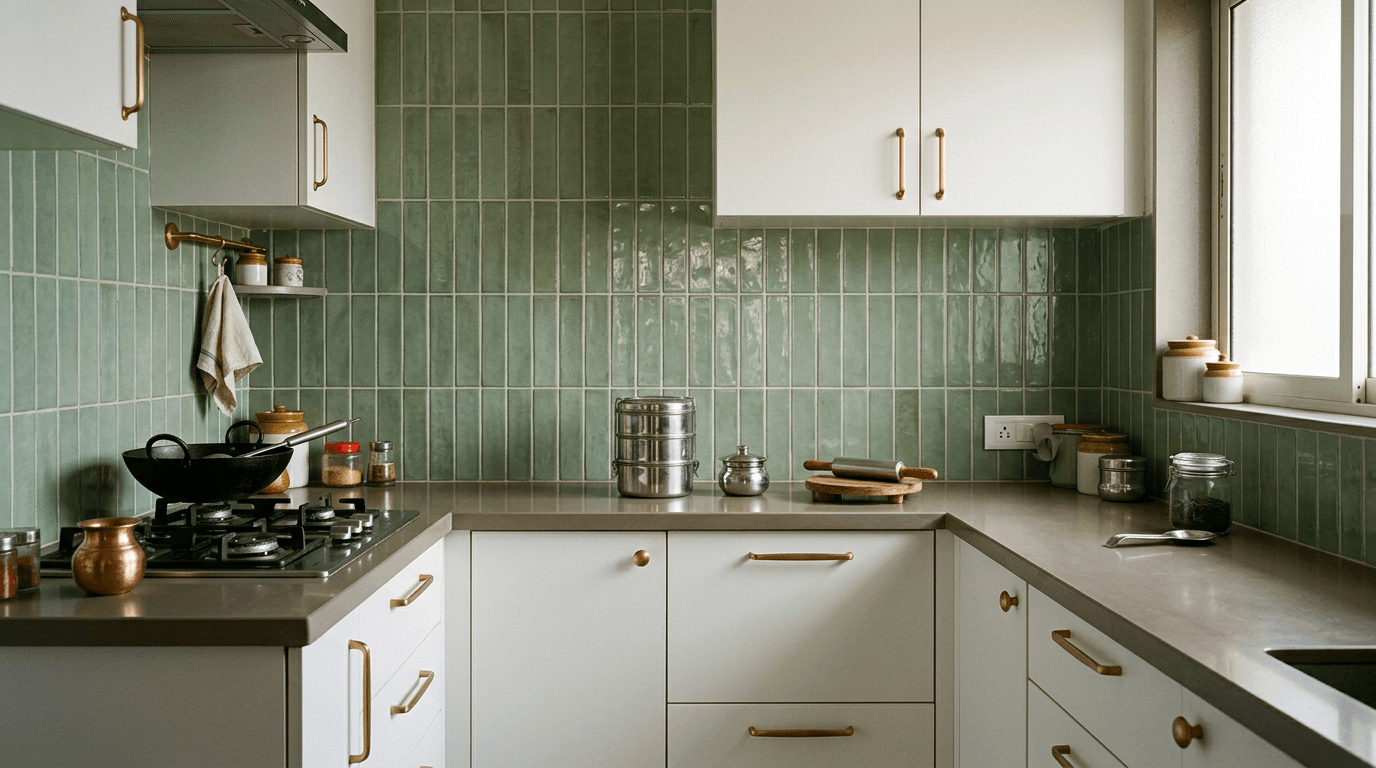
2026's favourite colour has reached the kitchen. Sage green glazed ceramic tiles read calm against wood or white cabinets and hide minor smudges better than pure white.
3. Terracotta-Look Wall Tiles
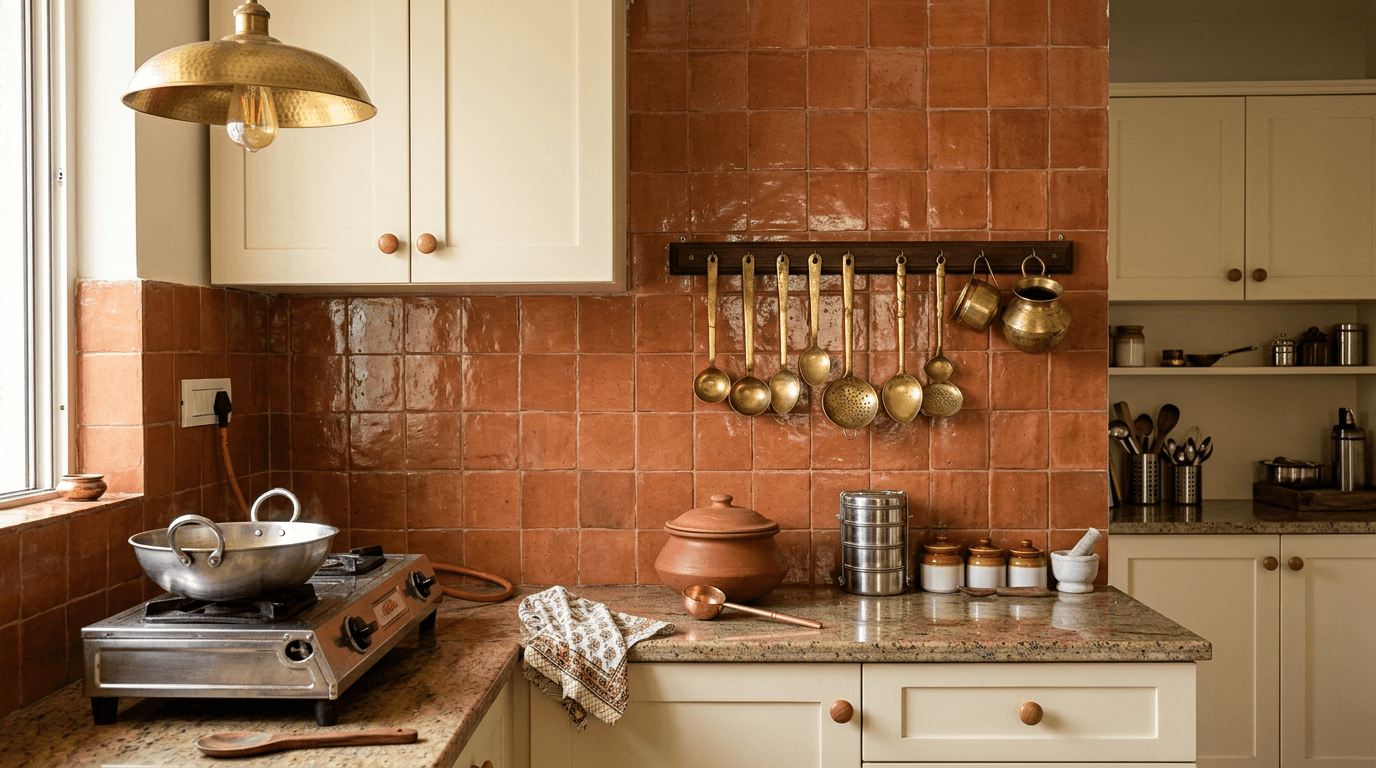
Warm, earthy, very Indian. Modern terracotta-look glazed tiles give you the mud-plaster warmth of a traditional kitchen with a surface that actually handles steam and oil.
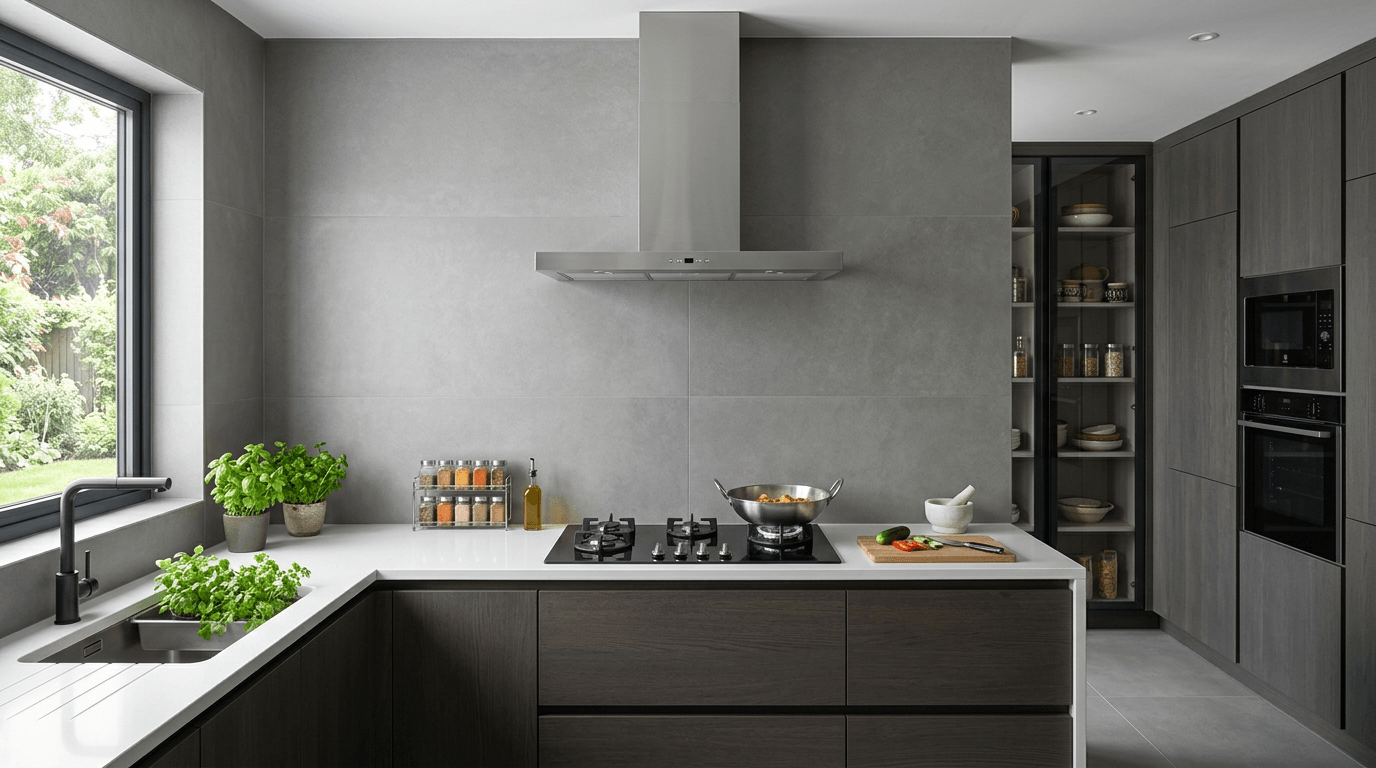
4. Grey Large-Format Matte Wall
Large-format tiles (600x1200 mm) mean fewer grout lines — the single best move for low-maintenance kitchen walls. Keep matte grey panels away from the hob zone and pair them with a glossy backsplash where the splatter lands.
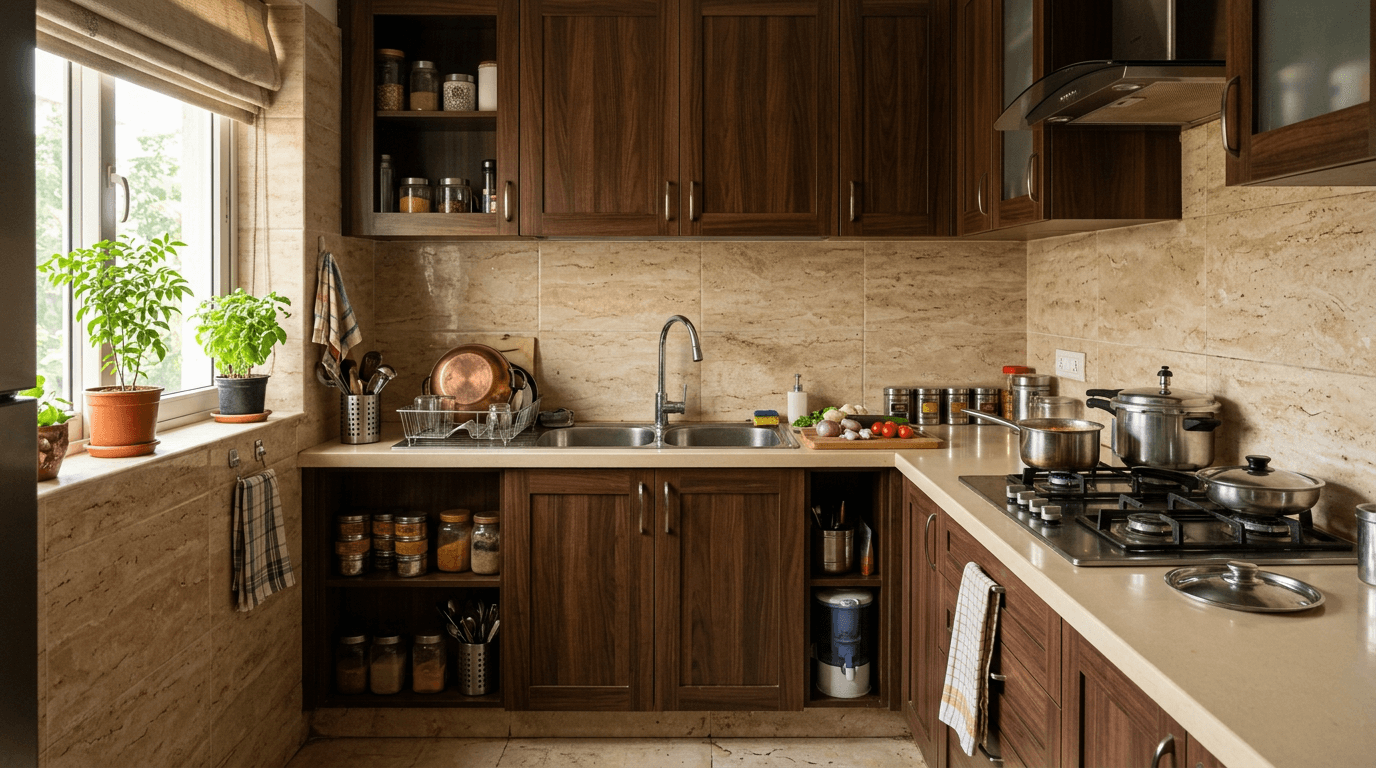
5. Beige Stone-Look Wall Tiles
Stone texture without stone porosity. Glazed beige stone-look tiles pair with almost every cabinet colour — the "universally acceptable" palette we used across the rental-ready homes in our portfolio.
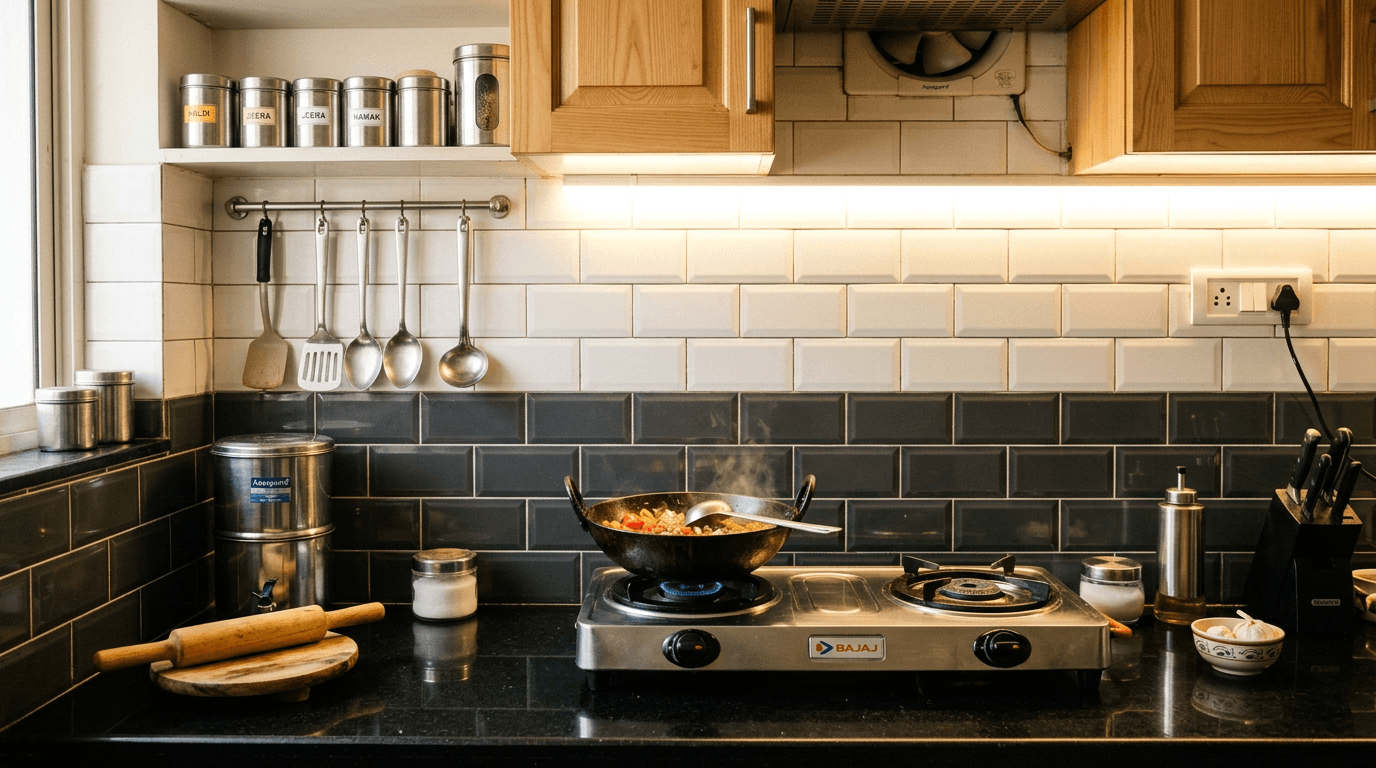
6. Two-Tone Wall: White Upper, Charcoal Dado
Split the wall at the 2-foot dado line: charcoal gloss below where splatter hits, white above where it doesn't. Practical zoning that looks deliberate.
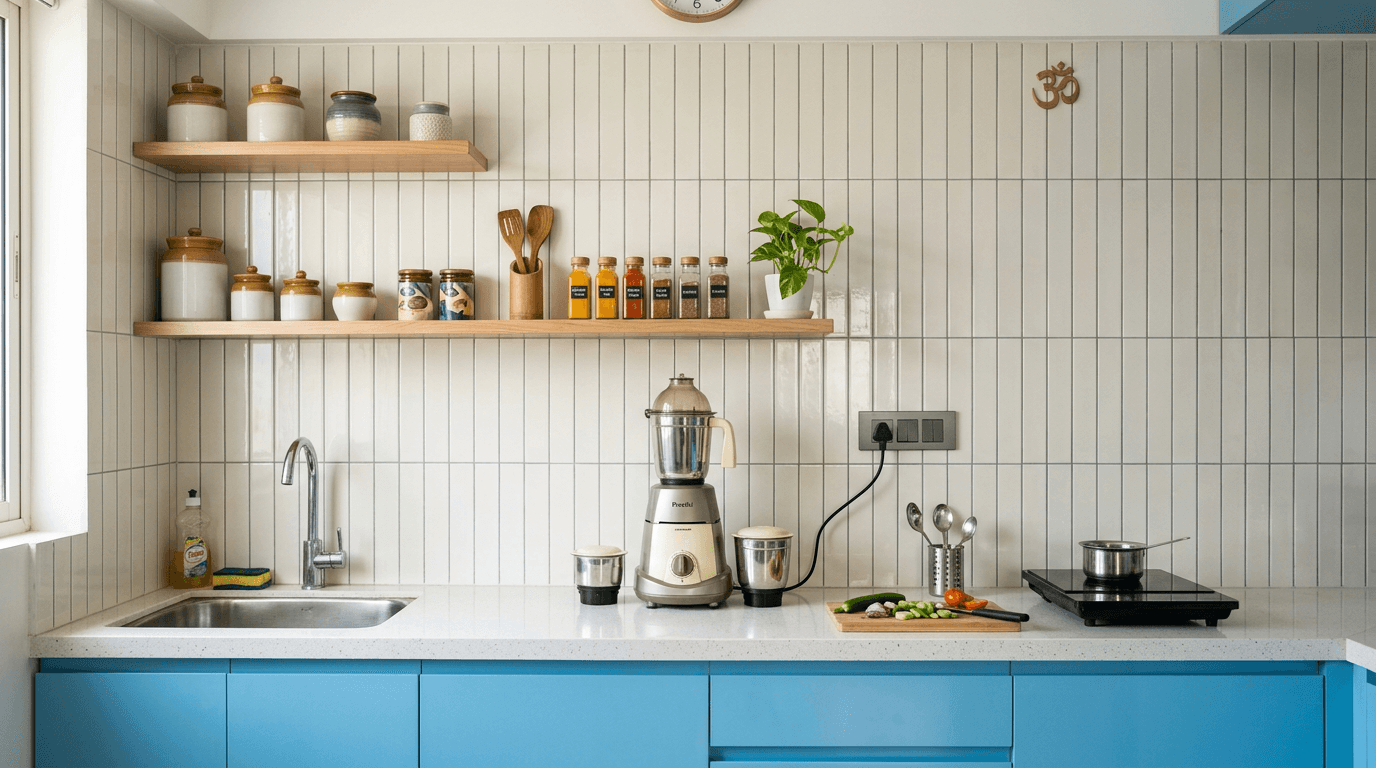
7. Vertical Stacked Slim Tiles
Slim tiles (75x300 mm) stacked vertically pull the eye upward — a clever trick for kitchens with low ceilings or heavy overhead cabinets.
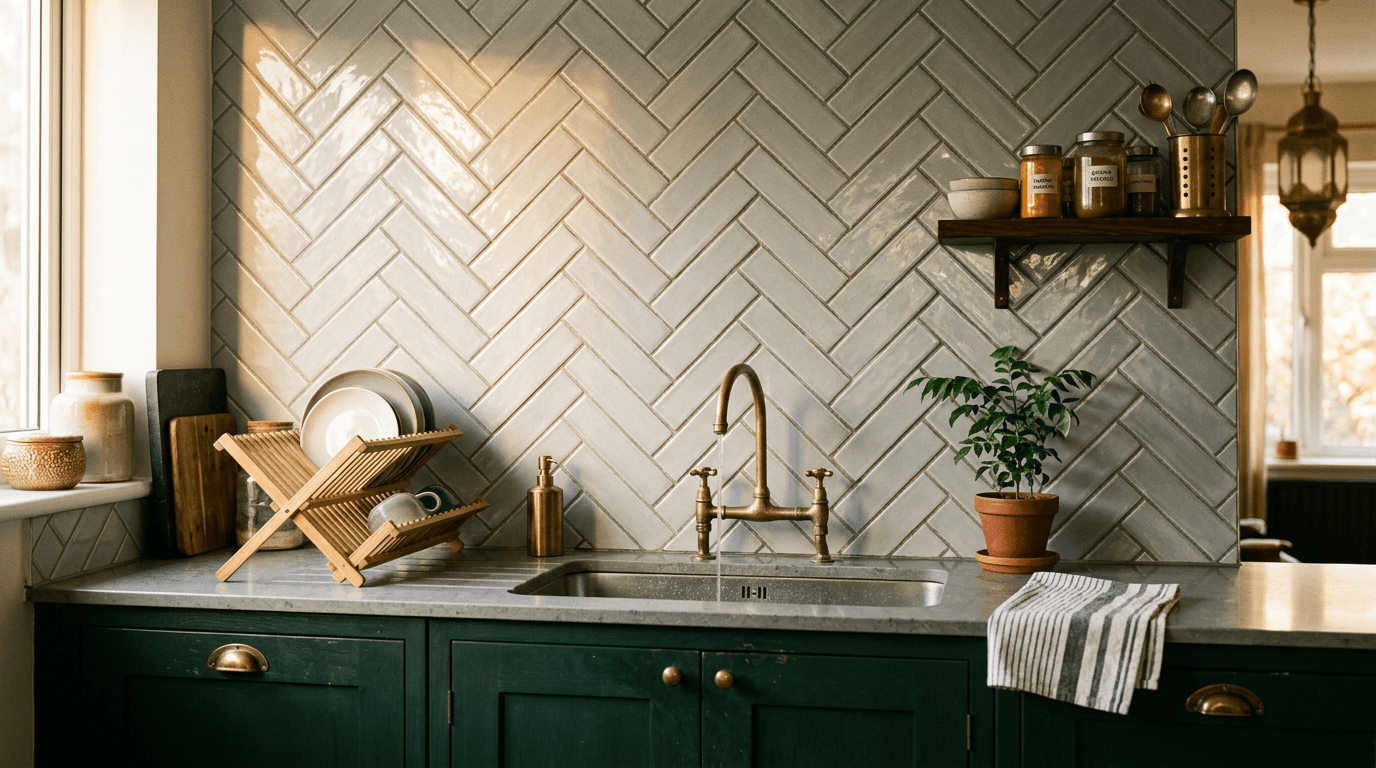
8. Herringbone Wall Tile Layout
Same subway tile, laid at 45 degrees. Herringbone adds movement to a plain wall without adding a single new material — you pay only for the mason's patience.
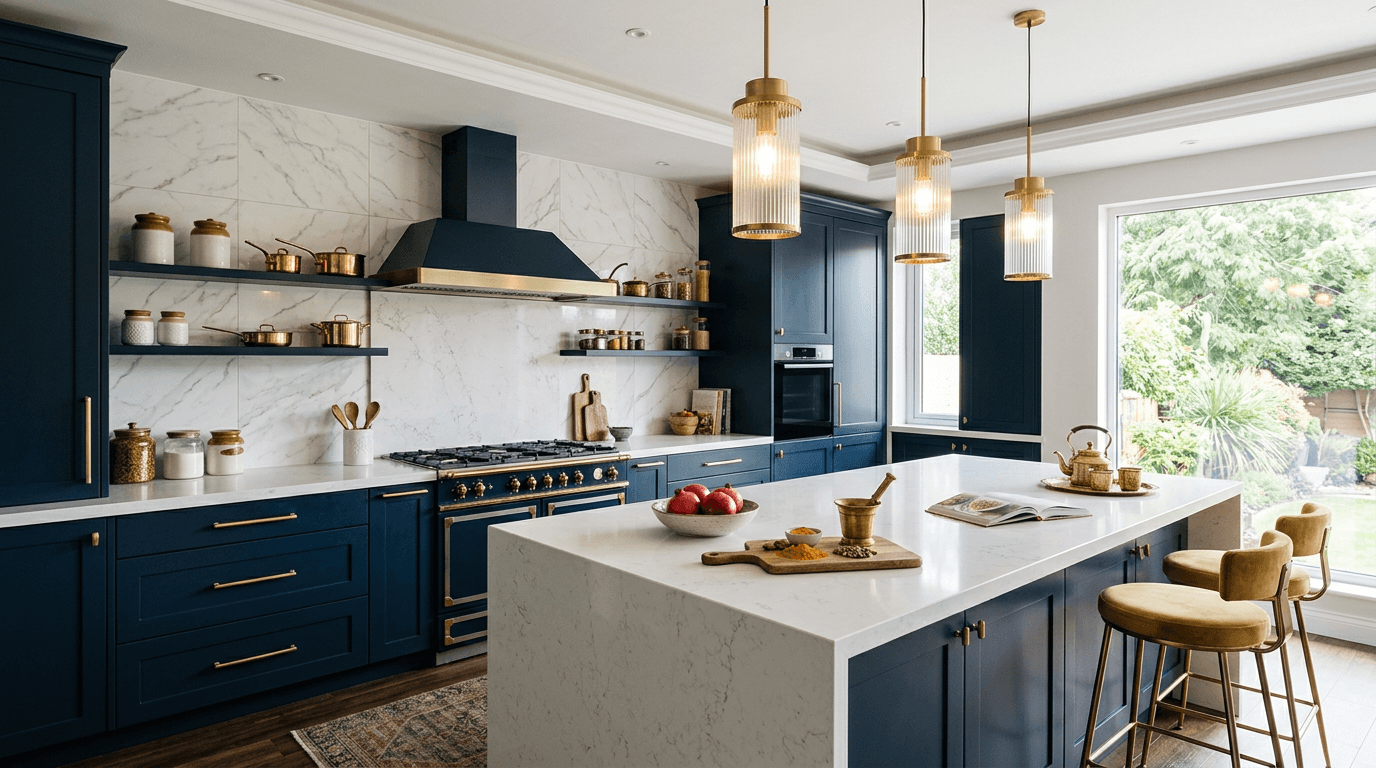
9. Marble-Look Glazed Wall Tiles
Real marble stains near cooking; glazed vitrified marble-look tiles don't. You get the veining and the light bounce with none of the sealing anxiety.
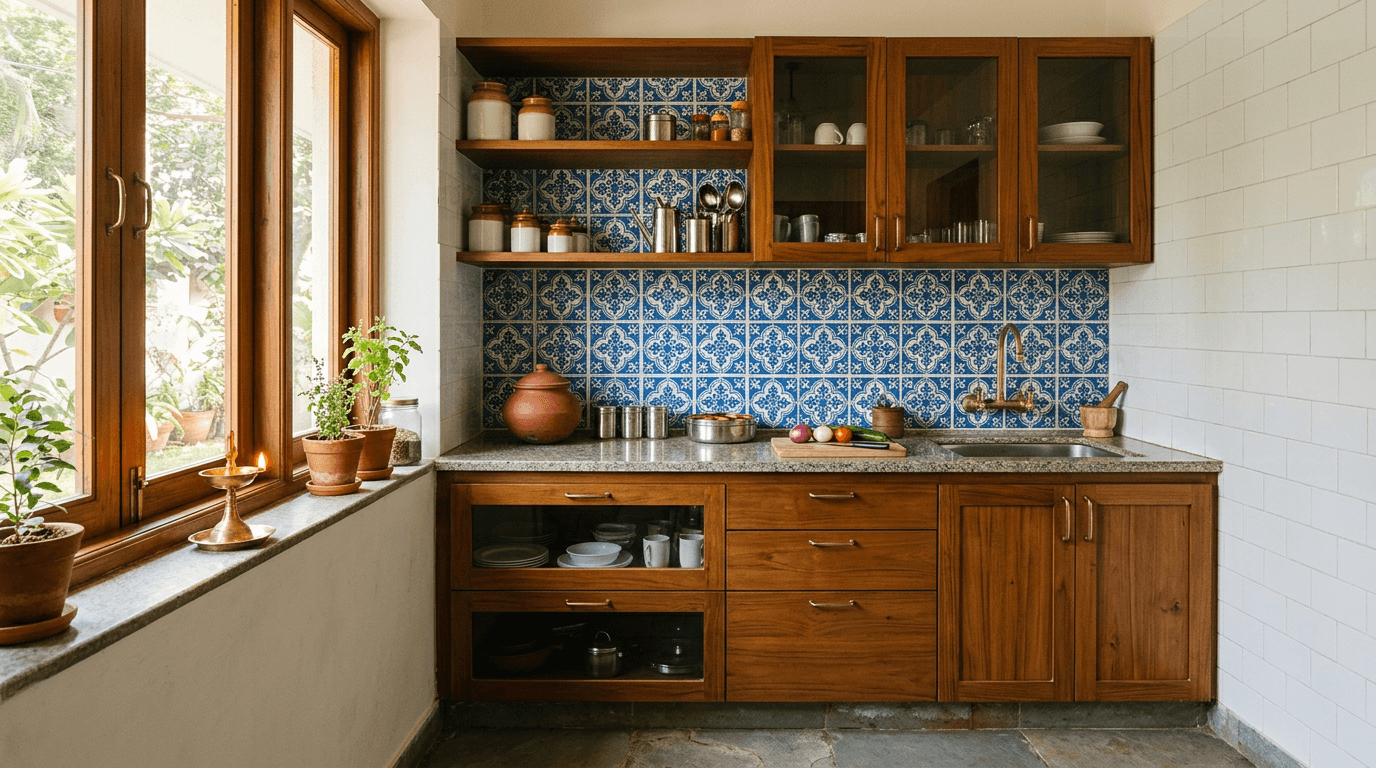
10. Patterned Accent Wall (Flat Glazed)
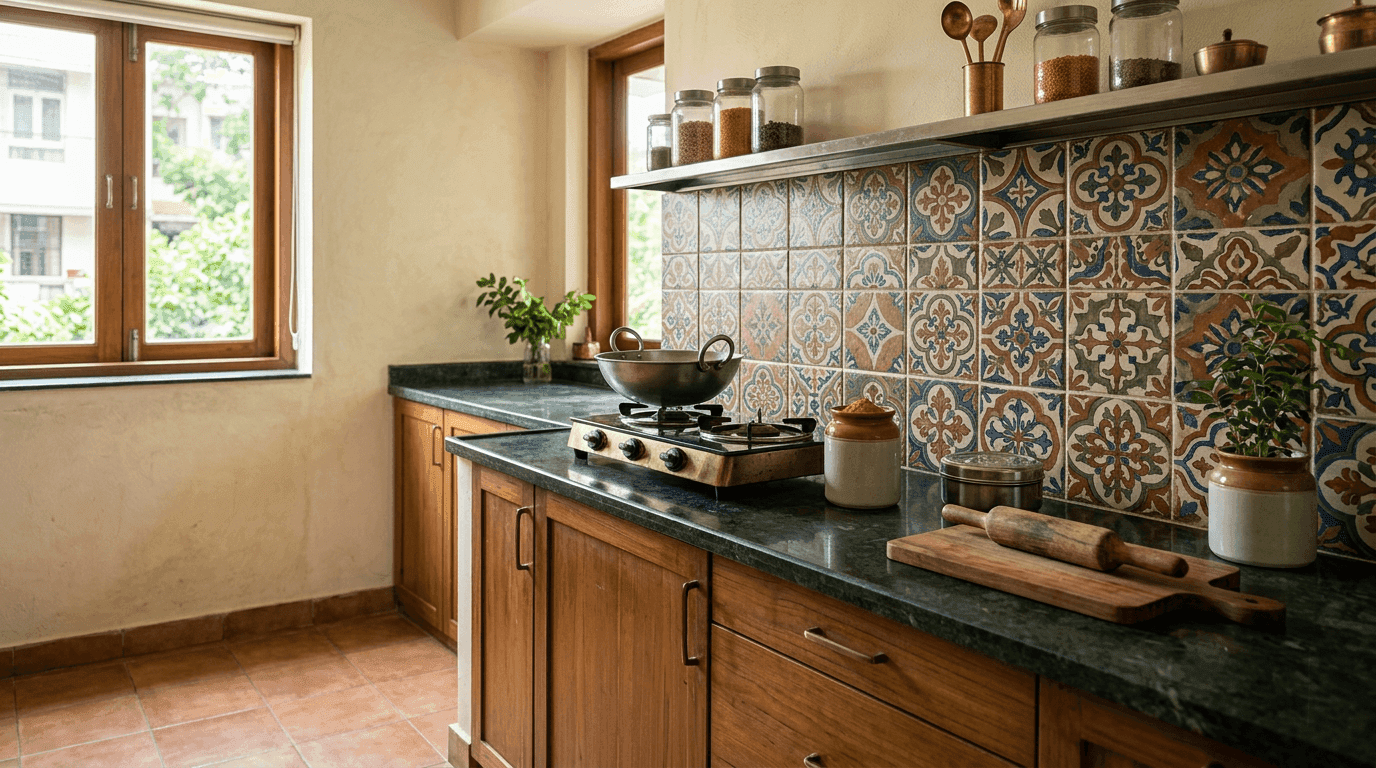
Hand-painted-look patterned tiles on one wall, plains everywhere else. The rule from our site experience: choose flat glazed versions, never textured or hand-carved — relief surfaces trap grease and soot in their crevices.
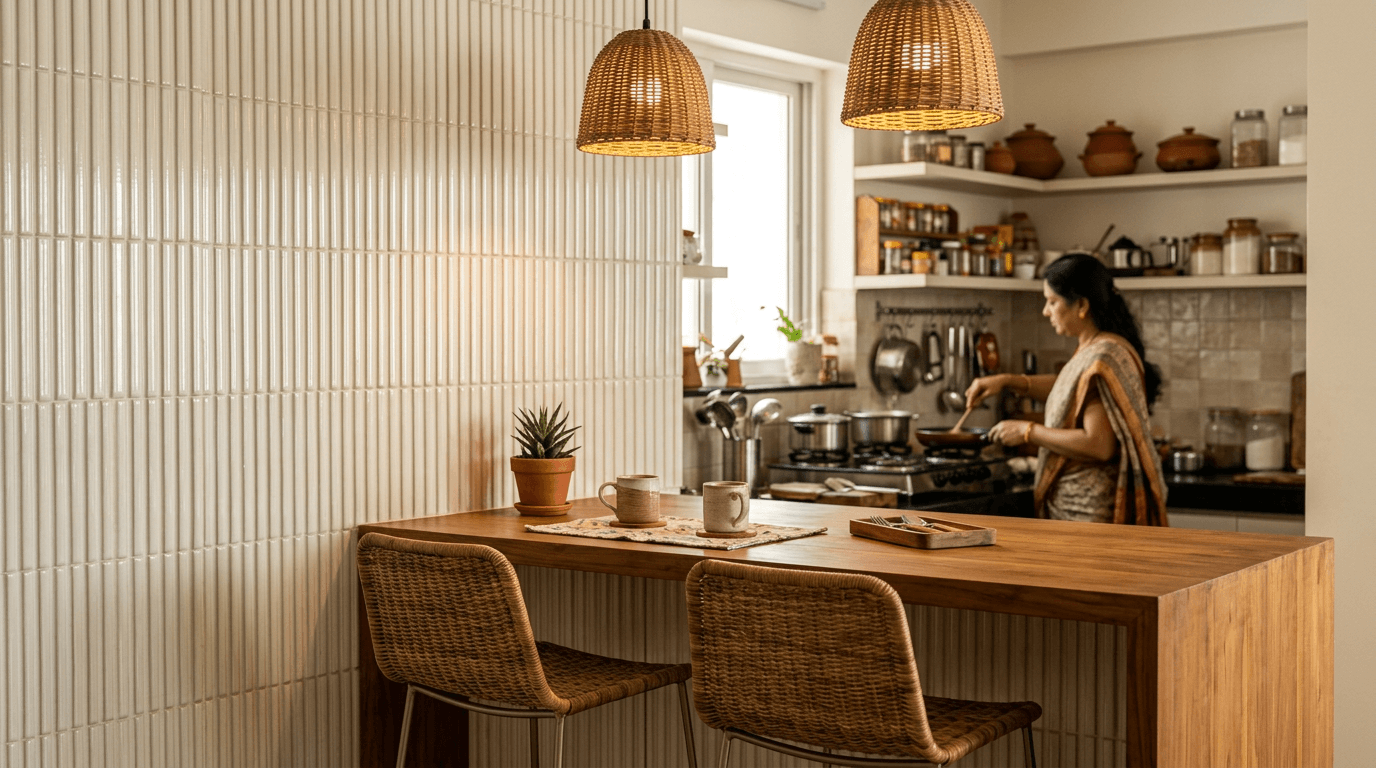
11. Fluted-Look Tile Feature Wall
Ribbed and fluted textures are everywhere in 2026 interiors. In kitchens, use them only on walls away from the hob — the grooves that look gorgeous will collect oil film near cooking zones. Perfect behind a breakfast counter.
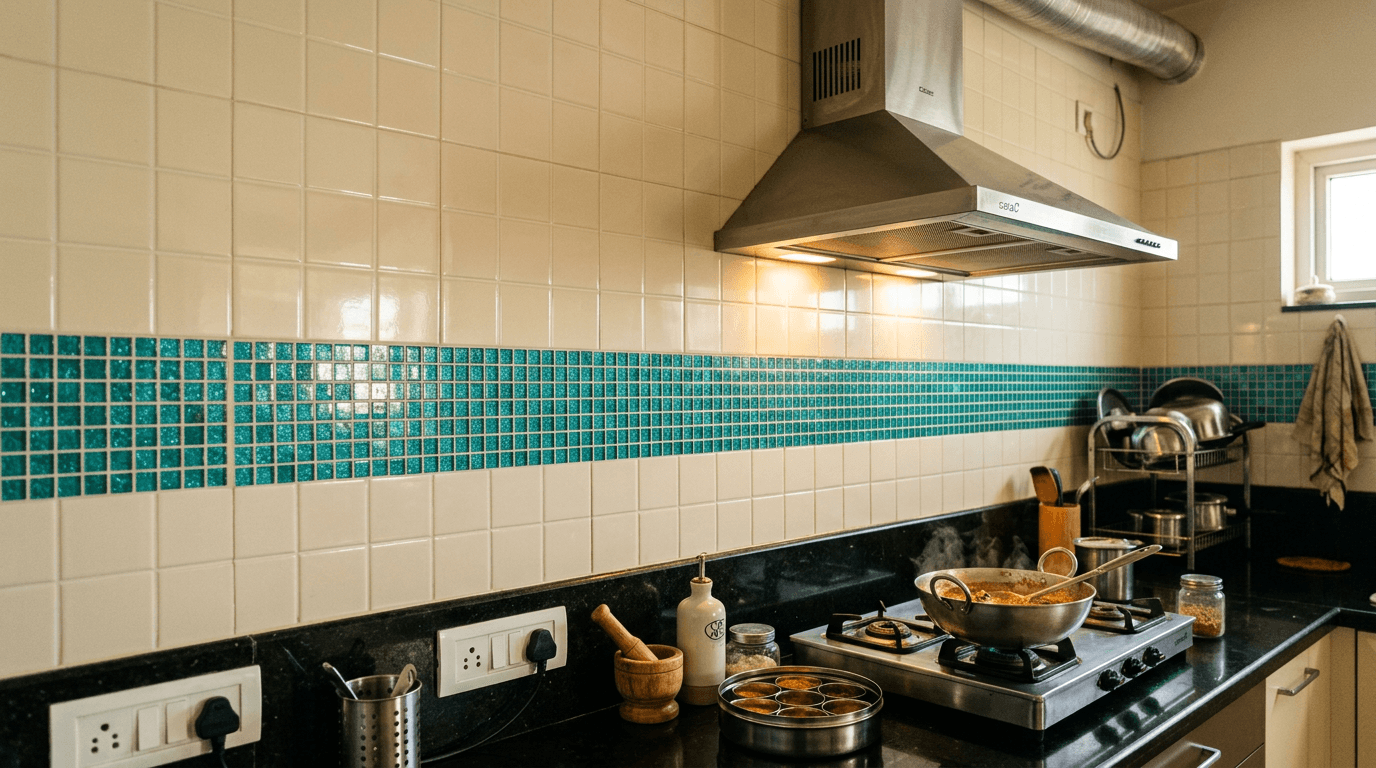
12. Glass Mosaic Accent Strip
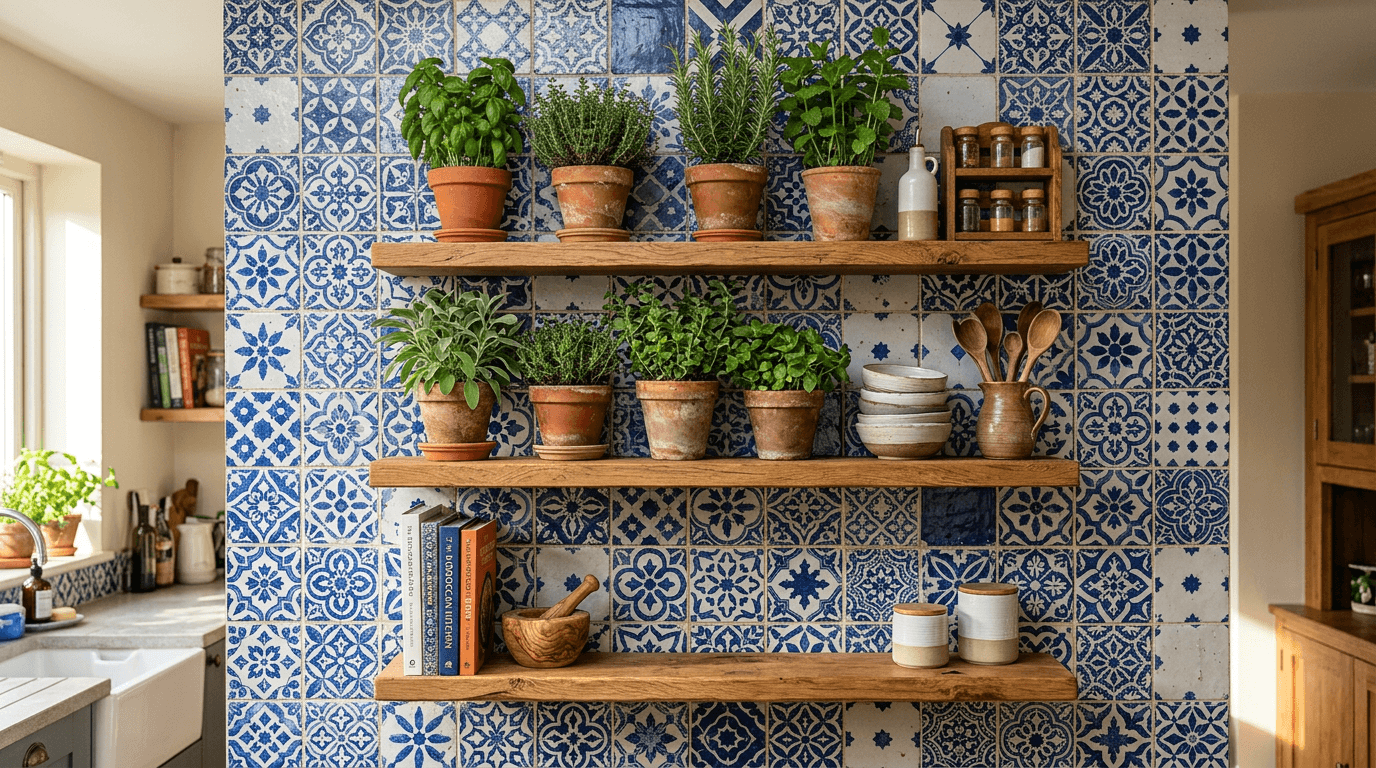
A single band of glass mosaic tiles between plain tile fields adds shimmer at low cost — the tiles create a jewellery line across an otherwise plain wall. Glass is non-porous, so it cleans as easily as glazed ceramic — just budget for careful grouting of all those tiny joints.
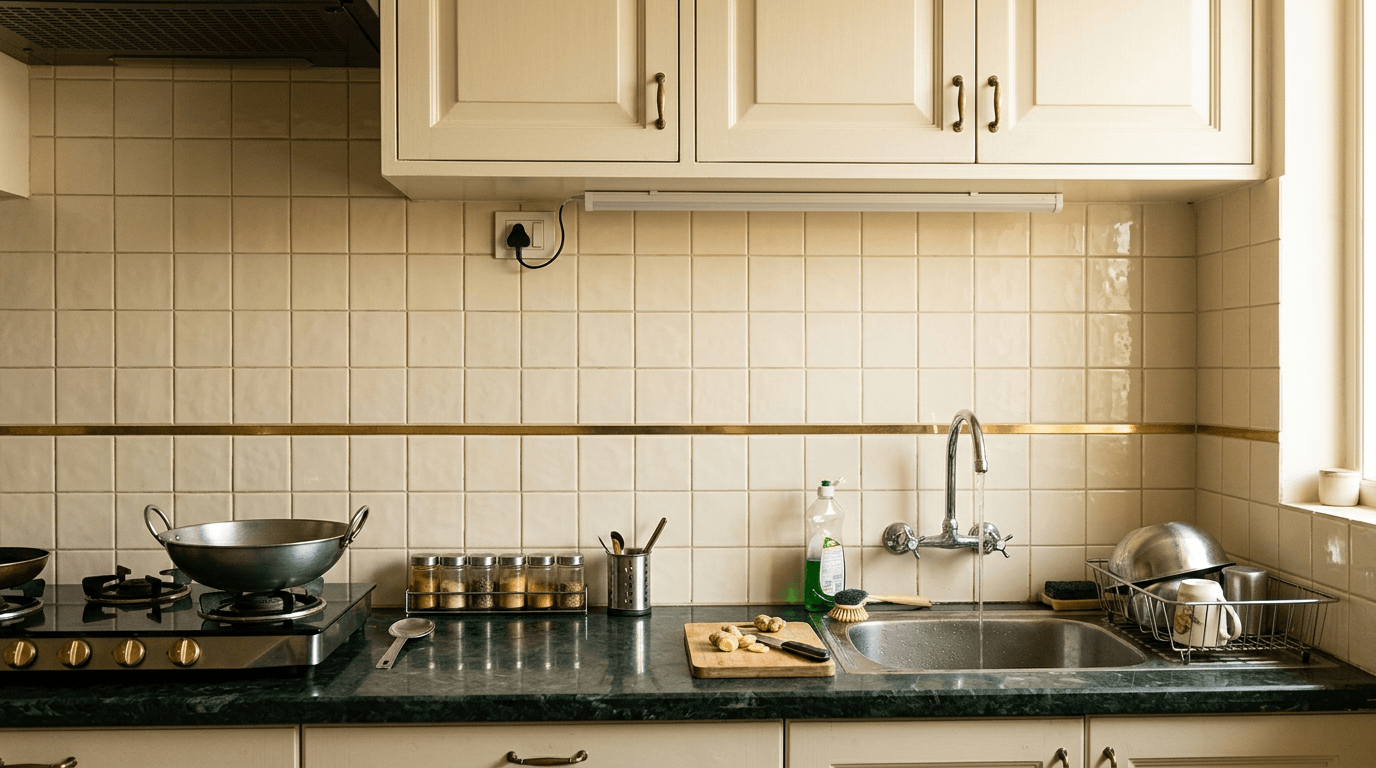
13. Ivory Gloss With Listello Border
The classic Indian kitchen formula, refreshed: warm ivory glossy tiles with a slim metallic listello border. Familiar, forgiving, and easy to match with existing granite counters in renovation projects.
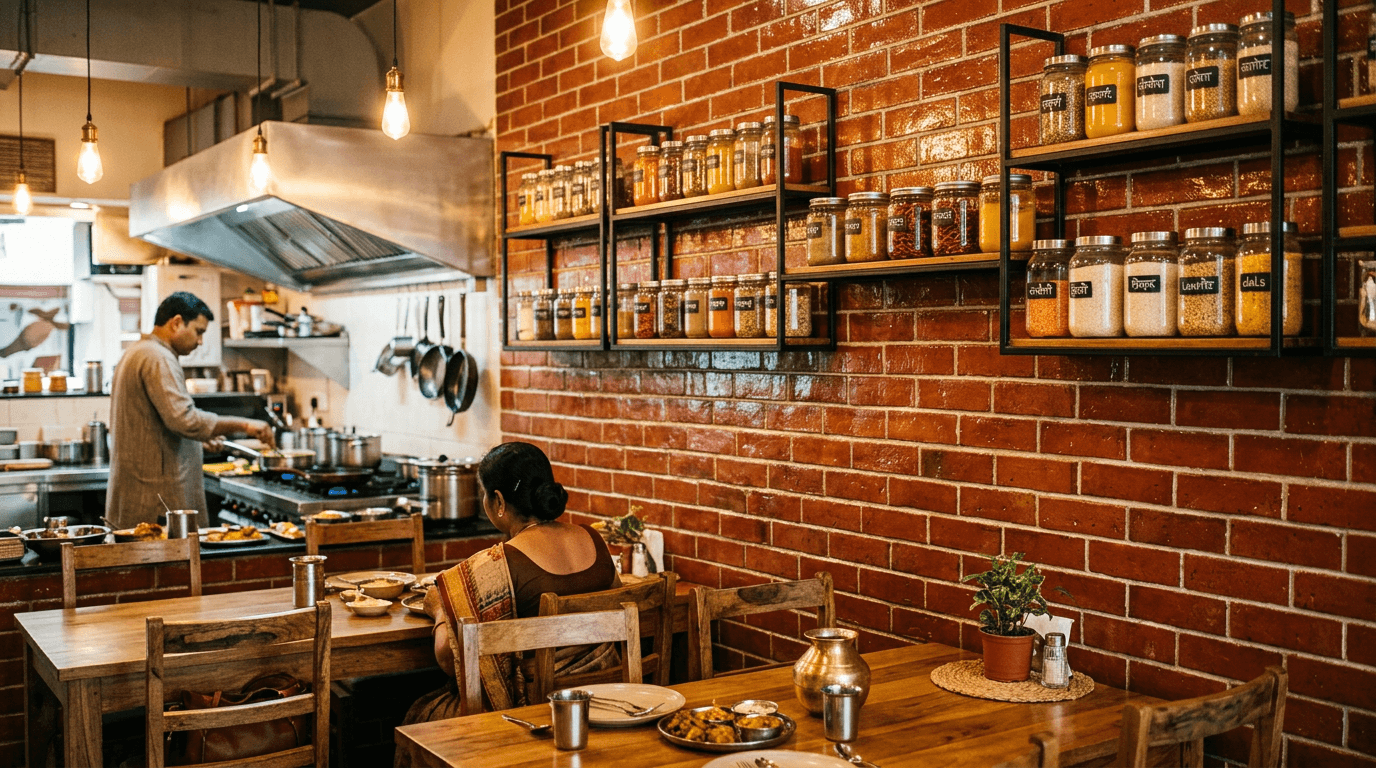
14. Brick-Look Wall Tile (Away From the Hob)
Exposed-brick warmth for cafe-style kitchens. Glazed brick-look tiles work; raw brick cladding doesn't — it's porous and impossible to degrease. Keep it on the wall farthest from cooking.
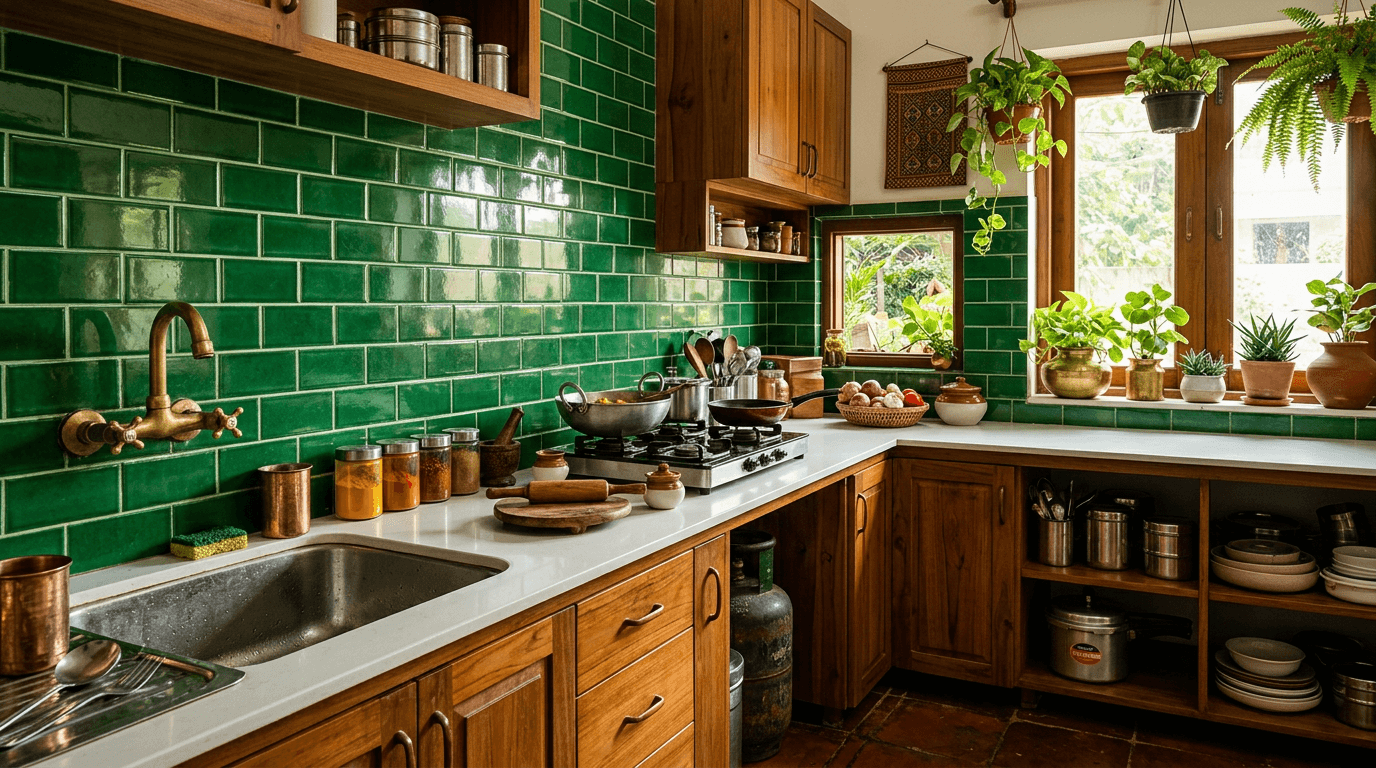
15. Dark Green Gloss With Wood Cabinets
Deep bottle-green glossy tiles against warm wood is the richest-looking combination on this list. Dark gloss shows water spots, so it suits the display wall more than the sink zone.
Kitchen Backsplash Tile Ideas + Dado Height Rules for Indian Cooking
Of all the kitchen wall tile ideas above, none work as hard as the dado zone. The backsplash — dado tiling, in site language — is the hardest-working two feet of your kitchen. Dado tiling is the protective band of wall tiles between the counter and the upper cabinets, typically 2 feet (24 inches) high. That band absorbs every splatter your kadai throws, which is why we spec it in glazed, glossy, low-porosity tile on nearly every project.
Why glossy over matte here? Glossy tiles have a smooth, non-porous, glass-like fired surface. Grease, oil and spices sit on top instead of soaking in, and a damp sponge removes them. Matte surfaces grip stains the way they grip light.
| Glossy vs Matte Kitchen Tiles | Glossy | Matte |
|---|---|---|
| Aesthetic appeal | Bright, reflective, makes small kitchens feel larger | Soft, contemporary, hides smudges |
| Stain resistance | Excellent — wipes clean | Moderate — holds grease film |
| Slip resistance (floors) | Poor when wet | Good, especially anti-skid rated |
| Best application area | Walls, backsplash, dado | Floors, low-splatter walls |
| Cleaning effort | Low | Medium to high near cooking |
Seven backsplash ideas we keep coming back to:
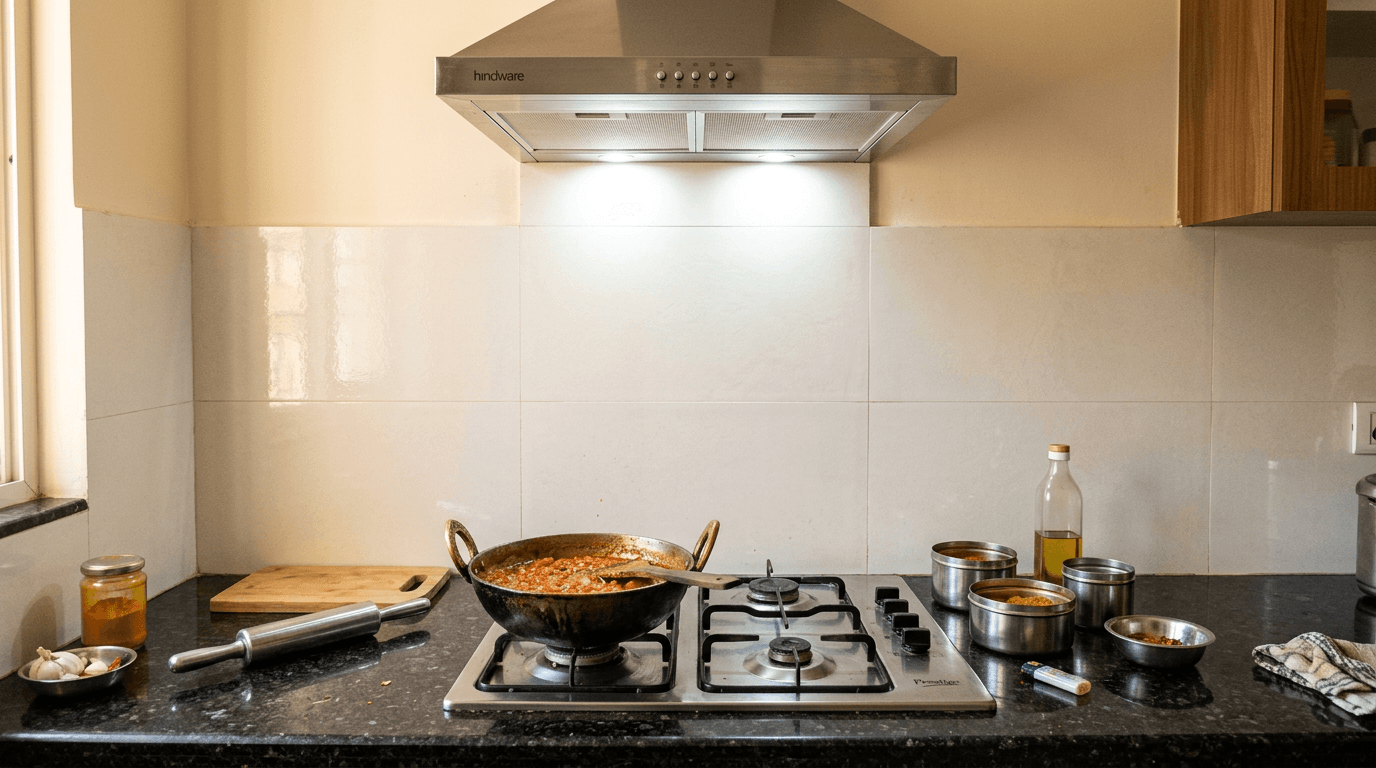
16. Full-Height Glazed Backsplash Behind the Hob
Run the tile from counter to chimney with no break. One continuous glazed surface behind the hob means zero grout-heavy zones where the worst splatter lands.
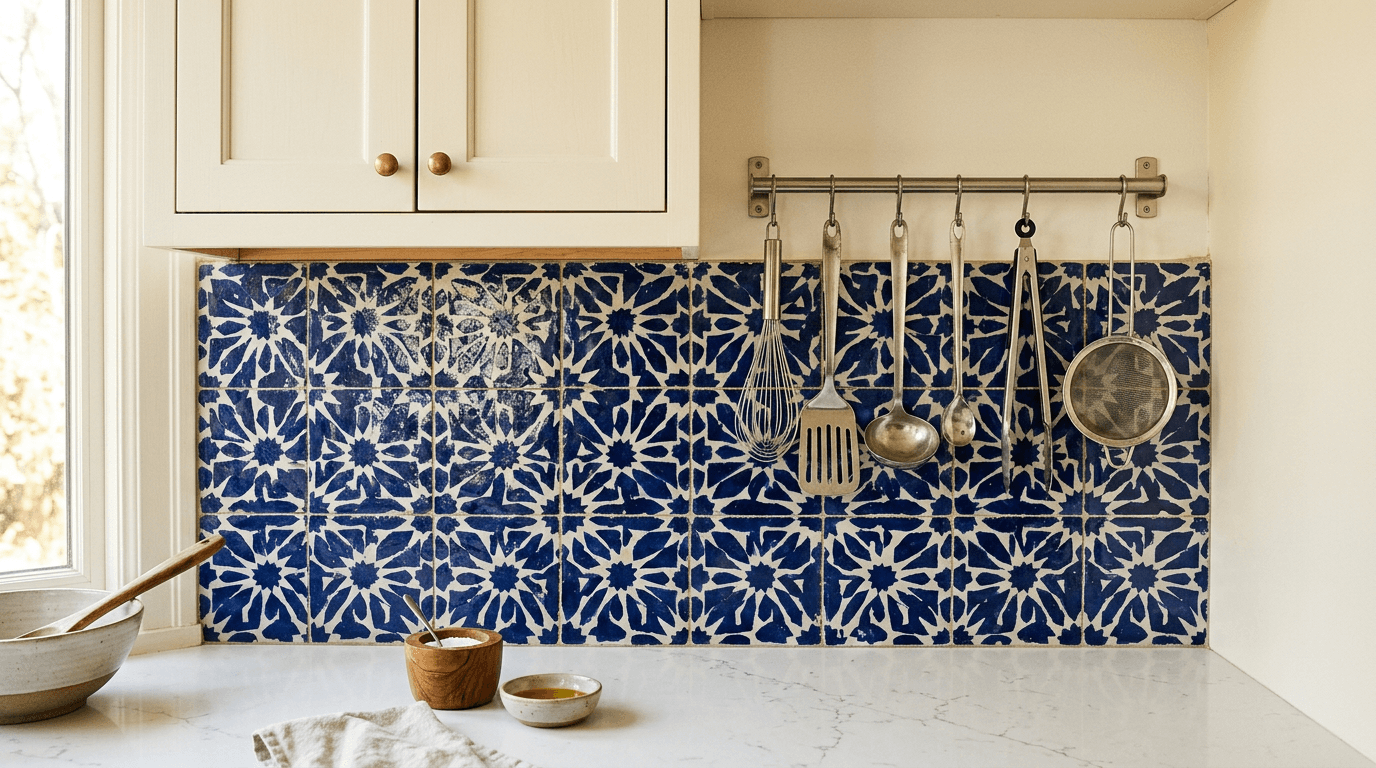
17. Moroccan-Pattern Flat Glazed Backsplash
Moroccan and patterned backsplash tiles are beautiful and practical — with one condition we repeat to every client: flat glazed versions only. Textured or hand-carved patterns trap grease and soot.
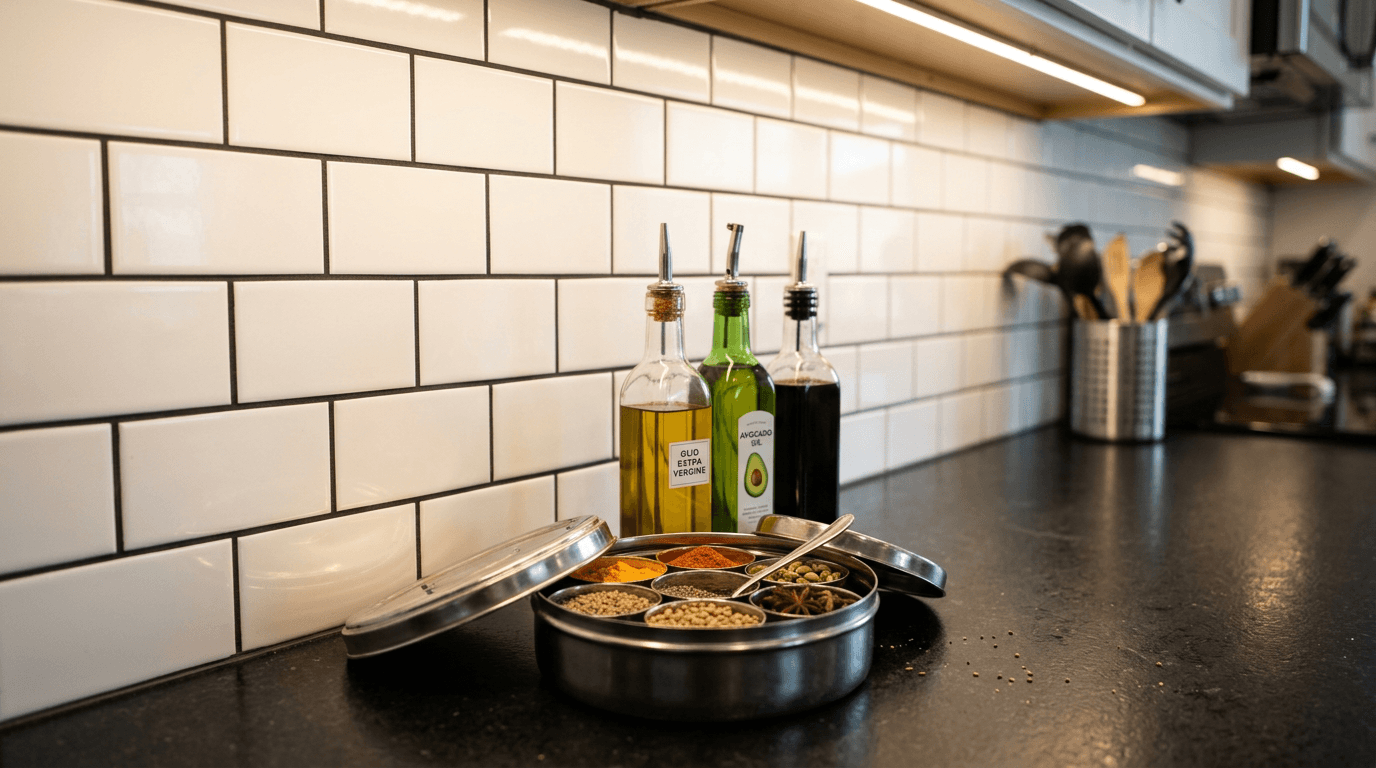
18. Subway Backsplash With Dark Epoxy Grout
Classic tile, upgraded joints. White subway tiles with charcoal epoxy grout give a crisp graphic look — and epoxy grout is non-porous, so turmeric has nowhere to soak in.
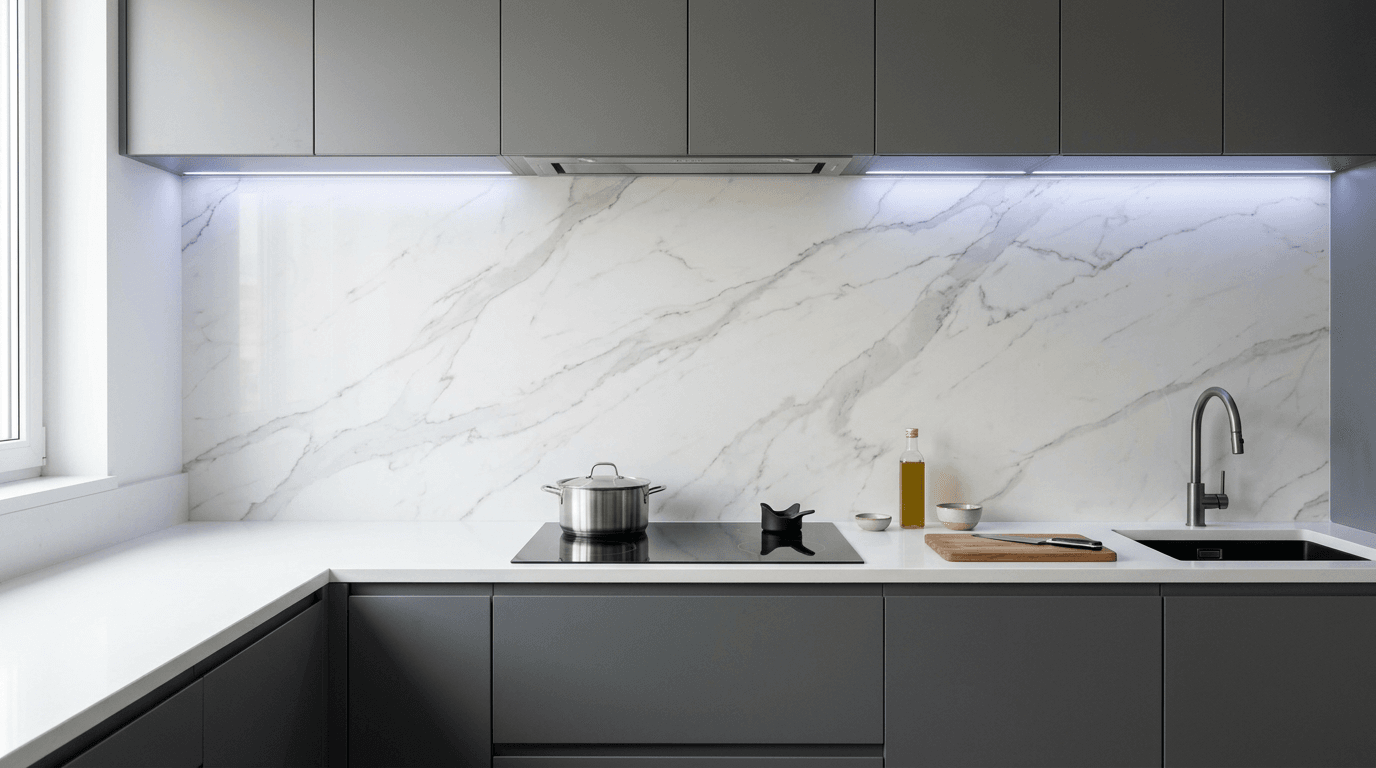
19. Single-Slab-Look Porcelain Backsplash
Large porcelain slabs (1200x2400 mm) cut to your dado give an almost joint-free backsplash. Highest material cost in this section, lowest lifetime cleaning effort.
20. Black Mirror-Gloss Backsplash
Dramatic and easy to wipe — but position it away from direct window light, or the glare at the counter becomes real. Best in kitchens lit mainly by under-cabinet LEDs.
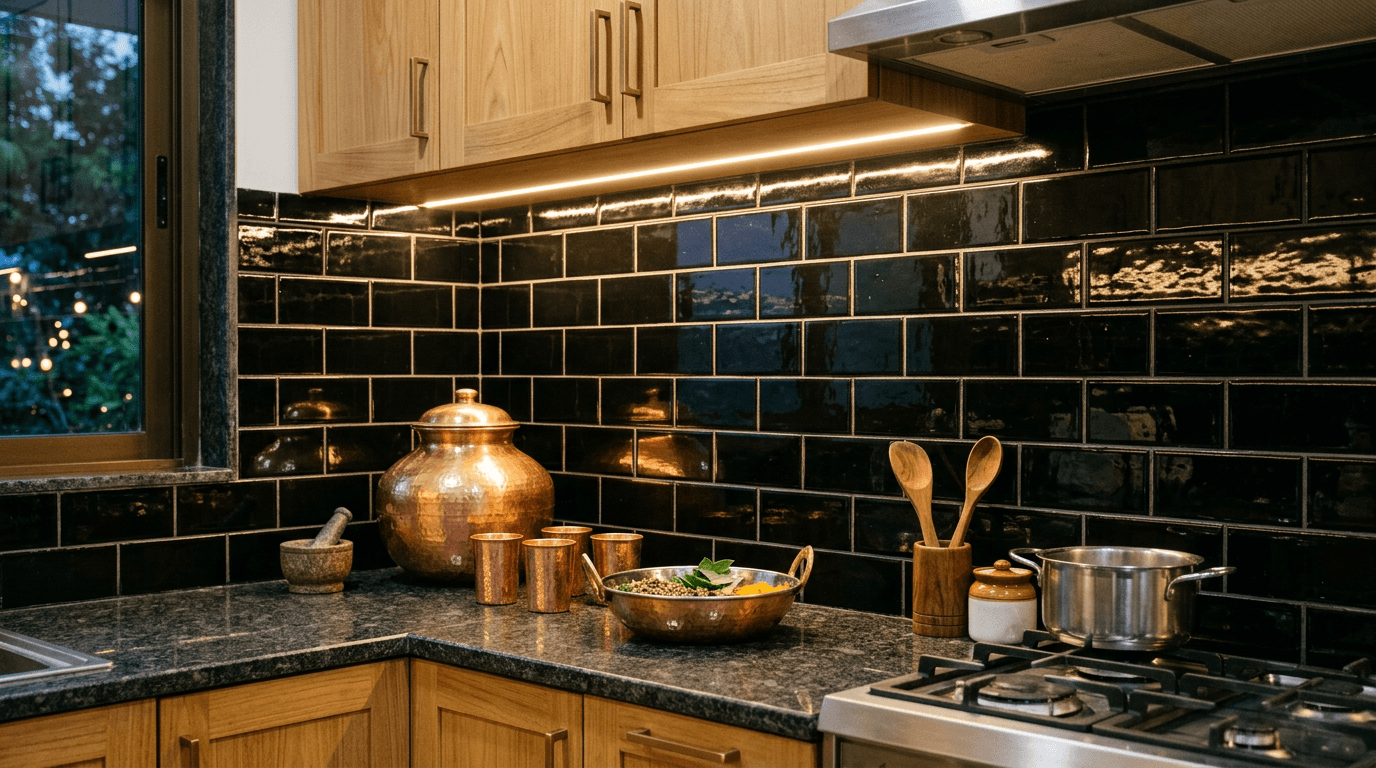
21. Mosaic Dado Band at Two Feet
A 2-foot mosaic dado band in mixed tones is the budget-friendly way to add colour to a rental or first kitchen — small tiles, small cost, standard height, easy future replacement.
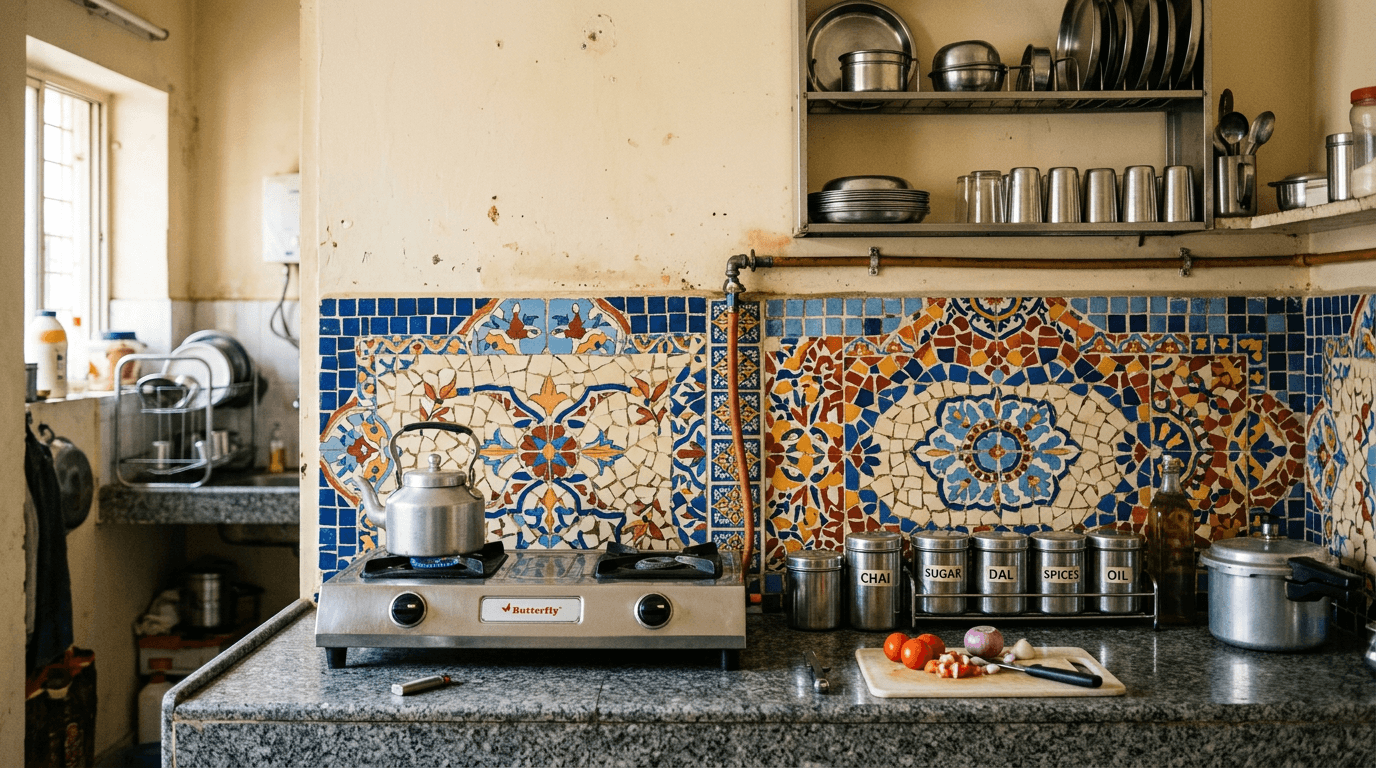
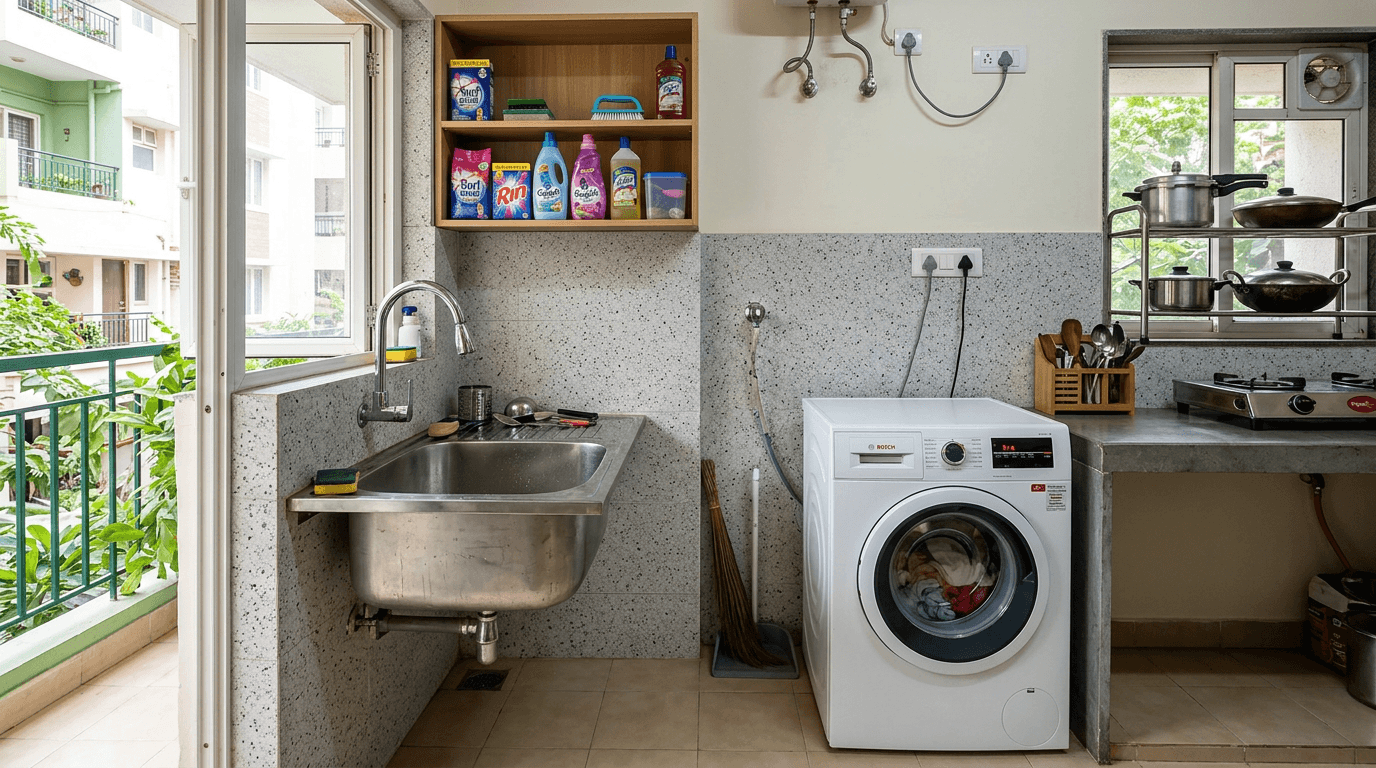
22. Utility-Area Dado in Quartz-Look Porcelain
The wash area and utility balcony behind the kitchen need dado protection too. Quartz-look porcelain shrugs off detergent splashes and hard-water marks better than painted walls ever will.
Kitchen Floor Tile Designs: Anti-Skid Ratings Explained
Kitchen floors get water, oil and foot traffic simultaneously. Before the look, check the grip: anti-skid ratings run from R9 (minimal grip) to R13 (maximum). For Indian kitchen floors, R10–R11 matte vitrified tiles are the practical sweet spot — grippy enough for a wet floor, smooth enough to mop clean. Pure glossy floors photograph beautifully and cause slips; save gloss for the walls.
Ten kitchen floor tile design ideas that balance grip and looks:
23. Ivory Matte Vitrified 2x2
The workhorse of Indian kitchen flooring. 600x600 mm matte vitrified tiles in ivory hide flour dust, brighten the room, and cost less than almost every alternative.
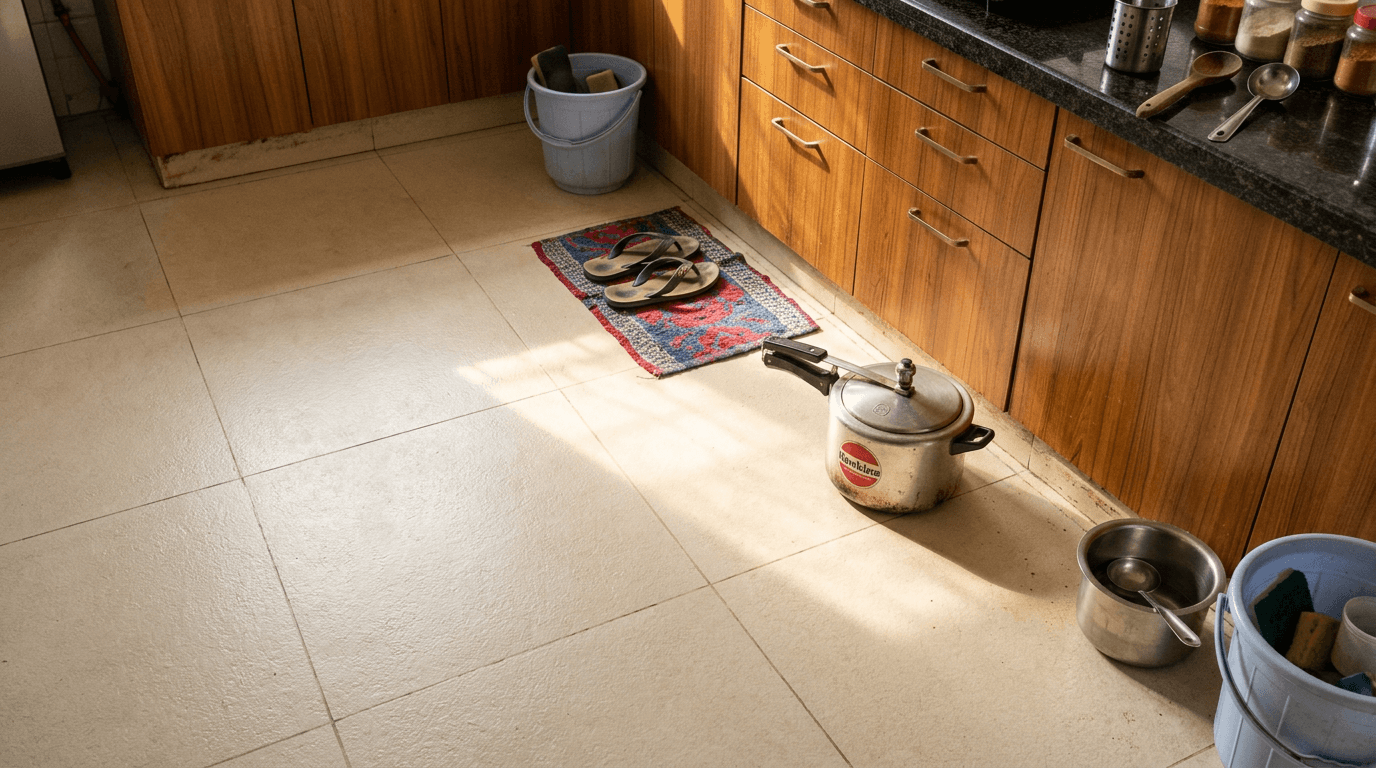
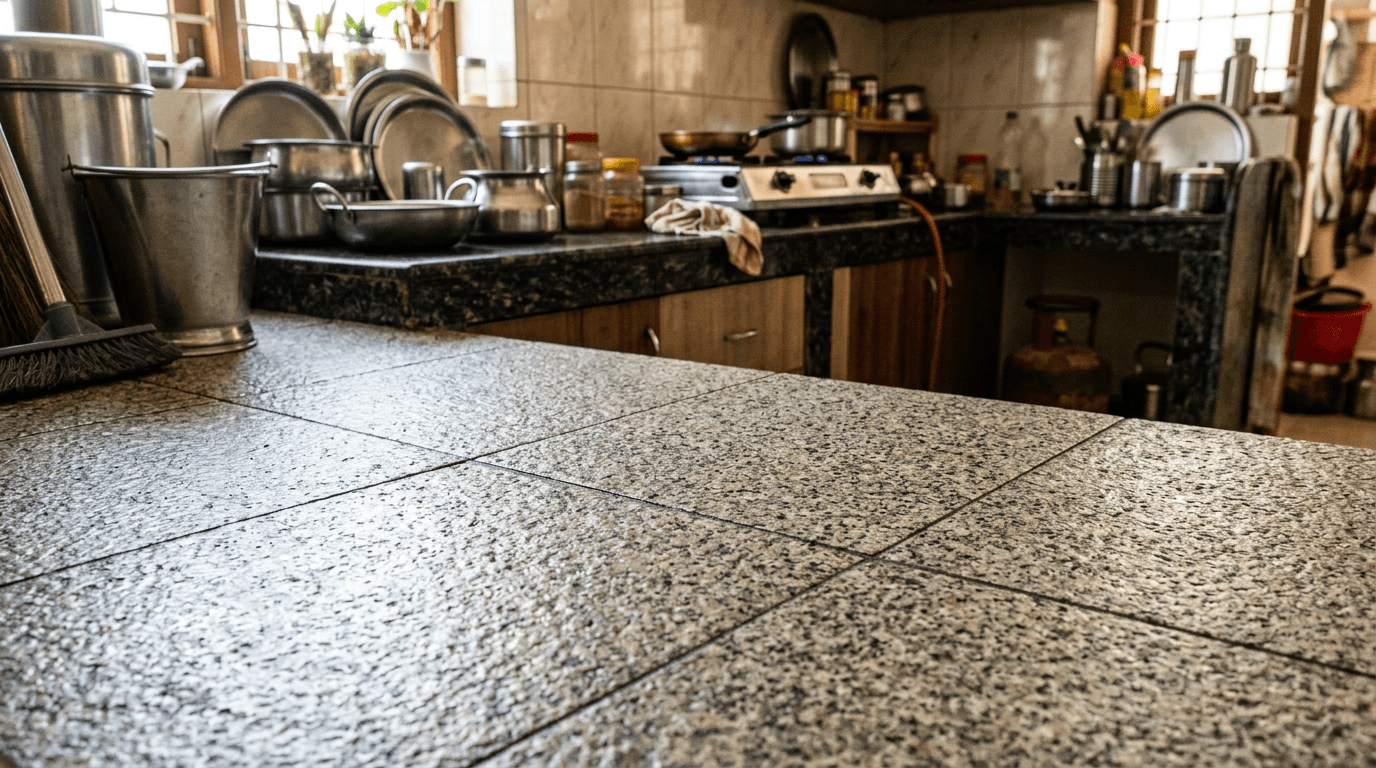
24. Salt-and-Pepper Anti-Skid Vitrified
Speckled "salt and pepper" texture is the most forgiving floor in this list — it hides dropped atta, spice dust and daily wear while carrying a proper anti-skid rating.
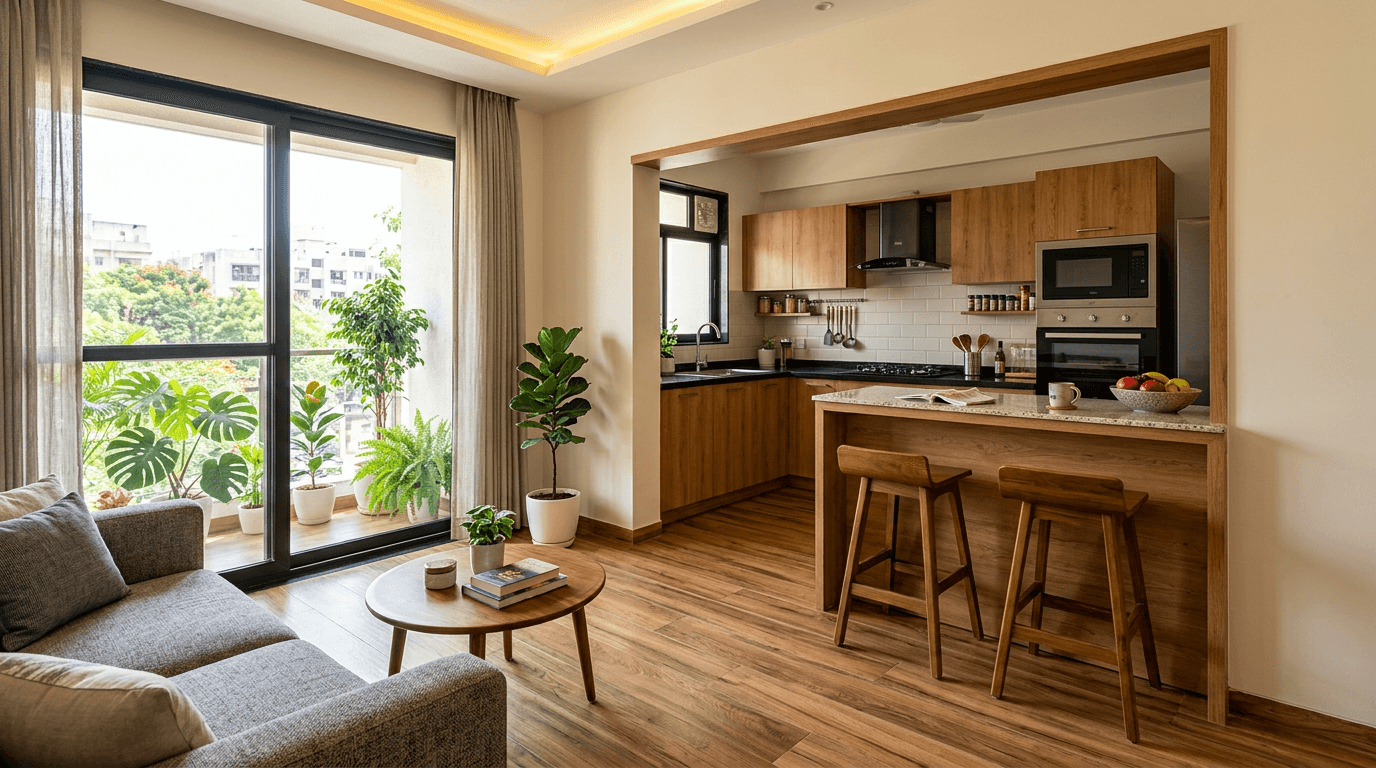
25. Wood-Look Plank Tiles
Wooden warmth, tile durability. Wood-look vitrified planks flow beautifully from an open kitchen into the living area — the continuity trick we used when we carved an open kitchen out of a small transitional space in the Umesh residence at Accurate Wind Chimes.
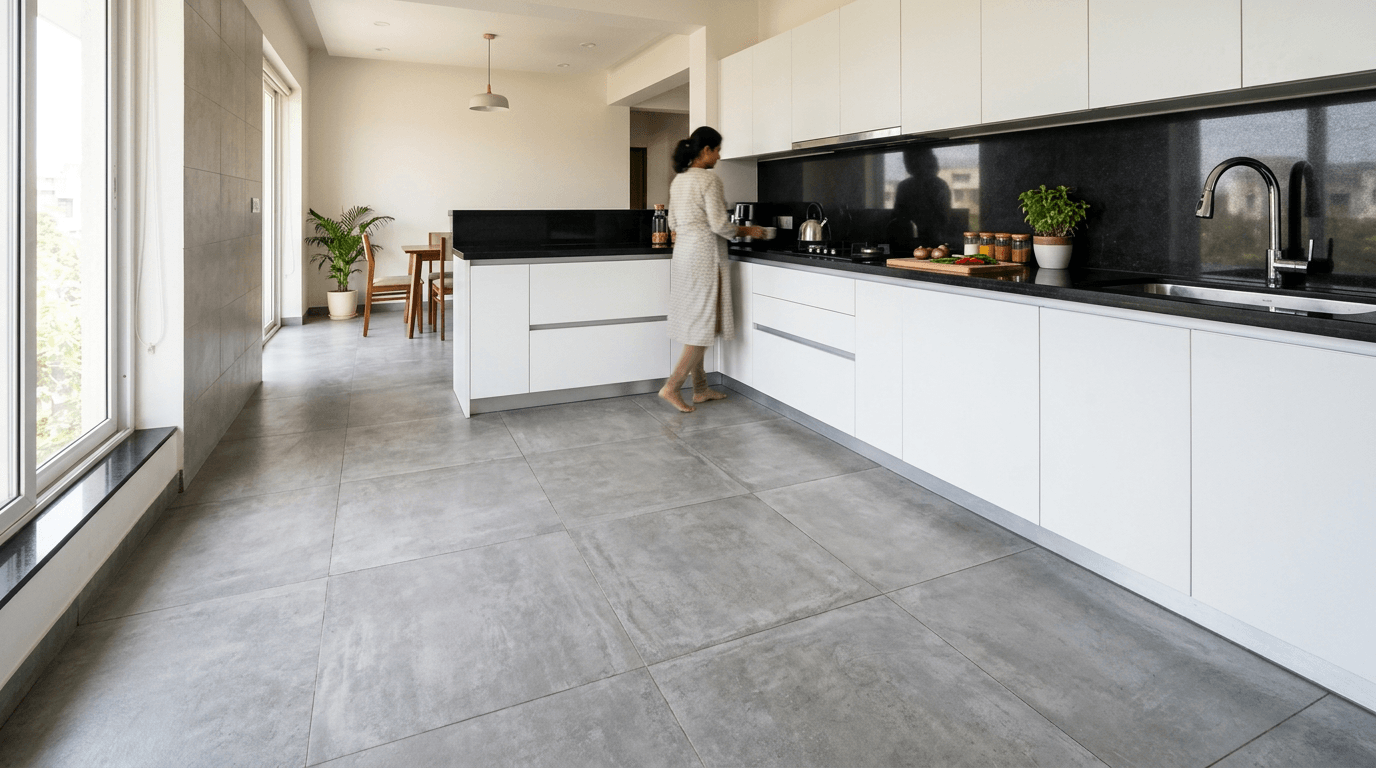
26. Grey Cement-Look Matte Floor
Industrial calm. Cement-look matte tiles pair with every cabinet colour, and their mid-grey tone sits exactly in the hides-everything zone between show-all white and dusty black.
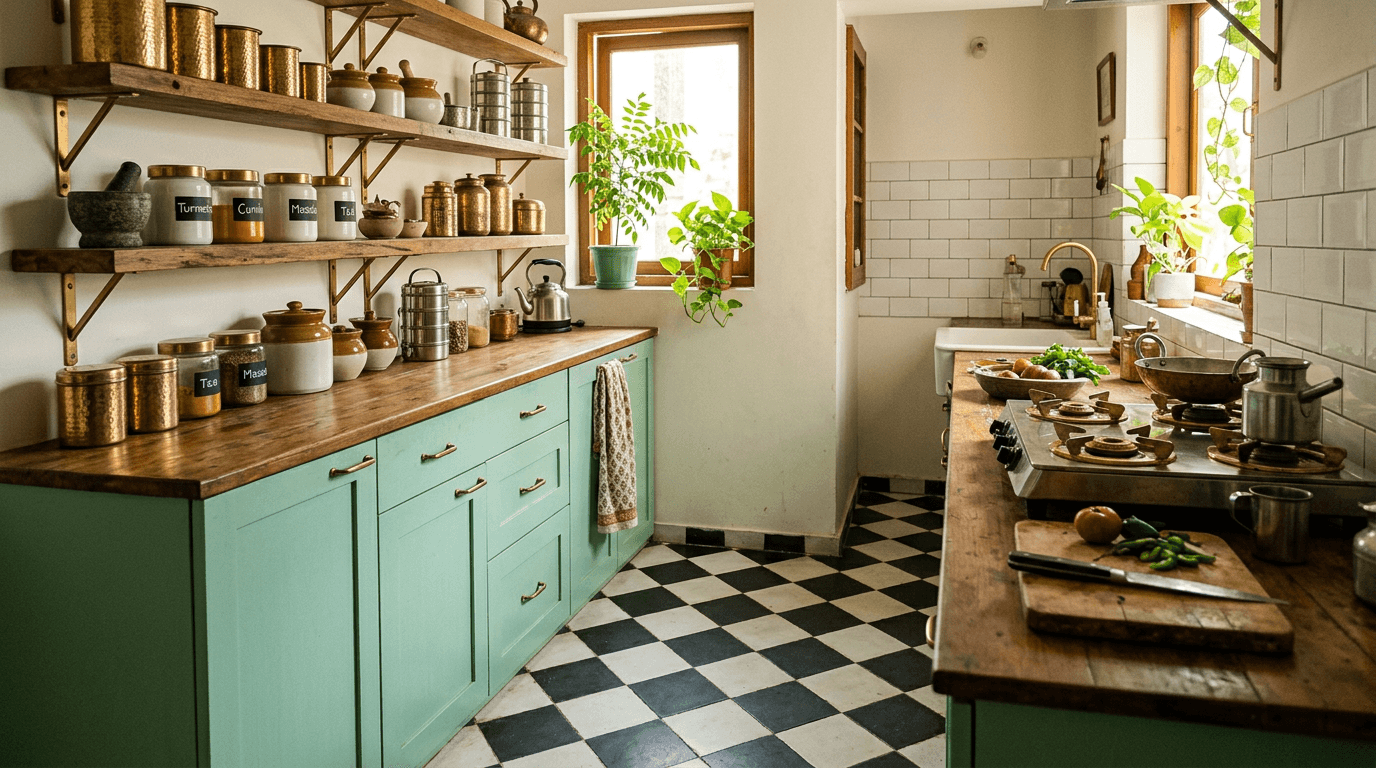
27. Checkerboard Floor
Black-and-white checkerboard is having a revival. In compact kitchens keep the checks small (300x300 mm) — large checks in a small room overwhelm it.
28. Patterned Floor Runner Strip
A strip of encaustic-look patterned tiles running down the working corridor, plains on either side. You get the pattern hit at a fraction of full-floor cost — and less pattern to visually tire of.
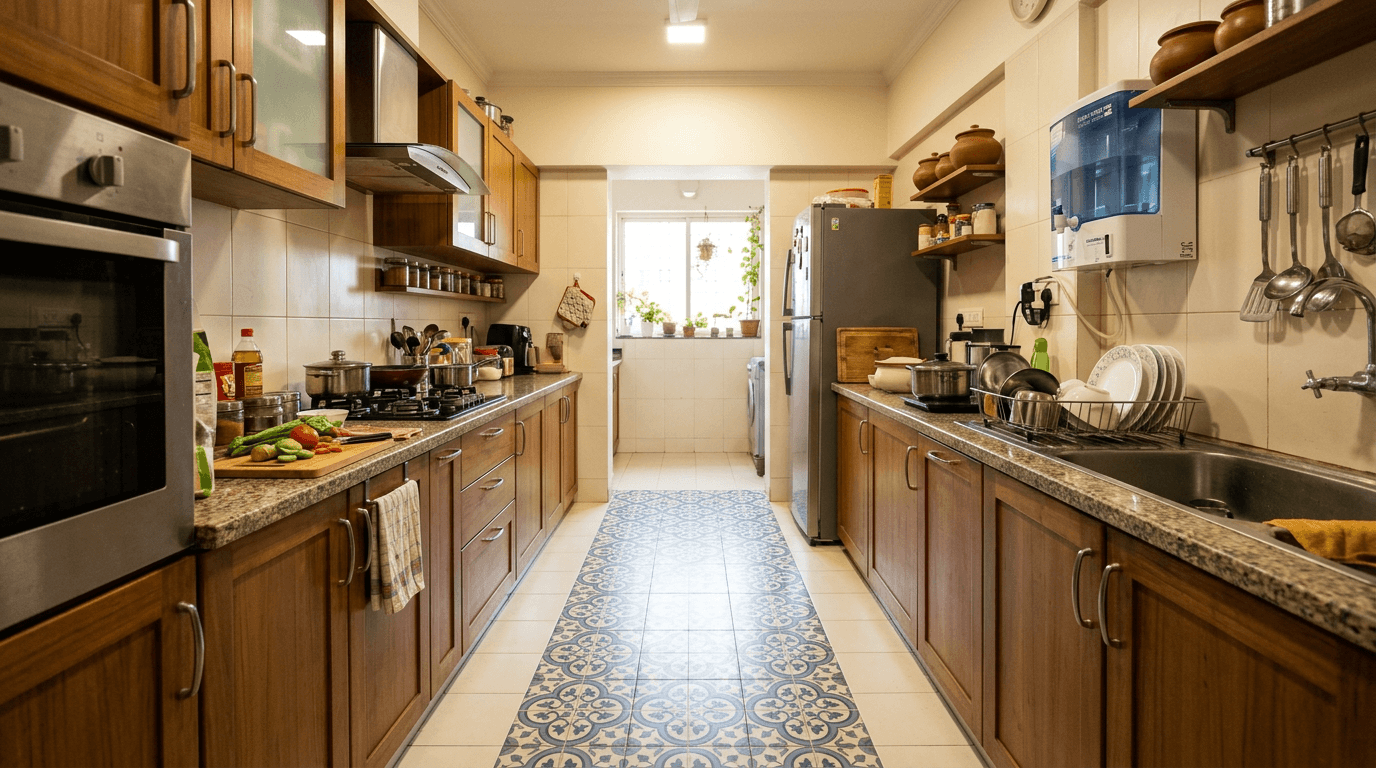
29. Large-Format Porcelain, Minimal Joints
800x1600 mm porcelain floor tiles mean grout lines every few feet instead of every two. Fewer joints, less lippage risk if your installer levels properly — insist on a levelling-clip installation.
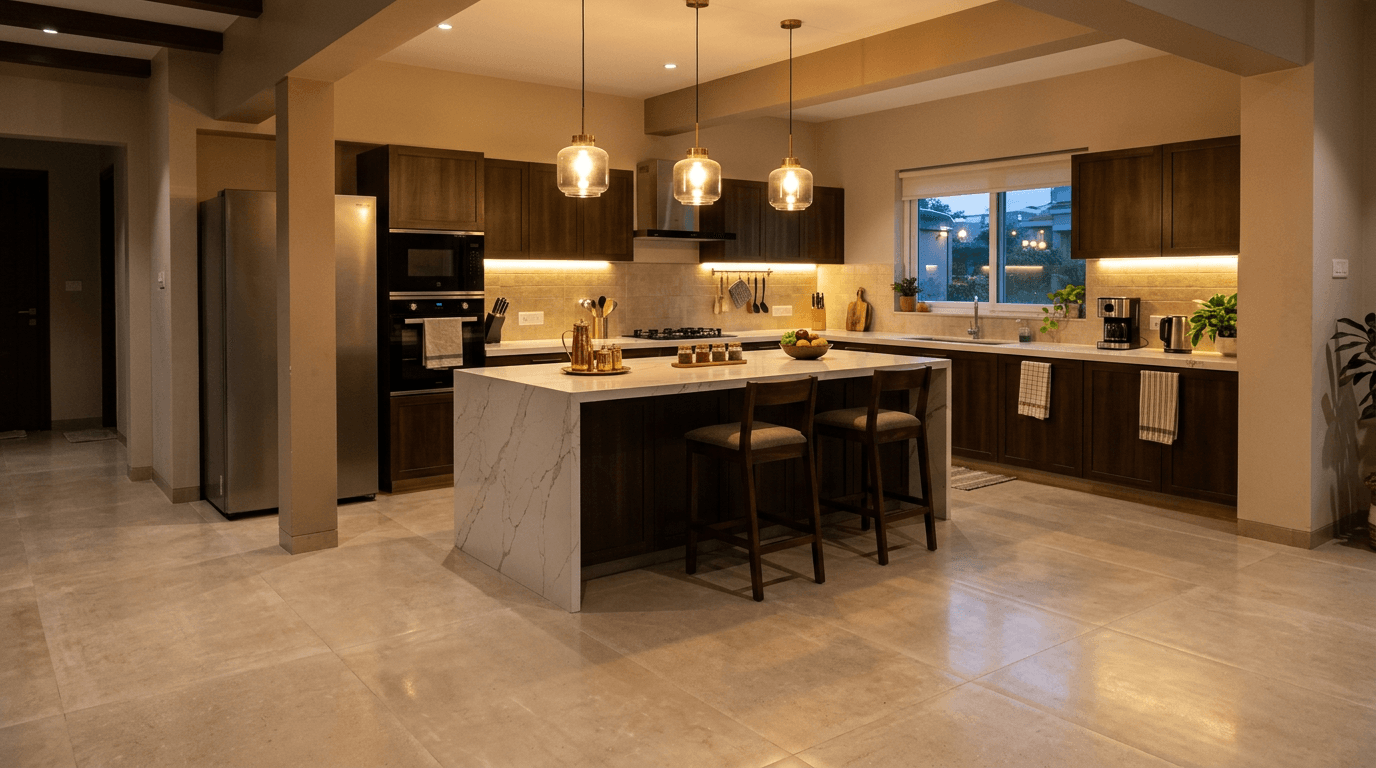
30. Charcoal Floor That Hides Stains
Dark floors hide masala stains and scuffs — and show every speck of flour and dust. Best for households that mop daily and want the drama; skip if you have hard water that leaves white marks.
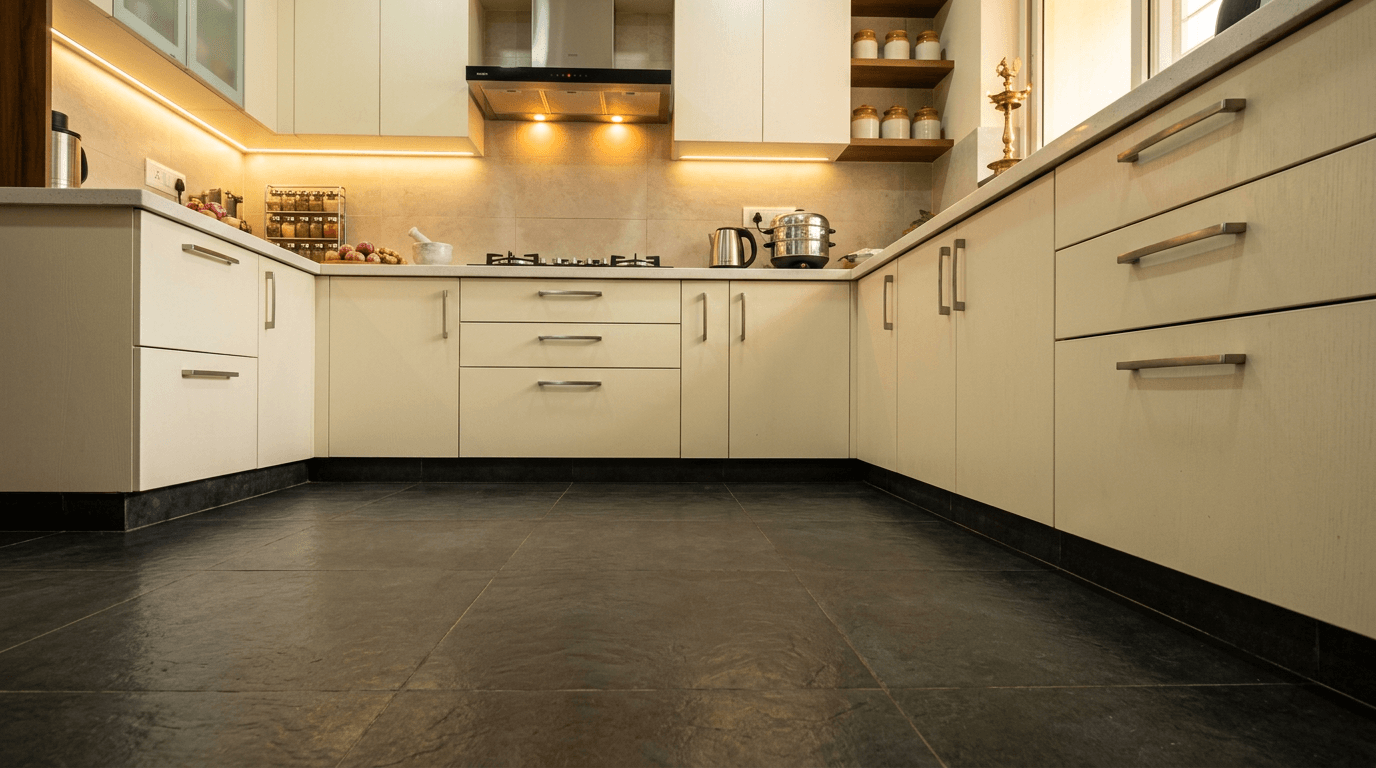
31. Terracotta Floor for Traditional Kitchens
For courtyard homes and farm houses, terracotta-look vitrified floor tiles deliver the nostalgic red-oxide warmth clients ask us for — without raw terracotta's chipping and sealing upkeep.
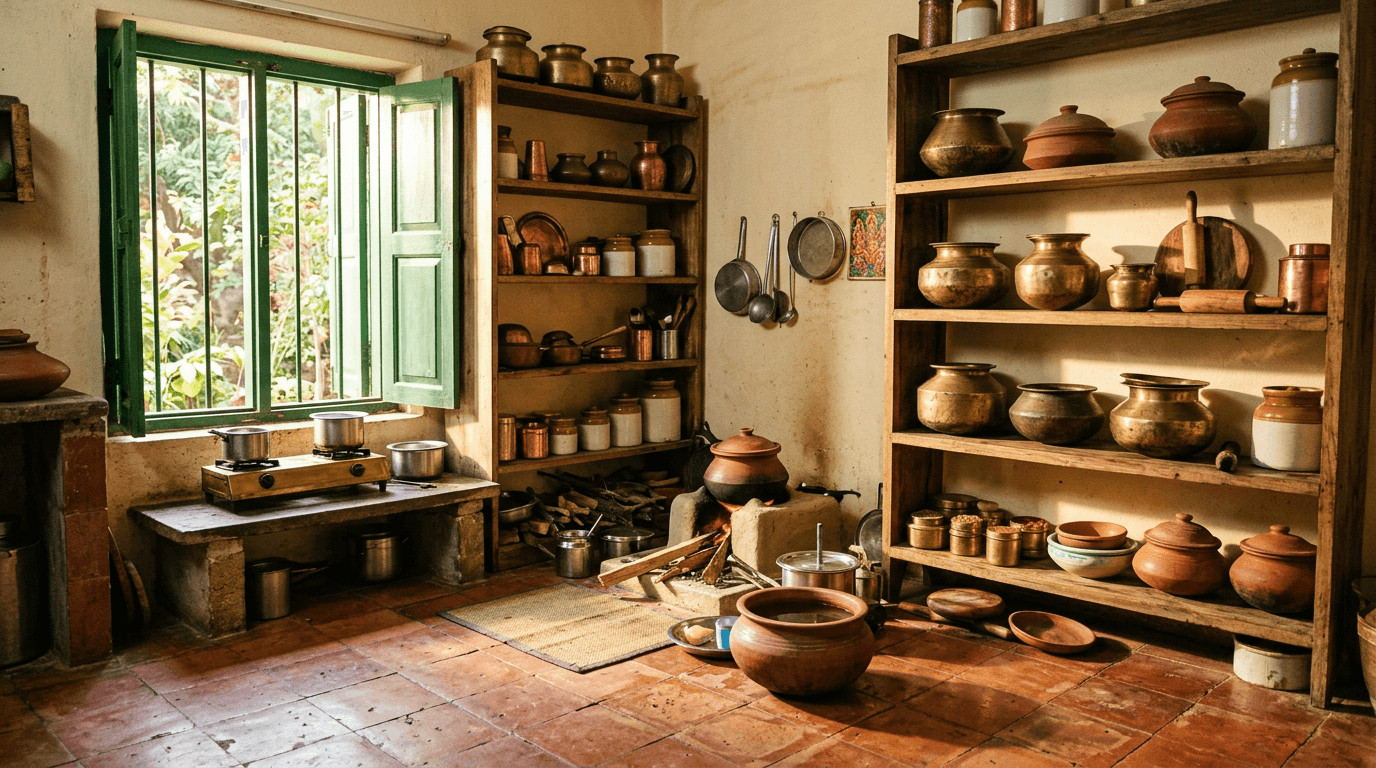
32. Textured Anti-Skid for the Wet Zone
Around the sink and utility door, step up to a deeper-textured anti-skid tile even if the main floor is smoother. A one-tile-width border zone of higher grip where water actually lands.
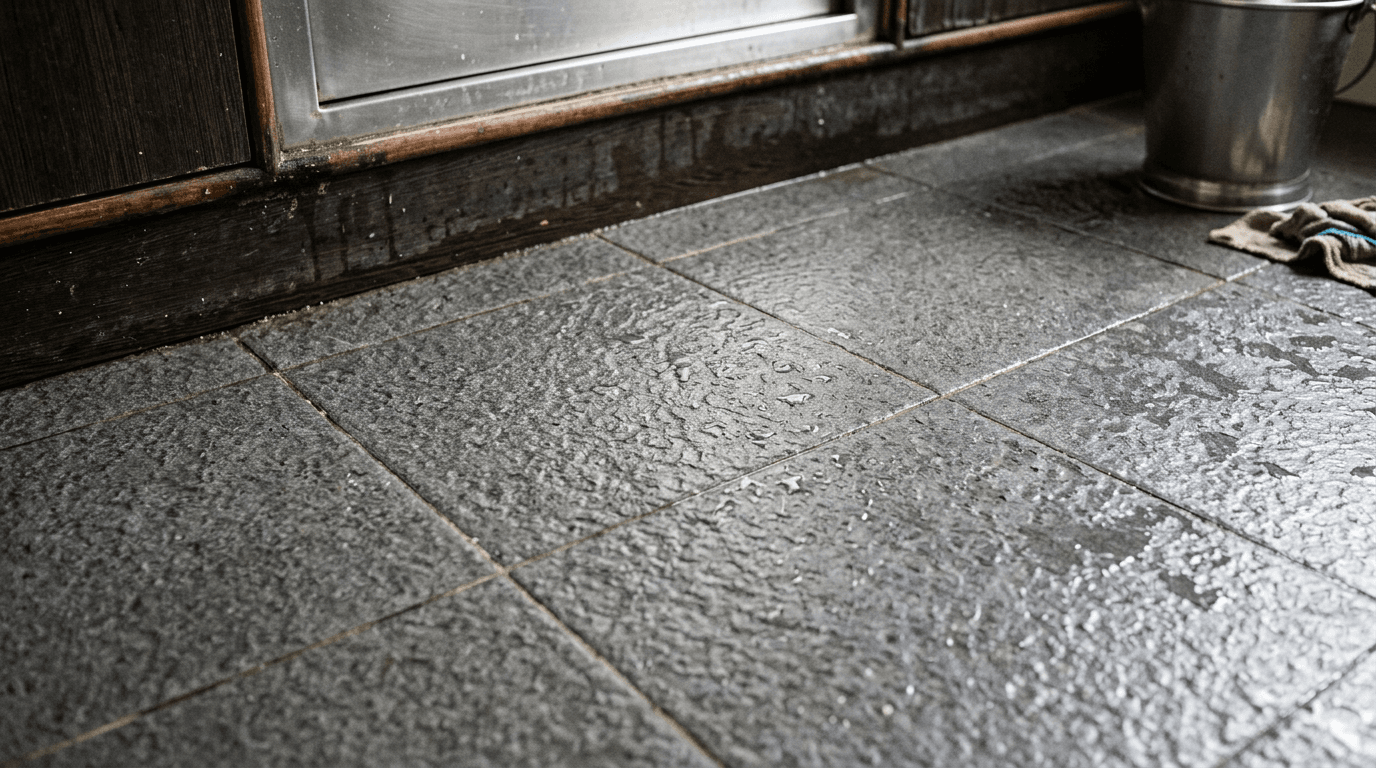
Best Kitchen Tile Materials: Ceramic vs Vitrified vs Subway vs Moroccan
Same design, different body. The material under the glaze decides the price, the durability and where the tile can go. Eight material choices, each shown in its best kitchen role:
33. Glazed Ceramic — The Wall Standard
Ceramic tiles are the budget-friendly classic for kitchen walls: light, easy to cut, endlessly available in designs. Their higher porosity means they belong on walls, not heavy-traffic kitchen floors.
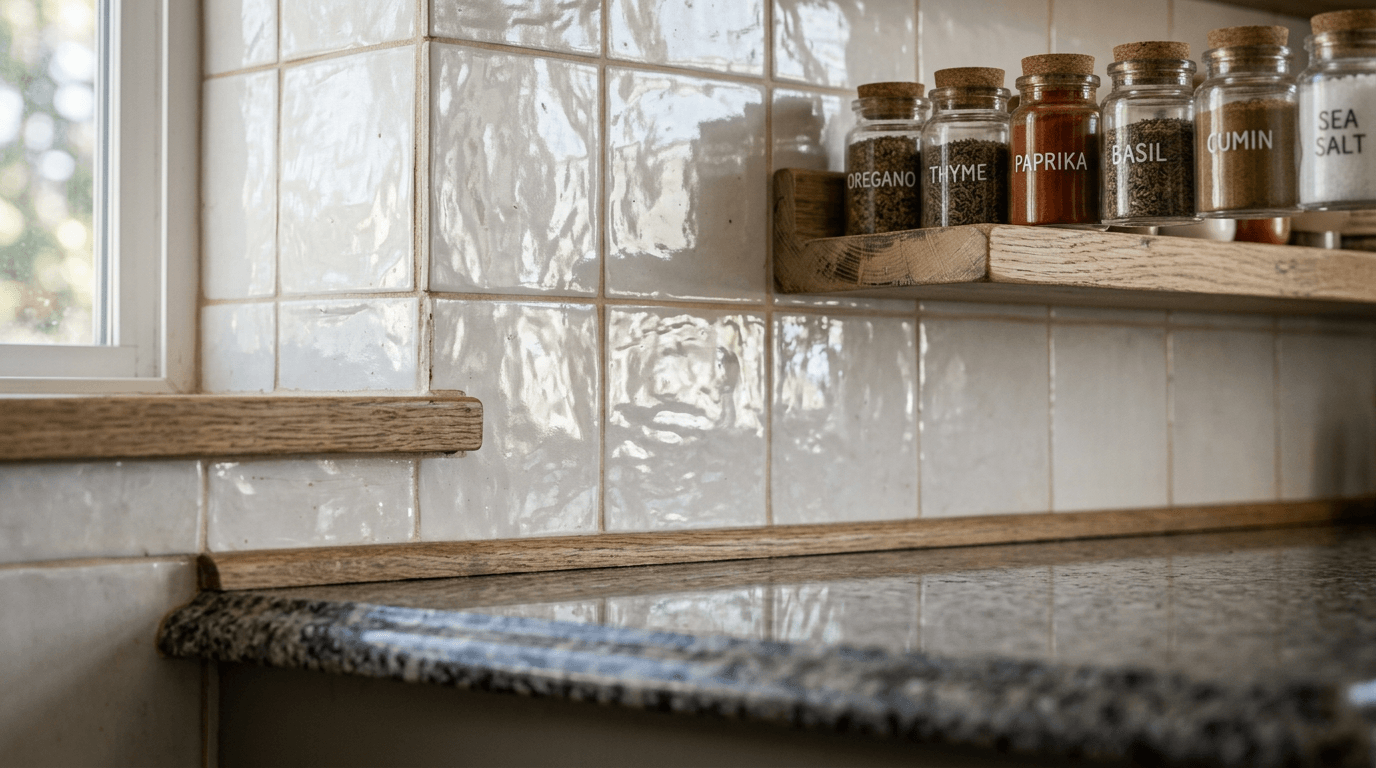
34. Glazed Vitrified Tiles (GVT) — The All-Rounder
GVT gives you printed designs — marble, stone, concrete, wood — on a dense, low-porosity vitrified body. It's what we spec most for Indian kitchens: wall or floor, it copes.
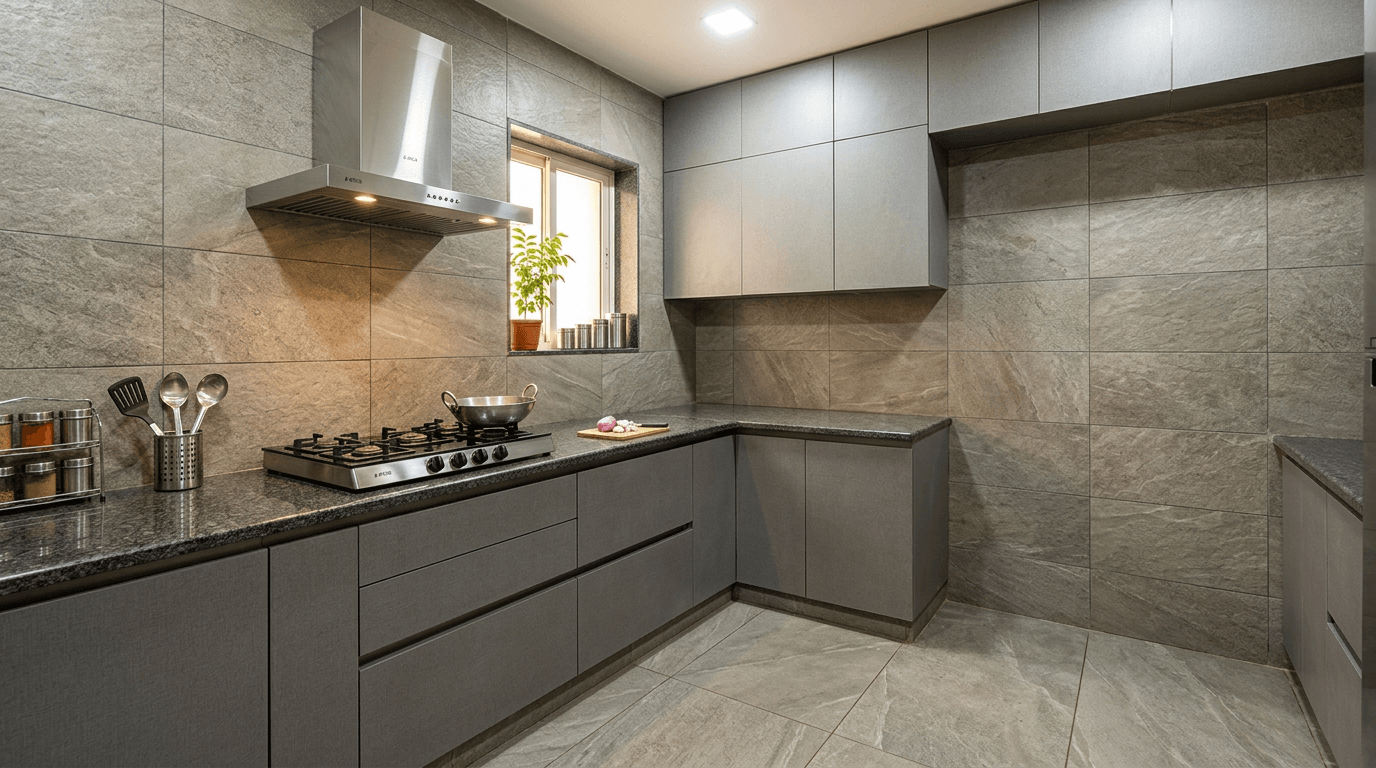
35. Full-Body Vitrified — For the Hardest Wear
Colour runs through the entire tile, so chips barely show. Overkill for most homes; exactly right for heavy-use family kitchens and rental units where retiling later is not on the menu.
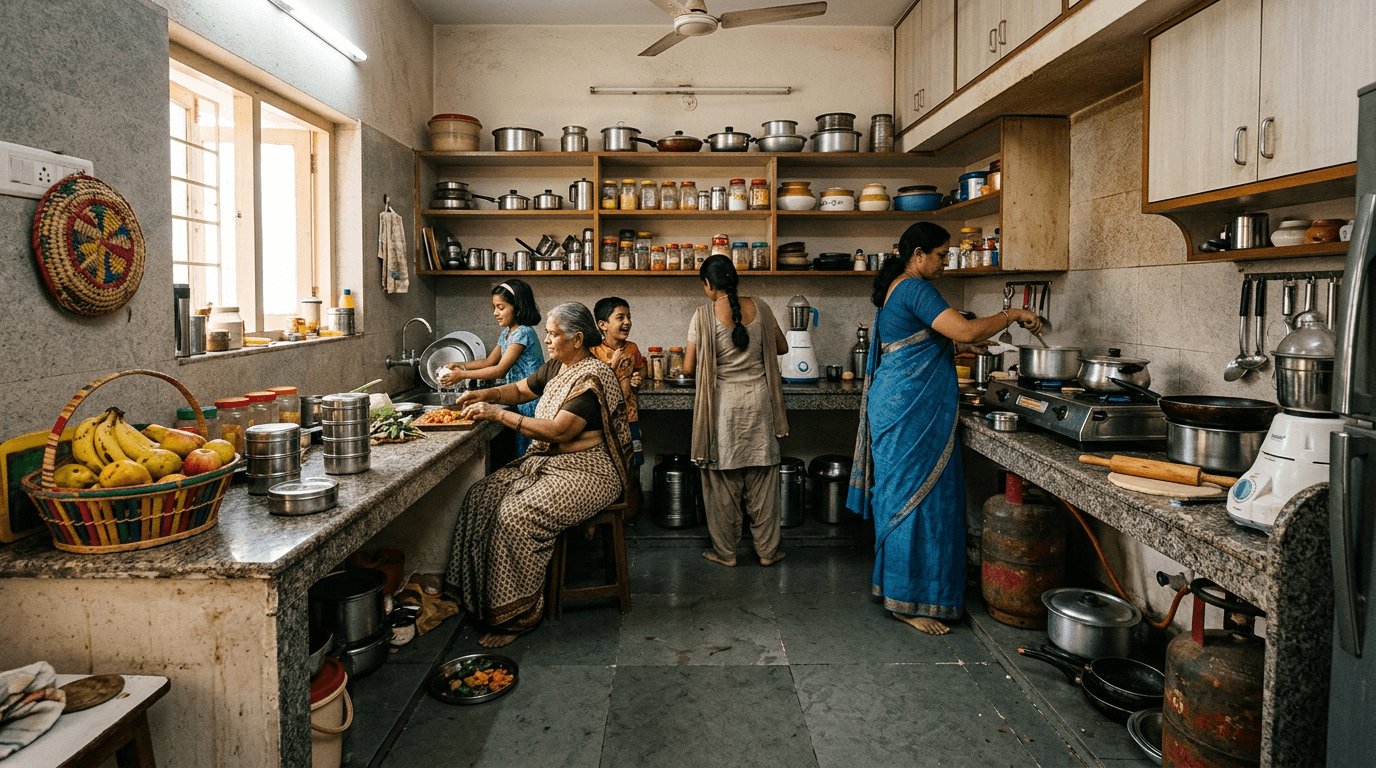
36. Double-Charge Vitrified — Budget Durability
Two layers of pigment pressed together give a thick wear layer at a mid-range price. Limited to simpler patterns, which is fine — kitchen floors don't need drama, they need endurance.
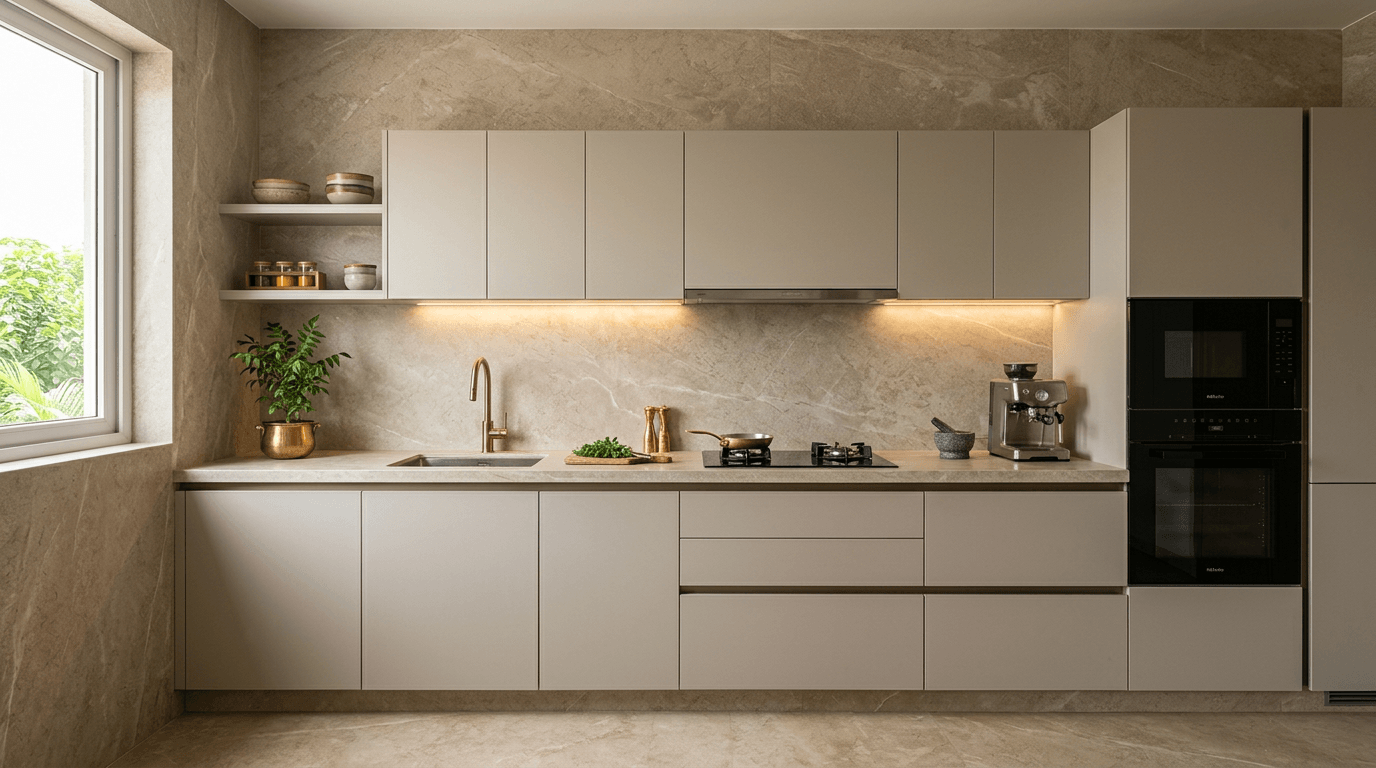
37. Porcelain Slim Slabs — The Premium Move
Large, thin, dense and almost non-porous. Porcelain slabs make seamless backsplashes and counters-to-wall continuity possible. Premium price, premium installer required.
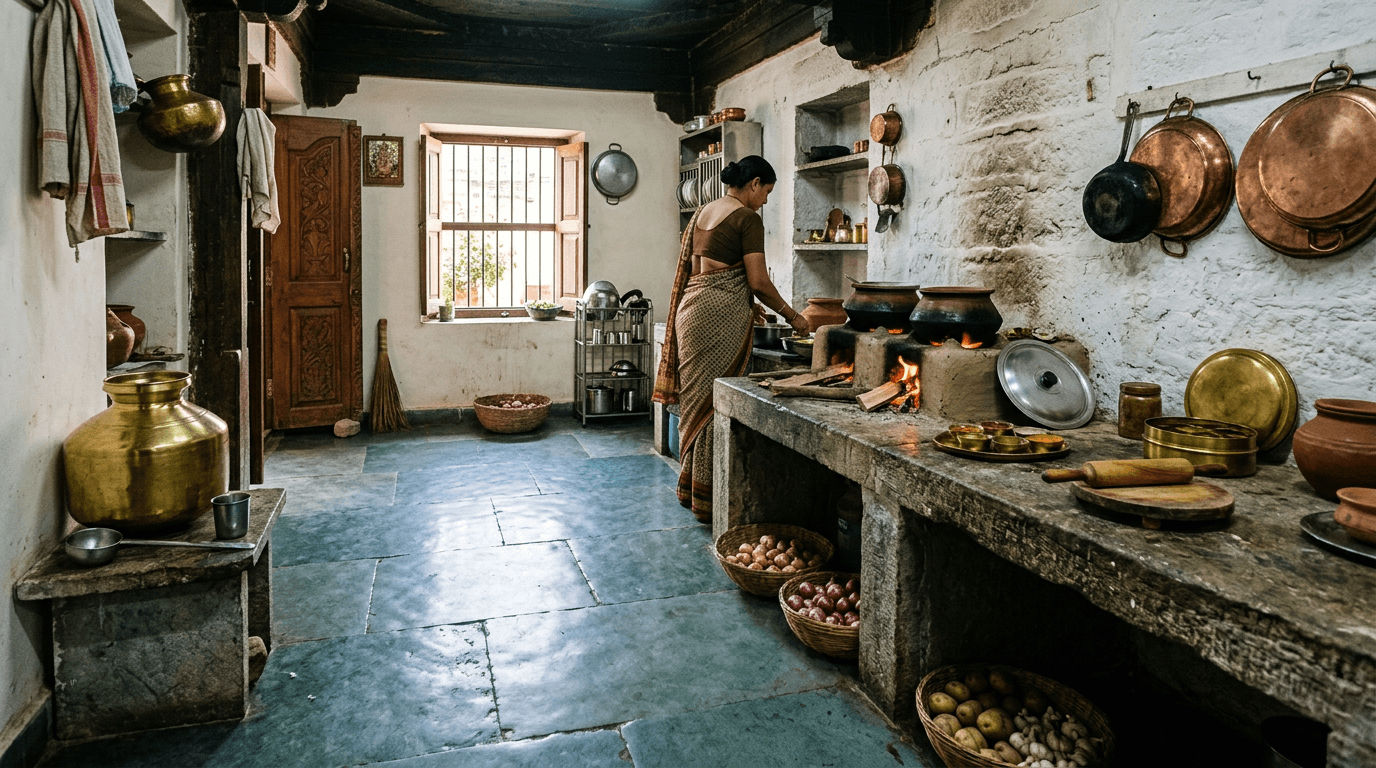
38. Natural Stone — Beautiful, With Homework
Natural stone tiles — granite, Kota, kadappa — have served Indian kitchens for generations. Stone tiles are porous, though: unsealed stone drinks oil and turmeric. Budget for periodic sealing, or choose a stone-look vitrified instead.
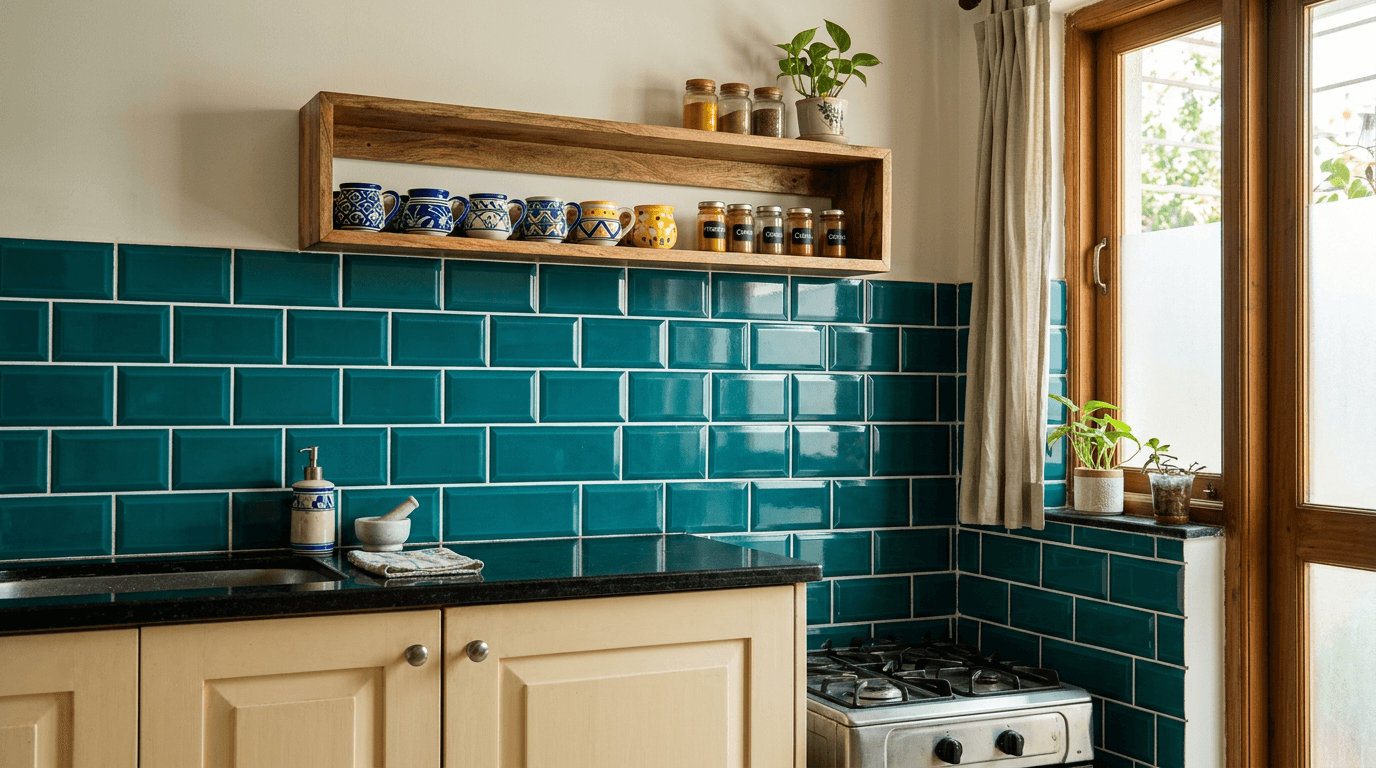
39. Coloured Subway Ceramic — Personality Per Piece
Subway tile isn't only white. Coloured glazed subway — mustard, teal, blush — brings personality at ceramic prices. The bevelled-edge versions catch light beautifully.
40. Moroccan Mix-and-Match — The Statement Finish
Patterned Moroccan-style tiles mixed across a single wall, unified by one base colour. Order 10% extra for pattern matching and breakage — the standard buffer we build into every tile order.
Latest Kitchen Tile Design Trends for Indian Homes in 2026
Modern kitchen tiles design in India is converging on five looks. If you only want the short version of what's popular, these are the popular kitchen tile directions our clients keep pointing at — the latest kitchen tile ideas for Indian homes that we expect to stay current past this year:
- Warm minimalism. Ivory, greige and sand tones replacing stark white. Tiles bring warmth without pattern; the modern look now leans cozy, not clinical.
- Modern kitchen backsplash as the hero. One expressive backsplash — Moroccan pattern, bottle green gloss, brass-edged mosaic — against otherwise quiet surfaces. A single feature wall of pattern gives the kitchen character without overwhelming it.
- Large-format tiles everywhere. Larger tiles with fewer joints, on walls and floors both. Less grout is the most requested "trend" of all, and it's really a maintenance decision wearing a design hat.
- Vertical stacking. Rectangular tiles stacked upright instead of brick-laid — a small change to give the kitchen a taller, more current feel.
- Earthy patterns from Indian craft. Jaipur blue pottery motifs, terracotta tones and athangudi-inspired patterns, all in flat glazed, wipeable versions built for Indian cooking.
Top kitchen picks aside, remember trends age fastest on the biggest surfaces. Put the trendy tile on the small backsplash zone and keep the entire kitchen's field tiles timeless — that's the design option that still looks right in 2032.
Matching Kitchen Tiles to Cabinet Colours (Combination Chart)
Tiles never live alone — they sit against shutters and counters. When Mrs. Padmavathi asked us to convert her L-shaped kitchen into a U-shaped one at Pushpa Nilayam, the retiling brief was really a colour brief: the new wall had to work with cabinets on three sides instead of two.
The combinations we reach for most:
| Cabinet colour | Wall tile that works | Floor tile that works |
|---|---|---|
| White / cream | Sage green, patterned accent, grey large-format | Ivory matte, wood-look plank |
| Warm wood (oak/teak) | Glossy white subway, bottle green, terracotta-look | Grey cement-look, salt-and-pepper |
| Grey / charcoal | Marble-look, ivory gloss, glass mosaic accent | Large-format beige, charcoal (bold) |
| Navy / dark green | Marble-look white, brass-bordered ivory | Ivory matte, wood-look plank |
| Two-tone (light upper, dark lower) | Plain glossy white — let cabinets talk | Salt-and-pepper, cement-look |
One picture-wins rule: never finalize wall tile and cabinet laminate on different days from different showrooms. Bring the shutter sample to the tile shop. For the full colour logic, see our guide to kitchen colour combinations.
Grout Colours & Maintenance Reality
Tile ads never show grout. Kitchens are made or broken by it.
- White cement grout near a hob will stain. Not might — will.
- Grey or beige grout hides most of what Indian cooking throws at it.
- Epoxy grout is non-porous and nearly stain-proof. It costs several times more per kg than cement grout and needs an installer who has actually worked with it. Behind the hob and around the sink, we consider it money well spent.
How to clean turmeric stains off white tile grout: make a thick paste of baking soda and water, press it onto the stained grout lines, wait 15 minutes, spray white vinegar over it, scrub gently with a soft brush, and rinse. Repeat rather than scrubbing hard — aggressive scrubbing erodes cement grout and makes the next stain soak deeper.
And one lesson from our Banjara Hills duplex project (Vikas Goud residence): tiles do more than decorate. The house had a chronic pest problem, so before any woodwork went in, we laid a full tiling layer behind the cabinets — a sealed, cleanable surface where termites and cockroaches previously found gaps. The kitchens we design haven't just looked better for it; they've stayed pest-free.
Kitchen Tile Costs per Sq Ft in 2026 + Installation
Indicative market rates for tiles in Indian metros (material only; verify current rates with your retailer — brands and cities vary widely):
| Tile type | Typical market range (₹/sq ft) | Best kitchen use |
|---|---|---|
| Glazed ceramic | 35–90 | Walls, backsplash |
| Double-charge vitrified | 45–110 | Floors |
| Glazed vitrified (GVT) | 55–150 | Walls and floors |
| Full-body vitrified | 90–200 | Heavy-traffic floors |
| Porcelain slabs | 150–400+ | Seamless backsplash, premium floors |
| Glass mosaic | 80–250 | Accent strips |
Installation adds roughly ₹25–60 per sq ft depending on city, tile size and pattern complexity — herringbone and large-format work cost more in labour than straight-lay ceramic. Add ~10% material for wastage and cuts, more for diagonal or pattern layouts.
Two budgeting notes from our project experience across 30+ projects: the dado zone is small (a typical kitchen needs only 40–60 sq ft of backsplash tile), so upgrading the backsplash tile quality costs far less than people assume. And retiling after cabinets are installed is miserable — tile first, always. For how tiles fit into the full kitchen budget, our modular kitchen price guide breaks down every line item.
Choosing the Right Kitchen Tiles: Wall and Floor Checklist
Planning a kitchen and staring at 400 design options in a tile showroom? Most people choose kitchen tiles on looks alone. To choose the right kitchen tiles for your home, answer four questions in order:
- Which surface? Tiles for kitchen walls should be glazed, glossy and low-porosity; kitchen floors want matte anti-skid vitrified. Wall and floor have opposite jobs — never buy one tile for both without checking ratings.
- How hard does this zone work? The 2-foot dado behind the hob earns your best tile budget. A simple kitchen wall tiles design in plain glossy ceramic is completely fine for the remaining walls.
- What sits next to it? Carry your cabinet shutter sample and counter piece to the showroom. The right kitchen wall tiles design is the one that works with what you already chose, not the prettiest tile in isolation.
- Can you maintain it? Textured, carved and raw finishes near cooking mean scrubbing. If nobody in the house enjoys scrubbing, choose tiles with flat glazed faces and darker or epoxy grout.
If you buy tiles online, order physical samples first — screen colours are approximate, batch variations are real, and a tile can make or break the room at full-wall scale. And whatever you order, add 10% extra of the same batch number.
Small Kitchen Tile Ideas
For a small kitchen or compact kitchen, tiles do the space-expanding work that square footage can't:
- Glossy ceramic tiles in light tones bounce light around and make the kitchen feel larger without making the kitchen look sterile.
- Larger tiles with fewer grout lines read as more surface, less grid — large-format tiles on a small floor is counterintuitive and correct.
- Rectangular tiles laid vertically add height; laid horizontally, they stretch a narrow galley wider.
- Keep wall and floor tones close in value. High contrast chops a compact kitchen area into visual pieces; low contrast lets small kitchen spaces read as one continuous room.
FAQs
Why is glossy tile preferred over matte tile for a kitchen backsplash? Glossy tiles have a smooth, non-porous, glass-like glazed surface that prevents grease, oil and spices from soaking in. A damp sponge wipe restores them. Matte tiles hold a grease film near cooking zones and need scrubbing.
What is kitchen dado tiling, and what is its standard height? Dado tiling is the protective band of wall tiles between the kitchen counter and the upper cabinets. The standard height is about 2 feet (24 inches) — the zone that catches almost all cooking splatter.
Are Moroccan or patterned tiles practical for Indian kitchen walls? Yes, as backsplashes — if you choose flat, glazed versions. Textured or hand-carved patterned tiles trap grease and soot in their crevices and are very hard to degrease.
How do I clean yellow turmeric stains off white kitchen tile grout? Apply a thick baking soda and water paste to the stained grout, leave it for 15 minutes, spray with white vinegar, scrub gently with a soft brush, and rinse clean. For a permanent fix, regrout the splatter zone with epoxy grout.
Conclusion: Sample Tiles Under Your Kitchen's Light
Choosing the right tiles for your kitchen ends with one unglamorous step that decides whether all the tiles work well together. Every tile on this page was photographed under controlled light. Your kitchen doesn't have that. Showroom halogens make matte tiles glow and hide the yellowness of warm glosses; your kitchen's tube light and window do the opposite. So before you order: bring two or three sample tiles home, prop them where they'll be installed, and look at them in morning light, afternoon light, and under your actual kitchen bulb. Ten minutes of this prevents years of mild regret.
If you're planning a kitchen — new build or retiling an old one — we design and build kitchens as part of complete home interiors across Hyderabad and 7+ Indian cities. Book a free design consultation and we'll bring the tile samples to your light.
Related reading: floor tiles design ideas for every room and bathroom tiles designs.
