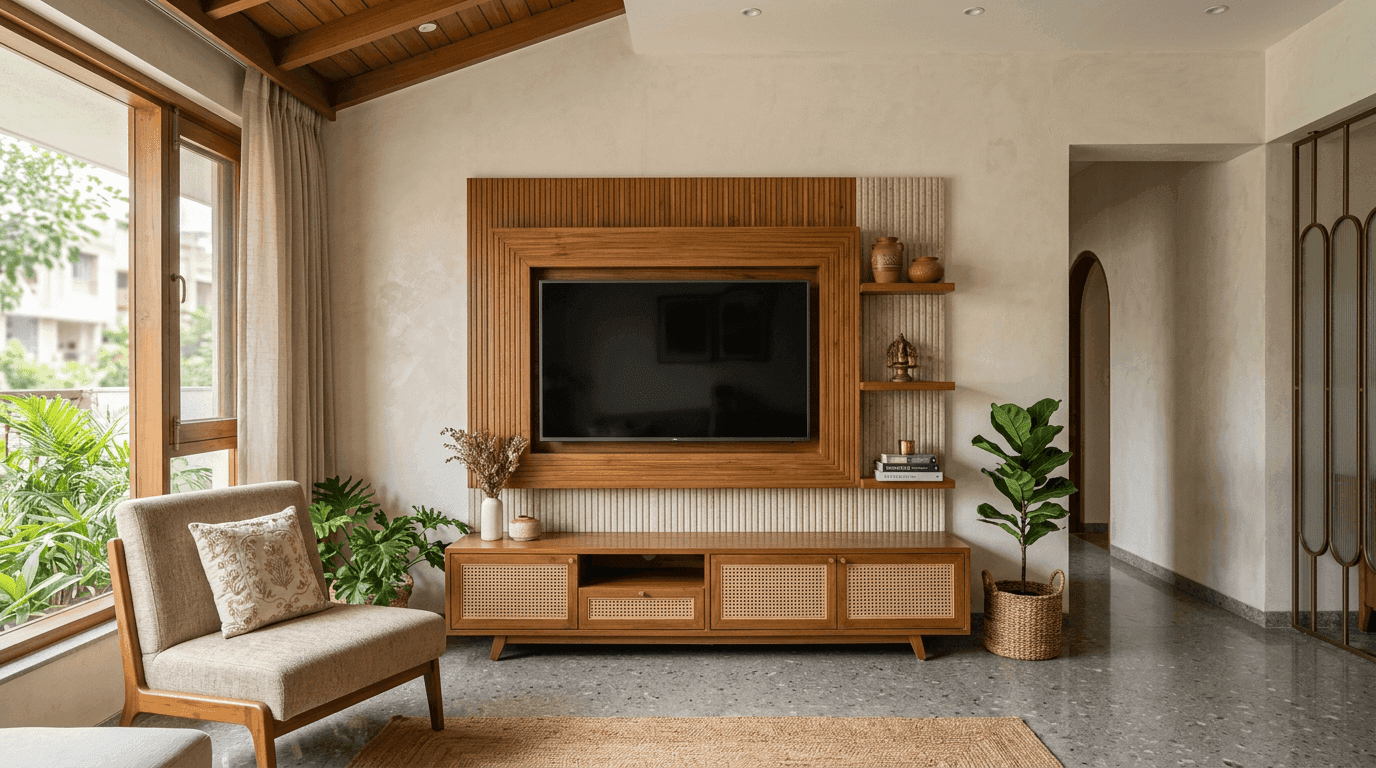
Key Takeaways
- The TV unit is the focal point in your living room, so design it as one composition: panel, unit, storage, and lighting decided together, never as a bought-off-the-shelf object against a bare wall.
- The Wall-First Rule: pick the wall treatment before the unit. A ₹20,000 unit in front of a designed panel wall beats a ₹80,000 unit against bare paint.
- Size by formula: screen centre at about 42 inches from the floor, TV units wider than the TV, seating at 1.5 to 2.5 times the screen diagonal.
- Budget honestly: basic TV units start near ₹15,000; a fully designed wall with panelling, storage, and lighting can reach ₹2.5 lakh (NoBroker).
The best TV unit design for a hall in 2026 pairs a wall-mounted floating console with a full-height panel backdrop, in fluted wood, stone-look, or laminate, sized wider than the TV, with the screen centre at about 42 inches and all cables concealed inside the panelling.
This gallery collects 60+ TV units across every budget and hall size: modern floating consoles, full TV wall design treatments, luxury marble and backlit panels, simple TV units under ₹40,000, wooden TV units and stands, and small-space solutions — a genuine variety of TV unit styles, not forty photos of the same fluted wall. Each TV unit design comes with the reasoning: what it costs, where it works, and what to tell your carpenter. You'll discover TV units here for interior briefs we actually get, from 600 sq ft studios to double-height villas. Pinterest will show you the photos. We'll also tell you why half of them will not survive an Indian hall.
Why the TV Unit Decides Your Living Room's Look
Walk into any Indian hall and check where every chair points. At the TV. Western design blogs still debate whether screens deserve focal-point status; in Indian living rooms the vote closed years ago. Ask any interior designer who works here: the TV unit carries more of your hall's look than any other single element, including the sofa. A TV unit isn't a shelf you park a screen on. It's the one piece of interior joinery every guest faces for the whole visit.
We learned to take this seriously on a Hyderabad project. Aravind Shetty, recently married, had bought a 3 BHK in Vasavi Sri Nilayam to move into with his wife and parents. Good flat, one real problem: the layout had no ideal spot for a TV unit at all. Our fix was structural, not decorative. We extended an existing wall with a wooden partition, separating the drawing room from the living area, and that new partition became the perfect home for the TV unit. The lesson we now apply to every hall: don't hunt for a wall that fits the TV. If the architecture doesn't offer one, build one.
And the honest counterpoint, because we've seen that too: another client of ours, Manikantha, briefed us for a clean, minimalist 3 BHK with zero open shelves. It's still the only home we know that doesn't have a television. Design for how your family actually watches, not for the render.
Our three-step method before choosing from any gallery of TV units:
- Fix the wall. Confirm which wall holds the TV, check it for windows, doors, and switchboards, and run conduits for power and HDMI before any panelling goes up.
- Fix the sizes. Screen centre at about 42 inches from the floor, unit wider than the TV, seating distance 1.5 to 2.5 times the screen diagonal.
- Then pick the design. Panel treatment first, unit second, lighting third.
Trending TV Unit Design Ideas in 2026
- Wall-mounted floating consoles: space-saving sleek TV units that keep the floor open and easy to clean.
- Fluted panel backdrops: vertical wooden slats that add a luxurious texture behind the TV.
- Stone and marble-clad panels: premium marble-look tiles or slate sheets for a high-end wall.
- Partition TV panels: double-duty room dividers between the dining space and living area.
- Built-in storage units: open display shelves alongside closed drawers for consoles and books.
The latest TV unit design direction in one line: warmer wood, fewer handles, more wall. The best modern designs this year all share that restraint — a modern look built from one or two materials, not five. Below, you'll discover modern TV unit ideas in every one of these directions, priced from paint-tin to penthouse.
15 Modern TV Unit Designs for Main Halls (Photos)
These fifteen modern TV units are the ones we spec most often for main halls: clean lines, concealed wiring, and wall treatments that look composed even with the screen off. Most work in standard 2 and 3 BHK living rooms without civil work. If you're choosing a TV unit design for the first time, start here — this is the TV unit design modern families shortlist most, these are the TV unit designs for living rooms that get photographed most, and every entry scales up or down a size. The living room TV unit sets the tone for everything else you buy, so decide it early.
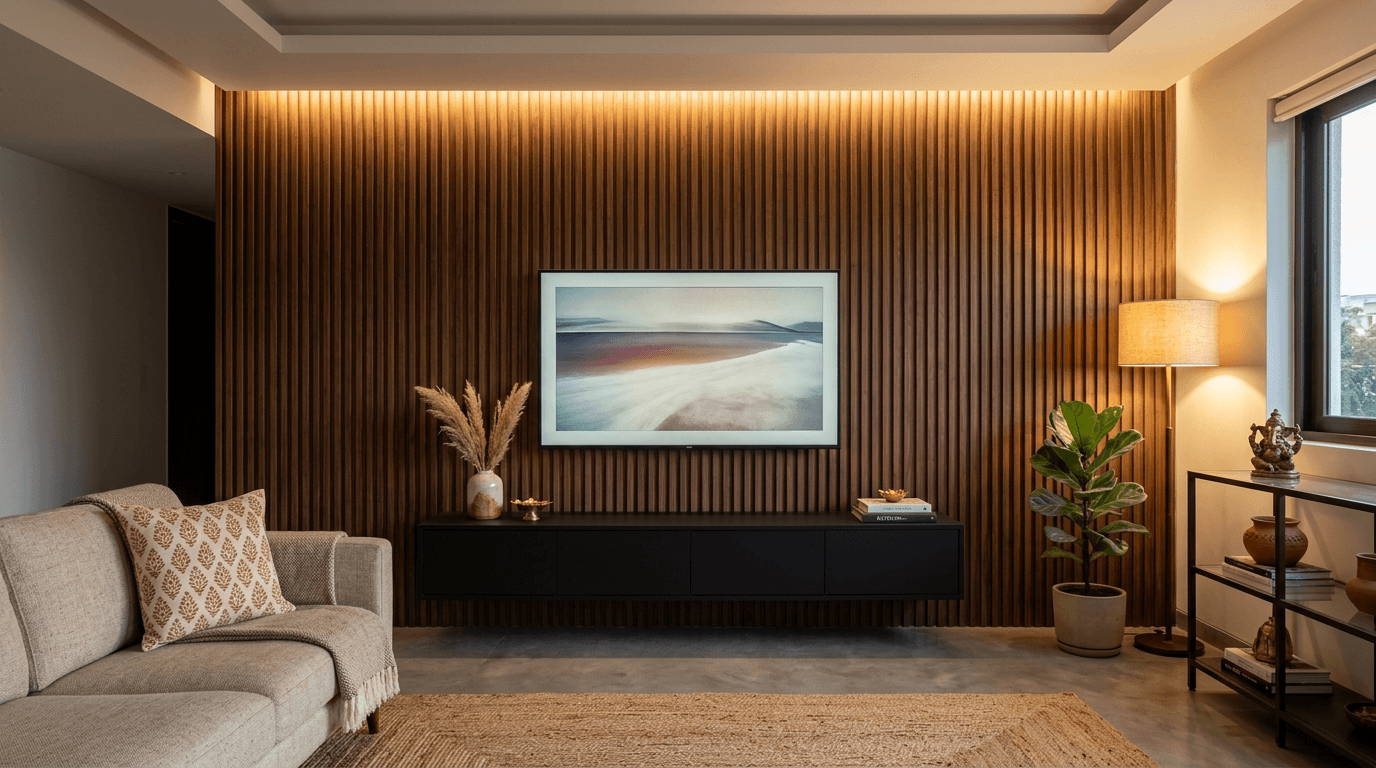
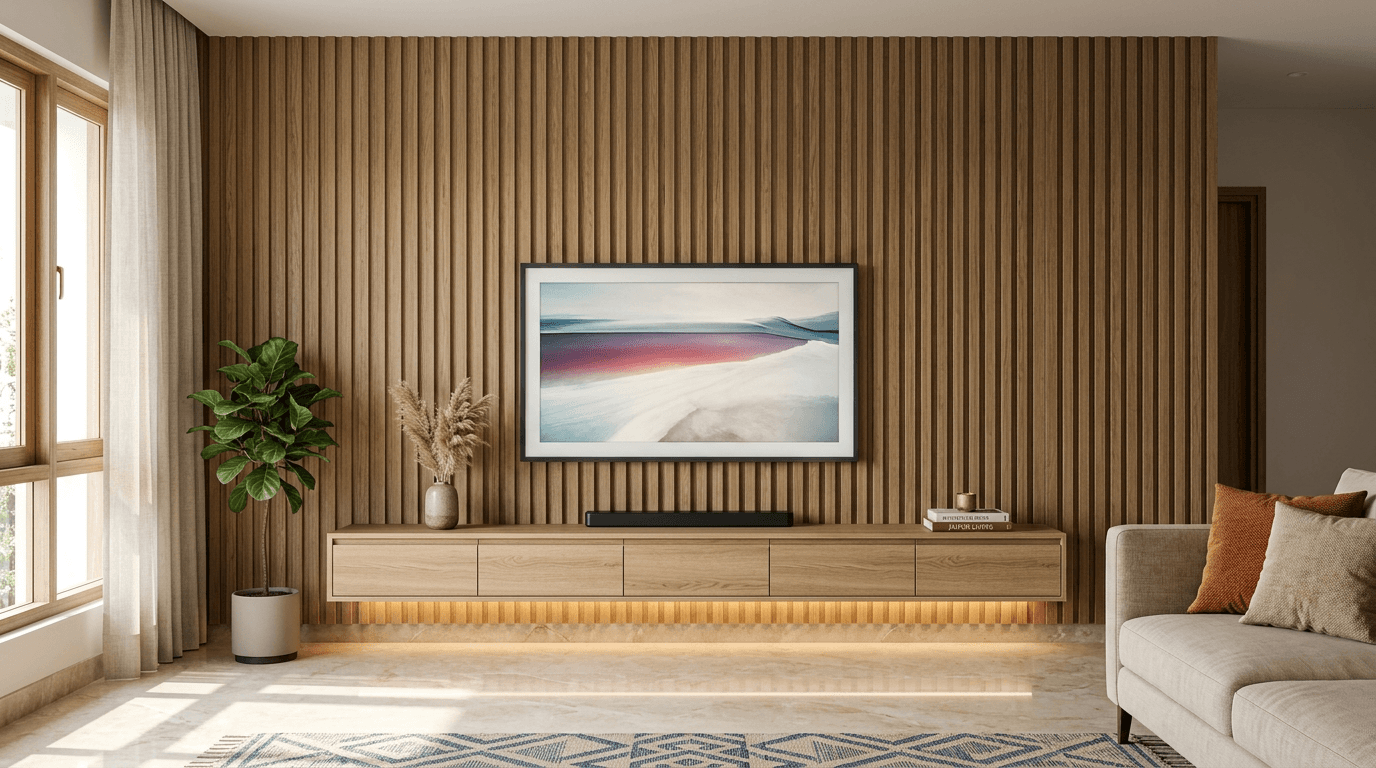
1. Fluted panel backdrop with floating console. The defining main hall modern TV unit design of this decade: vertical fluted panels floor to ceiling, one long handleless console floating beneath. Warm, textured, forgiving of fingerprints. TV units in this style suit almost every hall on this list.
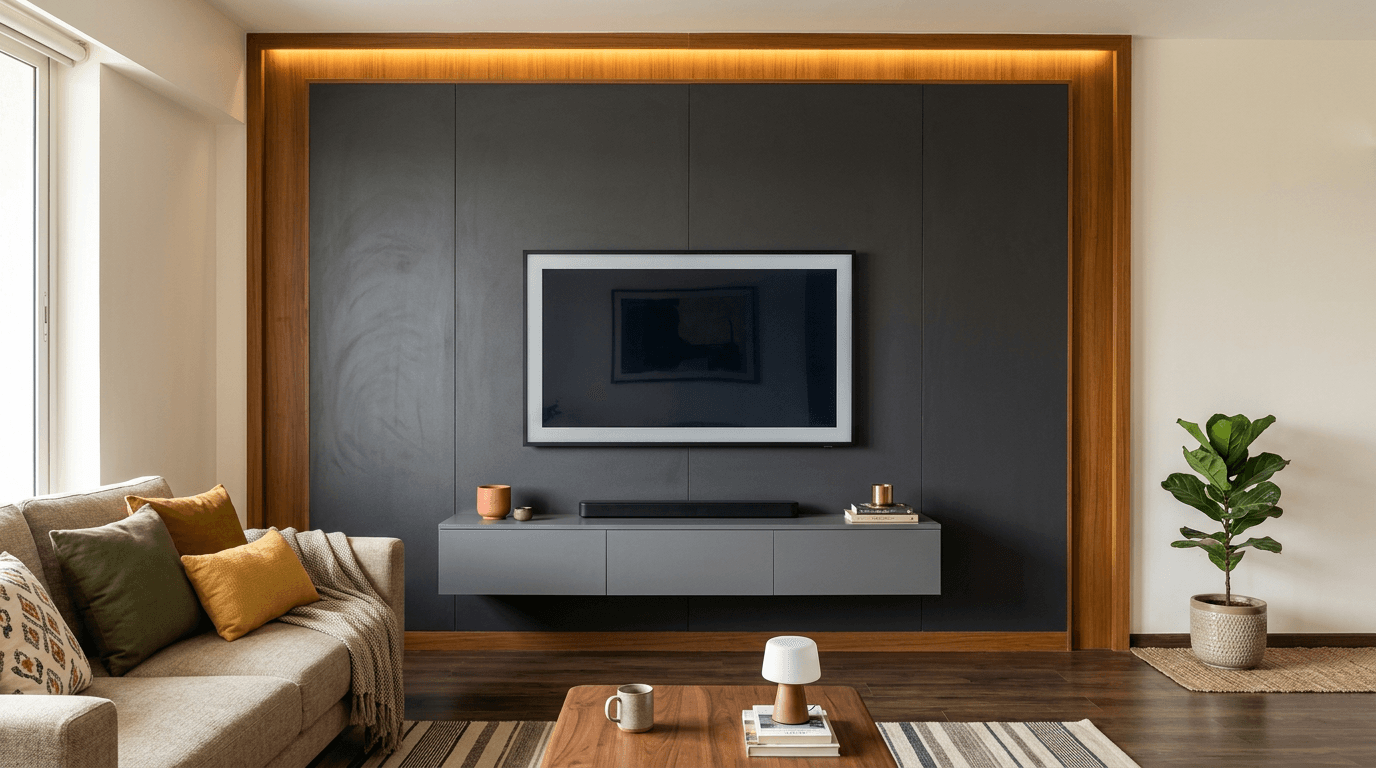
2. Charcoal grey and wood duo wall. Charcoal grey laminate panels behind the screen absorb its black rectangle; warm wood tones frame it. The highest-contrast-control design here, and the one we suggest when clients fear "the TV looks huge". Of all the TV units in this section, this is the most forgiving of large screens.
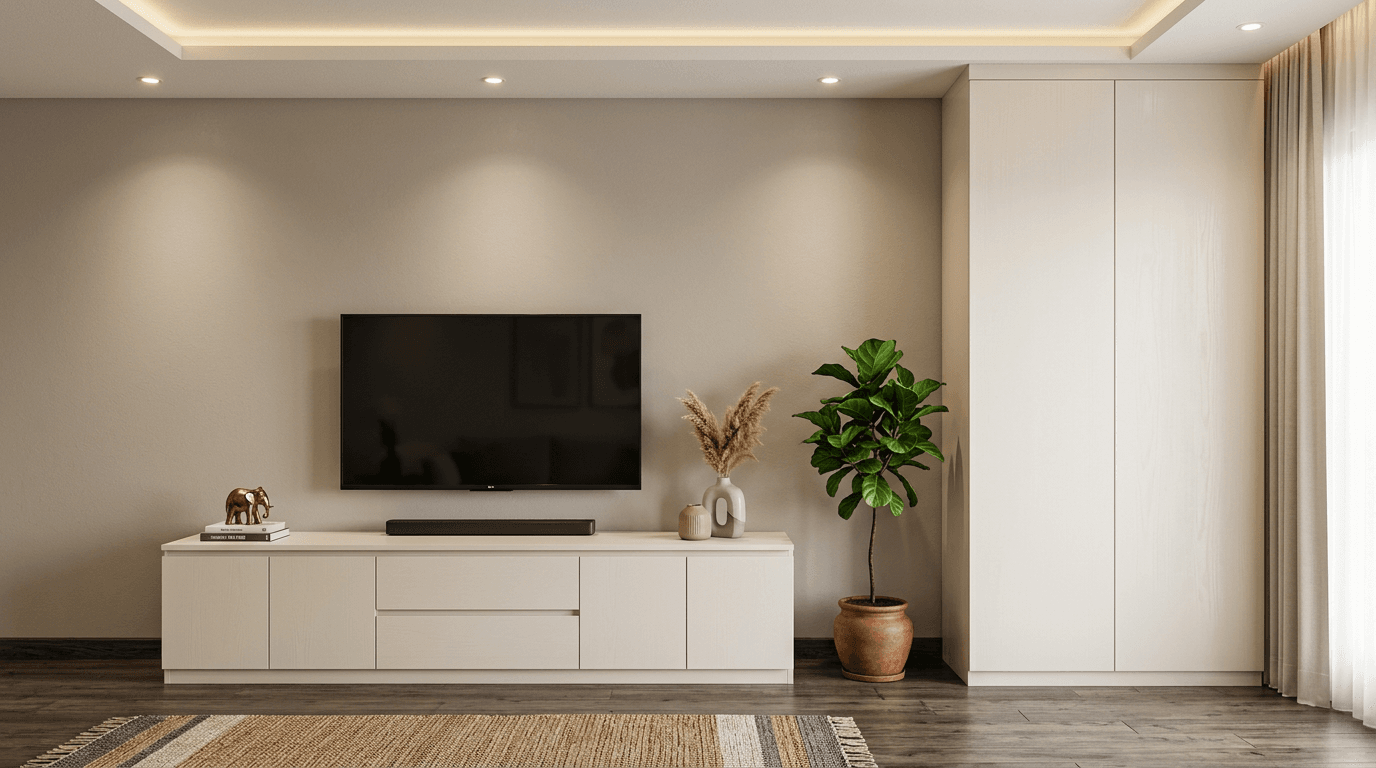
3. Handleless low unit with tall side cabinet. A full-width low drawer unit plus one tall storage tower on the side balances horizontal and vertical mass. Storage-heavy without looking bulky.
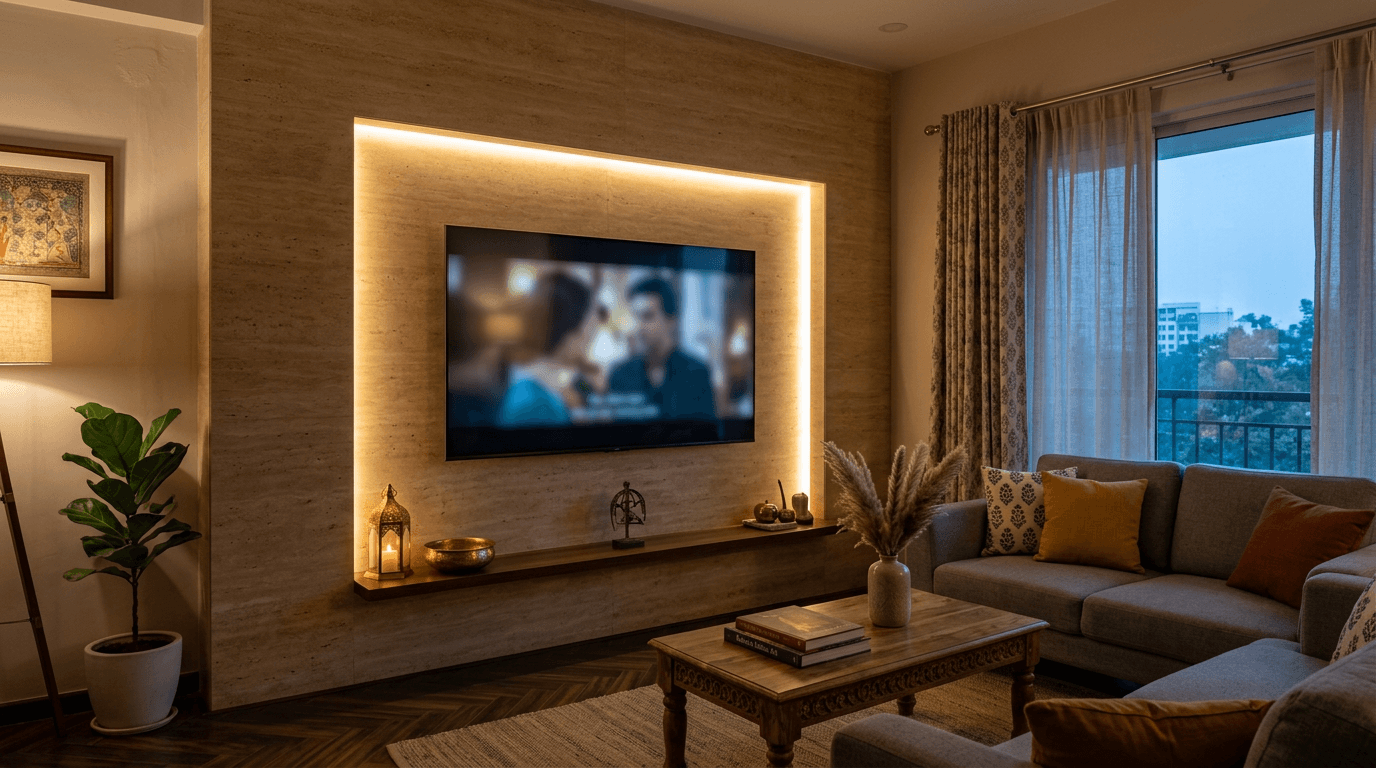
4. Backlit niche wall. A TV unit design featuring a recessed niche with indirect LED strip lighting around its inner edge. Depth and shadow do the styling; the wall glows at night.
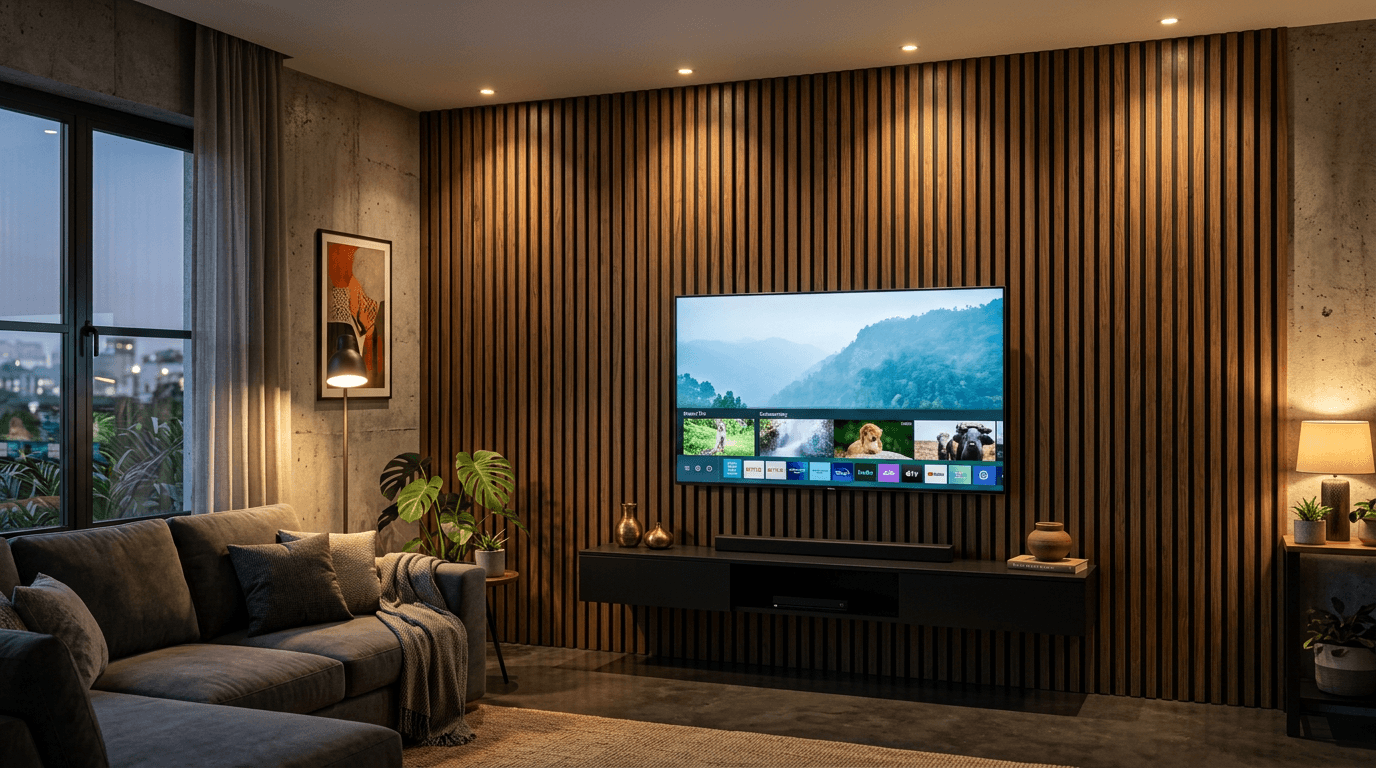
5. Slatted wood with matte black accents. Thin wooden slats over a matte black background, black floating shelf, black-framed TV. Sharp, masculine, very now — TV units like this photograph darker than they live, so see a sample board first.
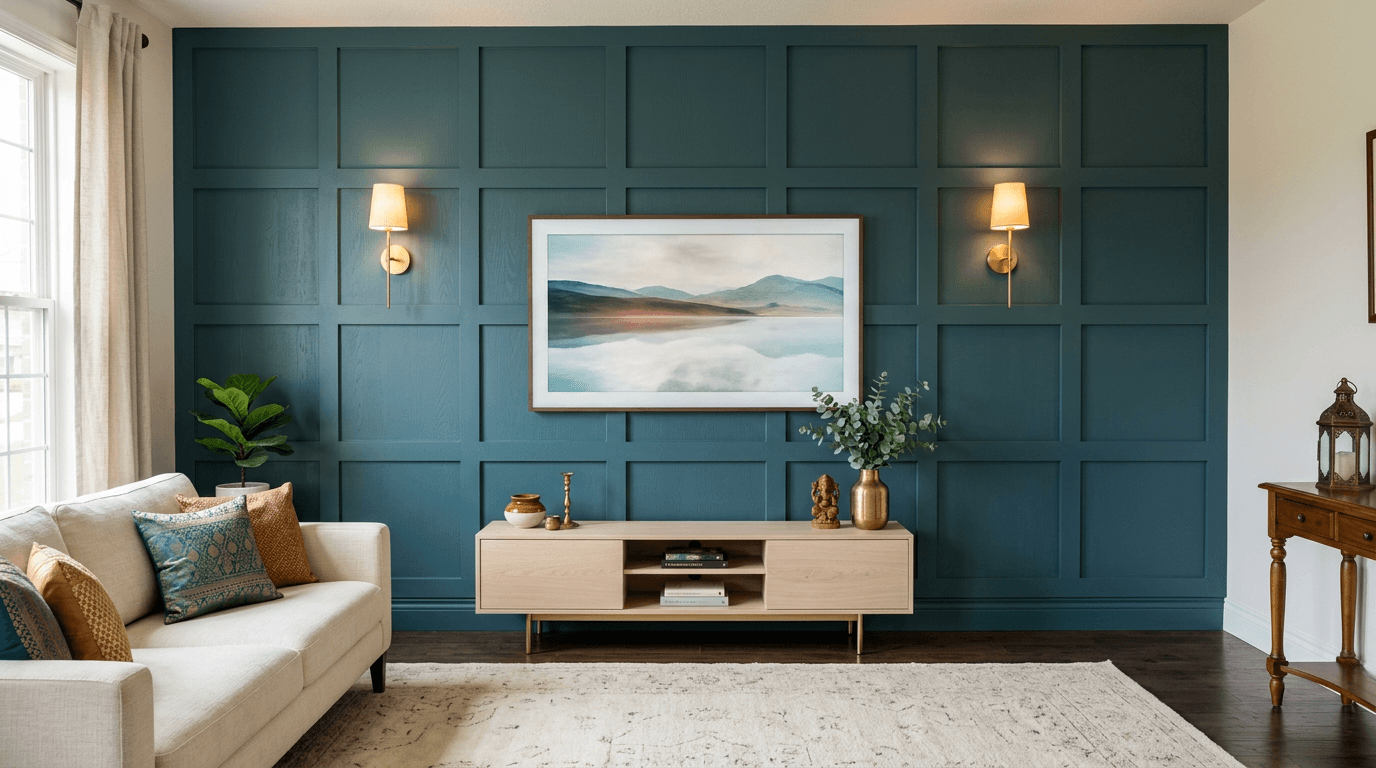
6. Grid-panel painted wall. Shaker-style moulding grid painted a single deep colour, TV centred in the grid, slim console below. A classic-leaning design that costs paint and beading, not veneer money.
7. Asymmetric box composition. Staggered open boxes and closed storage arranged off-centre around the TV. Playful without clutter if you cap it at three or four boxes.
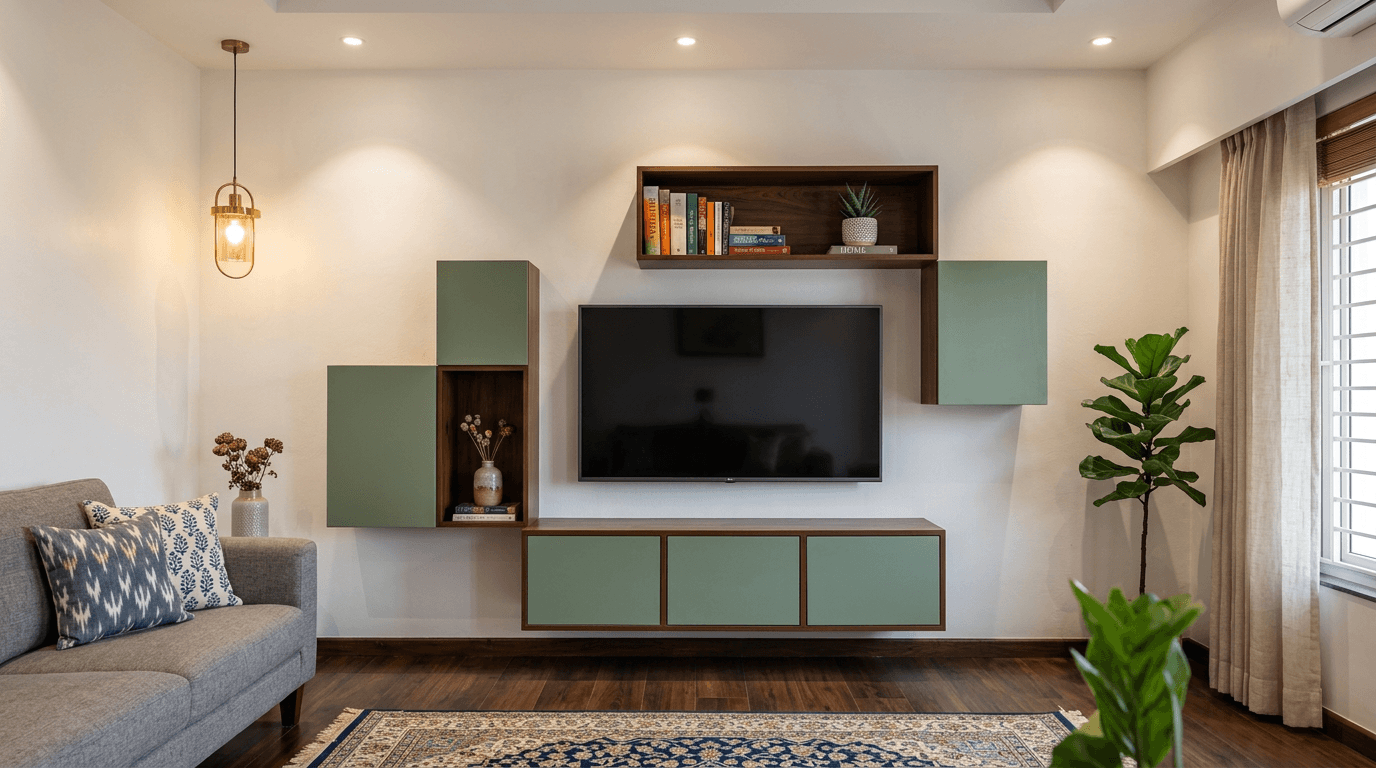
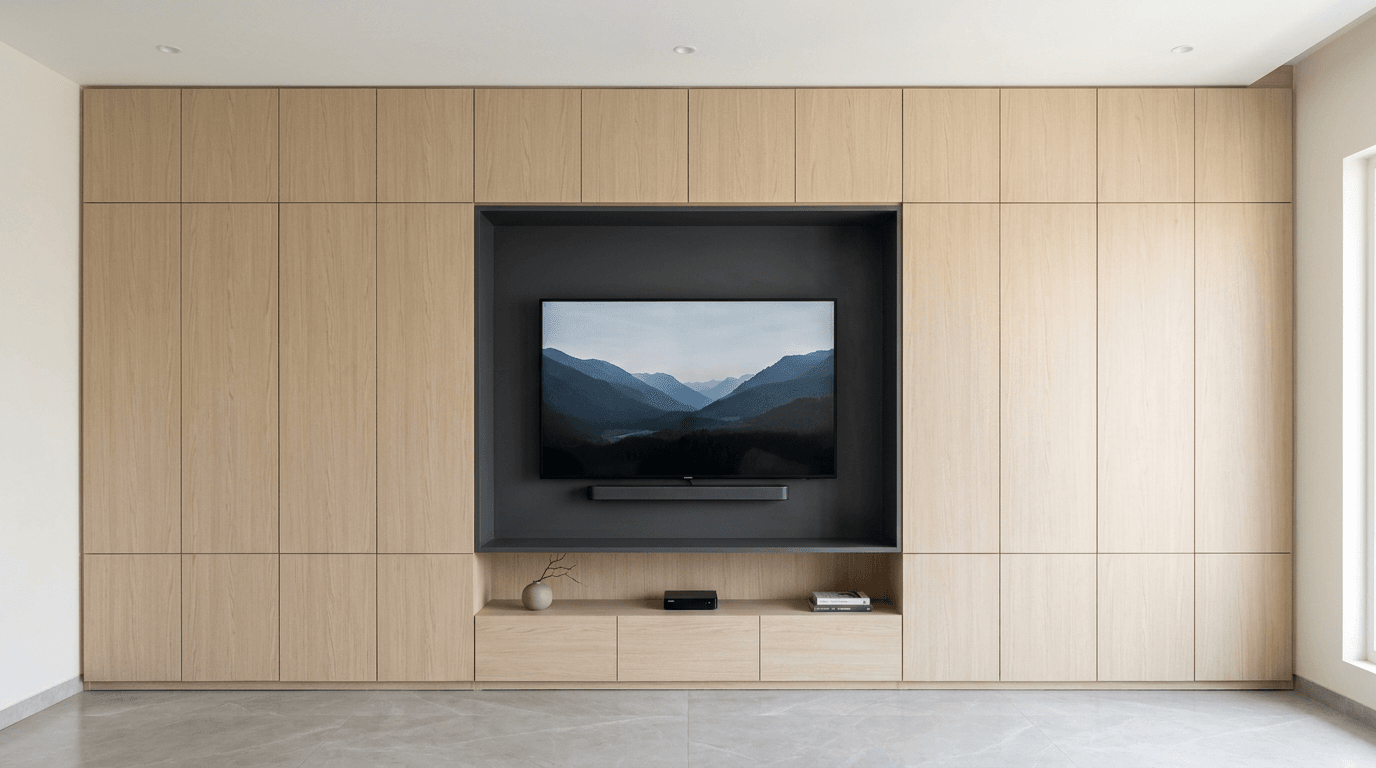
8. TV inside a full-height storage wall. The screen becomes one bay of a wall-to-wall, floor-to-ceiling storage system. The unit provides a wardrobe's worth of concealed storage, and the TV stops being an object entirely. TV units built this way cost more but replace two other pieces of furniture.
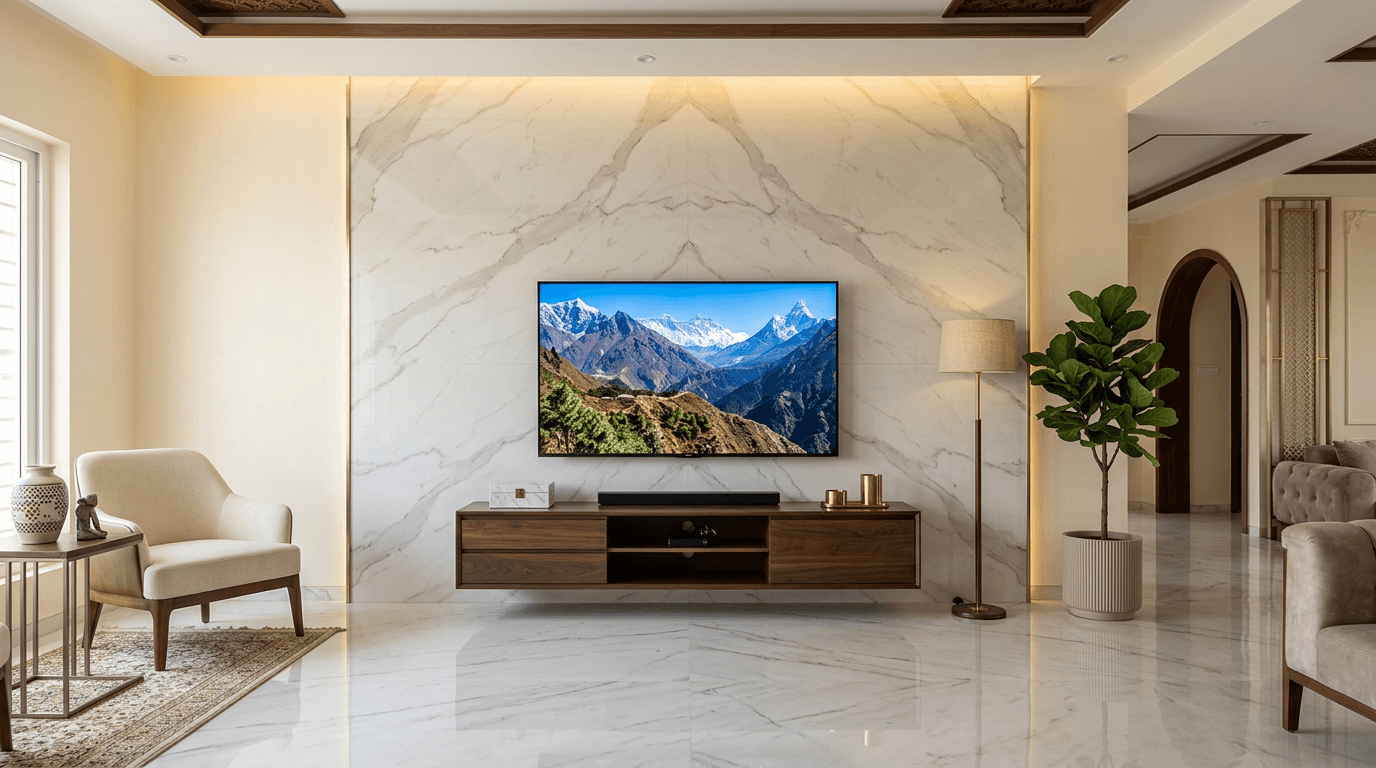
9. Marble-look tile backdrop. Large-format marble-look tiles behind the screen, one floating drawer unit. Delivers the luxury stone effect at tile prices, it wipes clean, and TV units in front of stone-look tile need almost no styling.
10. Warm minimal single console. Lime-plaster textured wall, one solid oak console, nothing else. For homes where the hall must stay calm; the design is the restraint. Among the TV units here, this is the one that dates slowest.
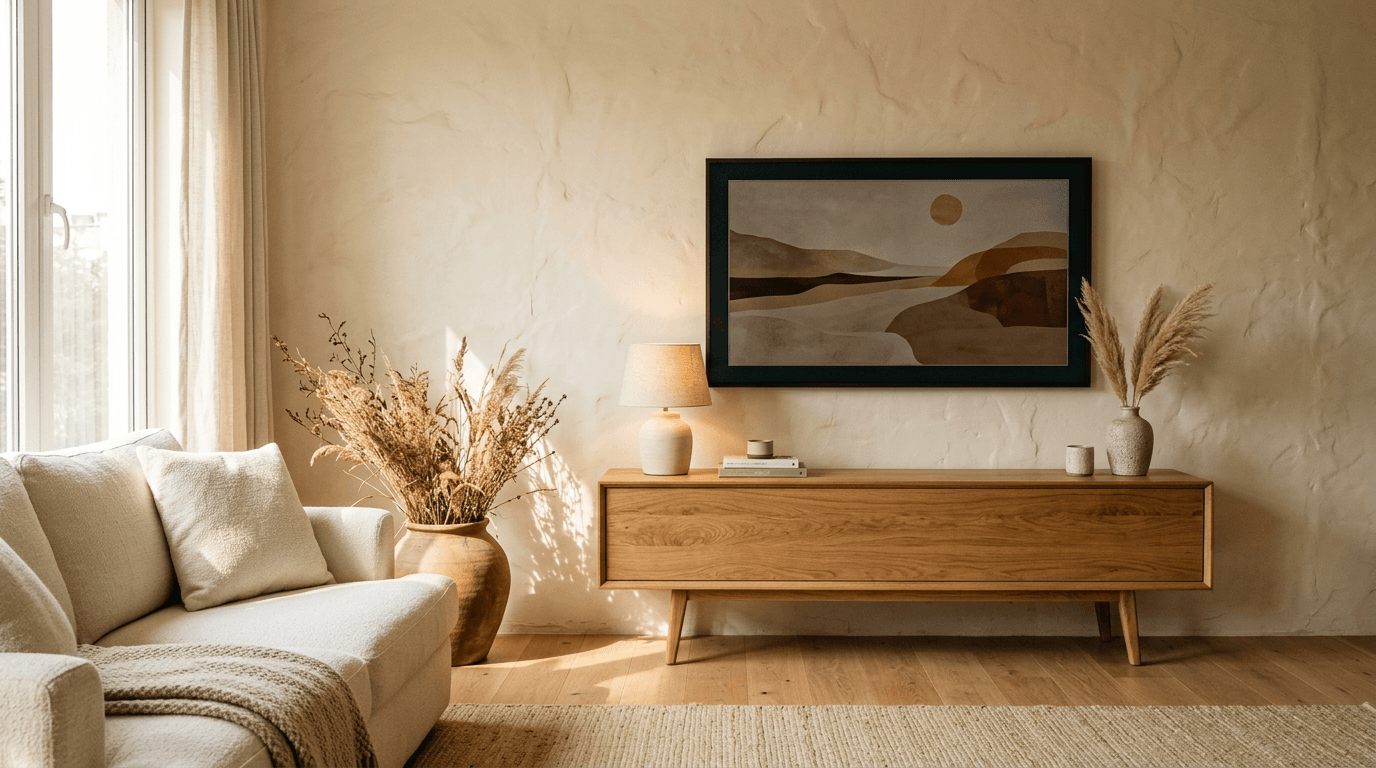
11. Frame-TV gallery wall. The TV hangs flush like art among actual framed art. Works only with a gallery-mode television and disciplined frame spacing, but then it disappears completely — the only TV units that vanish in plain sight.
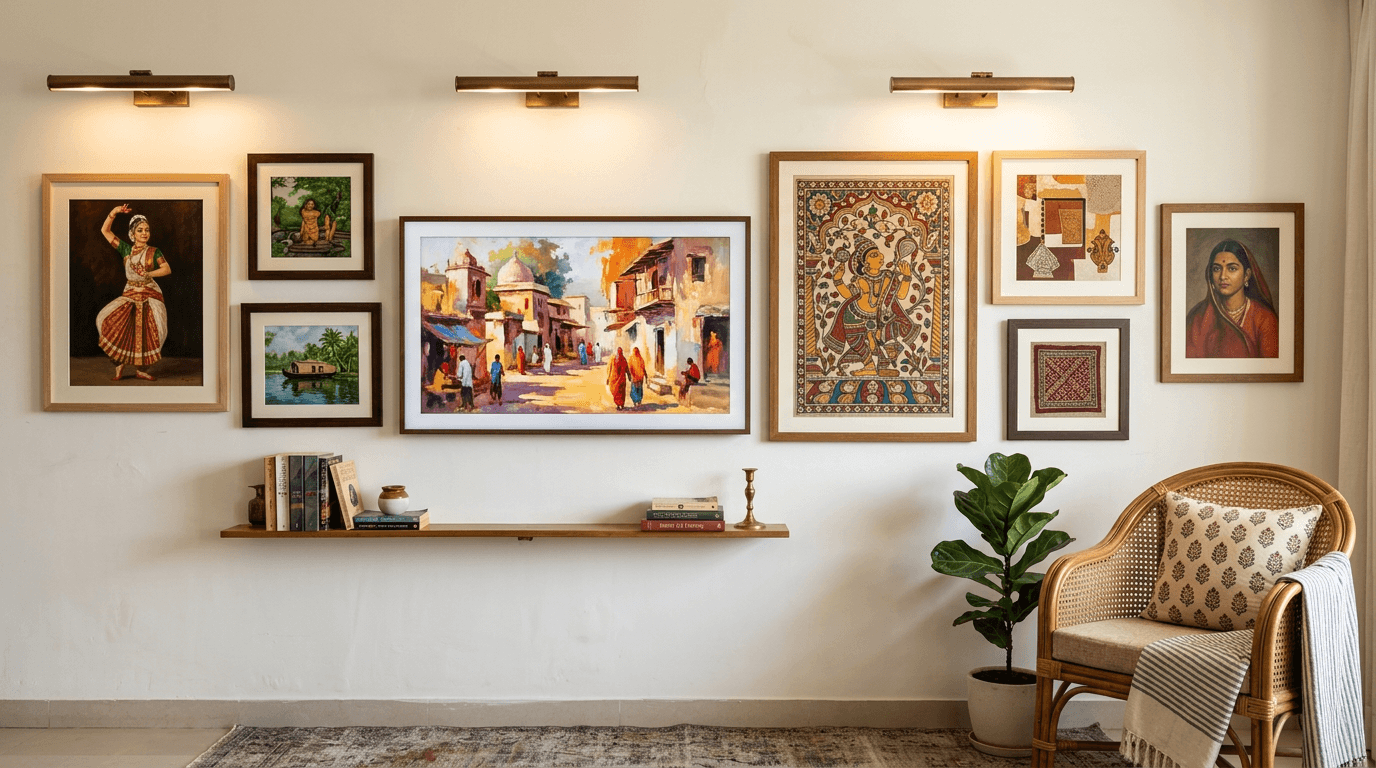
12. Curved plaster niche. Softly curved gypsum niche wrapping the screen, cove-lit. Pairs beautifully with arched openings elsewhere in the hall.
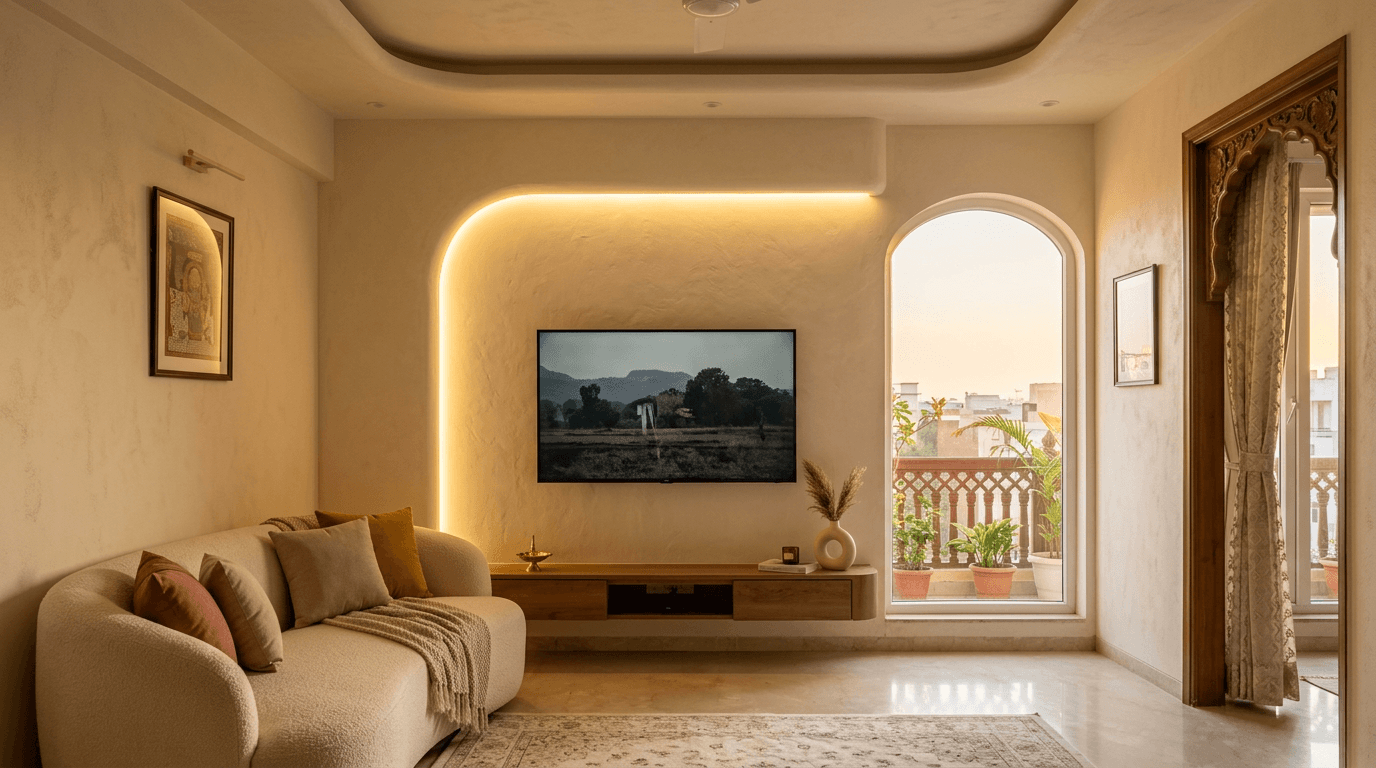
13. Two-tone terracotta and cane. Terracotta paint band behind the TV, cane-shutter console below. Earthy, budget-friendly, and very forgiving in Indian light. TV units with cane fronts also ventilate electronics for free.
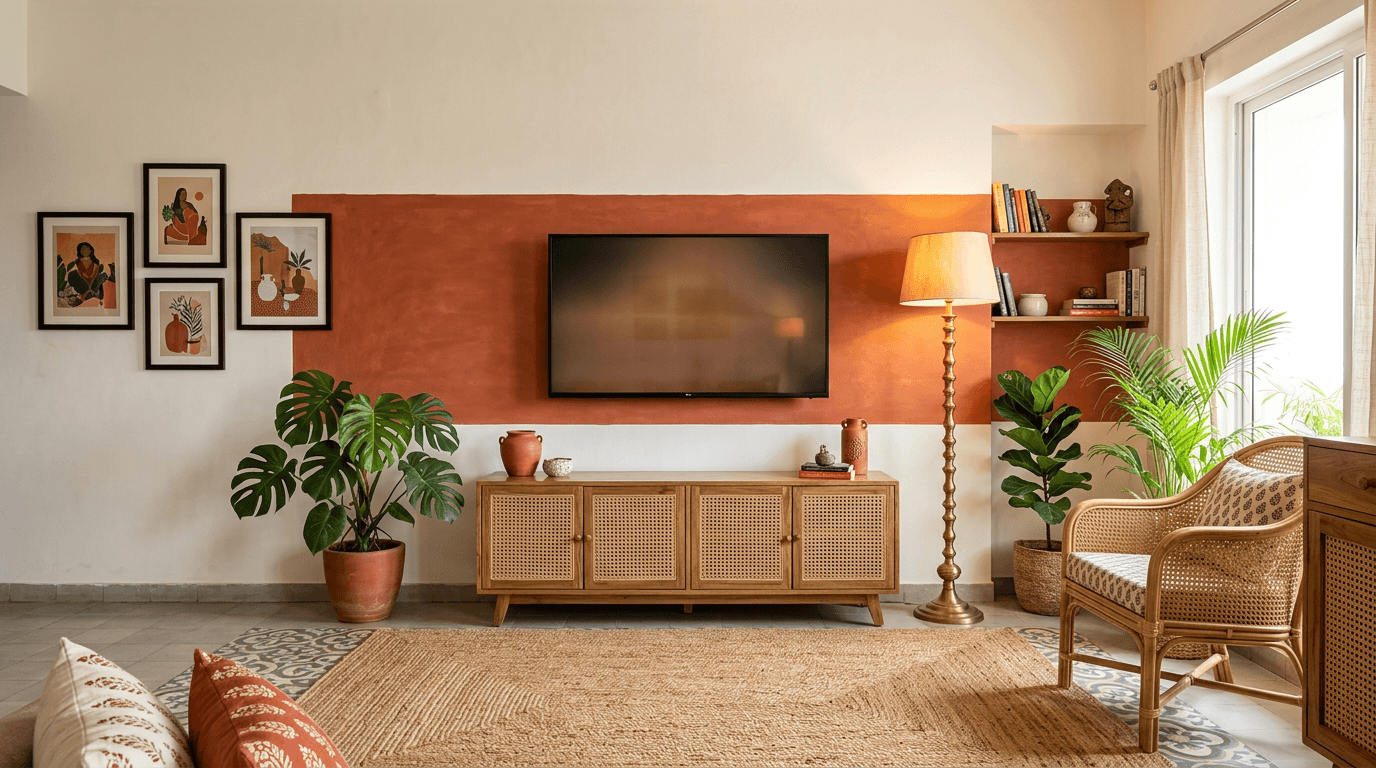
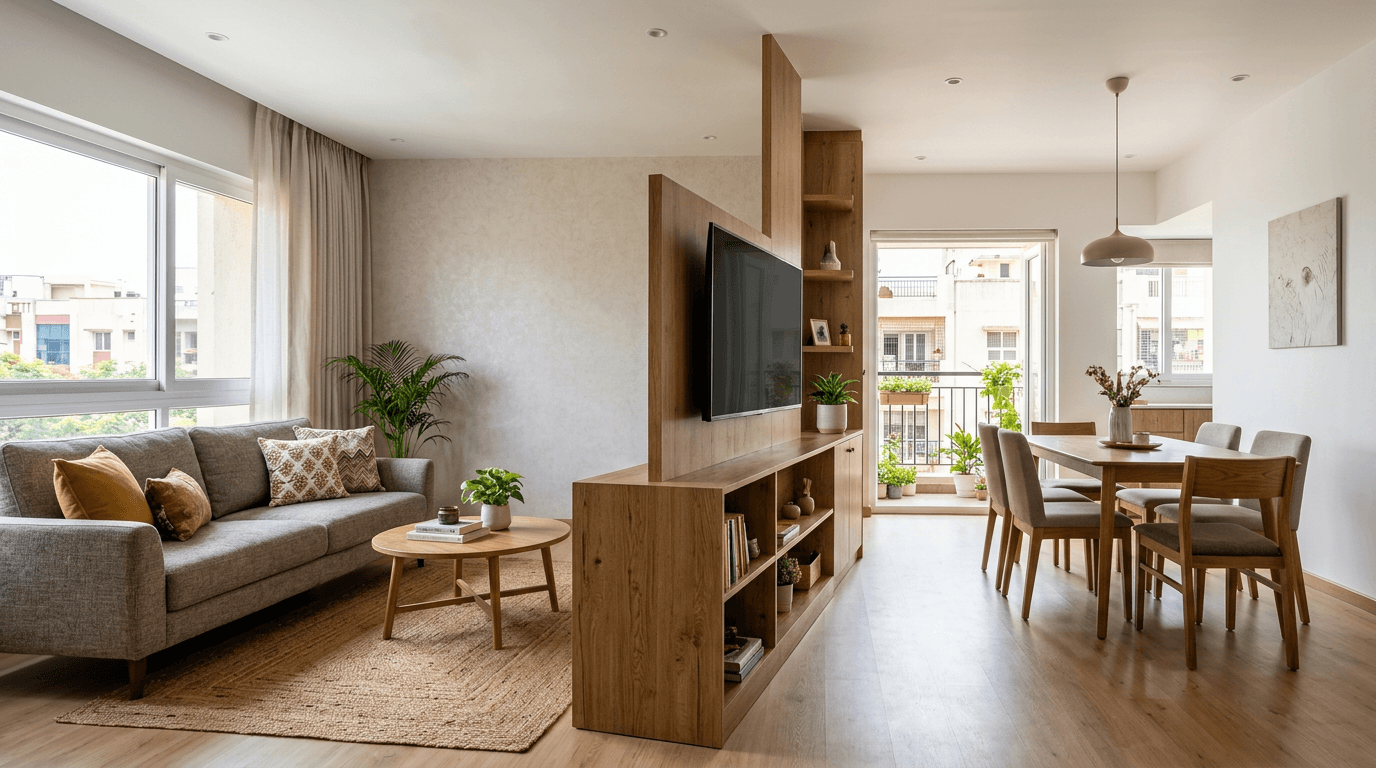
14. Partition TV unit. A slatted or panelled partition that carries the TV while dividing living from dining. This is exactly what we built for Aravind Shetty's hall: a wooden partition extending an existing wall created the TV spot his flat never had, without darkening either side.
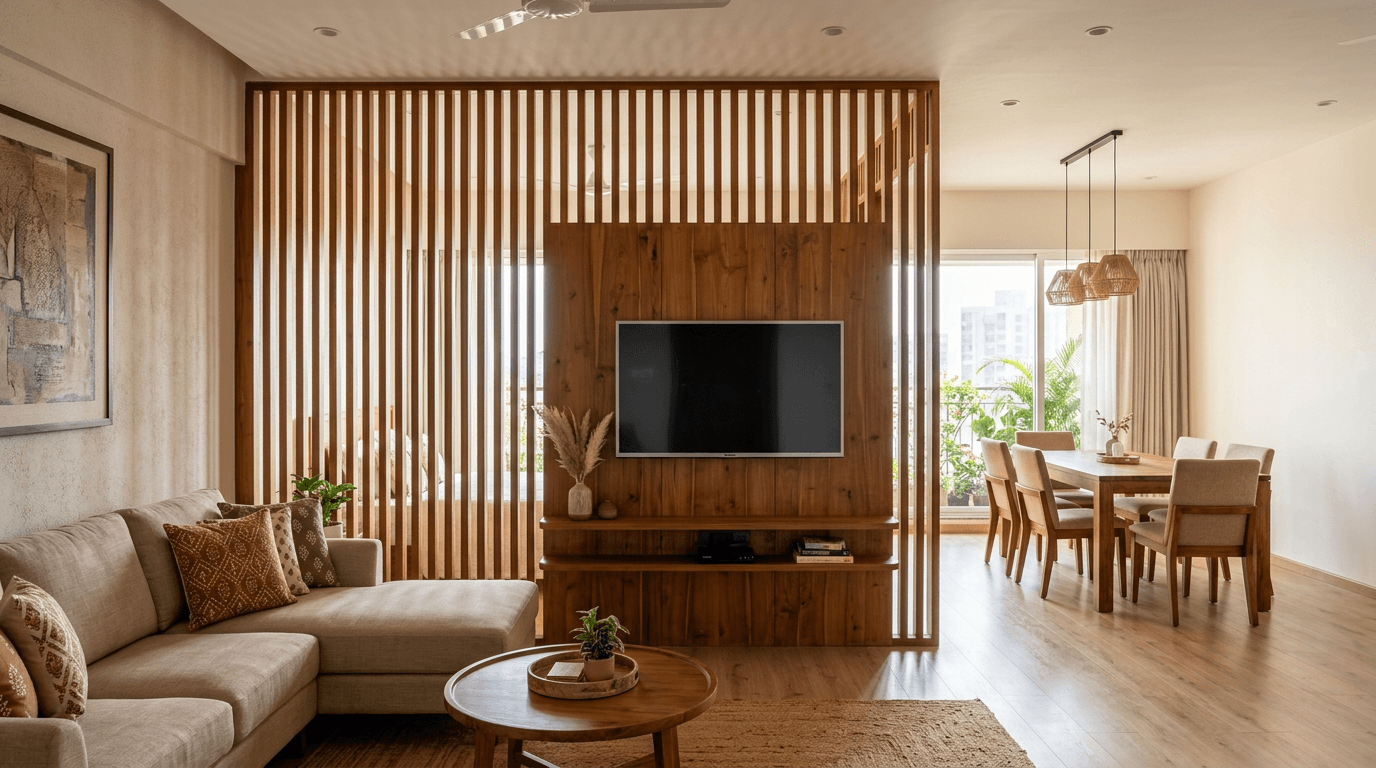
15. Ceiling-linked panel raft. The TV panel material continues up into a false-ceiling raft above the seating, tying wall and ceiling into one composition. Coordinate it with your false ceiling designs for hall rather than treating the two as separate purchases.
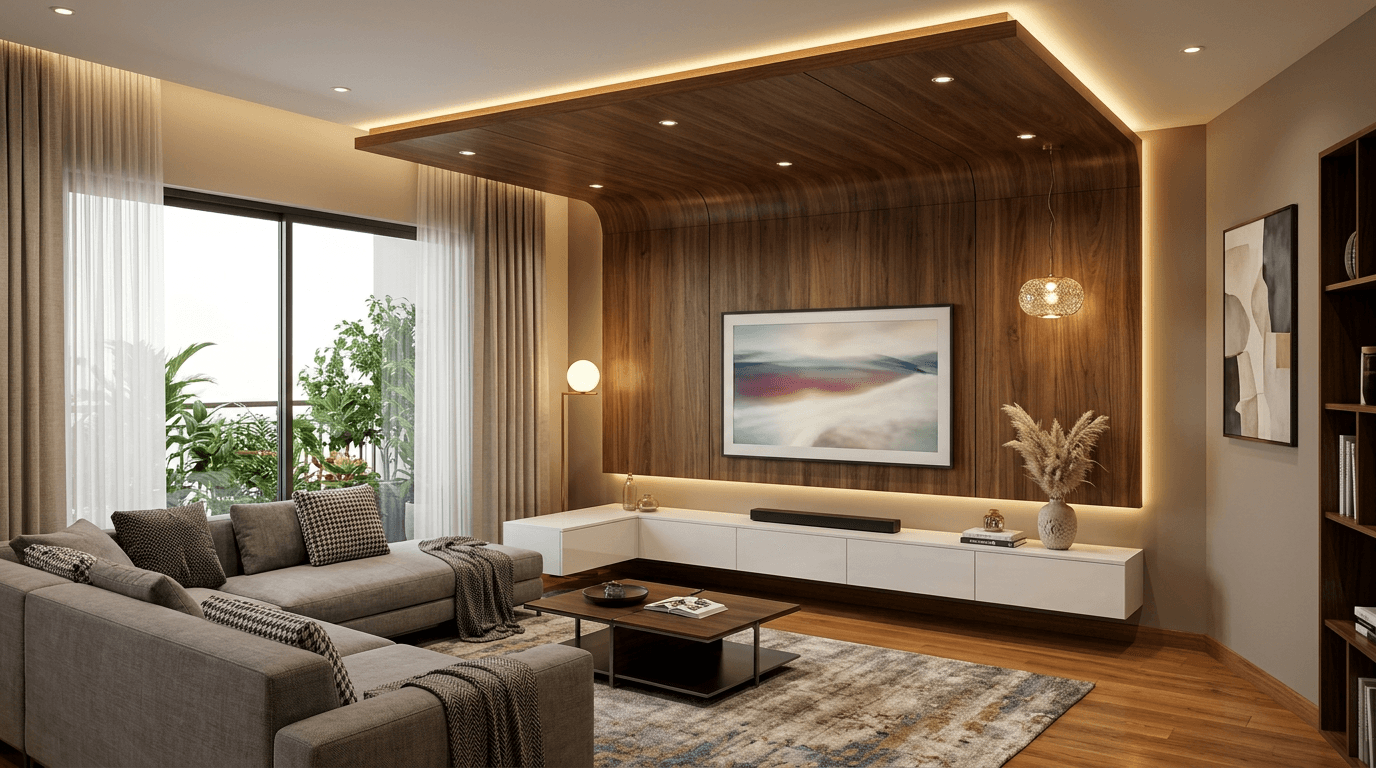
Full TV Wall Designs: Panelling, Stone & Fluted Finishes
When the budget allows treating the entire surface, the conversation shifts from furniture to architecture. These ten TV wall design ideas cover the panel designs we get asked about most in large living rooms, with the material honesty each one deserves. Good TV panel design starts under the finish: every wall panel here is a laminate, veneer, or stone skin over an MDF core or HDMR panels; specify HDMR (high-density moisture-resistant) if the wall shares plumbing with a bathroom or kitchen. And a TV wall unit design only succeeds when the panelling, the TV units below it, and the lighting read as one built object — the look of your TV unit should hold up with the screen off.
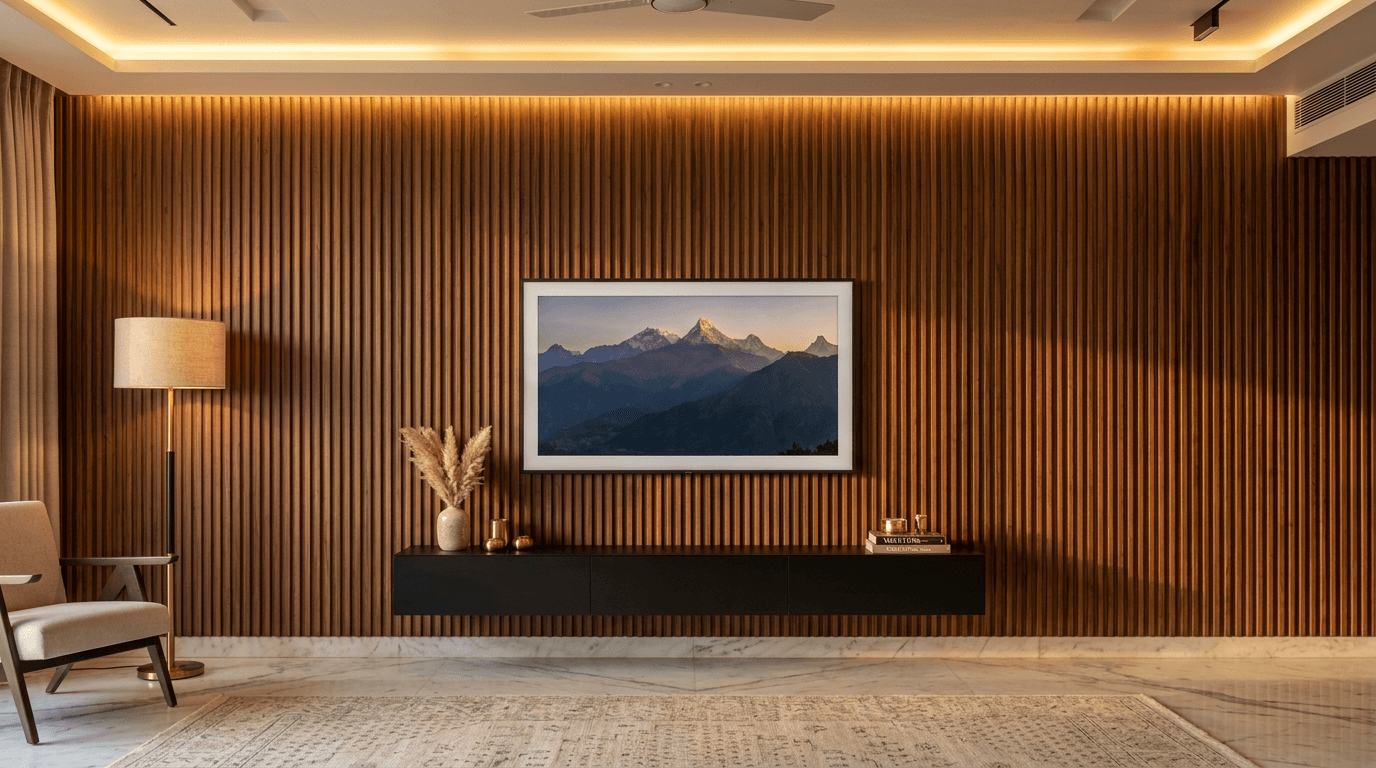
16. Floor-to-ceiling fluted walnut. The full-commitment version of design 1. Fluted wooden paneling wall to wall, no visible hardware, cove light from above. Reads five-star hotel lobby; TV units rarely look this expensive per rupee spent.
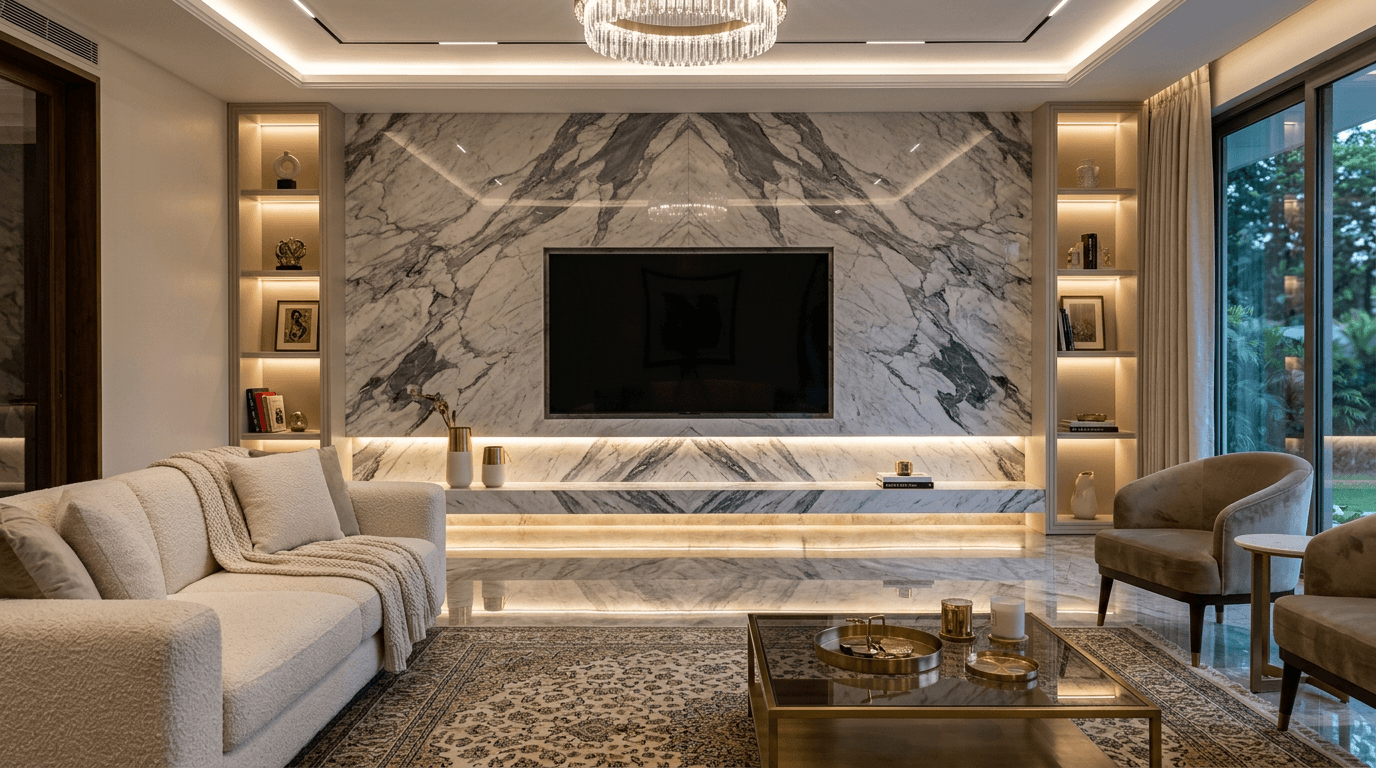
17. Bookmatched marble slab. Real stone, mirrored veining, TV floating on it. The most expensive wall in this gallery and the only one that appreciates visually with age.
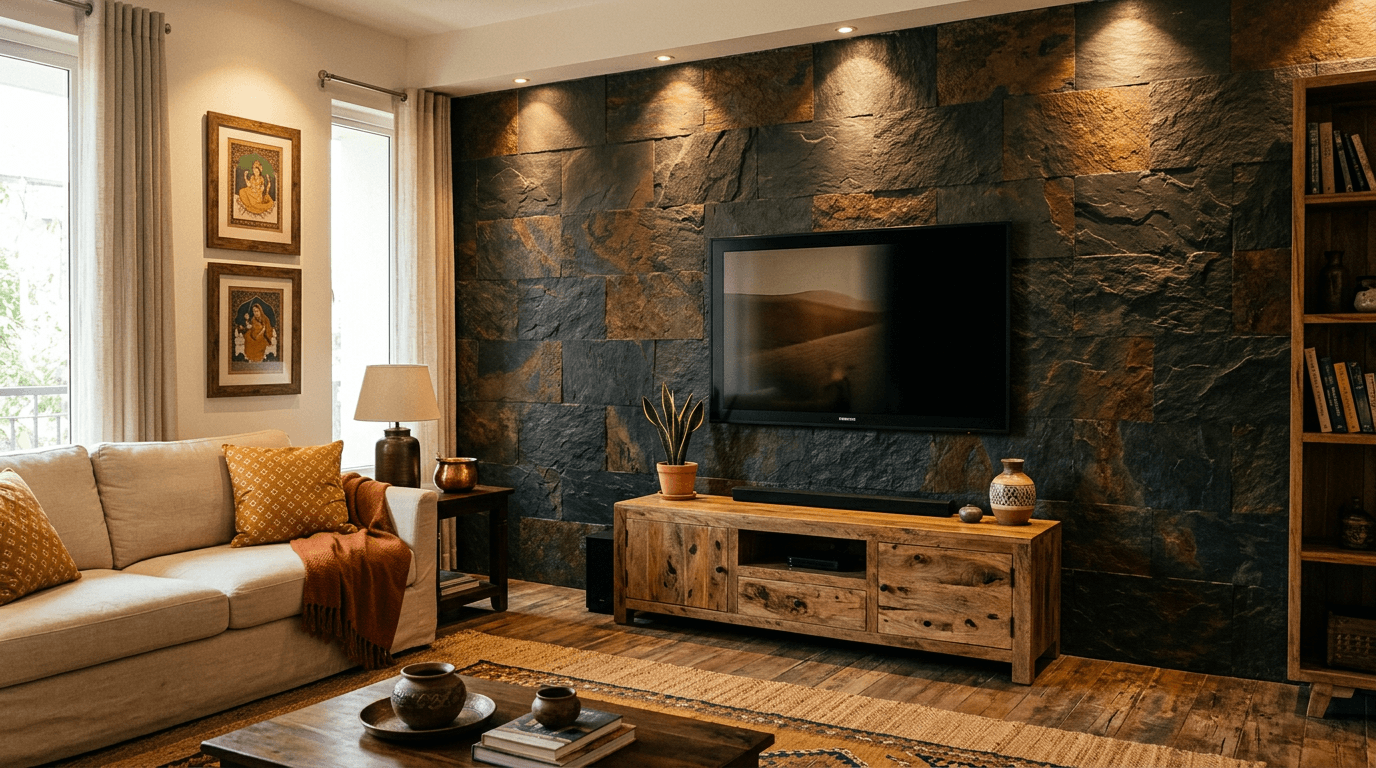
18. Slate and stone veneer. Thin natural slate veneer sheets bring rugged texture at a fraction of slab cost. Suits earthy palettes; hides scuffs in a busy family hall.
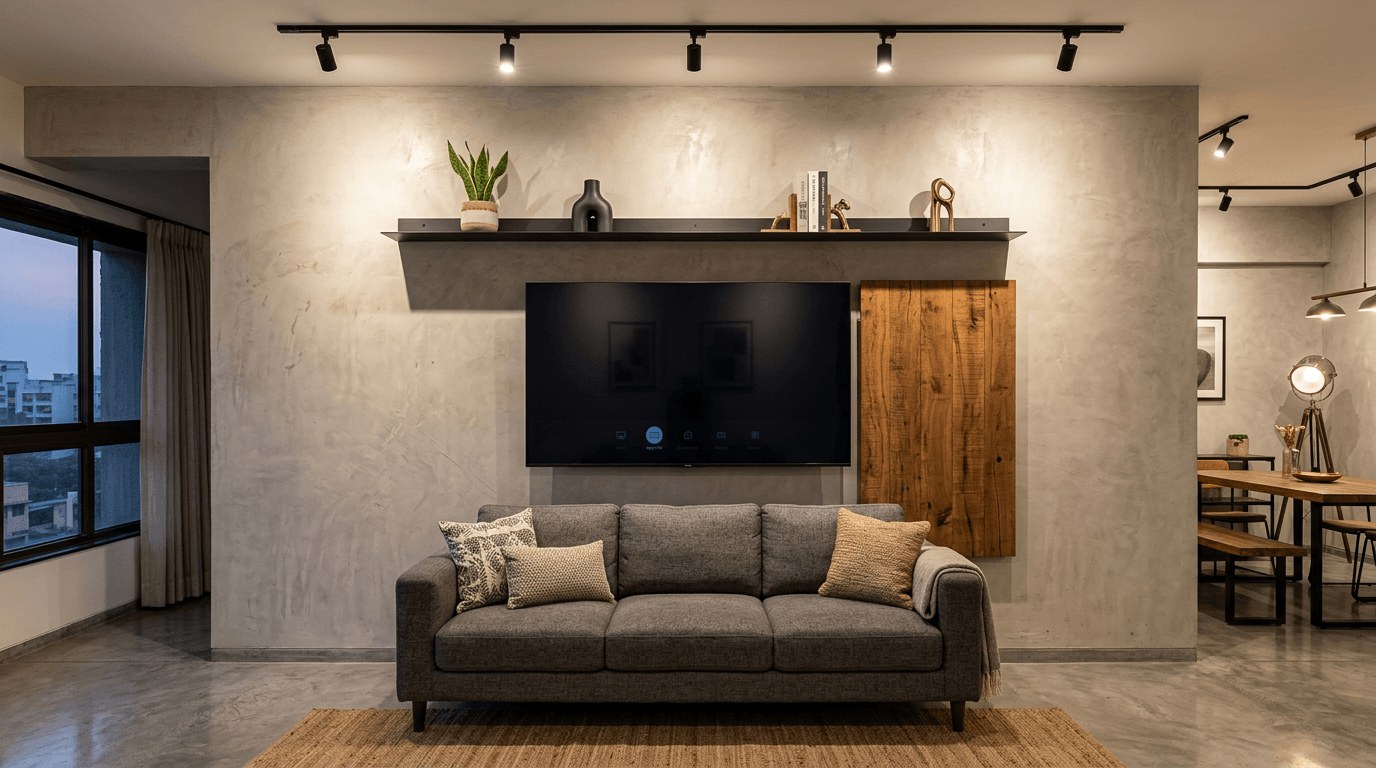
19. Micro-cement industrial wall. Seamless grey micro-cement or concrete-finish plaster, black hardware, one wood accent. A modern style at its most stripped back: urban, unfussy, and it pairs with black-framed glass partitions and TV units in matte black.
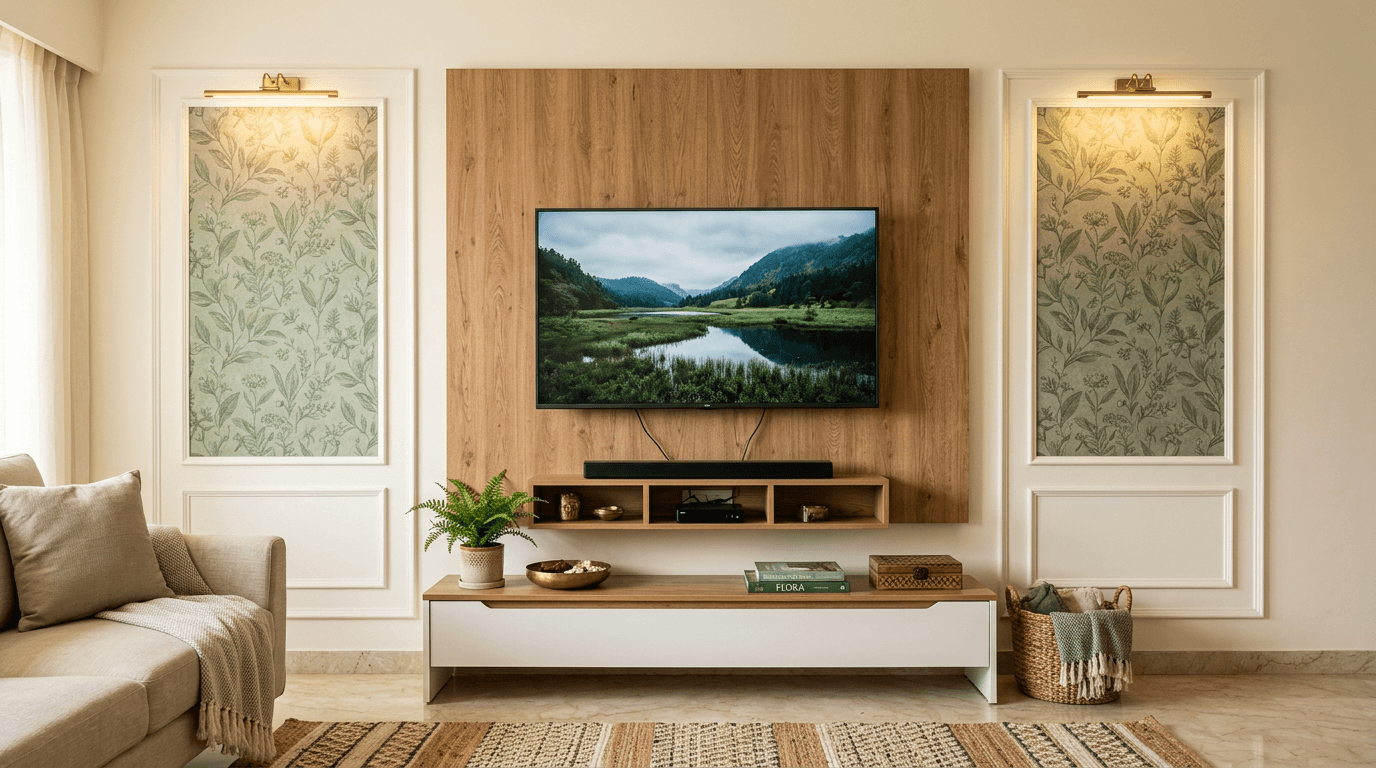
20. Wallpaper and panel combo. Patterned wallpaper inside painted moulding frames flanking a central laminate TV panel. Maximum look per rupee; swap the wallpaper in five years and the wall feels new.
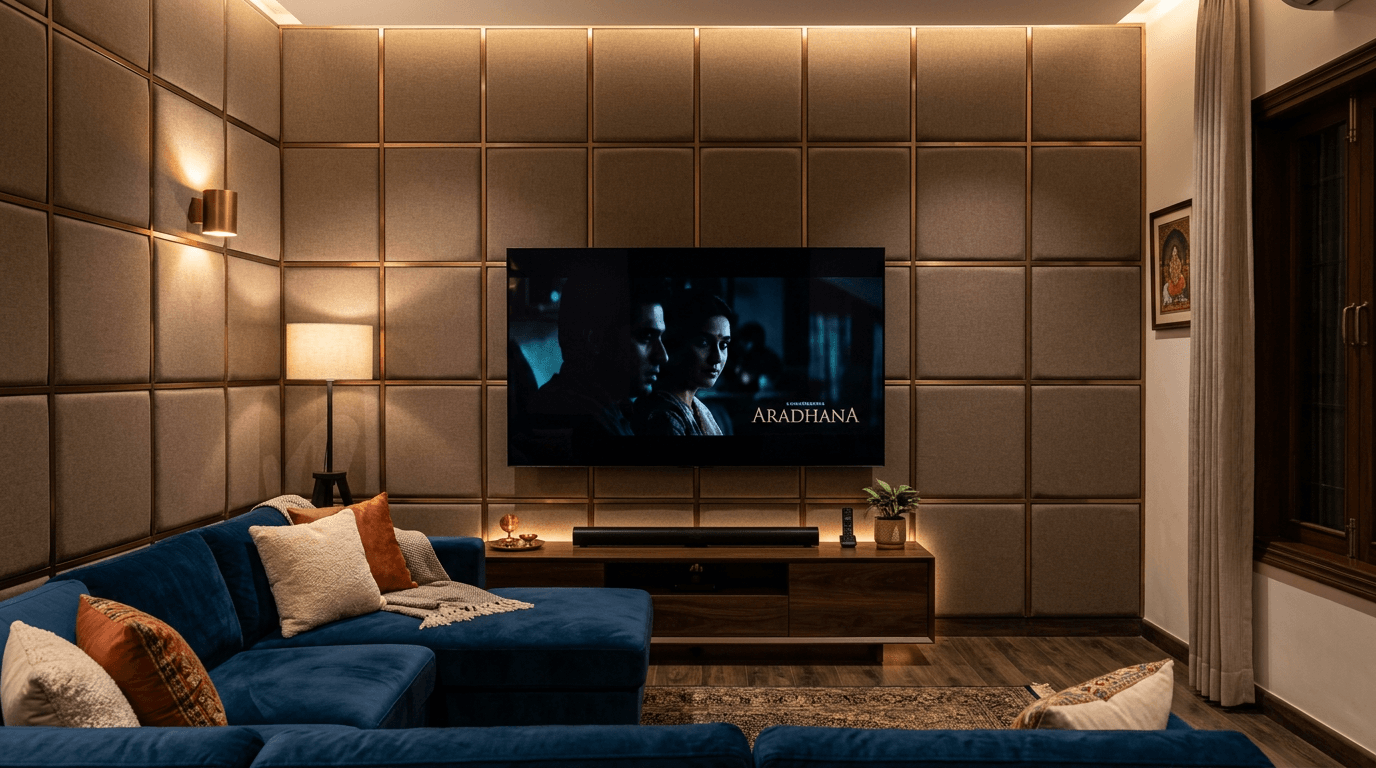
21. Acoustic fabric panel wall. Upholstered acoustic panels around the screen tame echo in large marble-floored living rooms and double as a home-theatre statement.
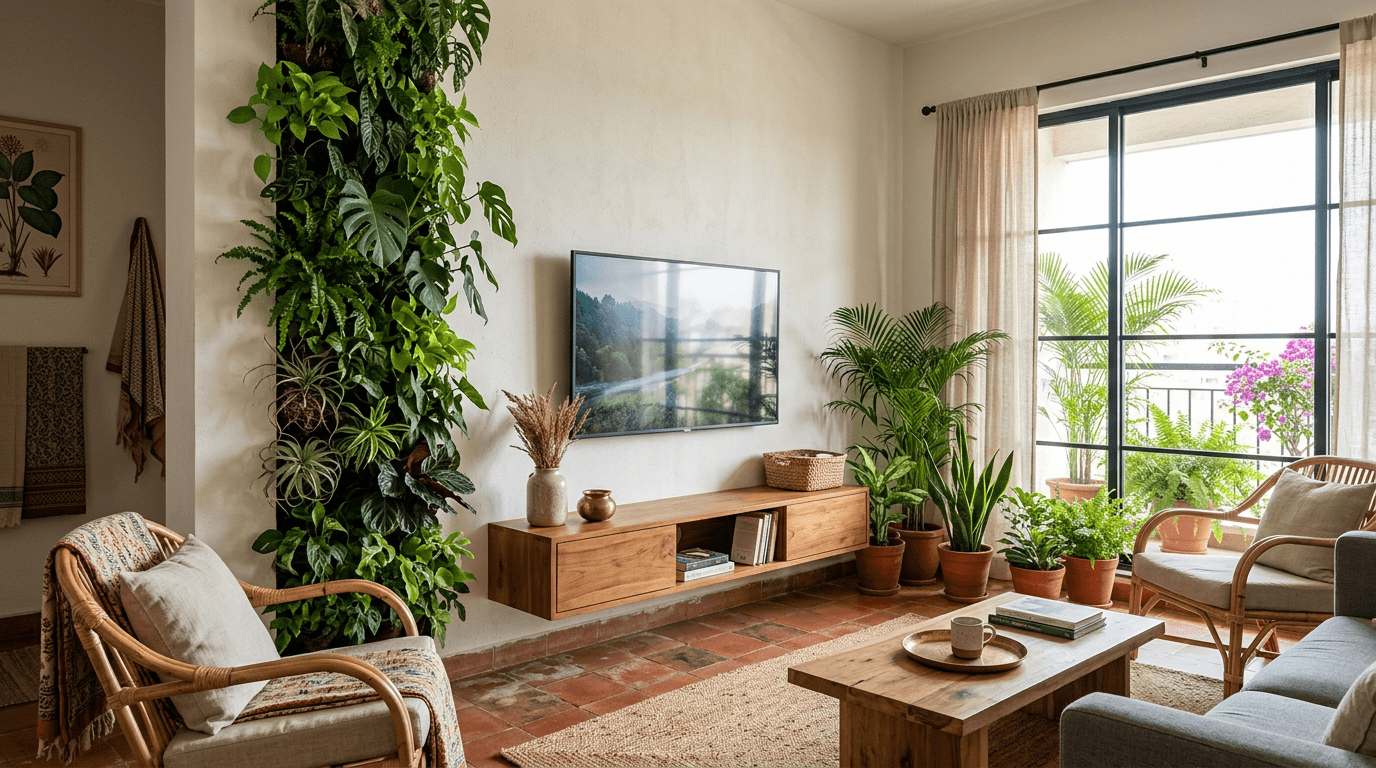
22. Green-edge panel wall. A vertical planter strip or preserved-moss border on one side of the panel softens all that hardware. Needs light and honest watering intentions.
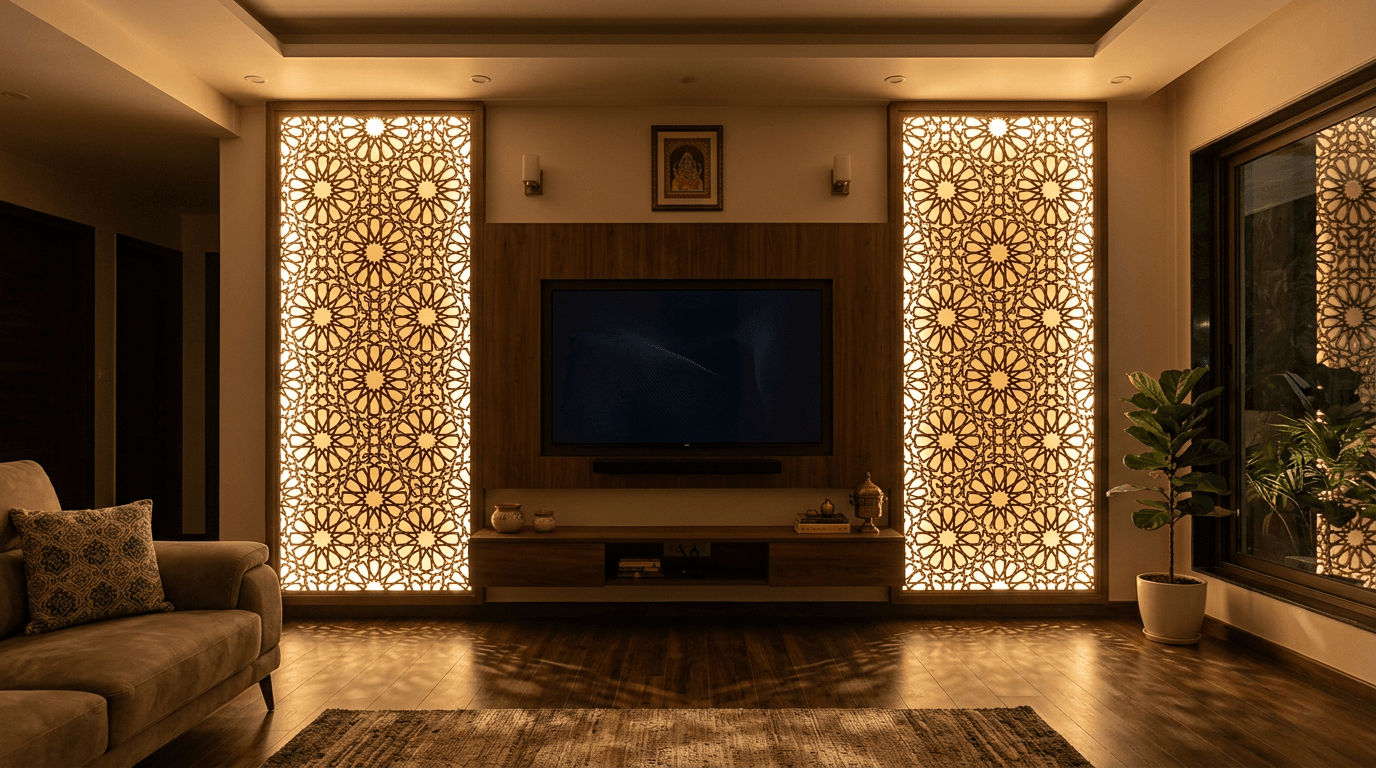
23. Backlit jaali side panels. CNC-cut jaali screens with soft backlight flanking a plain centre panel. Indian craft vocabulary, contemporary execution; glorious at night.
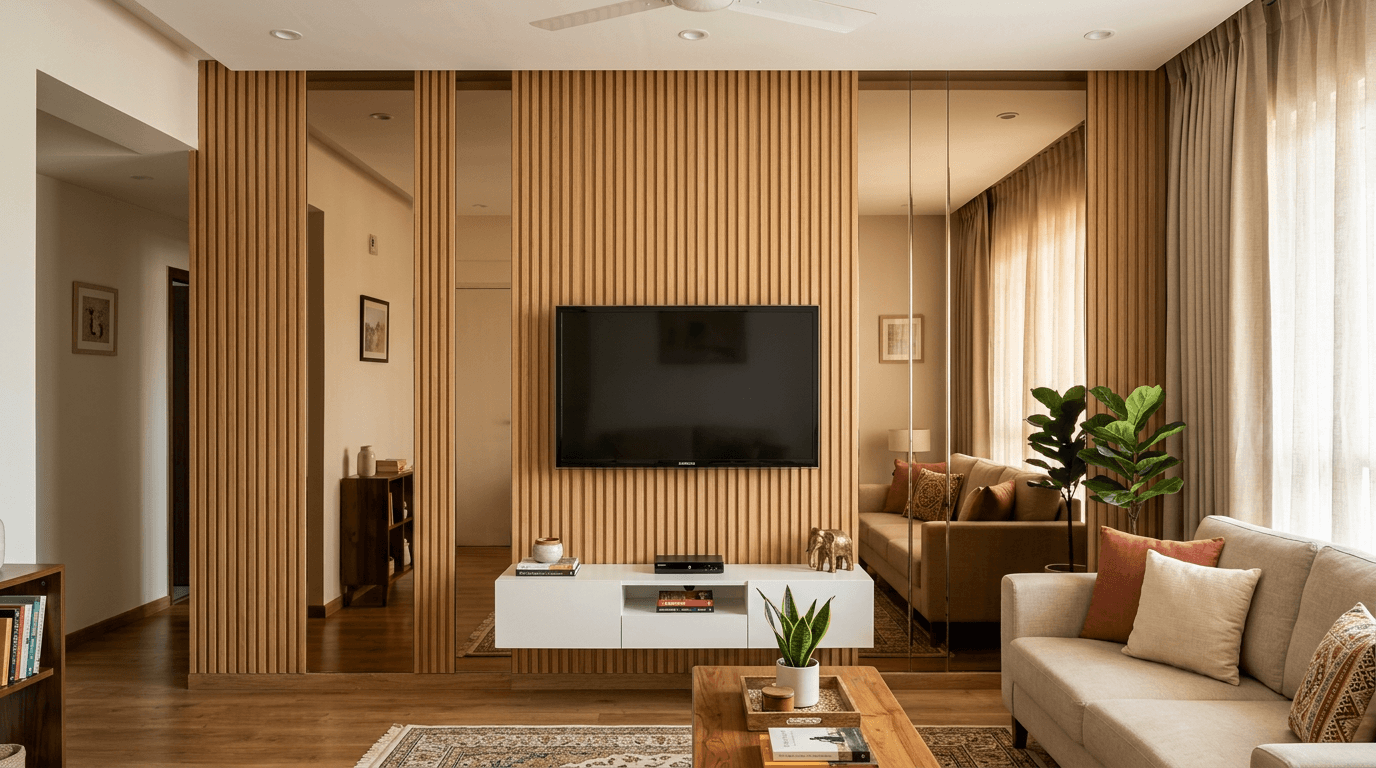
24. Fluted panel with mirror strips. Alternating fluted wood and slim vertical mirror strips stretch a small hall sideways and bounce evening light around.
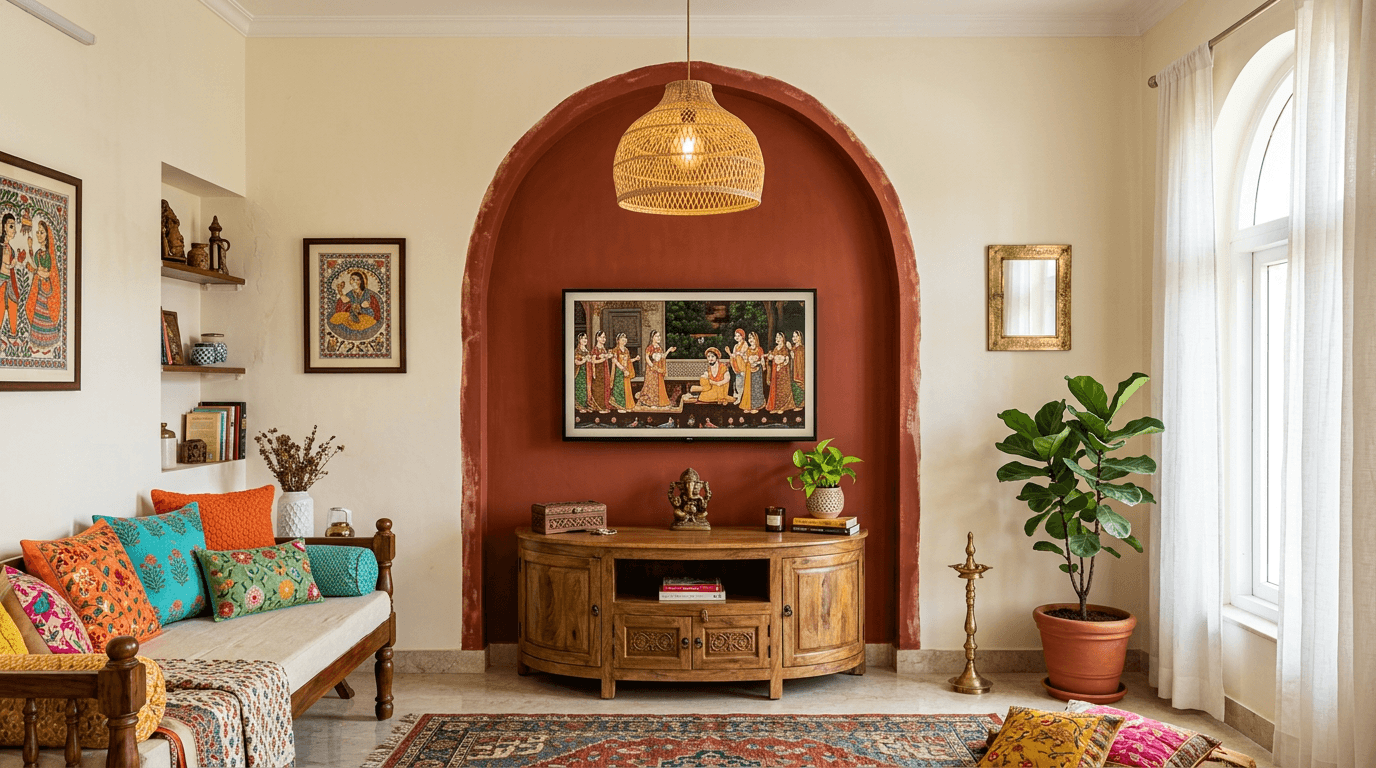
25. Painted arch backdrop. A tall painted arch in a deeper shade frames the screen; a half-round console echoes the curve. The cheapest of these panel designs: one tin of paint and a steady hand.
Floating vs Floor-Standing TV Cabinets
No question comes up more in client meetings about TV cabinets: floating or floor-standing? Floating TV units keep the floor visible, make small living rooms feel larger, and simplify mopping, but they need a solid wall and disciplined cable planning — opt for a TV unit that floats when the hall is tight, and go for a wall-mounted unit to save space in flats under 1,000 sq ft. Floor-standing TV units carry more storage, need no wall strength, and suit heavy stone tops. Rule of thumb from our projects: under 150 sq ft of hall, float it; joint-family storage pressure, ground it. Eight TV cabinet design ideas across both camps:
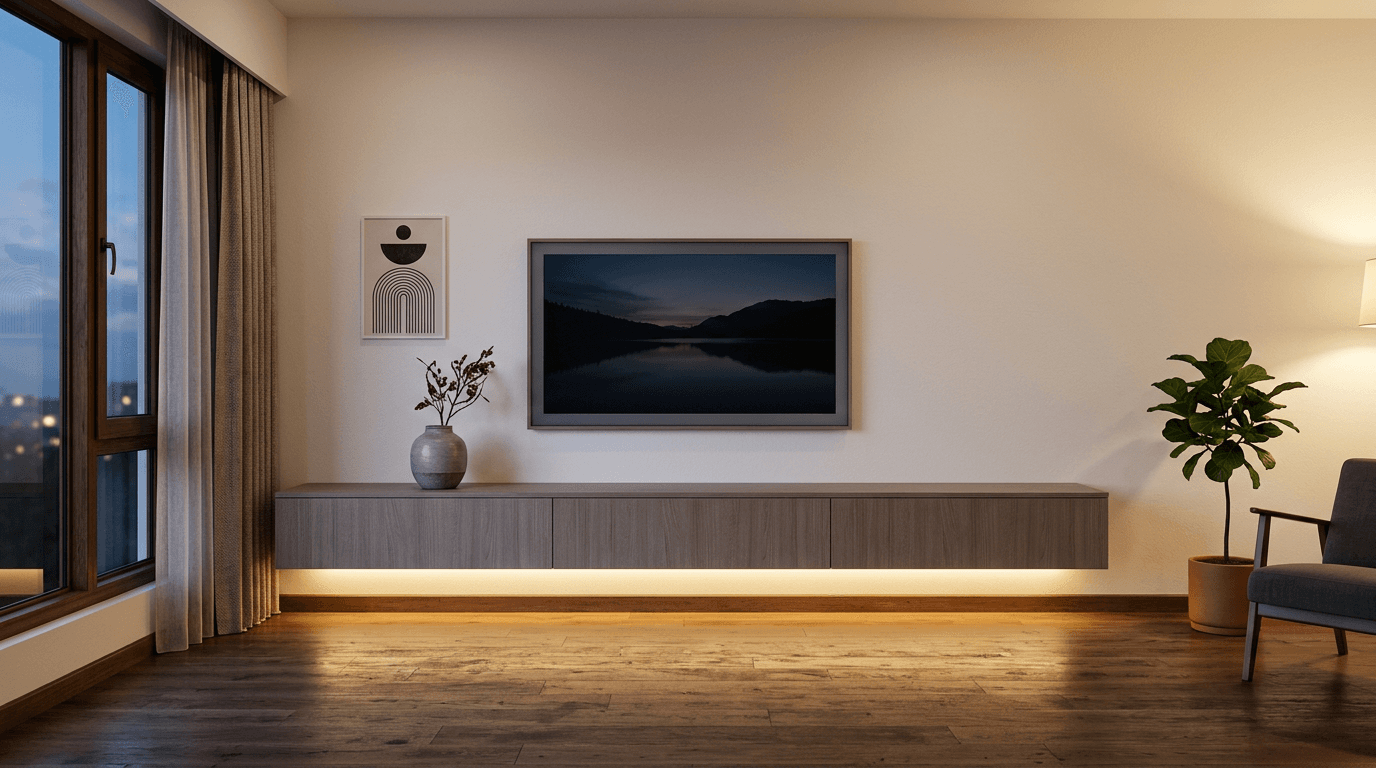
26. Long floating console with underglow. The default floating unit right now: 8 to 10 feet long, LED strip beneath, appears to hover. The floating TV cabinet look most clients mean when they say "modern", and of all the floating TV units here, the easiest to brief a carpenter on.
27. Floating drawers plus open shelf. Two floating drawer boxes with a lower open shelf line for the soundbar and set-top box; everything off the floor, everything ventilated.
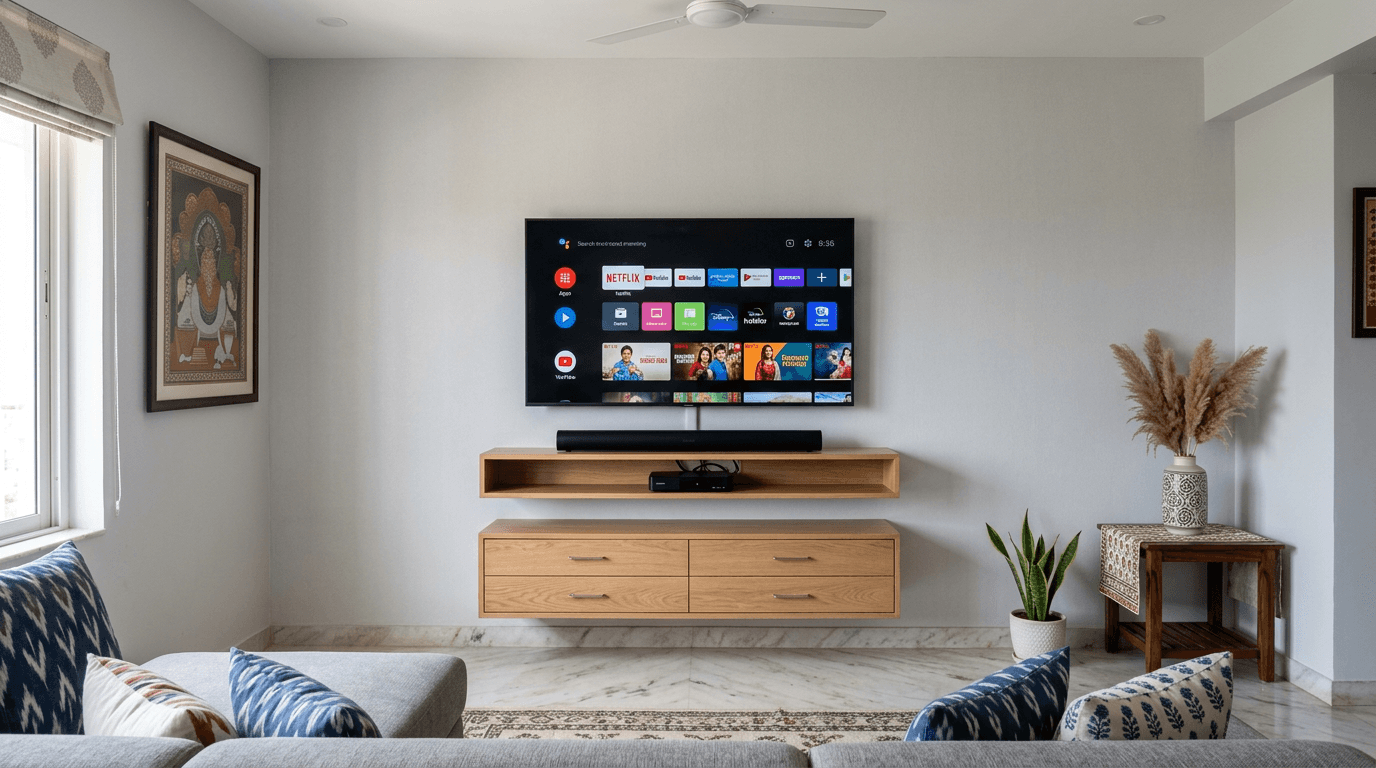
28. Sideboard-style floor cabinet. A classic long sideboard grounded on legs, TV on top or wall above. Moves with you when you shift homes, which floating TV units never do.
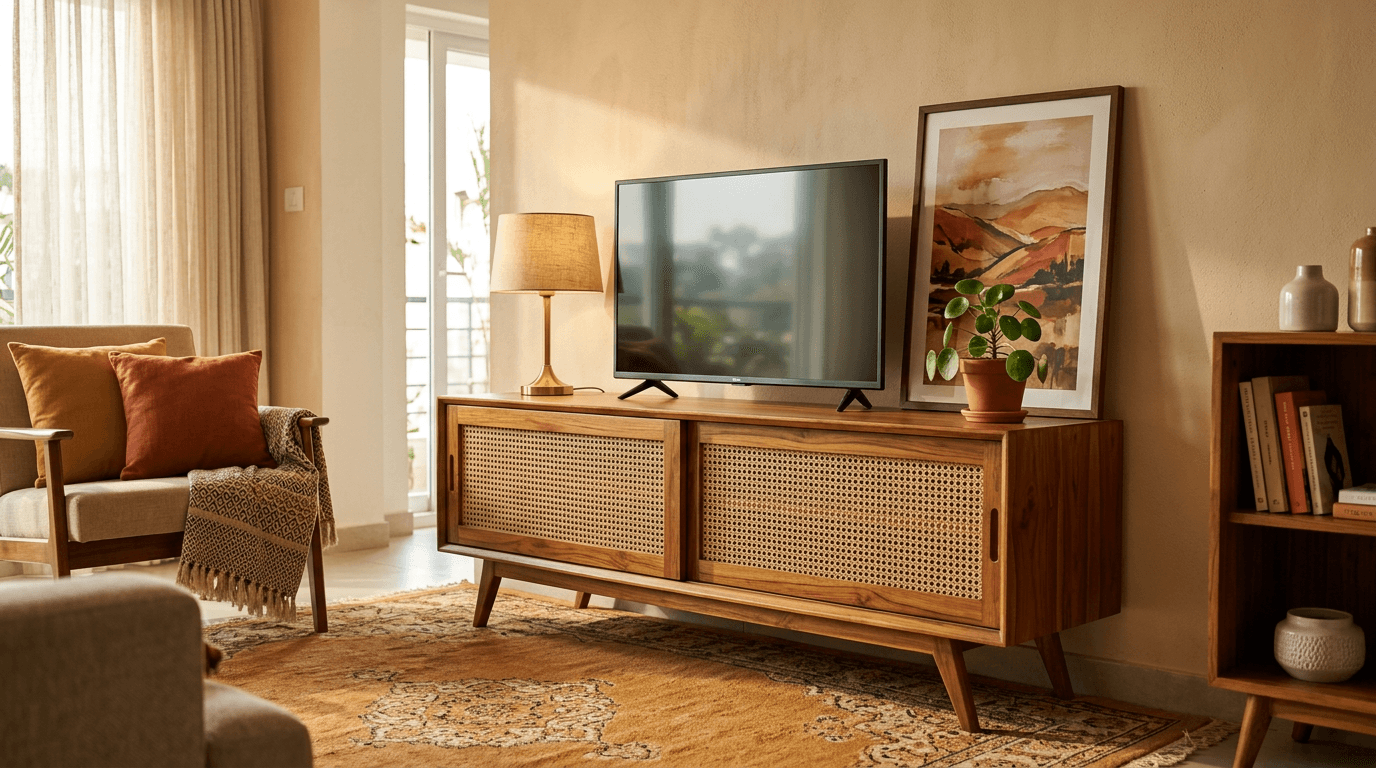
29. Low Japanese-style floor unit. Barely knee height, extra long, floor-hugging. TV units this low calm the whole hall and suit floor-seating families honestly.
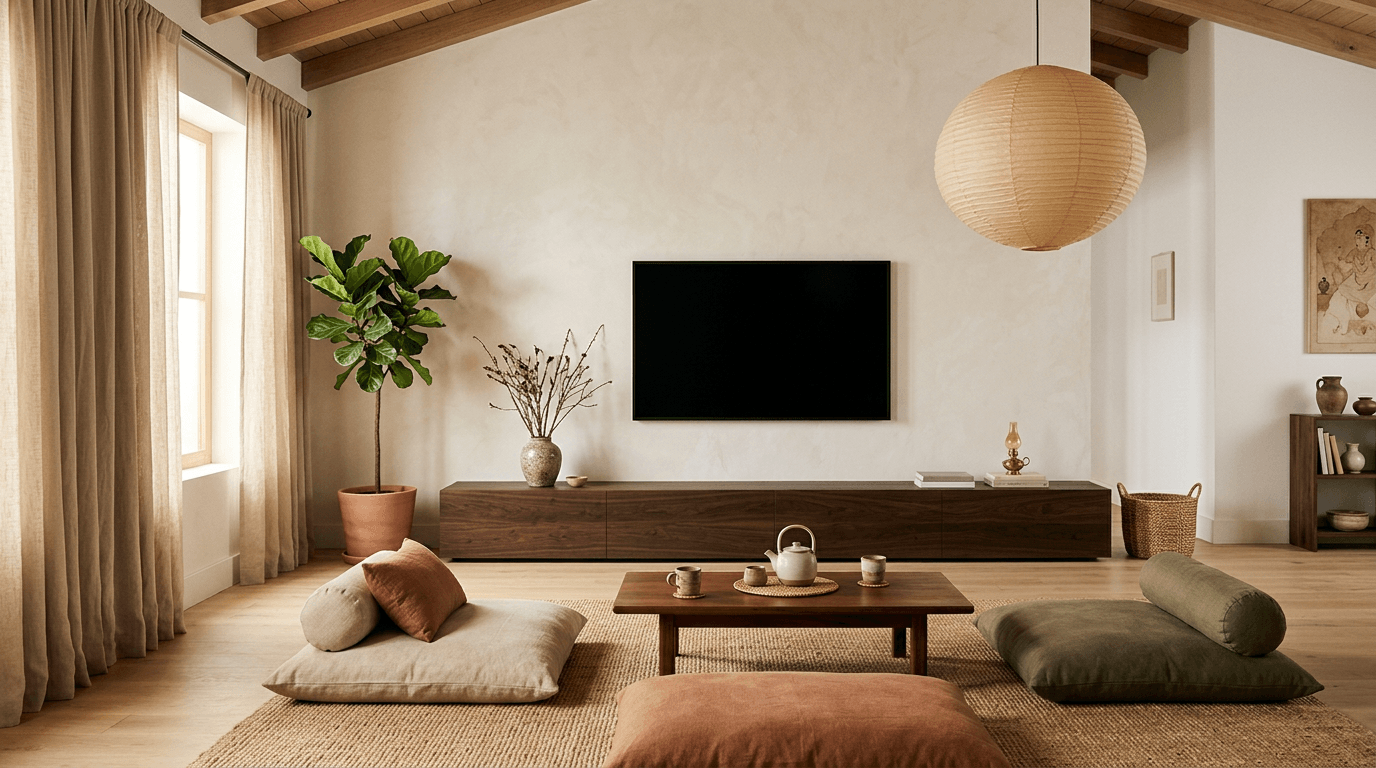
30. Floating corner-wrap unit. The console turns the corner and continues along the adjacent wall as a display ledge, rescuing halls where the corner TV is the only option.
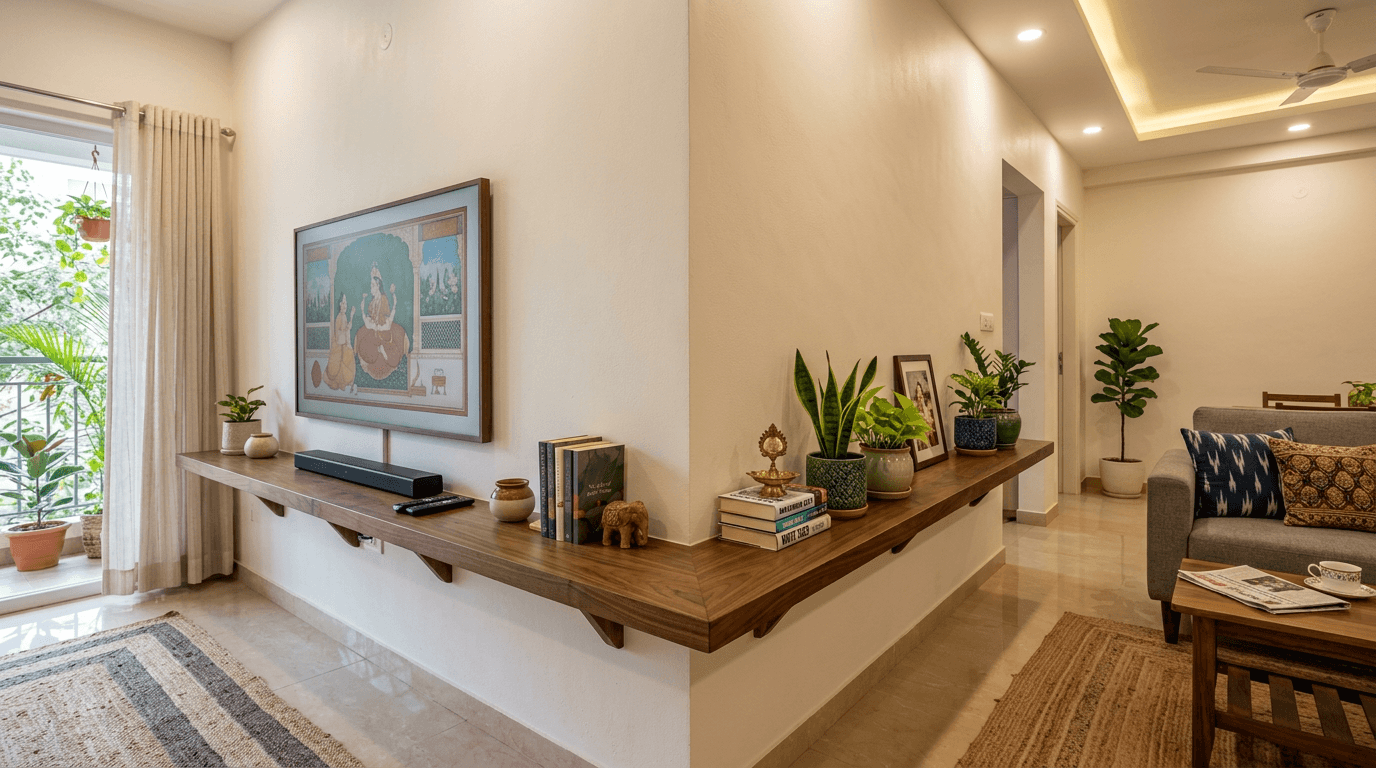
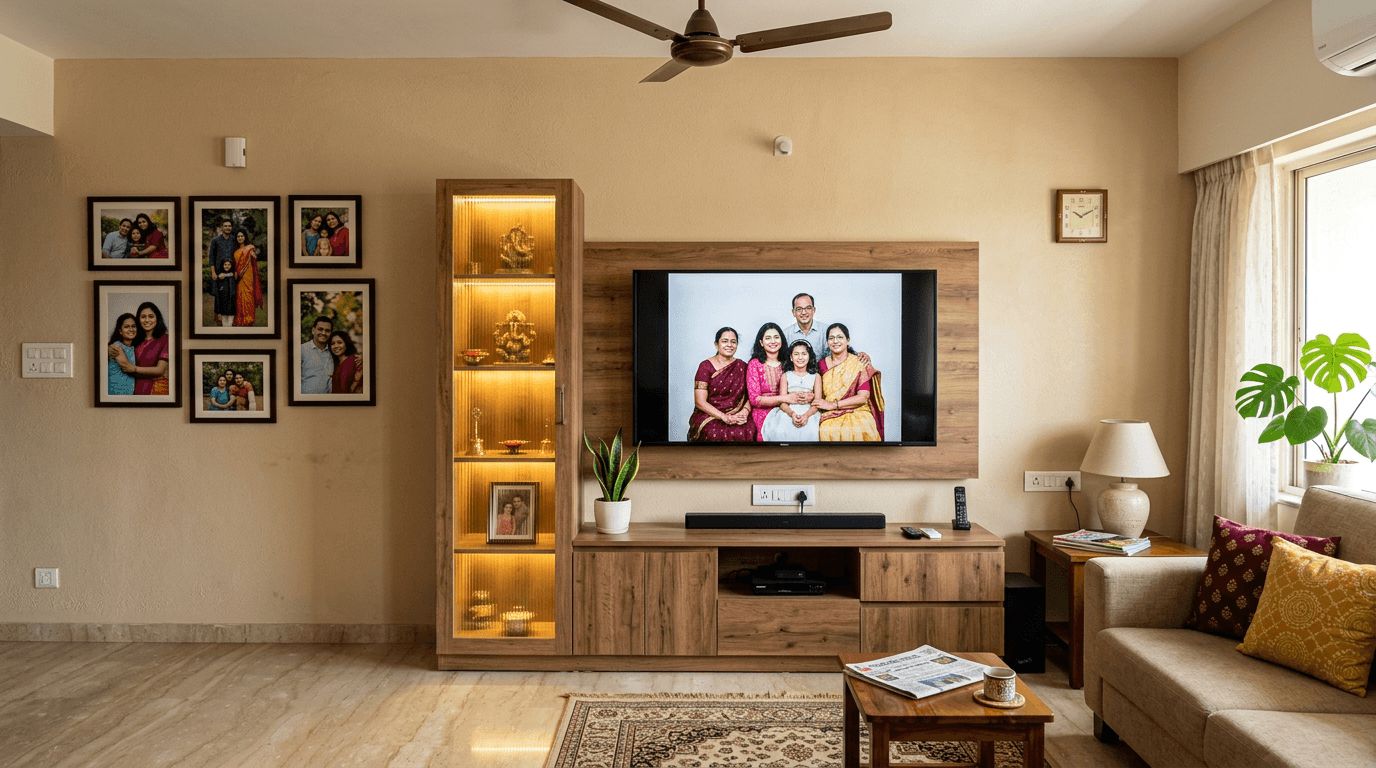
31. Floor unit with tall display tower. A grounded unit with one tall glass-front tower for curios and books, closed storage below the screen. Of the grounded TV units here, the best for families who display as much as they watch.
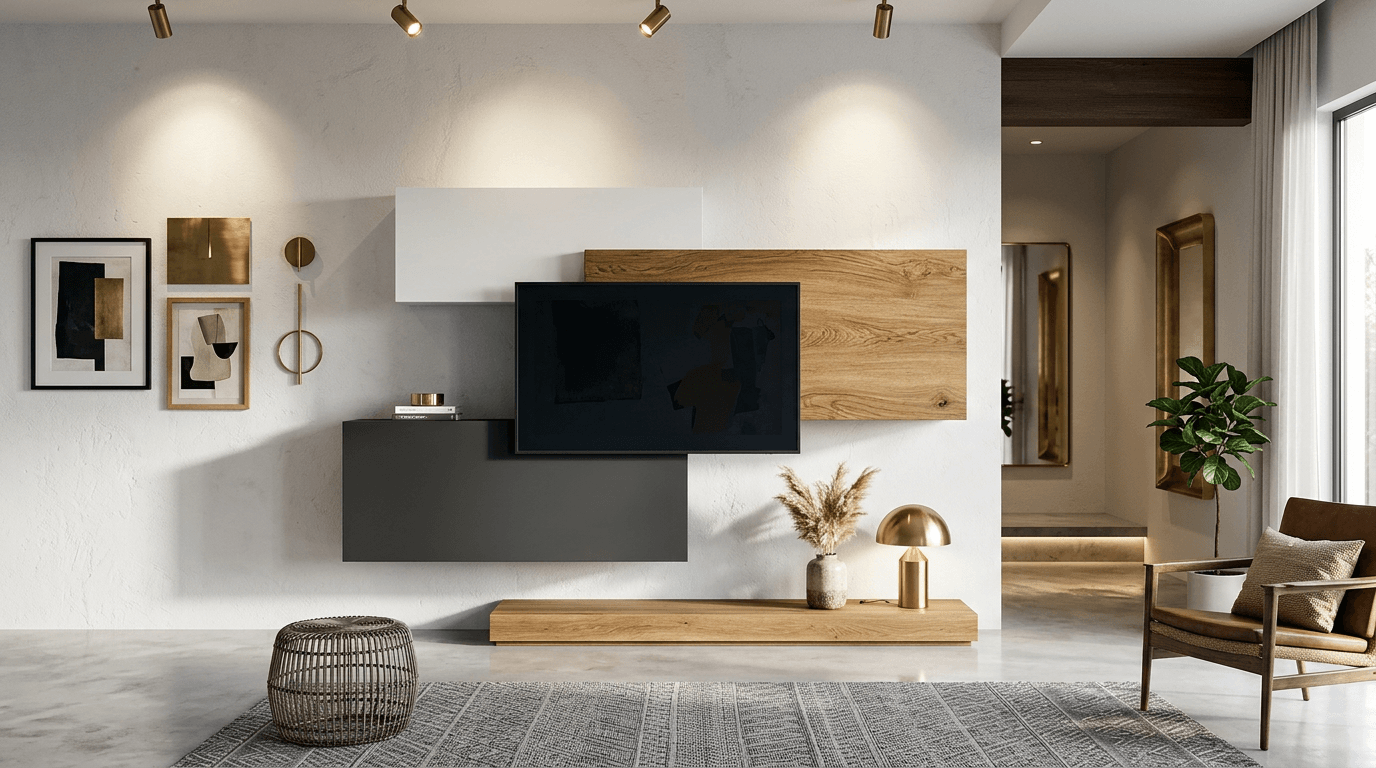
32. Cantilevered box composition. Chunky boxes projecting at different depths, part floating, part grounded. Sculptural; demands a large blank wall to breathe.
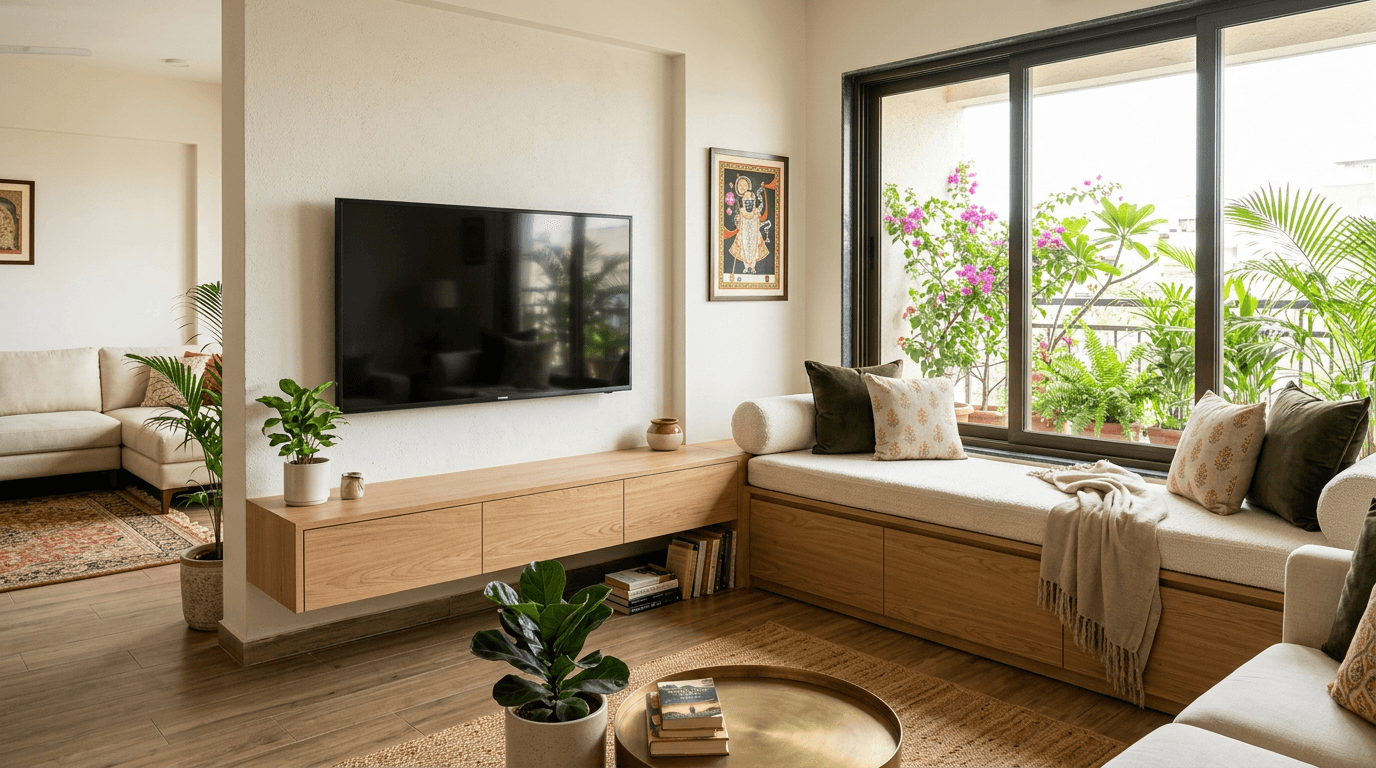
33. Console-to-bench continuation. The floating console extends past the TV area into a window-seat bench, one continuous line of joinery doing two jobs.
Luxury TV Unit Designs: Marble, Brass & Backlit Detailing
Luxury in TV unit interior design is not more material; it's fewer materials, better resolved. A luxury TV unit design earns its budget through one hero surface, metal restraint, innovative TV unit detailing you notice slowly, and lighting you can dim. These are the TV units our villa and penthouse clients shortlist, and each one deserves a 3D render approval before fabrication — at Roomantic every project gets photorealistic renders signed off before execution, because at this budget a surprise is unforgivable.
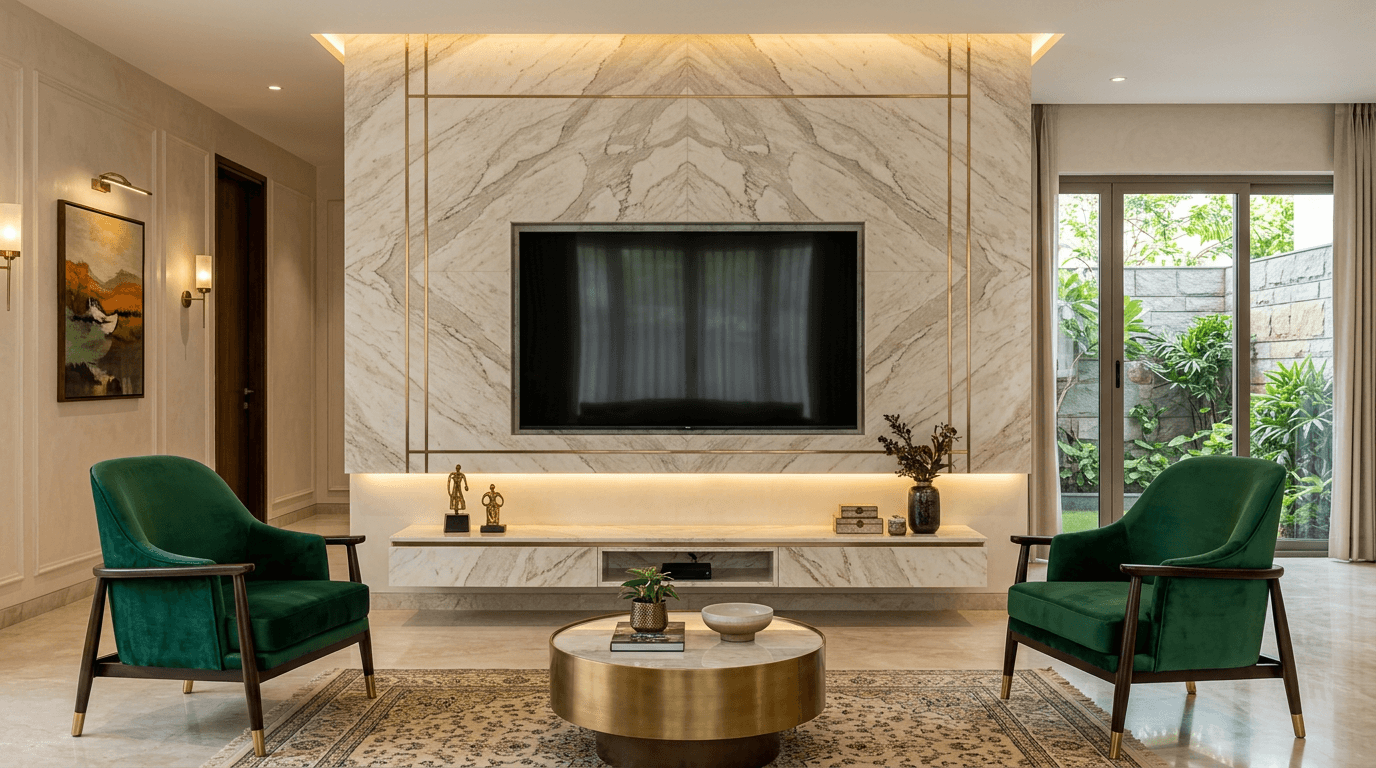
34. Marble with brass inlay. Bookmatched stone crossed by thin brass inlay lines that frame the screen. Jewellery logic: the metal is the clasp, not the necklace. A stylish TV unit for people who dislike "blingy".
35. Backlit onyx panel. Translucent onyx with LED backlighting turns the wall into a lantern. Use one panel, not the whole wall, unless you enjoy living inside a lamp.
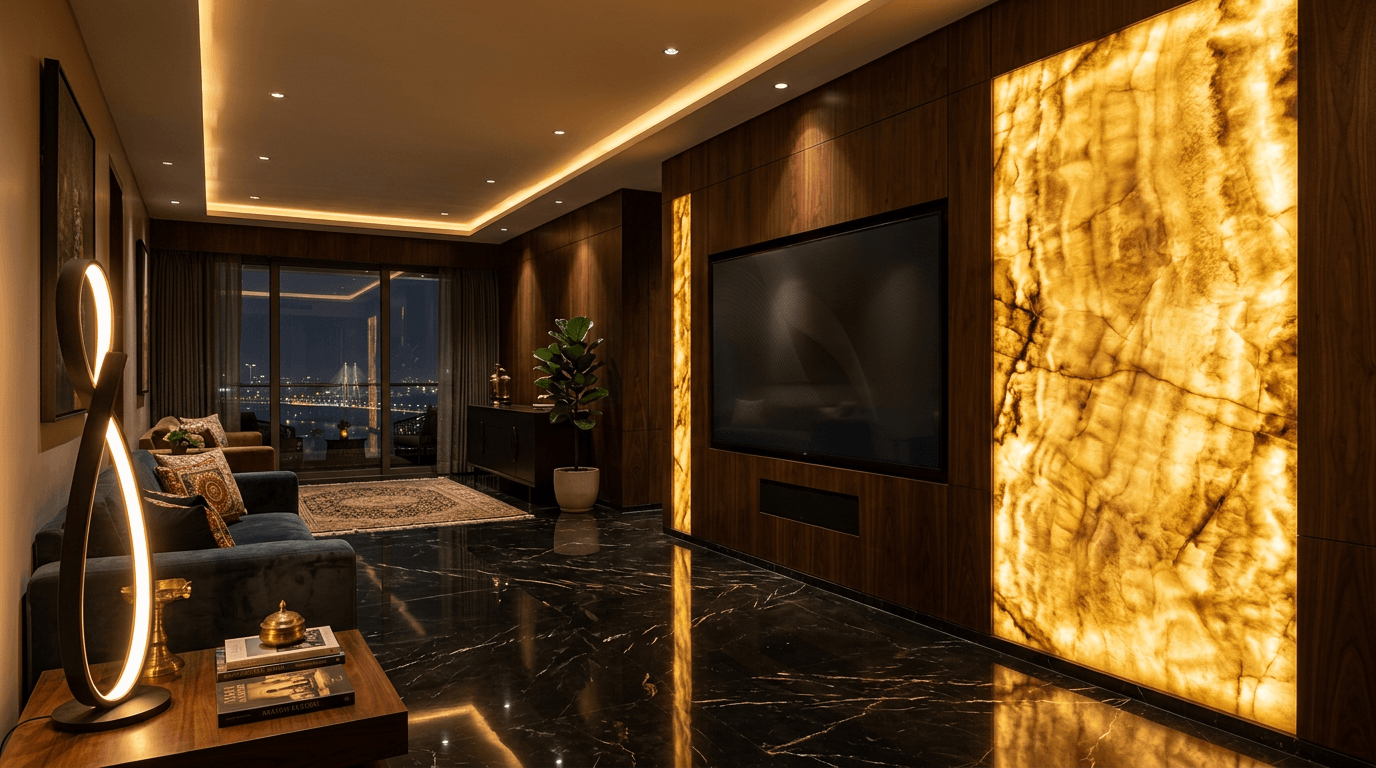
36. Fluted glass and champagne metal. Fluted glass shutters over warm-lit storage, champagne-gold frames. Softly glamorous; contents blur into texture instead of clutter. A stylish design that flatters everything behind the glass.
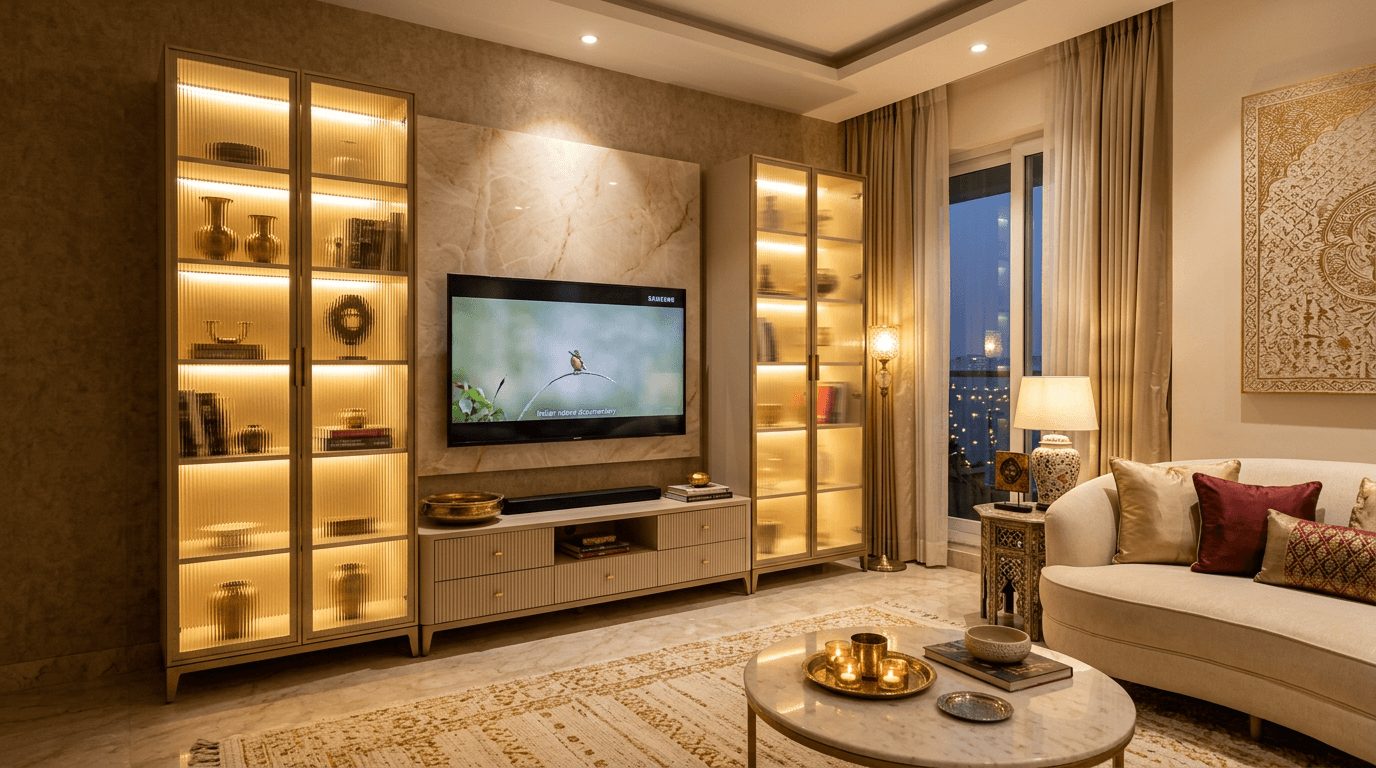
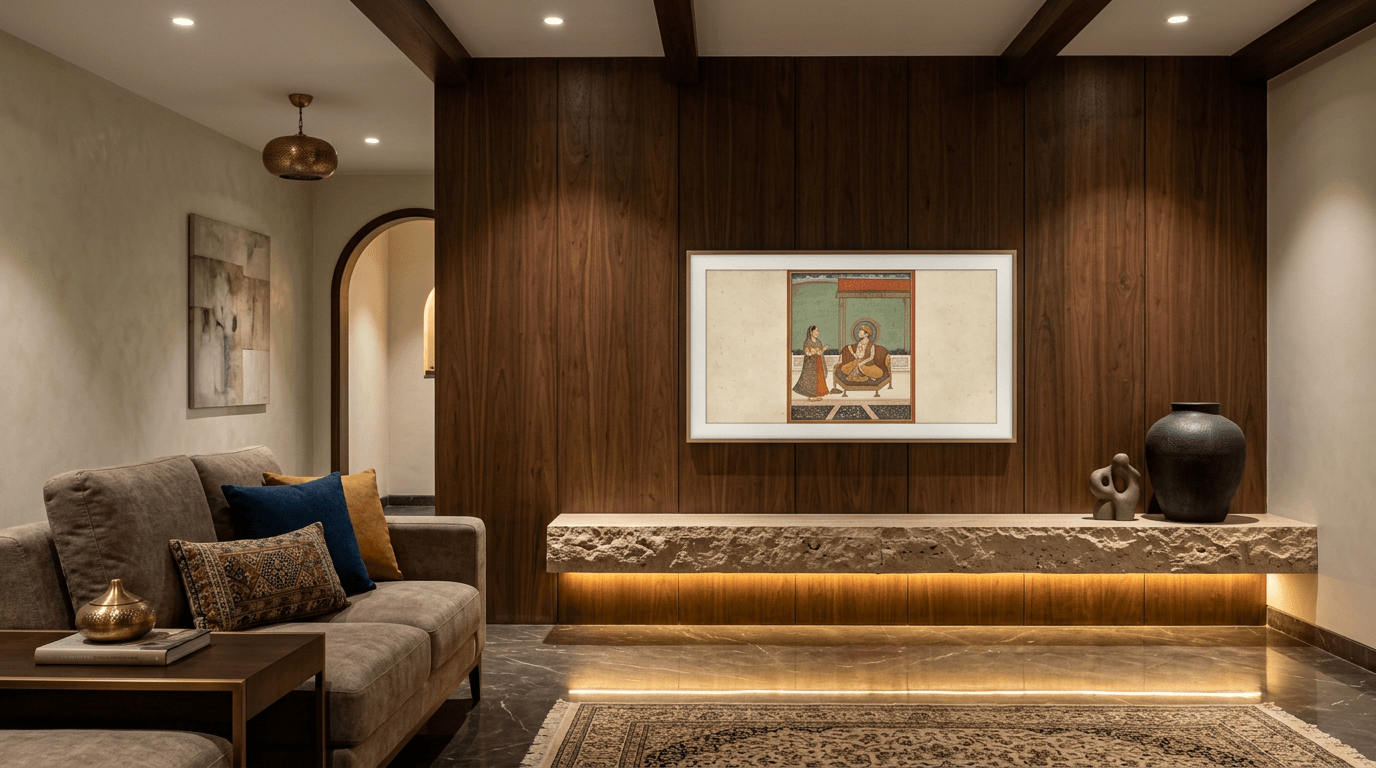
37. Veneer with stone ledge. Dark walnut veneer wall, one thick cantilevered stone ledge as the only shelf. Two materials, zero hardware, permanent dignity.
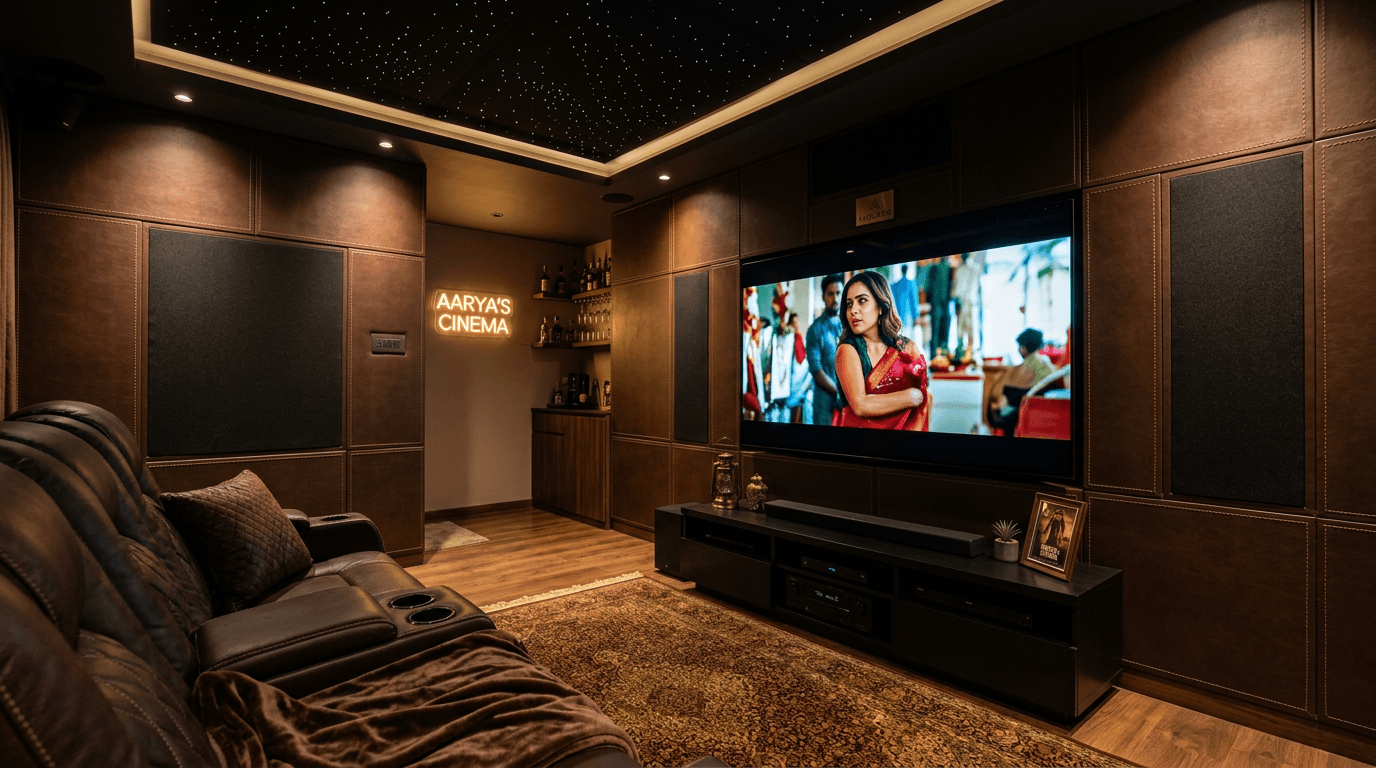
38. Leather-panel theatre wall. Stitched leather or leatherette acoustic panels, hidden speakers, blackout-friendly palette. The full home-cinema treatment for dedicated halls.
39. Double-height TV wall. For villas with double-height living rooms: the panel rises the full height, but the design keeps the TV and lighting in the human zone below, treating the upper reach as texture.
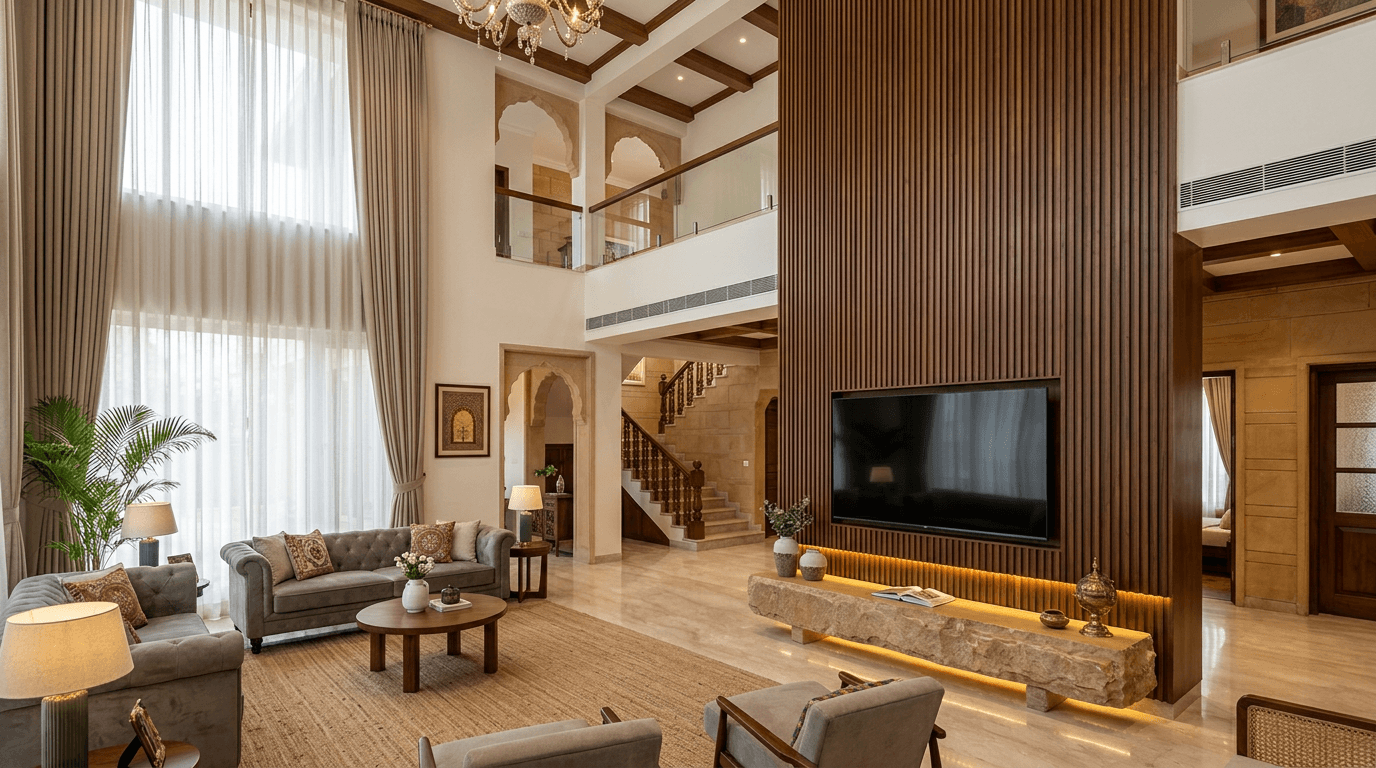
40. Smoked mirror and dark veneer. Bronze smoked-mirror panels behind open shelves over espresso veneer. Depth, glamour, and it hides fingerprints better than clear mirror ever will.
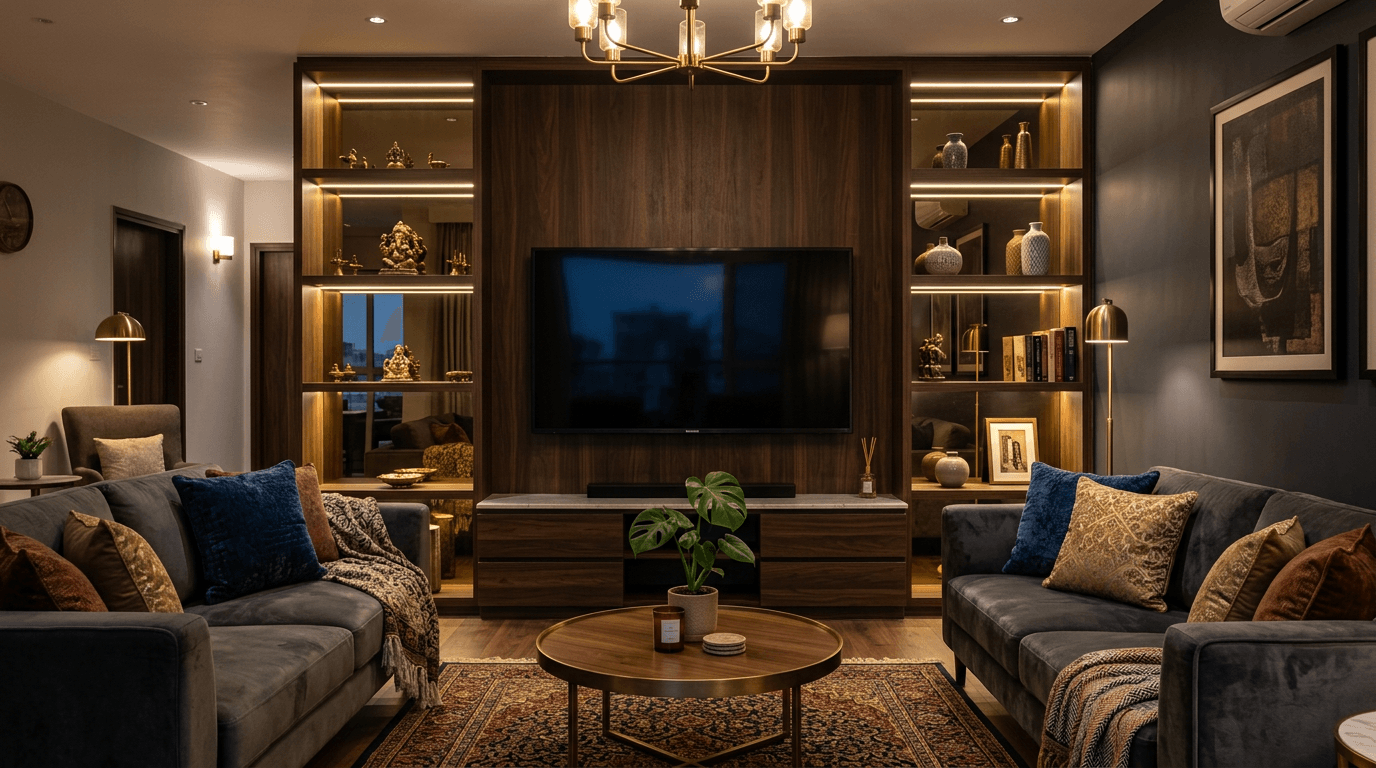
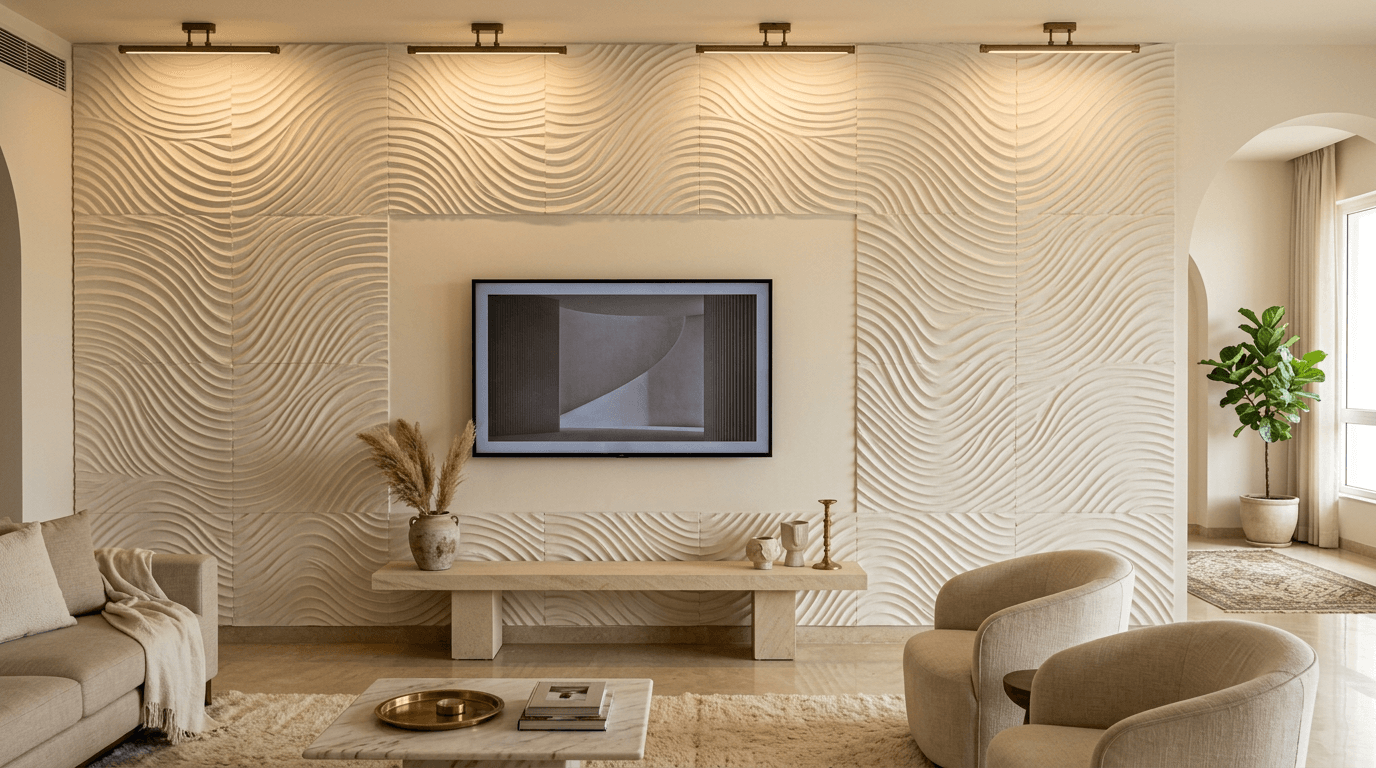
41. Sculpted plaster relief. Hand-finished plaster relief panels, gallery lighting, minimal console. For clients who want art, not furniture, holding the wall.
Simple & Budget TV Unit Designs Under ₹40,000
A simple TV unit design done precisely beats a luxury wall done carelessly. Everything in this section lands under roughly ₹40,000 in most Indian cities at current rates, several far under — honest TV units for everyday living rooms. The trick in every one: spend on the piece you touch daily, save on the backdrop with paint. The panel designs here are paint and plywood, not veneer, and nobody visiting will know.
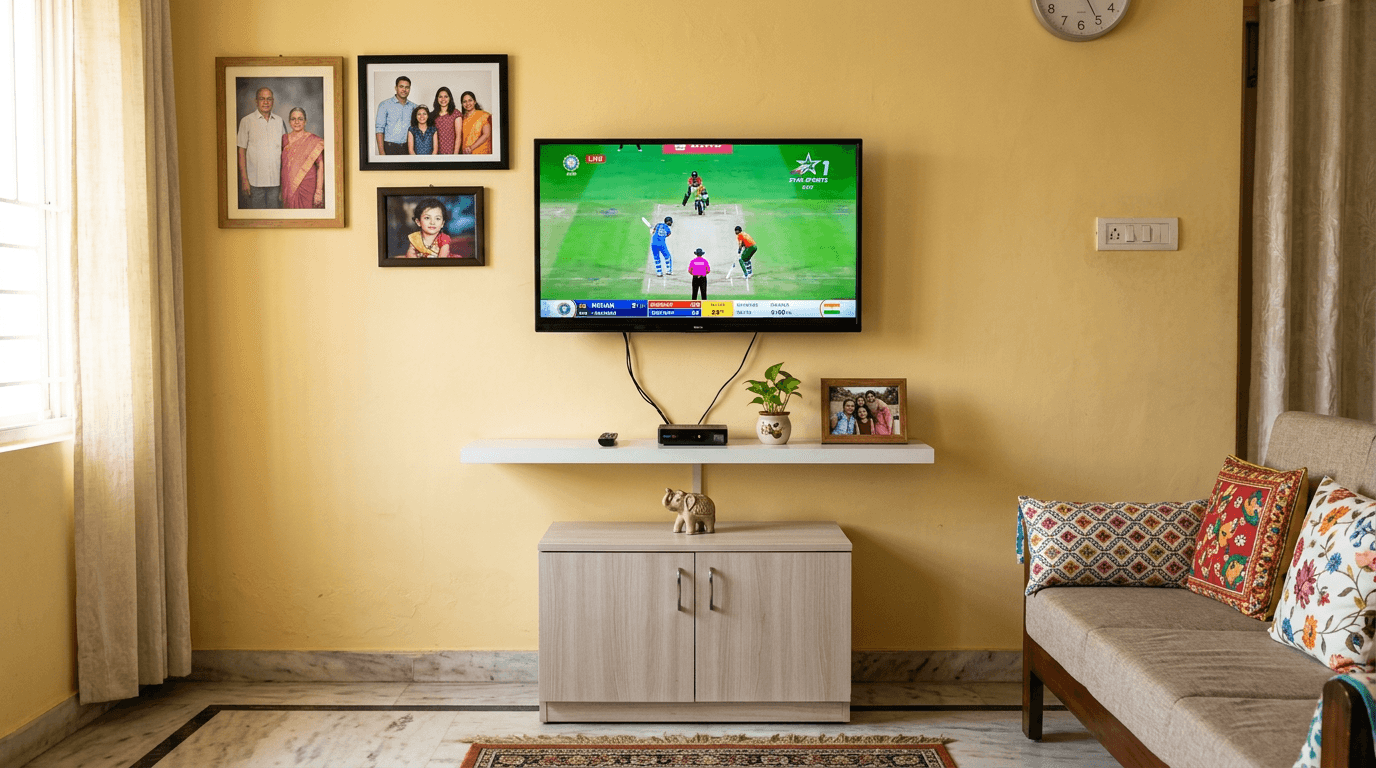
42. Floating shelf plus low cabinet. One laminate floating shelf, one two-door low cabinet. The honest minimum viable TV unit; add the panel later when the budget recovers.
43. Ready-made engineered wood unit. A well-chosen factory unit in the right width. Buying rule for ready-made TV units: wider than the TV, closed storage below, no glossy black glass anywhere.
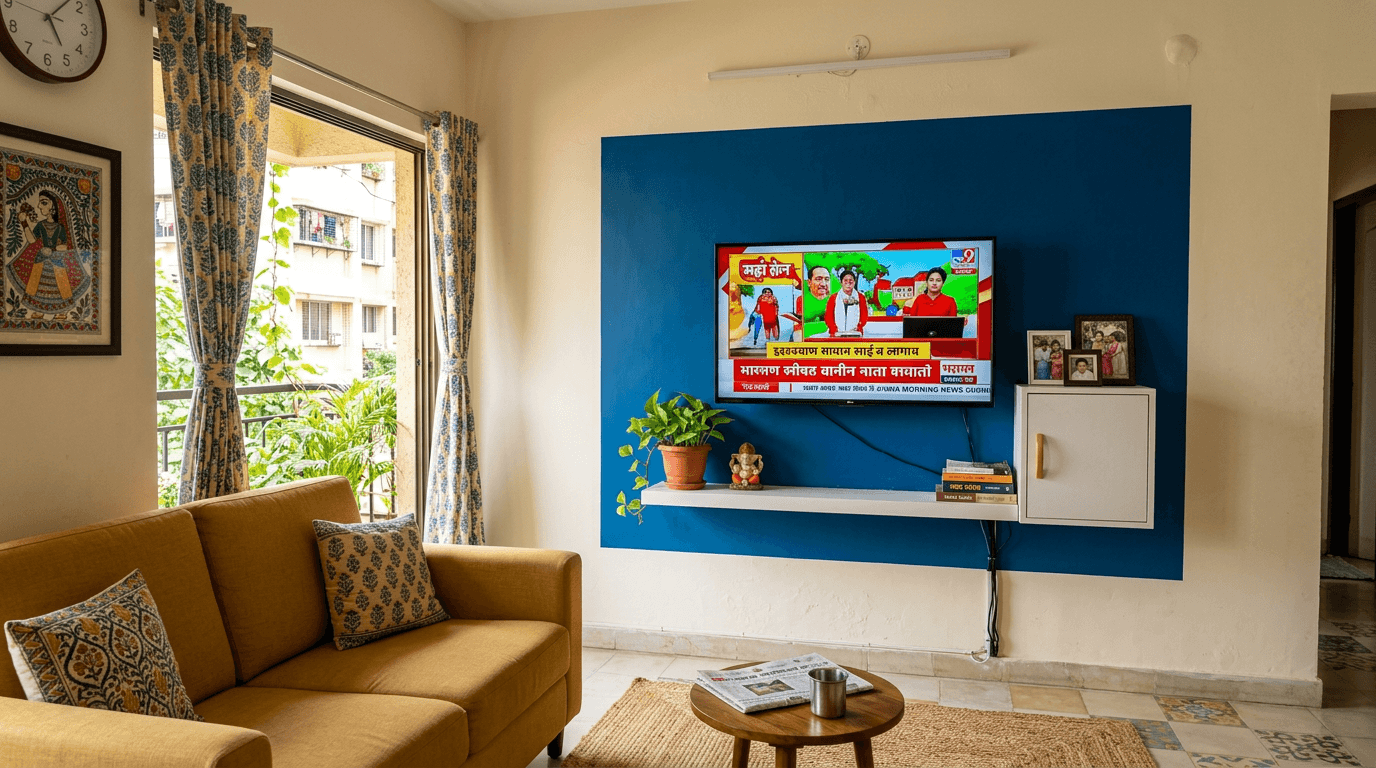
44. Accent-paint composition. A colour-blocked painted rectangle stands in for panelling, with a slim shelf-and-storage combo mounted inside it. The effect of TV unit furniture design at the price of a paint tin.
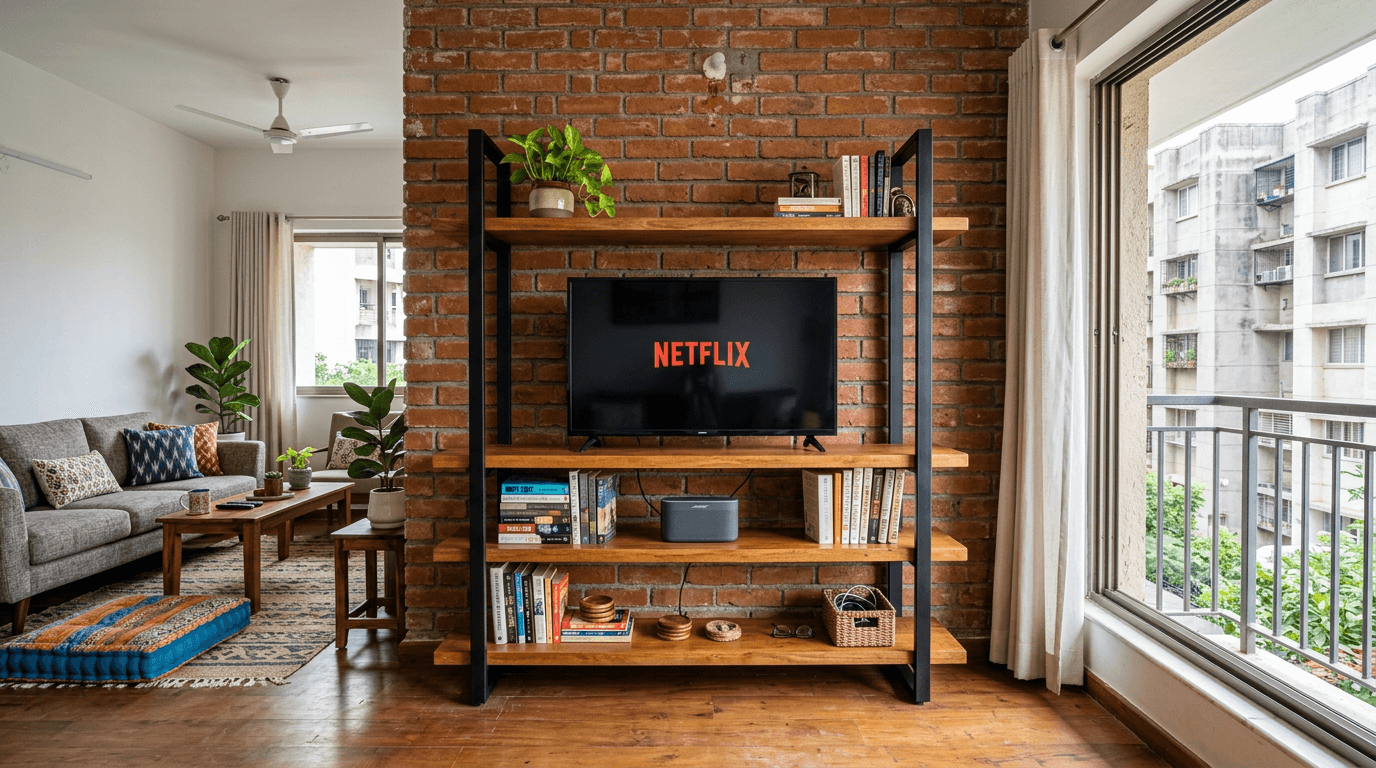
45. Open metal-frame rack. Powder-coated metal frame with wooden shelves, the most breathable of the tv rack designs. Industrial on purpose, ventilates electronics beautifully, assembles in an hour — of all the budget TV units here, the fastest to own.
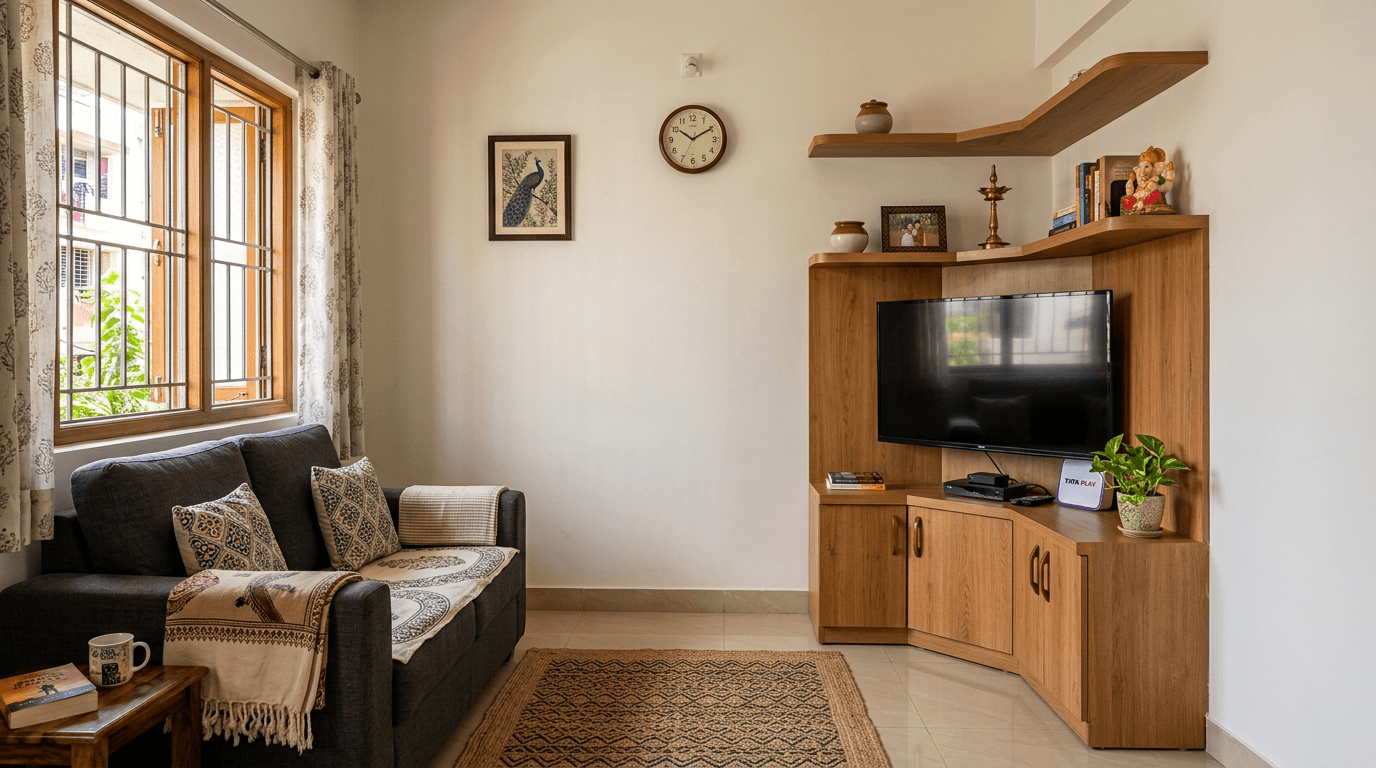
46. Budget corner unit. An L-shaped corner TV unit claims the one wall junction most halls waste. Measure both walls before ordering; corner TV units forgive nothing.
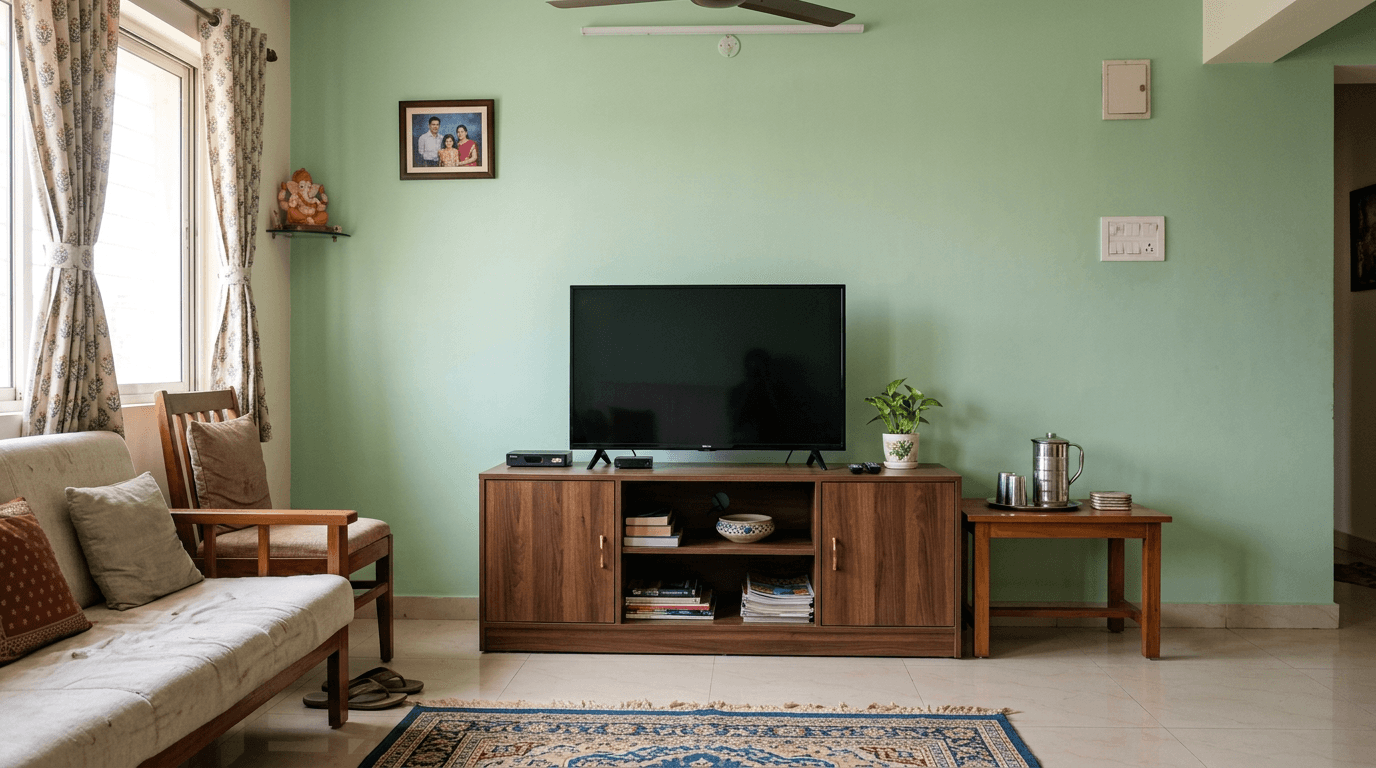
47. Plywood box shelving. Stacked laminate-finished plywood boxes any decent carpenter can build on site — the cheapest TV unit design here after paint alone. Arrange around the screen; repaint the wall behind, not the boxes.
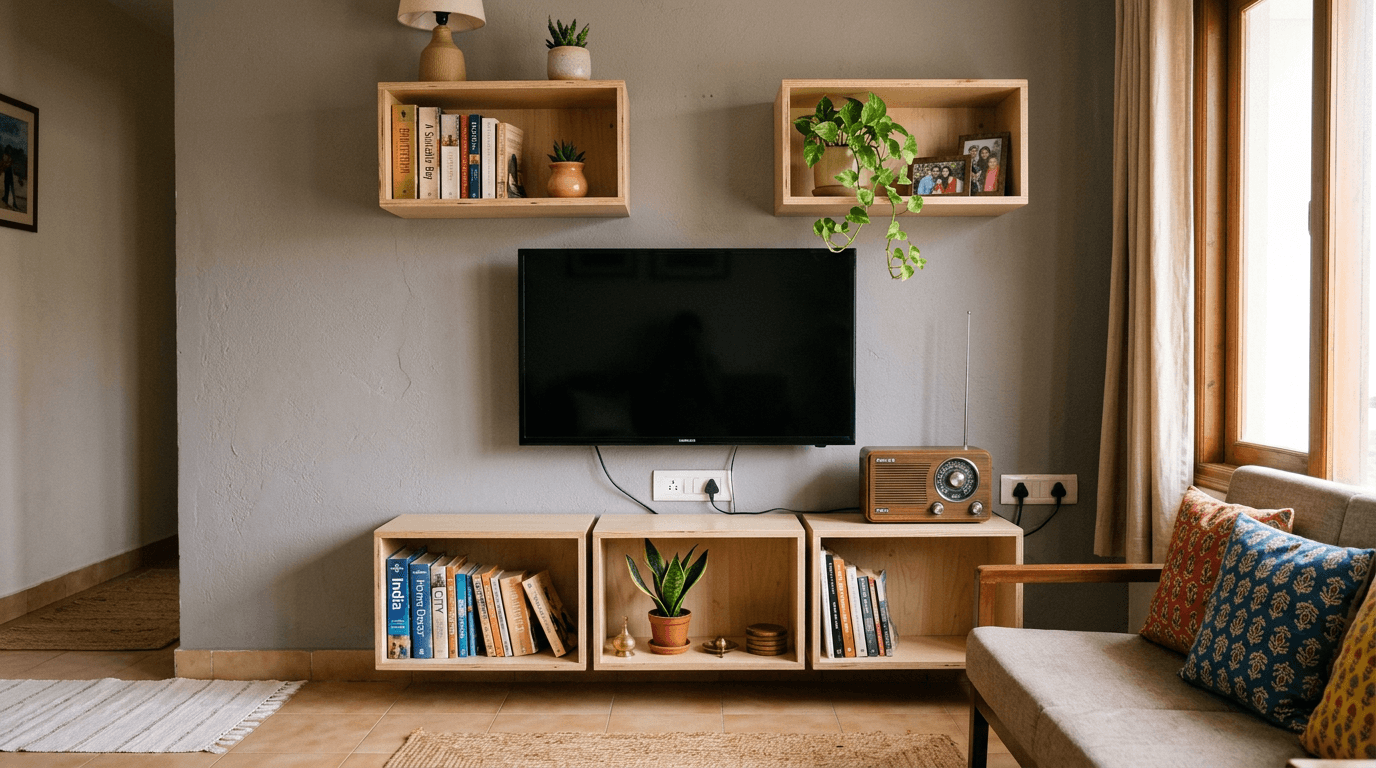
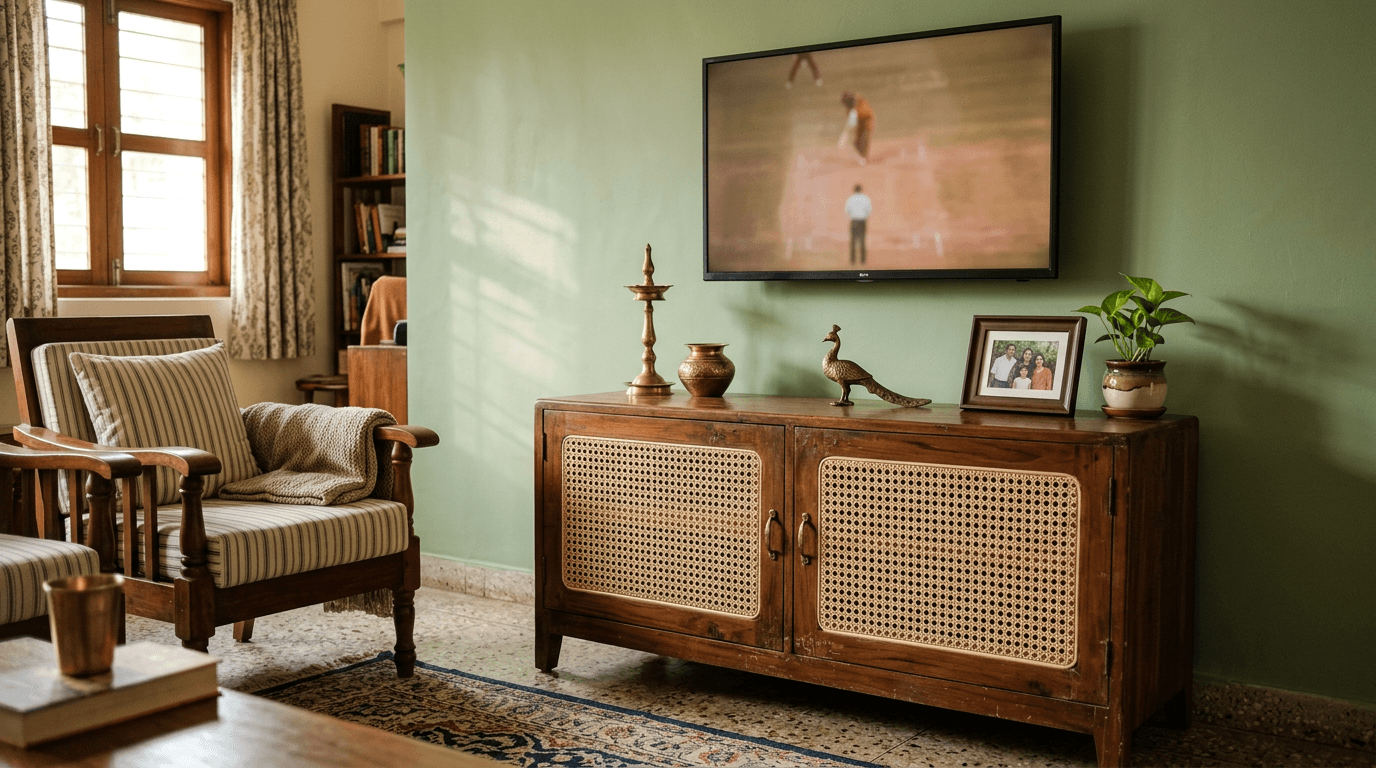
48. Fabric-softened unit. A basic unit upgraded with a cane or fabric-wrapped shutter front and new handles. The refresh we suggest before anyone throws out working TV units — a functional TV unit with a new face costs a tenth of a new one.
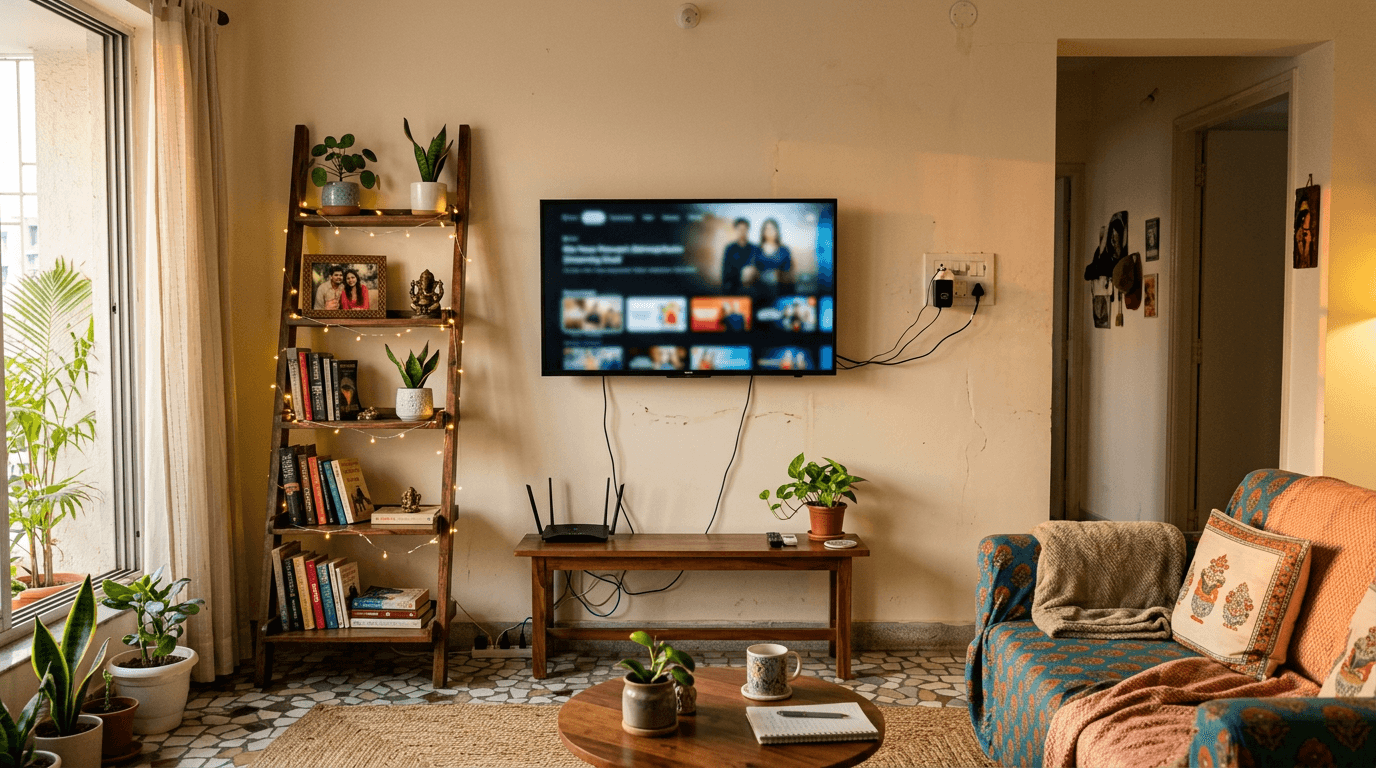
49. Shelf-ladder combination. A leaning ladder shelf beside a wall TV and a slim bench below. The perfect TV unit for a rental: zero drilling beyond the TV mount, moves out when you do.
Wooden TV Units, TV Stands & Entertainment Unit Designs
Solid wood ages; laminate endures; the right answer depends on who dusts and who pays. This section rounds up the wooden TV units, TV stand ideas, and entertainment unit designs that complete the 60+ set, including the modular route most urban buyers actually take. Choose a wooden TV unit when you want the piece to age into the room; choose laminate when you want it to stay exactly as delivered. The same joinery logic works in other rooms too — a bedroom TV unit design follows every rule here at three-quarter scale. If what you really want is a display-first wall for curios and collections, that's a tv showcase brief, and we've given it a full page of its own: showcase design ideas. Crockery walls near the dining side are covered separately in our crockery unit designs.
50. Solid sheesham cabinet. A classic solid-wood TV unit with turned details. Heavy, repairable, and of all the wooden TV units here, the only one your grandchildren might argue over.
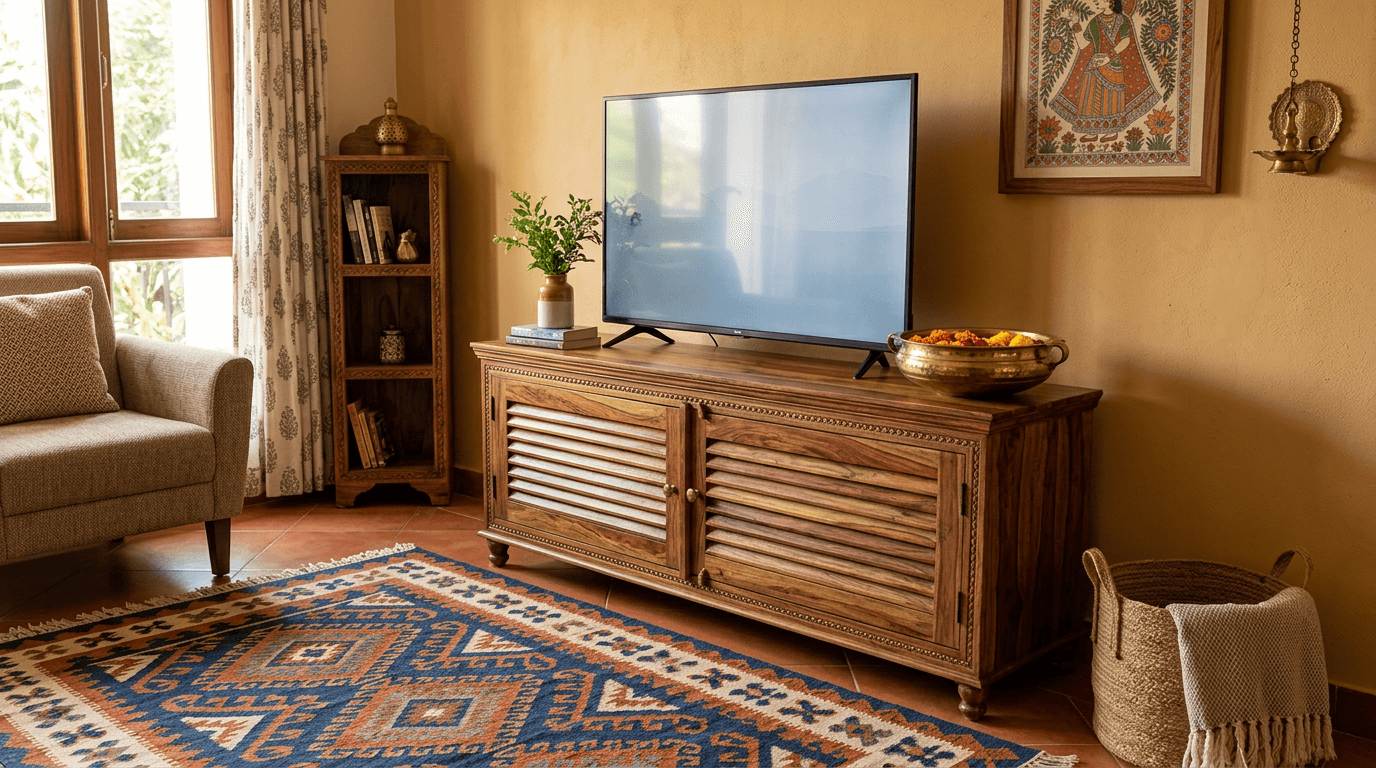
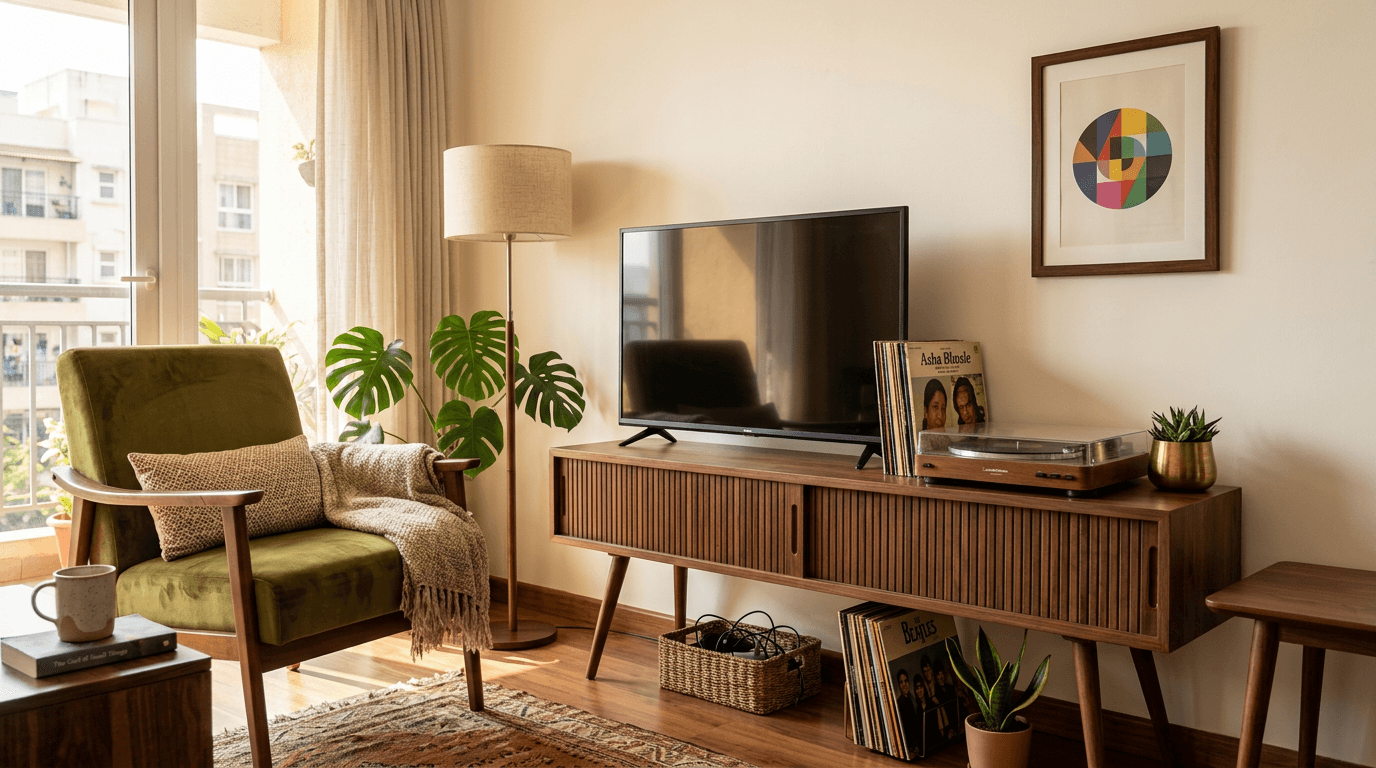
51. Mid-century stand on legs. A walnut-tone TV stand design on angled legs, sliding shutters, restrained brass. Petite enough for 2 BHK living rooms, stylish enough to anchor them — a modern TV unit in genuinely old-school clothing.
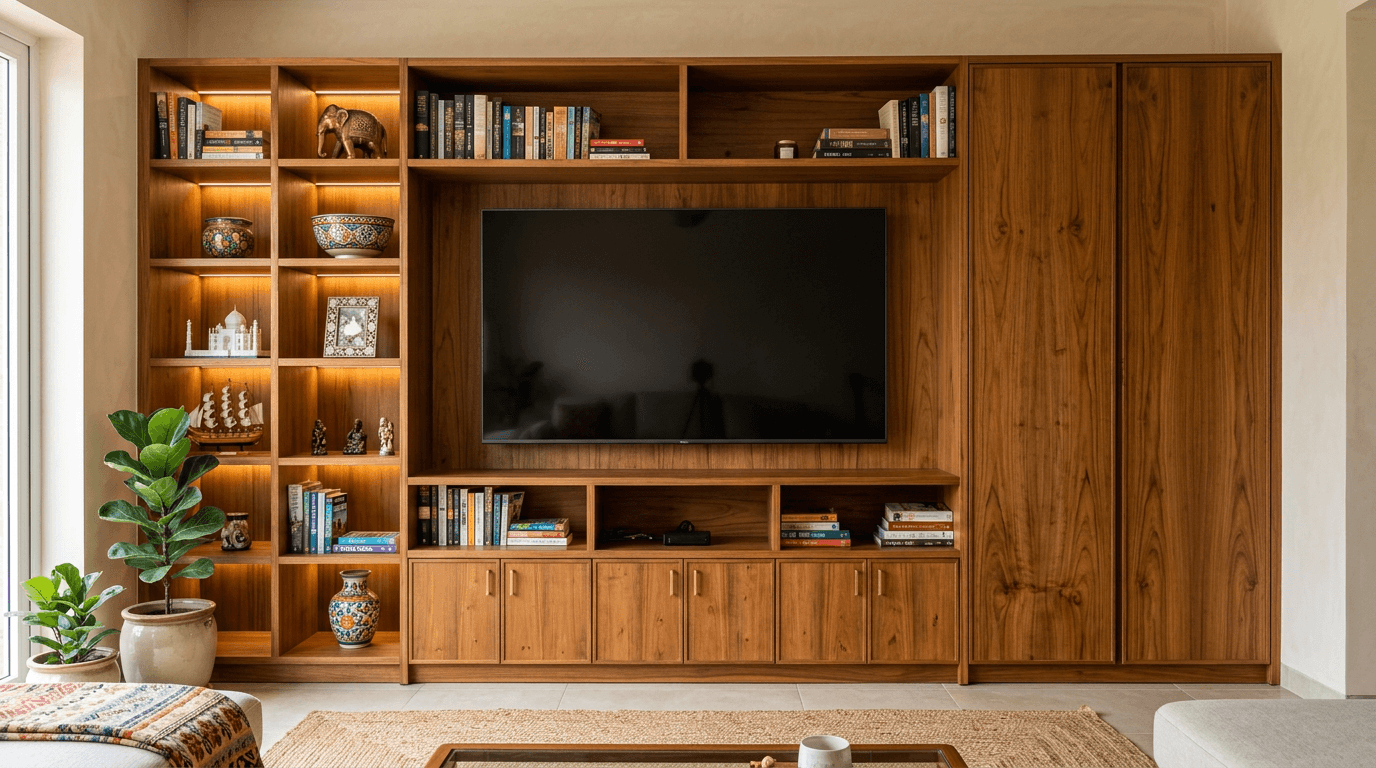
52. Full-wall teak entertainment unit. The complete package: a teak-veneer wall system with TV bay, closed storage, display shelf line, and a concealed cable spine behind everything. The full wall TV unit for families who want one piece to do it all.
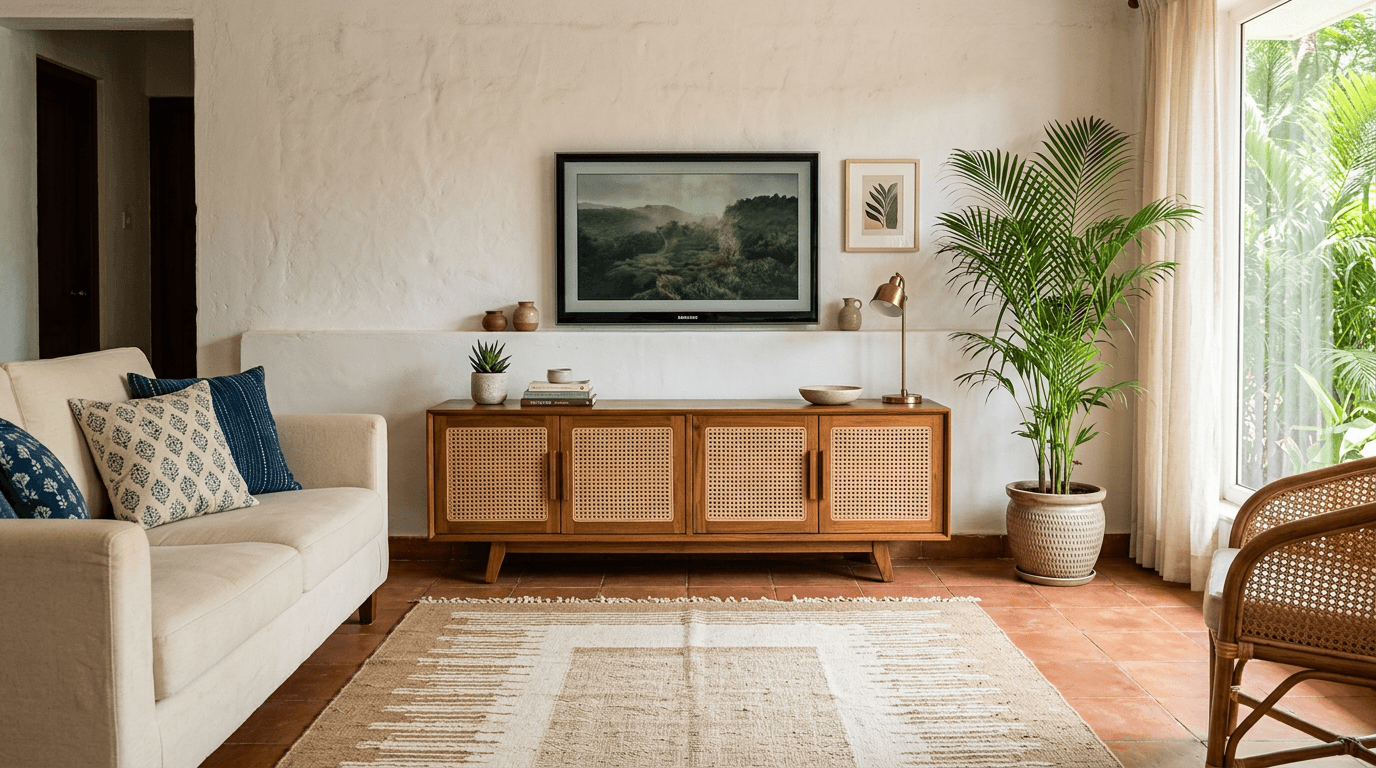
53. Cane-and-wood console. A proper TV console with cane-webbing shutters in a wood frame: breathes well (electronics inside stay cool) and photographs even better.
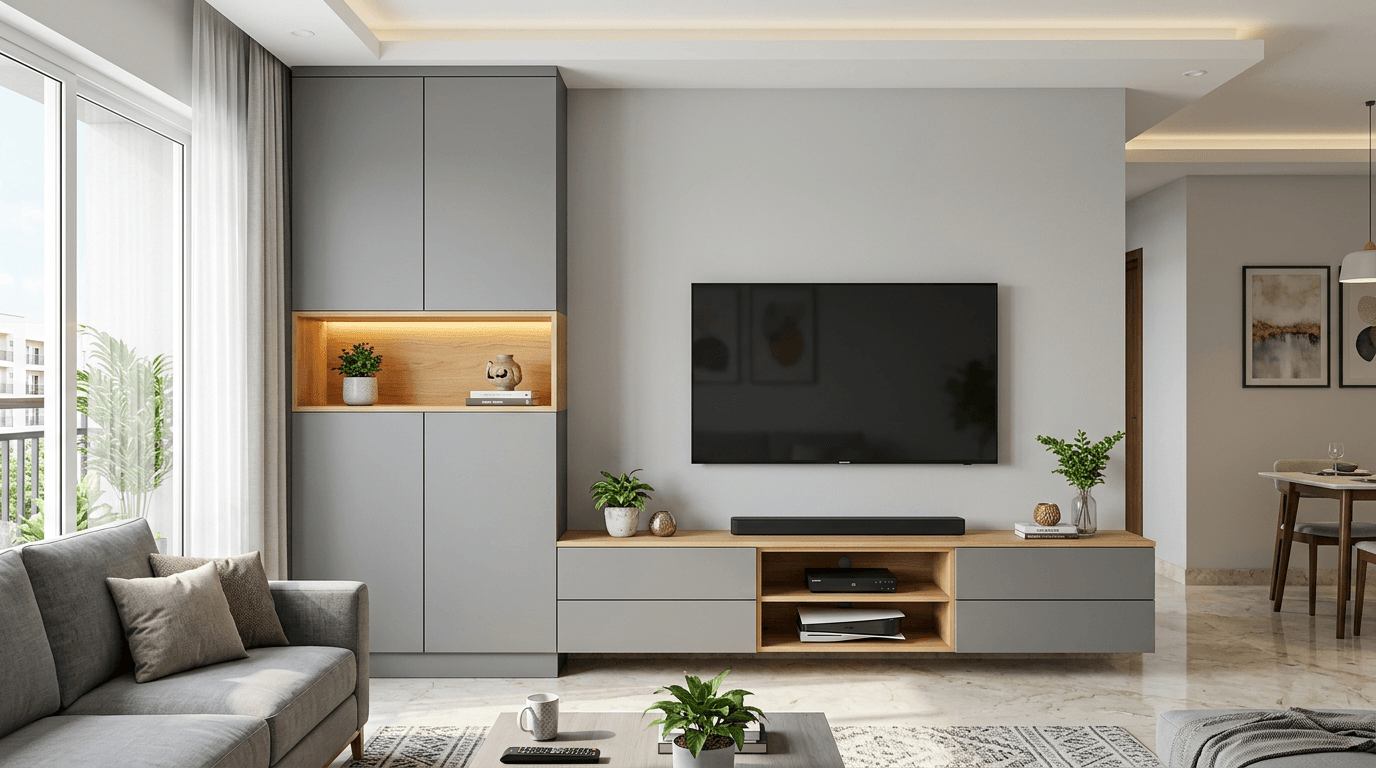
54. Modular TV unit. Factory-made modular TV unit systems: standard modules, fixed finishes, two-week delivery. Less bespoke than site-built TV units, far more predictable, and finishes match your modular kitchen line.
55. Industrial wood-and-metal stand. Chunky mango wood top on a black metal base with open lower shelf. TV units in mango and metal take abuse and look better scratched.
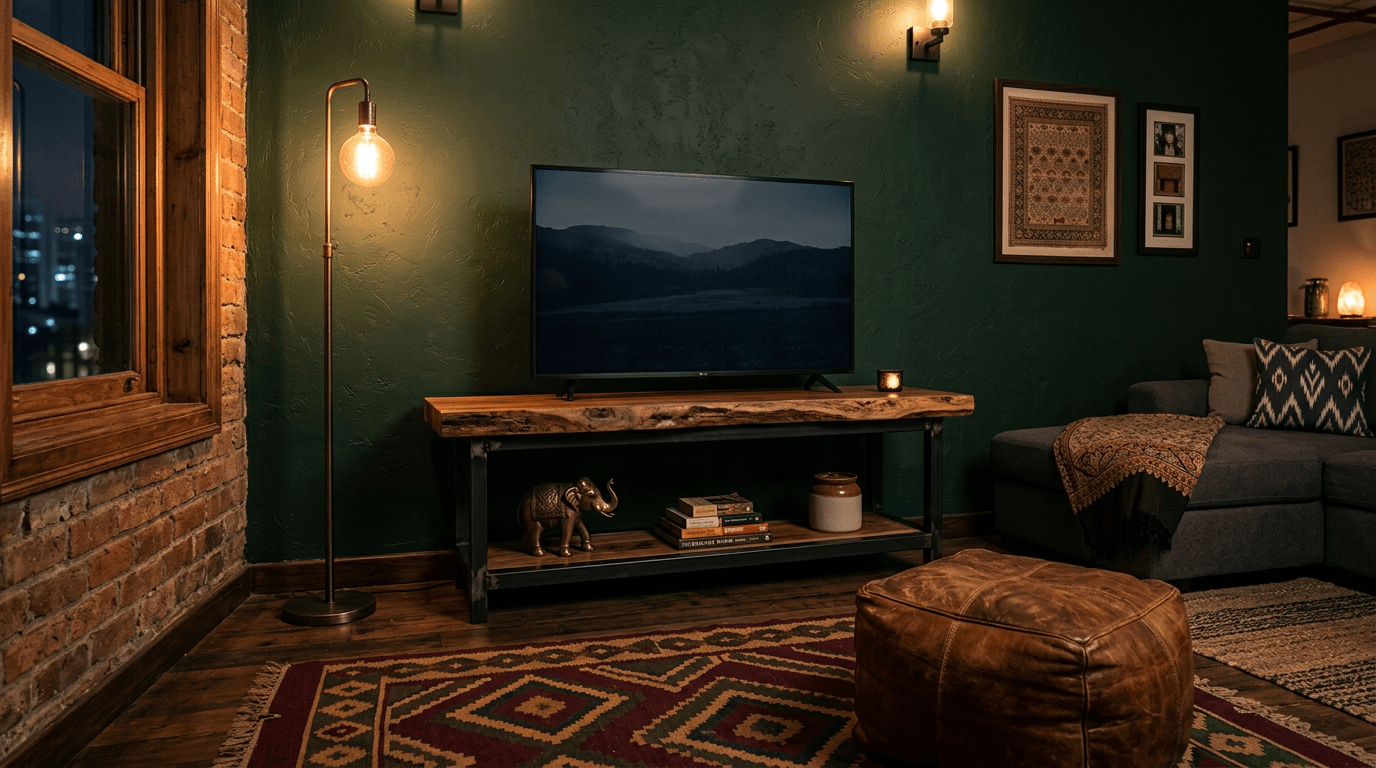
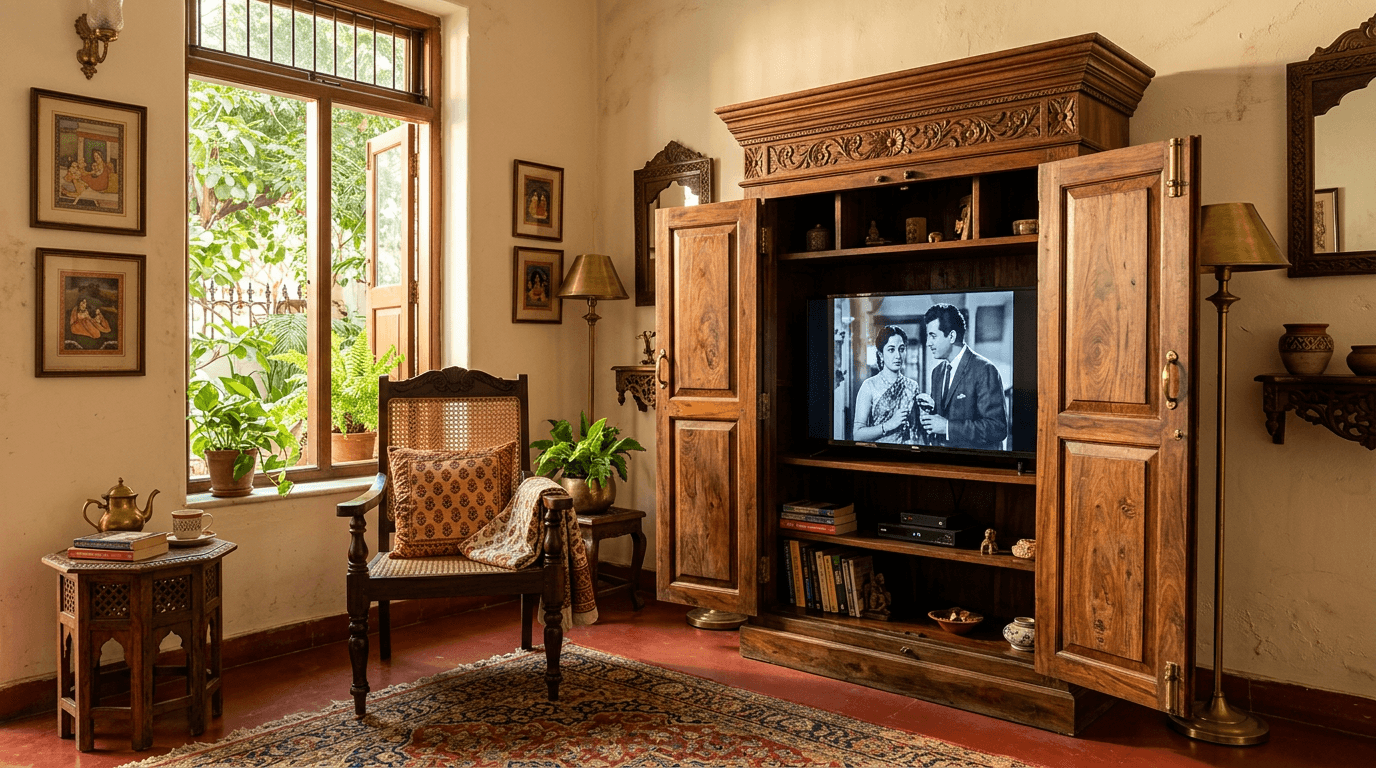
56. Traditional TV cupboard. A shuttered tv cupboard that closes over the screen completely. Grand-parent approved, toddler-proof, and the television stops hosting the room when the doors shut. Make your TV disappear on demand.
TV Units for Small Living Rooms
Small living rooms don't need smaller versions of big designs; they need different designs. We've furnished 600 sq ft studio apartments where the living space is one wall, and the TV units below are the moves that consistently work. The best designs for living room walls under 10 feet share one theme: go vertical, go corner, or go hidden — and explore TV unit ideas that earn their footprint twice over. A small TV unit chosen well is a unit that complements the room's scale instead of apologising for it.
57. Corner unit with wrap shelves. A slim corner tower with shelves wrapping both walls turns dead corner space into the hall's most efficient storage. The strongest of the corner TV units for genuinely tight rooms.
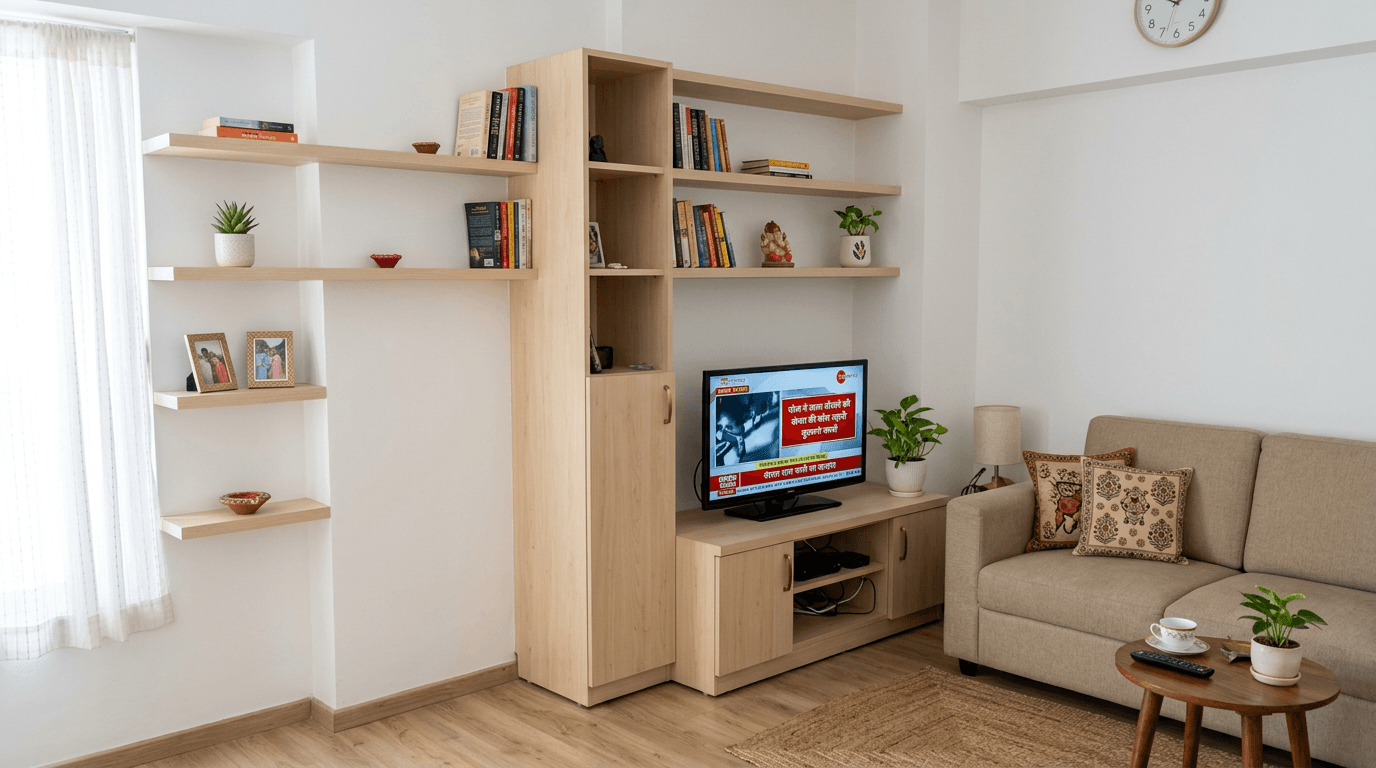
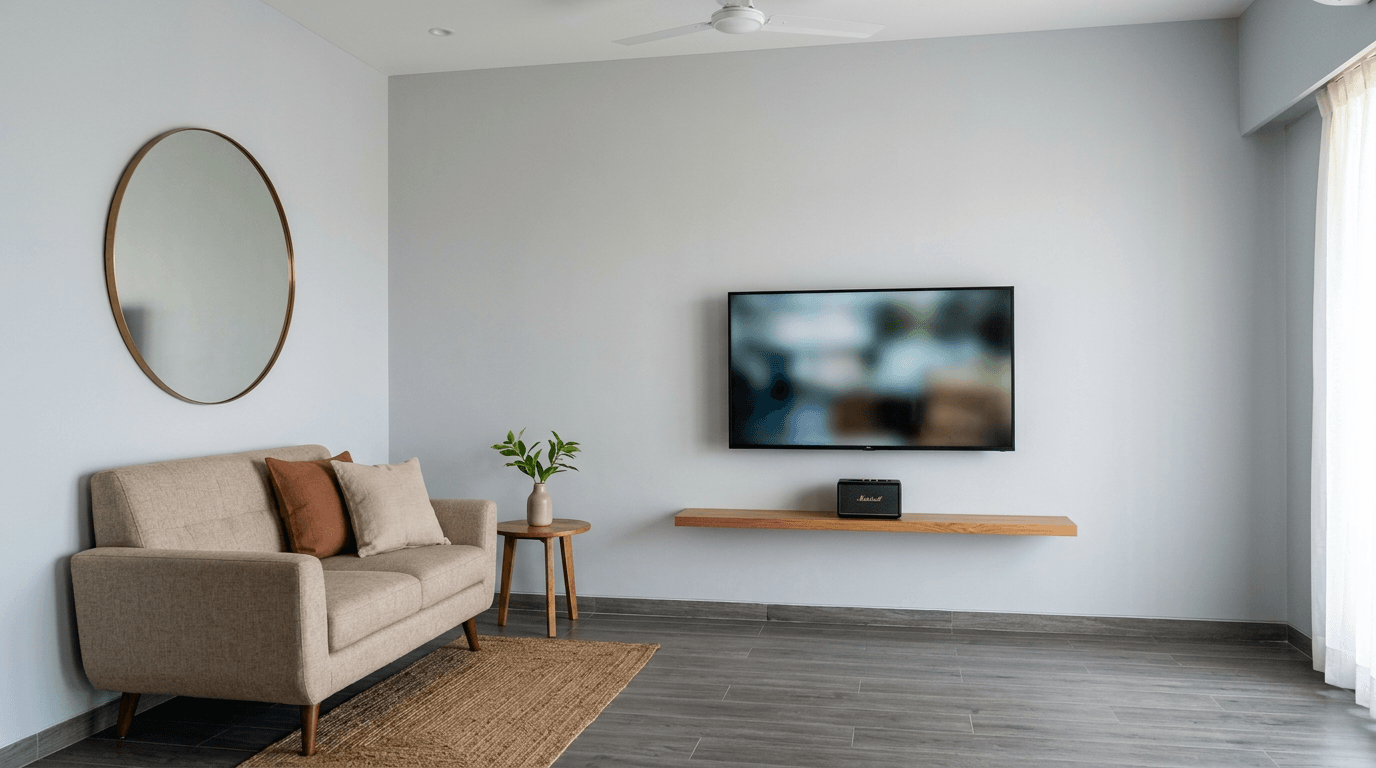
58. TV plus single ledge. A wall-mounted TV unit design at its most minimal: one slim ledge below the screen, storage moved elsewhere entirely. The floor stays empty and the room instantly reads larger.
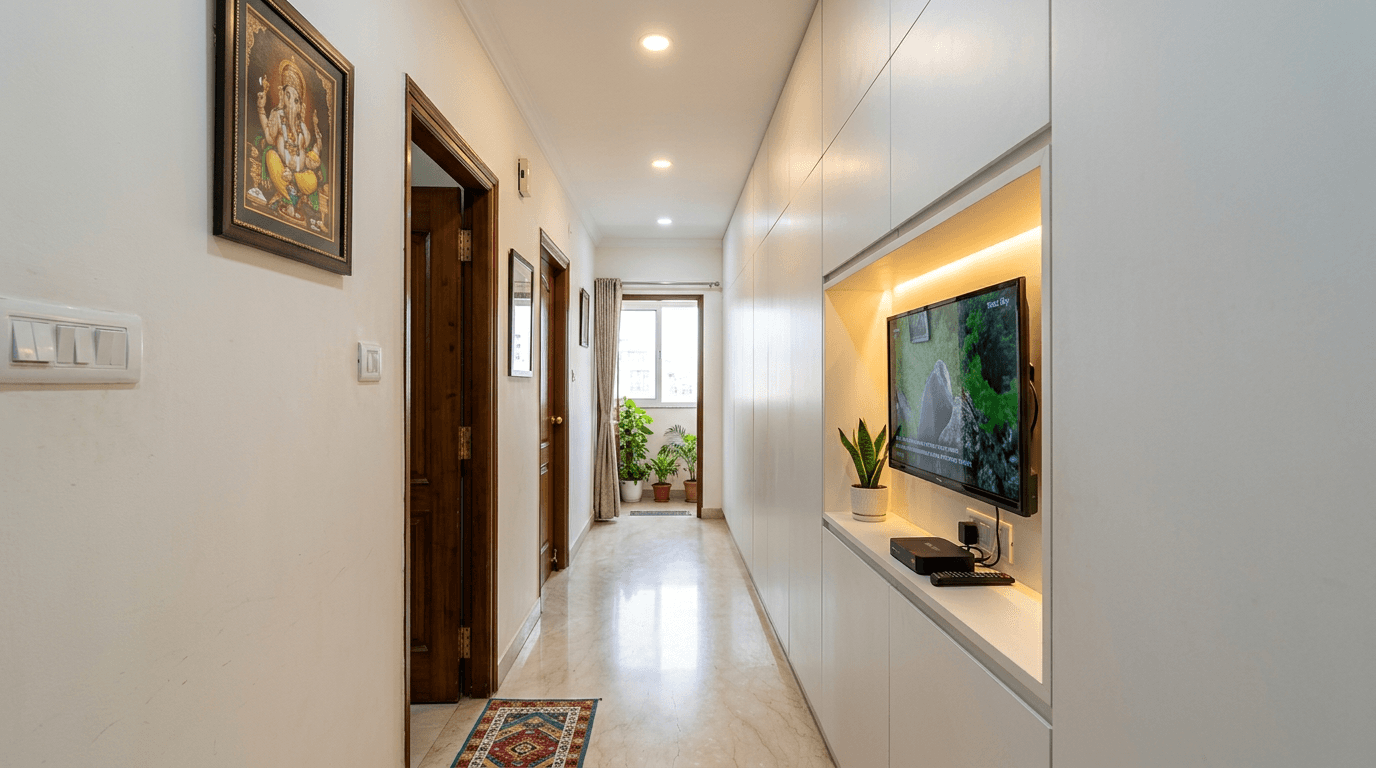
59. Narrow-hall storage column. In corridor-like halls, a full-height but shallow (10 to 12 inch) storage wall holds the TV plus a household's worth of things without eating the walkway. A wall mounted TV unit design this shallow still swallows more than most sideboards.
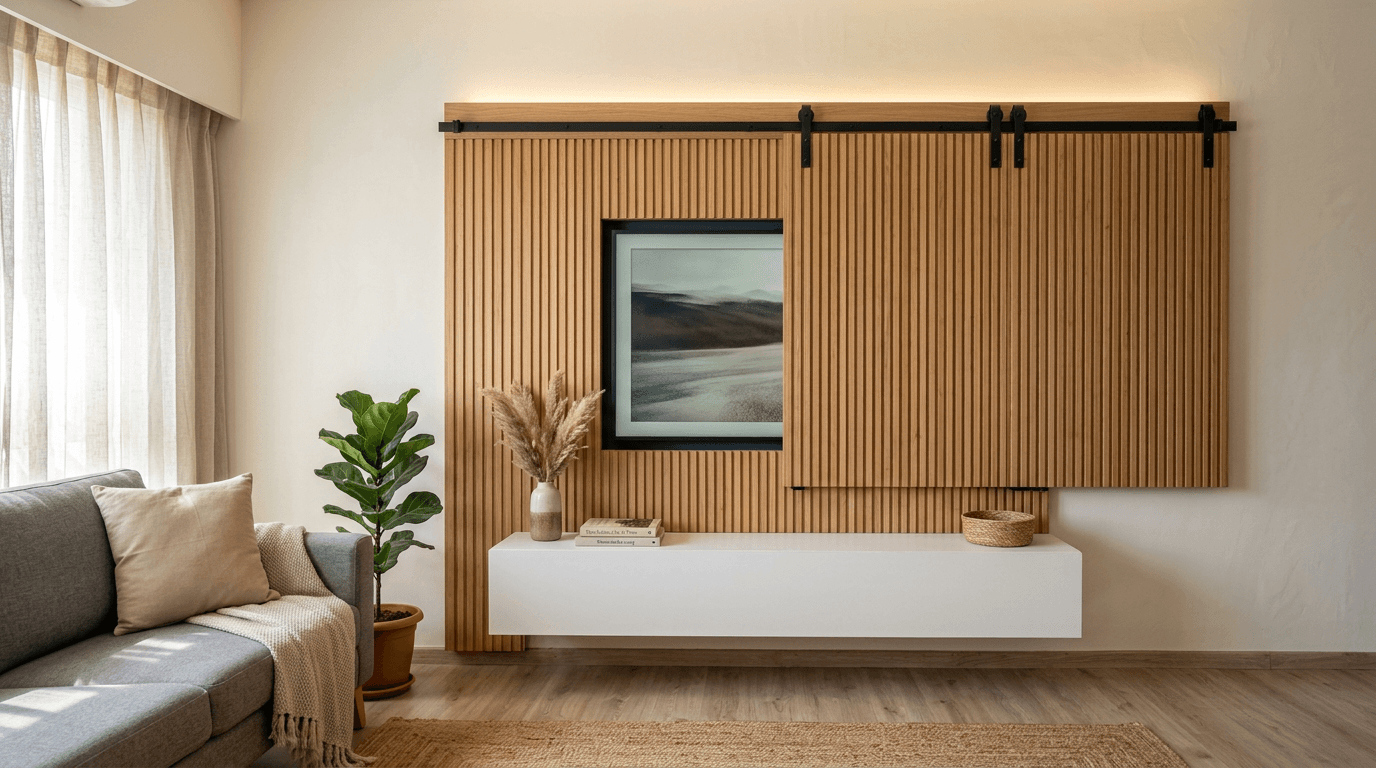
60. Hidden TV behind sliding shutters. Sliding fluted shutters park over the screen when it's off. In a one-room-does-everything home, TV units that can switch the screen visually off are worth the hardware.
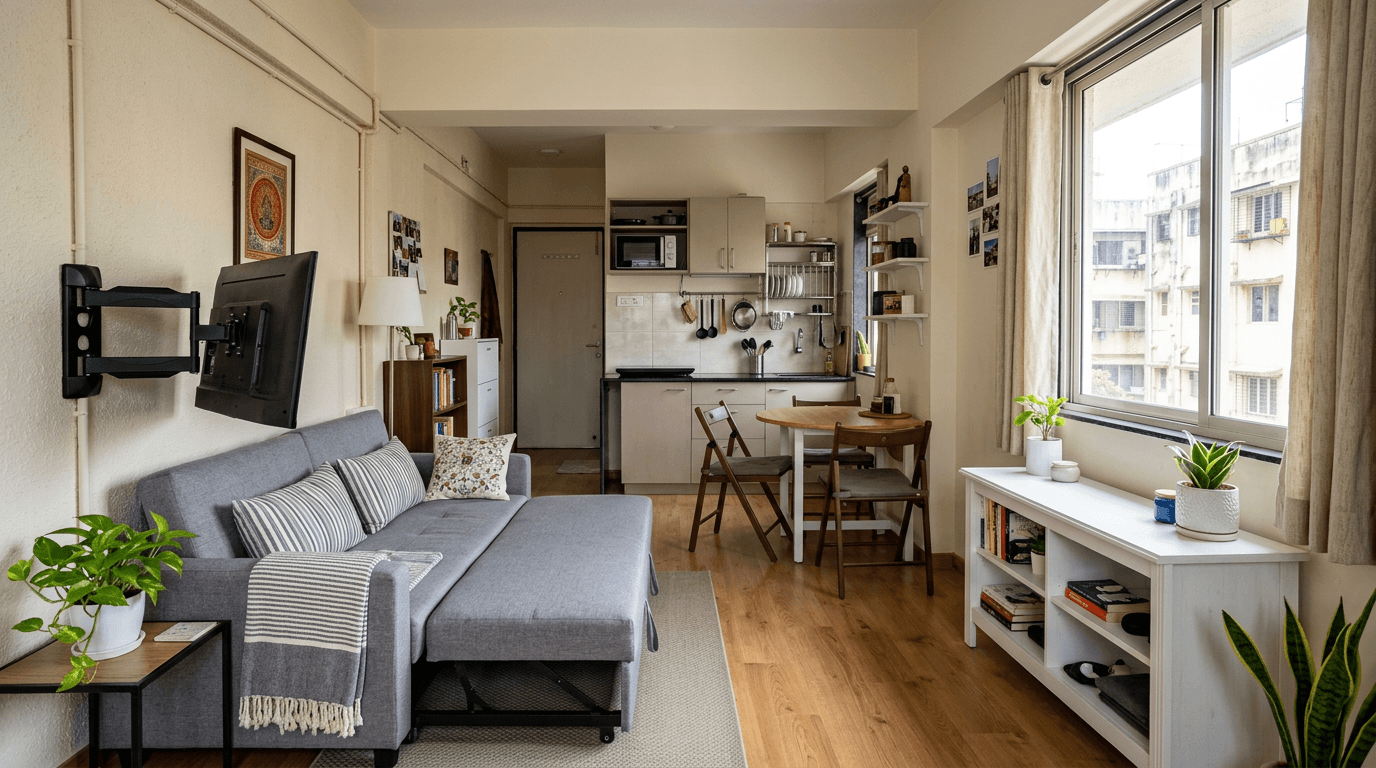
61. Studio-apartment micro console. For studio living: a 3-foot console under the window line, TV on an articulating arm that serves both sofa and bed zones. TV units this small live or die on cable discipline.
62. Open-plan divider unit. A waist-height double-sided unit zones living from dining in compact open plans: TV toward the sofa, crockery storage toward the table, light flowing over the top. The small-space cousin of the Aravind Shetty partition, and there are many more layouts like it in our room partition designs gallery.
TV Unit Dimensions: Sizing to Screen Size & Wall Width
Size TV units by three numbers: screen centre at about 42 inches from the floor for seated eye level, unit width at least 1.2 times the TV width (go for a unit wider than the TV — it always looks intentional), and viewing distance at 1.5 to 2.5 times the screen diagonal.
The size-by-screen table we hand to carpenters:
| TV size | Min unit/console width | Comfortable viewing distance | Typical console height |
|---|---|---|---|
| 43-inch | 4 ft (120 cm) | 5.5–9 ft | 18–22 in |
| 55 inch TV | 5.5 ft (165 cm) | 7–11.5 ft | 16–20 in |
| 65-inch | 6.5 ft (200 cm) | 8–13.5 ft | 14–18 in |
| 75-inch+ | 8 ft (245 cm) | 9.5–15.5 ft | 12–16 in |
Depth: 16 to 18 inches for floor-standing TV units, 12 to 14 for floating consoles. And measure your wall before falling for any design: you want a TV unit design that fits your wall, not the showroom. Most TV units fail on width, not height, and a composition that needs 10 feet of clean wall dies on an 8-foot wall with a switchboard in the middle — a TV unit design for hall walls under 9 feet should lose the side towers first. The dimensions of your TV matter less than the dimensions of your wall.
Storage Planning: Set-Top, Soundbar, Console, Cables
The difference between a designed wall and a messy one, six months in, is never the veneer. It's the cabling. Plan storage around what actually lives in TV units: set-top box, soundbar, gaming console, router, and the drawer of remotes and chargers every Indian household accumulates.
Our checklist, in build order:
- Conduits before panelling. Run concealed electrical conduit and an HDMI/data pipe from console level to screen level before any panel goes on the wall. Retrofitting means cutting your new wall.
- Cable grommets in every shelf. A ₹50 cable grommet per shelf keeps wires routed behind, not draped in front.
- Ventilation for closed boxes. Set-top boxes and consoles heat up; give closed storage a ventilation slot or cane/mesh shutter. (Cane isn't just pretty — it breathes.)
- IR and wifi pass-through. Glass or fabric shutter for the set-top shelf so remotes work with doors closed, and never seal the router in laminate.
- One service hatch. A removable panel behind the TV saves the day when a cable dies in year three.
Concealment is a craft we enjoy more than most. On Umesh's 3 BHK at Accurate Wind Chimes, the brief included a fully concealed bar unit inside a small transitional space — the same joinery thinking that hides a rats' nest of TV cables inside clean panelling. If a bar can disappear, your set-top box certainly can. TV units that plan for this on day one stay showroom-tidy for years.
Custom TV Unit Costs
Ready-made TV units cost roughly ₹8,000 to ₹30,000, custom laminate TV units ₹15,000 to ₹60,000, and fully designed walls with panelling, storage, and lighting ₹60,000 to ₹2.5 lakh, varying by city and finish (NoBroker).
| Element | Market range (₹) | Notes |
|---|---|---|
| Ready-made unit (engineered wood) | 8,000–30,000 | Widest quality spread; check board grade |
| Custom laminate unit (carpenter/modular) | 15,000–60,000 | Most 2–3 BHK living rooms land here |
| Solid wood unit (sheesham/teak) | 10,000–80,000 | Retail sheesham TV units list around ₹10,000–₹37,000 (Wooden Street, Flipkart); custom teak work climbs well past ₹60,000 |
| Panelling per running wall (laminate/fluted/veneer) | 20,000–1,20,000 | ₹250–₹1,200 per sq ft by material — laminate lowest, veneer and stone highest (Livspace, DesignCafe) |
| Full designed TV wall (panel + unit + lighting) | 60,000–2,50,000 | Matches the pillar guide's band (NoBroker) |
Three honest cost notes from our project files. First, hardware is the silent budget-eater in the living room decor line: soft-close channels and push-to-open fittings can add 15 to 20 percent to a carpentry quote, and it's the line item any interior designer prices first. Second, backlighting is cheap but the electrical point isn't; adding a 5-amp point after painting costs more than the LED strip it powers. Third, we don't quote fixed Roomantic prices in articles because pricing genuinely depends on your city, wall, and spec — for a project-specific number and the right design for your home, talk to us with your wall measurements.
