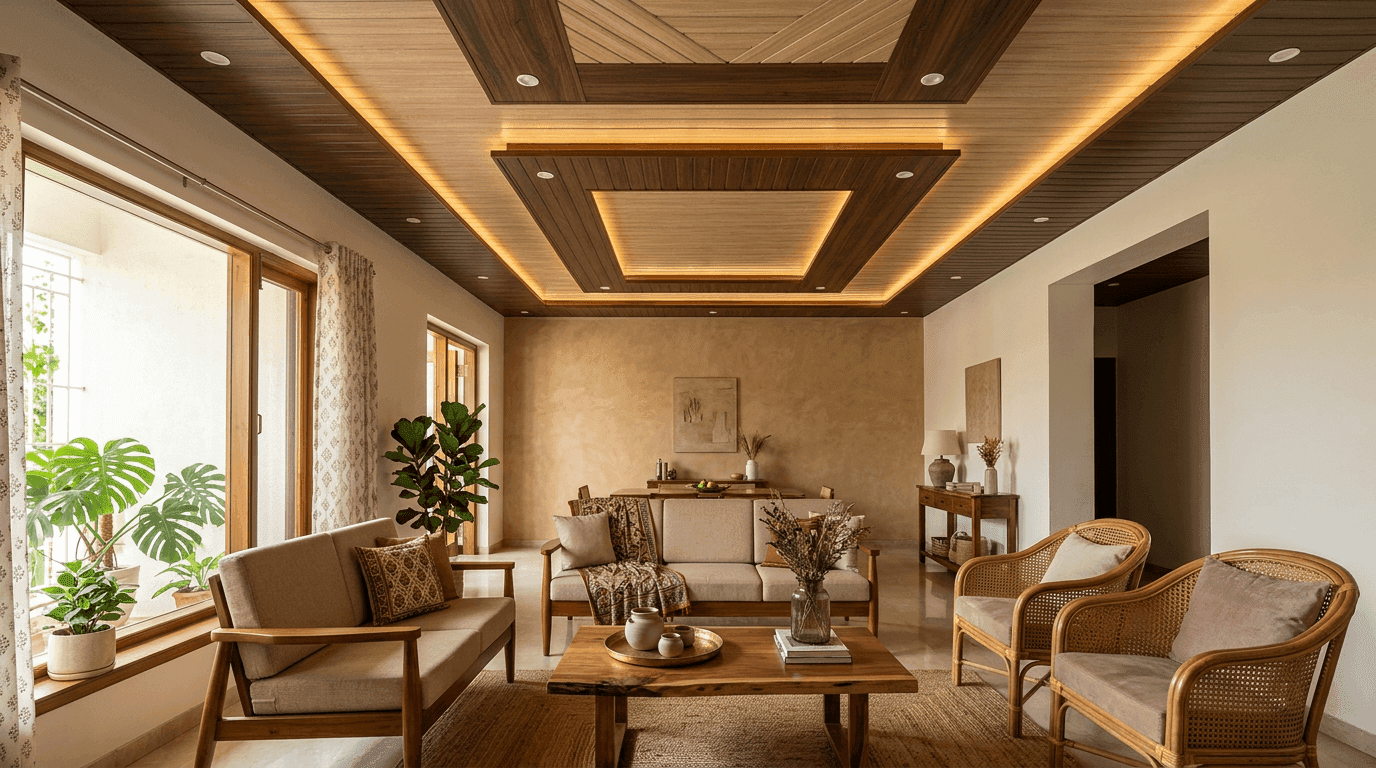
Key Takeaways
- PVC is the waterproof one. Panels made of PVC don't swell, sag or grow mould, which is why PVC ceilings own kitchens, bathrooms, utility areas and covered balconies.
- It installs in a day, dry. No plaster, no curing, no repainting. That single fact makes PVC ceilings the default for rentals and quick refits, and it is why so many rental ceiling designs use them.
- Cheap-looking is a design failure, not a material one. Wide glossy panels with visible joints look cheap. Narrow matte panel ceilings, a deliberate joint direction and grazing light don't.
- Where PVC loses: large dry halls with a real budget, strict fire scrutiny, and anywhere you want seamless curves. Those ceiling designs belong to gypsum and POP false ceilings.
A PVC panel ceiling is a dry-fit system: hollow polyvinyl chloride planks clipped to a light metal frame under your slab. It is fully waterproof, installs in about a day, and never needs painting, which makes it the best value ceiling solution in wet rooms, rentals and small budgets, and the wrong choice for a large luxury hall.
This gallery collects 30 PVC ceiling designs we'd actually put on a drawing: living room layouts, bedroom versions that stay calm, wet-zone workhorses, small-room fixes, and the newer matte, wood-look and backlit ceiling designs that finally shed the "government office" reputation this material carried for two decades. Every entry says what the design does, not just what it looks like. One naming note before you shop: vendors write the same product half a dozen ways on an estimate, from panel ceilings to PVC planking, and it is all the same system.
Where PVC Ceilings Make Sense — and Where They Don't
Let me be honest about the material before you scroll 30 pictures of it.
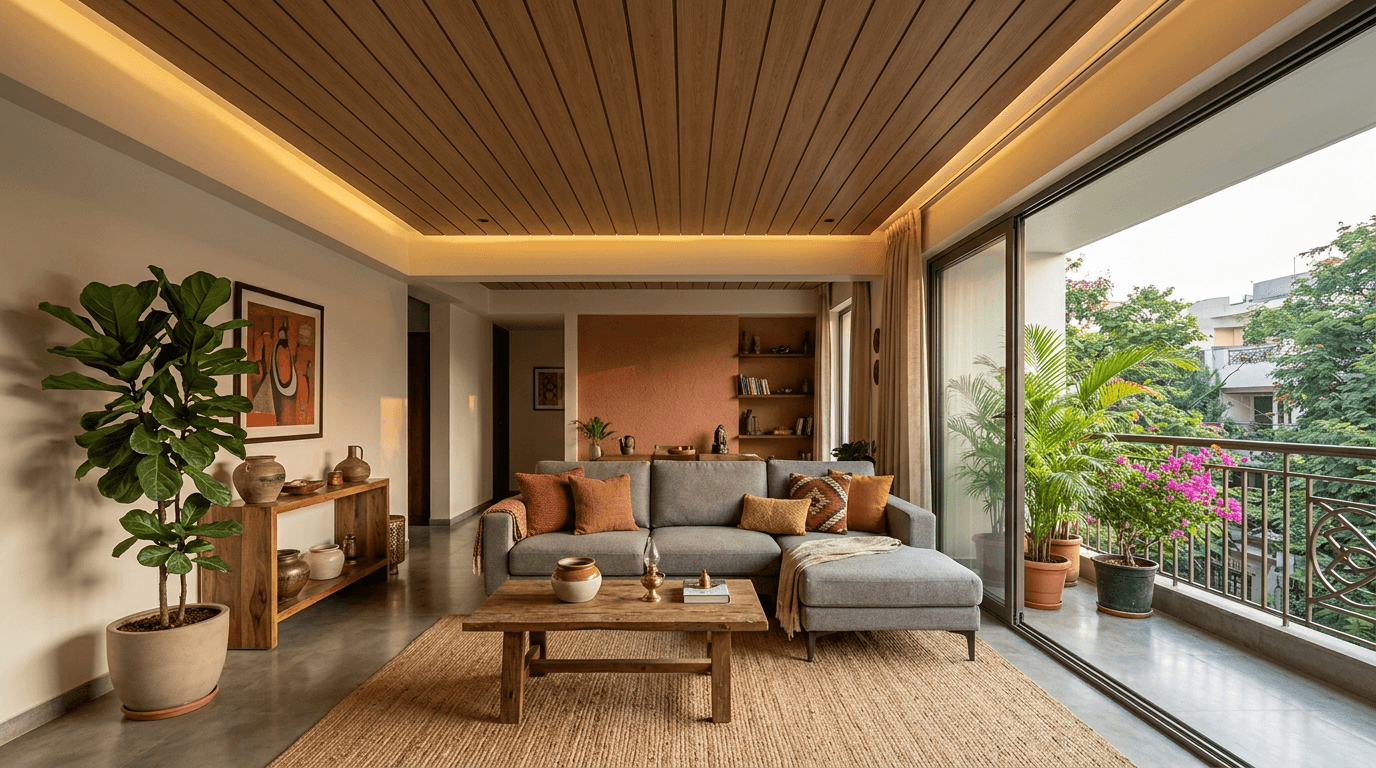
PVC wins on four things: water, speed, weight and price. It is the only mainstream ceiling material in Indian homes that genuinely does not care about moisture. A steam-filled kitchen, a bathroom with a weak exhaust, a covered balcony that takes monsoon spray sideways. Those are the rooms where gypsum blisters, POP develops brown maps, and plywood quietly rots. PVC ceilings just get wiped down. As a substitute for traditional ceiling materials in those spaces, nothing else comes close, which is why so many of the false ceilings we spec in wet rooms are plastic.
It also goes up dry. There's no plaster to cure and no paint coat to schedule, so a room can be emptied in the morning and finished the same evening. We think about that constantly on tenanted properties, where every extra week of site work is a month of lost rent. Three of our renovation projects for Mr. Srinivasa Rao were exactly this brief: a 500 sft flat, then a 550 sft one, then a 650 sft flat in Chaitanyapuri, all in buildings 30 years old, all needing to be handed back fast and let out furnished. His rental income went from ₹10,000 to ₹25,000 on the first two and ₹9,000 to ₹30,000 on the third. Those numbers only work when the work finishes on schedule.
And where PVC loses: PVC ceilings come as planks, so joints exist. They cannot be sculpted into curves the way plaster can. Fire behaviour is worse than gypsum's. In a big, dry, well-funded drawing room, a seamless painted surface simply reads richer.
So the rule we use when planning a design: choose PVC for the rooms that fight water, time or budget, and choose plaster for the rooms that are pure display. Mixing both false ceilings in one home is normal, not a compromise.
Top 10 PVC Ceiling Designs for Living Rooms
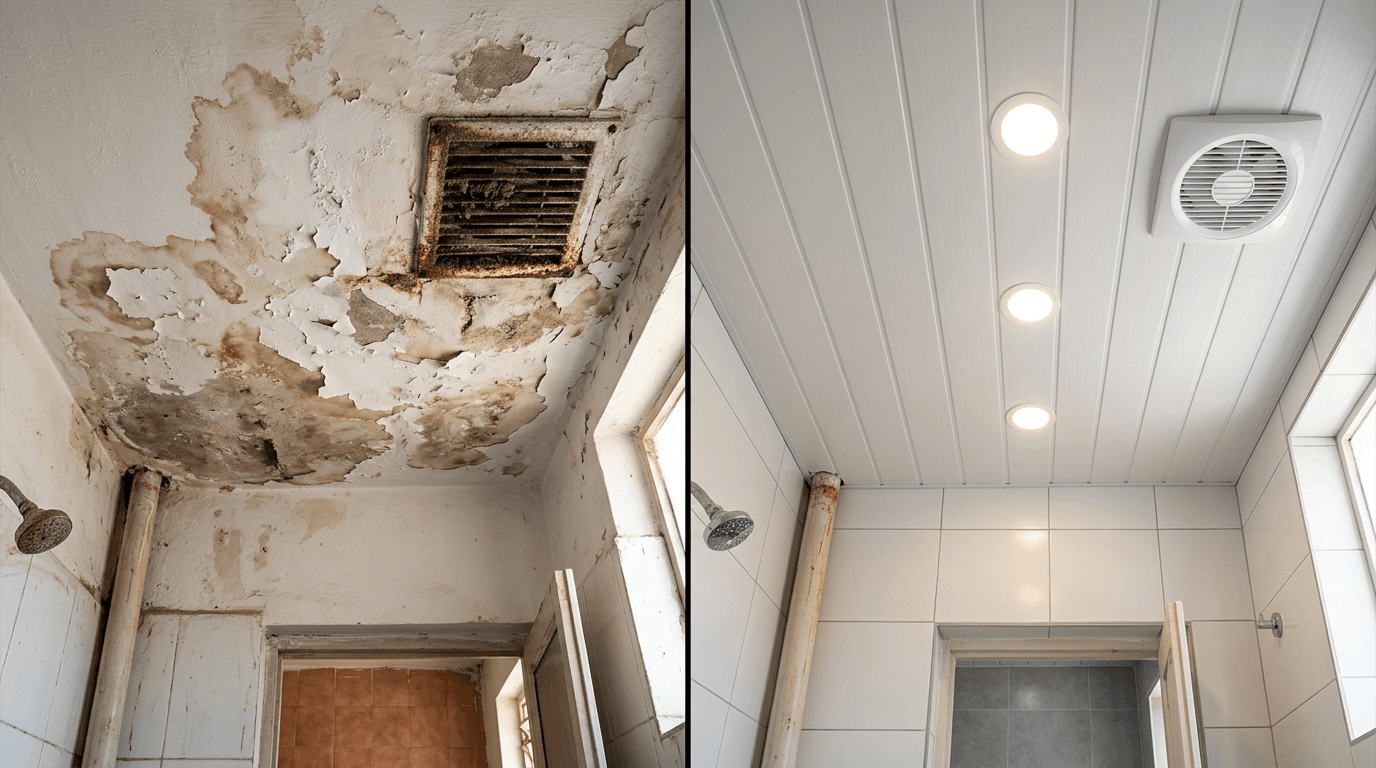
The living room is where PVC has to work hardest, because it is the room people judge. All ten of these ceiling designs for your living room use the same premium trick: control the joint lines, kill the gloss, and light the surface from the side rather than through it. PVC ceiling design for living rooms is mostly a joint-and-finish problem, not a shape problem.
If you're collecting PVC ceiling design ideas for living rooms, note that halls take the identical treatment: a ceiling design for the living room is a ceiling design for the hall, minus the sofa. Want PVC panel ceiling design hall ideas in a dedicated gallery? Our false ceiling designs for hall page covers the non-PVC ceiling options too.
1. Full-length plank run. Narrow planks running along the room's longest dimension, no cross joints anywhere. The eye reads continuous lines instead of a grid, and the room feels longer. This is the single highest-impact decision in living room PVC ceiling design, whatever the room's proportions.
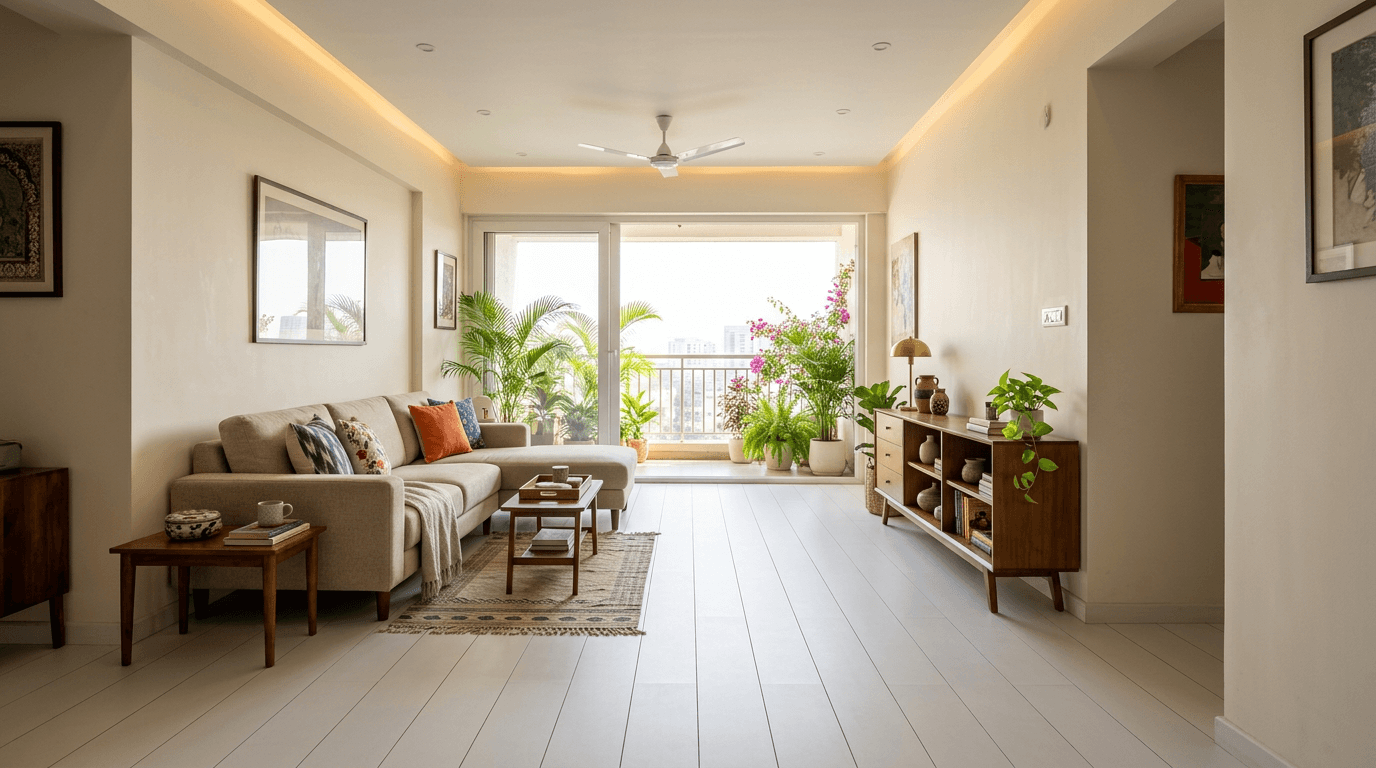
2. Perimeter drop with an open centre. A one-foot panelled band along the walls, the middle of the slab left plain and painted. Height stays, the fan stays where the builder put it, and cost stays low. The most common ceiling design we hand over for a living room, and one of the cheapest ceiling designs on this page.
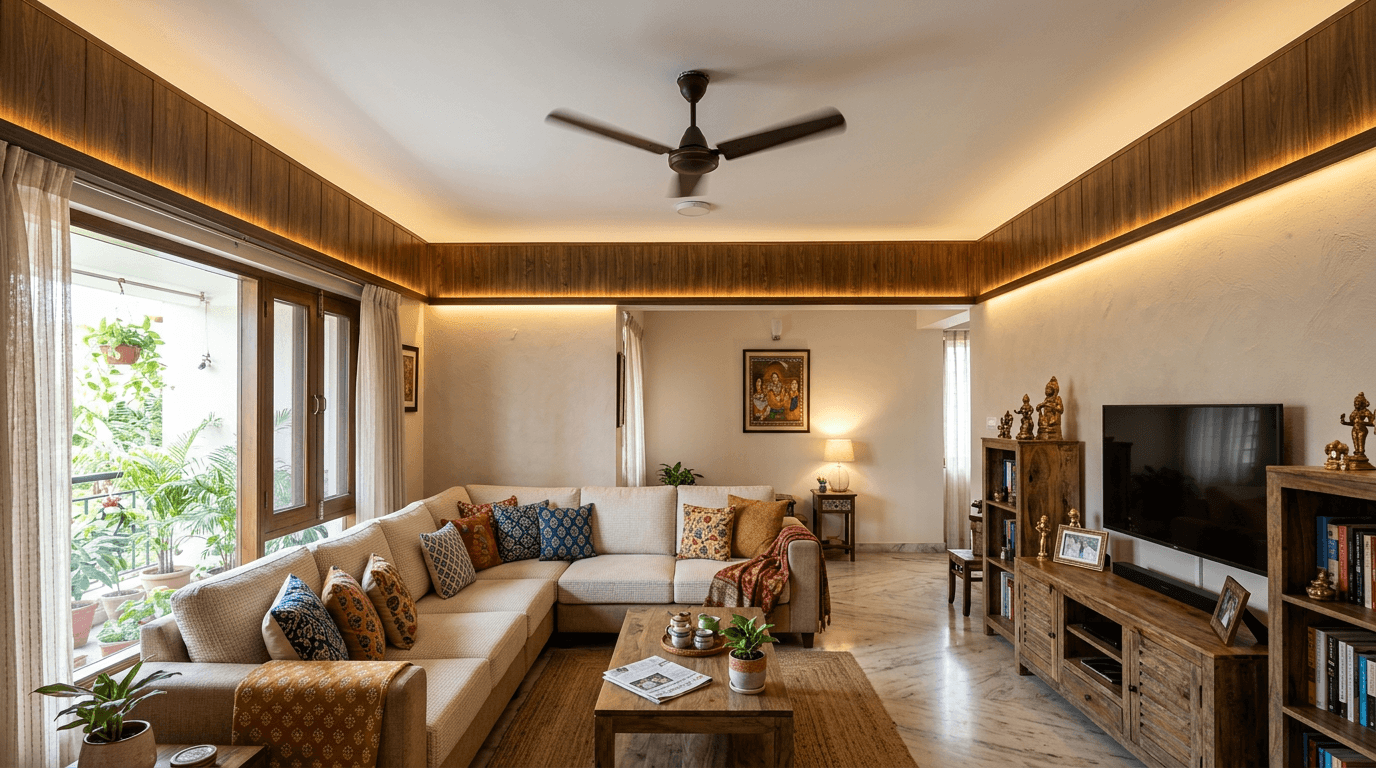
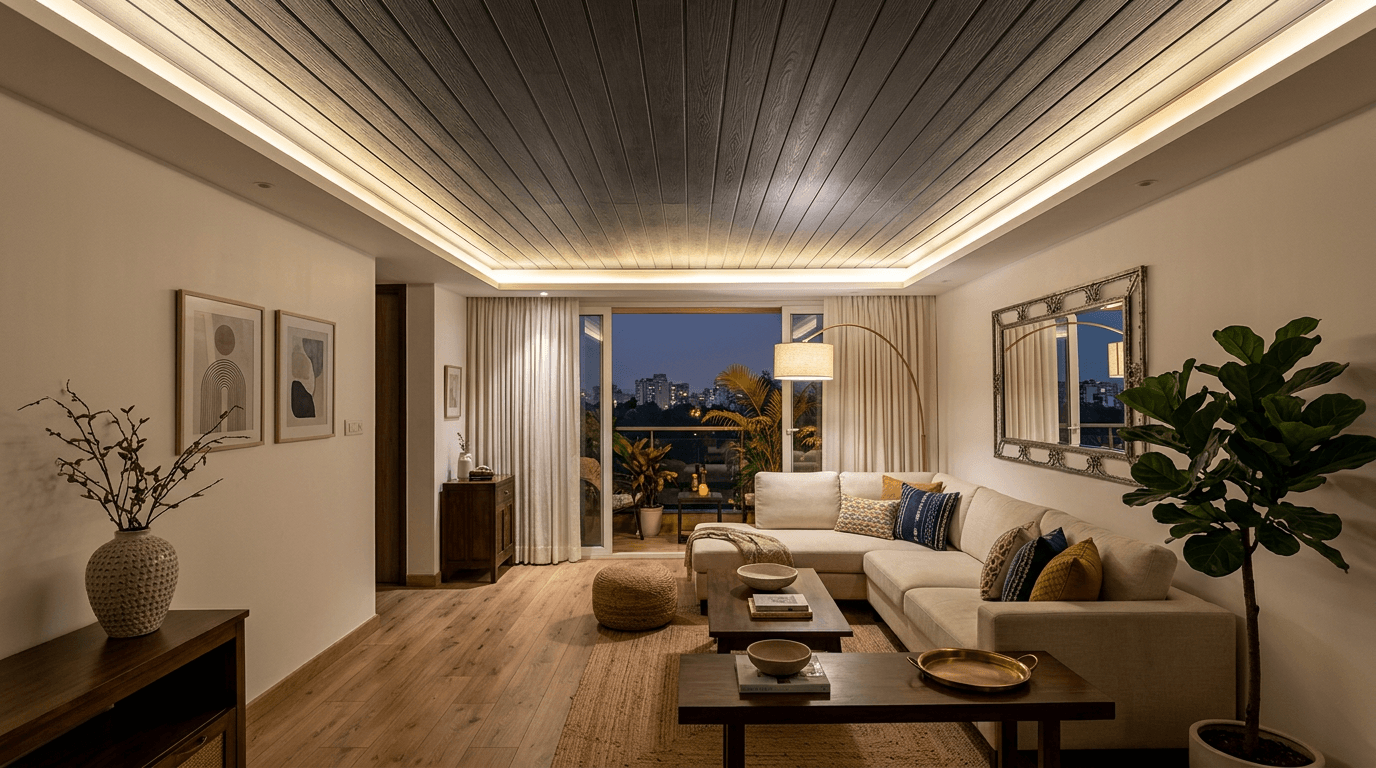
3. Matte charcoal panels over a light room. Dark planks overhead, pale walls and floor below. This panel design adds depth rather than weight, because dark surfaces above eye level read as distance, and the colour instantly separates the look from the glossy-white cliché.
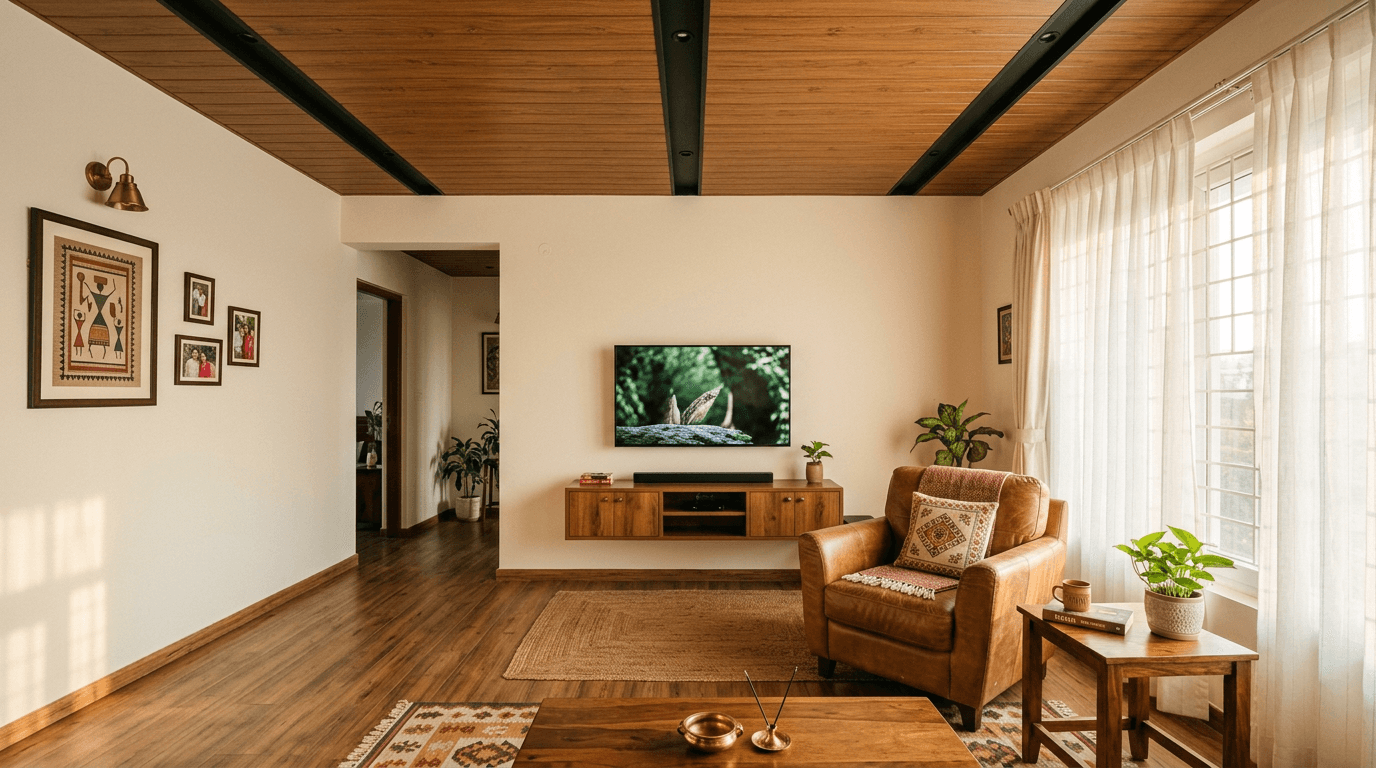
4. Wood-look planks with a beam rhythm. Wood-grain planks broken every four feet by a slim dark strip that mimics a beam. The fake rhythm hides real joints and adds architectural interest to a room that had none.
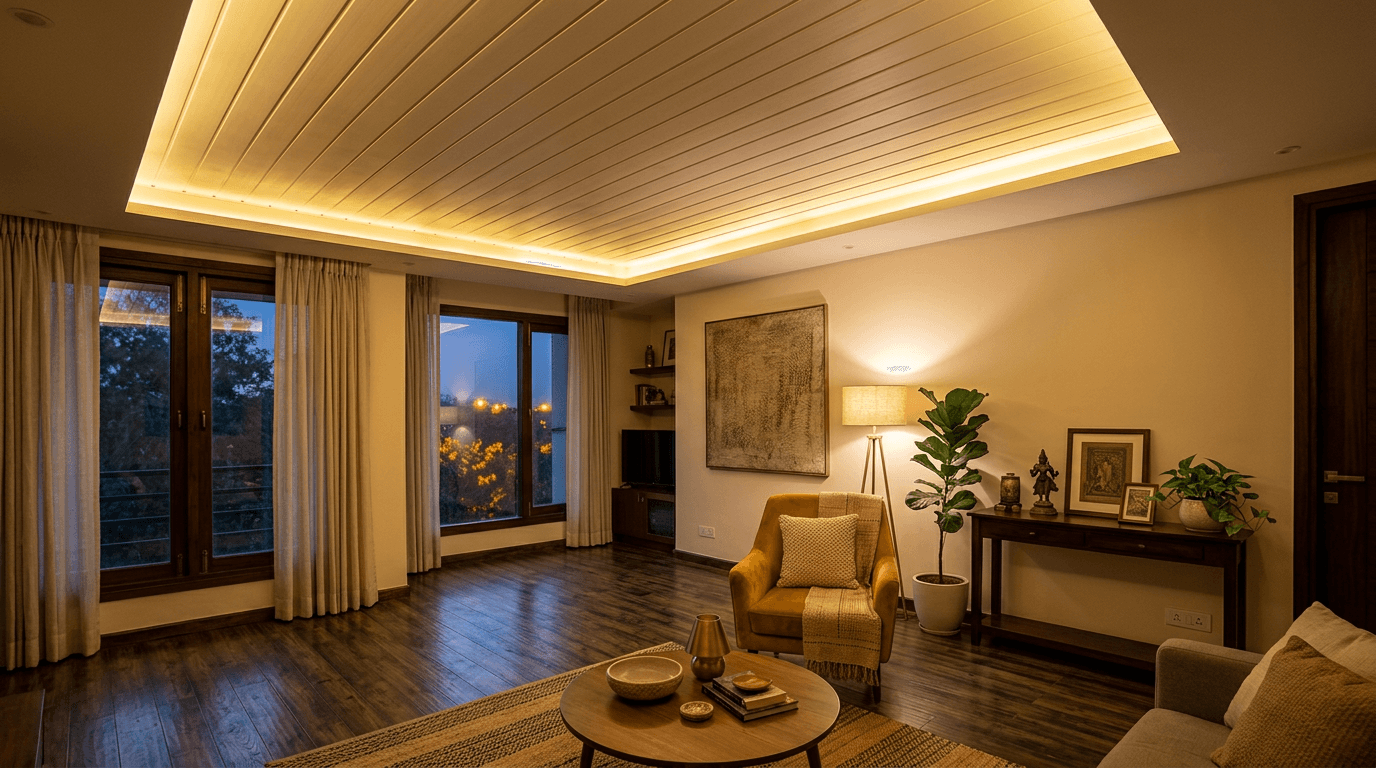
5. Panelled tray with a lit cove. A rectangular dropped tray finished in planks, with an LED strip hidden in its step. All the drama of a plastered tray at a fraction of the site time. It's the best PVC ceiling design of the ten if a room wants a focal point without losing three weeks to plaster.
6. Two-tone plank layout. White planks in the centre, a wood-look band along the TV wall. It zones an open living-and-dining space overhead without building a single partition below.
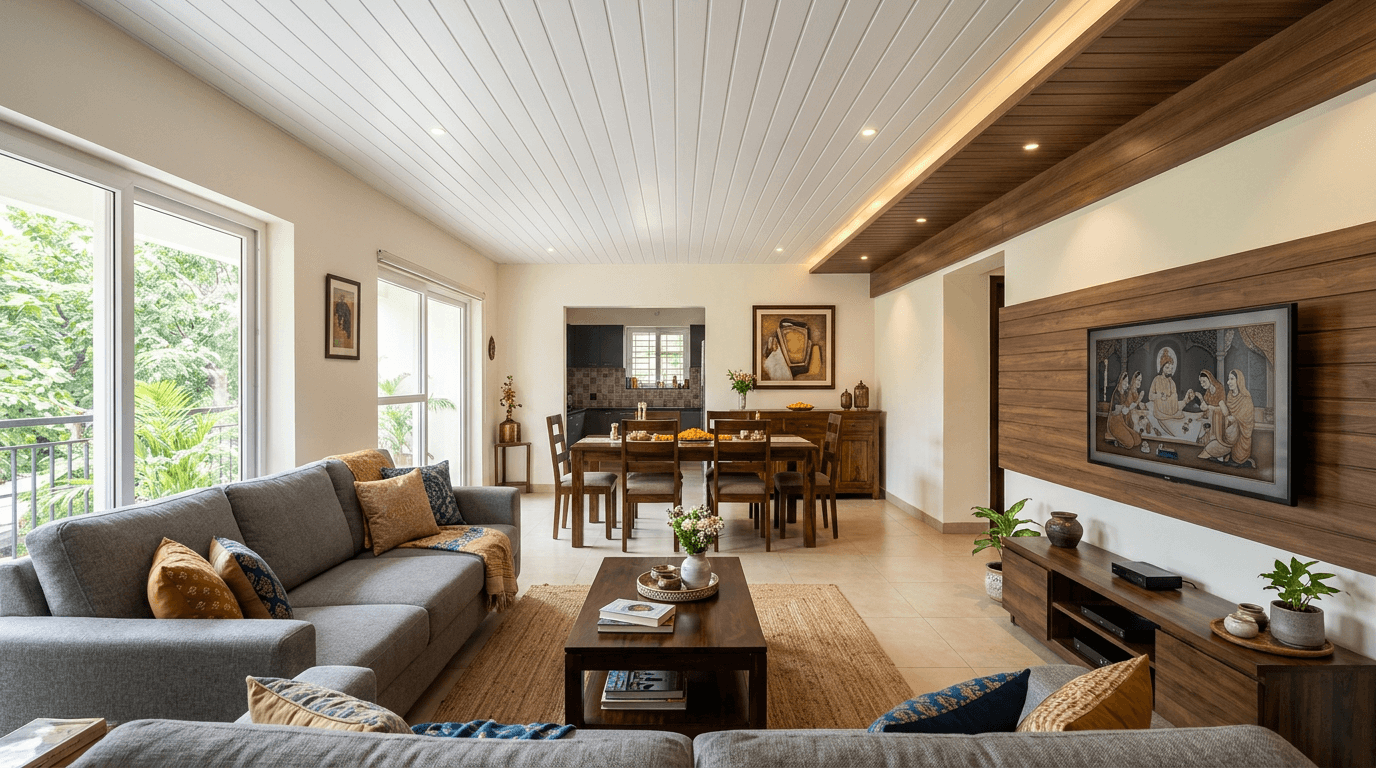
7. Cross-plank centre panel. One square in the middle laid at ninety degrees to the surrounding planks. It gives a plain field a centre without dropping a single millimetre of height, which matters when the size of the room is modest to begin with.
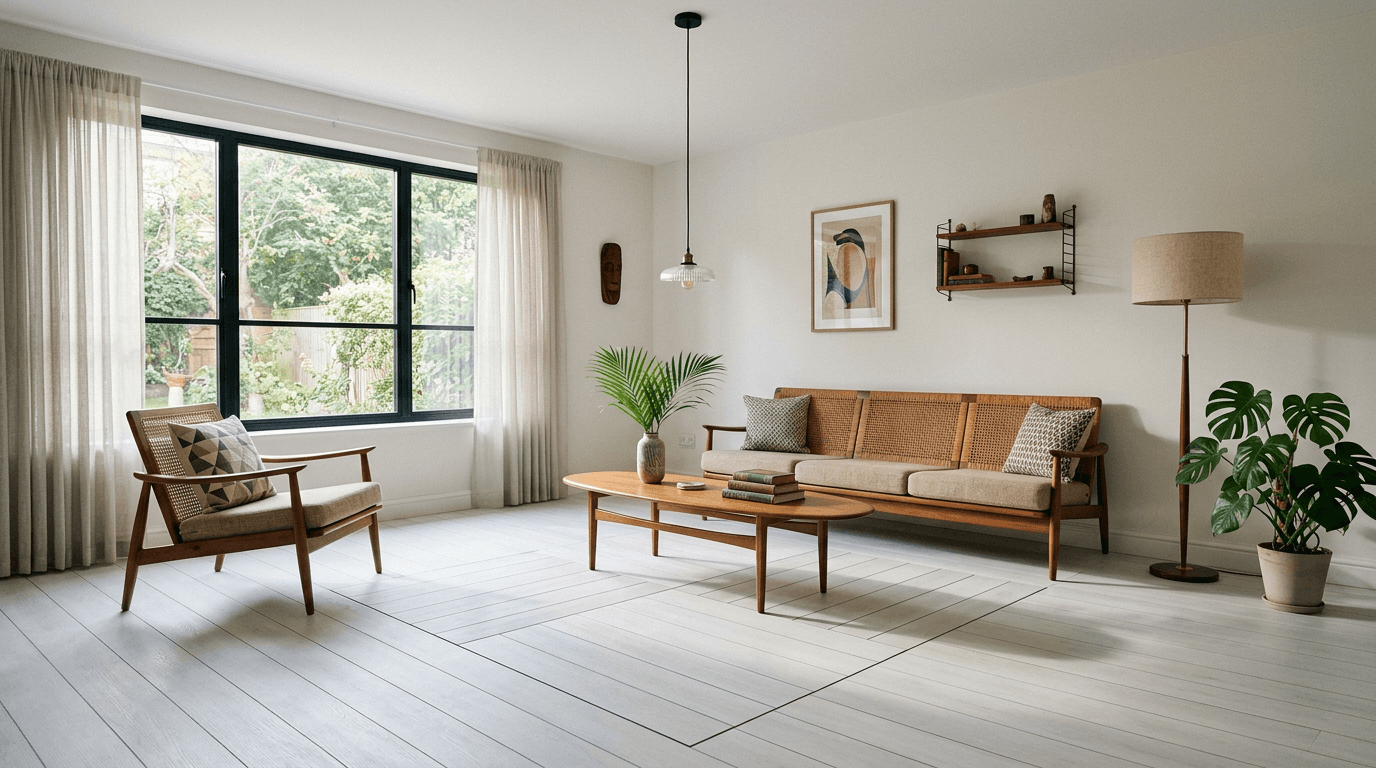
8. Panelled band with a magnetic track slot. The band carries a recessed slot for a magnetic light track. Spots, grazers and micro-pendants can move later without an electrician touching the panels.
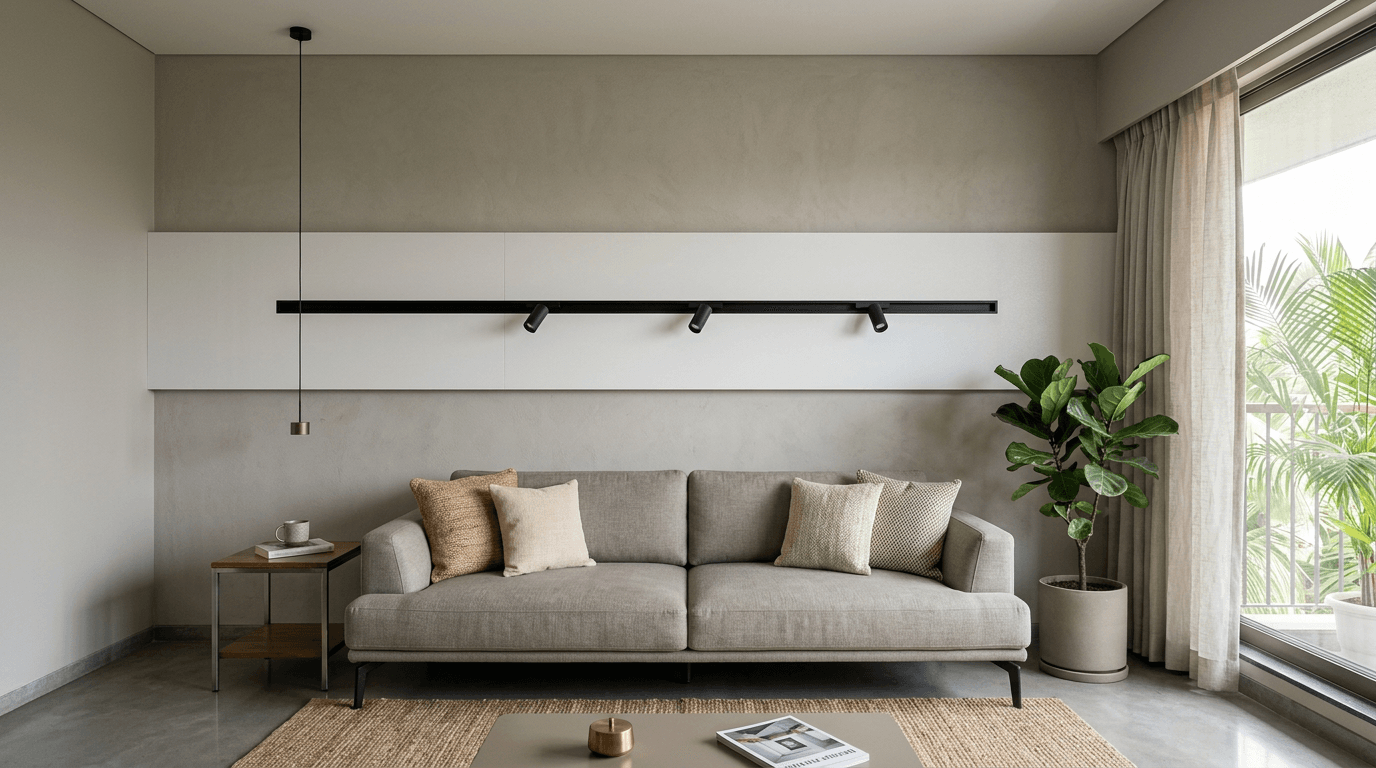
9. Grid coffers in plank form. Shallow square coffers built from plank strips over a flat field. A coffered ceiling adds shadow and formality to a classical-leaning room, and this version skips the plaster, the weight and the curing time.
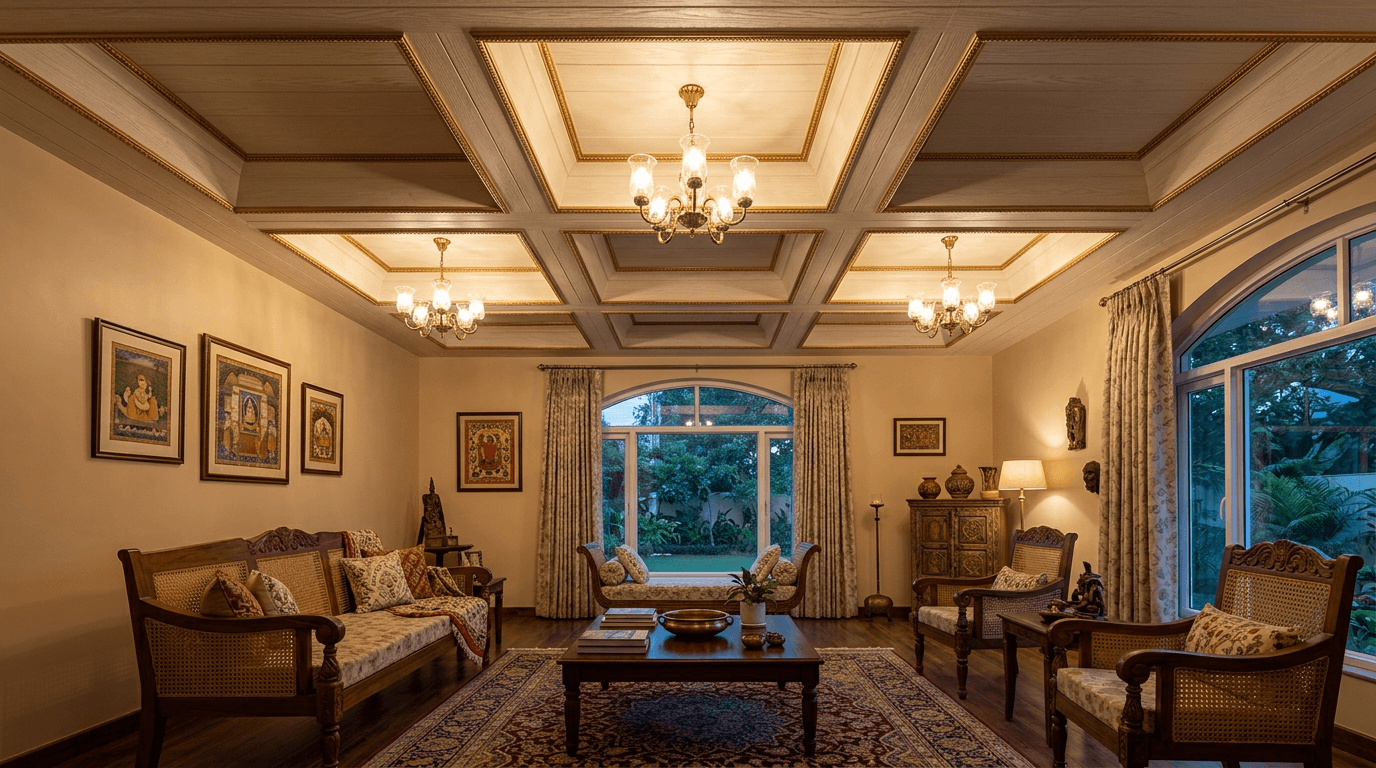
10. Slat-look ribbed panels. Deep-ribbed planks that read as a fluted timber slat system from below. The strongest texture available in this material, and the one clients photograph.
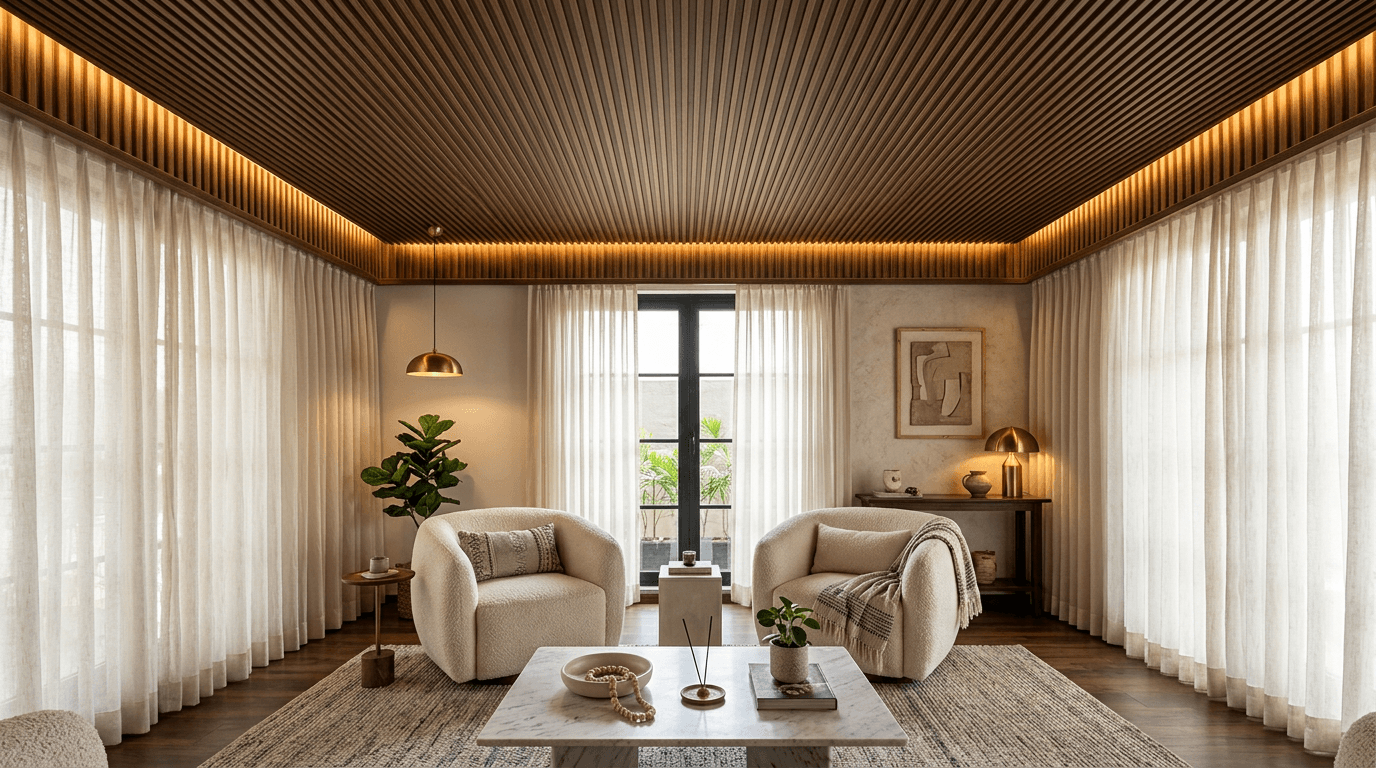
PVC Ceiling Design for Bedroom Use: 6 Panel Layouts That Stay Calm
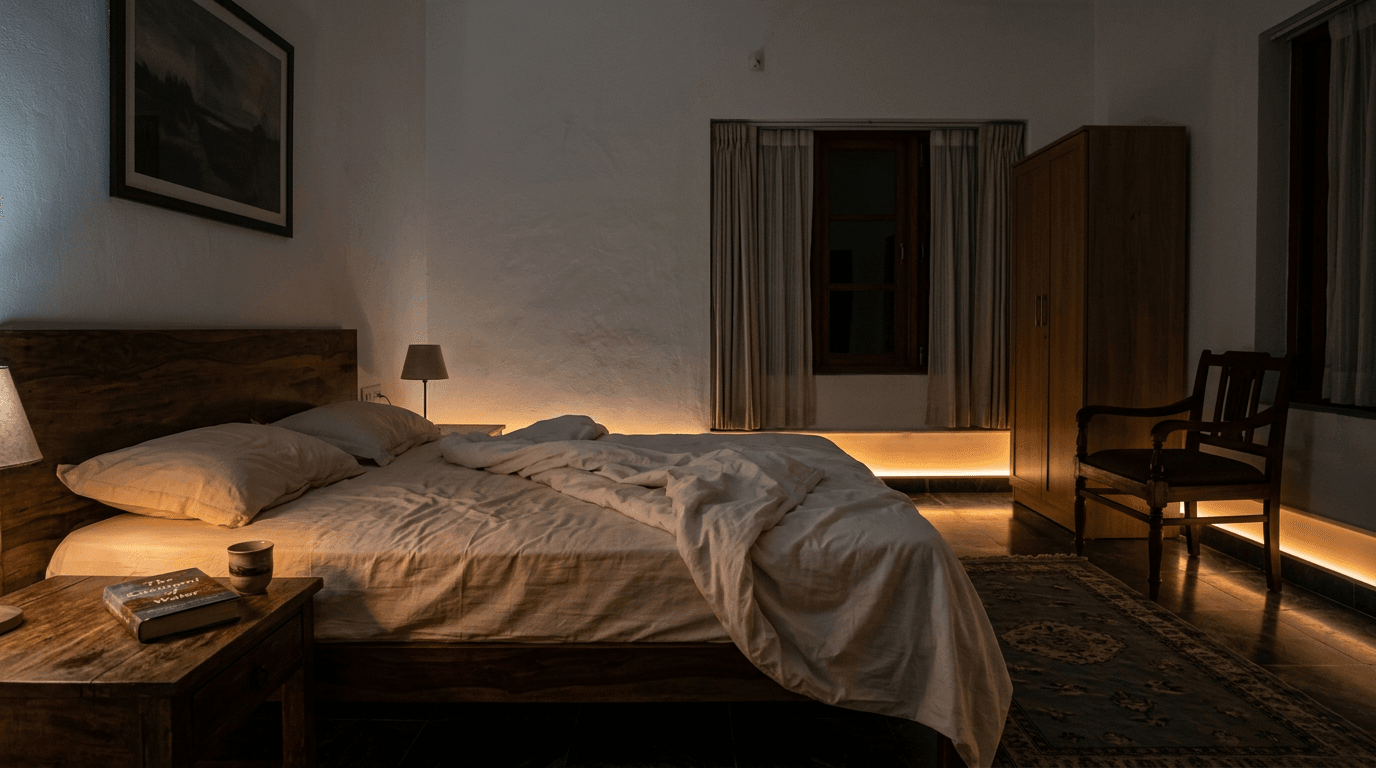
A bedroom is looked at lying down, in the dark. That kills two things immediately: gloss, which throws every light source back at you, and busy joint patterns, which your eye will trace at 2 am. A PVC ceiling works fine in here. It just has to be matte and quiet. These six PVC designs for your bedroom follow that rule, and all six are ceiling designs you can live under.
11. Matte plank field with a wall-side cove. The whole surface in matte off-white planks, one light strip along the headboard wall only. Nothing above the pillow. It's the minimalist suspended PVC false ceiling in its purest form.
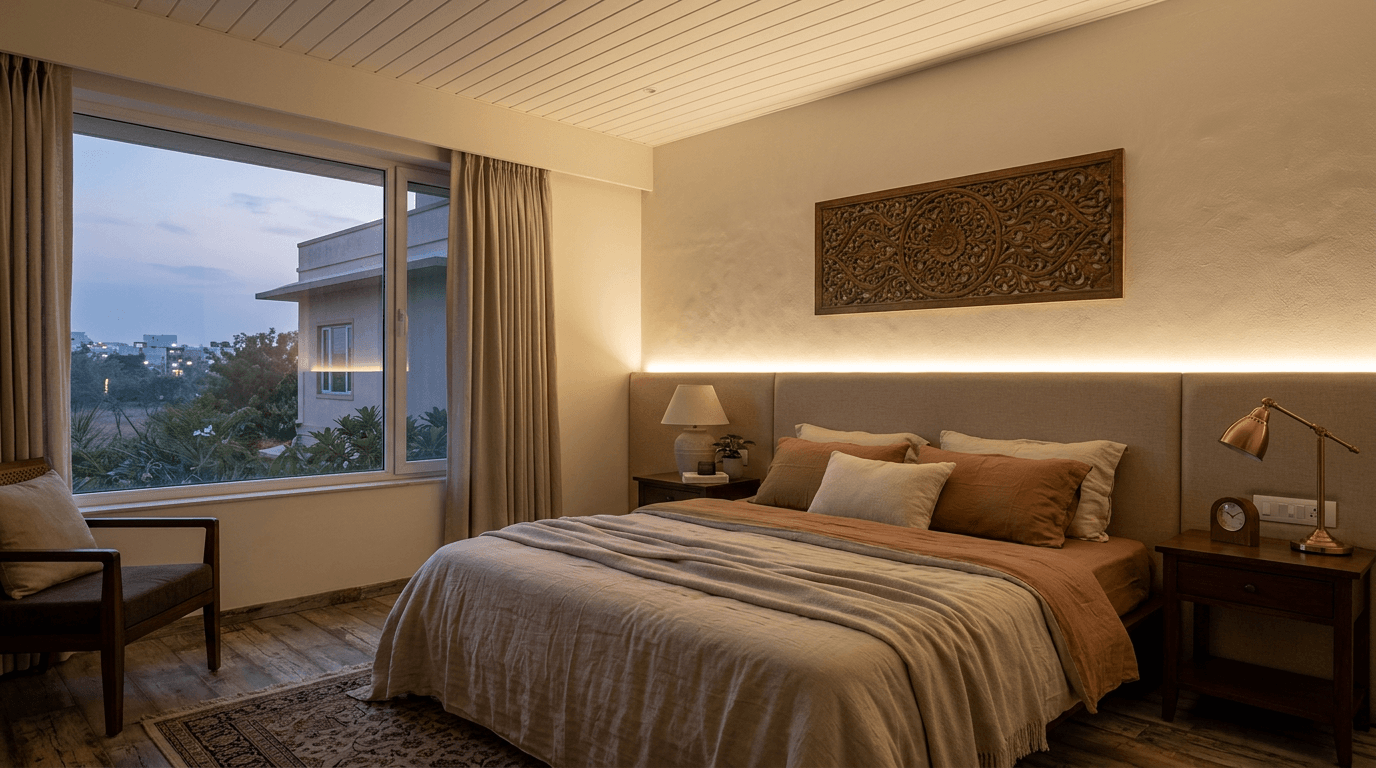
12. Headboard-side partial drop. Panels cover only the third of the room above the bed, wrapping down slightly to form a canopy. The rest of the slab stays plain, so height is preserved where you walk. A good ceiling design for a bedroom with a low slab.
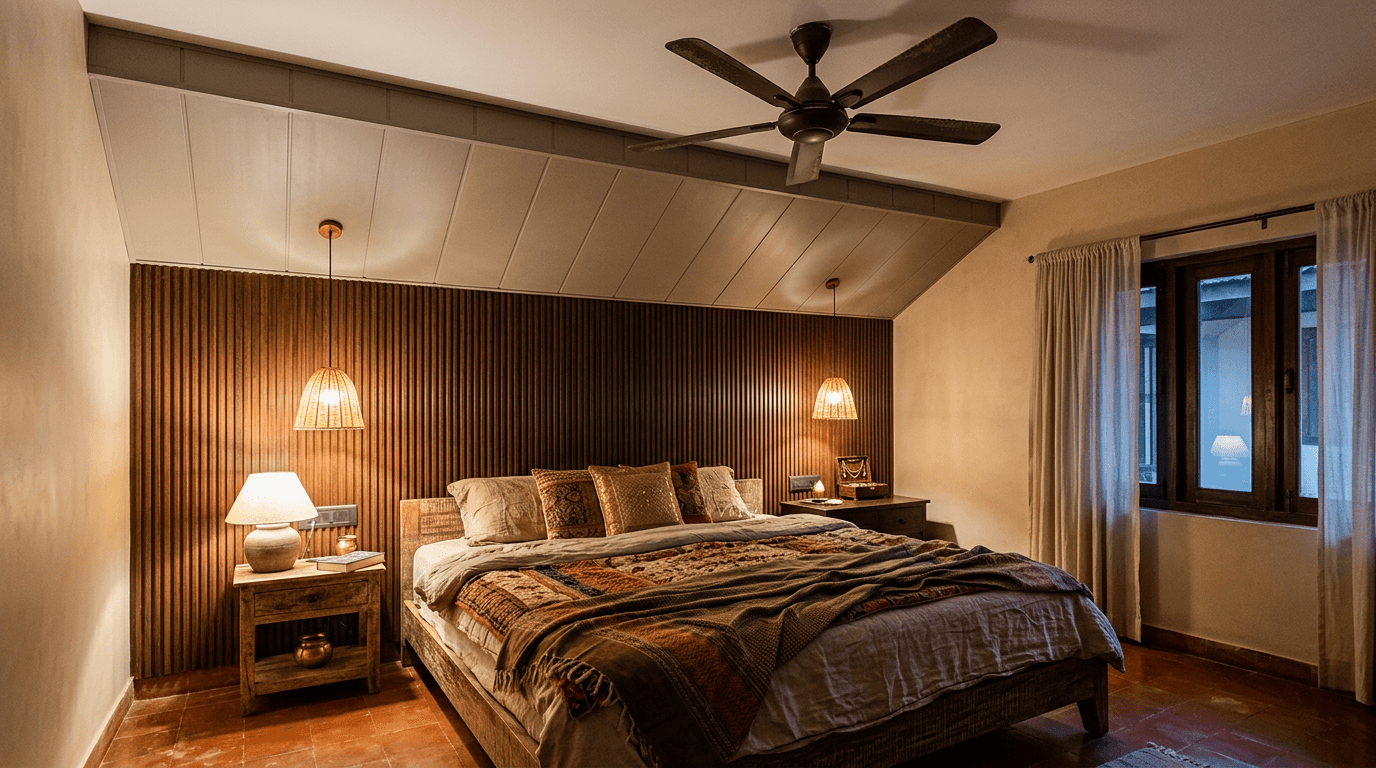
13. Fabric-grain printed planks. Newer prints copy linen and raw wood rather than high-gloss marble. In a bedroom, a textile-look finish is the one that stops the room feeling clinical.
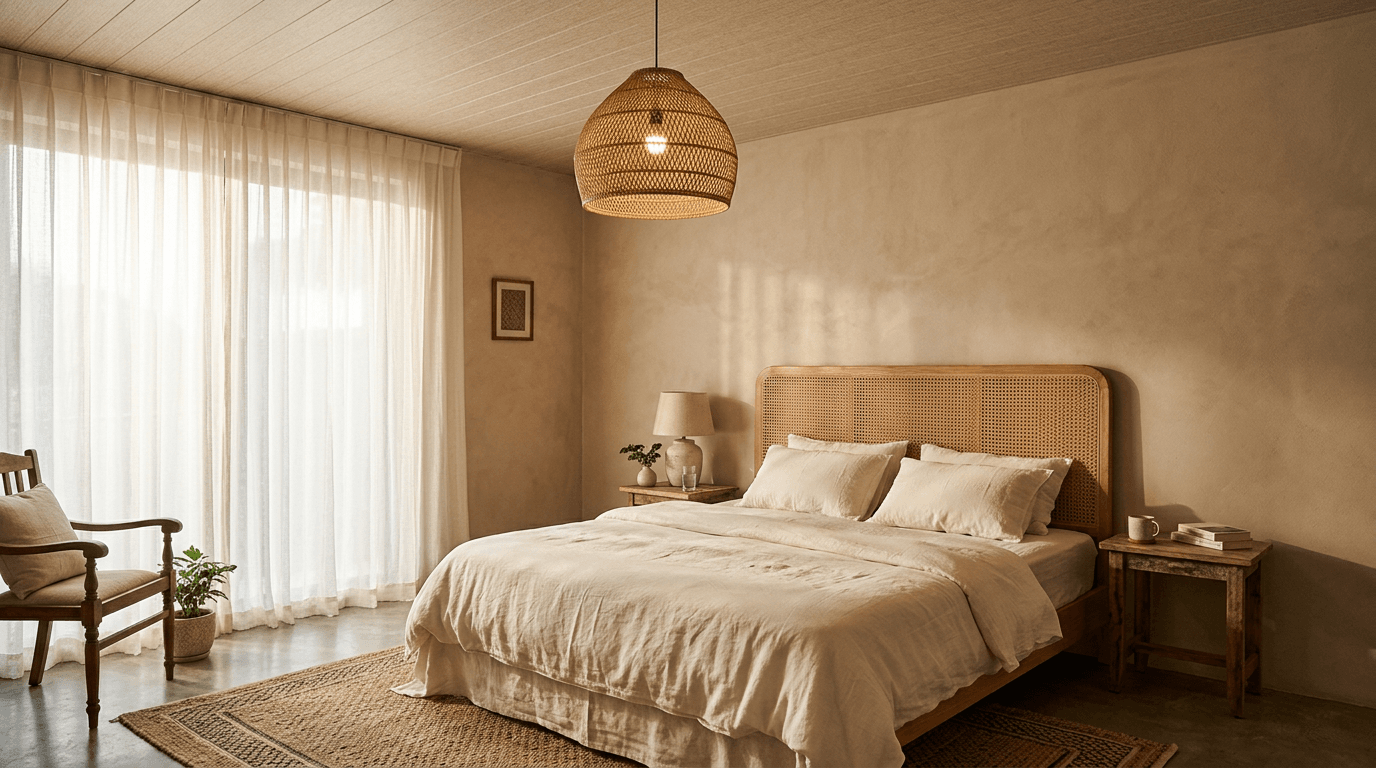
14. Perimeter band with a night path light. A band around the room carrying one dimmable low strip you can switch alone at 3 am. Cheap, and the detail guests remember.
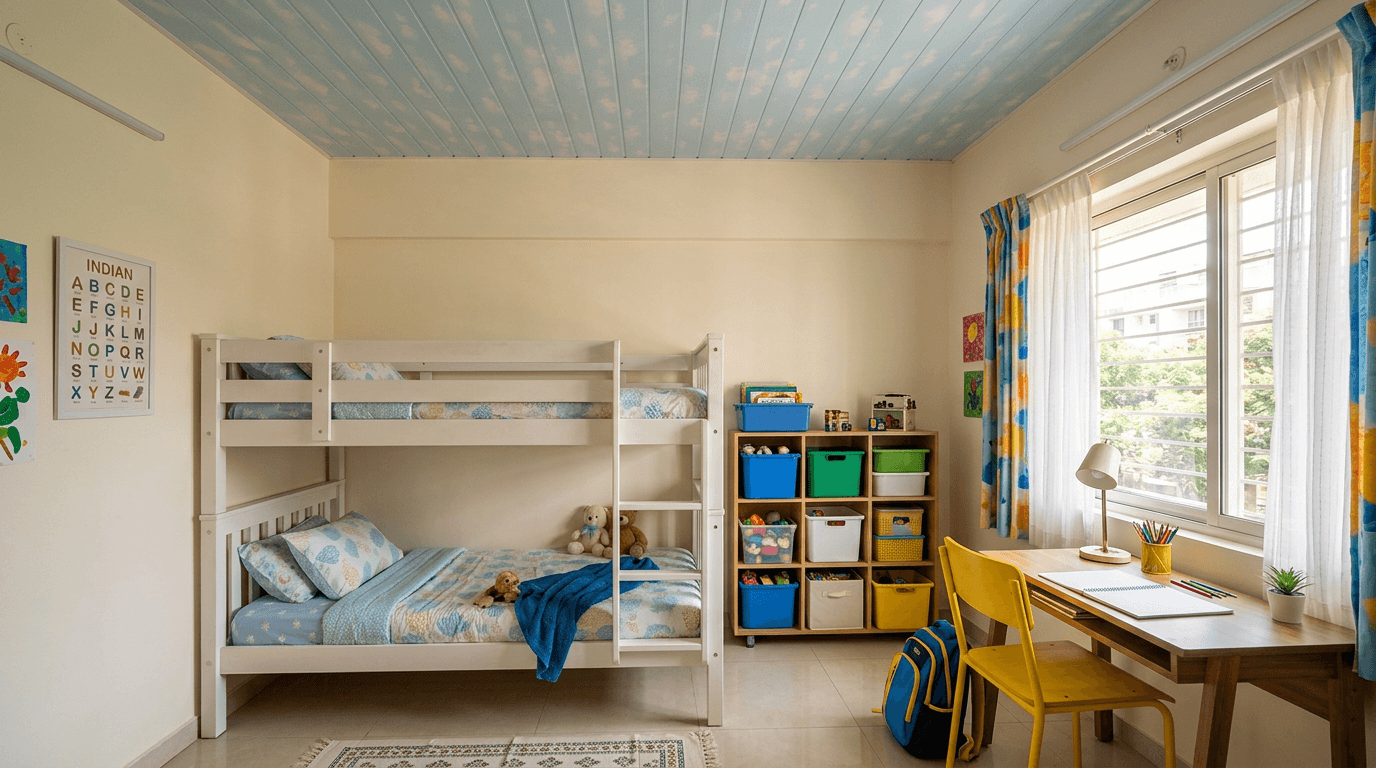
15. Kids room with printed panels. In a child's room, print goes overhead instead of on the walls: a soft sky, a map, a pattern. Wipe-clean, and replaceable in an afternoon when the child turns twelve and hates it.
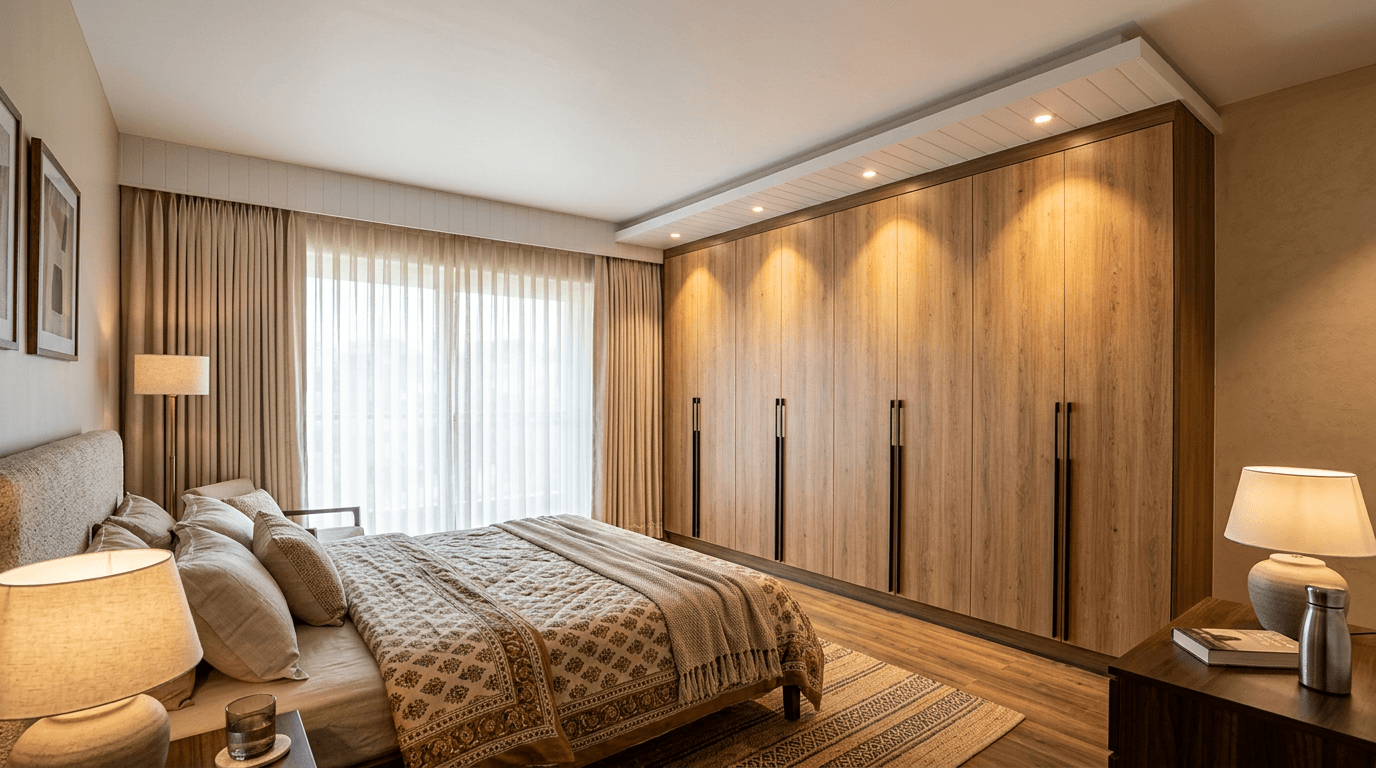
16. Split-level band over the wardrobe. The panels drop only over the wardrobe run, hiding the loft line and the curtain track in one move. Sleeping zone untouched. If you want the gypsum and POP alternatives for this room, our bedroom ceiling design gallery covers them.
PVC Panel Ceiling Designs for Kitchens, Bathrooms and Balconies
This is the material's home ground. In steam and splash zones (kitchen, bathroom, utility, covered balcony), PVC ceilings are the only common false ceilings that shrug off humidity without swelling, staining or feeding mould, and the planks can be unclipped for access when a leak from the flat above eventually happens.
We learned that lesson the slow way on a 30-year-old apartment building in Hyderabad. After renovating two flats there for Mr. Srinivasa Rao, the residents' association asked us to take on the whole building: flooring, plumbing, electrical, repainting, and the water seepage that had been quietly ruining surfaces for years. Waterproofing solved the source. But in rooms where water is a permanent guest rather than a visitor, we use PVC because false ceilings in plaster simply don't survive there.
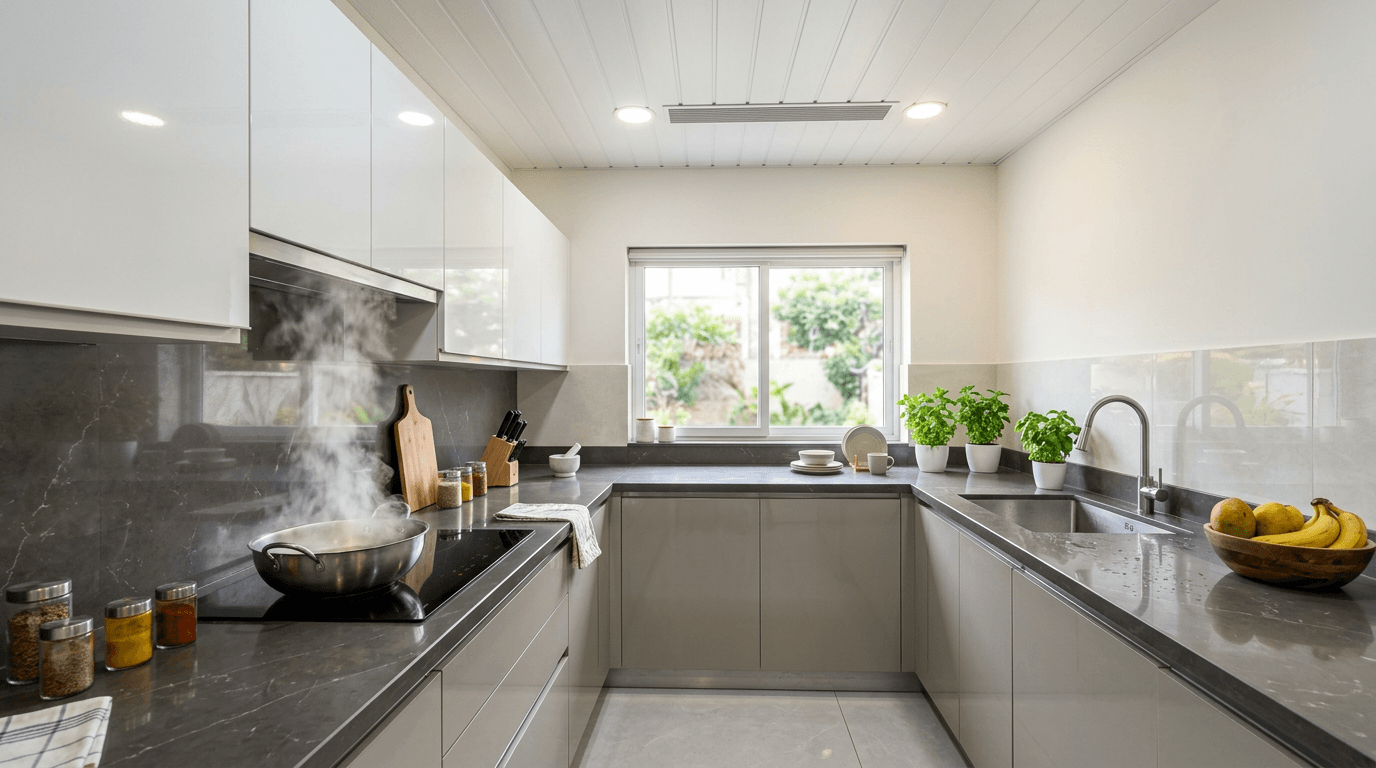
17. Flush kitchen panels with an integrated exhaust. A flat field of matte planks with the exhaust duct routed above and only a slim grille visible. Grease wipes off, and there's no repainting every second Diwali. Our kitchen false ceiling gallery has the full set of kitchen ceiling designs.
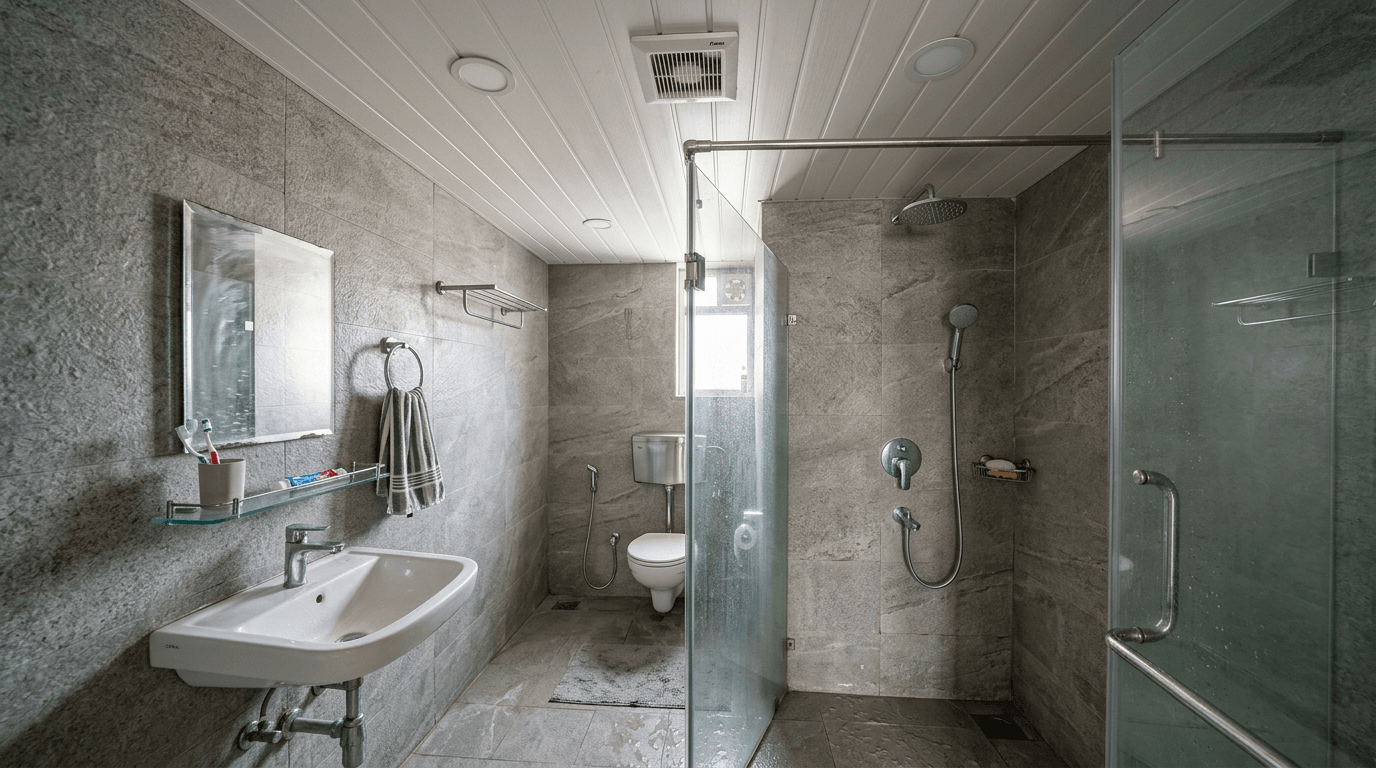
18. Bathroom planks with flush round lights. Narrow white PVC planks, two moisture-rated flush lights, one grille. The whole job goes up in an afternoon and never blisters.
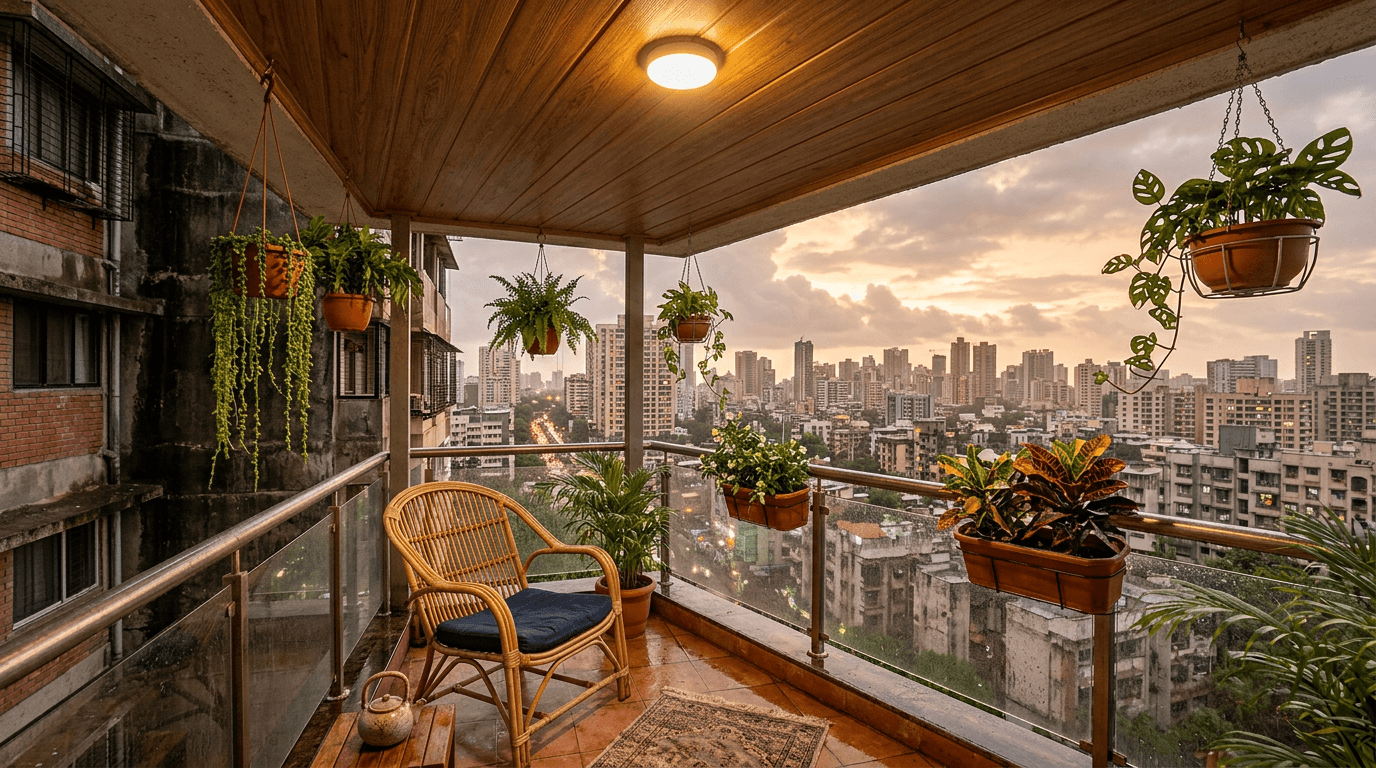
19. Wood-look balcony soffit. Warm plank tones over a covered balcony, where real timber would grey out in two monsoons. The upgrade that makes a small balcony feel like a room.
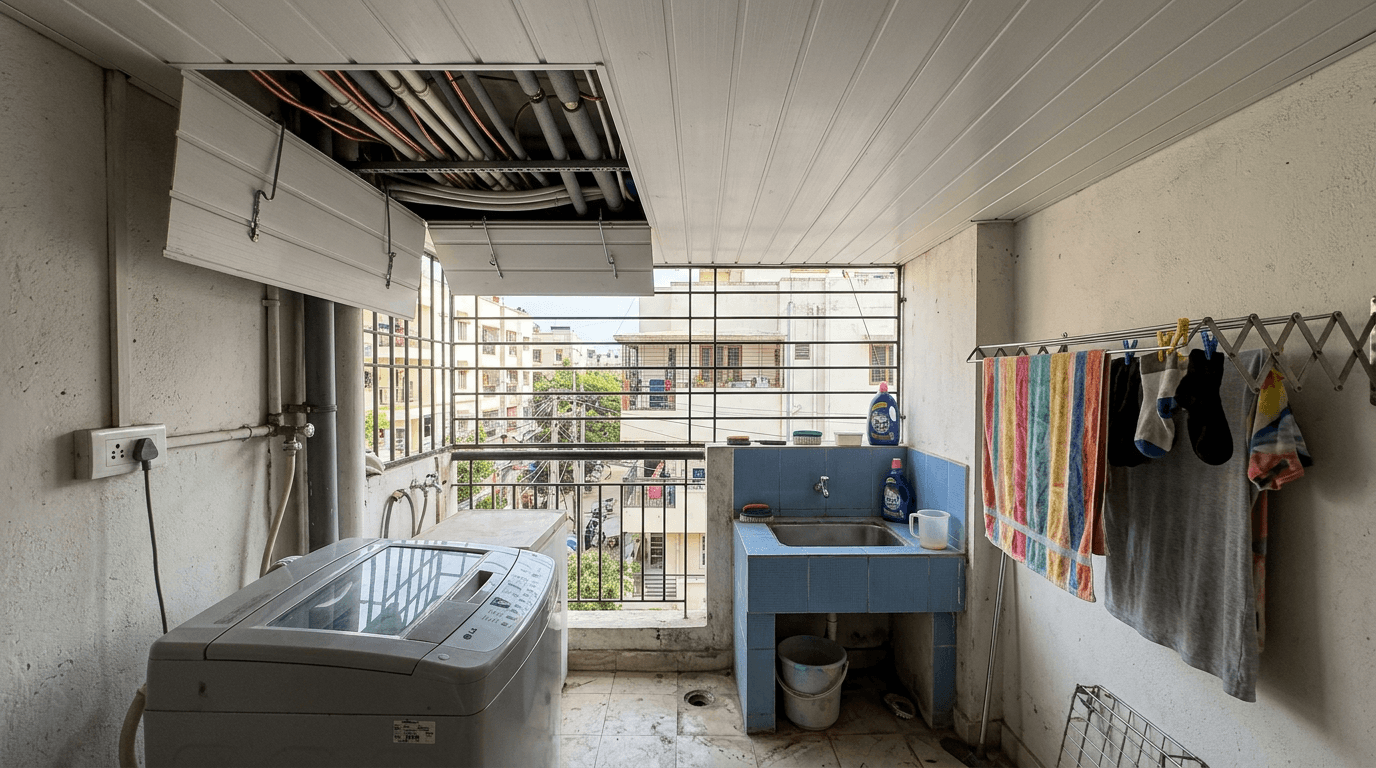
20. Utility area with removable access planks. Two planks left unclipped over the plumbing shaft, marked on the drawing. When something leaks upstairs, a plumber opens the panels instead of breaking them.
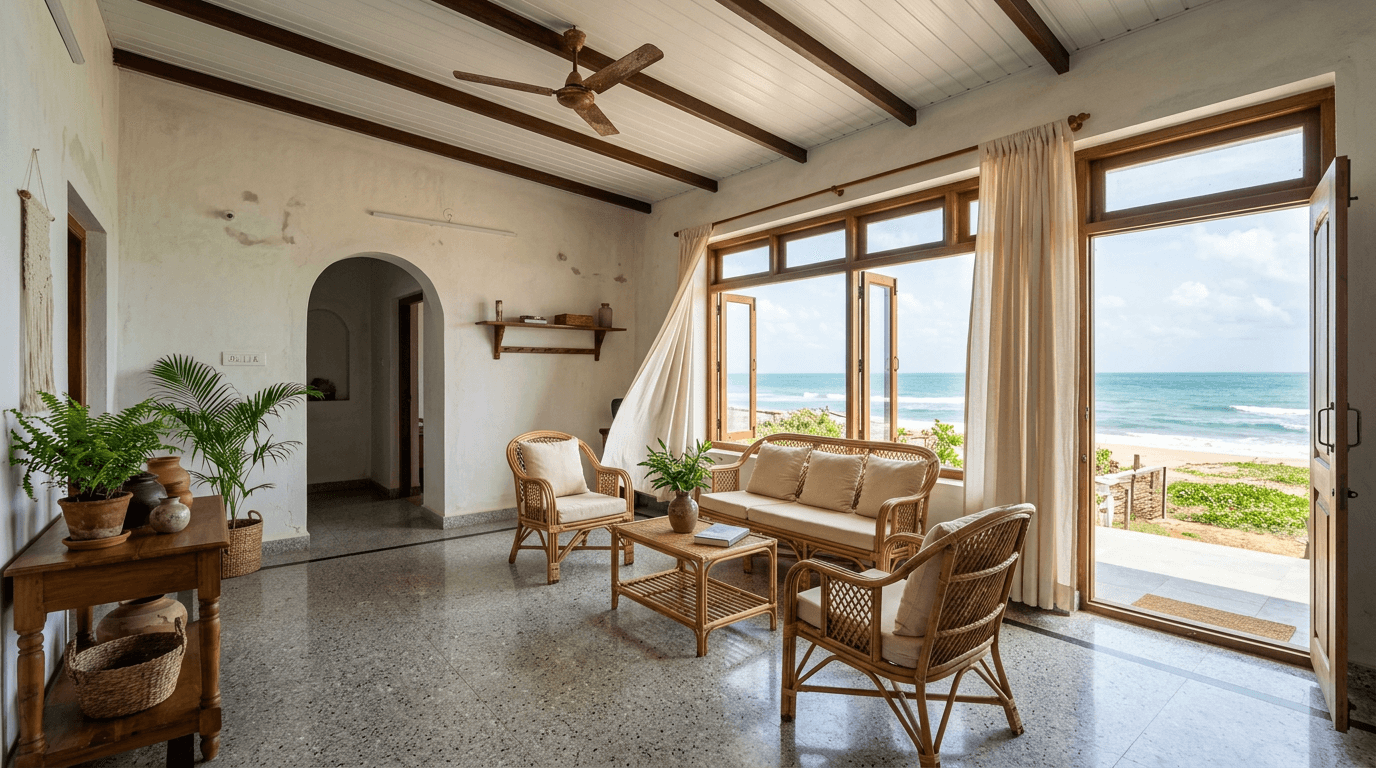
21. Coastal-home panels in a humid climate. In Machilipatnam, salt air is in every brief. Our independent-house and villa projects there are planned around materials that stay indifferent to humidity, and PVC ceilings are one of the few overhead systems that qualify.
22. Verandah soffit for a courtyard house. On a traditional farm house with deep verandahs, panel ceilings handle the semi-outdoor zone where the roof overhang ends and weather begins. Our Srikakulam courtyard home was built on exactly that logic: simple, robust materials in the spaces that face the sky.

Simple PVC Ceiling Designs for Small Rooms and Rentals
A compact room and a let-out flat share one enemy: anything that takes two weeks or needs annual maintenance. Four simple PVC false ceiling design options that respect both.
23. Plain matte field, nothing else. No drop, no cove, no pattern. In a 560 sft flat like the Tarnaka studio apartment we renovated for Mr. Ramana Murthy, where the brief was minimal, maximum storage, easy to maintain and ready to let, plain is the correct answer, not the cheap one.
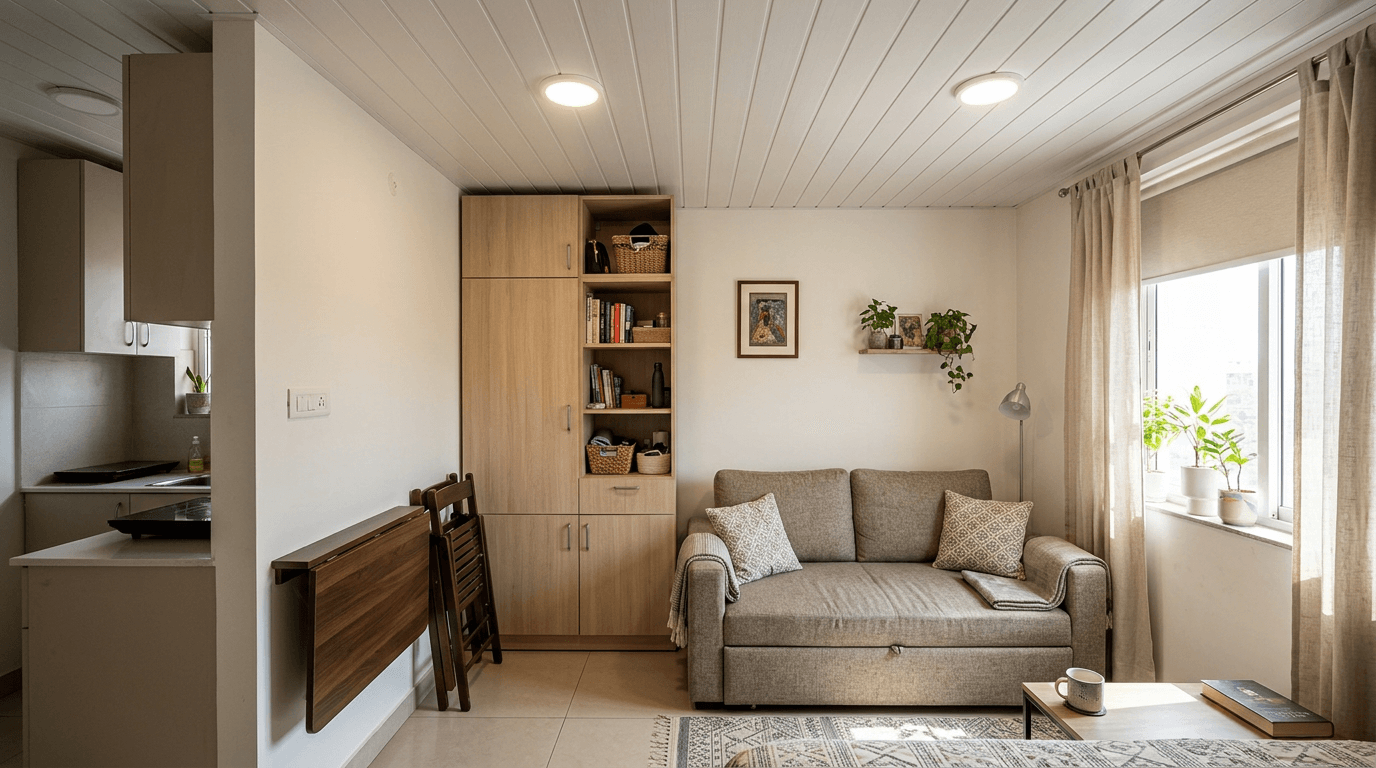
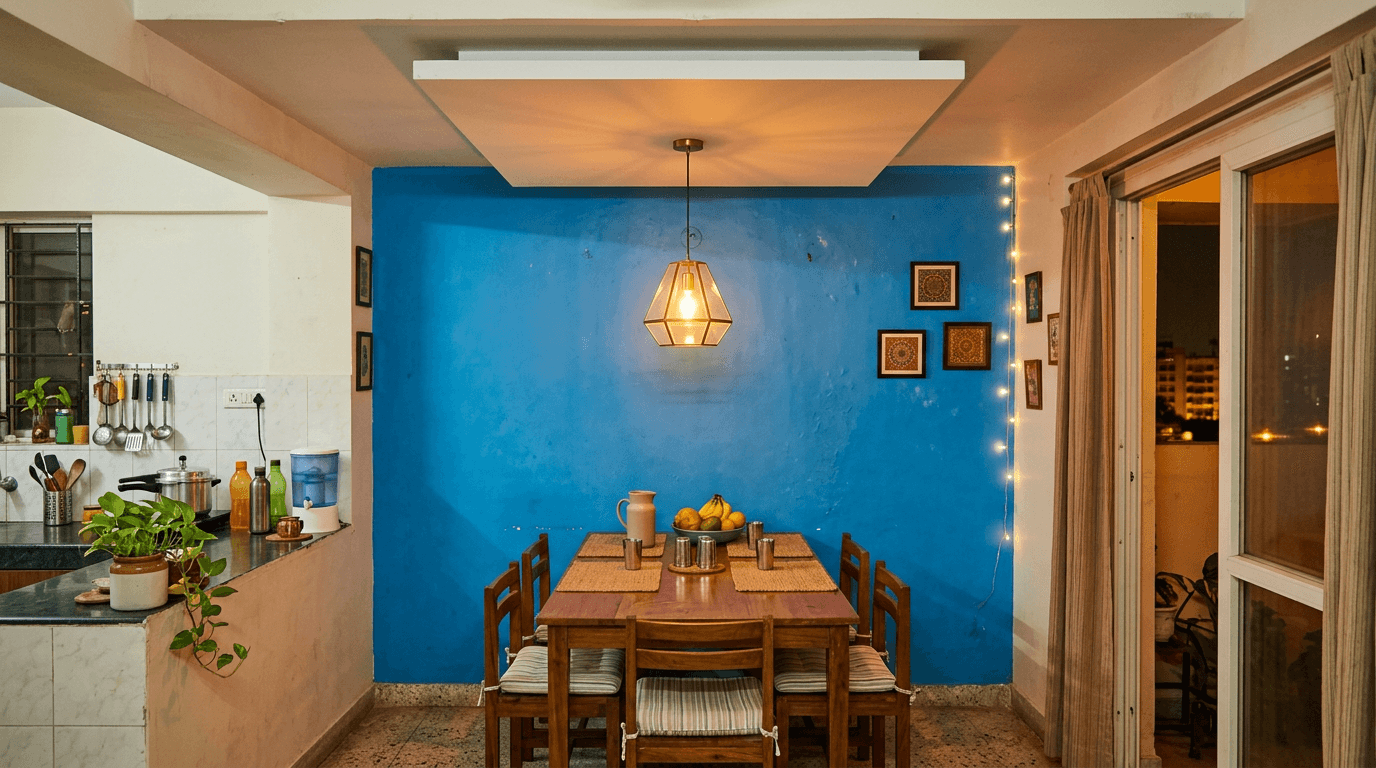
24. Half-drop over the dining nook. A single panelled rectangle above the dining table defines the nook in a one-room layout. It costs almost nothing and makes a modern home read as zoned.
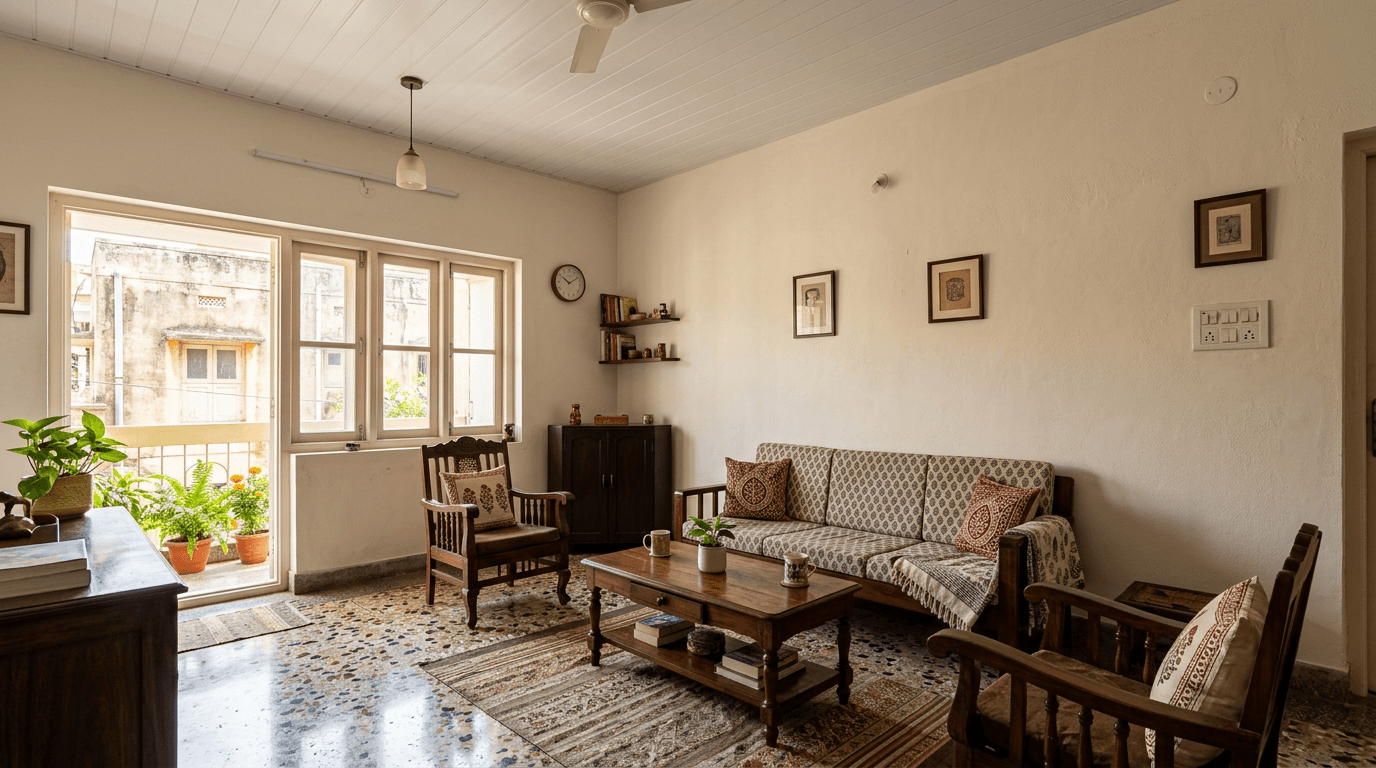
25. Planks over a repaired slab. In old buildings, panelling is as much repair as decoration: it covers cracked plaster, patchy repainting and old wiring in one pass. That matters in 30-year-old flats where opening the slab is not on the table.
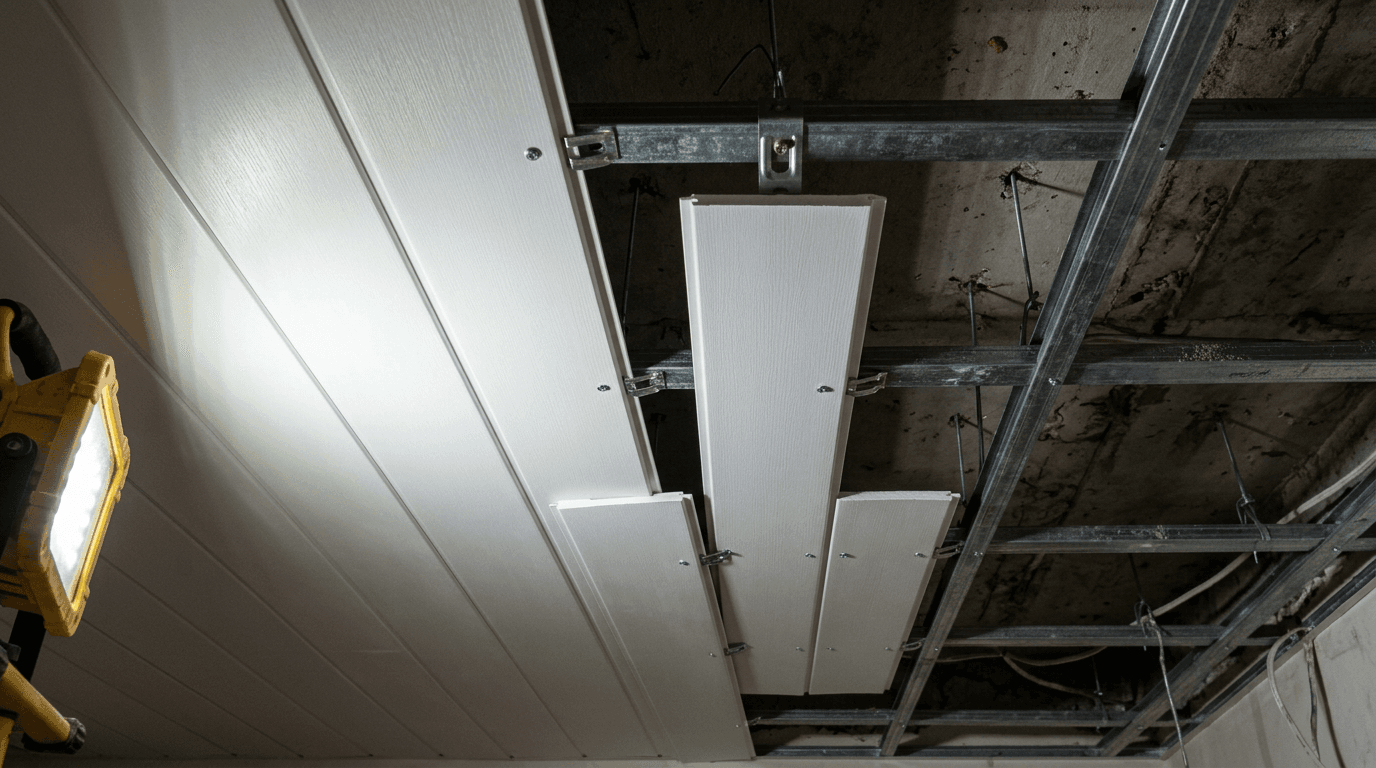
26. Termite-proof planks in a problem building. One of our Banjara Hills clients had fought pests and termites through the whole building before asking us to redo their duplex. In buildings with that history, plastic and metal beat timber battens every time, and the frame matters as much as the panel.
Modern PVC Ceiling Design: Backlit, Lattice and Stretch-Look Panels
The last four PVC ceilings are where the material has genuinely moved on since the glossy-white era. These are the ceiling designs clients now send us as references.
27. Backlit translucent planks. Milky translucent sections lit from behind give an even glow with no visible fixture. Backlit PVC is a skylight effect for an internal room that has never seen the sun.
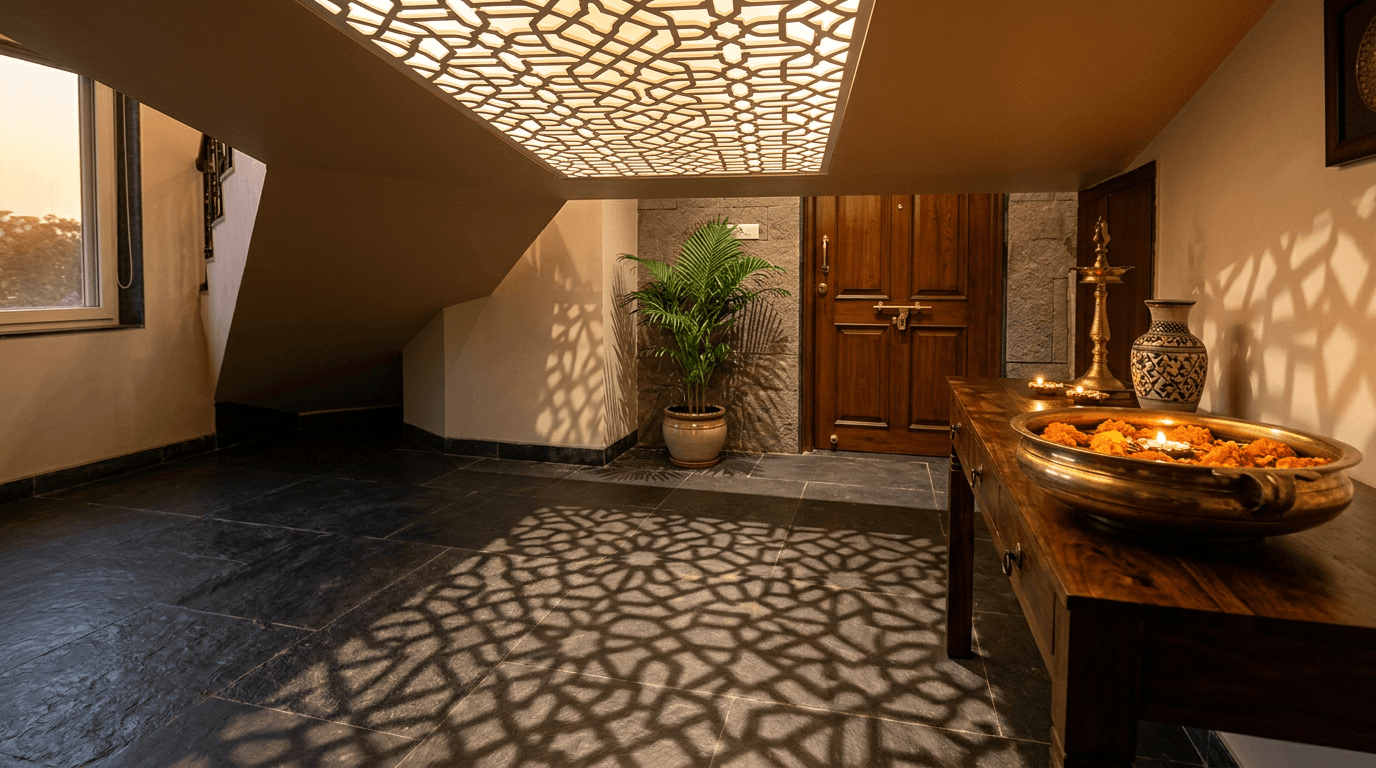
28. Jaali screen over an entry. A cut-out lattice PVC false ceiling design with light behind it throws a pattern across the foyer. Traditional jaali geometry, in a material that costs a fraction of carved timber.
29. Stretch-look high-gloss inset. One glossy inset inside an otherwise matte field, mirroring the light below. Used once, deliberately, it looks expensive. Used everywhere, it looks like a 2005 showroom.
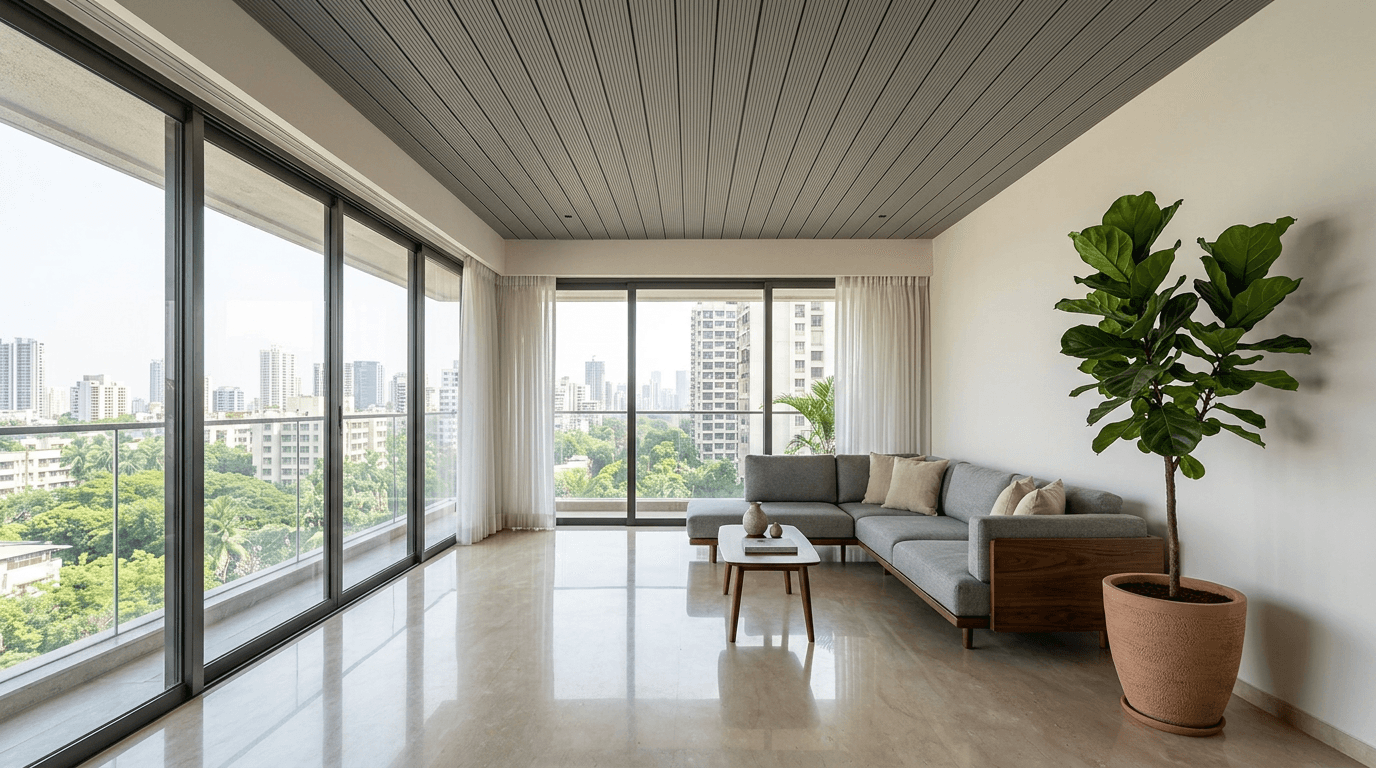
30. Micro-groove acoustic-look planks. Fine grooved planks soften echo a little and read as a designed acoustic system. In hard-floored apartments where every footstep rings, the difference is small but audible.
Choosing the Right PVC Ceiling: Panel Types, Sizes and Finishes
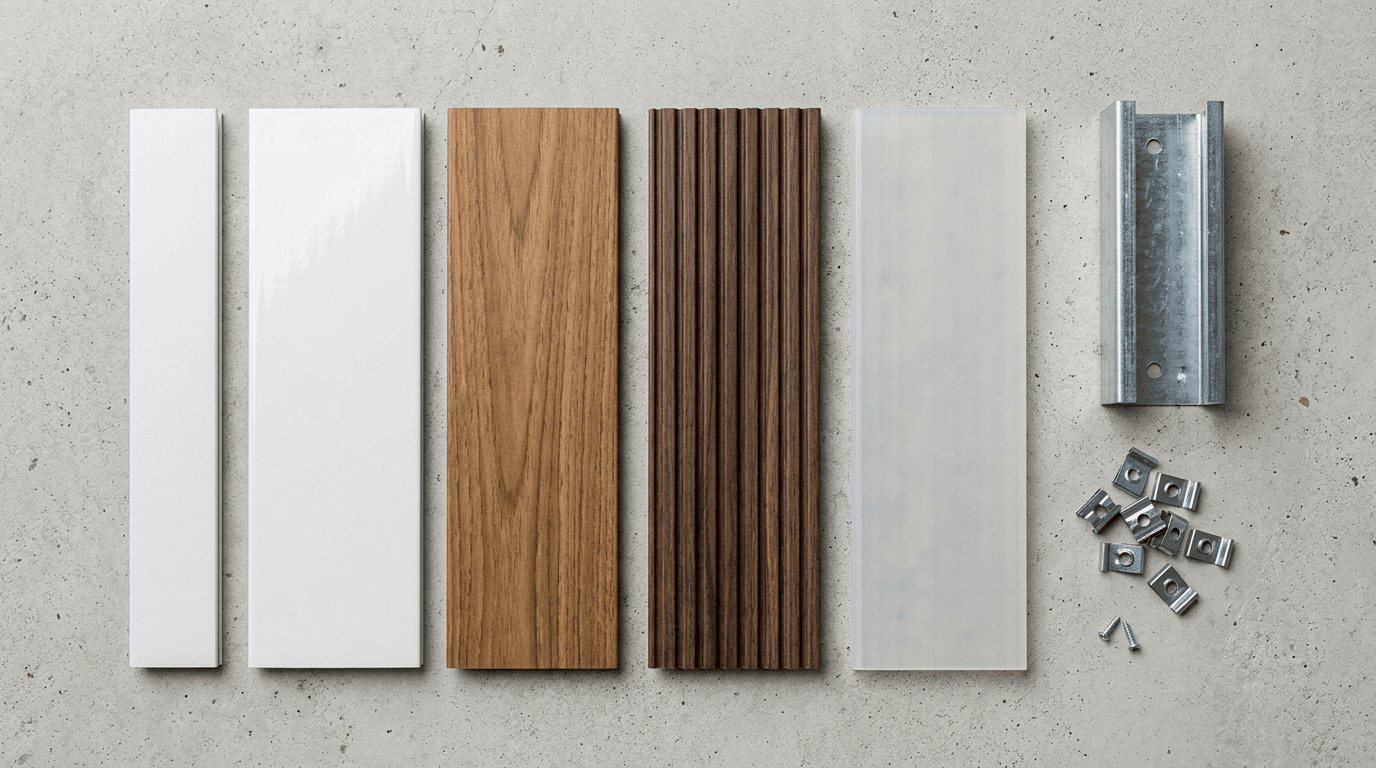
Most of the difference between a premium result and a cheap one is decided here, before anyone drills anything. These are the five design options that actually change the outcome.
- Width. Narrow planks look considered. Very wide ceiling sheets look like a shop's false roof. Narrow costs a little more in labour and is worth it.
- Thickness. Thicker PVC ceiling panels sag less over long spans and feel solid when tapped. Ask to hold a sample, because a flimsy plank is obvious in your hand.
- Finish. Matte over gloss, always, unless gloss is a deliberate one-off feature. Matte prints have improved enormously and read as paint from below.
- Joint type. Interlocking tongue-and-groove profiles give a nearly invisible seam. Cheaper profiles leave a visible V-groove that becomes the ceiling style whether you wanted it or not.
- Frame. Galvanised metal, not wood. Timber battens invite termites and warp in humidity, which defeats the whole reason you chose a waterproof system.
The choice of the PVC ceiling finish matters more than the plank brand: plank width and sheen drive the overall design further than any logo on the box. Two rooms with identical planks and different widths do not read as the same room.
How Do PVC Ceilings Compare With Gypsum and POP?
Gypsum gives the seamless painted finish and is the default for dry living rooms and bedrooms. POP handles curves, domes and ornate mouldings. PVC beats both on water resistance, installation speed and price, and loses on finish quality, fire performance and curves. Most Indian homes are best served using both.
| PVC panels | Gypsum board | POP | |
|---|---|---|---|
| Finish | Planked, joints visible | Seamless, painted | Seamless, sculptable |
| Moisture | Excellent | Poor | Moderate |
| Curves | No | Limited | Yes |
| Site time | Fastest, dry-fit | Medium | Slowest, wet work |
| Repainting | Never | Periodic | Periodic |
| Best for | Wet rooms, rentals, budgets | Living rooms, bedrooms | Ornate and curved work |
For the full picture across every system, our false ceiling design guide is the pillar, and it has more ceiling ideas across gypsum, POP and wood. Material deep-dives live in the gypsum guide and the POP design gallery. If you're panelling walls rather than the surface overhead, that's a different craft entirely. See PVC panel design. Contractors, incidentally, usually write this work on the estimate as false ceiling PVC panelling.
What Decides the Cost of a PVC Ceiling?
PVC is the cheapest mainstream false ceiling material in India, but the plank rate is only part of your bill. Area covered, panel width and thickness, frame material, the number of light points, and cut-outs around beams and ducts move the final number far more than the price per sheet does.
The five cost drivers, in the order they actually bite:
- Coverage. A perimeter band covers a fraction of a full field. Same visual payoff, much smaller quantity.
- Panel spec. Narrow, thick, matte, wood-look planks cost more than wide glossy white ones. That's the premium-look premium.
- Frame. Galvanised framing costs more than timber battens, and is the right call anyway.
- Light points. Every spot, strip and driver is billed separately and adds up faster than clients expect.
- Complications. Beams, ducts, cassette AC units and access hatches all mean cutting, and cutting means labour hours.
We don't publish fixed rates, because pricing genuinely varies by city, spec and site. For current market ranges across materials, our false ceiling price guide is the place to check the cost of PVC false ceiling work in your city, and get every quote itemised against a drawing, not a verbal per-square-foot number.
How a PVC Panel Ceiling Gets Installed
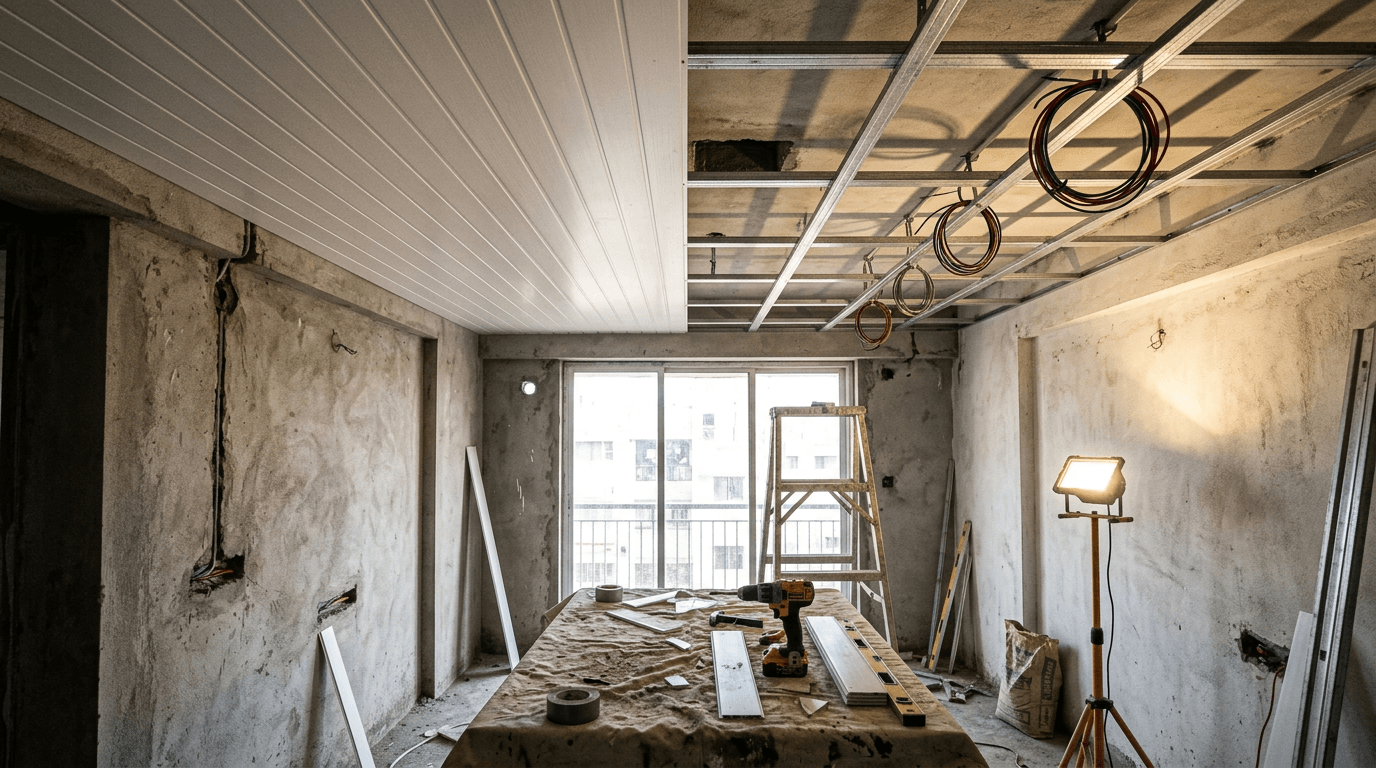
Order of work, roughly a day for a normal room:
- Services first. Wiring, AC piping and duct routes are finalised and tested before anything closes up. Nobody enjoys reopening a finished surface.
- Perimeter channel. A level line is marked and the wall channel goes up. Everything downstream inherits this line, so a lazy level here shows forever.
- Frame. Galvanised sections at the manufacturer's spacing. Wider spacing sags, and sag is the failure people photograph.
- Panels. Planks clip in one by one, cut around lights and grilles as they go.
- Trims and lights. Corner beading closes the edges, fixtures drop in, and the room is usable that evening.
Two rules we enforce on drawings. Fans anchor to the structural slab, never to the planks or the frame, because a hollow plank carries nothing. And use low-heat LED fixtures only, because heat is the one thing this material genuinely dislikes. Halogen lamps sitting against plastic will discolour and eventually distort it. For layered lighting plans that suit panelled surfaces, our home lighting design guide goes deeper.
Are PVC Ceilings Safe, and How Long Do They Last?
Rigid PVC building panels are stable at normal room temperatures and don't off-gas meaningfully once installed; a faint new-material smell in the first days is normal and fades with ventilation. The real safety question is fire: PVC performs worse than gypsum and produces acrid smoke, so keep it away from open flames and hot fixtures.
Three practical rules, and they are all about heat:
- Keep planks clear of gas hobs, tandoors and any open-flame appliance. A full panelled field directly over a stove is a bad idea in any home.
- Use LED lighting only, never halogen, and never let a hot fixture body sit against a plank.
- Buy from a known manufacturer with published specifications. Unbranded market panels vary wildly in thickness, additive quality and finish stability.
On lifespan, the honest answer is that the plank usually outlives the design taste. Colour stability and sag depend on panel quality, frame spacing and sunlight exposure, so well-framed matte PVC ceilings in internal rooms age far better than a thin glossy plank on a west-facing balcony. Damage tends to be mechanical, a knock or a leak from above pooling on one plank, rather than gradual decay. And unlike plaster, a damaged plank can be unclipped and swapped without touching the rest of the run.
What's Trending in PVC Ceiling Design in 2026?
The latest PVC ceiling designs in 2026 are matte, narrow and wood-toned: fabric-grain and micro-groove prints replacing high-gloss white, narrow plank widths replacing 300 mm sheets, backlit translucent inserts, and dark charcoal fields in rooms that used to default to white.
Where PVC ceiling designs are actually heading, based on what manufacturers are pushing and what clients now ask for by name:
- In: matte and micro-textured prints, narrow planks, wood and linen looks, backlit inserts, dark ceilings in light rooms, and jaali cut-outs (designs 3, 13, 27, 28, 30).
- Out: high-gloss white everywhere, wide sheets with prominent V-grooves, printed floral and marble panels, and multi-colour cove strips. These are the details that date a PVC ceiling faster than any furniture choice.
- Quietly rising: designing the joint direction as the feature (design 1 and design 7) rather than adding layers. It costs nothing and photographs beautifully.
Trend-proofing advice we give every client: put money into panel quality, the frame and the lighting, and keep the geometry simple. Plain matte PVC ceilings with good dimming outlive every patterned fashion, which is why they are still the ceiling designs we spec most.
