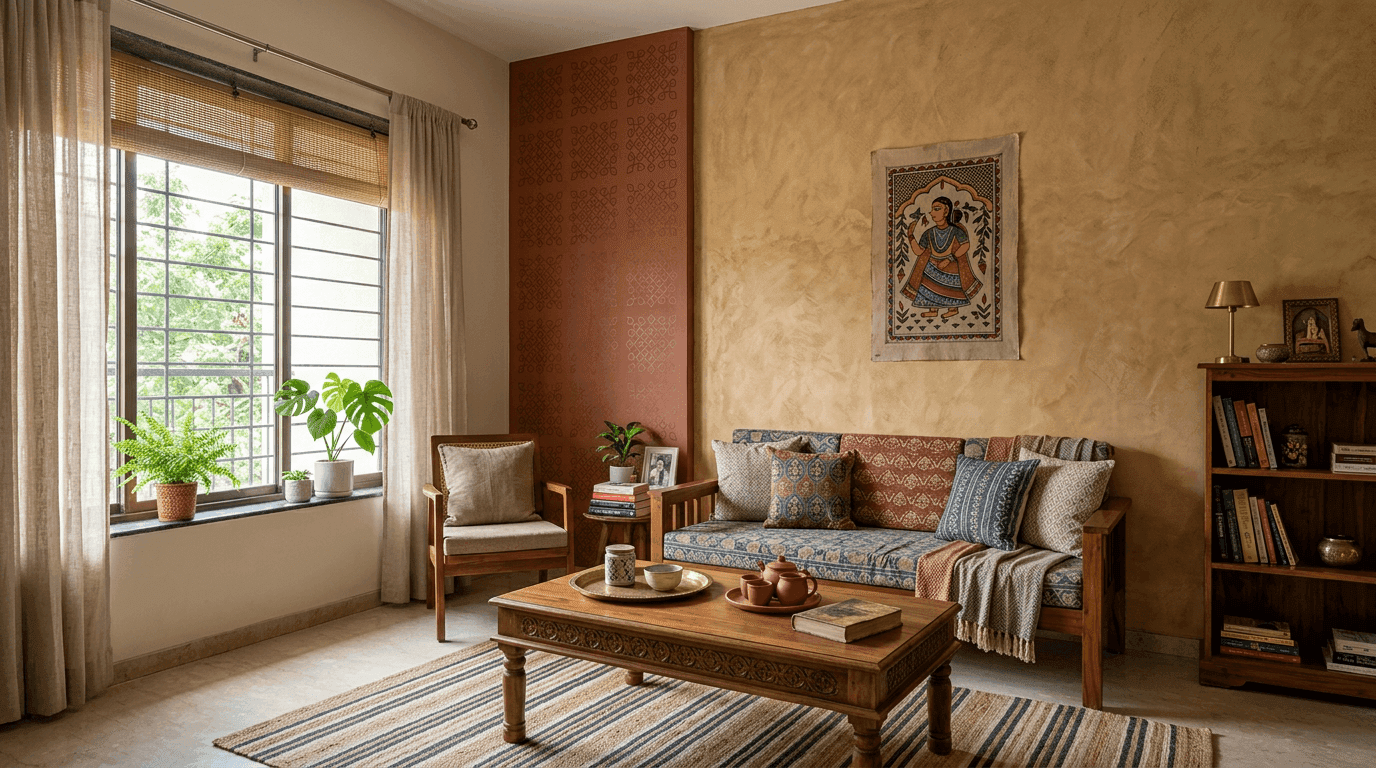
Meta description: Explore 50 wall paint designs for 2026: texture paint, wall stencils, geometric colour blocking & mural ideas for living rooms, bedrooms and interiors.
Key Takeaways
- A wall painting design is a technique decision, not a colour decision. Texture, stencil, colour-blocking, ombre, or mural: pick the technique first, then the shade.
- One wall is enough. Almost every design in this gallery is built for a single accent wall. Whole-room drama dates fast; one considered statement wall doesn't.
- DIY-friendly vs professional-only matters more than the photo. Stencils and tape-line geometry are weekend projects. Venetian plaster and 3D trowel textures are not.
- Budget anchor: standard texture painting runs roughly ₹80–200 per sq ft in India, while a stencilled accent wall can cost little more than a sampler pot and a weekend.
The wall paint designs trending in 2026 are colour-drenched rooms, limewash and micro-texture finishes, mandala and folk-art wall stencils, tape-line geometric blocking, and soft ombre gradients, almost always on one accent wall, in matte or chalky finishes, with the rest of the room kept deliberately quiet.
This gallery collects 50 wall painting designs organized the way we actually brief painters: by technique first (texture, stencil, geometric, mural) and then by room. Each idea carries a difficulty rating, because a creative wall you can't execute is just a screenshot. Paint brands and home decor magazines will show you their prettiest walls. We'll also tell you which ones survive an Indian monsoon, a toddler, and a landlord inspection. For the broader thinking on feature walls beyond paint (paneling, cladding, and the rest), our wall design guide is the place to start.
How Do You Choose the Right Wall Paint Design for a Room?
Pick the wall before the design: find the natural focal point, check its daylight, then match the technique to the room's job: stencils for pattern and tradition, texture for depth and luxury, geometric blocking for modern energy, murals for personality. Coordinate with the furniture you already own, not the furniture in the reference photo.
Choosing the right wall is half the design. Here's the four-step method we run on our own drawings before any painting project starts:
- Select the natural focal point. Usually the wall behind the TV unit, the sofa, or the bed headboard. The perfect wall is the one people already look at.
- Evaluate natural light. Heavy dark textures on a wall that receives zero daylight turn muddy. Save deep finishes for lit walls.
- Choose the technique. Stencils for traditional motifs, textures for depth, tape-line geometry for crisp modern rooms, murals when the wall should tell a story.
- Coordinate with furniture. The background wall colour must flatter your existing upholstery and wood tones, not fight them.
One honest note before the gallery. This page is about technique: how the paint goes on the wall. If your real question is which shades to pair, that's a palette problem: for wall colour ideas and colour combination ideas room by room, our room colour combination guide handles it properly, and whole-home colour scheme planning lives in the house colour combination gallery. The two decisions work best made in that order: technique, then colour.
10 Latest Wall Paint Designs Trending in 2026
What changed this year: shine is out, chalk is in. The trending wall treatments of 2026 are matte, mineral, and quieter than the neon-cove era. Modern wall painting now leans on finish and depth rather than loud pattern. These ten design ideas lead our client briefs right now, in living rooms and bedrooms alike.
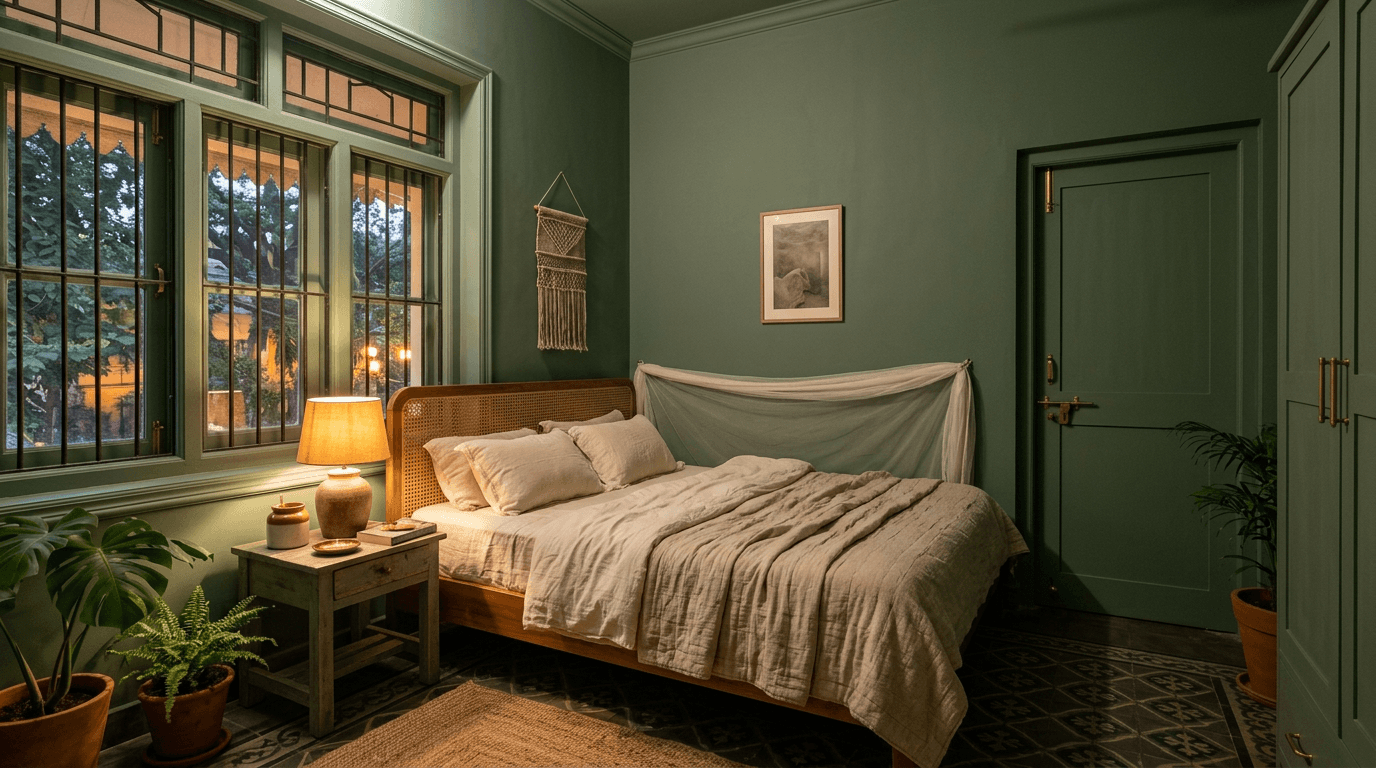
1. Colour drenching. Walls, trim, and ceiling in one continuous shade. It's the single most requested look of 2026 because it makes small Indian rooms feel taller and intentional. Difficulty: DIY-friendly.
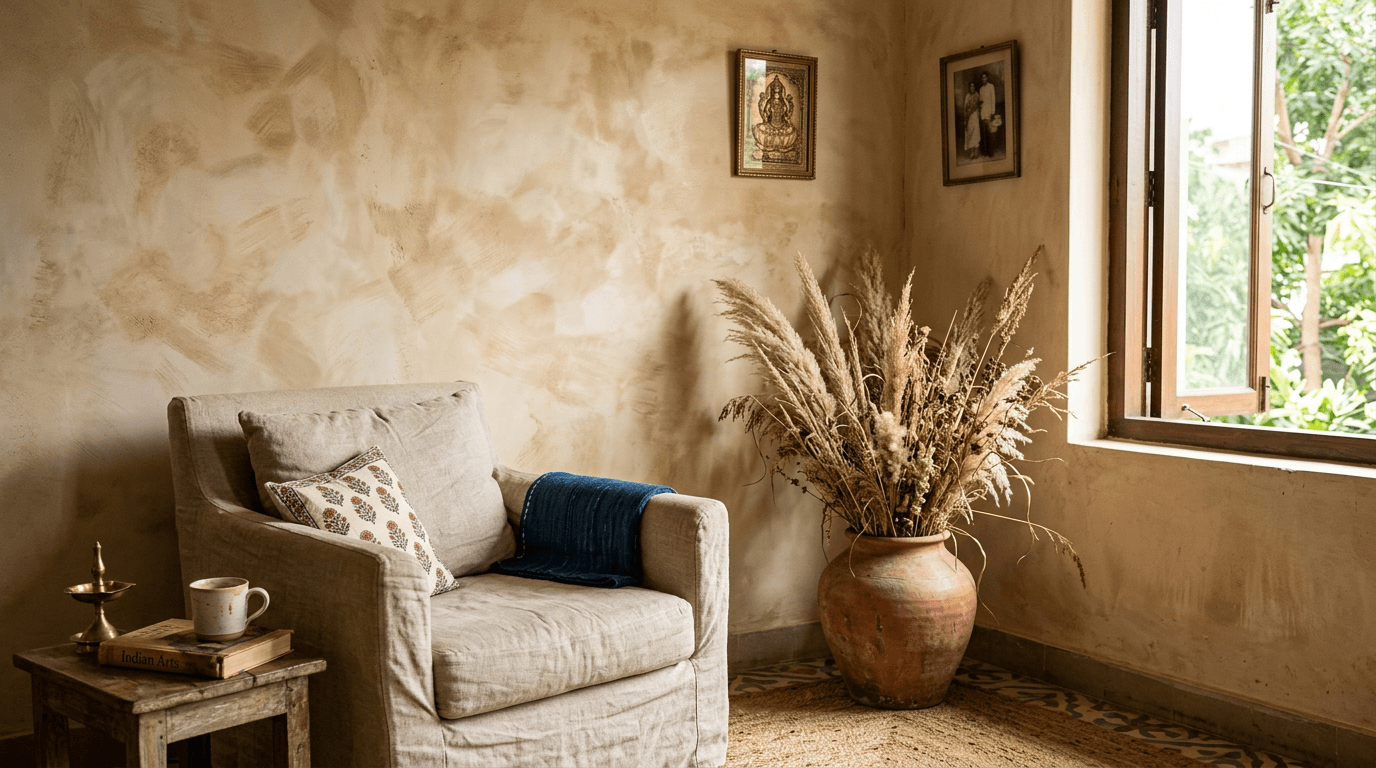
2. Limewash finish. Cloudy, mineral, old-world. Limewash gives a plain surface gentle movement without pattern. Every pass of the brush leaves a unique wall, and it photographs beautifully in Indian daylight. Difficulty: DIY-possible, better hired.
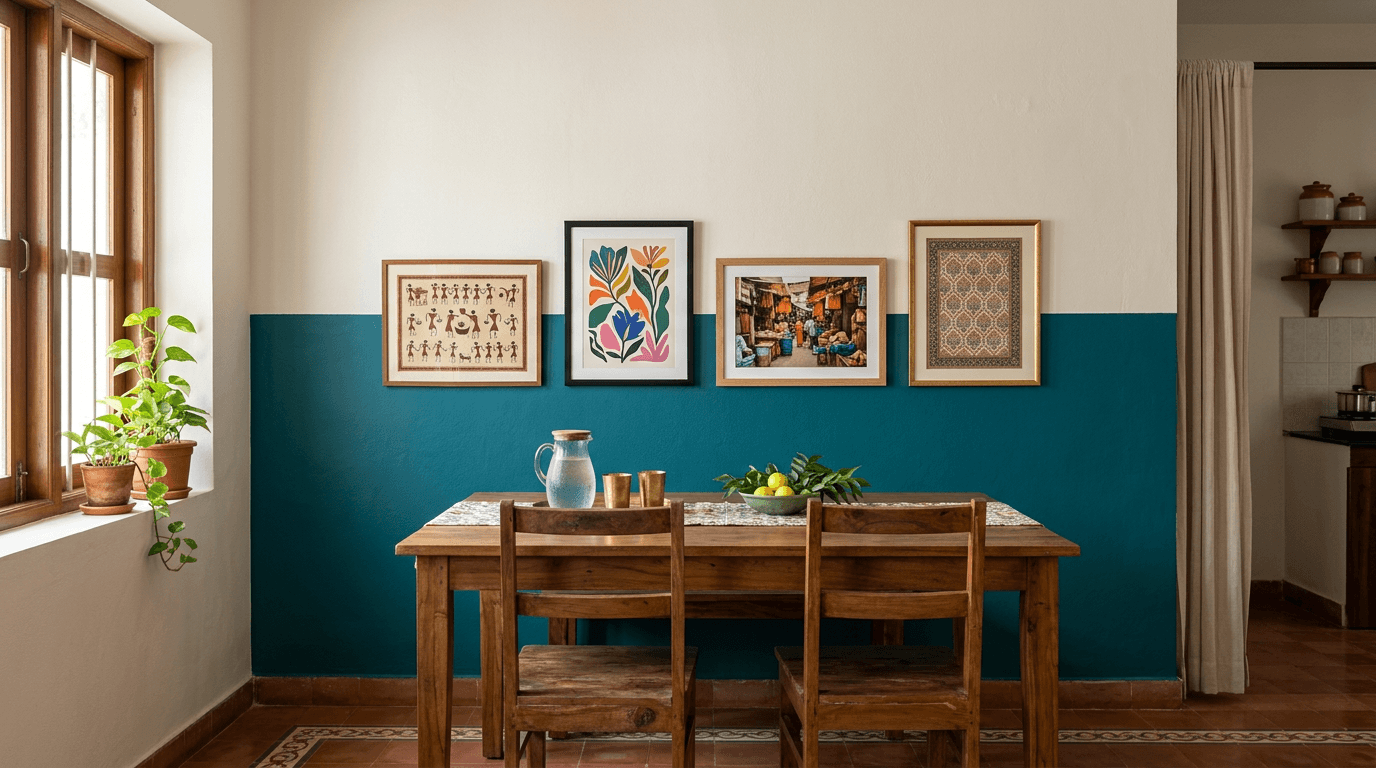
3. Half-wall two-tone. Deeper shade below, lighter above, split at roughly one metre. An old dado idea reborn: practical against scuffs, and it visually widens a narrow room. Difficulty: DIY-friendly.
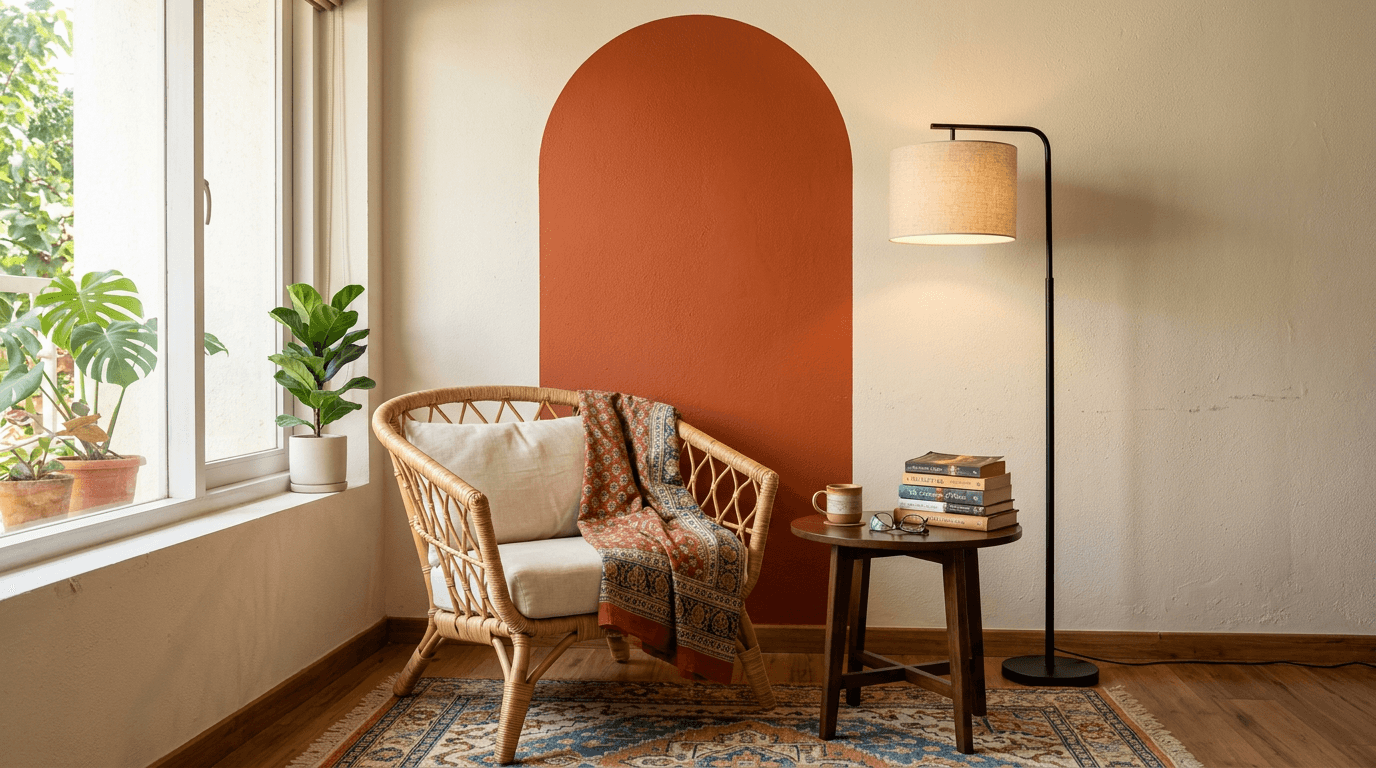
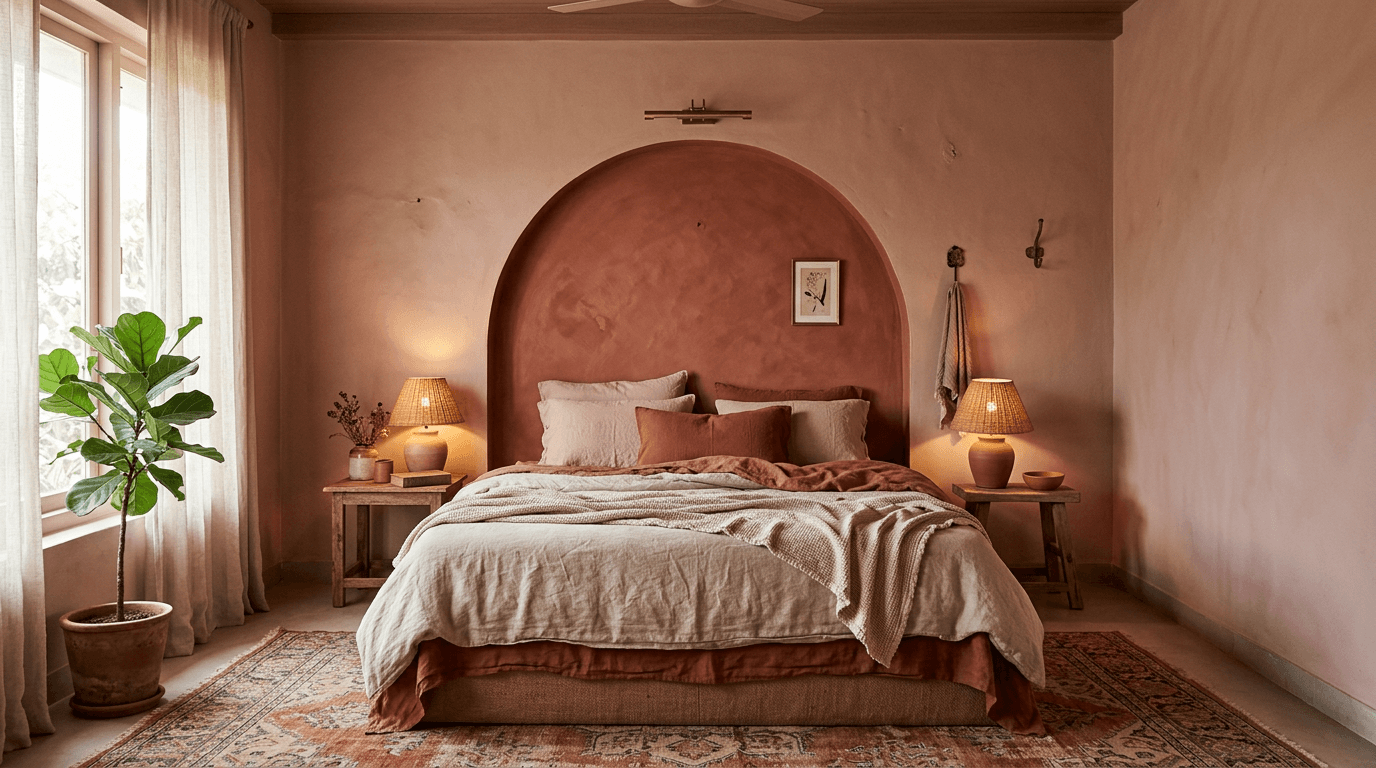
4. Painted arch. A tall arch painted behind a bed, console, or reading chair. It fakes architecture for the price of a litre of paint. Difficulty: DIY-friendly with a pencil-and-string compass.
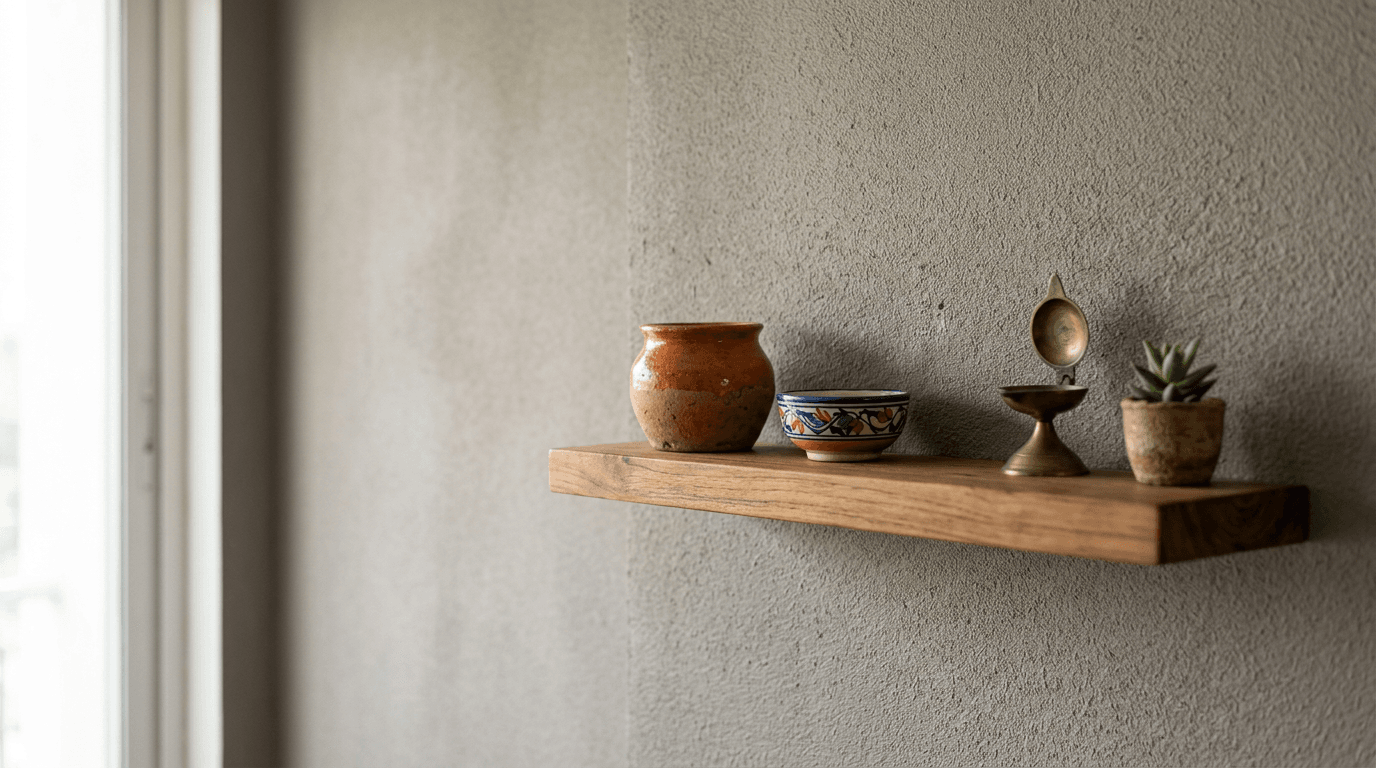
5. Micro-texture sand finish. A fine-grain sand texture that reads as fabric from across the room. The subtle end of texture paint: depth without drama. Difficulty: professional.
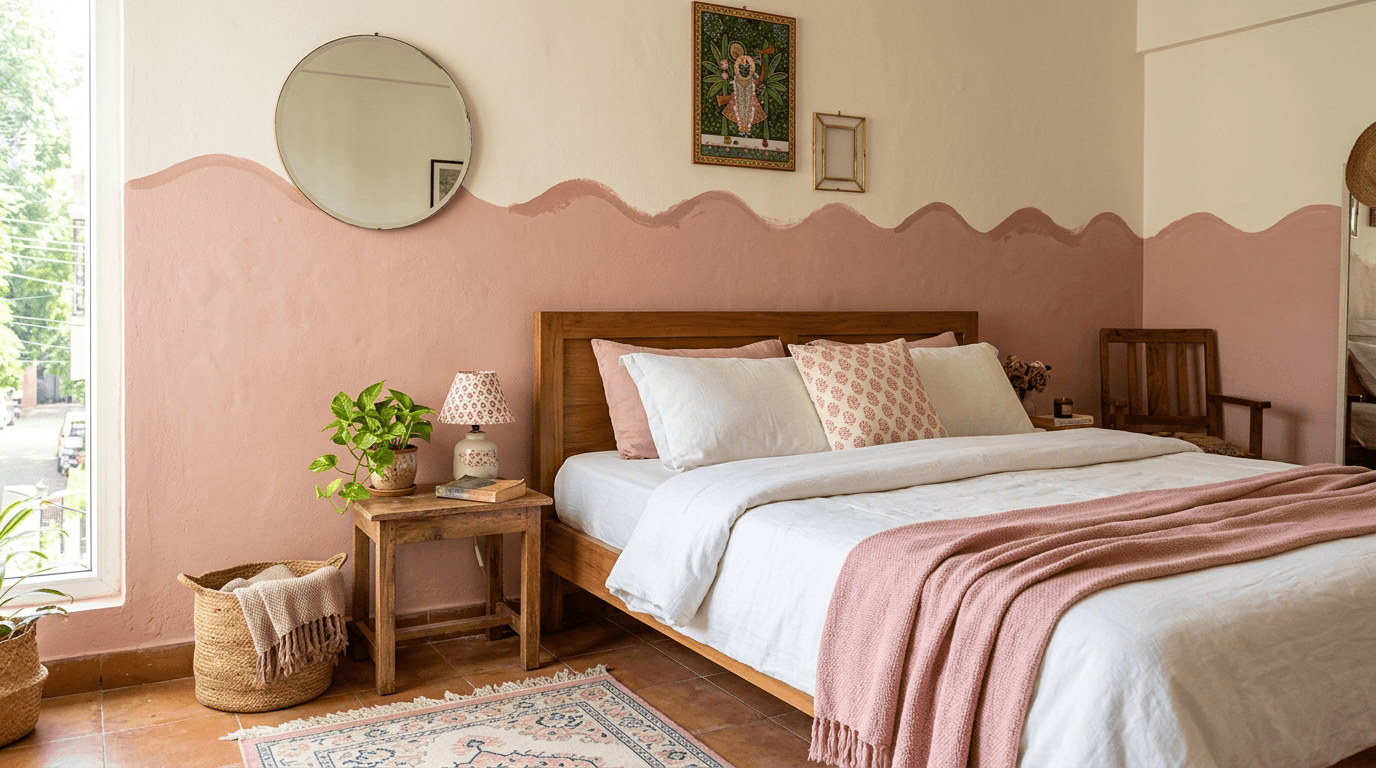
6. Freehand wavy border. A soft hand-painted wave where two colours meet, instead of a ruler-straight line. Relaxed, a little playful, very 2026. Difficulty: DIY-friendly.
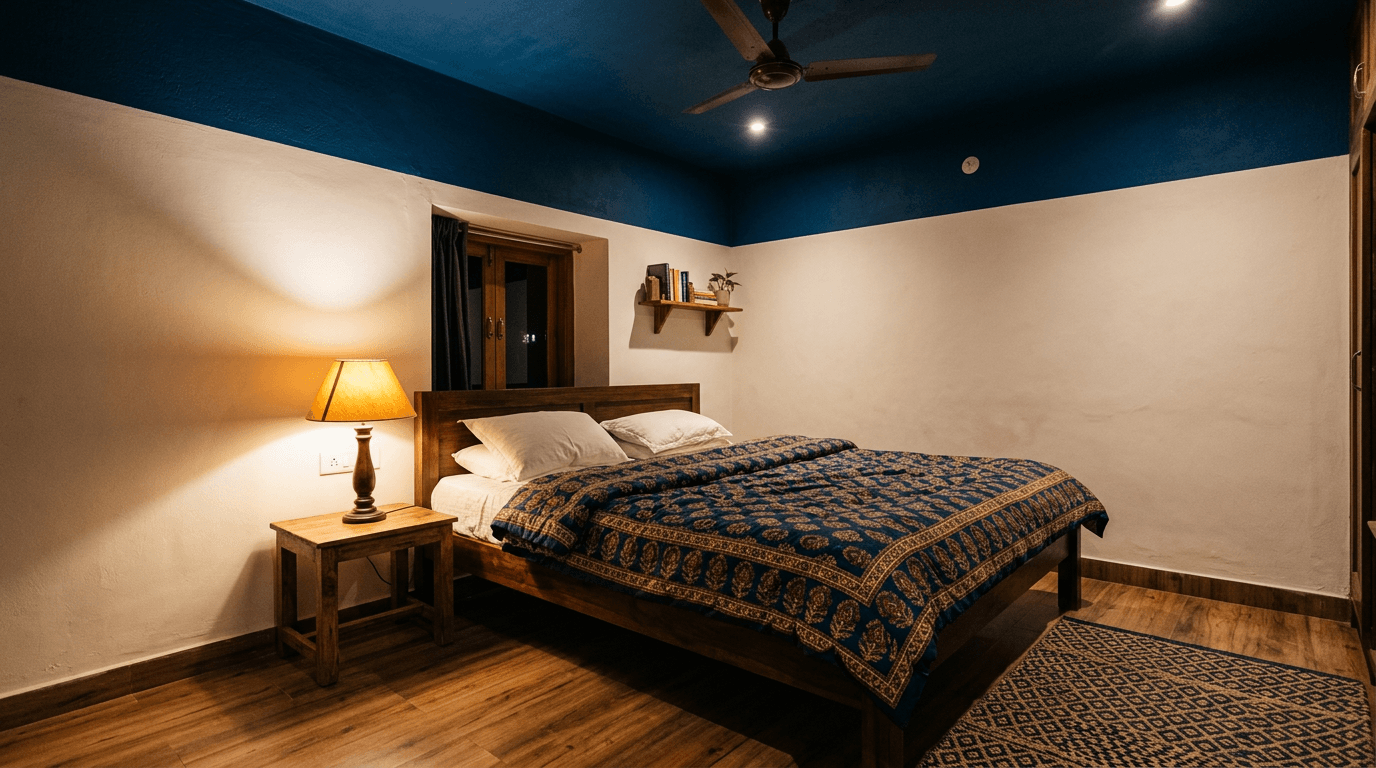
7. Painted ceiling, the fifth wall. Drench the ceiling in colour and keep the walls pale. Makes low Indian slabs feel deliberate rather than low. Difficulty: DIY-possible, neck-breaking.
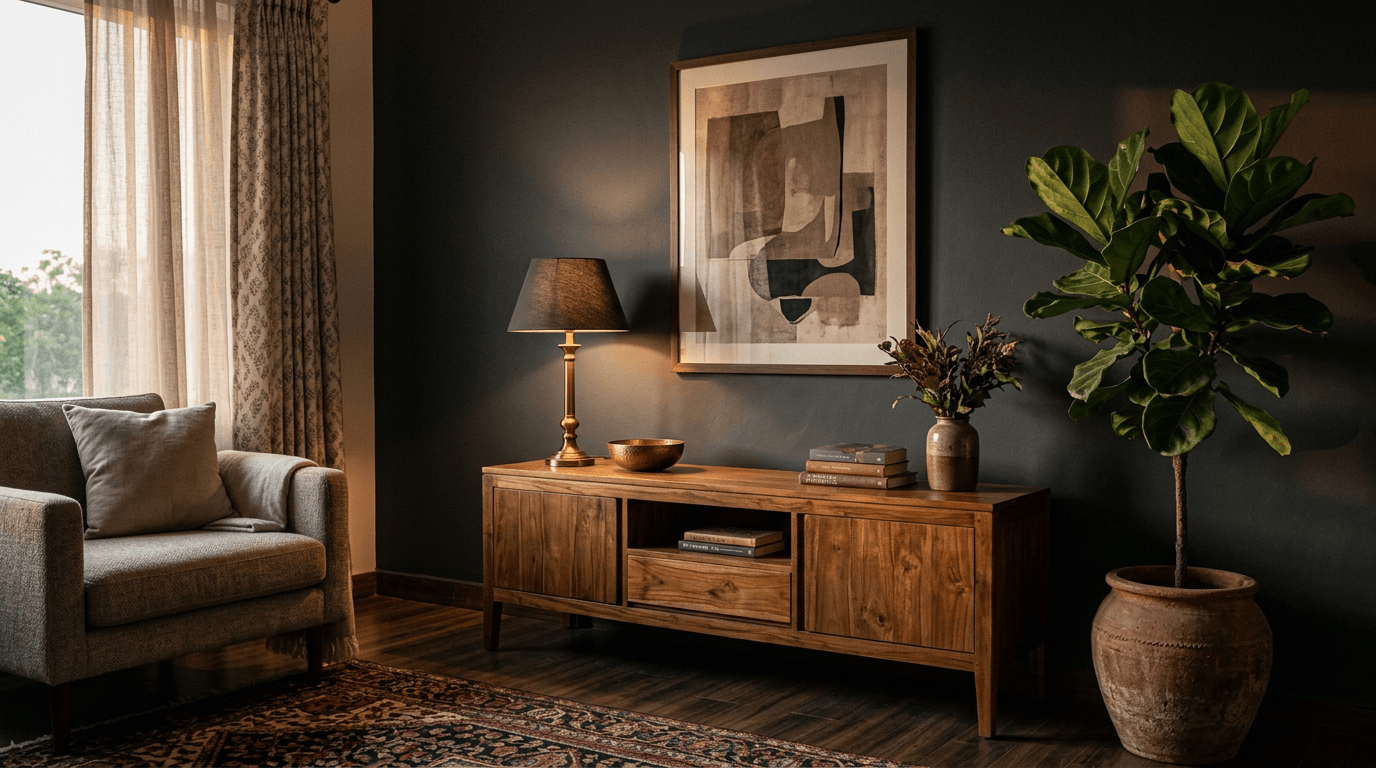
8. Matte charcoal statement wall. The strongest neutral there is. A charcoal statement wall makes wood, brass, and greenery look instantly expensive. Difficulty: DIY-friendly.
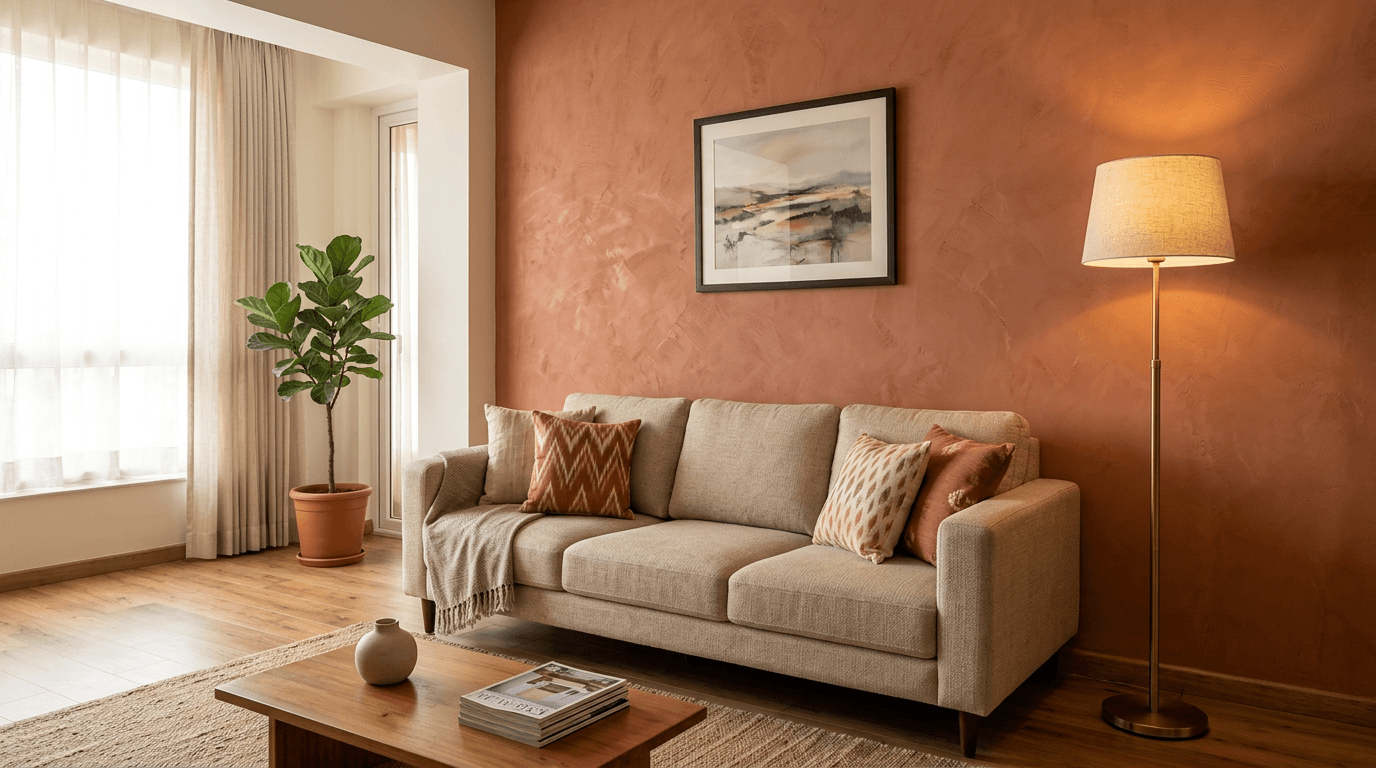
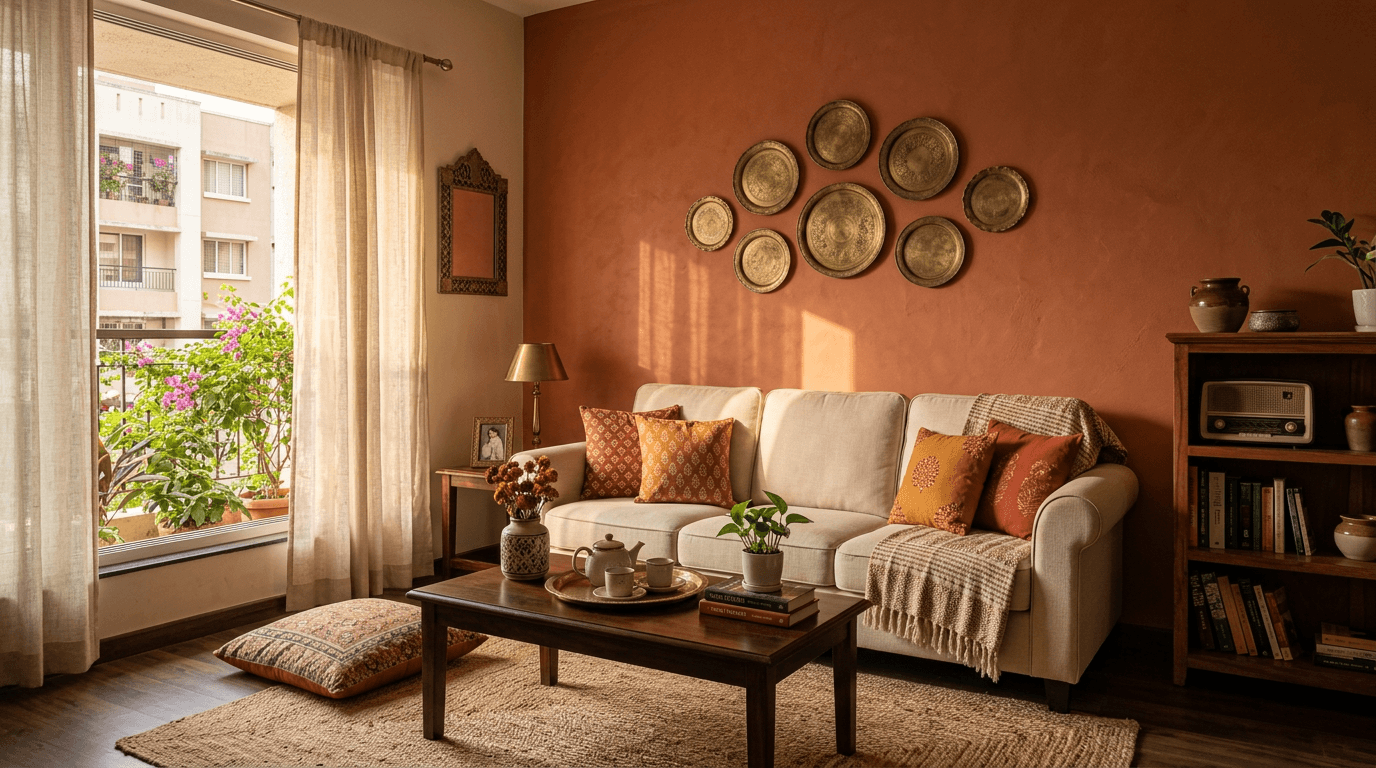
9. Earthy terracotta accent. The shade of 2026 across Indian interiors: warm, forgiving, at home with both traditional brass and modern boucle. Difficulty: DIY-friendly.
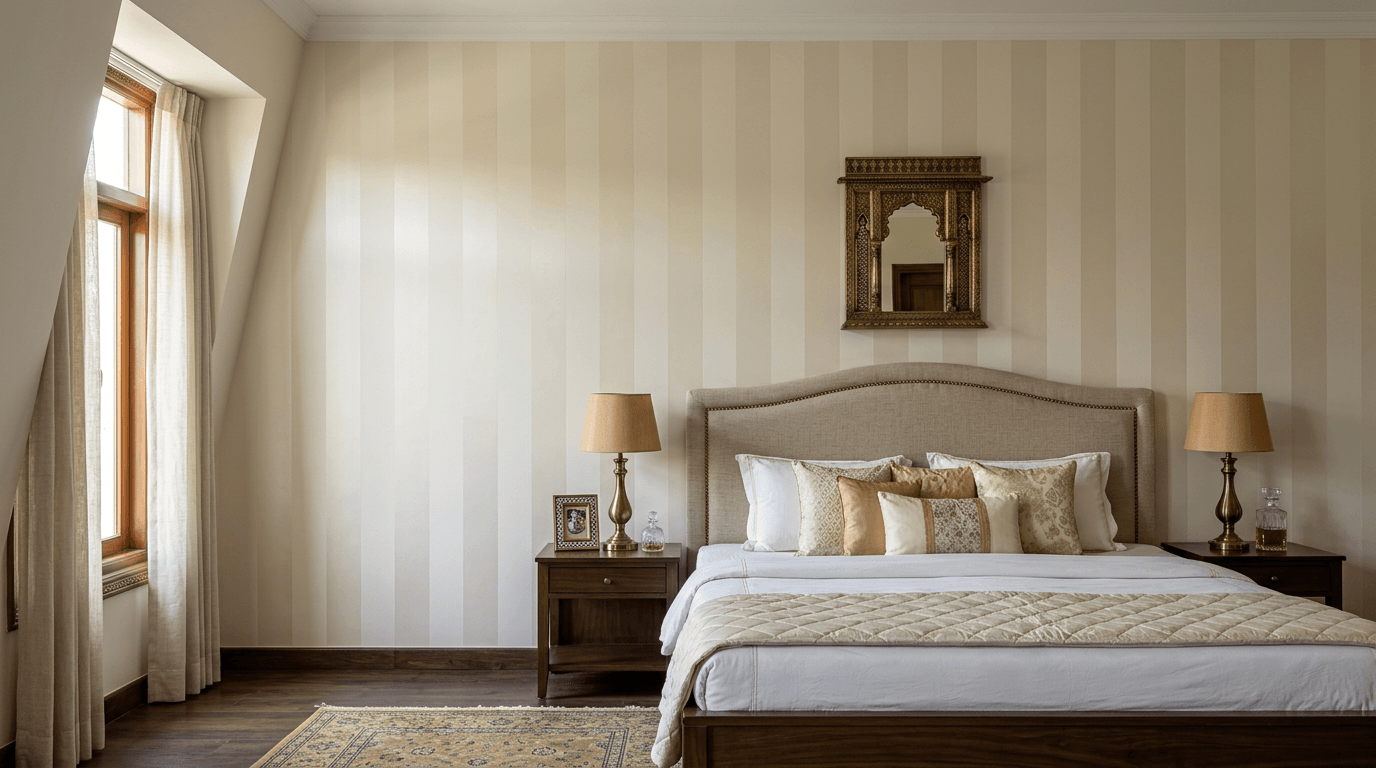
10. Tone-on-tone sheen stripes. Same colour, two finishes: a matte base with satin stripes that appear only when light moves across the wall. Quiet luxury for people who think accent walls shout. Difficulty: professional patience, DIY-possible.
Texture Paint Designs: Rustic, Metallic & Concrete-Look Wall Texture Ideas
Texture paint is thick, acrylic-based material applied with trowels, combs, sponges, or rollers to build physical depth, unlike standard emulsion, which dries smooth and flat. That physicality is why a texture wall reads as luxury: it interacts with light all day. Some of the best texture paint designs for living rooms sit in this section, and it's also where most professional-only jobs live — a bad texture job on an interior wall can't be painted over, it has to be scraped.
Rustic & Concrete-Look Texture Designs
11. Rustic comb texture. Wide-tooth comb dragged through wet texture paste in arcs or crosshatch. Earthy and handmade, brilliant behind wooden furniture. Difficulty: professional.
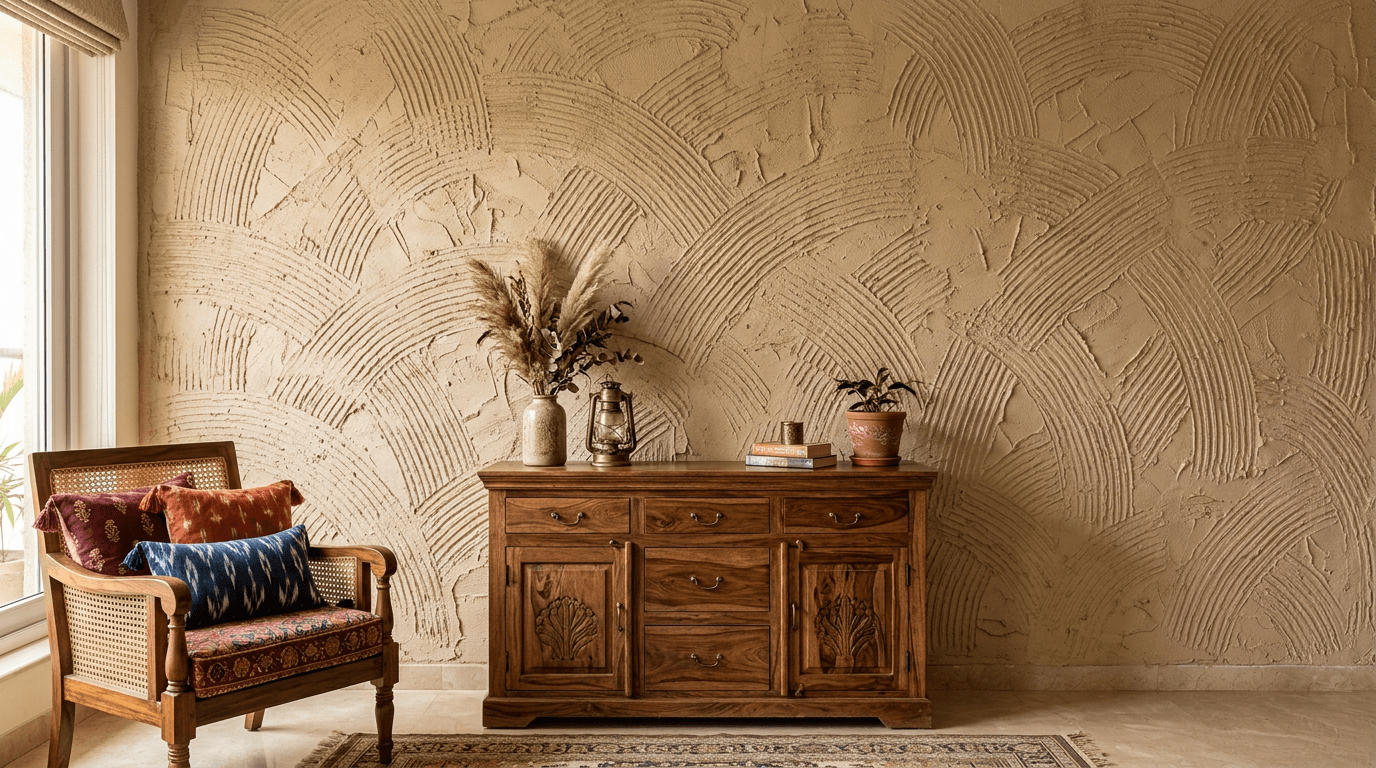
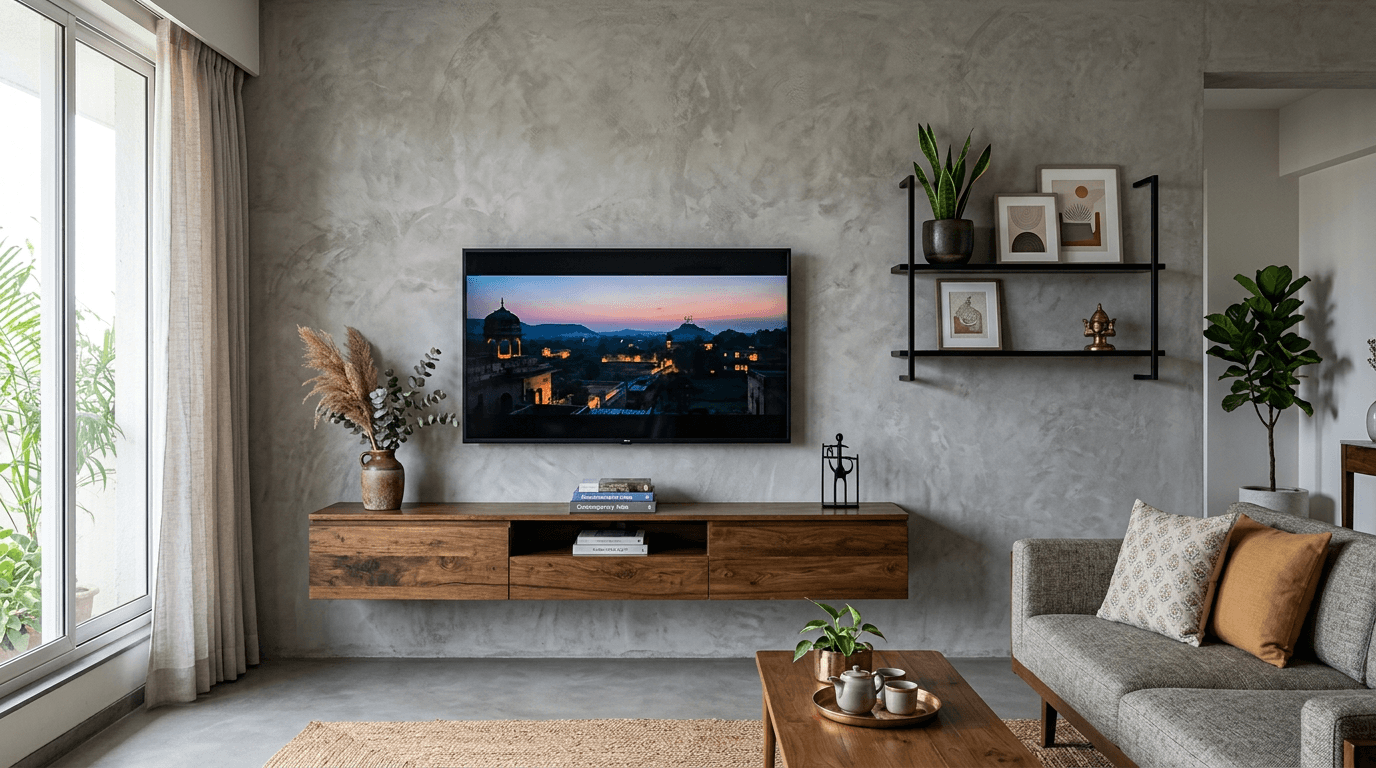
12. Concrete-look finish. Cement-grey troweled texture with subtle mottling: the industrial loft look, minus actual exposed concrete's cold and dust. Difficulty: professional.
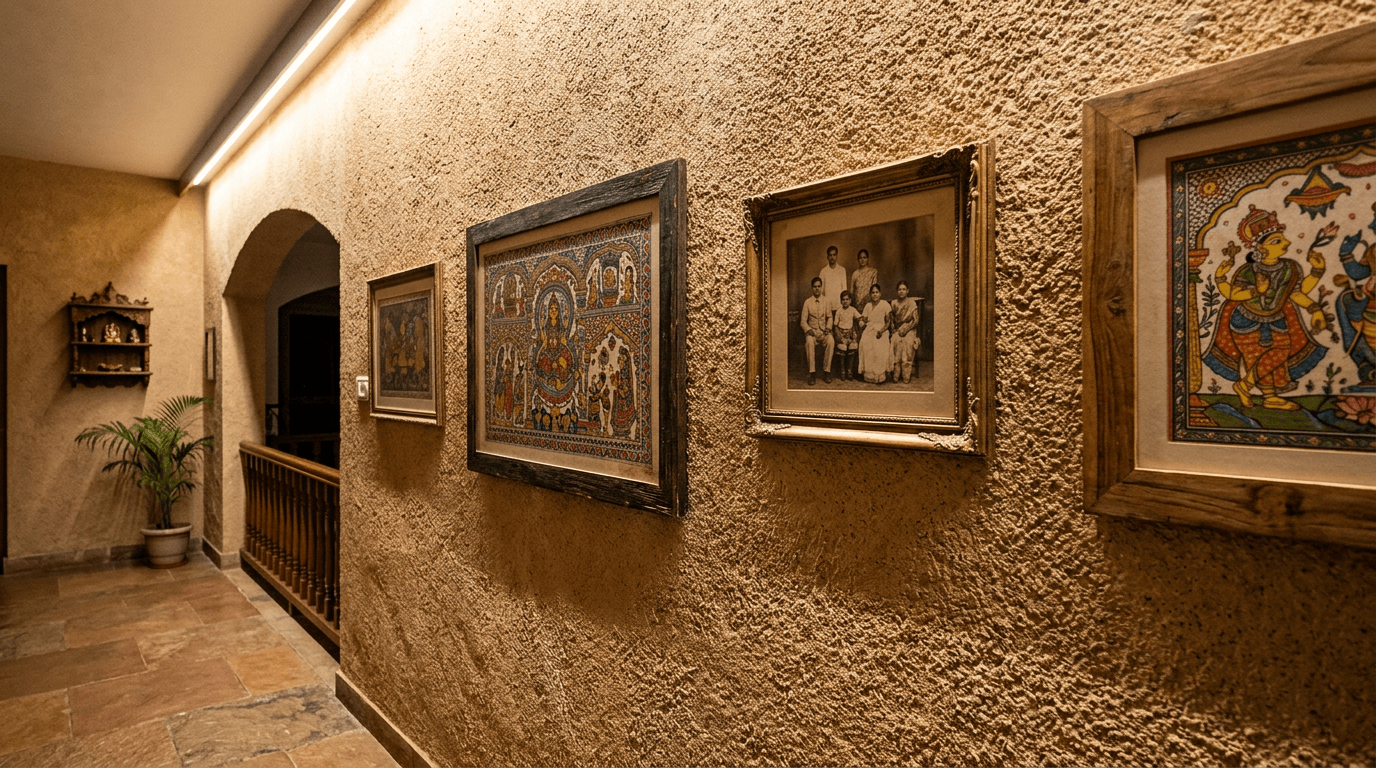
13. Sandstone granule texture. Coarse granular finish in sandstone tones. Hides imperfect plaster better than any other texture design on this page. It's our go-to for renovation walls that aren't worth re-plastering. Difficulty: professional.
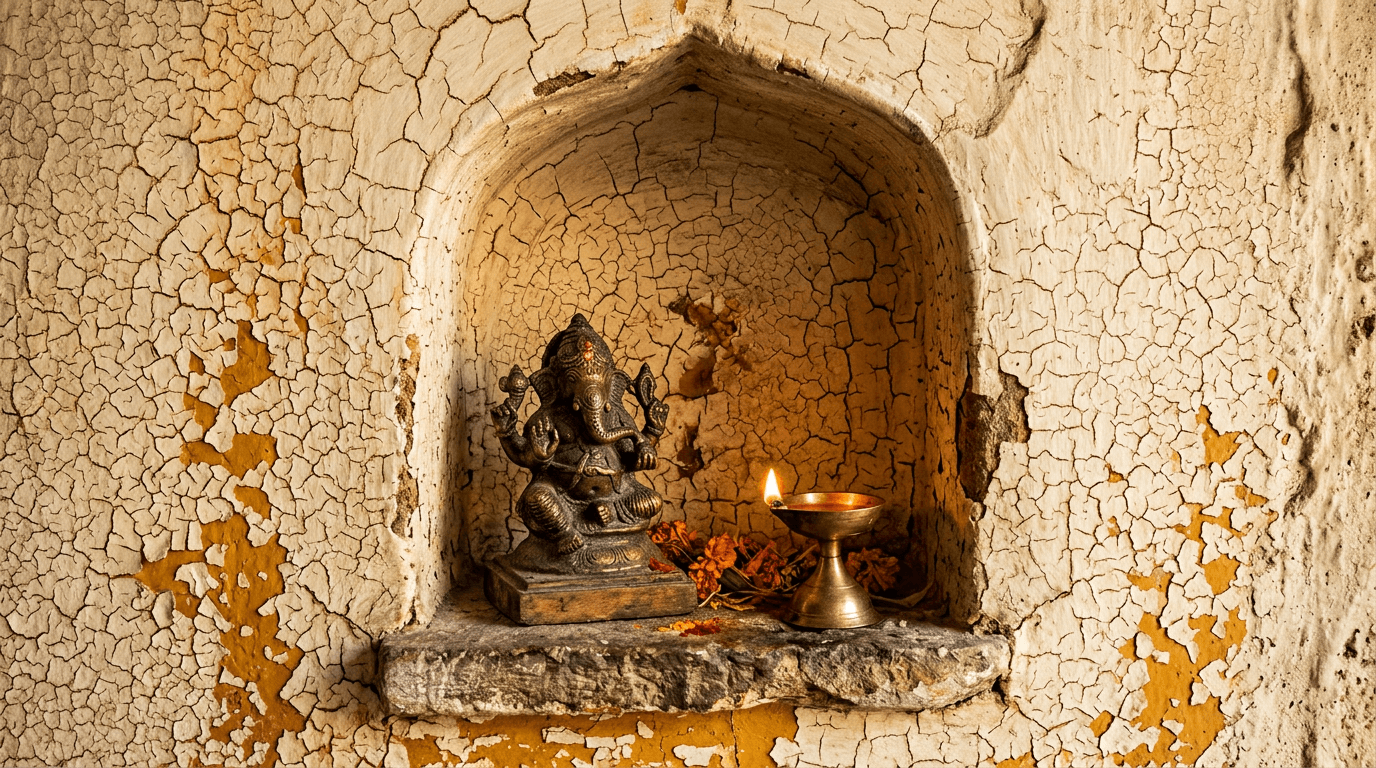
14. Weathered crackle finish. A top coat that shrinks into fine cracks over a contrast base. Vintage character, best kept to one niche or column rather than a full wall. Difficulty: professional.
15. Sponged texture. Emulsion dabbed with a sea sponge in two close tones. The friendliest DIY way to add texture to a wall: forgiving, fast, cheap. Difficulty: DIY-friendly.
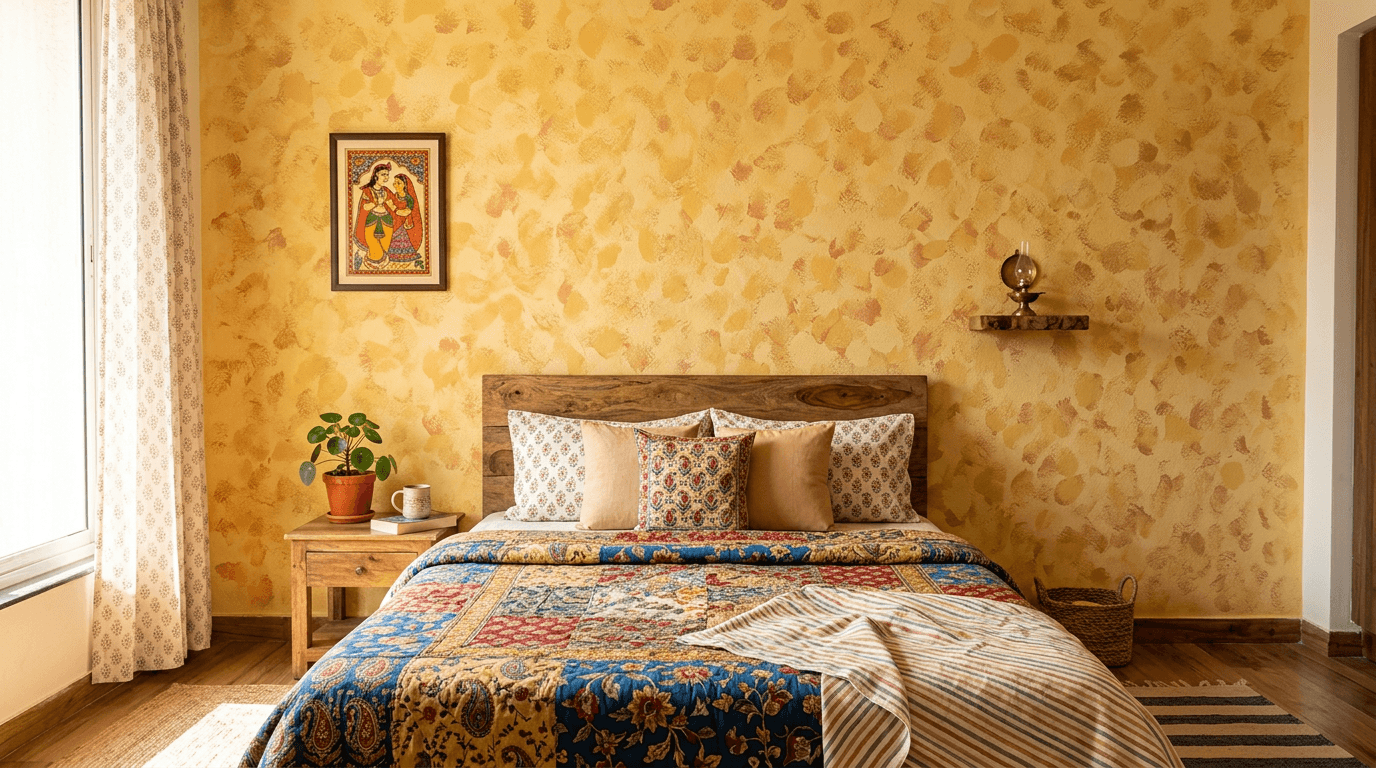
Metallic Texture Designs
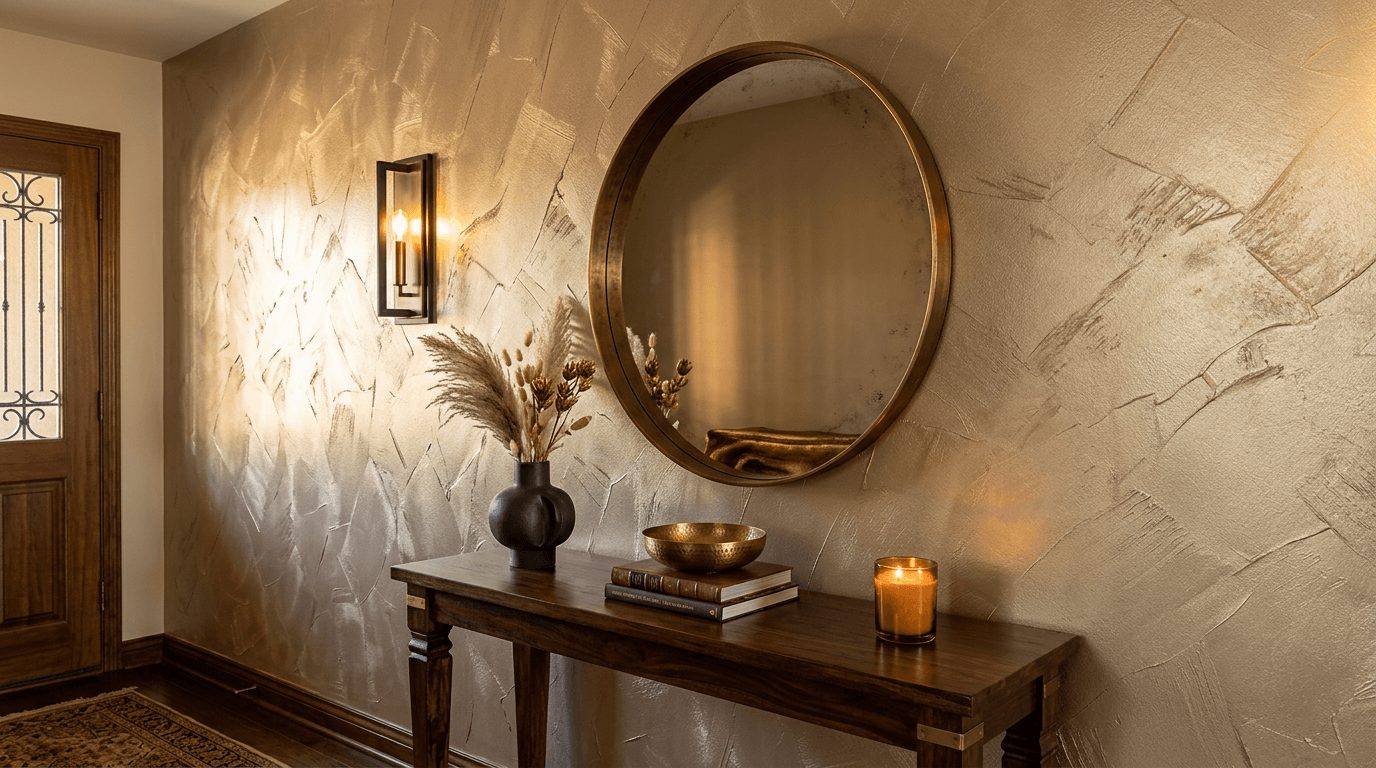
16. Metallic gold trowel texture. Gold or champagne metallic paste over a warm base, troweled loosely so light catches the ridges. One wall, maximum. Difficulty: professional.
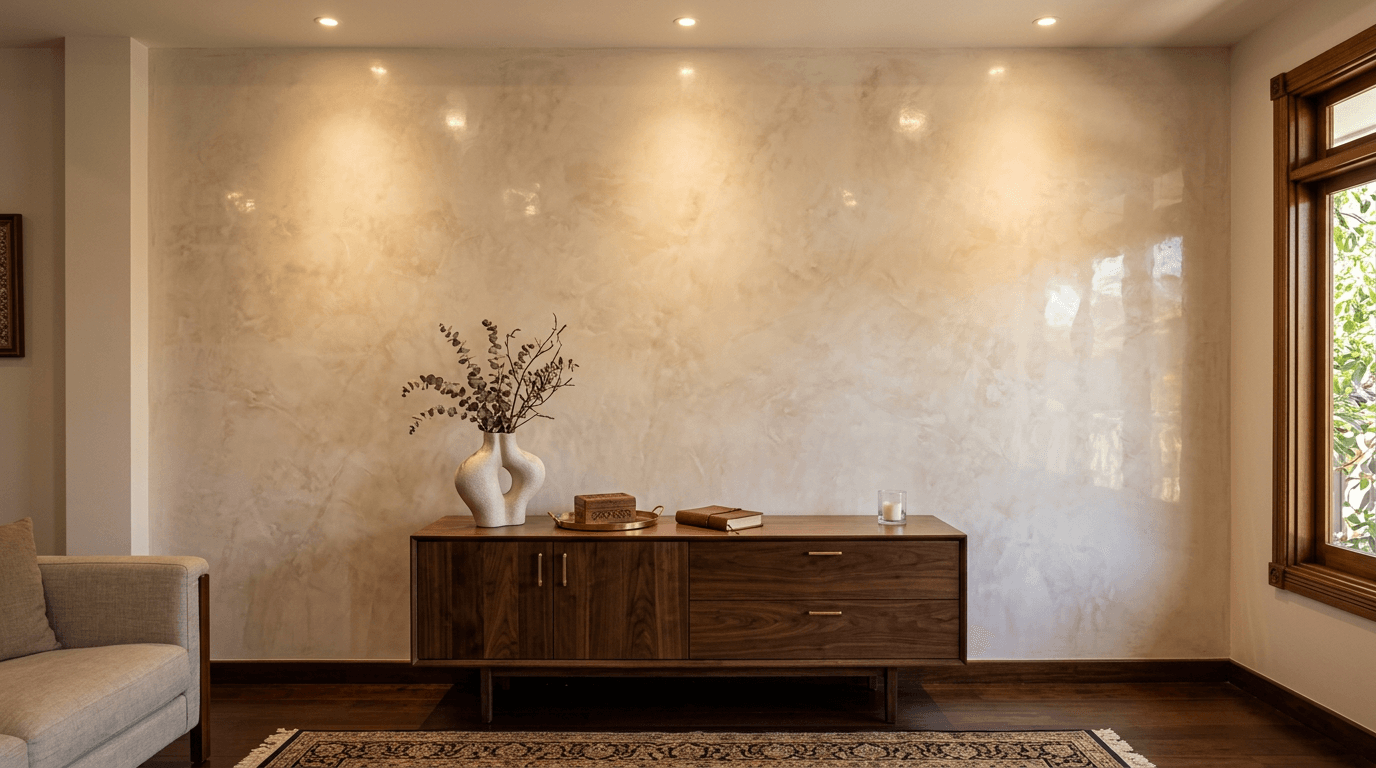
17. Venetian plaster (lustro). Polished lime plaster burnished to a marble-like glow. The most exquisite wall finish money can buy in paint form, and genuinely professional-only. Difficulty: specialist.
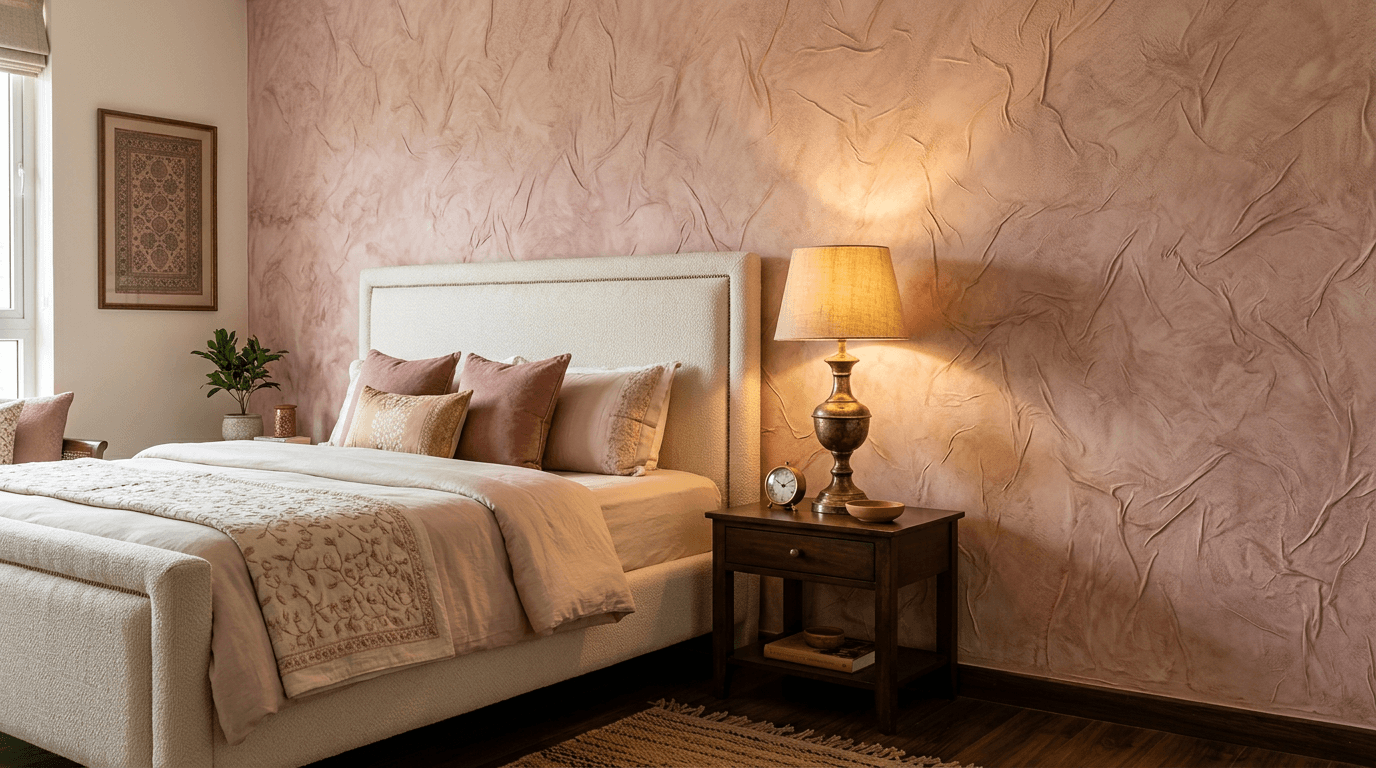
18. Ragging fabric texture. Twisted cloth rolled through wet glaze leaves a soft crumpled-silk pattern. Old technique, quietly returning in muted 2026 tones. Difficulty: DIY-possible.
19. Roller-swirl stucco. Texture roller pushed in overlapping swirls through paste. Bold, retro, and divisive. Sample a board before committing a wall. Difficulty: professional.
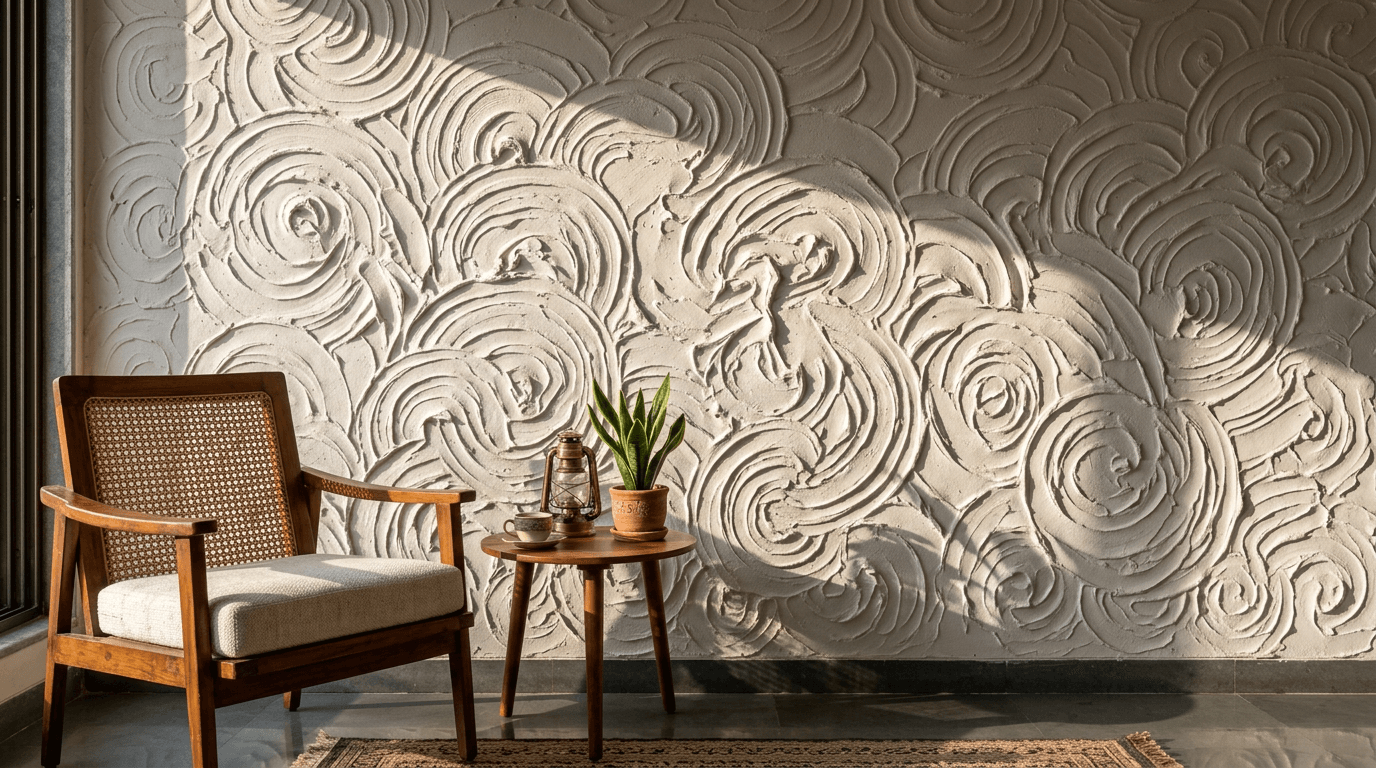
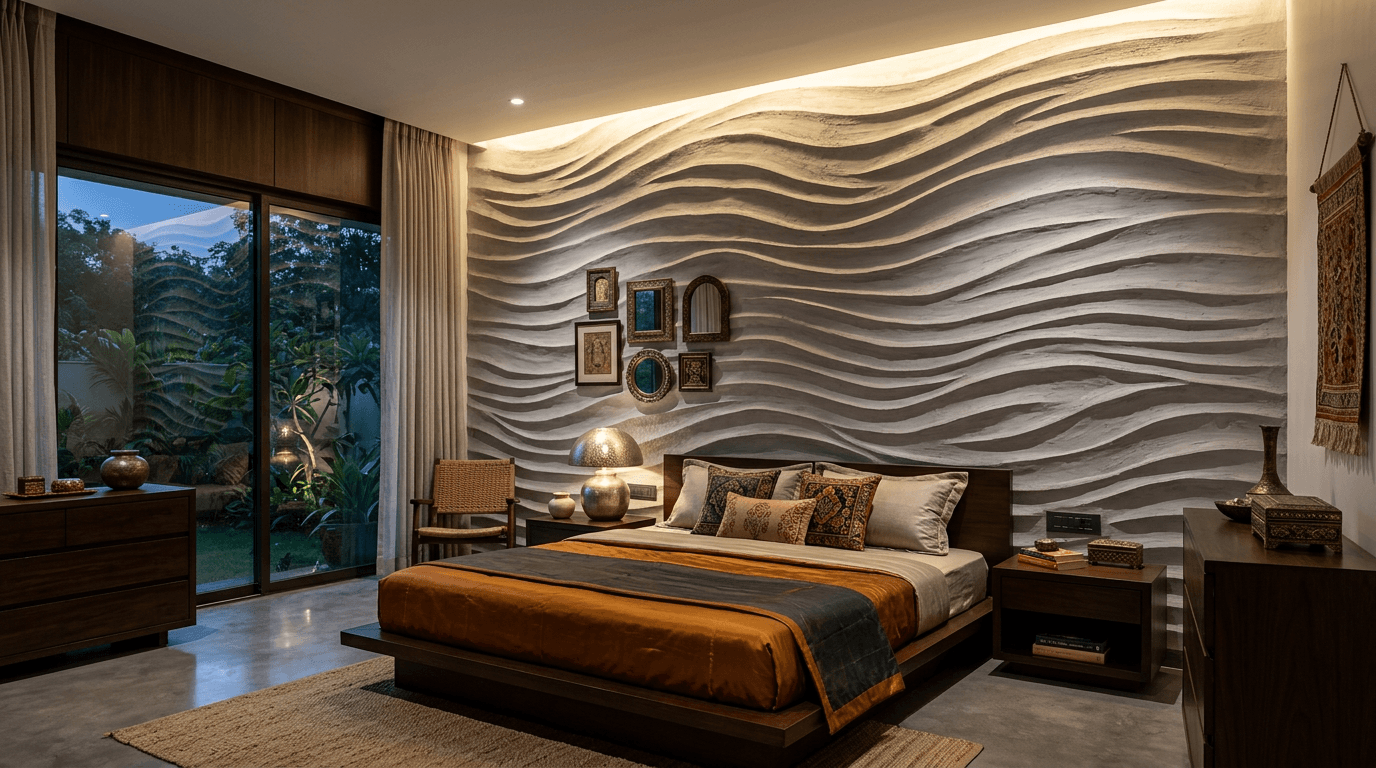
20. 3D trowel waves. Deep horizontal wave relief in plaster, usually behind the TV or bed. The most dramatic of all texture finishes here, and the one that most needs a skilled applicator and a dust sheet. Difficulty: specialist.
Wall Stencil Designs: Types of Wall Stencils for Indian Homes
Stencils are the honest shortcut of decorative wall painting: wallpaper-level pattern, paint-level cost, and a weekend timeline. A quality stencilled wall with a durable top coat lasts 5–7 years with minimal maintenance, and unlike wallpaper, it never peels in humidity. The types of wall stencil worth knowing: repeat-pattern (allover), border, motif (single medallion), and panel stencils, covering everything from intricate designs to bold modern shapes. As wall decoration goes, nothing else delivers this much pattern per rupee.
How to stencil a wall without ruining it, the five steps that matter:
- Prep and base-coat the wall, and let it cure fully.
- Secure the stencil with low-tack painter's tape, level-checked.
- Test the stencil on cardboard first with your actual roller and paint.
- Load the roller almost dry. Excess paint is what causes bleeding under the stencil edges. Two thin coats always beat one wet one. That's the whole secret: to prevent bleeding under the stencil, starve the roller.
- Lift the stencil carefully straight off while paint is tacky, realign to the registration marks, repeat.
Mandala, Moroccan & Damask Stencil Patterns
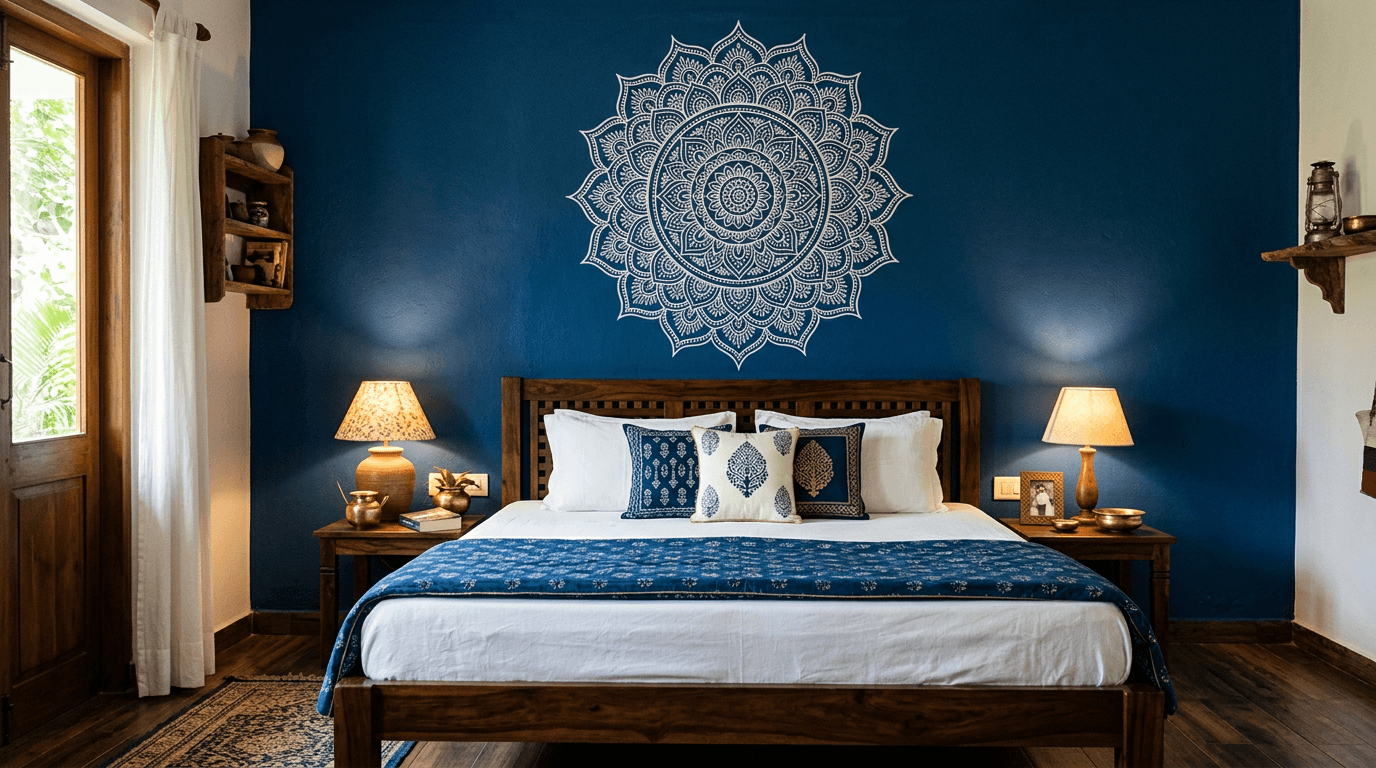
21. Mandala stencil medallion. One oversized mandala stencil centred behind the bed or over a console, a single intricate motif instead of allover pattern. Difficulty: DIY-friendly.
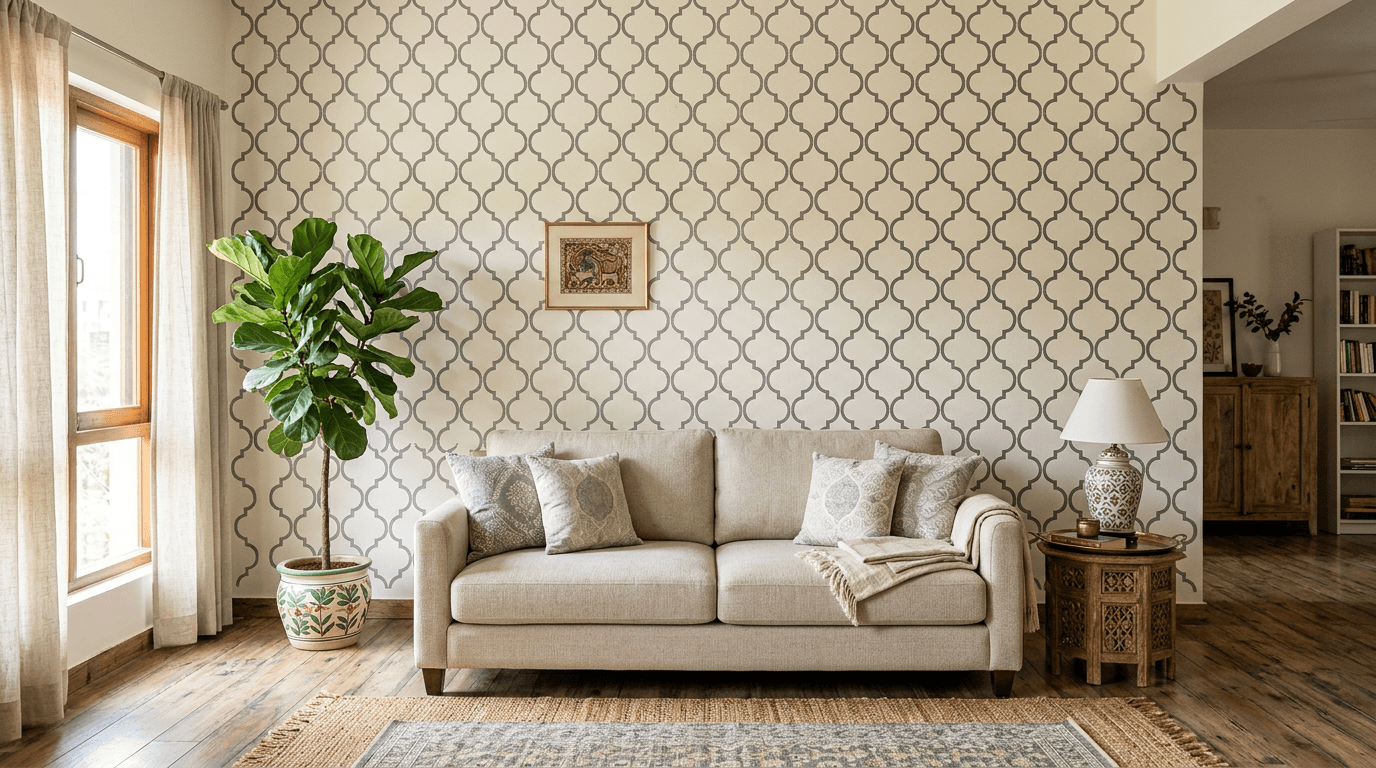
22. Moroccan trellis allover. Repeat trellis pattern across one wall in two soft tones. The classic "is that wallpaper?" stencil. Difficulty: DIY, patient.
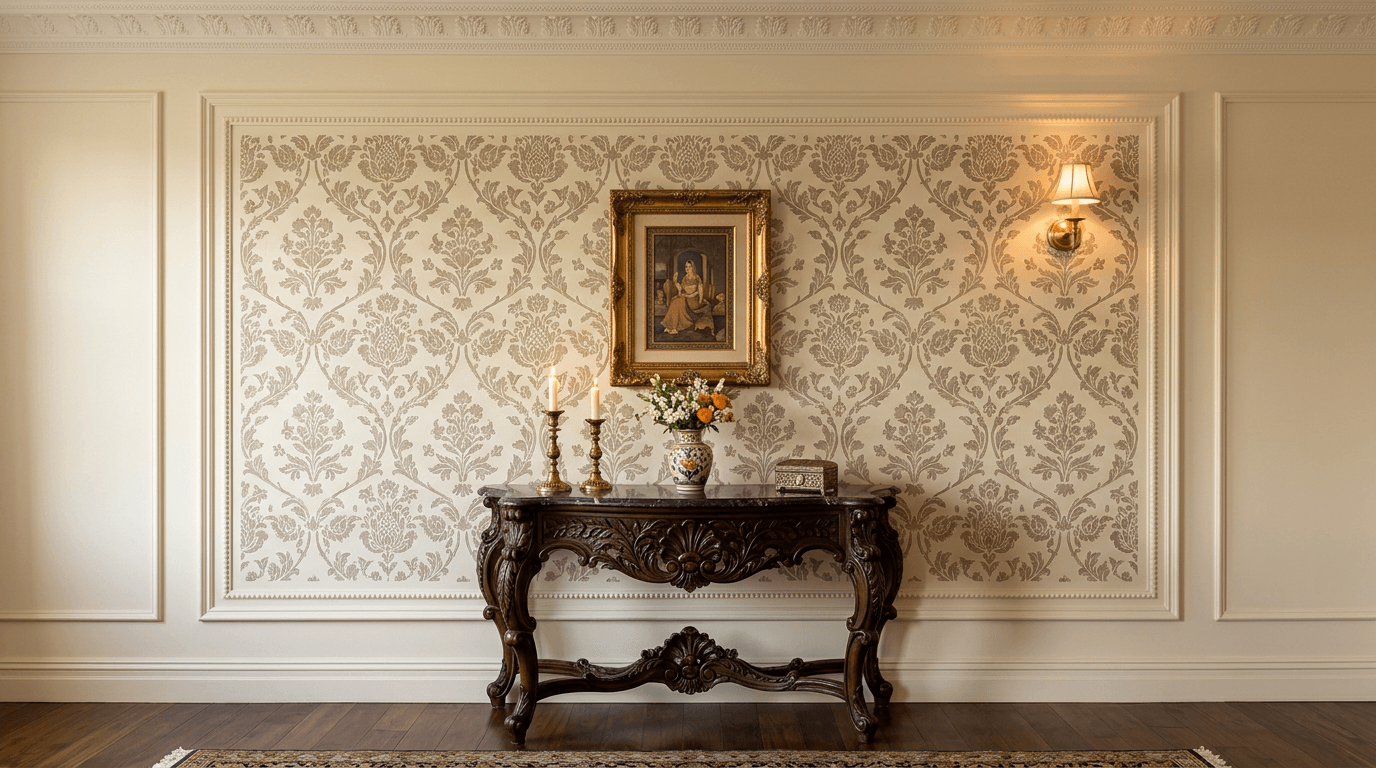
23. Damask panel stencil. Formal damask repeat inside painted "panels" framed by borders. Suits classic drawing room furniture and heavier wood. Difficulty: DIY, patient.
Indian Folk Art Stencils (Warli & Madhubani)
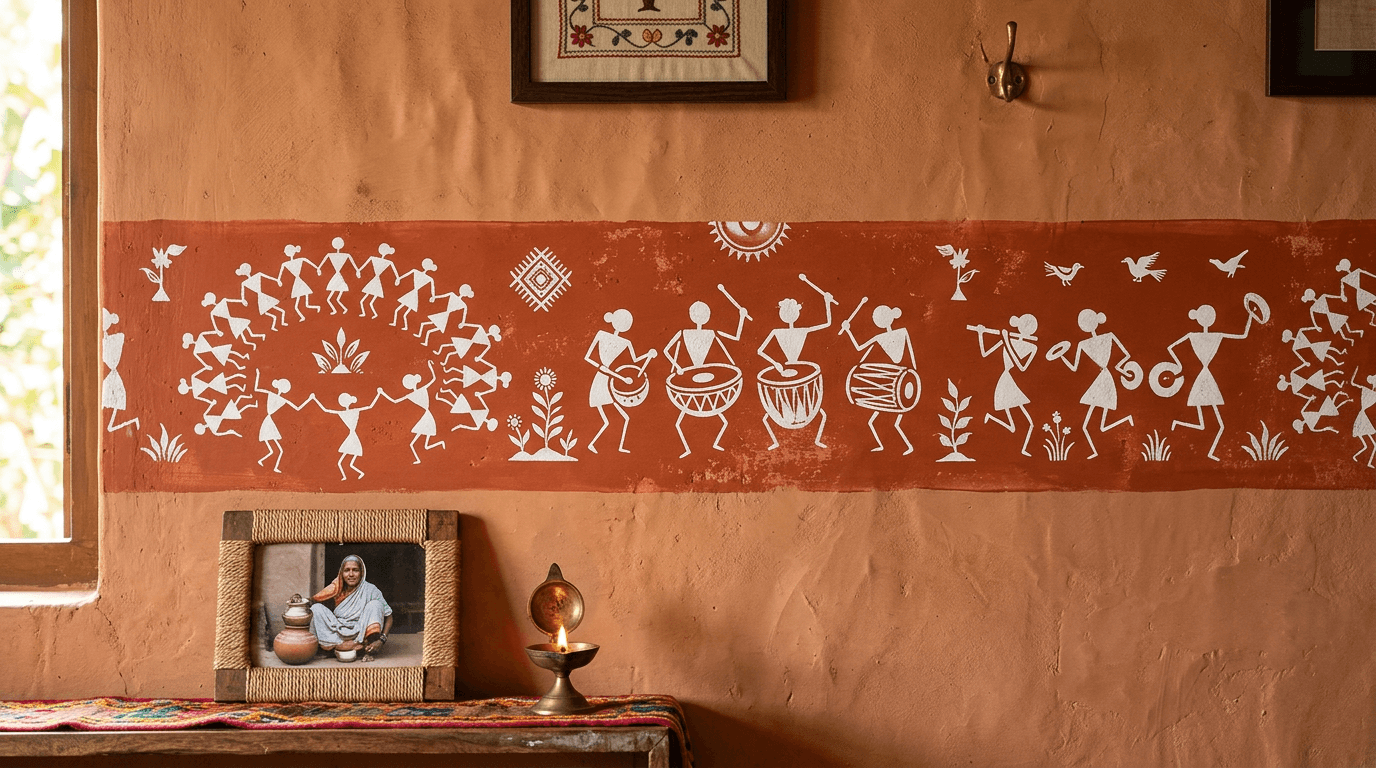
24. Warli folk art border. The Maharashtrian folk tradition (stick figures, drummers, dancing circles) stencilled as a border band in white over an earthy base. Difficulty: DIY-friendly.
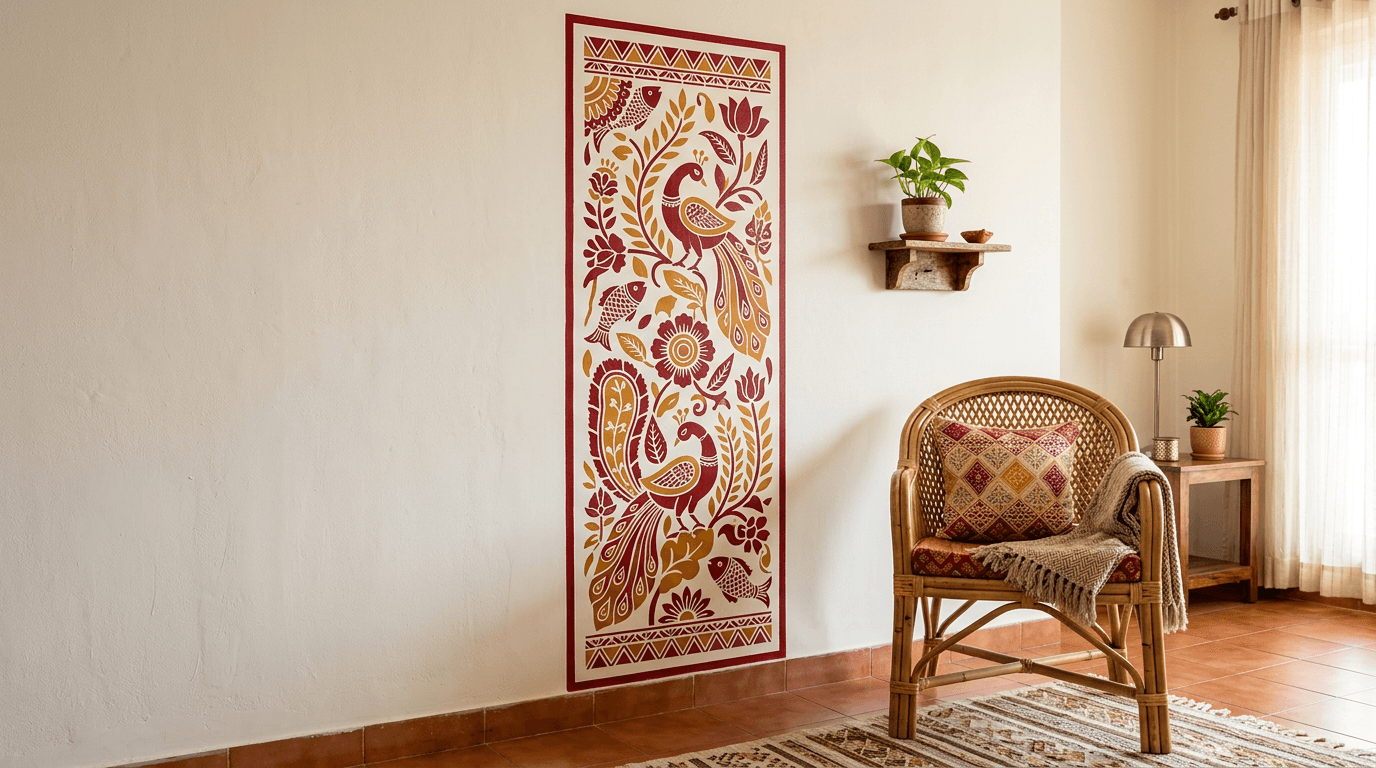
25. Madhubani-inspired panel. A framed vertical panel stencilled with Madhubani fish, peacock, and floral motifs in two or three colours. Heritage on one wall, modern everywhere else, and a natural fit for traditional courtyard-style homes and city apartments alike. Difficulty: DIY-possible.
Modern, Abstract & Kids Stencil Art
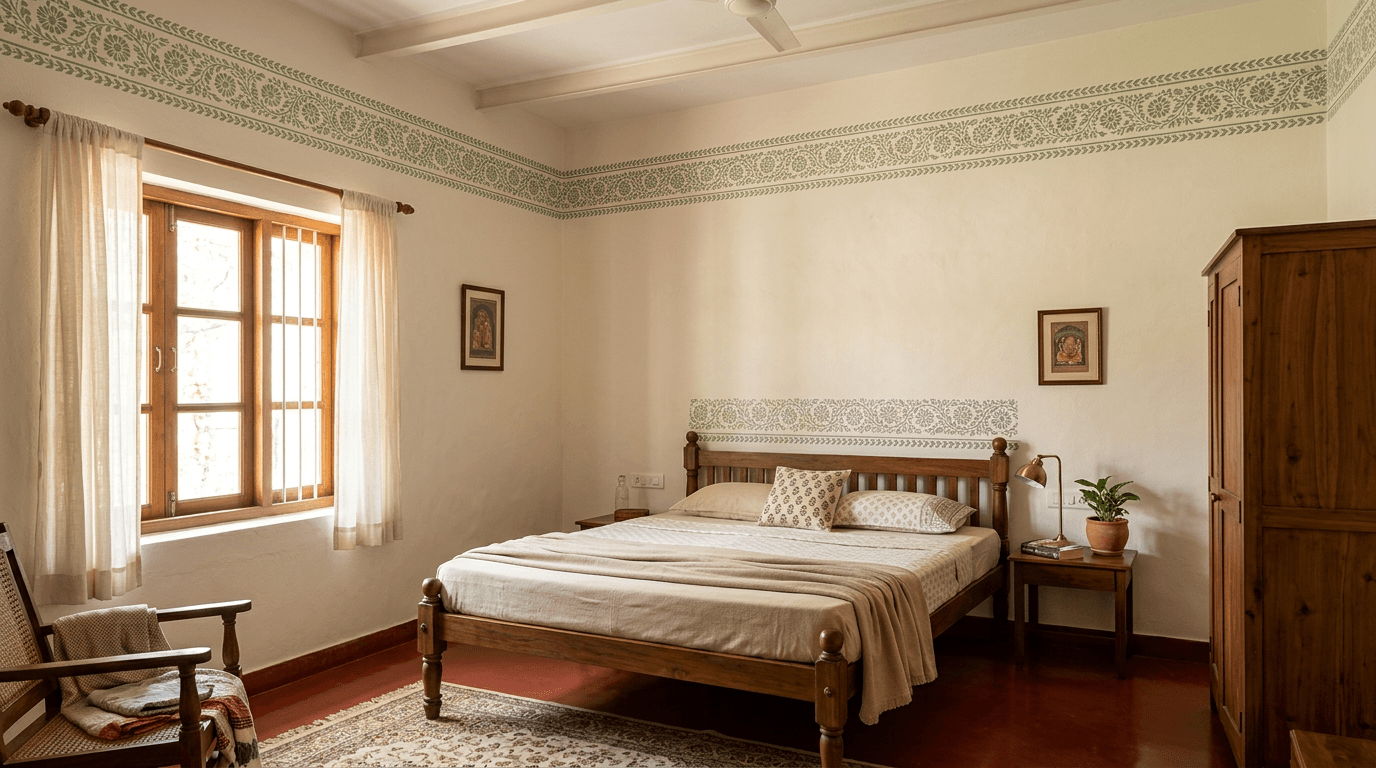
26. Ceiling-line border stencil. A slim running stencil band where wall meets ceiling. It's the quietest way to add pattern to a room in your home without committing a full wall. Difficulty: DIY-friendly.
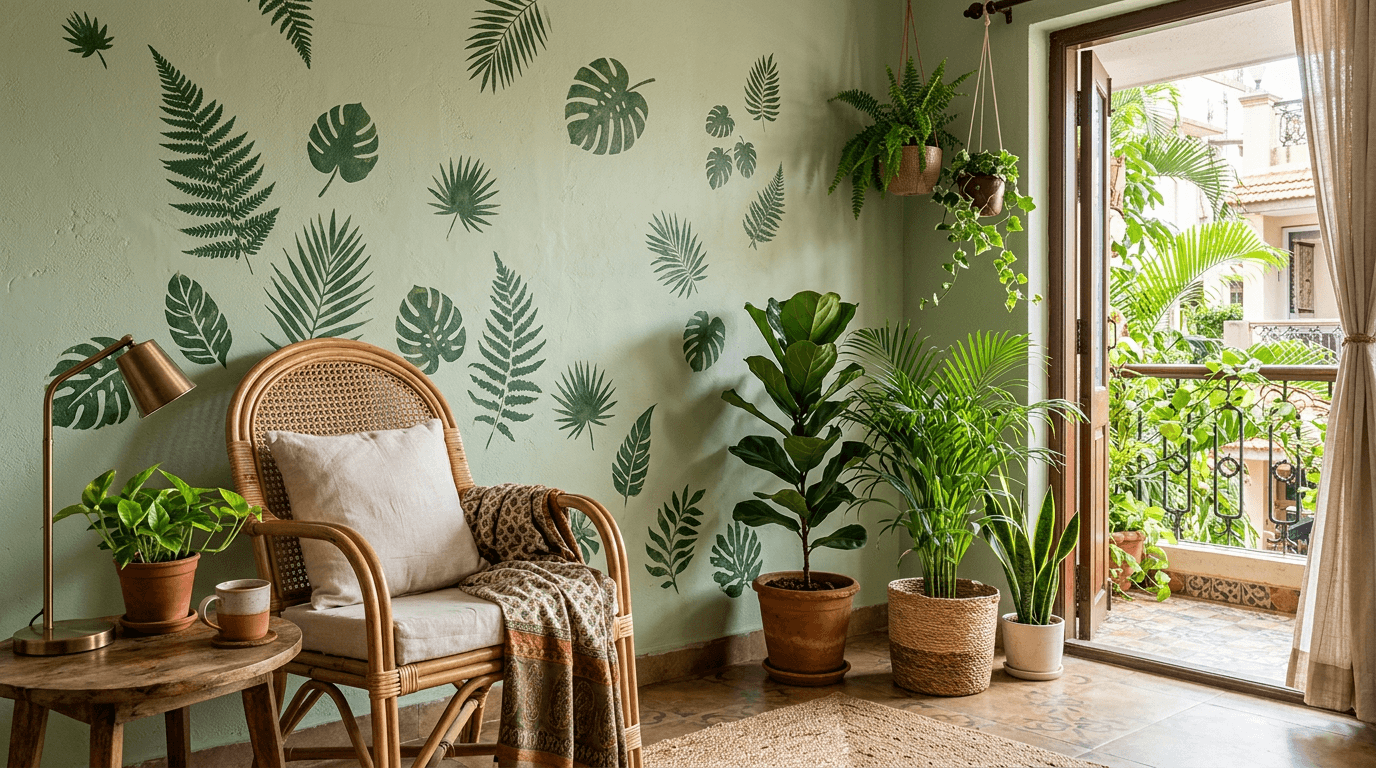
27. Botanical leaf repeat. Loose fern and palm leaf stencils scattered organically rather than gridded. Pairs with the 2026 earthy palette beautifully. Difficulty: DIY-friendly.
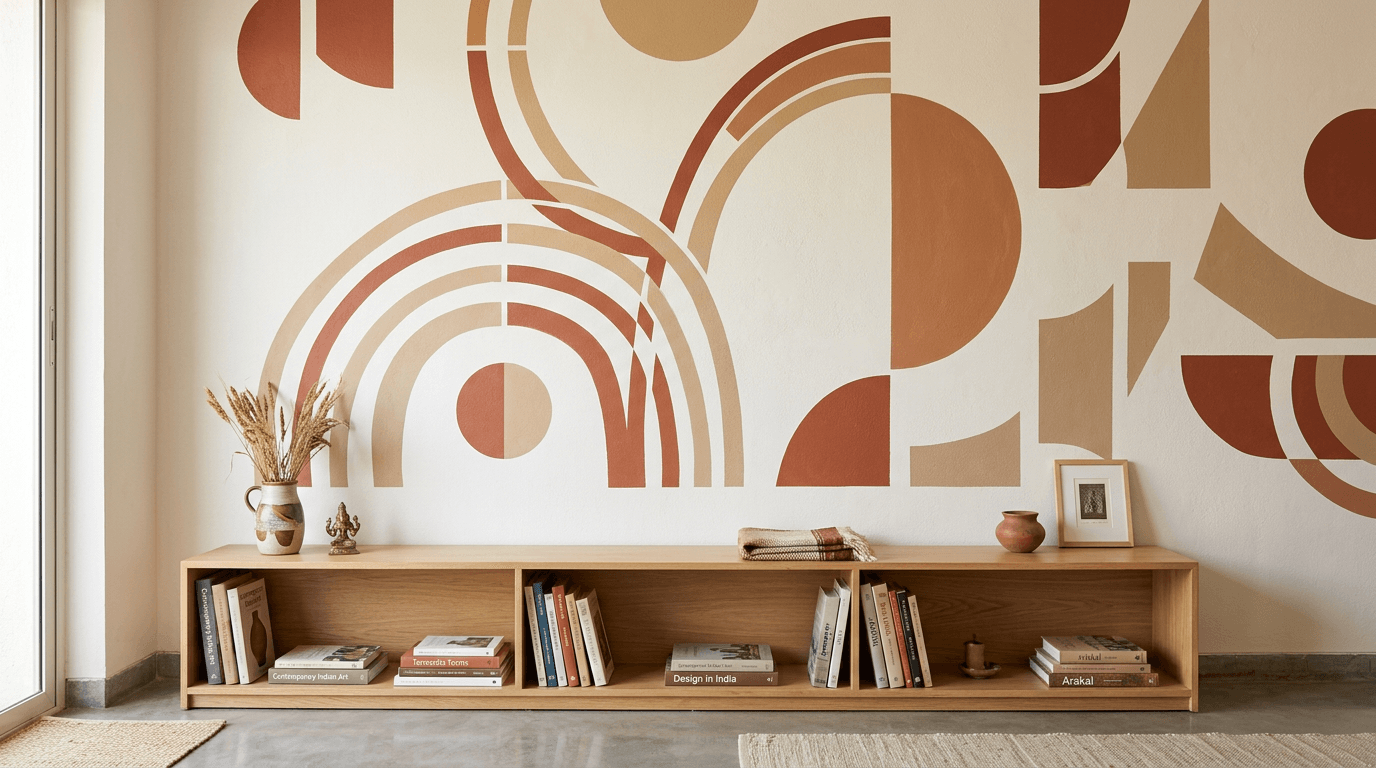
28. Abstract stencil shapes. Oversized abstract stencil forms (arcs, blobs, half-moons) in two muted tones. Modern stencil art energy without freehand skill. Difficulty: DIY-friendly.
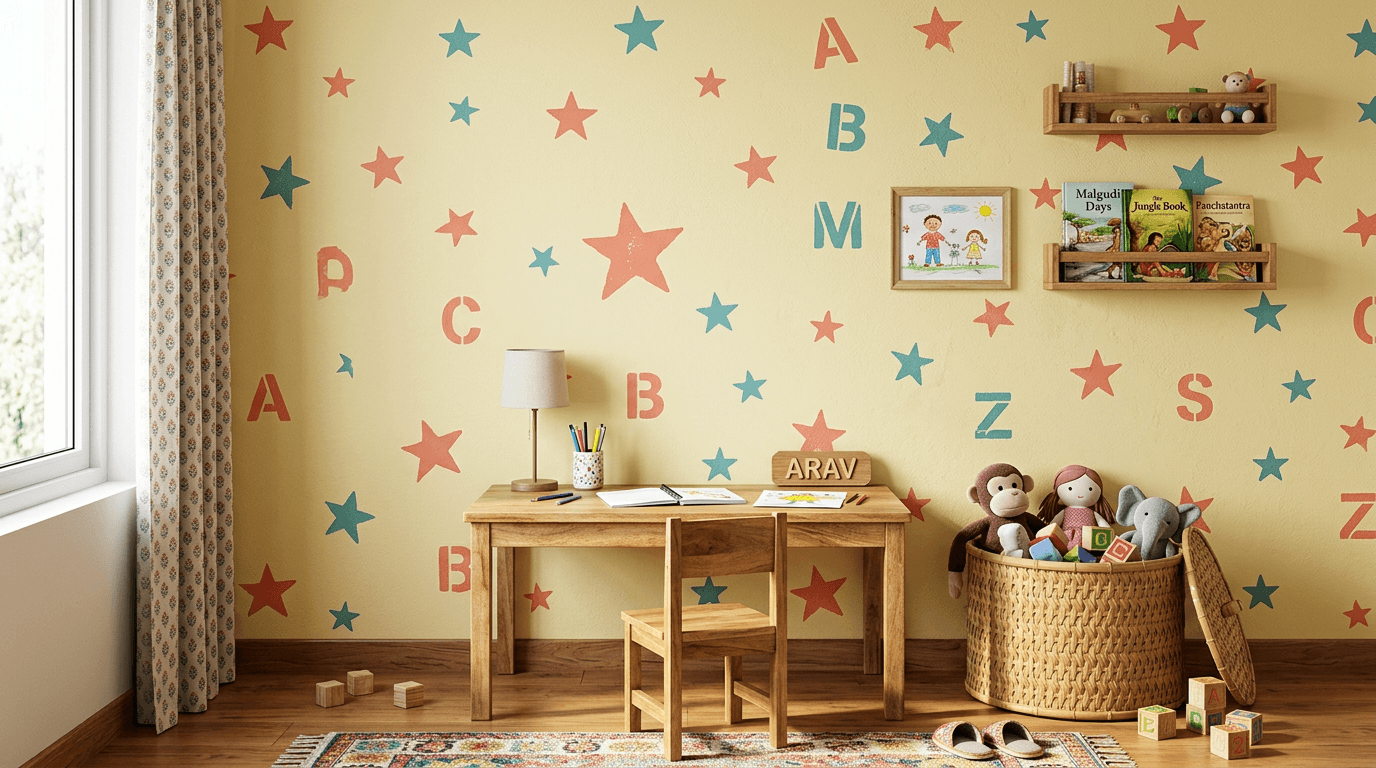
29. Kids' star-and-alphabet stencils. Washable emulsion base, star or alphabet stencils in two happy colours, everything repaintable in an afternoon when tastes change. Which they will. Difficulty: DIY-friendly.
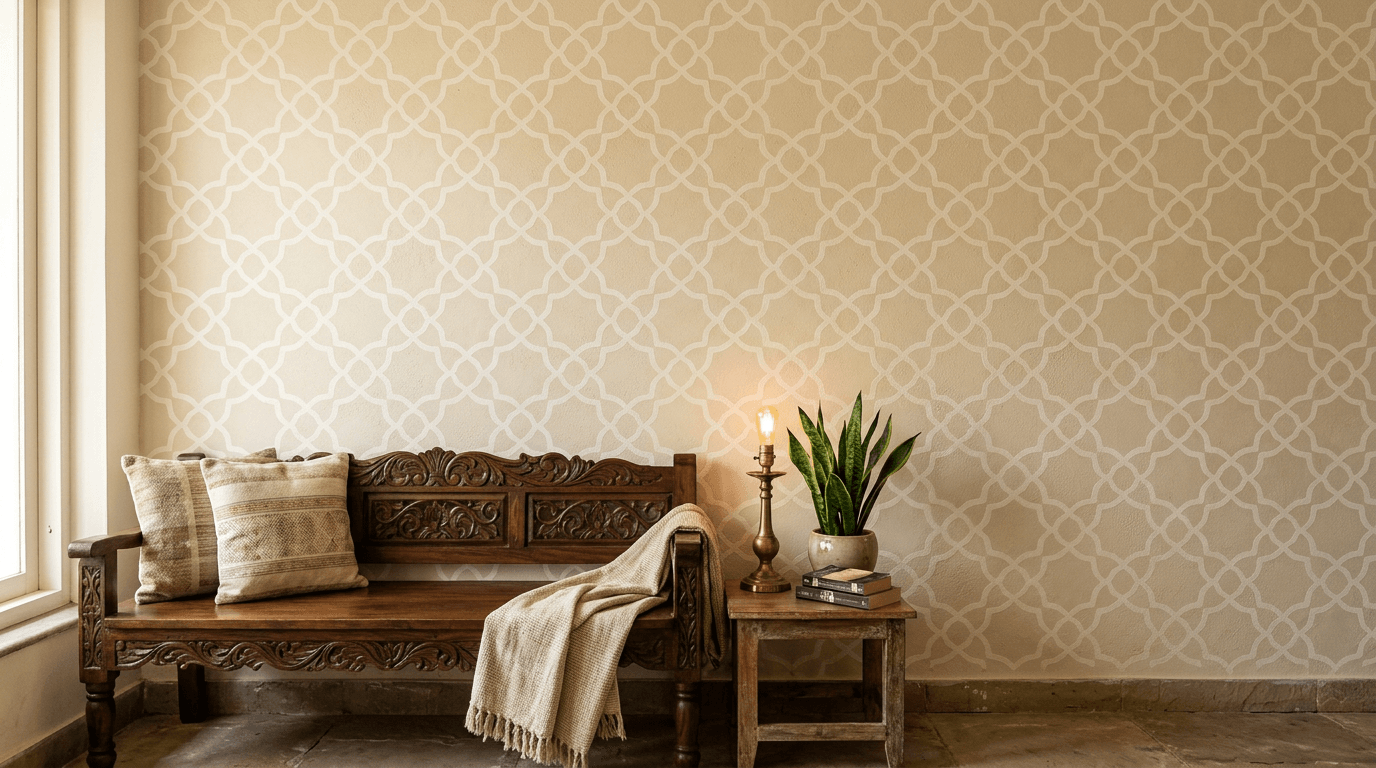
30. Jaali-inspired lattice stencil. Indian jaali screen geometry as a stencil: an octagonal lattice in tone-on-tone cream. Traditional geometry, contemporary restraint. Difficulty: DIY, patient.
Geometric Wall Paint Design Ideas & Colour Blocking
Geometric designs are the most forgiving route to a striking wall: if you can snap a chalk line and press painter's tape, you can paint geometric patterns. The method for a colour-block wall, start to finish: prep and base-coat, mark your geometry lightly in pencil, mask with good tape, seal the tape edge with the base colour first (this is the crisp-line trick), apply paint in your block colours, and peel the tape at a 45° angle while the final coat is still tacky.
31. Classic two-tone colour blocking. One bold rectangle behind the sofa or bed, offset rather than centred. The gateway geometric wall. Difficulty: DIY-friendly.
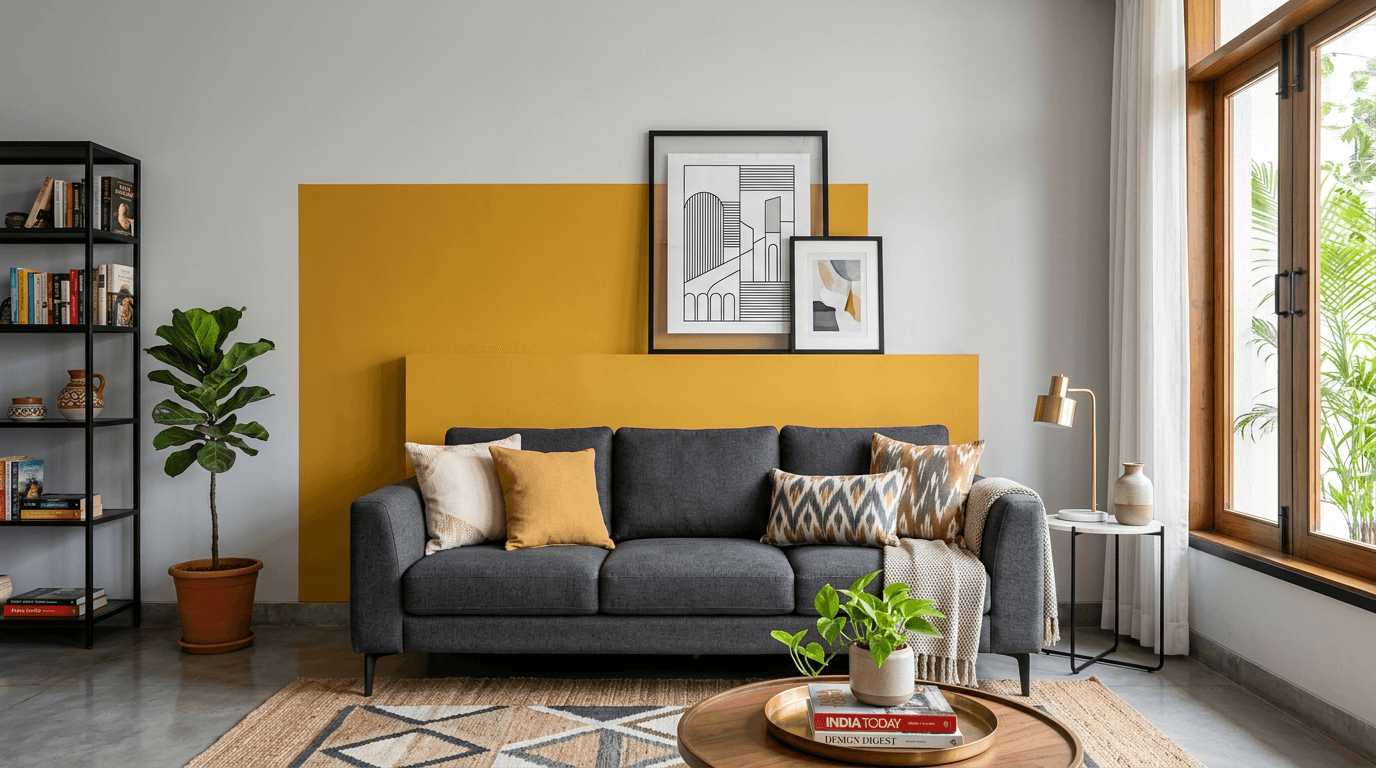
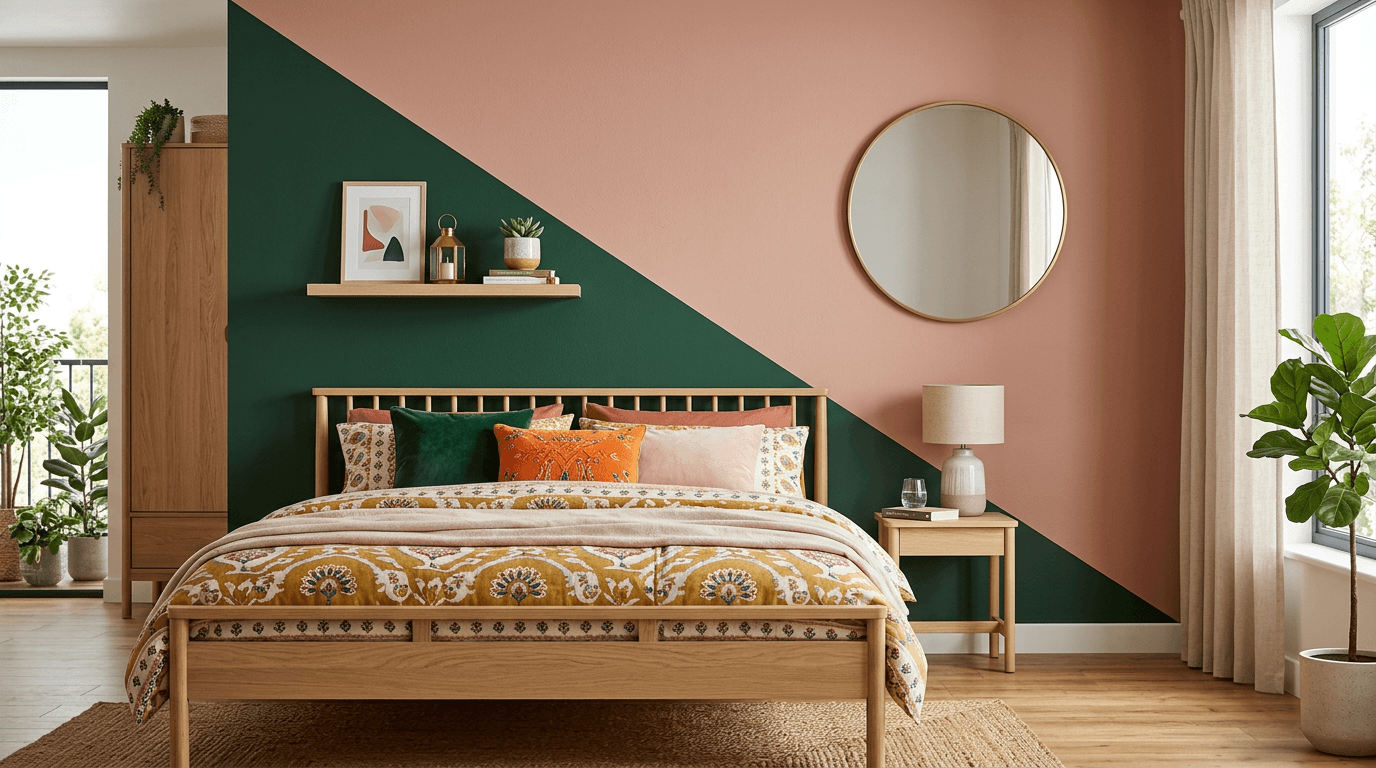
32. Diagonal split wall. The wall divided corner-to-corner in two shades. Instant dynamism in rooms where everything else is rectangles. Difficulty: DIY-friendly.
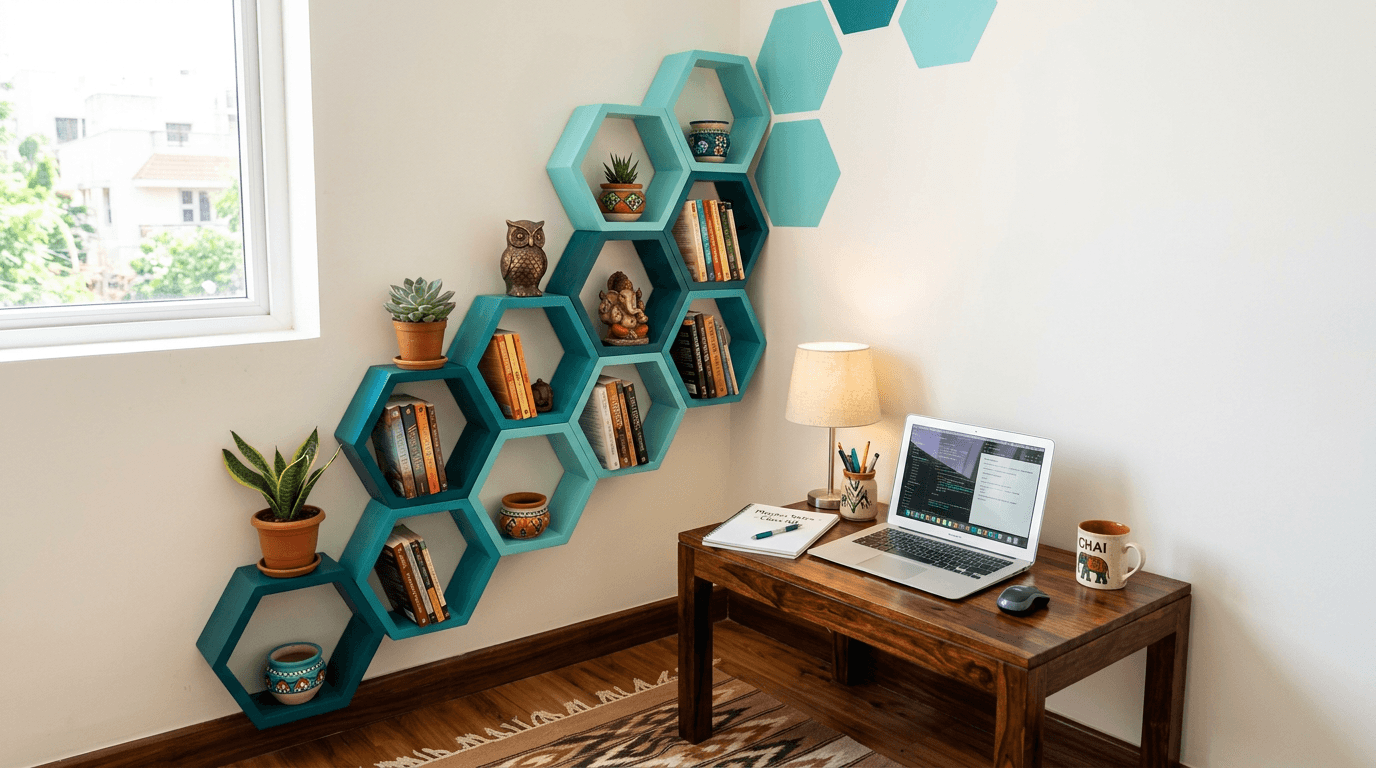
33. Hexagon honeycomb cluster. A cluster of painted hexagons climbing one corner in three related tones, fading into the base wall. Difficulty: DIY, patient.
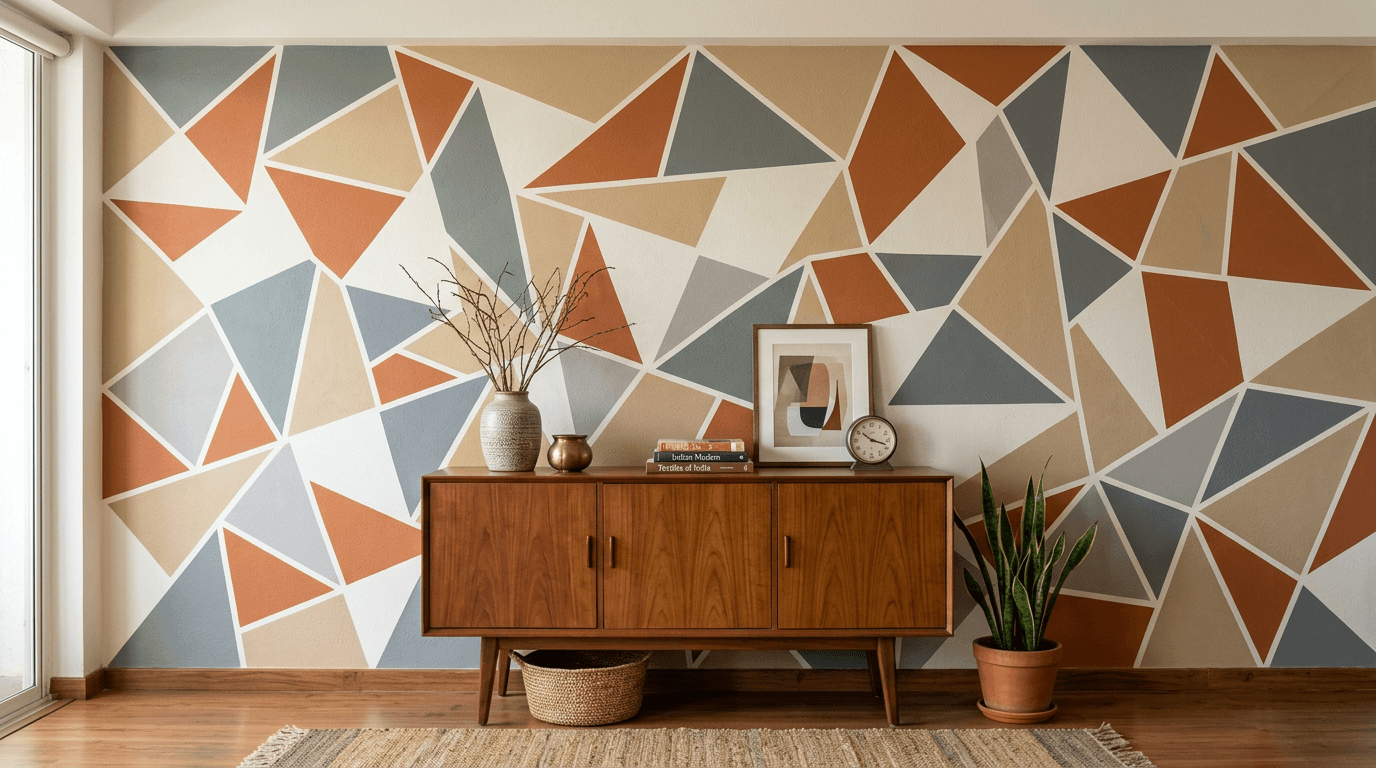
34. Triangle mosaic wall. Random triangles in a controlled palette of four shades. Reads playful in a kids room, sharp in a study. The palette does the talking. Difficulty: DIY, patient.
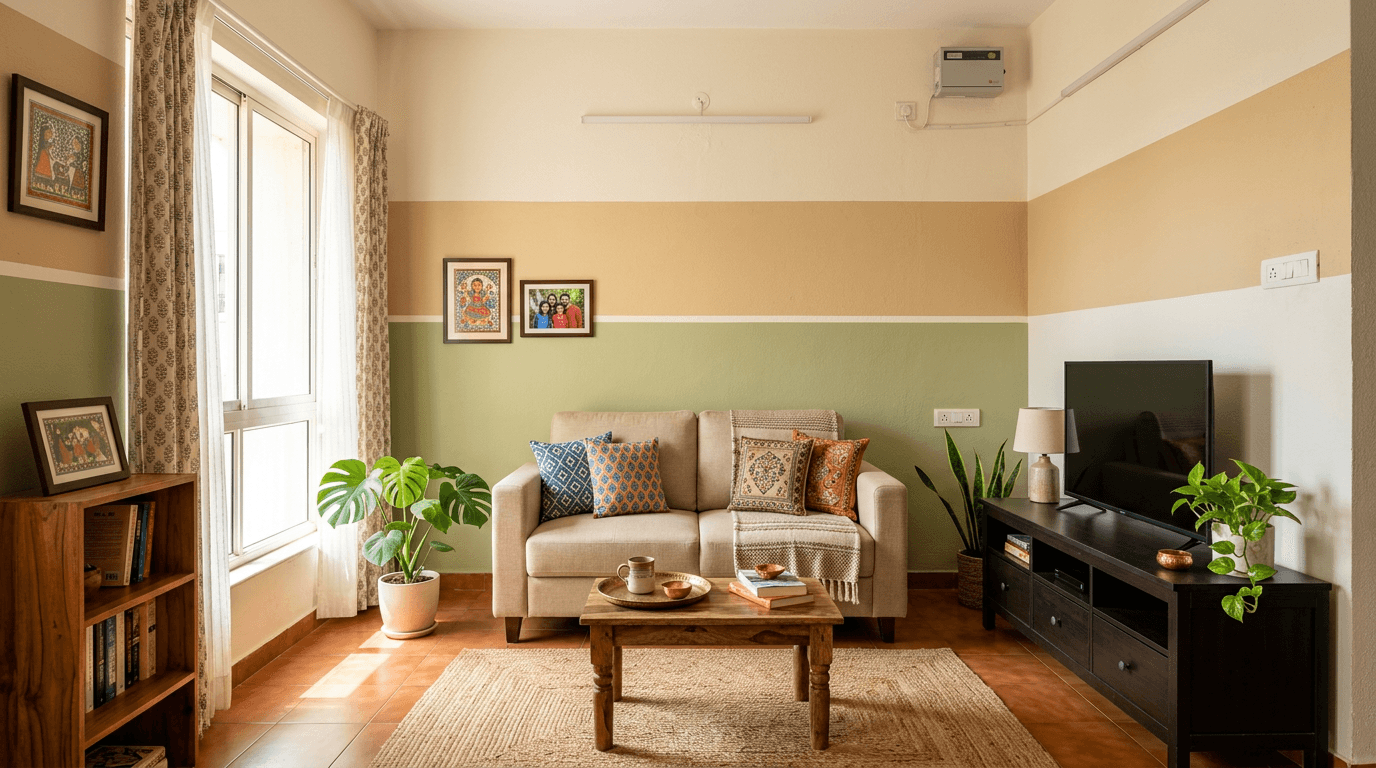
35. Horizontal wide bands. Two or three broad horizontal stripes that stretch a narrow room sideways. The classic optical fix for small rooms. Difficulty: DIY-friendly.
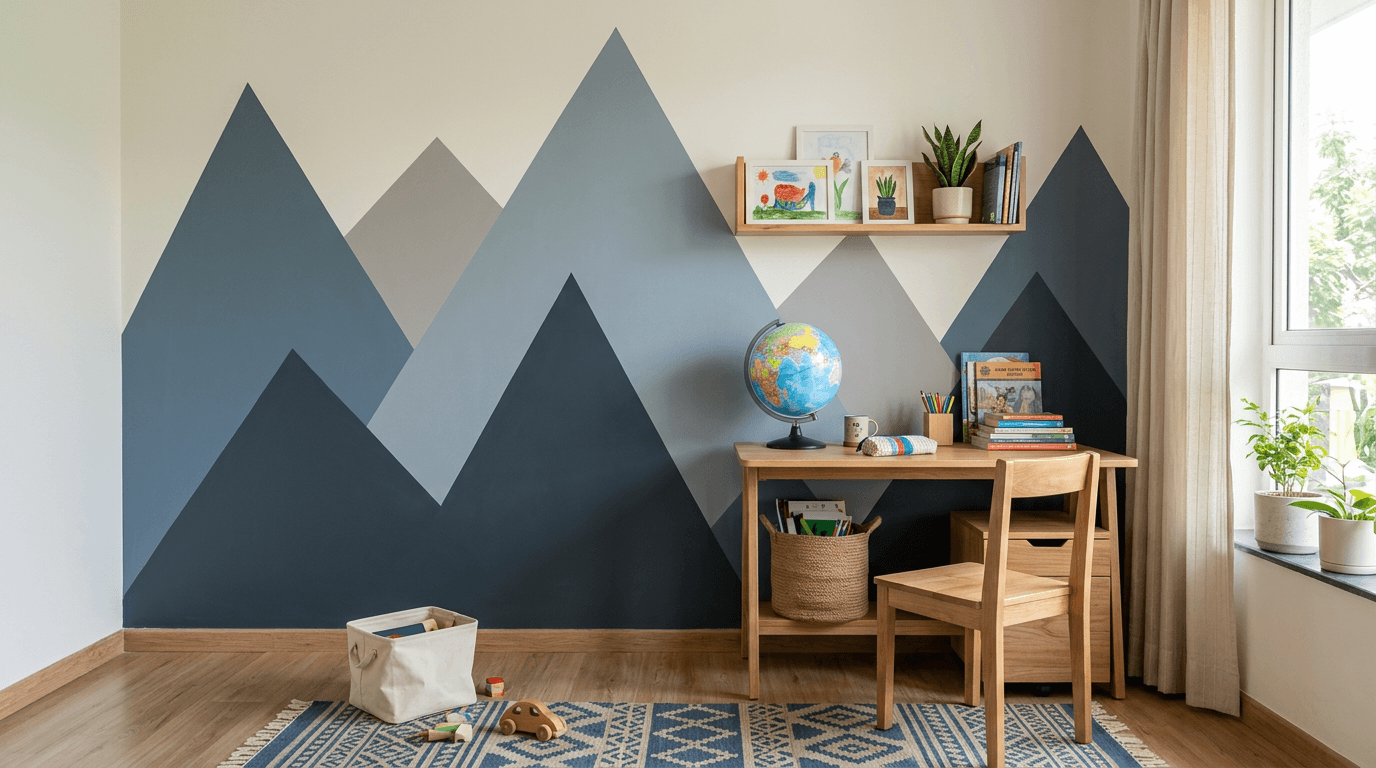
36. Geometric mountain mural. Overlapping tape-line mountain silhouettes in three tones. Technically it's a mural, executed entirely with masking tape and geometric shapes. Big favourite for kids and study rooms. Difficulty: DIY-friendly.
Murals, Ombre & Hand-Painted Wall Art Ideas
This is where wall painting becomes wall art. Murals are the highest-personality, highest-commitment designs in this gallery, so two honest stories from our project files first.
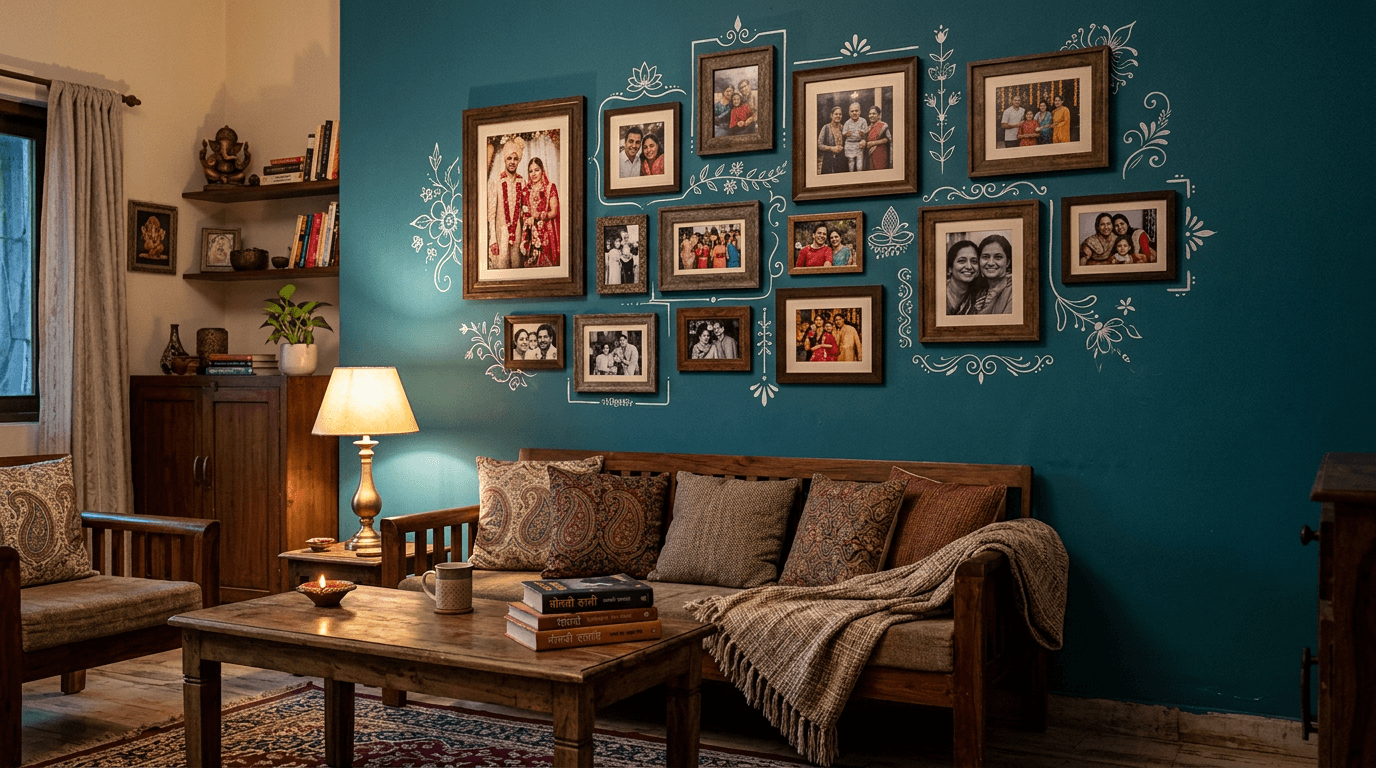
In one Hyderabad apartment we renovated, the previous owners had left a permanent religious painting on the wall. Beautiful work, but meaningless to the new family, and painted directly onto plaster. Undoing it meant building a storage unit over that wall. Lesson: paint your murals somewhere you own emotionally, or keep them repaintable. And in Navya's parents' home, the brief that mattered most came from the grandmother: a memory wall she could fill. The design wasn't the point. The wall's job was. That's the test for every idea below — what is this wall for?
Modern Ombre Gradients
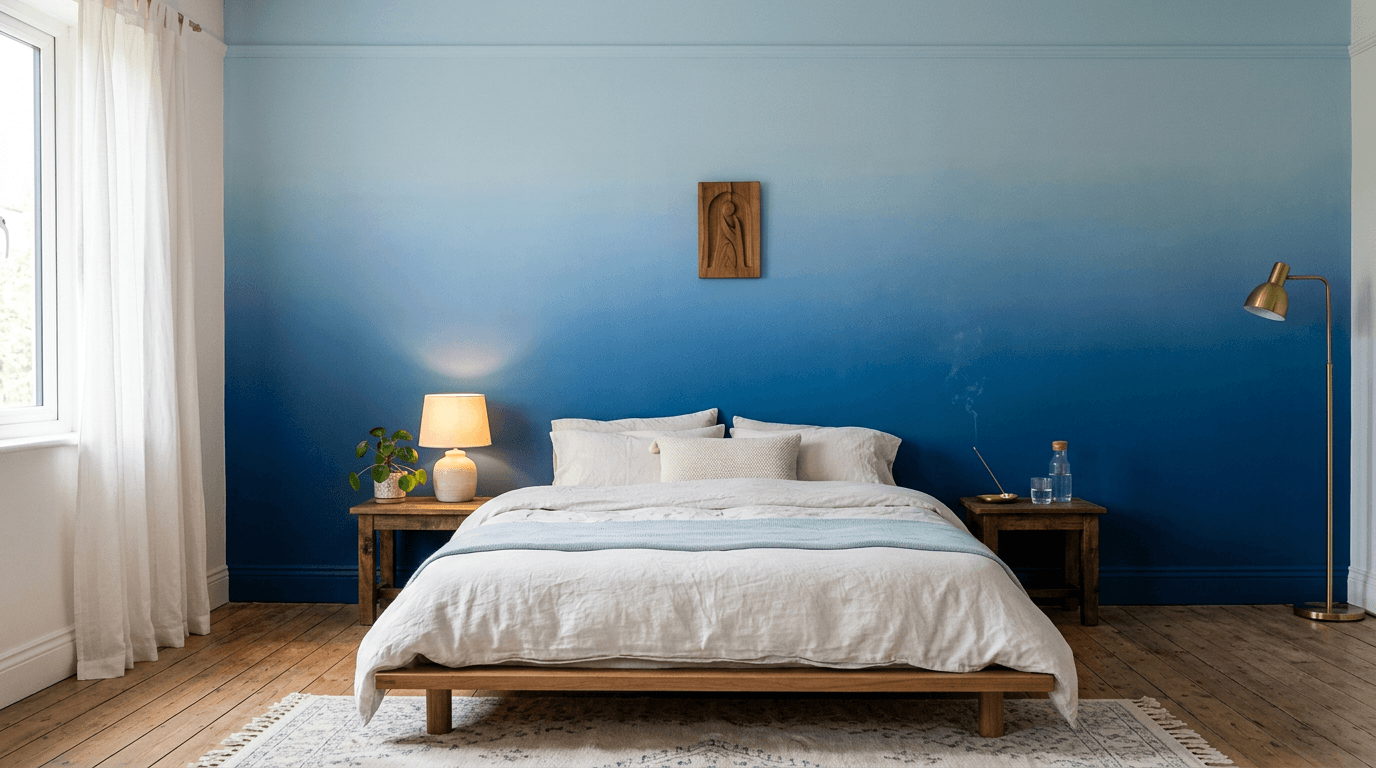
37. Ombre gradient wall. One colour dissolving from deep at the skirting to almost-white at the ceiling, blended wet-on-wet. Serene in bedrooms, striking behind open shelving. Difficulty: DIY-possible, messy.
Hand-Painted Murals & Art Walls
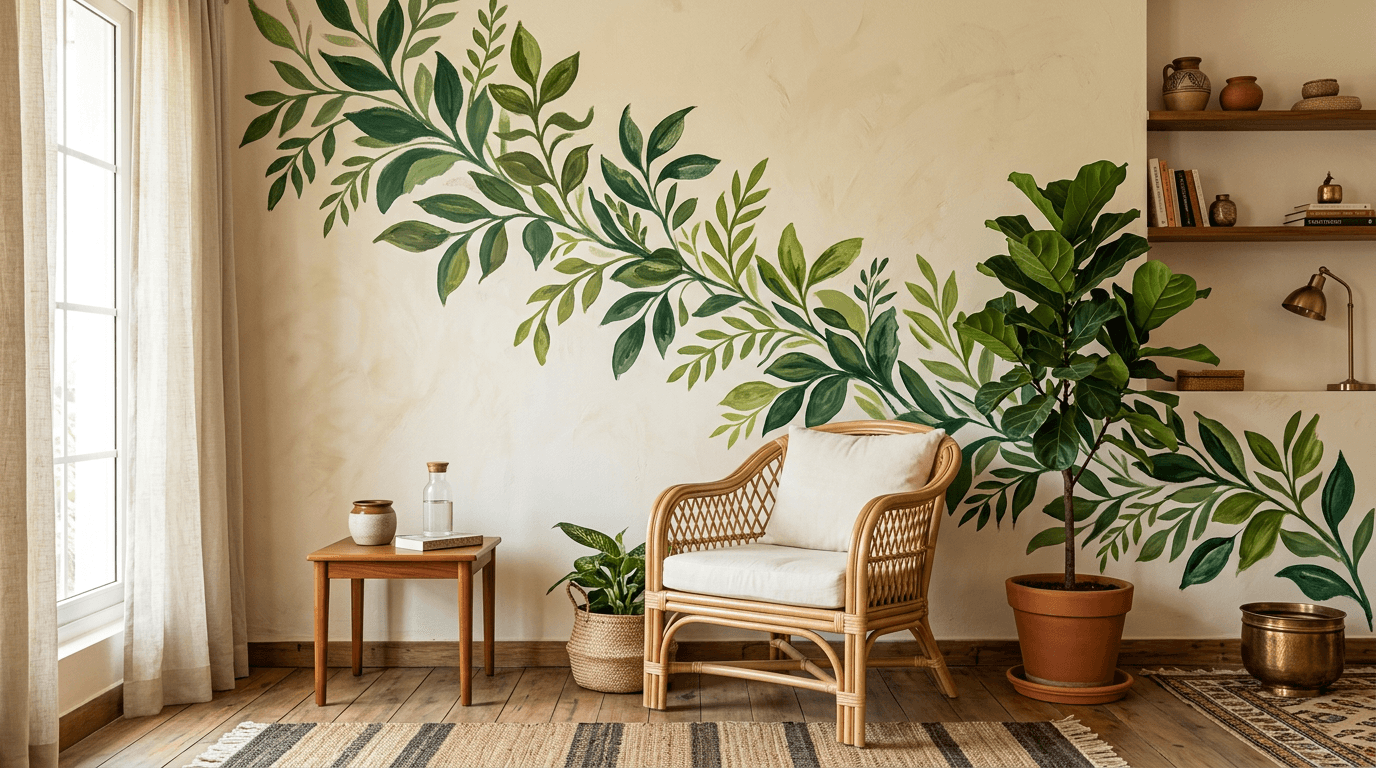
38. Hand-painted botanical mural. Loose oversized branches and leaves sweeping across one wall, painted by hand or a hired artist. The look wallpaper imitates. Difficulty: professional artist (or brave weekend).
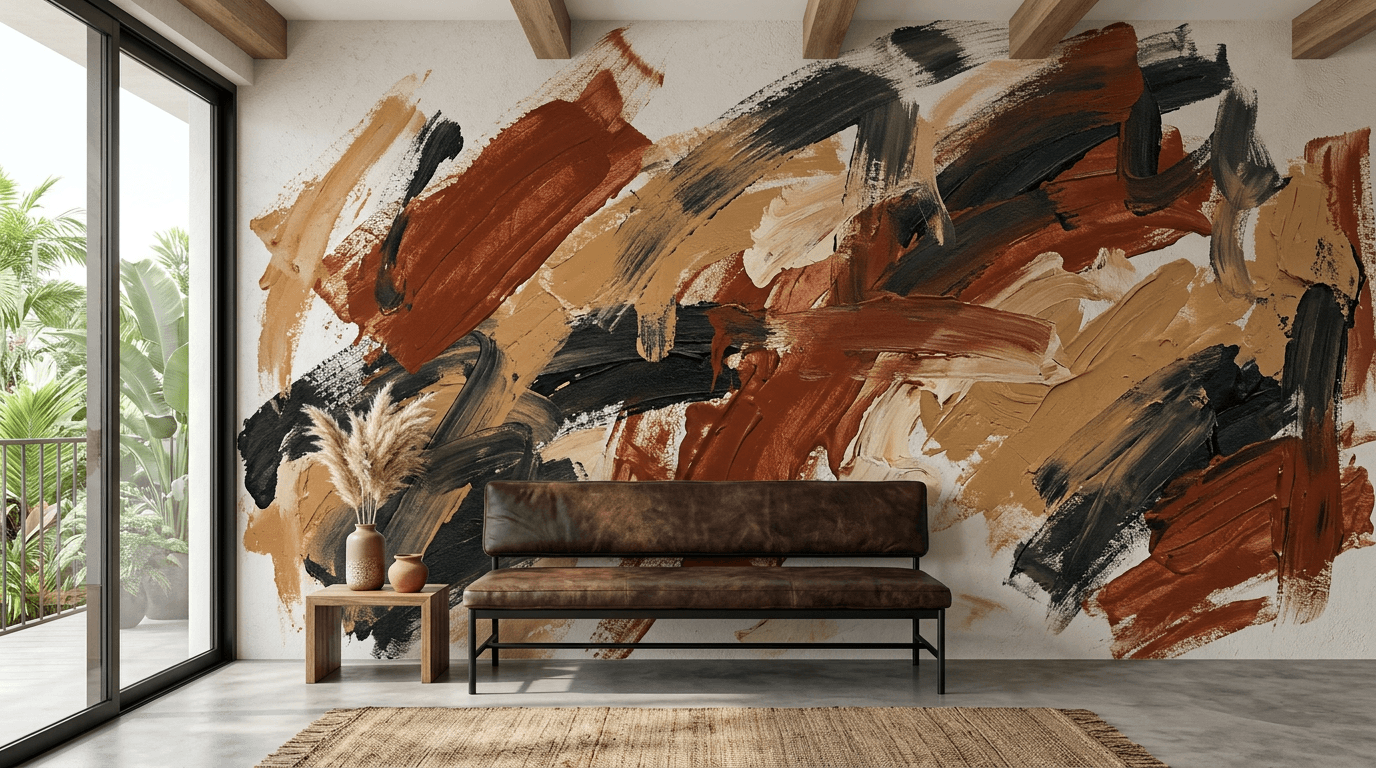
39. Freehand abstract art wall. Broad confident strokes, two or three colours, deliberately imperfect: a full-wall abstract art piece. Cheaper than a canvas that size, and it can't fall off the wall. Difficulty: braver than it is hard.
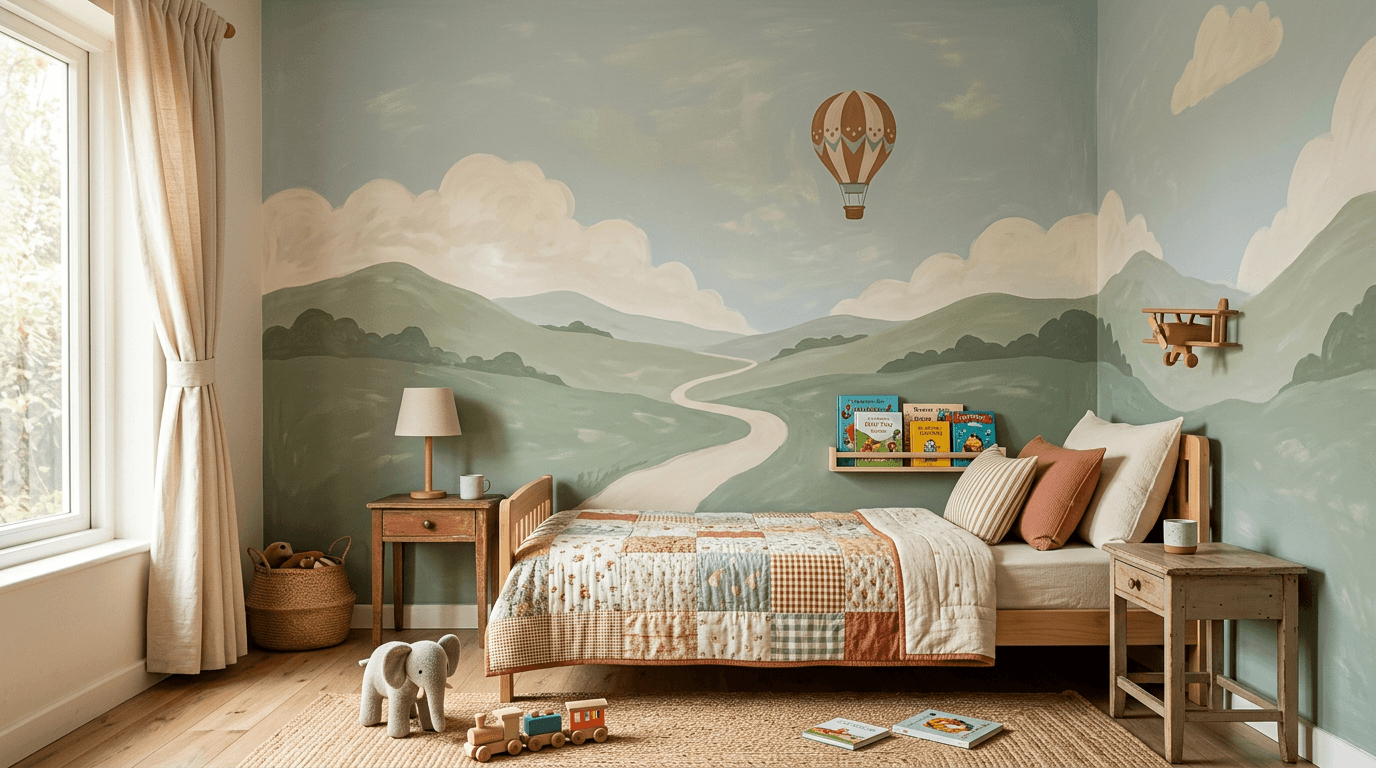
40. Kids' landscape mural. A soft-toned hills-clouds-hot-air-balloon scene. Keep the palette muted and it survives the transition from nursery to big-kid room. Difficulty: DIY-possible with projector tracing.
41. Painted memory wall. A deep-toned wall with hand-painted or stencilled frames waiting for real photographs, designed to be filled over years. We built one for a grandmother who wanted her life on one wall, and it out-performed every showpiece in that home. Difficulty: DIY-friendly.
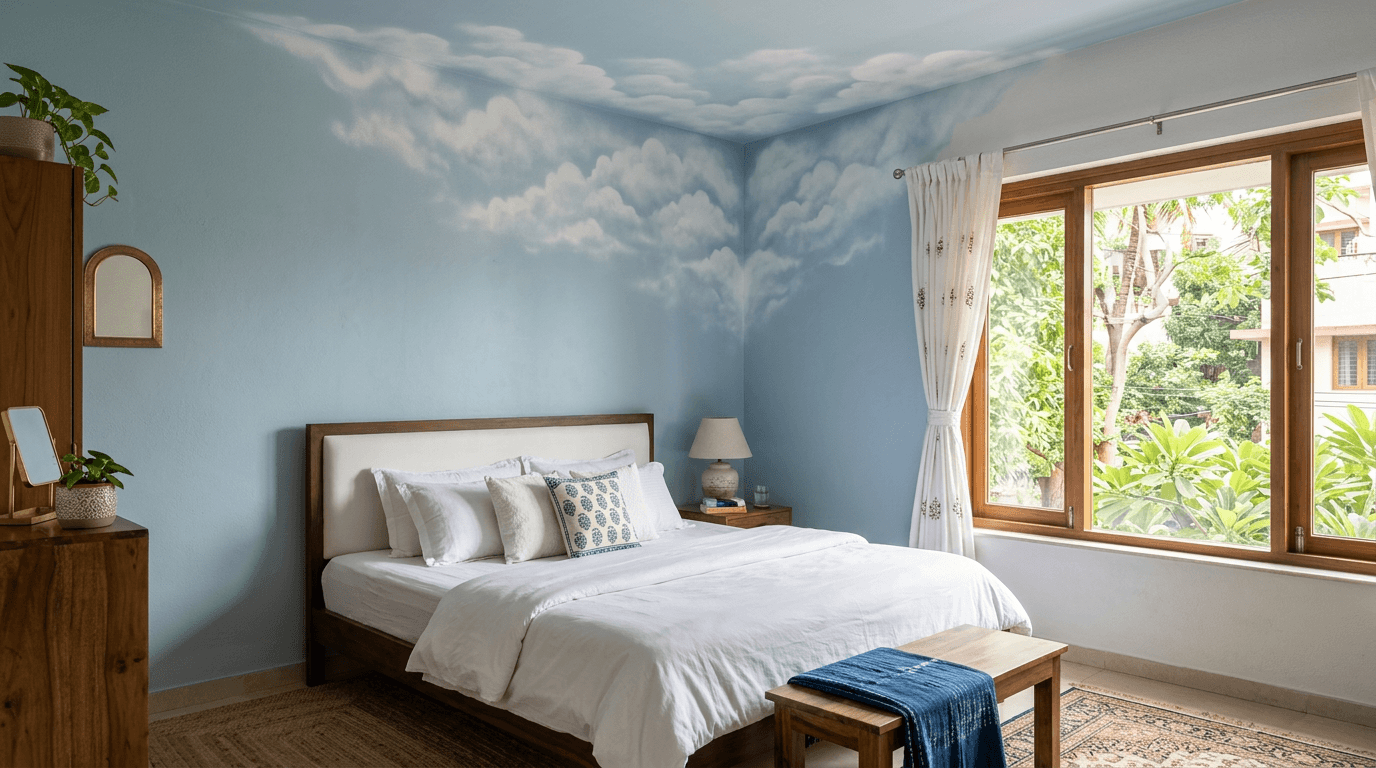
42. Sky-and-cloud ceiling mural. Soft clouds fading across the ceiling and down one wall corner. A little whimsy, a lot of perceived height. Difficulty: professional.
Wall Painting Designs by Room: Living Rooms, Bedroom, Study & Puja Room
Same technique, different job per room. Living rooms want presence, bedrooms want calm, kids' rooms want repaintability. The eight design ideas below are the ones we find ourselves specifying again and again, room by room. If you want a safe default, the most-repeated wall paint design for living room briefs in our files is simply a textured or deep-toned wall behind the main seating.
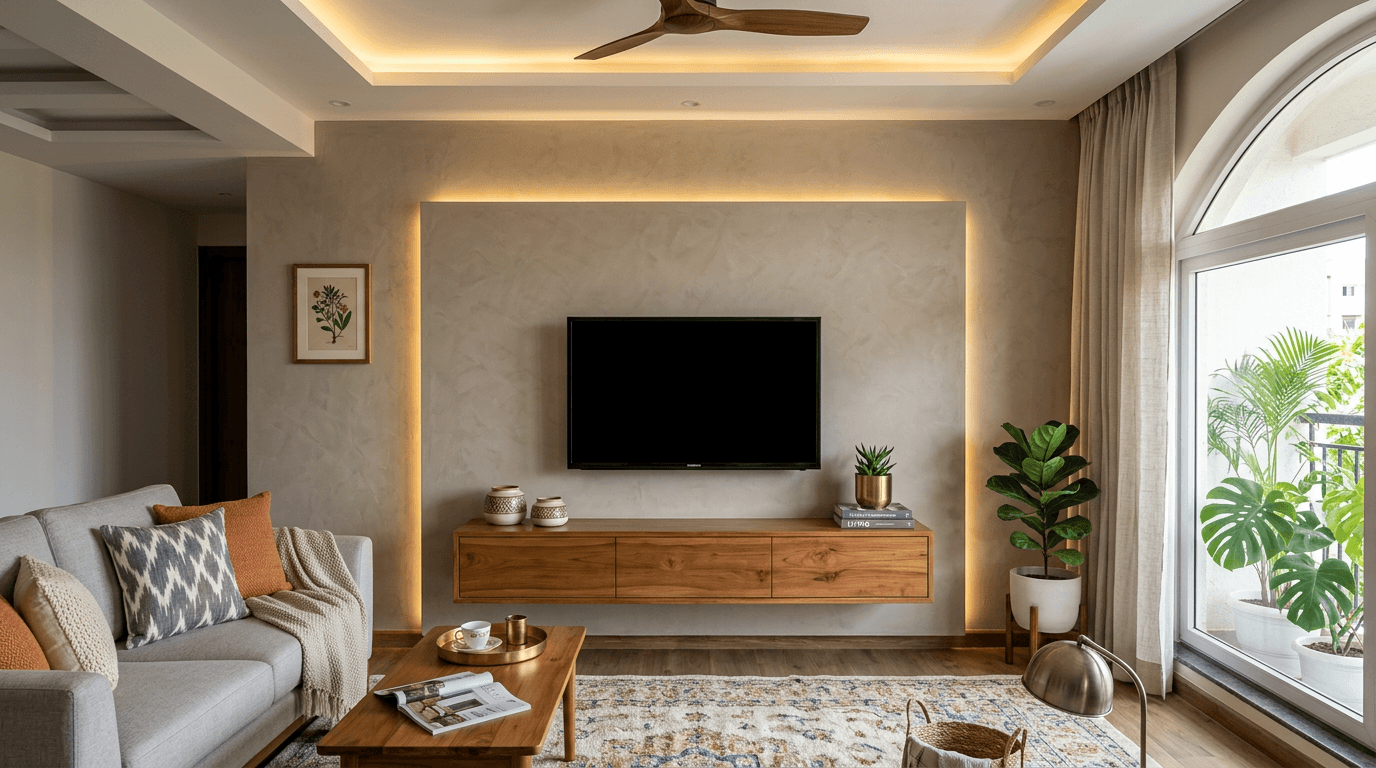
43. Living room TV unit wall. A textured or colour-blocked frame around the TV unit wall so the screen stops being the decor. In one Hyderabad 3BHK we even built the living room wall itself, extending a partition with a wooden divider to create the perfect TV backdrop the flat never had. Difficulty: professional.
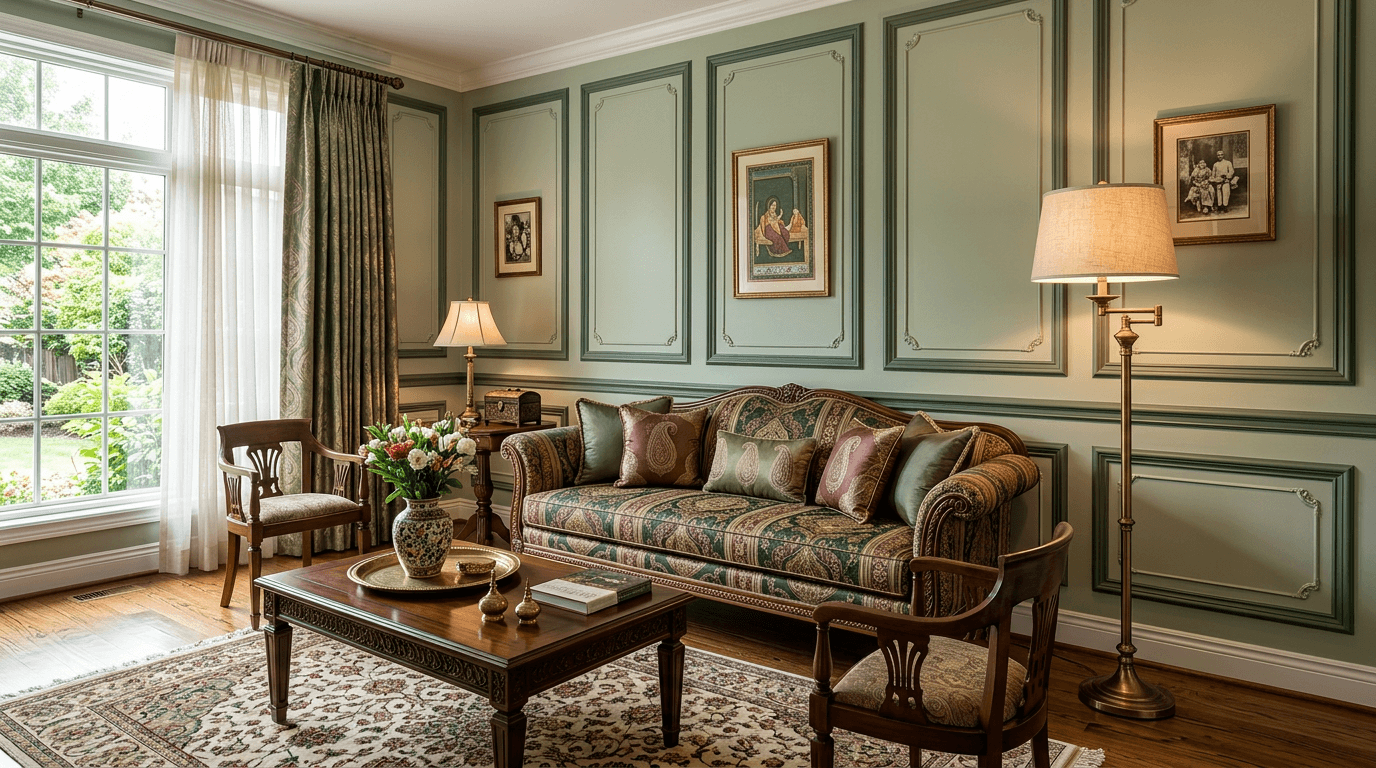
44. Drawing room painted panelling. Trompe-l'oeil panel borders painted in a deeper tone of the wall colour: classical panelling for the price of a steady hand. (For the real wooden thing, see our wall paneling gallery.) Difficulty: DIY, patient.
45. Bedroom colour-drench with painted headboard arch. The room in one muted shade, plus a deeper painted arch standing in for a headboard. One colour scheme, two trends, one restful room. Difficulty: DIY-friendly.
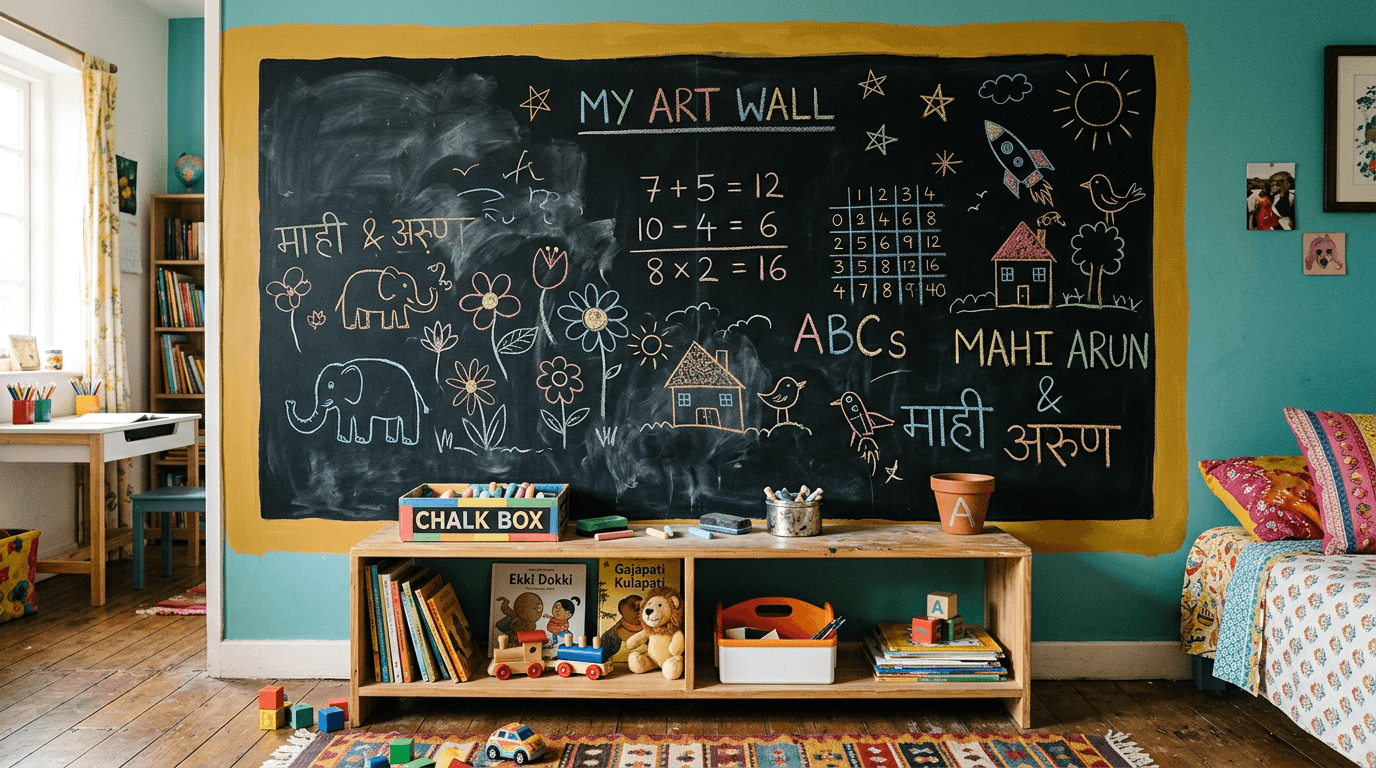
46. Kids' chalkboard wall. Chalkboard paint from skirting to door height on one wall, framed with a painted border. Legal graffiti. Repaint when they outgrow it. Difficulty: DIY-friendly.
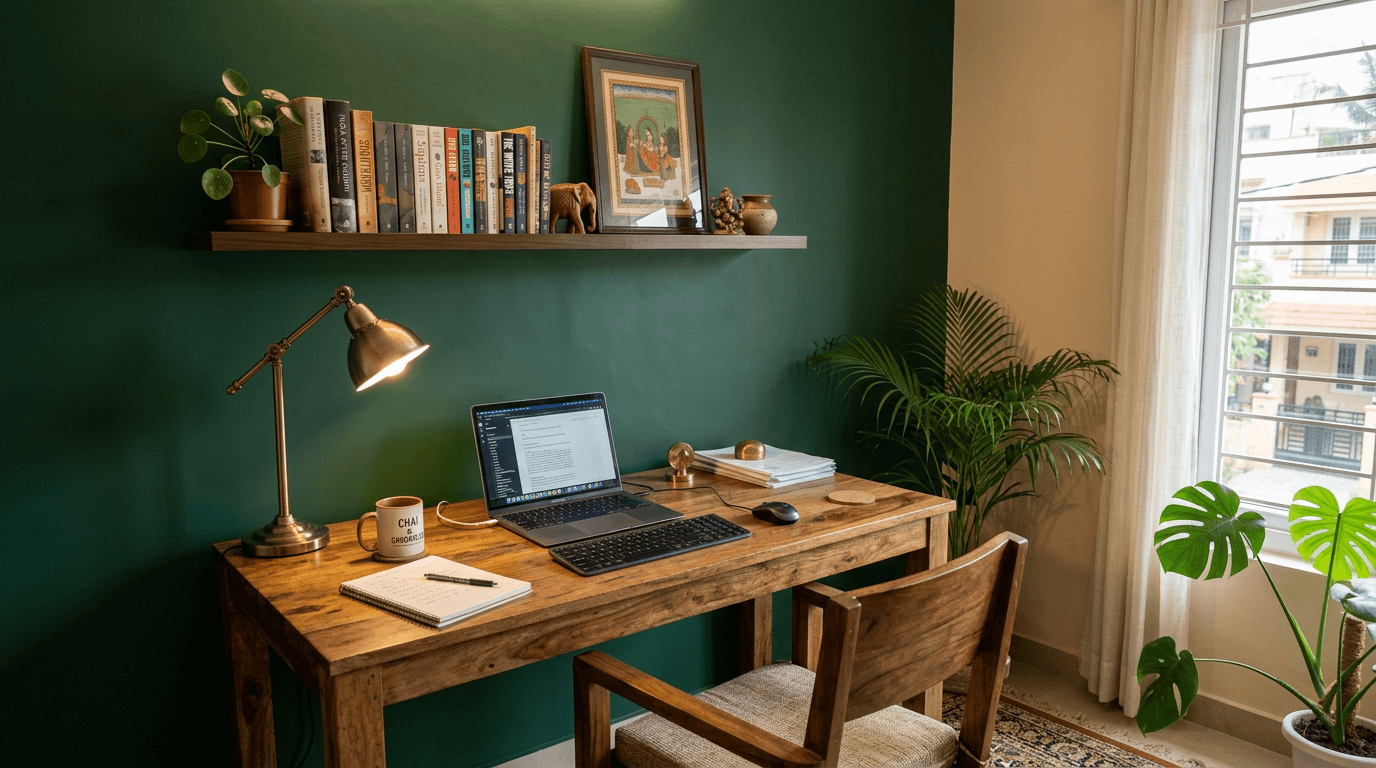
47. Study room focus wall. One deep matte green or blue wall behind the desk: low-stimulation, glare-free, and genuinely better on video calls. Difficulty: DIY-friendly.
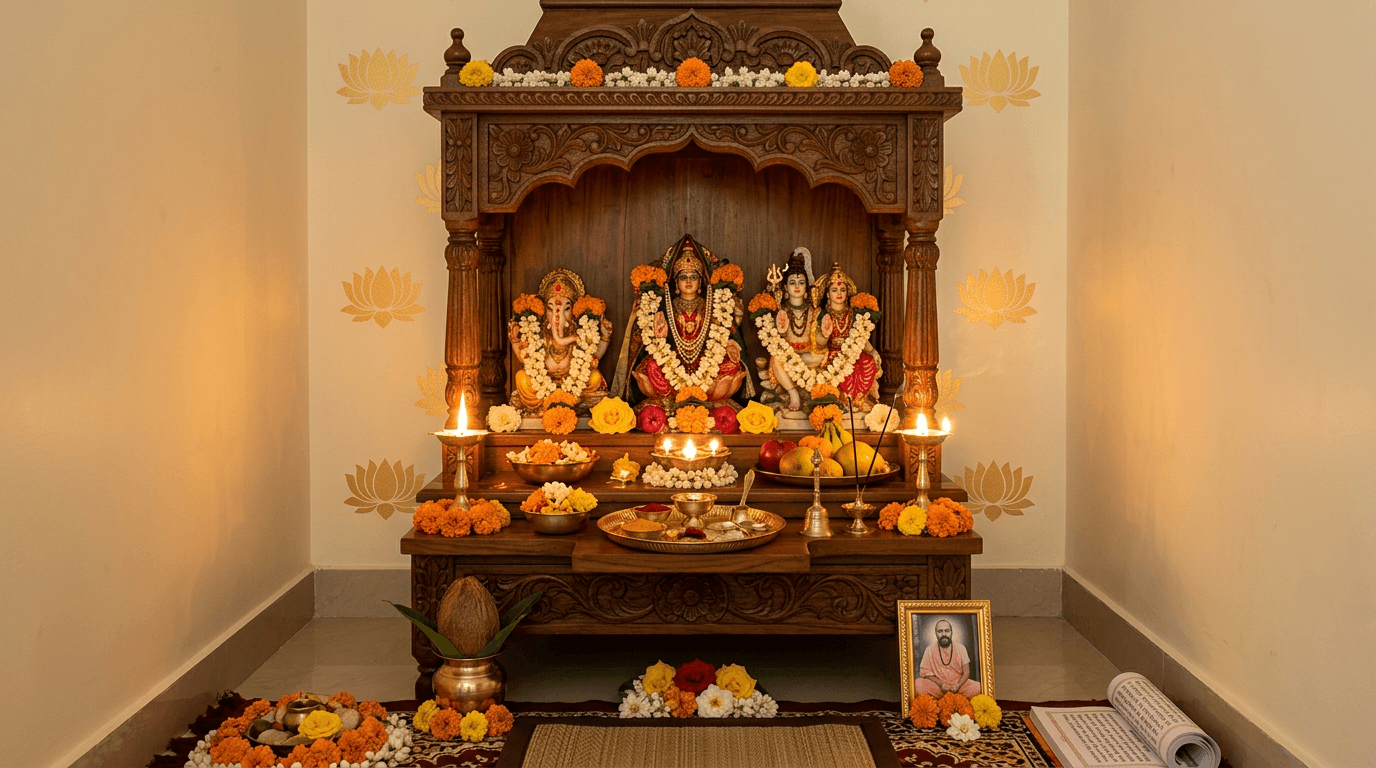
48. Puja room backdrop. Warm white or soft cream base with a restrained gold motif stencil behind the mandir. Devotional without theme-park gold. Difficulty: DIY-friendly.
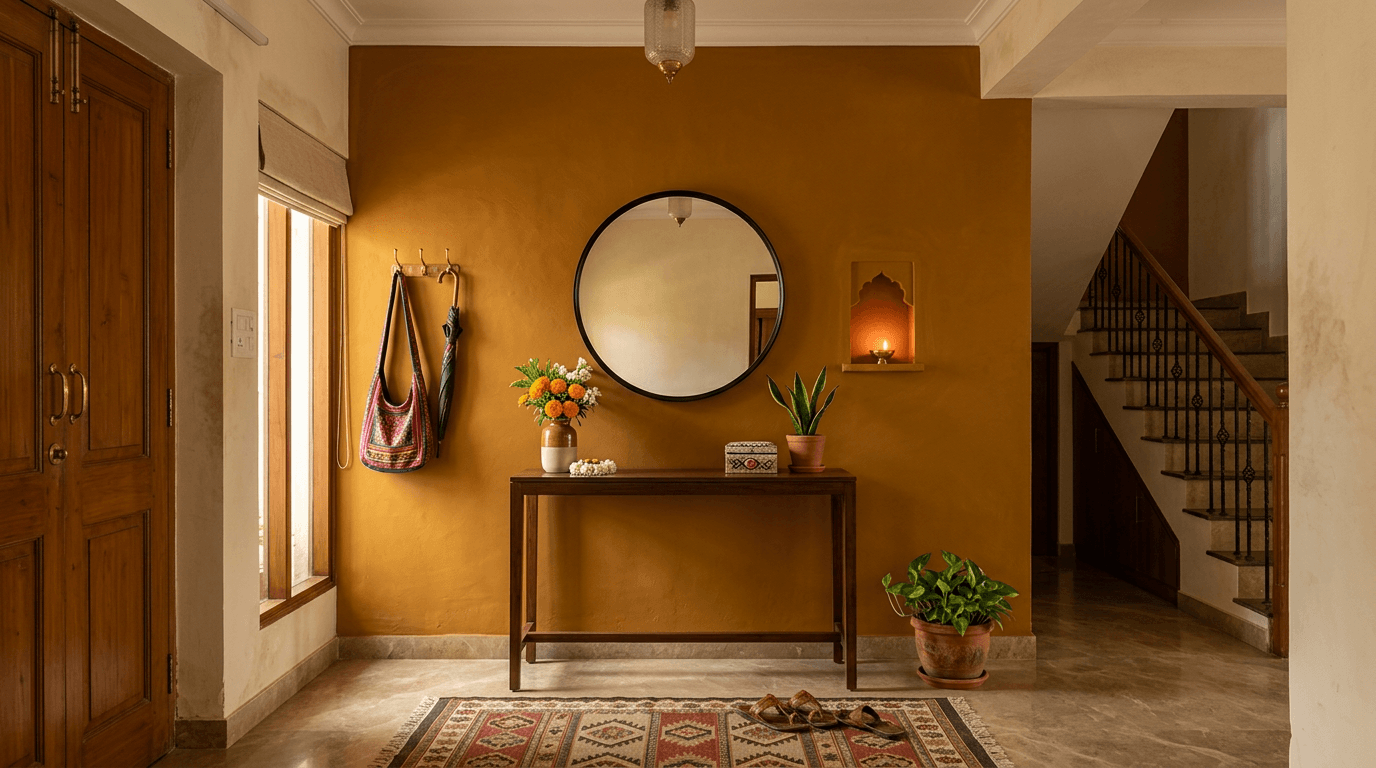
49. Foyer statement wall. The foyer wall is the first surface guests see, so it gets one confident move (a deep shade, a texture, or a single mural motif) with a console and mirror. Small area, outsized first impression. Difficulty: DIY-friendly.
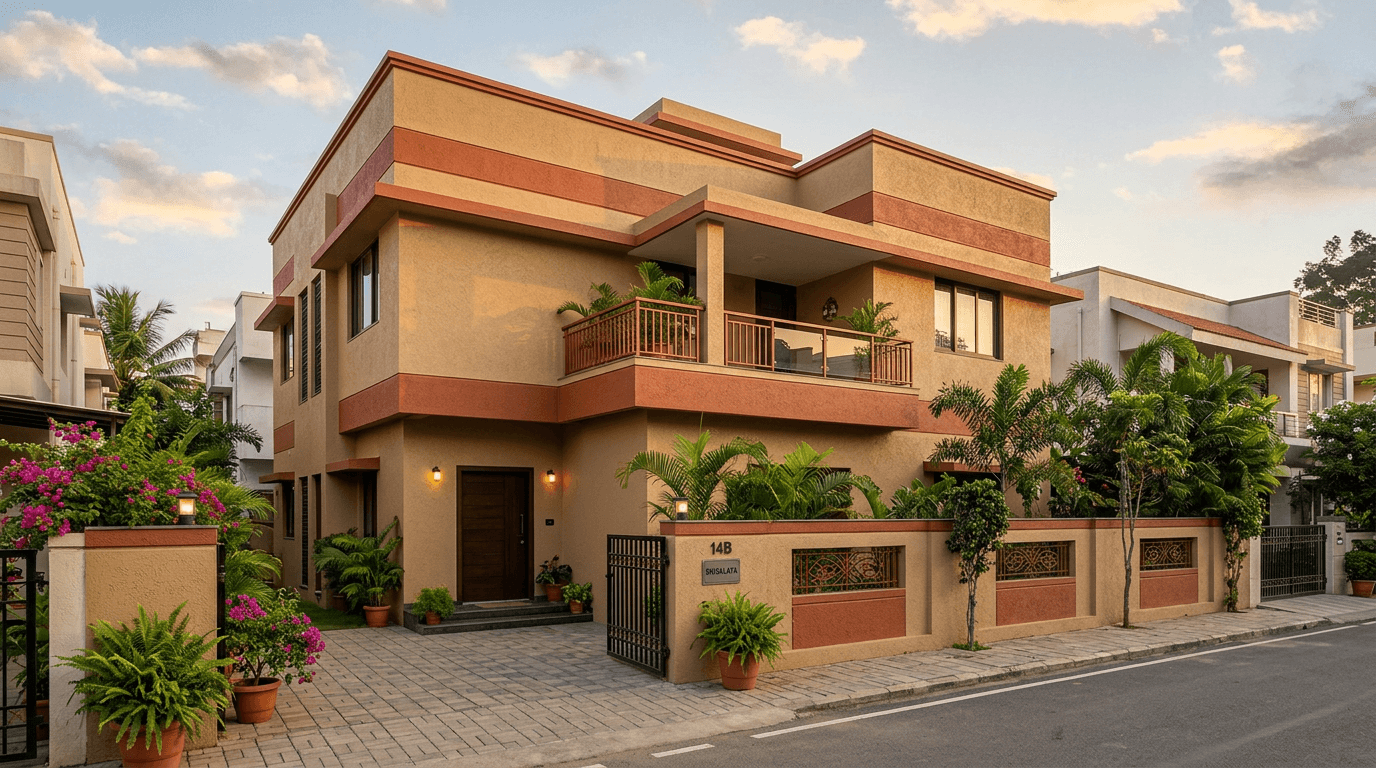
50. Exterior texture painting. Weatherproof textured paint on the facade or compound wall in earthy two-tone. Exterior painting is the one job on this page we'd never DIY above ground-floor height. When we renovated a 30-year-old Hyderabad apartment building, repainting the complex (with waterproofing underneath) did more for residents' pride than any single interior. Difficulty: professional.
Which Types of Wall Paints Work for Which Design?
Every design above assumes the right base system underneath. The types of wall paints that matter for Indian homes, and where each fits:
- Matte and chalky emulsions: the 2026 default for colour drenching, geometric work, and murals. Forgiving on imperfect plaster. Choose washable grades in high-touch zones.
- Satin and semi-gloss emulsions: sheen contrast work (design 10), trims, and any interior painting that must survive weekly scrubbing.
- Texture pastes and mineral finishes: the whole texture section. These add texture physically, so budget for the texture finishes themselves plus base and top coats.
- Limewash and distemper-style mineral paints: breathable, cloudy, beautiful, but less scrubbable, so keep them off kitchen and corridor walls.
- Specialty coats: chalkboard paint (design 46), washable kids' grades, anti-fungal bathroom paints. In genuinely wet zones, honest answer: wall tiles beat paint, so save the wall paint ideas for the dry walls.
- Weatherproof exterior emulsions: home painting outdoors is a different chemistry: UV resistance, crack-bridging, algae resistance. Never use interior paint outside.
Two spec habits from our interior design practice, whatever your paint colour or colour palette: buy the base coat and top coat from one system (mixed brands void most warranties), and keep a litre of every final shade labelled for touch-ups. Future you, holding a scratched wall and no colour code, will be grateful.
DIY-Friendly vs Professional-Only Painting Techniques
The most expensive wall in this gallery is the DIY attempt that a professional later scrapes off. Here's the honest split we give clients for home painting projects:
| Technique | Difficulty | Do it yourself? | Why |
|---|---|---|---|
| Colour drenching, accent walls | Easy | Yes | Standard emulsion, standard rollers |
| Stencils (all types) | Easy–moderate | Yes | Cheap to test, low-stakes to redo |
| Tape-line geometric / colour block | Moderate | Yes | Patience, not skill |
| Ombre gradients | Moderate | Borderline | Wet-blending window is short |
| Sponging, ragging | Moderate | Yes | Forgiving, repaintable |
| Comb, stucco, sand textures | Hard | No | Paste consistency and speed matter |
| Venetian plaster, metallic trowel | Specialist | No | Materials cost too much to waste |
| 3D relief, murals | Specialist | Hire an artist | Scraping a failed one is demolition |
Rule of thumb: if a mistake can be painted over this weekend, DIY it. If a mistake needs scraping, sanding, or re-plastering, hire a painting service and spend your weekend supervising snacks.
How Much Does Texture Paint Cost per Sq Ft in India?
Standard texture painting costs roughly ₹80–200 per sq ft in India in 2026, depending on pattern complexity and paint quality. Plain emulsion repaints run far cheaper per sq ft, stencilled accents add mostly labour time, and specialist finishes like Venetian plaster or 3D relief price per project rather than per sq ft.
What actually moves the number:
- Coverage area. One accent wall of 80–120 sq ft is the budget sweet spot. Full-room texture multiplies cost fourfold for less visual return.
- Pattern complexity. A simple sand or sponge texture design sits at the bottom of the band; multi-tone trowel work and metallic finishes push the top.
- Paint system. Base coat, texture paste, top coat, and (for stencils) a protective clear coat each add a layer of material and labour.
- Surface condition. Repairing damp, cracks, or old flaking paint before the design work is the invoice line nobody budgets for. Budget it.
Full disclosure: we don't quote fixed Roomantic rates in articles because pricing genuinely varies by city, surface condition, and spec. The ranges above are market bands to sanity-check painter quotes against. For a project-specific number, talk to us with your wall measurements.
